

Synopsis
Covers the whole plot, including the ending.
- Difficulty
- Medium
- Pacing
- Slow
- Mood
- Philosophical, Atmospheric, Melancholy, Reflective, Exotic
- Read it if
- You enjoy philosophical explorations of civilization vs. savagery, the search for authenticity, and richly atmospheric prose set in the Amazon.
- Skip it if
- You prefer fast-paced plots, clear-cut resolutions, or less introspective narratives.
The Lost Steps Plot Summary
Covers the whole plot, including the ending.
The Musician's Discontent
The unnamed protagonist, a composer and musicologist in New York, is unhappy with his life and career. He feels stuck in a commercial existence, his art reduced to advertising jingles. His marriage to Ruth, an actress, is also unfulfilling. When his patron, the Curator of the Museum, offers him a trip to a remote part of South America to find ancient musical instruments, he takes the chance. This quest offers an escape from his ordinary life and a way to reconnect with an authentic, primal form of art and existence, which he desperately craves.
Arrival in the City of Perpetual Rain
The protagonist arrives in a bustling, unnamed South American capital, a city known for its constant rain and chaotic energy. He meets his contact, the Director of Culture, who helps him with his expedition. He also meets a variety of people, including an eccentric French botanist named Yannes and Rosario, a charming, free-spirited local woman. Rosario, with her natural beauty and unpretentious nature, immediately draws him in, a stark contrast to the sophisticated but superficial women he knows in New York. This first experience with a different culture begins to change his perspective.
Journey Upriver and the Allure of Rosario
The journey into the interior begins by plane, then by riverboat, taking the protagonist, Rosario, and their small crew deeper into the Amazon jungle. The landscape grows wilder, far different from the cities he knows. During this difficult journey, the protagonist feels increasingly drawn to Rosario. Her practical skills, resilience, and deep connection to nature are a revelation to him. Their relationship grows amidst the jungle's raw beauty, and he starts to feel a sense of belonging and authenticity he has never known. He begins to shed his Western inhibitions and embrace his surroundings.
Encountering Indigenous Cultures
As they go further, the expedition meets several indigenous tribes living in harmony with nature. The protagonist is fascinated by their ancient customs, their unwritten laws, and especially their music. He observes their rituals, daily lives, and their strong connection to the land and its spirits. He realizes their musical instruments are not just for entertainment but are essential parts of their spiritual and social life, full of meaning and history. These encounters deepen his understanding of music's origins and its place in human existence, making him question modern art and Western civilization.
The Discovery of the Lost Steps
After weeks of difficult travel, they reach a hidden, isolated community deep in the jungle, a place seemingly untouched by time. Here, the protagonist hopes to find truly primitive instruments. He discovers a unique, ancient instrument, a set of drums made from tree trunks, which he believes are the 'lost steps' of music—the original, elemental sounds from which all music evolved. The community lives a simple, communal life, embodying a purity that deeply moves him. He feels an overwhelming sense of belonging, as if he has finally found his true home and purpose.
Life in the Primitive Village
The protagonist decides to stay in the village, abandoning his mission and his former life. He fully adopts the indigenous way of life, taking part in their daily rituals, hunting, and communal activities. He sheds his Western clothes, his watch, and his intellectual pretenses, finding satisfaction in the simplicity of existence. His relationship with Rosario becomes a deep bond, and he feels a spiritual and emotional completeness he never thought possible. He even starts composing music again, not for commercial gain, but as an expression of his soul, using the ancient instruments and inspired by the jungle sounds.
The Return of Ruth
Just as the protagonist believes he has found his ultimate paradise and true self, his past life dramatically interferes. Ruth, his wife, unexpectedly appears in the village, having tracked him down with the Curator's help. Her arrival shatters his idyllic world. Ruth, representing the modern, commercialized world he tried to escape, cannot understand his change or his attachment to Rosario and the primitive life. Her presence forces him to face the stark contrast between his two lives, causing great internal conflict and threatening the peace he found.
The Dilemma and a Difficult Choice
The protagonist is torn between two worlds: the authentic, primal life with Rosario in the jungle and the sophisticated, intellectual life with Ruth in New York. He loves Rosario and the freedom he found, but Ruth's appearance reawakens old obligations and a sense of responsibility. He realizes he cannot have both. The choice is agonizing, representing a fundamental conflict between his desire for artistic purity and his former identity. The act of choosing means a loss, no matter the path, showing the impossibility of truly escaping one's past.
Leaving the Paradise
After much internal struggle, the protagonist makes the difficult decision to leave the village and Rosario. The reasons are complex: a sense of duty, the practical impossibility of fully blending his two lives, and perhaps a fear that his paradise, once touched by the outside world, is already tainted. He packs the ancient instrument he found, symbolizing his attempt to bring a piece of that authenticity back with him. The departure is full of sorrow and regret, a deep sense of loss for the life he is leaving, and a growing understanding that some 'lost steps' cannot be fully recovered or moved.
The Return to Civilization
The protagonist returns to the capital city, and eventually to New York, with Ruth. The change is jarring. The sounds, sights, and demands of civilization now feel alien and suffocating. The ancient instrument he brought back quickly loses its meaning outside its natural context, becoming a mere artifact. He finds he cannot fully return to his old life, feeling a deep sense of displacement. His experiences in the jungle have changed him forever, making his former existence seem hollow, yet he cannot fully explain his transformation to others.
The Unattainable Past
Back in New York, the protagonist tries to write about his experiences, to capture what he found and lost. He tries to compose music inspired by the jungle, but the creative spark he felt in the village is gone. He realizes that the 'lost steps' cannot be brought into civilization; they belong to their original context and are lost once removed. The novel ends with the protagonist's understanding that the search for an authentic, primitive past is a journey from which there is no full return. He is forever changed, but also forever exiled from the paradise he briefly lived in, left with only memories and a deep sense of an unattainable past.
The Lost Steps Characters
The Protagonist (Unnamed)
Protagonist
A disillusioned composer seeking artistic and personal authenticity.
An intellectual and musicologist in his late thirties, the protagonist is deeply alienated by the commercialism and superficiality of modern life in New York. He feels his creative spirit stifled, his marriage to Ruth unfulfilling, and his existence meaningless. He is highly introspective, prone to existential musings, and yearns for a deeper connection to art, nature, and self. His journey is driven by a quest for the origins of music and, implicitly, the origins of his own being. He is initially cynical but becomes increasingly open and transformed by his experiences in the jungle.
Relationships: Ruth (Wife; represents his past, intellectual, superficial life.); Rosario (Lover; represents his desired authentic, natural, and sensual life.); The Curator (Patron and employer; instigates his journey.)
Rosario
Supporting
A free-spirited, indigenous woman who embodies natural authenticity.
Rosario is a young, beautiful, and uninhibited woman from the South American capital who joins the protagonist's expedition. She is deeply connected to the land, possessing practical skills, resilience, and an intuitive understanding of the jungle. Unburdened by Western societal conventions, she lives in the moment and embodies a primal authenticity that fascinates and liberates the protagonist. She becomes his lover and his guide to a more instinctual, sensual way of life, representing the purity and truth he seeks.
Relationships: The Protagonist (Lover; represents his connection to the natural world.)
Ruth
Supporting
The protagonist's wife, representing the artificiality of modern society.
Ruth is the protagonist's wife, an actress living in New York. She is sophisticated, intelligent, and embodies the Western, urban, intellectual world that the protagonist despises. While not malicious, she is unable to understand or accept his yearning for a primitive existence. Her unexpected arrival in the jungle shatters the protagonist's newfound paradise, forcing him to confront the irreconcilable differences between his past life and his desired future. She serves as a stark reminder of the obligations and superficialities he attempted to escape.
Relationships: The Protagonist (Wife; represents his former, unfulfilling life.)
Yannes
Supporting
An eccentric French botanist on his own quest in the jungle.
Yannes is a French botanist whom the protagonist encounters in the South American capital. He is an eccentric, scholarly figure, deeply engrossed in his own research and driven by a similar, though scientific, quest for discovery in the jungle. He provides some intellectual companionship and practical advice to the protagonist during the initial stages of the journey. While not a central figure, Yannes contributes to the atmosphere of intellectual curiosity and the pursuit of knowledge in the face of the unknown.
Relationships: The Protagonist (Acquaintance and fellow traveler; intellectual companion.)
The Curator
Supporting
The protagonist's patron who instigates his journey to find primitive instruments.
The Curator is the director of a museum in New York and the protagonist's patron. It is he who offers the protagonist the assignment to travel to South America in search of primitive musical instruments. He represents the institutional world of art and academia, which, while valuing authenticity, often commodifies it. His role is primarily functional, setting the plot in motion, but he also subtly represents the Western intellectual's desire to categorize and possess the 'primitive,' even as the protagonist seeks to merge with it.
Relationships: The Protagonist (Employer and patron.)
The Adelantado
Mentioned
A legendary figure who founded a utopian community in the jungle.
The Adelantado is a historical or quasi-historical figure, a Spanish conquistador who, centuries ago, abandoned his quest for gold to found a utopian, self-sufficient community deep in the Amazonian jungle. He is a mythical figure whose story is told by the locals and who represents a precursor to the protagonist's own desire to escape civilization. His legend underscores the long-standing human yearning for an authentic, untainted existence away from the corrupting influences of the modern world.
The Lost Steps Themes
The Search for Authenticity and Lost Origins
A central theme is the protagonist's quest for true authenticity in art and life. He seeks the 'lost steps' of music, believing Western civilization has corrupted art and human existence. This quest leads him to the jungle, where he hopes to reconnect with fundamental truths and a genuine way of being. His journey is a philosophical exploration of what it means to be human, free from societal constructs. His initial dissatisfaction with commercial music and his unfulfilling marriage highlight the emptiness he seeks to fill.
“What, then, had I come looking for? The lost steps, the lost steps of music, of man, of the species, the lost steps of the lost road, the lost names, the lost things...”
The Conflict Between Nature and Civilization
The novel vividly contrasts the wild, natural world of the Amazon with the sterile, artificial environment of modern cities like New York. The jungle represents freedom, authenticity, and a primal connection to existence. Civilization, in turn, embodies constraint, superficiality, and alienation. The protagonist's change in the jungle, as he sheds Western habits and embraces a simpler life, emphasizes this theme. His inability to fully bridge these two worlds, or to bring the 'lost steps' back to civilization, shows their fundamental incompatibility.
“I was experiencing the terrifying privilege of being a contemporary of the Stone Age.”
The Nature of Time and History
Carpentier explores time as fluid and cyclical, not linear. In the isolated jungle communities, the protagonist experiences a 'timeless' existence, where past, present, and future seem to merge. He meets people living in ways that reflect humanity's earliest stages, suggesting that all historical periods coexist. This challenges the Western linear view of progress. The 'lost steps' refer not just to musical origins, but to a return to a primordial state where time feels different. The cyclical narrative reinforces this theme.
“In this land, time was not a river that flowed, but a still pool where all epochs coexisted.”
Art, Creativity, and Commercialism
The protagonist's initial despair comes from his art being commercialized; he composes jingles instead of meaningful music. His journey is a search for the pure source of creativity. In the jungle, he finds music that is integral to life, ritual, and community, not a product. This contrasts sharply with the art world he left. The novel questions if true art can exist within a commercial framework and suggests its deepest roots are in fundamental human experience, untouched by market demands. His struggle to compose after returning further emphasizes this.
“My music, once a language of the soul, had become a mere jingle for detergents.”
The Elusiveness of Paradise
While the protagonist finds a temporary paradise in the primitive village, the novel suggests that such a state of pure authenticity is elusive for modern man. Once he has experienced civilization, a true, irreversible return to the primitive is impossible. Ruth's arrival and his decision to leave show that paradise, once found, is fragile and easily broken by outside forces or internal conflicts. The 'lost steps' remain lost, meaning they cannot be fully integrated into or recovered by the modern world, leaving the protagonist with a sense of longing and displacement.
“One does not return to the same river twice, nor to the same paradise.”
Plot Devices & Literary Techniques
The Quest/Journey Motif
A physical and spiritual journey into the heart of the unknown.
The entire narrative is structured as a quest, both literal and metaphorical. The protagonist embarks on a physical journey into the remote Amazonian jungle to find primitive musical instruments. This external journey mirrors his internal quest for authenticity, meaning, and self-discovery. The arduous nature of the travel, the encounters with different cultures, and the gradual shedding of his civilized self are all integral to this device, driving his transformation and the novel's thematic explorations.
The Unnamed Protagonist
Highlights universality and allows readers to project themselves onto the character.
The protagonist is never given a name, which serves several functions. It universalizes his experience, making him an everyman figure representing modern humanity's existential angst and yearning for meaning. It also emphasizes his journey as an archetypal quest rather than a personal narrative tied to a specific identity. This anonymity invites readers to project themselves into his shoes, fostering a deeper engagement with his philosophical struggles and the novel's larger themes of identity and authenticity.
Magical Realism
Blends realistic narrative with fantastical or mythical elements.
While not as overt as some magical realist works, Carpentier employs elements of this device, particularly in the way the jungle and its inhabitants are depicted. The 'timelessness' of the primitive village, the almost mythical quality of Rosario and the indigenous cultures, and the protagonist's heightened sensory experiences blur the lines between reality and the fantastic. This imbues the natural world with a spiritual and symbolic weight, making it a living, breathing entity that profoundly influences the protagonist's perception and transformation.
The Symbol of Music/The Lost Steps
Represents the essence of humanity and lost origins.
Music is not merely a subject but a central symbol. The 'lost steps' refer to the origins of music, but also to the primordial essence of humanity, a connection to a more authentic, uncorrupted past. The protagonist's initial despair over commercial music and his quest for primitive instruments symbolize his yearning for a lost spiritual and artistic integrity. The ancient instrument he finds and then brings back represents his futile attempt to transplant this lost essence into the modern world, highlighting its inherent untranslatability.
The Lost Steps Quotes
“Man has always been much better at killing than at living.”
“The greatest tragedy is not to die, but to have lived without having fully lived.”
“Time, for us, is a succession of events; for them, it is a single, eternal present.”
“Every journey is a return to a place we have never been.”
“What is real is not the world, but the act of perceiving it.”
“The artist is a man who always carries his childhood with him.”
“The true measure of a man is not where he stands in moments of comfort and convenience, but where he stands at times of challenge and controversy.”
“Music is the most direct expression of the soul.”
“Civilization is a thin veneer, easily peeled away by the jungle's embrace.”
“The search for origins is the most profound quest of all.”
“Silence is the only language that is universally understood.”
“Every man carries within him the seeds of his own destruction and salvation.”
“The past is not dead, it is not even past; it is a living presence that shapes us.”
“There are places on earth where time seems to have forgotten its purpose.”
Quiz
10 questions on the plot and the characters. Each answer comes with a short explanation.
Question 1
What is the protagonist's profession at the beginning of the novel, before he embarks on his journey?
- A novelist
- A composer of film scores
- An anthropologist
- A journalist
Show answer
B. A composer of film scores The protagonist is a composer who feels unfulfilled by his work creating film scores and commercial jingles.
Question 2
What specific musical instrument is the protagonist tasked with finding for the museum?
- A pre-Columbian flute
- A primitive marimba
- A unique, ancient percussion instrument
- An indigenous stringed instrument
Show answer
C. A unique, ancient percussion instrument He is sent to find a specific, ancient percussion instrument that is believed to be the ancestor of modern musical forms.
Question 3
Who is Mouche?
- The protagonist's wife
- The protagonist's mistress, a poet
- A native guide in the jungle
- A singer the protagonist works with
Show answer
B. The protagonist's mistress, a poet Mouche is the protagonist's mistress at the beginning of the novel, a superficial poet who accompanies him on the initial stages of his journey.
Question 4
What significant change in the protagonist's perception of time occurs as he travels deeper into the jungle?
- He becomes obsessed with keeping track of every minute.
- He begins to experience time as cyclical rather than linear.
- He gains the ability to predict future events.
- He loses all sense of time completely.
Show answer
B. He begins to experience time as cyclical rather than linear. As he moves away from civilization, the protagonist's perception of time shifts from linear Western time to a more primordial, cyclical understanding.
Question 5
What is the name of the woman the protagonist falls in love with in the indigenous village?
- Rosario
- Yumí
- Isabel
- Catalina
Show answer
A. Rosario Rosario is the indigenous woman with whom the protagonist forms a deep connection and attempts to build a new life.
Question 6
Which ancient Greek myth does the protagonist frequently reflect upon and identify with during his journey?
- The myth of Sisyphus
- The myth of Orpheus and Eurydice
- The myth of Icarus
- The myth of Prometheus
Show answer
B. The myth of Orpheus and Eurydice The protagonist repeatedly draws parallels between his journey and the myth of Orpheus, particularly his desire to retrieve something lost from a primordial past.
Question 7
What is the primary reason the protagonist ultimately decides to return to civilization after living in the indigenous village?
- He misses his family and friends from the city.
- He needs to publish the music he has composed in the jungle.
- He is forced out by a rival in the village.
- Rosario decides she wants to see the city.
Show answer
B. He needs to publish the music he has composed in the jungle. He feels compelled to return to the 'real' world to share the profound musical creations that have come to him in the jungle, believing they must be heard.
Question 8
What is the symbolic significance of the 'lost steps' in the novel's title?
- The protagonist's forgotten musical compositions.
- The path to a hidden treasure in the jungle.
- The primordial, original state of humanity and art that has been lost to civilization.
- The physical footsteps he literally loses track of in the dense foliage.
Show answer
C. The primordial, original state of humanity and art that has been lost to civilization. The 'lost steps' refer to the forgotten, foundational stages of human existence, culture, and especially music, which the protagonist seeks to rediscover in the jungle.
Question 9
Upon his attempted return to the indigenous village, what specific obstacle prevents the protagonist from re-entering the community and reuniting with Rosario?
- A tribal war has broken out, making the path impassable.
- The river has flooded, completely submerging the village.
- He cannot find the secret passage through the mountains he used before.
- The path has been obscured by the rapidly regrowing jungle, and he cannot find the 'gate' again.
Show answer
D. The path has been obscured by the rapidly regrowing jungle, and he cannot find the 'gate' again. The jungle quickly reclaims its territory, and the specific 'gate' or opening that led him into the village on his first journey can no longer be found, symbolizing his inability to return to that past state.
Question 10
Which of the following philosophical concepts is most central to 'The Lost Steps'?
- Existentialism and the absurdity of life.
- The superiority of rational thought over emotion.
- The search for authenticity and the contrast between 'real' and 'artificial' existence.
- The inevitability of technological progress.
Show answer
C. The search for authenticity and the contrast between 'real' and 'artificial' existence. The novel is a profound exploration of authenticity, contrasting the artificiality and superficiality of modern Western life with the raw, primordial existence found in the jungle, where the protagonist seeks his true self and artistic voice.
The Lost Steps FAQ
What is the core premise of 'The Lost Steps'?
The novel follows an unnamed musicologist, disillusioned with his modern life and career in a Western city, who embarks on an expedition to a remote region of the Amazon jungle to find primitive musical instruments. This journey becomes a quest for authenticity and a return to the origins of human existence, challenging his perceptions of time and civilization.
Who are the main characters accompanying the protagonist on his initial journey to the Amazon?
Initially, the protagonist is accompanied by his mistress, Mouche, a superficial and modern woman who represents the very urban life he seeks to escape. Their relationship highlights the contrast between his yearning for authenticity and her attachment to artificiality, ultimately leading to their separation in the jungle.
What is the significance of Rosario in the protagonist's journey?
Rosario is a native woman he encounters deep in the jungle, representing a primal connection to nature and a more authentic way of life. She becomes his lover and a guide, embodying a sense of timelessness and simplicity that deeply attracts him, offering an alternative to his Western intellectualism.
Where does the protagonist eventually settle for a significant period in the jungle?
He settles in Santa Mónica de los Venados, a remote, anachronistic community founded by a reclusive Adelantado. This village exists outside conventional time, where the inhabitants live a simpler, more 'original' existence, allowing the protagonist to experience a profound sense of belonging and artistic inspiration.
What forces him to leave Santa Mónica de los Venados and return to civilization?
His return is prompted by the need to retrieve crucial documents that would allow him to legitimize his relationship with Rosario and protect the community's land rights. This practical necessity pulls him back to the world he had abandoned, highlighting the inescapable pull of modern obligations.
What is the 'Adelantado's' role and philosophy in Santa Mónica de los Venados?
The Adelantado is the charismatic, almost mythical founder of Santa Mónica de los Venados, who sought to create a utopian society free from the corruptions of modern civilization. He represents a deliberate attempt to 'step back' in time, establishing a community based on self-sufficiency and a rejection of progress, embodying a living anachronism.
How does the protagonist's perception of time change as he delves deeper into the jungle?
As he travels, the protagonist experiences a blurring of chronological time, perceiving historical epochs simultaneously and feeling a regression to primordial states. This 'dilation' of time is a key element of Carpentier's 'marvelous real,' where the past is not merely remembered but actively present and lived.
What specific 'primitive' instruments does the musicologist discover, and what is their significance?
He discovers instruments like a five-stringed lyre, a primitive marimba, and various percussion instruments, all of which resonate with ancient, almost mythical origins. These discoveries are not just academic finds; they are catalysts for his own artistic reawakening, inspiring him to compose his 'Symphony of the Lost Steps' – a work that transcends Western musical conventions.
What is the significance of the protagonist's inability to find the path back to Santa Mónica de los Venados at the end?
His failure to retrace his steps symbolizes the irreversible nature of his journey and the impossibility of truly returning to a past state. The 'lost steps' are not just physical paths but also the lost opportunities and the lost innocence, suggesting that once one leaves such a primal existence, the way back is forever obscured.
How does the protagonist's relationship with Mouche reflect his internal conflict?
Mouche represents the superficiality and intellectual pretension of his urban life, constantly reminding him of the world he despises but cannot fully escape. His growing disdain for her in the jungle mirrors his internal struggle to shed his own artificiality and embrace a more authentic self, highlighting the psychological burden of his past.
What psychological need does the protagonist seek to fulfill by going to the jungle?
He seeks to escape profound anomie and a sense of existential emptiness in his modern life. The jungle represents a primal return, a search for meaning, authenticity, and a connection to the fundamental wellsprings of human creativity and existence that he feels have been lost in his technologically advanced society.
How does the protagonist's artistic identity evolve through his experiences in the jungle?
Initially a jaded composer of commercial jingles, he rediscovers his true artistic voice, moving from imitation to genuine creation inspired by the raw sounds and timeless rhythms of the jungle. His 'Symphony of the Lost Steps' becomes a testament to this transformation, representing a profound artistic rebirth and a reconnection with fundamental human expression.
What is the psychological impact of the protagonist's return to civilization on him?
Upon returning, he experiences profound alienation and a sense of displacement. The modern world, once familiar, now seems artificial and meaningless, and his attempts to articulate his jungle experiences are met with misunderstanding. This highlights the irreversible psychological change he underwent, making reintegration impossible.
Is 'The Lost Steps' an indictment of modernity, or a more nuanced critique?
While it strongly critiques the superficiality and alienation of modern life, it's more nuanced than a simple indictment. It explores the human yearning for authenticity and origins, but also acknowledges the practical impossibilities of permanently abandoning civilization, suggesting a complex, perhaps tragic, tension between these two worlds.
How does Carpentier's concept of 'marvelous real' manifest in the novel?
The 'marvelous real' is evident in the protagonist's subjective experience where the extraordinary is not supernatural but deeply embedded in the reality of the Latin American landscape and its history. This includes the blurring of time, the living presence of ancient myths, and the anachronistic existence of Santa Mónica de los Venados, all perceived as part of an inherent reality.
Could the entire jungle journey be interpreted as a metaphorical psychological exploration rather than a literal one?
While the journey is physically real, it can also be interpreted as a profound psychological descent into the protagonist's unconscious, a quest for his authentic self and an exploration of humanity's collective past. The 'lost steps' symbolize the forgotten aspects of his own being and ancestral memory, making the external journey a reflection of an internal one.
What does the ending suggest about the possibility of escaping one's societal roots?
The ending suggests that a complete and permanent escape from one's societal roots, especially from the pull of Western civilization, is ultimately impossible. While temporary immersion is possible, the protagonist's inability to return to Santa Mónica de los Venados implies that the 'lost steps' represent a path that, once left, cannot be truly re-entered, binding him to his origins despite his desires.
What is the broader philosophical message about progress and civilization in the novel?
The novel suggests that while civilization brings advancements, it also entails a loss of primal connection, authenticity, and a sense of timelessness. It questions the linear notion of progress, implying that certain fundamental human truths and modes of existence are sacrificed in the pursuit of modernity, leading to a profound sense of spiritual emptiness.
About the author
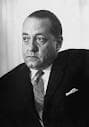
Alejo Carpentier y Valmont was a Cuban novelist, essayist, and musicologist who greatly influenced Latin American literature during its famous "boom" period. Born in Lausanne, Switzerland, of French and Russian parentage, Carpentier grew up in Havana, Cuba, and despite his European birthplace, he strongly identified as Cuban throughout his life. He traveled extensively, particularly in France, and to South America and Mexico, where he met prominent members of the Latin American cultural and artistic community. Carpentier took a keen interest in Latin American politics and often aligned himself with revolutionary movements, such as Fidel Castro's Communist Revolution in Cuba in the mid-20th century. Carpentier was jailed and exiled for his leftist political philosophies.
Similar books
- Heart of Darkness
Joseph Conrad
3.4 (415k) average on GoodreadsHistorical FictionExplores a journey into the 'primitive' and the dark side of human nature, with themes of disillusionment and the clash of cultures.
- One Hundred Years of Solitude
Gabriel García Márquez
4.1 (753k) average on GoodreadsLiterary FictionFeatures a rich, mythical Latin American setting and a deep engagement with the concept of time and history.
- The Sheltering Sky
Paul Bowles
3.9 (25k) average on GoodreadsLiterary FictionFollows Westerners seeking meaning in an exotic, 'primitive' land, grappling with alienation and existential questions.
- To Kill a Mockingbird
Harper Lee
4.3 (4.5M) average on GoodreadsHistorical FictionIn the 1930s Jim Crow South, Harper Lee writes about racial injustice, moral growth, and the quiet courage of a lawyer father, Atticus Finch, as seen through his young daughter's eyes.
- The Great Gatsby
F. Scott Fitzgerald
3.9 (3.8M) average on GoodreadsHistorical FictionIn the opulent Roaring Twenties, a mysterious millionaire's lavish parties hide his desperate, tragic pursuit of a lost love, exposing the emptiness within the American Dream.
- Pride and Prejudice
Jane Austen
4.3 (3M) average on GoodreadsHistorical FictionIn a society focused on status and money, Elizabeth Bennet navigates love and pride, challenging Mr. Darcy and social expectations to find true affection.





Enjoyed the summary?
A summary gives you the shape of the book. The book itself has the detail, the examples and the voice.
Find The Lost Steps on AmazonAs an Amazon Associate, BookBrief earns from qualifying purchases. How we're funded