
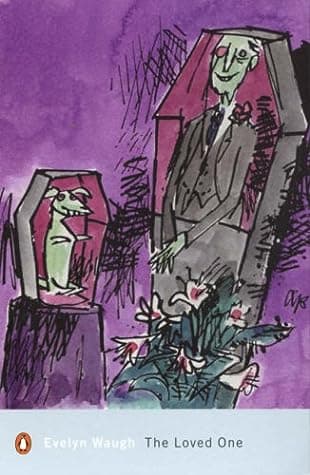
Synopsis
Covers the whole plot, including the ending.
- Difficulty
- Medium
- Pacing
- Moderate
- Mood
- Darkly humorous, Satirical, Macabre, Absurdist
- Read it if
- You enjoy dark satire, black comedy, and critiques of consumerism and cultural differences.
- Skip it if
- You are sensitive to themes of death, suicide, and morbid humor, or prefer straightforward narratives.
The Loved One Plot Summary
Covers the whole plot, including the ending.
The Demise of Sir Francis Hinsley
Dennis Barlow, a young English poet and pet mortician in Hollywood, learns his mentor, Sir Francis Hinsley, has been fired from his film studio job. Distraught, Sir Francis hangs himself. Dennis, as the only friend present, is asked by the local British community, specifically the Cricket Club, to arrange the funeral. He receives a large sum of money and instructions to ensure Sir Francis gets a dignified burial. This unexpected duty pushes Dennis into the unfamiliar world of American death rituals, starting with the opulent Whispering Glades Memorial Park.
Whispering Glades Memorial Park
Looking for a place for Sir Francis, Dennis visits Whispering Glades Memorial Park. He is immediately struck by its manicured grounds, themed sections like 'Slumberlake' and 'The Lake Isle of Innisfree,' and the constant artificial serenity. The park's staff present death as a luxurious, customizable experience, with various 'interment packages.' Dennis is overwhelmed by the scale and commercialism, a sharp contrast to his own reserved British feelings about death. He finds himself in a world where grief is packaged and sold, and the dead are 'loved ones' instead of simply dead.
Encounter with Aimée Thanatogenos
During his visit to Whispering Glades, Dennis meets Aimée Thanatogenos, a young, impressionable cosmetician who beautifies the deceased. Aimée, whose name means 'death-born,' is naive and romantic, living in a world shaped by the park's sentimental brochures. Dennis is intrigued by her innocent yet strange job and her belief in the sanctity and artistry of her work. He begins a relationship with her, at first wanting to use her for his own ends, but soon finds himself captivated by her unique view of life and death.
Mr. Joyboy's Affection
Aimée is not only the focus of Dennis's attention but also the silent obsession of Mr. Joyboy, the park's senior embalmer. Mr. Joyboy is a lonely, meticulous man who sees Aimée as his ideal partner. He shows his affection in odd ways, such as bringing her a parrot as a gift and, more disturbingly, secretly visiting the body of an old woman he once embalmed perfectly. His attempts to win Aimée are clumsy and often unsettling, showing his social awkwardness and his inability to connect with her normally, viewing her through his profession.
Dennis's Impersonation
Knowing Aimée's romantic and idealistic nature, Dennis decides to hide his identity as a pet mortician. Instead, he presents himself as a distinguished poet. He reads her poems, some his own and some copied, which she finds profound and moving. Aimée, with little understanding of true literary merit, is easily swayed by his act. This deception lets Dennis gain her admiration and affection, as she believes him to be a sensitive, artistic soul, far from the commercialism she hates but is part of.
The Cricket Club's Judgment
Dennis, having spent most of the money for Sir Francis's funeral on himself and gifts for Aimée, finds himself in a difficult spot. He arranges for Sir Francis to be buried in the cheapest plot at Whispering Glades, under a tree for 'unloved ones.' When the British Cricket Club learns of this, they are angry at his disrespect and his wasting of the funds. They hold a meeting, led by Mr. Slump, to condemn Dennis's actions and demand repayment, further isolating him from his community.
Aimée's Romantic Delusion
Aimée, deeply in love with Dennis's poetic persona, is torn between his artistic sensitivity and Mr. Joyboy's more stable, though morbid, affection. She asks Dennis for advice, presenting her dilemma as a choice between two suitors, unaware that Dennis is one of them. She tells him she wants a 'spiritual' love, a concept she learned from sentimental literature. Dennis, while keeping his poetic act, struggles to match her romantic fantasies with his own cynical reality, finding himself more and more caught in her emotional world.
The Unveiling of the Truth
The truth about Dennis's identity and his job as a pet mortician eventually comes out. Aimée overhears a conversation or sees evidence that exposes his deception. The revelation shatters her idealized image of him. She feels deeply betrayed, her romantic dreams crumbling as she realizes the man she admired is not the sensitive poet she believed, but someone who deals with the mundane and often grotesque realities of death, even if for animals. This discovery sends her into a deep emotional crisis, making her question her judgment and the nature of love.
Aimée's Despair and Suicide
Devastated by Dennis's betrayal and the collapse of her romantic views, Aimée feels a deep despair. She sees her life and work at Whispering Glades as meaningless without the spiritual love she wanted. In a tragic echo of Sir Francis Hinsley's suicide, Aimée takes her own life. Her death happens within the memorial park she beautified, a final, ironic statement on the artificiality she both embraced and was destroyed by. Her death further complicates Dennis's already uncertain situation.
Mr. Joyboy's Final Act
Upon finding Aimée's body, Mr. Joyboy, in a macabre act of possessive love, embalms her. He carefully prepares her, aiming for a perfect preservation that will allow him to keep her with him forever. This act is the ultimate sign of his twisted affection, turning Aimée from a living woman into an object of his morbid art. He dresses her in a wedding gown, further showing his delusional desire for her, treating her death as a perverse fulfillment of his romantic fantasies.
The Dénouement and Escape
Dennis finds himself involved in Aimée's death, as her suicide note mentions his deception. Mr. Joyboy, aware of Dennis's role and wanting to avoid scandal, blackmails Dennis. He offers to keep Dennis's involvement quiet if Dennis writes a eulogy for Aimée, implying she died by suicide out of unrequited love for Mr. Joyboy. Dennis agrees, seeing it as his only way out. Having fulfilled his duty and with the Cricket Club still pursuing him for the funeral funds, Dennis gets a ticket back to England, leaving the bizarre world of Hollywood and Whispering Glades behind, but forever changed by his experiences.
The Loved One Characters
Dennis Barlow
Protagonist
A cynical British poet and pet mortician navigating the absurdities of Hollywood death.
Dennis is a young, opportunistic British expatriate poet living in Hollywood. Initially working as a pet mortician, he possesses a cynical and detached view of the world, particularly the American way of life and its commercialization of death. He is intelligent but morally ambiguous, often exploiting situations and people for his own gain. He is an observer, taking in the bizarre customs around him with a blend of bewilderment and calculated self-interest. His actions are driven by a desire for comfort and escape rather than any strong moral compass.
Relationships: Aimée Thanatogenos (Object of his manipulative affection; he deceives her about his identity.); Sir Francis Hinsley (Mentor and friend whose death precipitates Dennis's involvement with Whispering Glades.); Mr. Joyboy (Rival for Aimée's affection; later, his blackmailer.)
Aimée Thanatogenos
Supporting Character / Tragic Figure
A naive and romantic cosmetician at Whispering Glades, easily swayed by idealism.
Aimée is a young, impressionable cosmetician at Whispering Glades Memorial Park. She lives in a world constructed from the sentimental clichés found in the park's brochures and popular romance novels. She is deeply naive, idealistic, and yearns for a 'spiritual' love. Her profession, beautifying corpses, is seen by her as an artistic and sacred calling. She is easily manipulated by Dennis's poetic pretenses and embodies the tragic innocence that is ultimately crushed by the harsh realities and deceptions of the world around her.
Relationships: Dennis Barlow (Her idealized lover, whose deception ultimately causes her demise.); Mr. Joyboy (Her persistent, unsettling suitor, whose affection she largely ignores.)
Mr. Joyboy
Antagonist / Supporting Character
The chief embalmer at Whispering Glades, morbidly obsessed with Aimée.
Mr. Joyboy is the meticulous and highly skilled chief embalmer at Whispering Glades. He is a lonely, socially awkward man who harbors a deep, possessive, and somewhat morbid affection for Aimée. His attempts at romance are clumsy and often unsettling, revealing a man more comfortable with the dead than the living. He views Aimée as a perfect, beautiful object to be preserved, and his actions after her death are the ultimate expression of his twisted love, highlighting the novel's themes of artificiality and the commodification of emotion.
Relationships: Aimée Thanatogenos (The object of his unrequited, obsessive, and ultimately necrophilic affection.); Dennis Barlow (His rival for Aimée's affection; later, he blackmails Dennis.)
Sir Francis Hinsley
Supporting Character / Catalyst
An aging British expatriate and Hollywood screenwriter whose suicide sets the plot in motion.
Sir Francis Hinsley is an elderly British expatriate living in Hollywood, a once-respected screenwriter whose career has waned. He is a mentor figure to Dennis Barlow and a prominent member of the British expatriate community. His suicide, triggered by his firing from the studio and a deep sense of disillusionment, acts as the catalyst for Dennis's journey into the world of Whispering Glades. Sir Francis embodies the failure of the European intellectual in the face of American commercialism and superficiality.
Relationships: Dennis Barlow (His protégé and friend, who is tasked with arranging his funeral.)
Mr. Slump
Supporting Character
The stern, moralistic leader of the British Cricket Club.
Mr. Slump is the upright, moralistic, and rather humorless leader of the British Cricket Club. He represents the traditional, conservative British values and community spirit, which stand in stark contrast to the hedonistic and commercialized culture of Hollywood. He takes it upon himself to uphold the dignity of the British expatriate community and is fiercely critical of Dennis's perceived squandering of the funeral funds and his general lack of decorum. He serves as a voice of judgment and moral accountability.
Relationships: Dennis Barlow (His accuser and moral adversary, whom he holds accountable for mismanaging funeral funds.)
The Guru (Swami)
Mentioned / Supporting Character
Aimée's spiritual advisor, offering platitudes and superficial wisdom.
The Guru is Aimée's spiritual advisor, a figure who dispenses vague, New Age-esque platitudes and self-help advice. He represents the superficial spirituality prevalent in Hollywood, where profound concepts are reduced to easily digestible, often meaningless, soundbites. Aimée consults him for guidance on her romantic dilemmas, but his advice is ultimately unhelpful and contributes to her confusion, highlighting the emptiness of her chosen spiritual path.
Relationships: Aimée Thanatogenos (Her spiritual advisor, to whom she turns for guidance.)
The Loved One Themes
The Commercialization of Death
Waugh satirizes the American funeral industry's change of death into a marketable product. Whispering Glades Memorial Park is a carefully curated, artificial paradise where grief is managed, and the dead are 'loved ones' rather than simply dead. This theme appears in the elaborate 'interment packages,' the sentimental language from park staff, and the aestheticization of burial plots into themed gardens. The park focuses on selling comfort and an illusion of eternal beauty, removing death's solemnity and replacing it with consumerism. The ultimate example is Mr. Joyboy's embalming of Aimée, treating her as a final, perfect product.
“'Loved ones' was the current American euphemism for corpses.”
Anglo-American Cultural Clash
The novel sharply contrasts British and American ways, especially regarding death, emotion, and social manners. Dennis Barlow and the British Cricket Club show a more reserved, often cynical, and traditional European view. Whispering Glades, Aimée, and the American characters embody a more open, sentimental, and commercial approach. The British find the American obsession with packaging grief and superficial optimism confusing and distasteful. This clash is clear in Dennis's reaction to Whispering Glades, the Cricket Club's anger at his handling of Sir Francis's funeral, and Aimée's naive romanticism, which Dennis, a cynical Englishman, uses.
“The British colony in Hollywood was a small, self-contained, and highly articulate group of exiles.”
Illusion vs. Reality
A main theme is the constant presence of illusion and the devastating effect of its breakdown. Aimée lives in a world of manufactured sentiment, believing Dennis to be a sensitive poet, a stark contrast to his true job as a pet mortician. Whispering Glades itself is an elaborate illusion, designed to hide the grim reality of death with beauty and comfort. Dennis maintains illusions about himself to reach his goals, but the eventual truth shatters Aimée's fragile world, leading to her suicide. The novel constantly questions what is real and what is just a performance or a made-up fantasy.
“He had seen the world and found it a deception.”
The Nature of Love and Obsession
Waugh explores various, often twisted, forms of love and obsession. Aimée's 'love' for Dennis is based entirely on a false image, a romantic ideal from popular culture. Mr. Joyboy's affection for Aimée is a morbid, possessive obsession, ending in his embalming of her. Dennis's interest in Aimée is at first manipulative, though he has brief moments of genuine, if confused, feeling. The novel suggests that in a superficial society, true, healthy love is rare, often replaced by infatuation, delusion, or a desire for possession, making real connection impossible.
“Love, it appeared, was a thing of the spirit, a spiritual communion.”
Plot Devices & Literary Techniques
Satire
Waugh's primary tool for criticizing Hollywood culture and the American funeral industry.
Satire is the dominant plot device, used to expose and ridicule the follies and vices of Hollywood society and the commercialization of death. Waugh employs exaggeration, irony, and caricature to highlight the absurdities of Whispering Glades Memorial Park, the superficiality of its inhabitants, and the sentimentality that masks darker realities. The names of characters like Aimée Thanatogenos ('death-born') and Mr. Joyboy (a grim irony) are satirical in themselves. The novel's tone is consistently detached and cynical, allowing the reader to observe the grotesque humor in the characters' actions and beliefs.
Dramatic Irony
The audience's knowledge of the truth contrasts with the characters' illusions.
Dramatic irony is frequently used, particularly in the interactions between Dennis and Aimée. The reader is aware of Dennis's true identity as a pet mortician and his manipulative intentions, while Aimée believes him to be a sensitive, struggling poet. This creates a sense of tension and often dark humor, as Aimée confides her romantic dilemmas to the very person deceiving her. The irony underscores the theme of illusion versus reality and highlights Aimée's profound naivety, making her eventual disillusionment and suicide all the more tragic.
Symbolism (Whispering Glades)
The memorial park symbolizes artificiality, consumerism, and the denial of death.
Whispering Glades Memorial Park is a powerful symbol throughout the novel. It represents the ultimate triumph of artificiality and consumerism over genuine human emotion and the natural process of death. Its manicured lawns, themed sections ('Slumberlake'), and euphemistic language ('loved ones') symbolize a society that sanitizes, commodifies, and ultimately denies the grim reality of mortality. The park is a gilded cage, a false paradise where everything is beautiful but nothing is real, reflecting the superficiality of Hollywood itself and the characters who inhabit it.
Foil Characters
Characters whose contrasting traits highlight each other's qualities.
Foil characters are used to emphasize key traits. Dennis Barlow and Mr. Joyboy serve as foils in their pursuit of Aimée: Dennis is cynical and manipulative, using intellect and deception, while Joyboy is morbidly obsessive and socially awkward, expressing his 'love' through his embalming craft. Similarly, the pragmatic, traditional British expatriates act as a foil to the sentimental, superficial Americans, highlighting the cultural divide. These contrasts underscore the novel's themes of authenticity, emotional expression, and cultural differences.
The Loved One Quotes
“Death is the only thing that’s not a joke.”
“A man’s life is his own business.”
“It is a mistake to imagine that love is a matter of words.”
“The greater the sinner, the greater the saint.”
“In a world of change, the Happier Hunting Ground is a haven of peace.”
“She was a priestess of the cult of the Beautiful Dead.”
“The human heart is an organ of fire.”
“The English have a genius for understatement.”
“It was impossible to feel anything but reverence for so much expense.”
“Life is a brief spell of light between two eternities of darkness.”
“They had learned to speak the language of the grave.”
“Sentimentality is the most dangerous of all human weaknesses.”
“The Loved One was no more than a parcel of corruptible clay.”
“He had come to California to bury a friend and found himself digging his own grave.”
Quiz
10 questions on the plot and the characters. Each answer comes with a short explanation.
Question 1
What is Dennis Barlow's initial profession in Hollywood before he becomes involved with Whispering Glades?
- Screenwriter for a major studio
- Poet and pets' mortician
- Journalist for a British expatriate newspaper
- Gardener at a private estate
Show answer
B. Poet and pets' mortician Dennis Barlow is introduced as a British poet who also works as a pets' mortician, caring for deceased animals before his friend's death draws him into Whispering Glades.
Question 2
Who is the 'Loved One' in the title, referring to the initial event that brings Dennis to Whispering Glades?
- Aimée Thanatogenos
- Mr. Joyboy
- Sir Francis Hinsley
- The Reverend Wilbur Kenworthy
Show answer
C. Sir Francis Hinsley Dennis Barlow's friend, Sir Francis Hinsley, commits suicide, leading Dennis to arrange his funeral at Whispering Glades Memorial Park, thus introducing him to the world of American mortuary practices.
Question 3
What is Aimée Thanatogenos's profession at Whispering Glades?
- Receptionist and tour guide
- Corpse beautician
- Landscape architect
- Grave digger
Show answer
B. Corpse beautician Aimée is the naive Californian corpse beautician, responsible for making the deceased presentable for viewing.
Question 4
What is the name of the rival pet cemetery where Dennis Barlow eventually finds work?
- Heaven's Gate Pet Memorial
- The Happy Hunting Ground
- Paws Awhile Gardens
- Forever Friends Pet Park
Show answer
B. The Happy Hunting Ground After leaving the film industry, Dennis Barlow takes up a position at 'The Happy Hunting Ground,' a pet cemetery that serves as a parallel to Whispering Glades.
Question 5
What is Mr. Joyboy's unusual daily ritual involving the deceased Mrs. Joyboy?
- He writes a poem for her every morning.
- He takes her out for a drive in his car.
- He brings her home from work to spend the evening with her.
- He secretly re-embalms her every night.
Show answer
C. He brings her home from work to spend the evening with her. Mr. Joyboy, the master embalmer, secretly brings his deceased mother home from Whispering Glades each night to spend time with her, returning her before dawn.
Question 6
What specific request does Dennis make of Aimée regarding Sir Francis Hinsley's remains that initially draws her interest?
- He asks for a custom-made suit for Sir Francis.
- He asks for Sir Francis to be given a 'poet's farewell'.
- He requests a specific type of flower arrangement.
- He demands a discount due to their friendship.
Show answer
B. He asks for Sir Francis to be given a 'poet's farewell'. Dennis's request for a 'poet's farewell' for Sir Francis Hinsley, which Aimée interprets as a profound, romantic gesture, is what first intrigues her.
Question 7
What is the ultimate fate of Aimée Thanatogenos?
- She marries Dennis Barlow and moves to England.
- She becomes a renowned mortician and takes over Whispering Glades.
- She commits suicide by ingesting poison.
- She leaves Whispering Glades to become a Hollywood actress.
Show answer
C. She commits suicide by ingesting poison. Overwhelmed by her conflicting feelings for Dennis and Mr. Joyboy, and her disillusionment, Aimée ultimately commits suicide by ingesting poison.
Question 8
What does Dennis Barlow ultimately do with Aimée's body after her death?
- He arranges for her to be buried at Whispering Glades with a lavish ceremony.
- He takes her body to The Happy Hunting Ground and cremates it in secret.
- He leaves her body for Mr. Joyboy to handle, as was her wish.
- He donates her body to a medical school for research.
Show answer
B. He takes her body to The Happy Hunting Ground and cremates it in secret. To escape the complications and expense, Dennis takes Aimée's body to The Happy Hunting Ground and cremates it in the animal incinerator, arranging to send her ashes to the 'Poets' Corner' in England.
Question 9
The novel satirizes the 'Anglo-American cultural divide'. Which specific aspect of American culture, particularly in relation to death, is most heavily lampooned?
- The stoic, understated approach to grief.
- The commercialization and sentimental beautification of death.
- The traditional, religious rituals surrounding funerals.
- The lack of memorialization for the deceased.
Show answer
B. The commercialization and sentimental beautification of death. The novel savagely satirizes the American obsession with making death 'pretty' and palatable, turning it into a commercialized, artificial spectacle at places like Whispering Glades, in stark contrast to British reserve.
Question 10
What is the significance of the 'Crusader's Rest' and 'The Lake Isle of Innisfree' in the context of the novel's ending?
- They are names of sections within Whispering Glades where Aimée wished to be buried.
- They are two poems Dennis considers sending to Aimée as a gesture of love.
- They are the names of two different memorial parks that compete for business.
- They are two possible destinations Dennis fabricates for Aimée's ashes, representing different cultural ideals of death.
Show answer
D. They are two possible destinations Dennis fabricates for Aimée's ashes, representing different cultural ideals of death. Dennis fabricates the destinations for Aimée's ashes: 'Crusader's Rest' (a war memorial in England) and 'The Lake Isle of Innisfree' (a Yeats poem), to satisfy different parties, highlighting the manipulation and superficiality surrounding death and memorialization in the novel.
The Loved One FAQ
What prompts Dennis Barlow's initial visit to Whispering Glades Memorial Park?
Dennis Barlow first visits Whispering Glades to arrange the funeral of his friend and fellow expatriate, Sir Francis Hinsley, who committed suicide after being fired from his Hollywood studio job. As the only British person Hinsley knew, Dennis feels obligated to ensure a dignified send-off, despite his own limited funds.
Who is Aimée Thanatogenos and what is her role at Whispering Glades?
Aimée Thanatogenos is a young, naive Californian cosmetician at Whispering Glades, responsible for making the deceased presentable for viewing. She is depicted as highly susceptible to romantic notions and poetic language, often misinterpreting intentions and taking things literally.
How does Dennis Barlow initially deceive Aimée?
Dennis Barlow, seeking to win Aimée's affection and secure a loan, pretends to be a successful poet and author of the verses he recites to her. In reality, these are lines from well-known English poets, which Aimée, unfamiliar with European literature, believes to be his original work.
What is Mr. Joyboy's position and his peculiar obsession?
Mr. Joyboy is the senior embalmer at Whispering Glades and a highly respected figure within its hierarchy. He harbors a deeply disturbing obsession with Aimée, often stalking her and, most unsettlingly, keeping a photograph of a deceased woman he embalmed, whom he named 'the Loved One,' on his bedside table.
What is the 'Pets' Paradise' and Dennis's connection to it?
The 'Pets' Paradise' is a pet cemetery and crematorium located adjacent to Whispering Glades, offering elaborate funeral services for deceased animals. Dennis Barlow works there as a mortician, a role he finds less glamorous than his imagined poetic pursuits but which provides him with a living.
What is the significance of the 'Cricket' and 'Elsinore' projects in Sir Francis Hinsley's past?
The 'Cricket' and 'Elsinore' projects represent Sir Francis Hinsley's failed attempts to bring high-brow, culturally significant British cinema to Hollywood, specifically an adaptation of Hamlet. These projects highlight the clash between European artistic integrity and Hollywood's commercialism, ultimately leading to Hinsley's professional downfall.
How does Waugh use the character of the 'Guru' or 'Swami' to comment on American spirituality?
The 'Guru' is a charlatan figure who offers vague, pseudo-philosophical advice to Aimée, exploiting her spiritual naivety. Waugh uses him to satirize the superficiality and commercialization of spiritual movements prevalent in certain American circles, where enlightenment is sold rather than earned.
What is the deeper implication of the Whispering Glades' founders' names, Wilbur and Theodora Heinkel?
While not explicitly stated in the text, 'Heinkel' is a German aircraft manufacturer, which subtly evokes a sense of industrial, almost military, precision and scale applied to death. This suggests the founders' vision for Whispering Glades was less about genuine solace and more about an organized, commodified system for processing grief.
How does Aimée's understanding of love and poetry differ from Dennis's?
Aimée views love and poetry through an idealized, sentimental lens, seeking grand gestures and profound declarations, often detached from reality. Dennis, on the other hand, sees them as tools for manipulation and personal gain, using borrowed verses to achieve his pragmatic goals, highlighting her naivety versus his cynicism.
Analyze Mr. Joyboy's psychological motivations for his obsession with Aimée.
Mr. Joyboy's obsession stems from a profound loneliness and a morbid fascination with death, which he sublimates into his work and his pursuit of Aimée. He projects his desires onto her, seeing her as an extension of the 'Loved Ones' he meticulously prepares, blurring the lines between the living and the dead in his mind.
How does Dennis Barlow's cynicism act as a coping mechanism in the face of the bizarre world he encounters?
Dennis's cynicism serves as a protective shield, allowing him to navigate the absurdities of Whispering Glades and Pets' Paradise without succumbing to their emotional or spiritual demands. It enables him to detach and exploit situations for his own benefit, preventing him from being genuinely affected by the artificiality and morbid sentimentality around him.
What is the psychological impact of the constant proximity to death on the employees of Whispering Glades?
The constant proximity to death in Whispering Glades distorts the employees' perceptions of life and death, leading to a professional detachment that often veers into the macabre. They view death as a business transaction, a canvas for their artistry, or an object of obsession, rather than a profound human experience, leading to emotional desensitization.
Is 'The Loved One' primarily a satire of American culture, or does it also criticize British expatriates?
'The Loved One' primarily satirizes American funeral culture and its commercialization of death, but it also critiques the British expatriate community's snobbery, hypocrisy, and inability to adapt. Characters like Sir Francis Hinsley and Dennis Barlow, despite their disdain for Hollywood, are themselves flawed and opportunistic, highlighting a shared human tendency towards artifice.
What is the significance of the novel's ending, where Dennis returns to England?
The ending signifies Dennis's escape from the morally bankrupt landscape of Hollywood and Whispering Glades, but it's not a triumphant return to moral rectitude. He leaves having profited from Aimée's death and the sale of his 'poetry,' suggesting that while he rejects American excess, he remains opportunistic and unburdened by conscience, carrying the 'loot' of his experiences.
How does Waugh use the theme of 'artifice' throughout the novel?
Waugh employs 'artifice' extensively, from the manufactured beauty of the deceased at Whispering Glades and the fake gravestones at Pets' Paradise, to Dennis's plagiarized poetry and Aimée's idealized romantic notions. This pervasive artifice underscores the novel's critique of a society that prioritizes superficial appearances and manufactured emotions over genuine experience.
To what extent is Aimée responsible for her own tragic fate?
While Aimée is a victim of manipulation by both Dennis and Mr. Joyboy, her profound naivety, literal interpretation of poetry, and inability to distinguish genuine affection from false flattery contribute significantly to her tragic fate. Her romantic idealism, detached from reality, makes her particularly vulnerable to the deceit around her, leading to her ultimate despair.
What is the role of the 'Cricket' club in the novel?
The 'Cricket' club serves as a meeting place for the British expatriate community in Hollywood, providing a sense of camaraderie and a refuge from American culture. It highlights their attempts to maintain British traditions and a sense of superiority, even while many of them are struggling or have become disillusioned with their lives abroad.
How does the novel satirize the American concept of the 'pursuit of happiness'?
The novel satirizes the 'pursuit of happiness' by depicting a culture where happiness is commodified and superficial. Whispering Glades promises eternal bliss and beauty in death, while characters like Aimée pursue an idealized, unrealistic happiness through romantic fantasies, ultimately leading to disillusionment and despair, rather than genuine contentment.
About the author
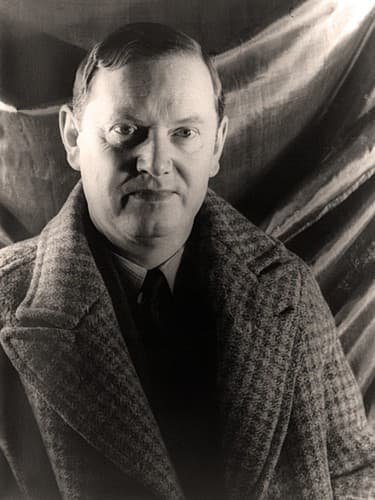
Arthur Evelyn St. John Waugh was an English writer of novels, biographies, and travel books; he was also a prolific journalist and book reviewer. His most famous works include the early satires Decline and Fall (1928) and A Handful of Dust (1934), the novel Brideshead Revisited (1945), and the Second World War trilogy Sword of Honour (1952–1961). He is recognised as one of the great prose stylists of the English language in the 20th century.
Similar books
- A Handful of Dust
Evelyn Waugh
3.9 (23k) average on GoodreadsLiterary FictionShares Waugh's signature dark humor, social critique, and satirical take on upper-class society.
- Catch-22
Joseph Heller
4.0 (723k) average on GoodreadsHistorical FictionFeatures absurd situations, dark humor, and a satirical look at institutions and human folly.
- Vile Bodies
Evelyn Waugh
3.8 (12k) average on GoodreadsLiterary FictionAnother Waugh novel with a satirical tone, focusing on the hedonistic and morally ambiguous lives of young socialites.
- Brideshead Revisited
Evelyn Waugh
4.0 (93k) average on GoodreadsLiterary FictionWaugh's earlier novel (1945) also critiques societal values but is more reflective, melancholic, and expansive, focusing on themes of class, tradition, and memory. The Loved One is far more acerbic, less sentimental, and possesses a concentrated satirical power, showcasing a different facet of Waugh's literary genius with a singular, biting focus.
- The Old Man and the Sea
Ernest Hemingway
3.8 (831k) average on GoodreadsLiterary FictionA Cuban fisherman's long struggle with a giant marlin becomes a story of endurance and dignity, now retold for young adults with illustrations, phonetic guides, and writing prompts in Traditional Chinese.
- One Hundred Years of Solitude
Gabriel García Márquez
4.1 (753k) average on GoodreadsLiterary FictionThrough the multi-generational story of the Buendía family, a mythical town deals with the repeating patterns of time, love, and solitude, as the extraordinary mixes with the ordinary.



Enjoyed the summary?
A summary gives you the shape of the book. The book itself has the detail, the examples and the voice.
Find The Loved One on AmazonAs an Amazon Associate, BookBrief earns from qualifying purchases. How we're funded