

Core Idea
- Difficulty
- Medium
- Read it if
- You are seeking philosophical reflections on individuality, societal critique, and spiritual awakening, presented in a poetic and allegorical style.
- Skip it if
- You prefer straightforward narrative non-fiction or practical self-help, or are not open to abstract spiritual and philosophical parables.
Key Takeaways from The Madman
The Mask of Sanity
Embracing the 'madman' within is a path to authentic self-discovery.
Gibran's opening parable immediately shows the main idea: societal conformity often means we hide our true selves to fit in. The 'madman' is not insane but someone who has removed these artificial fronts, willingly or not. He seems 'mad' to a world still holding onto its false beliefs. Removing these masks is shown as a liberation, a painful but good act, as it allows for an honest experience of one's inner being. It suggests that real wisdom and peace come not from following external expectations, but from accepting and expressing one's authentic self, even if it means being misunderstood or excluded by society.
“You ask me how I became a madman. It happened thus: One day, long before many gods were born, I woke from a deep sleep and found that all my masks were stolen – the seven masks I had fashioned and worn in seven lives – and I ran maskless through the streets, crying, 'Thieves, thieves, blessed be the thieves.'”
In the book: The opening poem, 'How I Became a Madman,' directly illustrates the protagonist's awakening to his maskless state and his subsequent embrace of this 'madness.'
Try this: Reflect on the 'masks' you wear in different social contexts. Identify one area where you can intentionally shed a mask and express a more authentic part of yourself, even if it feels uncomfortable. Practice vulnerability.
Related ideas: authenticity, conformity, self-discovery
The Paradox of Freedom
True freedom often lies in rejecting conventional definitions and embracing inner liberation.
This section discusses the complex nature of freedom in Gibran's work. The madman, free from societal norms, finds himself in a new 'chain'—his own madness, which isolates him. However, this is a freedom of spirit, a release from the mental prisons of expectation and judgment. It suggests that while external freedom can be limited, true freedom is an internal state, a choice to see and exist outside of established limits. This freedom is both good and bad, giving great insight but also deep solitude. Gibran asks the reader to consider what true freedom means and if it requires an unconventional path.
“And now I am a madman. Free, and in chains. For I am free only to be mad, and my madness is my chain.”
In the book: The poem 'The Two Hermits' subtly highlights this, as one hermit seeks freedom through physical detachment while the other finds it in internal peace, regardless of external circumstance.
Try this: Identify an area in your life where you feel constrained by external expectations. Explore how you might reframe your perception of that constraint to find internal freedom, even if the external situation remains unchanged. Practice mental detachment.
Related ideas: liberation, individualism, paradox
The Wisdom of Unreason
Truth is often revealed in the illogical and the unconventional, defying rational explanation.
Gibran often uses seemingly illogical situations to show deep truths, suggesting that normal logic and reason are often not enough to understand deeper realities. The 'madman' acts from intuition, feeling, and a connection to the basic, pure essence of existence, much like a child. This approach encourages the reader to look beyond surface appearances and intellectual ideas, promoting a more complete and intuitive way of knowing. Wisdom from unreason is often direct, free from societal filters, and able to see the fundamental nature of things that logic might hide. It is a call to trust one's inner knowing, even when it cannot be explained.
“I was about to answer him, when I saw a woman pass by, carrying her babe in her arms. And I looked at the babe, and the babe looked at me. And the babe smiled. And I knew then that the babe knew what I was about to say.”
In the book: Stories like 'The Wise Dog' and 'The Two Hermits' present situations where the 'wise' or 'logical' characters are often misguided, while unconventional figures or animals embody deeper truths.
Try this: When faced with a complex problem, take time to step away from purely logical analysis. Engage in activities that foster intuition (e.g., meditation, walking in nature, creative expression) and observe any insights that emerge, even if they seem 'illogical' at first.
Related ideas: intuition, irrationality, spiritual-insight
The Nature of Possession
True ownership is an illusion; we are merely temporary custodians of all we 'possess.'
Gibran critiques human attachment to material things and even abstract ideas like reputation or knowledge. Through the madman's view, he shows that 'ownership' is mostly a mental idea, a cause of worry and limitation. The true self, free from the need to possess, finds freedom and wholeness in its inherent existence. This idea aligns with spiritual traditions that promote non-attachment. By letting go of the illusion of control and ownership, one opens up to a richer experience of life, realizing that real value comes from being, not from having. The ultimate possession is the self, and even that changes and grows.
“Yesterday I owned the world, and today I own naught but myself. And in this naught I have found my all.”
In the book: In 'The Grave-Digger,' the madman observes the futility of human striving for possessions, as all ultimately return to dust. The 'Yesterday I owned the world...' quote from 'The Madman' directly supports this.
Try this: Conduct a 'possession audit': Identify three items you feel strongly attached to. Reflect on why you feel this attachment and imagine what it would be like to lose them. Practice gratitude for what you have without clinging to the idea of ownership.
Related ideas: non-attachment, materialism, ephemerality
The Divine in the Mundane
Spiritual truths are not confined to sacred spaces but permeate everyday life.
Gibran consistently points to the presence of the divine, suggesting that the sacred is not far off or abstract but is part of existence. The madman, with his clear perception, sees the miraculous in the ordinary—a dewdrop, a child's smile, the wind. This view challenges traditional religious thought that often puts spirituality into specific rituals or institutions. Instead, Gibran promotes a constant state of awareness, where every moment, every natural event, every human interaction can offer deep spiritual insight. This encourages a more engaged and thoughtful approach to life, making everyday things a continuous spiritual practice.
“And a philosopher said, 'I have seen the face of God in a drop of dew, and the voice of God in a murmur of the sea.'”
In the book: The poem 'The Wise Dog' portrays a dog as a source of profound spiritual insight, challenging human-centric views of wisdom. 'The Gardener' also touches on this, where the gardener sees the divine in his plants.
Try this: Dedicate one day to actively seek out moments of beauty or wonder in your everyday routine. Notice the intricate details of a leaf, the sound of rain, or the kindness in a stranger's gesture. Journal these observations and reflect on the feelings they evoke.
Related ideas: immanence, mindfulness, sacred-ordinary
The Hypocrisy of Society
Societal norms often mask deeper moral failings and a fear of genuine truth.
Gibran sharply critiques the hypocrisy and superficiality within society. The 'sane' world, holding onto its customs and appearances, often condemns the madman because he exposes its illusions. The madman's 'madness' is simply his refusal to take part in the collective delusion, his clear view of the differences between what people say and what they do. This critique extends to religious institutions, political power, and social hierarchies that often prioritize rules and control over real human connection and empathy. Gibran asks readers to question the foundations of their own societal structures and to see where conformity might hide deeper moral compromises.
“And he said, 'You are a madman. You speak of things that do not exist.' And I said, 'You are a sane man. You speak of things that exist, but you do not see them.'”
In the book: In 'The Greater Sea,' the madman observes people's fear of true depth and their preference for superficiality. The interactions with the 'sane' characters throughout the book consistently highlight this societal blindness.
Try this: Identify one societal norm or belief you've always accepted without question. Research or reflect on its origins and implications. Consider if it aligns with your personal values or if it's a form of collective hypocrisy.
Related ideas: hypocrisy, social-critique, truth-telling
Love Beyond Possession
True love transcends attachment and seeks the freedom and growth of the beloved.
While not as detailed as in The Prophet, Gibran's idea of love in The Madman is similar to a theme of non-possessive affection. The madman's detachment from conventional desires allows him to see love as a force that cannot be owned or controlled, like the sea. He understands that trying to 'possess' love, or another person, lessens its essence and causes suffering. Instead, true love is about appreciating the other's inherent nature, giving them freedom, and recognizing the flow of connection without demanding permanence or exclusivity. This understanding of love is another aspect of the madman's 'madness,' as it contrasts with the possessive and conditional love often practiced in society.
“And I said, 'Love is like the sea. It has its ebb and flow, and its depths and shallows. And he who would possess the sea must needs possess its shores also.'”
In the book: The poem 'The Greater Sea' metaphorically speaks of the vastness and unpossessable nature of deeper truths, which can be extended to love. The madman's general non-attachment implies a different approach to relationships.
Try this: Reflect on a relationship where you might be holding onto possessive tendencies. Practice letting go of expectations or control, and instead, focus on supporting the other person's autonomy and growth. Observe how this shifts the dynamic.
Related ideas: non-possessive-love, freedom-in-love, unconditional-love
The Power of Silence
Profound truths are often found in stillness, beyond the clamor of words.
Gibran, through the madman, often stresses the limits of language and the deep wisdom in silence. In a world full of noise, talk, and constant communication, the madman often communicates through parables, metaphors, or simply his presence, encouraging deep thought rather than direct answers. Silence is shown not as an absence, but as a place where intuition can grow, where the soul can speak, and where truths too big for words can be understood. This idea encourages readers to find moments of quiet, to listen beyond the literal, and to recognize that some of life's most important lessons are learned through quiet observation and inner reflection, not through direct instruction.
“And the man said, 'Speak to us of Silence.' And he said, 'Silence is the voice of the soul. It is the language of the unspoken, and the speech of the unutterable.'”
In the book: Many of the parables conclude without explicit moralizing, leaving the reader in a state of contemplation. The madman's interactions are often brief, symbolic, and pregnant with unspoken meaning, such as the interaction with the babe.
Try this: Integrate 5-10 minutes of complete silence into your daily routine. This could be during a walk, before sleep, or during a meal. Focus on observing your thoughts and feelings without judgment, allowing insights to emerge naturally.
Related ideas: contemplation, inner-wisdom, meditation
The Playfulness of Spirit
A lighthearted, almost childlike approach can reveal deeper spiritual truths.
Despite the deep philosophical ideas, The Madman has a sense of playfulness. Gibran often uses simple, almost childlike situations and observations to convey complex ideas. The madman himself shows this spirit, free from the seriousness that often comes with conventional wisdom. This lightheartedness is not triviality, but a deep spiritual state—one that allows for greater openness, curiosity, and a direct connection to the basic joy of existence. It suggests that shedding the heavy cloak of adult seriousness and embracing a more playful, innocent view can unlock deeper understanding and a more authentic engagement with life's mysteries.
“And I saw a child playing with a toy, and I went and sat beside him. And he looked at me and smiled, and I smiled back. And then he gave me his toy. And I knew then that he knew what I was about to say.”
In the book: The numerous parables, such as 'The Wise Dog' or 'The Grave-Digger,' often have a fable-like quality, inviting a playful interpretation while delivering serious messages. The interaction with the child is a direct example.
Try this: Incorporate an element of play into a task you usually approach with seriousness. This could be through humor, creativity, or a changed perspective. Observe if this playful approach enhances your understanding or enjoyment.
Related ideas: innocence, whimsy, spiritual-joy
The Cycle of Rebirth
Death is not an end, but a transformation, a continuous cycle of becoming.
Gibran subtly includes the theme of life, death, and rebirth, not always as literal reincarnation, but as continuous spiritual and existential change. The 'madman' experiences a kind of death and rebirth when he sheds his masks, moving from a conventional existence to an authentic one. This view reframes death not as an end to be feared, but as a part of an eternal cycle, a shift to a different state of being or understanding. It encourages a broader view of existence, where change and dissolution are needed before new forms of life and consciousness appear. This takeaway offers comfort and a deep sense of connection, suggesting that nothing truly ends, but simply changes.
“For in truth all things are but shadows of things that are not, and all deaths are but births to a greater life.”
In the book: The poem 'The Grave-Digger' directly addresses the physical cycle of life and death, while the madman's own transformation from 'sane' to 'mad' is a metaphorical rebirth. The quote above is also very direct.
Try this: Reflect on a significant change or 'ending' you've experienced in your life (e.g., job loss, relationship end). Instead of viewing it as a loss, try to identify what new opportunities, insights, or 'births' emerged from that experience.
Related ideas: transformation, mortality, metamorphosis
The Madman Quotes
“I have found both freedom and safety in my madness; the freedom of loneliness and the safety from being understood, for those who understand us enslave something in us.”
“You ask me how I became a madman. It happened thus: One day, long before many gods were born, I woke from a deep sleep and found all my masks were stolen—the seven masks I have fashioned and worn in seven lives.”
“For the first time the sun kissed my own naked face and my soul was inflamed with love for the sun, and I wanted my masks no more.”
“And as I descended into the deeper caves of spirit I beheld a god asleep, and above his head a winged thought, and about his feet a throng of dreams.”
“The fox said: 'My life is a hunt, and I am both the hunter and the hunted.'”
“I am weary of words and of all things that are made by words.”
“In the stillness of the night I have walked among the tombs and seen the dead in their shrouds, and they were at peace.”
“The owl said: 'Thou seekest wisdom, but wisdom is not in seeking; wisdom is in the seeking itself.'”
“I have learned silence from the talkative, toleration from the intolerant, and kindness from the unkind; yet strange, I am ungrateful to these teachers.”
“My friend, you and I shall remain strangers unto the end, and unto each other, and unto ourselves.”
“The river said: 'My soul is not within me; my soul is in the banks that hold me.'”
“I have seen a face with a thousand countenances, and a countenance with a thousand faces.”
“They deem me mad because I will not sell my days for gold; and I deem them mad because they think my days have a price.”
“In the heart of the forest I met a child playing with his shadow, and the shadow laughed.”
Quiz
10 questions on the main ideas. Each answer comes with a short explanation.
Question 1
In 'The Madman,' what is the central metaphor for the protagonist's transformation?
- A journey through a desert
- The removal of a mask
- Climbing a mountain
- Sailing across an ocean
Show answer
B. The removal of a mask The book opens with the protagonist describing how he lost his mask, symbolizing the shedding of societal constraints and false identities to embrace his true, 'mad' self, which is a key theme in Gibran's exploration of spiritual authenticity.
Question 2
What does the madman claim to have found after losing his mask?
- Material wealth
- Divine enlightenment
- Freedom and madness
- A new identity
Show answer
C. Freedom and madness In the opening parable, the madman states that after his mask was stolen, he found both freedom and madness, highlighting Gibran's argument that true spiritual liberation often appears as insanity to conventional society.
Question 3
Which of these is a common theme in the parables of 'The Madman'?
- The importance of political power
- Critique of religious hypocrisy
- Advocacy for scientific progress
- Celebration of technological innovation
Show answer
B. Critique of religious hypocrisy Many parables, such as 'The Wise King' or 'The God,' satirize religious and societal hypocrisy, aligning with Gibran's spiritual philosophy that emphasizes inner truth over outward dogma.
Question 4
In the parable 'The Wise King,' what does the king do that reveals Gibran's critique of authority?
- He abdicates his throne to live as a hermit
- He executes a madman for speaking truth
- He orders the destruction of a temple built in his honor
- He declares war on a neighboring kingdom
Show answer
C. He orders the destruction of a temple built in his honor The king destroys the temple to prevent his people from worshiping him instead of God, illustrating Gibran's theme that true wisdom and spirituality reject idolatry and hollow authority.
Question 5
How does Gibran use the character of the madman to challenge societal norms?
- By advocating for violent revolution
- Through poetic parables that question conventional wisdom
- By promoting ascetic withdrawal from society
- Through scientific arguments against tradition
Show answer
B. Through poetic parables that question conventional wisdom The madman's stories, such as 'The Fox' or 'The Two Cages,' use allegory and irony to subvert common beliefs about love, freedom, and identity, embodying Gibran's philosophical critique.
Question 6
What practical insight does the parable 'The Two Cages' offer about human nature?
- That people are inherently selfish
- That freedom and captivity are often self-imposed
- That animals should be liberated from zoos
- That society provides necessary structure
Show answer
B. That freedom and captivity are often self-imposed In this parable, a bird in one cage sings of freedom while envying a bird in another cage, symbolizing how humans often trap themselves in mental or spiritual cages despite outward appearances, a key application of Gibran's ideas.
Question 7
In 'The Madman,' what is the significance of the madman's laughter?
- It represents his descent into insanity
- It is a tool for mocking others
- It symbolizes joyful liberation from societal constraints
- It indicates his lack of seriousness
Show answer
C. It symbolizes joyful liberation from societal constraints The madman's laughter, often mentioned in the parables, reflects Gibran's view that true spiritual freedom brings a sense of joy and irony, as seen in stories like 'The Sleep-Walkers' where laughter contrasts with societal solemnity.
Question 8
Which parable in 'The Madman' directly addresses the conflict between inner truth and outward appearance?
- 'The Fox'
- 'The God'
- 'The Grave-Digger'
- 'The Astronomer'
Show answer
C. 'The Grave-Digger' In 'The Grave-Digger,' the madman encounters a digger who hides his fear of death behind a facade of duty, illustrating Gibran's theme that societal roles often mask deeper spiritual truths.
Question 9
What does Gibran suggest about the nature of 'madness' in the context of this book?
- It is a medical condition to be cured
- It is a divine punishment for sin
- It is a higher form of wisdom misunderstood by society
- It is a temporary state of confusion
Show answer
C. It is a higher form of wisdom misunderstood by society Throughout the parables, such as in 'The Madman' himself or 'The Sleep-Walkers,' Gibran frames madness as a perspective that sees beyond societal illusions, aligning with his spiritual philosophy that values inner revelation over conventional rationality.
Question 10
How does 'The Madman' reflect Gibran's broader philosophical framework as seen in his other works like 'The Prophet'?
- By focusing on political activism
- Through its use of biblical prose style
- By exploring themes of love, freedom, and spirituality through parables
- By advocating for a specific religious doctrine
Show answer
C. By exploring themes of love, freedom, and spirituality through parables Like 'The Prophet,' 'The Madman' uses poetic parables to delve into universal spiritual themes, such as the critique of societal norms and the pursuit of authentic selfhood, showcasing Gibran's consistent philosophical approach across his writings.
The Madman FAQ
What is 'The Madman' by Kahlil Gibran about?
'The Madman' is a collection of parables and poems exploring themes of spirituality, freedom, and self-discovery. It follows a narrator who sheds societal constraints to embrace a 'mad' but enlightened perspective, critiquing conventional norms and celebrating inner truth.
Does 'The Madman' work as an introduction to Kahlil Gibran?
Yes, 'The Madman' serves as an excellent introduction to Gibran's style and themes. Its concise, allegorical stories offer accessible insights into his philosophical and spiritual ideas, paving the way for deeper works like 'The Prophet'.
What is the 'madman' concept in the book?
The 'madman' symbolizes someone who rejects societal conformity to seek higher spiritual truth. This character embodies freedom from dogma, embracing perceived madness as a path to enlightenment and authentic self-expression.
How different is 'The Madman' from 'The Prophet'?
'The Madman' is shorter and more fragmented, using parables to challenge societal norms, while 'The Prophet' is a cohesive, poetic narrative offering life advice. Both share spiritual themes, but 'The Madman' is more critical and less structured.
Does 'The Madman' discuss religion?
Yes, 'The Madman' critiques organized religion and dogma while promoting personal spirituality. It encourages readers to look beyond institutional practices to find direct, inner connections with the divine or universal truth.
What is the main message of 'The Madman'?
The main message is to embrace individuality and spiritual freedom over societal conformity. It advocates for shedding false identities to discover one's true self, viewing 'madness' as a courageous break from limiting norms.
How different is 'The Madman' from other philosophical books?
Unlike dense philosophical texts, 'The Madman' uses simple, poetic parables to convey deep ideas. It blends Eastern and Western spiritual traditions in a unique, accessible style that emphasizes personal experience over abstract theory.
Does 'The Madman' offer practical life advice?
Indirectly, yes. Through its stories, it encourages self-reflection, courage in nonconformity, and pursuit of authentic living. While not a step-by-step guide, it inspires readers to question societal pressures and seek inner truth.
What is the writing style of 'The Madman'?
Gibran's style in 'The Madman' is poetic, allegorical, and concise. It features short parables and prose poems with rich imagery, blending spiritual wisdom with narrative simplicity to engage readers emotionally and intellectually.
Is 'The Madman' relevant today?
Absolutely. Its themes of authenticity, spiritual freedom, and critique of societal norms resonate in modern contexts of consumerism and digital conformity. It remains a timeless call to prioritize inner growth over external validation.
About the author
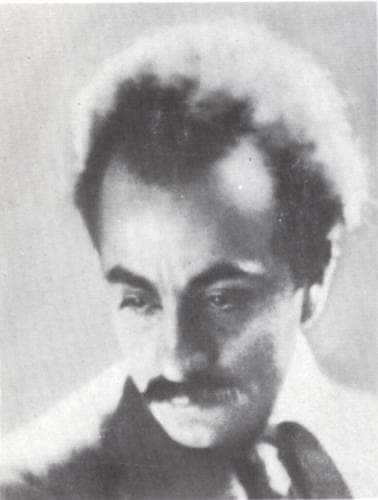
Kahlil Gibran was a Lebanese-American writer and philosopher known for his poetic prose and philosophical themes. His notable works include "The Prophet," a collection of poetic essays, "The Broken Wings," a tale of love and sacrifice, and "The Madman," which explores the nature of existence. Gibran's writings often reflect his spiritual and mystical beliefs.
Similar books
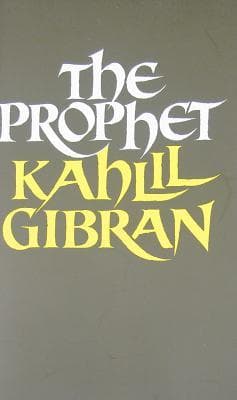
- The Prophet
Kahlil Gibran
4.2 (235k) average on GoodreadsSpiritualityShares Gibran's distinctive poetic style and explores similar themes of spirituality, love, and the human condition through parables.
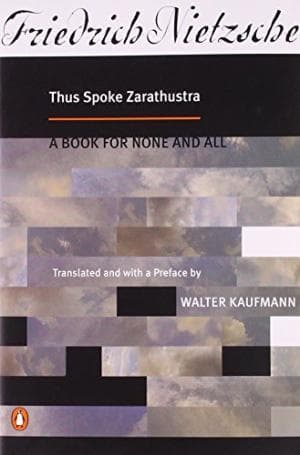
- Thus Spoke Zarathustra
Friedrich Nietzsche
4.0 (111k) average on GoodreadsPsychologyExplores philosophical ideas through a prophet-like figure challenging conventional morality and advocating for self-overcoming, using allegorical language.
- Siddhartha
Hermann Hesse
4.0 (583k) average on GoodreadsHistorical FictionBoth books explore individual spiritual journeys and the rejection of material and societal constraints. Siddhartha provides a more linear, character-driven narrative of enlightenment, whereas The Madman offers a collection of fragmented parables and poems, each presenting a distinct spiritual insight or challenge to convention.
- Eat, Pray, Love
Elizabeth Gilbert
3.6 (1.5M) average on GoodreadsLifestyleA heartbroken writer leaves her conventional life for a year-long global search for pleasure in Italy, spiritual devotion in India, and unexpected love and balance in Bali.
- Educated
Tara Westover
4.5 (796k) average on GoodreadsBiographyRaised in the Idaho mountains by fundamentalist survivalists, a young woman forges her own path to education, battling fierce family loyalty and personal demons to discover a world beyond her isolated upbringing.
- The Poisonwood Bible
Barbara Kingsolver
4.1 (659k) average on GoodreadsLiterary FictionA zealous missionary's rigid faith clashes with the Belgian Congo's wilderness and people, unraveling his family through the eyes of his five unforgettable women.




Enjoyed the summary?
A summary gives you the shape of the book. The book itself has the detail, the examples and the voice.
Find The Madman on AmazonAs an Amazon Associate, BookBrief earns from qualifying purchases. How we're funded