
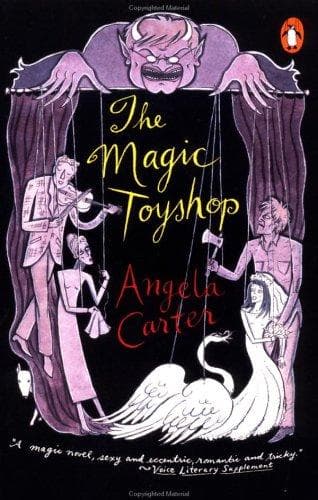
Synopsis
Covers the whole plot, including the ending.
- Difficulty
- Medium
- Pacing
- Moderate
- Mood
- Gothic, Surreal, Dark, Erotic, Oppressive, Liberating
- Read it if
- You enjoy dark fairy tales, gothic atmospheres, and stories about female awakening and rebellion against oppressive patriarchal figures. Fans of magical realism with a psychological edge will find this compelling.
- Skip it if
- You prefer straightforward narratives, lighthearted fantasy, or are sensitive to themes of psychological manipulation and implied abuse.
The Magic Toyshop Plot Summary
Covers the whole plot, including the ending.
A Night of Forbidden Dress-Up and Sudden Orphanhood
Fifteen-year-old Melanie, living a sheltered life in a comfortable suburban home, indulges in a forbidden fantasy one summer night. She secretly puts on her mother's elaborate wedding dress and wanders through the garden. The next morning, her idyllic world shatters: her parents are killed in an airplane crash. This sudden tragedy uproots Melanie and her younger siblings, Victoria and Jonathan, from their familiar surroundings. They are sent to London to live with their mother's estranged brother, Uncle Philip, a man they have never met. This abrupt change ends Melanie's childhood innocence and plunges her into an unfamiliar and unsettling new life.
Arrival at the Toyshop and First Impressions
The three children arrive at Uncle Philip's house, which is also his toyshop, located in a rundown part of London. The atmosphere is immediately oppressive and peculiar. The house is dark, dusty, and filled with an unsettling array of puppets, dolls, and clockwork mechanisms. They meet their gentle, almost ethereal Aunt Margaret, who is mute, having lost her voice on her wedding day. Her brothers, Francie and Finn, also live there. Uncle Philip himself is a formidable, authoritarian figure, obsessed with his craft, treating his family with a detached cruelty. Melanie is particularly disturbed by his intense, scrutinizing gaze and the strange, lifelike quality of his creations.
Life Under Uncle Philip's Tyranny
Life under Uncle Philip's roof is one of strict rules, deprivation, and emotional coldness. The children's possessions are confiscated, and they are given drab clothes. Melanie, in particular, clashes with Uncle Philip's rigid control and his almost perverse fascination with her. She is assigned chores, including helping in the toyshop, where she witnesses his meticulous, almost fanatical dedication to his craft. Aunt Margaret remains a silent, sympathetic presence, often communicating through gestures or her brother Francie. Melanie begins to observe the strange, almost theatrical existence of Francie and Finn, who seem trapped in their uncle's world, participating in his puppet shows.
The Developing Relationship with Finn
As Melanie navigates her new life, she finds herself increasingly drawn to Finn, the younger of Aunt Margaret's brothers. He is artistic, sensitive, and rebellious, often clashing with Uncle Philip. Their relationship is complex, marked by a growing attraction but also by a sense of unease and manipulation from Finn's side. Finn recognizes Melanie's spirit and intelligence, and they share moments of intimacy and shared understanding, often in secret. However, Finn also has a dark, predatory edge, and his interactions with Melanie are often tinged with a power dynamic that reflects the controlling environment of the toyshop. He introduces her to a different side of the house, away from Philip's direct gaze.
Uncle Philip's Obsession and the Puppet Shows
Uncle Philip's obsession with his puppets deepens, and he begins to create elaborate, life-sized figures that blur the line between toy and human. He stages increasingly complex and unsettling puppet shows, often featuring themes of innocence, corruption, and control. Melanie, Finn, and Francie are forced to participate, either by manipulating the puppets or by being present as an audience. These performances are not mere entertainment; they are extensions of Uncle Philip's twisted vision, often reflecting his psychological control over the household. Melanie feels increasingly like a puppet herself, her life being orchestrated by her uncle's will, especially as he begins to focus his creative energy on a new 'bride' puppet.
Melanie's Awakening and Defiance
Driven by her growing discomfort and a burgeoning sense of self, Melanie starts to rebel against Uncle Philip's tyranny. She chafes under his rules and his controlling gaze, which seems to strip her of her individuality. Her relationship with Finn intensifies, becoming more explicitly sexual, a defiant act against the suffocating atmosphere of the toyshop. These encounters, while providing a sense of agency, are also fraught with the complexities of her vulnerable position. Melanie begins to understand that she must escape her uncle's psychological and physical hold, and she starts to actively seek ways to reclaim her identity and freedom from the puppet-master's control.
The Puppet Bride and the Wedding Rehearsal
Uncle Philip's greatest work is a life-sized puppet bride, a realistic creation that Melanie finds disturbingly familiar. He begins to stage a 'wedding' play, casting Melanie as the reluctant bride to the puppet groom. This 'rehearsal' is a grotesque parody of a real wedding, imbued with Uncle Philip's perverse control and artistic vision. During this process, Melanie is dressed in a white gown, mirroring the dress she wore on the night her parents died, creating a sense of déjà vu and entrapment. The experience is humiliating and psychologically scarring, solidifying her resolve to break free from his grasp.
Aunt Margaret's Revelation and the Escape Plan
In a rare moment of communication, Aunt Margaret, through gestures and perhaps a whispered word, reveals the traumatic event that stole her voice: on her wedding day, Uncle Philip, driven by jealousy or madness, orchestrated a cruel trick involving a puppet to shame her, silencing her forever. This revelation affects Melanie, solidifying her understanding of her uncle's cruelty and the extent of his psychological damage. Inspired by Margaret's tragic story and her own desperate need for freedom, Melanie resolves to escape the toyshop, not just for herself but also for her younger siblings, Victoria and Jonathan, who are also trapped in this bizarre world.
The Toyshop on Fire
The tension in the toyshop reaches its breaking point. During a particularly intense 'performance' or perhaps in a fit of rage or desperation, Melanie, Finn, or a combination of events leads to the toyshop catching fire. The fire quickly spreads, engulfing the puppets, the mechanisms, and the very structure that has imprisoned them. The blaze is a symbolic act of destruction, consuming Uncle Philip's creations and, by extension, his oppressive control. In the chaos, there is a frantic struggle for survival, a desperate attempt to escape the burning building and the psychological prison it represents. The fire consumes everything, leaving behind only ashes and the possibility of a new beginning.
Freedom and an Uncertain Future
Melanie, Finn, Victoria, and Jonathan manage to escape the burning toyshop, leaving behind the ruins of their confinement. The fire has destroyed the physical embodiment of Uncle Philip's tyranny, but the psychological scars remain. Uncle Philip's fate is left ambiguous, perhaps perishing in the flames, or simply disappearing from their lives. Aunt Margaret's fate is also uncertain, adding to the somber aftermath. As they emerge into the night, free but disoriented, Melanie holds onto her siblings, facing an uncertain future. The experience has irrevocably changed her, stripping away her innocence but also forging a stronger, more resilient self, ready to navigate a world beyond the confines of the magic toyshop.
Principal Figures
Melanie
Protagonist
A naive teenager forced into a harsh new reality, who finds her voice and identity.
Melanie is a fifteen-year-old girl, initially innocent and imaginative, whose life is shattered by the sudden death of her parents. Forced to live with her eccentric and tyrannical Uncle Philip, she undergoes a profound transformation. She is observant, intelligent, and possesses a strong will, which gradually asserts itself against her uncle's oppressive control. Her journey is one of awakening, from childhood naivety to a recognition of her own sexuality and agency. She struggles with feelings of entrapment, objectification, and a desperate yearning for freedom. She often feels like a puppet in her uncle's world, but ultimately finds the strength to cut her own strings.
Relationships: Uncle Philip (Oppressive guardian, artistic tormentor); Finn (Complicated romantic and rebellious ally); Aunt Margaret (Silent, sympathetic confidante); Victoria (Younger sister, her responsibility); Jonathan (Younger brother, her responsibility)
Uncle Philip
Antagonist
A tyrannical, obsessive toy-maker who psychologically manipulates his family.
Uncle Philip is Melanie's estranged uncle and the novel's primary antagonist. He is a master toy-maker, whose artistic genius is intertwined with a deep-seated cruelty and a need for absolute control. He is a formidable, brooding figure, obsessed with his craft, particularly the creation of lifelike puppets. He governs his household with an iron fist, imposing strict rules and deriving perverse pleasure from manipulating those around him, especially Melanie. His gaze is often described as penetrating and unsettling, making Melanie feel like an object. His past trauma, particularly regarding Aunt Margaret, hints at the source of his twisted nature and his inability to connect authentically with others.
Relationships: Melanie (Object of obsession and control); Aunt Margaret (Traumatized sister, victim of his past cruelty); Finn (Rebellious nephew, often clashing with him); Francie (Subservient nephew, assistant in his workshop)
Finn
Supporting
Melanie's rebellious cousin, an artist with a dark, complex allure.
Finn is Aunt Margaret's younger brother and Melanie's cousin. He is an artist, a sculptor, and a more rebellious figure within Uncle Philip's oppressive household. He is drawn to Melanie and becomes her lover, offering her a complex mix of tenderness, passion, and manipulation. Finn is sensitive and artistic, often creating sculptures that contrast with Philip's mechanical puppets, yet he is also trapped by his uncle's influence. He represents both a potential escape and another form of entanglement for Melanie, embodying the blurred lines between freedom and control within the toyshop's world. His relationship with Melanie is a catalyst for her sexual awakening and defiance.
Relationships: Melanie (Lover, complex ally); Uncle Philip (Oppressor, object of rebellion); Aunt Margaret (Sister); Francie (Brother)
Aunt Margaret
Supporting
Melanie's silent aunt, a victim of Uncle Philip's past cruelty.
Aunt Margaret is Melanie's aunt, a gentle and ethereal woman who has been mute since her wedding day. Her silence is a profound symbol of Uncle Philip's past cruelty and his ability to crush the spirit of those around him. She communicates primarily through gestures and her eyes, often conveying sympathy and understanding to Melanie. Her tragic story, eventually revealed, provides Melanie with a crucial understanding of her uncle's character and strengthens her resolve to escape. Margaret represents the fragility of innocence and the devastating impact of malevolent control, yet she also embodies a quiet resilience and a connection to a world beyond the toyshop.
Relationships: Melanie (Sympathetic relative, silent confidante); Uncle Philip (Cruel brother, tormentor); Finn (Brother); Francie (Brother)
Francie
Supporting
Aunt Margaret's other brother, subservient to Uncle Philip and complicit in his schemes.
Francie is Aunt Margaret's other brother, and Finn's elder brother. Unlike Finn, Francie is more passive and subservient to Uncle Philip, often acting as his assistant in the toyshop and participating in his puppet shows without much resistance. He is less artistic than Finn, more focused on the mechanical aspects of the workshop. Francie is somewhat dim-witted and largely uncritical of his uncle's tyranny, embodying the chilling effect of prolonged oppression and the normalization of the bizarre. He is a stark contrast to Melanie's growing defiance and Finn's rebellious spirit, highlighting the different ways individuals react to an authoritarian environment.
Relationships: Uncle Philip (Master, employer); Finn (Brother); Aunt Margaret (Sister); Melanie (Cousin, whom he observes with mild curiosity)
Victoria
Supporting
Melanie's younger sister, adapting to the toyshop with childlike resilience.
Victoria is Melanie's younger sister, and one of the three siblings orphaned and sent to live with Uncle Philip. She is younger than Melanie, still very much a child, and thus adapts to the strange environment of the toyshop with a mixture of fear and childlike resilience. She looks to Melanie for protection and guidance, and her innocence highlights the harshness of their new reality. Her presence underscores Melanie's responsibility and the stakes of her eventual escape, as Melanie seeks not only her own freedom but also the liberation of her younger siblings from their uncle's strange world.
Relationships: Melanie (Elder sister, protector); Jonathan (Brother); Uncle Philip (Feared guardian)
Jonathan
Supporting
Melanie's youngest brother, largely unaware of the dangers around him.
Jonathan is Melanie's youngest brother, and the most innocent of the three siblings. Being very young, he is largely oblivious to the sinister undertones of Uncle Philip's toyshop and the psychological manipulation at play. He views the puppets and the house with a childlike wonder, which sometimes serves as a stark contrast to Melanie's growing dread. His vulnerability further emphasizes Melanie's role as a protector and her urgent need to remove her siblings from Uncle Philip's influence before they are irrevocably shaped or harmed by it. He represents the pure, untainted innocence that Uncle Philip seeks to control or corrupt.
Relationships: Melanie (Elder sister, protector); Victoria (Sister); Uncle Philip (Feared guardian)
Themes & Insights
Control and Freedom
The central theme revolves around Uncle Philip's tyrannical control over his family, particularly Melanie, and her struggle for freedom. Philip's toyshop is a microcosm of his oppressive regime, where he orchestrates lives like puppets. Melanie's journey is one of breaking free from these metaphorical strings, asserting her individuality, and reclaiming agency over her body and mind. The mute Aunt Margaret is a warning of the consequences of yielding to such control, while Melanie's sexual awakening and eventual defiance are acts of liberation against patriarchal dominance.
“She was in the night once again, and the doll was herself.”
Identity and Self-Discovery
Melanie's transition from a sheltered child to a self-aware young woman is a core aspect of the novel. Stripped of her former life and forced into a bizarre new environment, she grapples with who she is. Uncle Philip's attempts to mold her into his 'puppet bride' force her to confront and define her own identity. Her sexual awakening with Finn, though complicated, is a part of her self-discovery, allowing her to explore her desires and agency outside of her uncle's imposed roles. The burning of the toyshop ultimately symbolizes the destruction of the false identity imposed upon her.
“She felt herself to be nothing more than a doll, a puppet, pulled by strings.”
Artifice vs. Reality
The novel constantly blurs the lines between artifice and reality, particularly through Uncle Philip's lifelike puppets and the theatricality of the toyshop. The puppets are so realistic they are unsettling, making the human characters seem less real by comparison. The world inside the toyshop operates on its own set of rules, creating an artificial reality that imprisons its inhabitants. Melanie struggles to distinguish genuine emotions and experiences from the staged performances and manipulations within this world, questioning what is real and what is merely a construct of her uncle's twisted imagination. The ultimate destruction of the toyshop forces a return to a harsher, yet more authentic, reality.
“This crazy world whirled around her, men and women dwarfed by toys and puppets, where even the birds are mechanical and the few human figures went masked . . .”
Sexuality and Awakening
Melanie's burgeoning sexuality is a theme, explored amidst the oppressive and often perverse atmosphere of the toyshop. Her initial innocence is challenged by Uncle Philip's unsettling gaze and his 'puppet bride' fantasy. Her relationship with Finn becomes a complex exploration of desire, power dynamics, and rebellion. This awakening is not purely romantic; it's a vital part of her assertion of self and a defiant act against her uncle's attempts to control her body and spirit. It represents a raw, human reality that stands in stark contrast to the sterile, mechanical world of the puppets.
“She had to learn to live in her own skin, and that was a new and frightening thing.”
Plot Devices & Literary Techniques
The Toyshop as a Metaphor
The physical setting symbolizes Uncle Philip's mind and the characters' entrapment.
The toyshop is more than just a setting; it is a potent metaphor for Uncle Philip's psyche and the oppressive world he creates for his family. Filled with lifelike puppets, clockwork mechanisms, and a pervasive sense of artifice, it represents a place where life is manufactured, controlled, and manipulated. The characters, especially Melanie, feel like puppets within this space, their lives orchestrated by the master toy-maker. Its claustrophobic atmosphere and the constant presence of the uncanny reflect the psychological imprisonment of its inhabitants, making its eventual destruction a powerful act of liberation.
Puppets and Dolls
Symbols of control, objectification, and the blurring of human and inanimate.
The puppets and dolls are central to the novel's symbolism. They represent Uncle Philip's desire for absolute control, as he meticulously crafts and manipulates them, mirroring his treatment of his family. For Melanie, they symbolize her own objectification and the feeling of being stripped of her humanity, reduced to a mere plaything. The lifelike quality of the puppets blurs the line between human and inanimate, creating an uncanny and disturbing atmosphere that questions the nature of reality and consciousness. They are a constant reminder of the artifice and manipulation pervading the toyshop.
The Mute Aunt Margaret
A living symbol of silenced female agency and past trauma.
Aunt Margaret's muteness is a powerful symbol of silenced female agency and the devastating impact of malevolent control. Her inability to speak is the direct result of Uncle Philip's cruelty on her wedding day, making her a living testament to his past abuses and a warning of his potential for further harm. Her silence is not merely a physical condition but a metaphor for her suppressed voice and spirit. Her eventual, albeit indirect, revelation of her trauma serves as a catalyst for Melanie, empowering her to find her own voice and break free from the cycle of oppression.
Melanie's Mother's Wedding Dress
A recurring motif signifying lost innocence, forbidden desire, and cyclical entrapment.
The wedding dress initially appears as a symbol of Melanie's innocent, forbidden play and a connection to her lost mother. Its reappearance when Uncle Philip forces Melanie into the role of the 'puppet bride' transforms it into a symbol of entrapment, objectification, and a grotesque parody of marriage. It links Melanie's initial trauma (her parents' death) with her current subjugation, suggesting a cyclical pattern of female vulnerability and patriarchal control. The dress represents both the allure of conventional femininity and the restrictive, often suffocating, expectations placed upon women.
The Magic Toyshop Quotes
“The summer she was fifteen, Melanie discovered she was made of flesh and blood.”
“She would be a bride; she would marry a phantom bridegroom and live in a house of air.”
“The toyshop was a place of mystery and dread, full of the sinister creations of Uncle Philip.”
“He was a maker of monsters, and she was his prisoner.”
“The swan was huge, white, and cruel, with a neck like a question mark.”
“She felt as if she were turning into wood, like one of his puppets.”
“Love is a kind of hunger, and I am starving.”
“The house was full of whispers, like the sea in a shell.”
“He had made a world of clockwork and paint, and they were all trapped in it.”
“She would not be a puppet; she would be a woman, with a woman's power.”
“The toys were not for play; they were for punishment.”
“In the end, the magic was all a trick of the light, and the toyshop was just a room full of dust.”
“She had learned that flesh could be as unyielding as wood, and wood as tender as flesh.”
“The fire that consumed the toyshop was a fire of liberation, burning away the past.”
Quiz
10 questions on the plot and the characters. Each answer comes with a short explanation.
Question 1
What event triggers Melanie's move to her Uncle Philip's house?
- Her parents' divorce
- Her mother's remarriage
- Her parents' death in a plane crash
- Her expulsion from school
Show answer
C. Her parents' death in a plane crash Melanie's world is shattered when her parents die in a plane crash while traveling abroad, leaving her and her siblings orphaned and forcing them to live with relatives they've never met.
Question 2
Why is Aunt Margaret mute?
- She was born without the ability to speak
- She lost her voice in a childhood accident
- She became mute on her wedding day
- She chooses not to speak as a form of protest
Show answer
C. She became mute on her wedding day Aunt Margaret has been mute since her wedding day to Uncle Philip, a symbolic loss of voice that reflects her oppressive marriage and the control Philip exerts over the household.
Question 3
What does Melanie do in the garden while wearing her mother's wedding dress?
- She dances with Finn
- She walks through it at night
- She buries a doll
- She meets Uncle Philip secretly
Show answer
B. She walks through it at night In an act of adolescent exploration and fantasy, Melanie walks through the garden at night in her mother's wedding dress, which symbolizes her transition from childhood to womanhood and foreshadows the upheaval to come.
Question 4
What is Uncle Philip's primary obsession?
- Collecting antique toys
- Making life-size puppets and mechanical toys
- Writing children's stories
- Gardening exotic plants
Show answer
B. Making life-size puppets and mechanical toys Uncle Philip is a toymaker who creates elaborate, life-size puppets and mechanical toys in his workshop, which he values more than the human relationships in his household, reflecting themes of control and artifice.
Question 5
How does Finn primarily communicate with Melanie?
- Through written notes
- By playing the fiddle
- Using sign language
- Through telepathic dreams
Show answer
B. By playing the fiddle Finn, Aunt Margaret's brother, often communicates emotions and connections with Melanie through his fiddle playing, which serves as a contrast to the silent, oppressive atmosphere of the toyshop.
Question 6
What symbolic role do the mechanical birds play in the novel?
- They represent freedom and escape
- They symbolize the artificiality and control in Uncle Philip's world
- They are omens of good luck
- They serve as pets for the children
Show answer
B. They symbolize the artificiality and control in Uncle Philip's world The mechanical birds, like other toys in the house, are creations of Uncle Philip that symbolize the artificial, controlled environment he imposes, contrasting with natural life and highlighting themes of domination.
Question 7
What happens during the puppet show where Melanie is forced to perform?
- She rebels and destroys the puppets
- Uncle Philip makes her act out a rape scene with a puppet swan
- Finn rescues her by playing music
- Aunt Margaret breaks her silence to protest
Show answer
B. Uncle Philip makes her act out a rape scene with a puppet swan In a climactic and disturbing scene, Uncle Philip forces Melanie to perform in a puppet show where she enacts a rape by a life-size puppet swan, symbolizing his control and the violation of her innocence.
Question 8
How does the novel end?
- Melanie escapes and returns to her childhood home
- The toyshop burns down, and Melanie and Finn leave together
- Uncle Philip is arrested for his cruelty
- Aunt Margaret regains her voice and confronts Philip
Show answer
B. The toyshop burns down, and Melanie and Finn leave together The novel concludes with the toyshop burning down in a fire, which destroys Uncle Philip's oppressive world, allowing Melanie and Finn to escape together into an uncertain but hopeful future.
Question 9
What theme is highlighted by the contrast between the toyshop and the natural world?
- The innocence of childhood
- The conflict between artifice and reality
- The importance of family traditions
- The power of artistic creation
Show answer
B. The conflict between artifice and reality The toyshop, filled with mechanical creations, represents artifice, control, and repression, while references to the garden and natural elements symbolize reality, freedom, and organic life, central to the novel's exploration of these opposing forces.
Question 10
Which character's actions most directly challenge Uncle Philip's authority?
- Aunt Margaret through her silent endurance
- Finn through his music and relationship with Melanie
- Francie through his academic studies
- Melanie's younger siblings through their play
Show answer
B. Finn through his music and relationship with Melanie Finn challenges Uncle Philip's control by forming a bond with Melanie, expressing emotions through his fiddle playing, and ultimately helping her escape, representing a counterforce to Philip's domination.
The Magic Toyshop FAQ
What is 'The Magic Toyshop' about?
The novel follows 15-year-old Melanie, whose idyllic life is shattered when her parents die in a plane crash. She and her siblings are sent to live with their Uncle Philip in London, where he runs a sinister toyshop filled with life-sized puppets and mechanical creations. The story explores Melanie's coming-of-age as she navigates this oppressive household, dominated by Uncle Philip's tyrannical control and the eerie, puppet-filled environment.
Why should I read 'The Magic Toyshop'?
It's a masterful blend of Gothic horror, feminist themes, and surreal fantasy, showcasing Angela Carter's lush, poetic prose. The novel delves into dark family dynamics, sexual awakening, and the loss of innocence, all set against a backdrop of uncanny toys and puppets that blur the line between reality and artifice. Readers interested in symbolic storytelling and psychological depth will find it compelling.
What is the background/setting of 'The Magic Toyshop'?
The story begins in Melanie's rural childhood home, but after her parents' death, she moves to Uncle Philip's toyshop in London. This setting is claustrophobic and surreal, filled with mechanical birds, clockwork roses, and life-sized puppets that Uncle Philip creates. The toyshop symbolizes control and artifice, contrasting with the natural world Melanie once knew.
What are the most memorable quotes?
Key quotes include: 'This crazy world whirled around her, men and women dwarfed by toys and puppets, where even the birds are mechanical and the few human figures went masked...' and 'She was in the night once again, and the doll was herself.' These lines highlight the novel's themes of identity, artifice, and the blurring of human and object.
What writing style does the author use?
Angela Carter employs a rich, lyrical, and often surreal prose style, blending Gothic elements with fairy-tale motifs. Her descriptions are vivid and symbolic, creating an atmosphere of dread and enchantment. The narrative shifts between Melanie's internal thoughts and the external, oppressive world of the toyshop.
What minor details add significant meaning?
Details like the mechanical birds and clockwork roses symbolize Uncle Philip's desire to control nature and humanity. Aunt Margaret's muteness, stemming from her wedding day, represents the silencing of women in patriarchal structures. These elements reinforce themes of artifice versus reality and female subjugation.
What are some subtle foreshadowing moments?
Melanie's early act of wearing her mother's wedding dress foreshadows her forced engagement to the puppet and her loss of innocence. Uncle Philip's obsession with creating life-like puppets hints at his later use of them to manipulate and dominate his family, culminating in the puppet show where Melanie is coerced into performing.
What unexpected character connections exist?
Finn and Francie, Uncle Philip's brothers, share a bond that contrasts with Philip's cruelty, offering Melanie glimpses of warmth and rebellion. Aunt Margaret's muteness connects to Melanie's own struggle for voice and agency. These relationships highlight alternatives to Philip's tyranny within the household.
What are unspoken character motivations?
Uncle Philip's motivation stems from a desire for absolute control, using toys to impose order on a chaotic world. Melanie is driven by a need to reclaim her identity and autonomy after being uprooted. Finn's rebellious acts are motivated by a hidden affection for Melanie and a rejection of his brother's dominance.
What psychological complexities do characters exhibit?
Melanie grapples with adolescence, grief, and sexual awakening in a repressive environment. Uncle Philip displays narcissism and god-like aspirations through his puppet creations. Aunt Margaret's trauma-induced muteness reflects deep psychological damage from her marriage, symbolizing the cost of patriarchal oppression.
What are the major emotional turning points?
Key moments include Melanie's parents' death, which shatters her world; her forced participation in Uncle Philip's puppet show, where she is humiliated; and her growing bond with Finn, which offers hope and rebellion. The climax involves a fire that destroys the toyshop, symbolizing liberation from Philip's control.
How do relationship dynamics evolve?
Melanie's relationship with Finn evolves from initial distrust to a tentative romance, representing resistance to Uncle Philip's tyranny. Her interactions with Aunt Margaret shift from pity to a deeper understanding of shared female oppression. The family's dynamic is marked by increasing tension, leading to the destructive climax.
Which parts remain ambiguous or open-ended?
The novel's ending is ambiguous: after the fire, Melanie and Finn escape, but their future is uncertain. It's unclear whether they achieve true freedom or are still haunted by their past. Aunt Margaret's fate and the full extent of Uncle Philip's downfall are left open to interpretation.
What are controversial scenes or decisions?
The puppet show scene, where Uncle Philip forces Melanie to interact with a life-sized puppet in a sexually suggestive manner, is controversial for its depiction of coercion and violation. Some readers debate whether Finn's rebellious actions are heroic or merely another form of manipulation in the oppressive household.
'The Magic Toyshop' ending explained: how it ends & what it means
The novel ends with a fire that destroys the toyshop, possibly set by Finn, allowing Melanie and Finn to escape. This symbolizes the burning down of patriarchal control and artifice, suggesting a rebirth or liberation. However, the open-ended nature implies that their journey toward freedom and identity is ongoing, with lingering trauma from their experiences.
About the author

Angela Olive Pearce, who published under the name Angela Carter, was an English novelist, short story writer, poet, and journalist, known for her feminist, magical realism, and picaresque works. She is best known for her book The Bloody Chamber, which was published in 1979. In 2008, The Times ranked Carter tenth in their list of "The 50 greatest British writers since 1945". In 2012, Nights at the Circus was selected as the best ever winner of the James Tait Black Memorial Prize.
Similar books
- Nights at the Circus
Angela Carter
3.9 (10k) average on GoodreadsFantasyShares Carter's distinctive blend of magical realism, feminist themes, and exploration of identity and performance.
- The Bloody Chamber and Other Stories
Angela Carter
4.0 (39k) average on GoodreadsFantasyA collection of dark, feminist retellings of fairy tales, showcasing Carter's signature style and thematic concerns.
- The Bell Jar
Sylvia Plath
4.0 (591k) average on GoodreadsPsychologyWhile Plath's novel offers a stark, realistic portrayal of mental illness and societal pressures on young women, Carter’s novel leans into the surreal and grotesque imagery to externalize internal states and represent Melanie’s trauma and burgeoning selfhood.
- The Prime of Miss Jean Brodie
Muriel Spark
3.7 (43k) average on GoodreadsLiterary FictionSpark's novel explores the influence of a charismatic figure on young girls, but Carter's depiction of Uncle Philip's tyranny is far more sinister and overtly sexualized, delving into darker, more taboo aspects of power dynamics and exploitation.
- The Old Man and the Sea
Ernest Hemingway
3.8 (831k) average on GoodreadsLiterary FictionA Cuban fisherman's long struggle with a giant marlin becomes a story of endurance and dignity, now retold for young adults with illustrations, phonetic guides, and writing prompts in Traditional Chinese.
- One Hundred Years of Solitude
Gabriel García Márquez
4.1 (753k) average on GoodreadsLiterary FictionThrough the multi-generational story of the Buendía family, a mythical town deals with the repeating patterns of time, love, and solitude, as the extraordinary mixes with the ordinary.




Enjoyed the summary?
A summary gives you the shape of the book. The book itself has the detail, the examples and the voice.
Find The Magic Toyshop on AmazonAs an Amazon Associate, BookBrief earns from qualifying purchases. How we're funded