

Core Idea
- Difficulty
- Hard
- Read it if
- You want a comprehensive, deeply researched history of the atomic bomb, covering its scientific origins, political motivations, and the ethical dilemmas faced by its creators.
- Skip it if
- You are looking for a quick overview or prefer a less dense historical narrative; this book is exhaustive and lengthy.
Key Takeaways from The Making of the Atomic Bomb
The Unforeseen Path to Armageddon
Nuclear fission, a scientific marvel, quickly morphed into a weapon of unprecedented destruction.
Rhodes carefully shows how Otto Hahn and Fritz Strassmann's discovery of nuclear fission in late 1938, initially a purely scientific pursuit, quickly became tied to global worries. Once its energy potential was understood, it presented a clear, terrifying path to a super-weapon. This change was not a simple invention but a series of scientific discoveries and strategic choices, driven by the fear that Nazi Germany would develop such a weapon first. The scientific community, at first driven by pure inquiry, found itself dealing with the deep moral and existential consequences of its own discoveries, showing the careful balance between knowledge and responsibility. The book emphasizes that the bomb was not a single invention but the result of decades of basic physics research, which accidentally led to its use as a weapon.
“The bomb was not invented; it was discovered, a truth waiting to be unveiled by human intellect.”
In the book: The initial experiments by Hahn and Strassmann, Lise Meitner's and Otto Frisch's interpretation of fission, and the subsequent theoretical work by scientists like Leo Szilard on chain reactions.
Try this: Recognize that scientific progress, however benign its origin, can have unforeseen and profound societal impacts, necessitating constant ethical consideration and foresight.
Related ideas: nuclear-fission, manhattan-project-origins, scientific-responsibility
The Race Against Fascism
Fear of a Nazi atomic bomb fueled the frantic, secretive American effort.
The reason for the Manhattan Project was not just scientific curiosity but a deep, existential fear that Nazi Germany would develop a nuclear weapon and use it to conquer the world. Rhodes clearly shows the atmosphere of fear and urgency among scientists and politicians in the early 1940s. Scientists like Leo Szilard, understanding the implications of fission, pushed for American action, famously convincing Albert Einstein to sign a letter to President Roosevelt. This fear, though ultimately wrong about German progress, was the main reason for the huge scale and speed of American bomb development. It shows how global worries can speed up scientific and technological progress, even towards destructive ends, highlighting the strong connection between scientific discovery and international conflict.
“The overriding fear was not that America would build the bomb, but that Germany would build it first.”
In the book: The Einstein-Szilard letter to President Roosevelt, intelligence reports (or lack thereof) on German atomic research, and the personal testimonies of scientists expressing their fears about a Nazi bomb.
Try this: Understand how perceived threats, real or imagined, can drive monumental, resource-intensive projects, and critically evaluate the intelligence that informs such decisions.
Related ideas: world-war-ii-impact, einstein-szilard-letter, nazi-atomic-program
The Ivory Tower to the Battlefield
Scientists, once detached academics, were thrust into the moral and logistical complexities of war.
Rhodes expertly details how brilliant, often unusual, physicists, chemists, and engineers changed from working in quiet university labs to the high-stakes, secret world of wartime engineering and moral problems. People like J. Robert Oppenheimer, a theoretical physicist, became the director of Los Alamos, managing thousands of people and huge technical challenges. This change forced scientists to face the practicalities of large-scale industrial production, security, and the deep ethical questions about their creation. They struggled with what their work meant, often feeling a strong sense of responsibility and, later, regret. The book shows how the urgency of war can fundamentally change the role and responsibilities of the scientific community, blurring the lines between pure research and applied, often destructive, technology.
“They were not soldiers, but their work would decide the fate of nations and the lives of millions.”
In the book: Oppenheimer's shift from theoretical physics to managing Los Alamos, the internal debates among scientists about the bomb's use, and the personal struggles of figures like Leo Szilard and Niels Bohr regarding arms control.
Try this: Consider the ethical responsibilities inherent in scientific and technological innovation, especially when it has the potential for widespread societal impact, and advocate for scientists to be part of the ethical discourse.
Related ideas: j-robert-oppenheimer, los-alamos-laboratory, scientists-moral-dilemma
The Engineering Marvel of Destruction
Building the bomb required unprecedented scale, ingenuity, and industrial mobilization.
Beyond theoretical physics, Rhodes explains that the Manhattan Project was an unmatched achievement of engineering and industrial effort. The challenge was not just understanding how an atomic bomb could work, but how to actually build it—how to enrich uranium, produce plutonium, design the complex implosion mechanisms, and build the huge facilities needed. Places like Oak Ridge and Hanford appeared almost overnight, employing hundreds of thousands of people in highly specialized, often dangerous, tasks. The book details the huge logistical problems, the new engineering solutions, and the sheer amount of resources put into this one goal. It shows how scientific ambition, when supported by vast national resources and a clear goal, can achieve seemingly impossible technological breakthroughs, for better or worse.
“The Manhattan Project was not just science; it was an industrial undertaking of staggering proportions, a testament to American ingenuity and organizational might.”
In the book: Descriptions of the uranium enrichment plants at Oak Ridge (calutrons, gaseous diffusion), the plutonium production reactors at Hanford, and the design challenges of the 'Fat Man' implosion device.
Try this: Appreciate the often-underestimated role of engineering, logistics, and industrial capacity in translating scientific theory into tangible, large-scale reality, and consider the resource allocation implications of such projects.
Related ideas: manhattan-project-logistics, uranium-enrichment, plutonium-production, industrial-mobilization
The Trinity Test: A New Dawn of Fear
The first atomic detonation ushered in the nuclear age with terrifying beauty and profound implications.
Rhodes' account of the Trinity test is a masterful historical narrative, capturing both the wonder and horror of the world's first atomic detonation. The description of the blinding flash, the intense heat, and the towering mushroom cloud shows the sheer destructive power released. More importantly, it highlights the immediate and deep understanding among the scientists present that they had crossed an irreversible line. Oppenheimer's famous quote captures the mix of scientific success and terrifying moral reckoning. The Trinity test was not just a successful experiment; it was the start of the nuclear age, forever changing how humans saw warfare, power, and the possibility of self-destruction. It was a moment of clear understanding about the immense power humanity now held, and the responsibility that came with it.
“We knew the world would not be the same. A few people laughed, a few people cried. Most people were silent. I remembered the line from the Hindu scripture, the Bhagavad-Gita; Vishnu is trying to persuade the Prince that he should do his duty and, to impress him, takes on his multi-armed form and says, 'Now I am become Death, the destroyer of worlds.' I suppose we all thought that, one way or another.”
In the book: Detailed descriptions of the Trinity test, including the reactions of Oppenheimer, Groves, and other scientists present, and the subsequent analysis of its destructive yield.
Try this: Reflect on pivotal historical moments that irrevocably change human understanding and capabilities, and consider the long-term consequences of technological breakthroughs.
Related ideas: trinity-test, j-robert-oppenheimer-quote, nuclear-age-beginning
The Decision to Drop: A Complex Calculation
The use of the bomb on Japan was a product of wartime logic, not a simple act of malice.
Rhodes discusses the difficult decision-making process that led to the atomic bombings of Hiroshima and Nagasaki. He presents a balanced view, explaining that the decision came from the wartime mindset of total war, the desire to end the conflict quickly, and the predicted terrible casualties of a conventional invasion of mainland Japan (Operation Downfall). While acknowledging the huge human cost, Rhodes argues that the decision was less about malice and more about ending a long, brutal war that had already killed tens of millions of people. The book highlights the lack of perceived viable alternatives at the time, the immense pressure on President Truman, and the fast pace of events. It encourages readers to understand the historical context rather than simply judging from a modern perspective, showing the tragic choices leaders face in extreme situations.
“The decision to use the bomb was not made in a vacuum, but within the brutal context of total war, with the specter of a bloody invasion looming.”
In the book: Discussions of casualty projections for an invasion of Japan, the Potsdam Declaration, President Truman's perspective, and the lack of a clear surrender signal from Japan before the bombings.
Try this: Analyze historical decisions within their specific contexts, understanding the pressures and limited information available to decision-makers, rather than imposing contemporary moral frameworks retrospectively.
Related ideas: hiroshima-nagasaki, president-truman-decision, end-of-world-war-ii, operation-downfall
The Legacy of Fear and Control
The atomic bomb permanently reshaped international relations and the imperative for arms control.
The book concludes by exploring the deep and lasting impact of the atomic bomb on global politics and human awareness. The immediate aftermath saw a rush for control and a new understanding that nuclear weapons required a new way of international relations. The Cold War, with its nuclear standoff, defined the second half of the 20th century. Rhodes highlights the urgent calls from many of the scientists involved, like Niels Bohr and Leo Szilard, for international cooperation and arms control, recognizing the existential threat they had unleashed. The bomb created a legacy of fear, deterrence, and a constant need for diplomacy and non-proliferation efforts, forever changing the global political landscape and the very idea of warfare.
“With the bomb, humanity had acquired the means of its own destruction, and the imperative to control it became the defining challenge of the new age.”
In the book: The Baruch Plan, early discussions about international control of atomic energy, the subsequent arms race, and the formation of organizations dedicated to nuclear disarmament.
Try this: Engage with the ongoing challenges of nuclear proliferation and arms control, understanding their historical roots, and support diplomatic efforts to mitigate nuclear threats.
Related ideas: cold-war-origins, nuclear-proliferation, arms-control, international-relations
The Human Cost and Moral Reckoning
Beyond the science and politics, the story is one of immense human suffering and ethical introspection.
While full of scientific and political detail, Rhodes does not avoid the terrible human cost of the atomic bomb. He describes the immediate horrors of Hiroshima and Nagasaki, the long-term suffering of the hibakusha (survivors), and the moral distress of many scientists who helped create it. The book implicitly and explicitly asks readers to consider the ethical implications of scientific progress, especially when it leads to such destructive power. It is a powerful reminder that history involves not just grand narratives but individual lives deeply affected by major events. This human element grounds the scientific and political narrative, ensuring that the reader understands the ultimate purpose and consequence of the bomb's development.
“Behind every equation and every political decision lay the unimaginable suffering of millions, a burden that would haunt many of the creators of the bomb.”
In the book: Descriptions of the devastation in Hiroshima and Nagasaki, the testimonies of survivors (though less directly emphasized in this book, it's the underlying context), and the later public statements and reflections of scientists like Oppenheimer and Szilard.
Try this: Cultivate empathy and a deep understanding of the human consequences of conflict and technological innovation, advocating for peace and responsible scientific development.
Related ideas: hiroshima-survivors, ethical-implications-science, war-human-cost
The Power of Individual Vision
A few visionary scientists foresaw the atomic age and drove its creation.
Rhodes highlights the important role played by a few exceptionally brilliant and forward-thinking individuals in the journey to the atomic bomb. Figures like Leo Szilard, who thought of the nuclear chain reaction and tirelessly pushed for its development and later for its control, and Enrico Fermi, whose experimental genius led to the first self-sustaining chain reaction, were crucial. These were not just parts of a machine but independent thinkers who, driven by scientific curiosity and later by global fear, shaped history. Their intellectual leaps, their ability to connect different scientific ideas, and their courage to push for unprecedented projects show the deep impact individuals can have on global events, for both good and ill. The book shows the power of individual intellect and conviction.
“It was the prescience of a few, often eccentric, individuals that first glimpsed the power within the atom and pushed for its realization.”
In the book: Leo Szilard's patent for the chain reaction and his efforts to warn Roosevelt, Enrico Fermi's Chicago Pile-1 experiment, and Niels Bohr's insights into fission and later, arms control.
Try this: Recognize and foster the power of individual initiative and critical thinking, understanding that single insights can catalyze monumental change, and support visionary leadership in science and policy.
Related ideas: leo-szilard, enrico-fermi, niels-bohr, scientific-visionaries
The Making of the Atomic Bomb Quotes
“The bomb was not a thing, but a process, and the process was a human one.”
“The physicists have known sin; and this is a knowledge which they cannot lose.”
“It is a profound and moving experience to watch the world, as it were, give birth to itself.”
“Secrecy was a way of life, and it deformed everyone.”
“The history of the atomic bomb is not merely a history of science, but a history of human beings grappling with power.”
“In a world of nations, the bomb was a currency, and the United States had a monopoly.”
“They had built the bomb to end one war, but in doing so, they had begun another.”
“The scale of the enterprise was staggering, a nation-state mobilized to build a single weapon.”
“The bomb was not merely a weapon; it was a revolution in human affairs.”
“Curiosity, the greatest of human virtues, had led them to the brink of self-destruction.”
“The mushroom cloud, an iconic image of the 20th century, became a symbol of both power and peril.”
“The greatest secrecy of the Manhattan Project was not the bomb itself, but the fact that it was possible.”
“The physics was beautiful, but its application was terrifying.”
“They had opened Pandora's Box, and the world would never be the same.”
Quiz
10 questions on the main ideas. Each answer comes with a short explanation.
Question 1
Which of the following scientists is credited with conceiving the idea of a nuclear chain reaction in 1933, after reading a newspaper account of Ernest Rutherford's dismissive remarks about atomic energy?
- Enrico Fermi
- Leo Szilard
- J. Robert Oppenheimer
- Niels Bohr
Show answer
B. Leo Szilard Richard Rhodes details how Leo Szilard, while waiting to cross a street in London, conceived of the nuclear chain reaction, a pivotal moment in the lead-up to the atomic bomb's development.
Question 2
What was the primary reason for the initial secrecy surrounding the Maud Committee's findings in Britain regarding the feasibility of an atomic bomb?
- To prevent Germany from learning about their progress.
- To secure exclusive rights to uranium deposits.
- To avoid public panic about the destructive potential.
- To delay American involvement in the project.
Show answer
A. To prevent Germany from learning about their progress. Rhodes emphasizes that the fear of Nazi Germany developing atomic weapons first was the driving force behind the early secrecy and urgency of atomic research in Allied nations.
Question 3
Which specific isotope of uranium was identified as the fissile material necessary for a chain reaction in an atomic bomb, as detailed in the early scientific discussions?
- Uranium-235
- Uranium-238
- Uranium-234
- Uranium-233
Show answer
A. Uranium-235 The book frequently discusses the critical role of Uranium-235, which constitutes only a small fraction of natural uranium, and the monumental challenge of its separation.
Question 4
Before the Manhattan Project officially began, what significant event prompted Albert Einstein to write his famous letter to President Franklin D. Roosevelt in 1939?
- The discovery of plutonium by Glenn Seaborg.
- The German invasion of Poland.
- The successful fission of uranium by Otto Hahn and Fritz Strassmann.
- The establishment of the Los Alamos Laboratory.
Show answer
C. The successful fission of uranium by Otto Hahn and Fritz Strassmann. Rhodes details how the news of Hahn and Strassmann's fission experiment, interpreted by Lise Meitner and Otto Frisch, spurred Szilard and Teller to approach Einstein to warn the U.S. government about the potential for atomic weapons.
Question 5
What was the code name for the first self-sustaining nuclear chain reaction experiment, conducted by Enrico Fermi and his team in Chicago?
- Project Alberta
- Trinity Test
- Chicago Pile-1 (CP-1)
- Uranium Committee
Show answer
C. Chicago Pile-1 (CP-1) The book vividly describes the construction and successful operation of Chicago Pile-1 (CP-1) under the Stagg Field stands, marking a crucial step in demonstrating the feasibility of nuclear chain reactions.
Question 6
J. Robert Oppenheimer's leadership style at Los Alamos is characterized by Rhodes as fostering what kind of environment?
- Strict hierarchy and compartmentalization, limiting information flow.
- Open scientific exchange and collaboration, despite security concerns.
- Competitive individual research with minimal team interaction.
- Focus on theoretical physics, neglecting engineering practicalities.
Show answer
B. Open scientific exchange and collaboration, despite security concerns. Rhodes highlights Oppenheimer's unique ability to unify diverse scientific talents and foster an atmosphere of intellectual freedom and intense collaboration at Los Alamos, which was crucial for the project's rapid success.
Question 7
What was the primary technical challenge that led to the development of the implosion method for the plutonium bomb, as opposed to the gun-type assembly used for the uranium bomb?
- Plutonium's extreme scarcity made a more efficient assembly necessary.
- Plutonium's tendency to pre-detonate due to spontaneous fission required faster assembly.
- The gun-type method was too heavy for aircraft delivery with plutonium.
- Uranium enrichment facilities were insufficient for plutonium production.
Show answer
B. Plutonium's tendency to pre-detonate due to spontaneous fission required faster assembly. Rhodes meticulously explains that reactor-bred plutonium contained a higher proportion of Pu-240, which spontaneously fissions, necessitating the much faster, more complex implosion design to prevent a 'fizzle' before a full yield could be achieved.
Question 8
Niels Bohr's visit to Los Alamos and his 'Open World' philosophy, as described by Rhodes, primarily advocated for what post-war approach to atomic energy?
- A global monopoly on atomic weapons by the United States.
- International control and transparency of atomic research to prevent an arms race.
- The immediate disarmament of all nuclear weapons worldwide.
- Secrecy and nationalistic development of atomic power for energy.
Show answer
B. International control and transparency of atomic research to prevent an arms race. Rhodes dedicates significant attention to Bohr's profound concerns about a post-war nuclear arms race and his urgent advocacy for an 'Open World' where nations would share all atomic information to prevent catastrophic competition, a concept largely rejected by political leaders at the time.
Question 9
What ethical dilemma, beyond the immediate use of the bomb, significantly troubled many scientists involved in the Manhattan Project, particularly after Germany's defeat?
- The choice of targets in Japan and the potential for civilian casualties.
- The long-term environmental impact of nuclear fallout.
- The implications of unleashing a new era of warfare and the arms race it would trigger.
- The cost-effectiveness of the project compared to conventional weaponry.
Show answer
C. The implications of unleashing a new era of warfare and the arms race it would trigger. The book details the growing moral anxieties among scientists, especially after the surrender of Germany, shifting from the immediate threat of Nazi Germany to the profound long-term implications of nuclear weapons for global peace and the specter of an endless arms race.
Question 10
What was the significance of the Franck Report, drafted by several Manhattan Project scientists in June 1945, before the Trinity test?
- It argued for the immediate military use of the atomic bomb against Japan without warning.
- It advocated for a demonstration of the atomic bomb to the world before its military use, to achieve surrender without mass casualties.
- It proposed an international scientific exchange program to share atomic research with the Soviet Union.
- It detailed the technical specifications for the 'Fat Man' bomb design.
Show answer
B. It advocated for a demonstration of the atomic bomb to the world before its military use, to achieve surrender without mass casualties. Rhodes discusses the Franck Report as a significant attempt by a group of concerned scientists, led by James Franck, to influence policy by recommending a non-lethal demonstration of the bomb to secure Japan's surrender and prevent an immediate arms race, an argument ultimately rejected by the interim committee.
The Making of the Atomic Bomb FAQ
What is the primary focus of 'The Making of the Atomic Bomb' by Richard Rhodes?
The book meticulously details the complete history of how the atomic bomb was developed, tracing its origins from early 20th-century atomic discoveries through to the dropping of the first bombs on Japan, encompassing the scientific, political, and human elements of this monumental undertaking.
Does 'The Making of the Atomic Bomb' cover the ethical considerations of developing nuclear weapons?
While not its sole focus, the book inherently explores the ethical dilemmas faced by the scientists and politicians involved in the Manhattan Project, showcasing their personal struggles and the broader implications of their work as the project progressed.
What is the 'Manhattan Project' as described in the book?
The Manhattan Project was the top-secret World War II research and development undertaking that produced the first nuclear weapons. Rhodes details its rapid evolution from theoretical physics problems into a massive military-industrial effort involving numerous leading scientists and vast resources.
How did the scientific community react to the prospect of an atomic bomb?
The book illustrates a complex range of reactions within the scientific community, from initial fascination with nuclear energy's potential to growing alarm about its destructive capabilities, leading some scientists to advocate for its development while others expressed profound moral reservations.
How different is Rhodes's account from other books on the atomic bomb?
Rhodes's work is distinguished by its comprehensive scope, combining deep scientific explanation with rich historical and political context. It provides an unparalleled level of detail on the scientific breakthroughs, the political maneuvering, and the human stories of the individuals involved.
Does 'The Making of the Atomic Bomb' require a strong scientific background to understand?
No, Richard Rhodes masterfully explains complex scientific concepts in an accessible way for the general reader. While it delves into physics, his narrative focuses on the historical development and human drama, making it understandable without specialized scientific knowledge.
Who were some of the key scientists involved in the bomb's development, as highlighted by Rhodes?
The book brings to light the pivotal roles of numerous scientists, including Leo Szilard, J. Robert Oppenheimer, Enrico Fermi, Niels Bohr, Lise Meitner, and Edward Teller, detailing their contributions and personal journeys from academic research to the forefront of the nuclear age.
What role did politics play in the development of the atomic bomb?
Politics played a crucial and intertwined role, from the initial concerns about Nazi Germany developing a bomb first, to the massive government funding and logistical support for the Manhattan Project, and ultimately, the decisions regarding its use in warfare.
When did the idea of atomic energy transition from theory to practical application?
The book shows this transition occurring with frightening rapidity, spanning hardly more than twenty-five years from initial theoretical discussions of nuclear energy at the turn of the century to the bright glare of the Trinity test and the subsequent deployment of atomic bombs.
About the author

Richard Rhodes is an American author known for his non-fiction works, particularly in the field of history and science. He is best known for "The Making of the Atomic Bomb," which explores the development of nuclear weapons and has received significant recognition. Rhodes has written extensively on topics related to war, technology, and the human experience.
Similar books
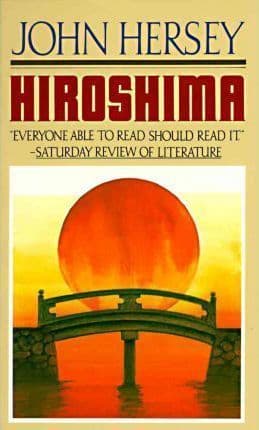
- Hiroshima
John Hersey
4.0 (61k) average on GoodreadsHistoryProvides a powerful, intimate account of the immediate aftermath of the atomic bomb, focusing on human experience.
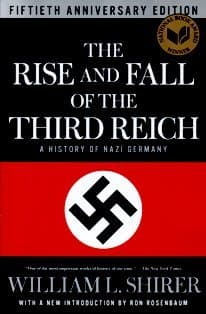
- The Rise and Fall of the Third Reich: A History of Nazi Germany
William L. Shirer
4.2 (101k) average on GoodreadsPoliticsCovers the broader historical context of World War II and the fascism that spurred the bomb's development.
- 1984
George Orwell
4.2 (3.1M) average on GoodreadsPoliticsIn a future where surveillance and thought control are absolute, a man's search for truth clashes with the Party, showing that hope can be a form of rebellion.
- Animal Farm
George Orwell
4.0 (2.7M) average on GoodreadsPoliticsA farm animals' rebellion against humans turns into a pig-led dictatorship, showing how power corrupts and revolutionary ideals are betrayed.
- Freakonomics: A Rogue Economist Explores the Hidden Side of Everything
Steven D. Levitt
4.0 (709k) average on GoodreadsBusinessThis book uses economic principles to reveal the surprising incentives behind everything from drug dealing and real estate to cheating teachers and the decline of crime.
- I Am Malala: The Story of the Girl Who Stood Up for Education and Was Shot by the Taliban
Malala Yousafzai
4.1 (419k) average on GoodreadsPoliticsA teenage girl from a Taliban-controlled valley refuses to give up her books, becoming a global voice for education even after an assassination attempt.




Enjoyed the summary?
A summary gives you the shape of the book. The book itself has the detail, the examples and the voice.
Find The Making of the Atomic Bomb on AmazonAs an Amazon Associate, BookBrief earns from qualifying purchases. How we're funded