
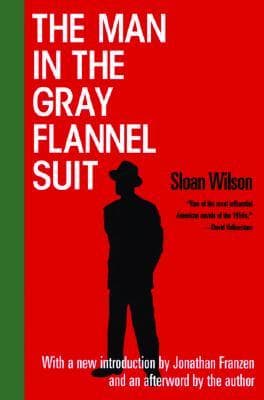
Synopsis
Covers the whole plot, including the ending.
- Difficulty
- Medium
- Pacing
- Moderate
- Mood
- Reflective, Thought-provoking, Melancholy, Realistic
- Read it if
- You're interested in post-WWII American society, corporate critiques, and stories about finding personal meaning amidst societal pressures.
- Skip it if
- You prefer fast-paced thrillers or lighthearted romance; this is a thoughtful, character-driven drama.
The Man in the Gray Flannel Suit Plot Summary
Covers the whole plot, including the ending.
A Commuter's Dilemma and a New Opportunity
Tom Rath, a World War II veteran, endures the daily commute from his suburban home in Westport, Connecticut, to his modest job in New York City. He and his wife, Betsy, live a seemingly comfortable life with their three children, but secretly struggle with financial anxieties and a general dissatisfaction. Tom wants a more meaningful existence beyond the corporate rat race. An opportunity arises when he is offered a public relations position at United Broadcasting Corporation (UBC), a television network. This new role, however, comes with a significantly higher salary and greater responsibilities, making Tom confront his career aspirations and the pressures of corporate life.
The Interview and the Weight of Expectation
Tom prepares for his interview at UBC, knowing this job could be a turning point for his family's financial stability and his own career. He meets with Mr. Hopkins, the imposing head of the network, who asks about Tom's professional qualifications, character, and personal life. The interview is less about specific skills and more about Tom's ability to fit into the corporate culture and handle the pressure. During this period, Betsy encourages Tom to pursue the opportunity, seeing it as their chance for a better life, adding to the pressure Tom feels to succeed and provide for his family.
A Past Haunts the Present: Maria's Letter
Just as Tom begins his new, demanding role at UBC, a letter arrives from Italy, bringing back his wartime experiences. The letter is from Maria, a young Italian woman with whom Tom had a brief affair during the war. She informs him that he is the father of her son, who is now several years old and needs financial support. This revelation upsets Tom's peace and forces him to confront a past he had tried to bury. The existence of his illegitimate son in Italy adds guilt, responsibility, and secrecy to his already stressful life, threatening to unravel his suburban existence.
Corporate Labyrinth and Personal Sacrifice
Tom quickly finds himself in the world of UBC, where ambition, office politics, and long hours dominate. His boss, Mr. Bernstein, a driven executive, pushes Tom to his limits, expecting complete dedication to the company. Tom's new role requires him to work late, travel frequently, and make personal sacrifices. This focus on his career strains his relationship with Betsy and his children. He struggles to balance his professional obligations with his desire to be a present husband and father, feeling increasingly distant from his family and the simple pleasures of home life.
Betsy's Discontent and the House Hunt
While Tom deals with his new job and the revelation from Italy, Betsy becomes more focused on finding a larger, more prestigious home. She believes that a better house will bring them the happiness and status they desire, mirroring societal expectations of their suburban community. Her pursuit of a new house, despite their tight finances, adds pressure to Tom. He feels he must earn more money to satisfy Betsy's desires, even as he questions whether material possessions are the true source of happiness. This shared ambition for upward mobility, though seemingly innocent, contributes to their marital tension.
Confronting the Past: Tom's War Trauma
The pressures of his new job and the letter from Maria trigger flashbacks to Tom's traumatic experiences in World War II. He relives the horrors of combat, particularly an incident where he killed a German soldier and the subsequent death of his best friend, Caesar, under his command. These memories are not just emotional scars; they are a deep part of his identity that he has suppressed. The resurfacing of these memories, especially his guilt over Caesar's death, forces Tom to confront the moral compromises he made during the war and how they continue to shape his present actions and anxieties.
The Truth Revealed: Tom Confesses to Betsy
Under emotional strain from his job, his past, and Maria's persistent letters, Tom finally decides to confess everything to Betsy. He reveals his affair with Maria in Italy and the existence of their son. This confession is a moment of vulnerability and risk, as Tom fears losing Betsy and destroying their family. Betsy's initial reaction is shock, hurt, and betrayal. The revelation makes them confront the unspoken truths and hidden burdens that have been weighing on their marriage, leading to a period of emotional upheaval and uncertainty for both of them.
Mr. Hopkins's Story and Tom's Decision
During a conversation, Mr. Hopkins, Tom's boss at UBC, confides in Tom about his own life. Hopkins reveals his personal struggles, including a past divorce and his regret over prioritizing his career over his family. He admits to loneliness from his pursuit of success, and subtly encourages Tom to learn from his mistakes. This display of vulnerability from his powerful boss impacts Tom. It helps him realize that corporate success, while tempting, might not be worth sacrificing his family and personal well-being. Hopkins's story is a cautionary tale, prompting Tom to re-evaluate his own priorities.
The Confrontation with Mrs. Ogden
Tom has an encounter with Mrs. Ogden, the wealthy socialite and board member of UBC, who is also Caesar's grandmother. She had hired Tom, unaware of his connection to her grandson's death. During their conversation, Tom reveals the circumstances of Caesar's death during the war, taking full responsibility for his role in the tragic event. This confession is a painful but necessary step for Tom to unburden himself of his guilt. Mrs. Ogden, initially shocked, eventually offers Tom a chance to make amends by becoming involved in a foundation dedicated to war orphans, including, implicitly, his own son.
A New Path: Prioritizing Family and Truth
After introspection and emotional turmoil, Tom makes a decisive choice. He decides to turn down the promotion and significant raise offered by UBC, realizing that the demands of the corporate world are incompatible with his desire for a fulfilling family life and personal peace. He also commits to financially supporting his son in Italy and finding a way to integrate this responsibility into his life with Betsy. Tom and Betsy decide to stay in their current, smaller home, choosing contentment over material ambition. Tom finds a new, less demanding job at a local hospital, showing his commitment to a life defined by personal values rather than corporate success.
The Man in the Gray Flannel Suit Characters
Tom Rath
Protagonist
A World War II veteran grappling with corporate ambition and a hidden past.
Tom Rath is a thirty-three-year-old World War II veteran and father of three, living in suburban Westport, Connecticut. He works in public relations and is offered a lucrative but demanding job at United Broadcasting Corporation. Tom is haunted by his wartime experiences, particularly his role in the death of his best friend, Caesar, and a secret affair with an Italian woman, Maria, resulting in an illegitimate son. He struggles with the societal pressures to achieve material success and the internal conflict between ambition and personal integrity. He is fundamentally a good man trying to do right by his family, but burdened by guilt and a sense of unfulfillment.
Relationships: Betsy Rath (Wife, partner in marriage, initially supportive of his ambition but later seeks honesty and stability); Maria (Italian woman with whom he had an affair during the war, mother of his illegitimate son); Mr. Hopkins (Boss at UBC, mentor figure who shares his own regrets); Caesar (Best friend who died under Tom's command during the war, a source of profound guilt); Mrs. Ogden (Caesar's grandmother, influential figure, eventually a confidante and catalyst for Tom's atonement)
Betsy Rath
Supporting
Tom's wife, initially driven by suburban aspirations but ultimately values truth and family.
Betsy Rath is Tom's wife and the mother of their three children. She is initially depicted as embodying the aspirations of the post-war suburban housewife, desiring a larger home, financial security, and upward social mobility. She encourages Tom's pursuit of the high-paying job at UBC, believing it will bring them happiness. However, she is also a strong, resilient woman who, despite her initial shock and hurt, ultimately confronts Tom's wartime secrets with courage and a desire to preserve their family. She represents the domestic side of the American Dream and its potential pitfalls.
Relationships: Tom Rath (Husband, partner in marriage, eventually a recipient of his confession and a source of forgiveness); Mr. Hopkins (Tom's boss, a figure of corporate power she initially admires); Children (Their three children, a central focus of her life and motivations)
Mr. Hopkins
Supporting
The powerful, enigmatic head of UBC, who offers Tom a cautionary tale.
Mr. Hopkins is the formidable and highly successful head of United Broadcasting Corporation. He is a man who has achieved immense corporate power and wealth but has done so at the cost of personal happiness and family relationships. He sees potential in Tom but also recognizes the dangers of unchecked ambition. In a pivotal moment, he confides in Tom about his own regrets, serving as a mentor and a living example of the trade-offs inherent in the pursuit of corporate success. He is a complex character who embodies both the allure and the emptiness of the corporate dream.
Relationships: Tom Rath (Boss and mentor, shares personal story to guide Tom); Mr. Bernstein (Subordinate at UBC, works under Hopkins)
Maria
Supporting
An Italian woman from Tom's past, mother of his illegitimate son.
Maria is an Italian woman with whom Tom Rath had a brief, passionate affair during his service in World War II. She writes to Tom years later, revealing that she gave birth to his son and is now in need of financial assistance. Maria represents Tom's buried past and the consequences of his wartime actions. Though she only appears through letters and Tom's memories, her existence forces Tom to confront his responsibilities and the moral complexities of his life. She is not a villain, but a catalyst for Tom's self-discovery and a symbol of the lasting impact of war.
Relationships: Tom Rath (Former lover, father of her son); Her son (Her child, Tom's illegitimate son)
Caesar
Mentioned
Tom's best friend and fellow soldier, whose death deeply scarred Tom.
Caesar was Tom Rath's best friend and fellow soldier during World War II. He died under Tom's command during a particularly brutal combat incident, leaving Tom with profound guilt and trauma. Caesar's death is a central haunting memory for Tom, symbolizing the moral compromises and psychological scars of war. His memory fuels Tom's internal struggles and his eventual need for atonement. Although only appearing in flashbacks and memories, Caesar's presence is crucial to understanding Tom's character and motivations.
Relationships: Tom Rath (Best friend and fellow soldier, his death is a source of Tom's trauma); Mrs. Ogden (His grandmother)
Mrs. Ogden
Supporting
Caesar's wealthy and influential grandmother, a key figure in Tom's journey of atonement.
Mrs. Ogden is a wealthy and influential socialite, a board member of United Broadcasting Corporation, and the grandmother of Tom's deceased best friend, Caesar. She initially hires Tom, unaware of his connection to her grandson's death. When Tom eventually confesses his role in Caesar's demise, Mrs. Ogden is instrumental in his path to atonement. She offers him an opportunity to work with a foundation for war orphans, providing a means for Tom to channel his guilt into constructive action. She represents a path to redemption and acceptance.
Relationships: Tom Rath (Employee, eventually recipient of his confession and facilitator of his atonement); Caesar (Her grandson, whose death is central to her and Tom's shared past)
Mr. Bernstein
Supporting
Tom's demanding boss at UBC, a symbol of corporate ruthlessness.
Mr. Bernstein is Tom's immediate superior at United Broadcasting Corporation. He is a highly driven, ambitious, and somewhat ruthless executive who embodies the intense, competitive nature of the corporate world. Bernstein pushes Tom hard, expecting complete dedication and long hours, reflecting the pressures placed on employees in the pursuit of success. He serves as a contrast to Tom's more introspective nature and highlights the sacrifices required to climb the corporate ladder. He is a key figure in illustrating the demanding environment Tom finds himself in.
Relationships: Tom Rath (Boss, demands high performance); Mr. Hopkins (His superior at UBC)
Barbara Rath
Mentioned
Tom and Betsy's eldest child, whose needs contribute to their financial worries.
Barbara is the eldest of Tom and Betsy's three children. As she approaches school age, the Raths become acutely aware of the increasing financial demands of raising a family in the suburbs. Barbara's need for proper schooling and a good environment contributes to Betsy's desire for a larger home and Tom's pressure to earn more money. She represents the future the Raths are trying to build and protect, and her presence underscores the motivation behind their pursuit of the 'American Dream'.
Relationships: Tom Rath (Father); Betsy Rath (Mother); Children (Siblings)
The Man in the Gray Flannel Suit Themes
The Illusion of the American Dream
The novel critiques the post-war American Dream, which promised happiness through material success and suburban conformity. Tom and Betsy Rath, despite having a 'good' job, a nice home, and three children, are unhappy and financially stressed. Tom's pursuit of a high-paying corporate job at UBC shows the emptiness of this pursuit, as it demands personal sacrifice and emotional detachment. Betsy's focus on a bigger house further illustrates how external validation and material possessions fail to bring genuine contentment. True fulfillment is beyond societal expectations of success.
“What does a man want, really? A good job, a good wife, a good home, healthy kids. He had all that, didn't he? So why wasn't he happy?”
Identity and Self-Discovery
Tom Rath's journey is one of self-discovery. He deals with different parts of his identity: the dutiful husband and father, the ambitious corporate man, and the traumatized war veteran haunted by his past actions. The pressure of his new job and the revelation of his illegitimate son force him to confront the suppressed parts of himself. By acknowledging his wartime affair, his guilt over Caesar's death, and his disappointment with corporate life, Tom begins to define who he truly is, independent of societal expectations. This leads him to prioritize personal integrity and family over external validation.
“He felt that he had been standing still for years, but now, finally, he was moving.”
The Scars of War
World War II shapes Tom Rath's character and his struggles. His experiences in combat, especially his role in the death of his friend Caesar and his affair with Maria, leave deep psychological scars. These traumas appear as anxiety, guilt, and a general sense of unfulfillment in his post-war life. The novel shows how veterans carry the moral and emotional burdens of war long after returning home, impacting their relationships and their ability to find peace. Tom's journey is partly about confronting and integrating these wartime experiences rather than suppressing them.
“The war was over, but it wasn't over for him. It was a part of him, like his arm or his leg, only it was inside.”
Marital Communication and Honesty
The relationship between Tom and Betsy Rath is central to the novel, showing the importance of open communication and honesty in marriage. Their initial struggles come from unspoken anxieties, financial pressures, and Tom's hidden wartime past. Betsy's focus on material possessions and Tom's suppression of his secrets create a rift between them. Only when Tom confesses his affair and illegitimate son can their marriage begin to heal. The novel suggests that true intimacy and a strong partnership are built on confronting uncomfortable truths, even if painful.
“The truth was like a stone in his stomach, but once it was out, he felt lighter.”
Corporate Culture and Conformity
The novel criticizes 1950s corporate culture. Tom's experience at United Broadcasting Corporation exposes the ambition, long hours, office politics, and the pressure to conform, symbolized by the 'gray flannel suit.' The expectation is that employees dedicate their lives to the company, often at the expense of personal well-being and family. Mr. Hopkins's personal story of regret is a cautionary tale, illustrating how the pursuit of corporate success can lead to a hollow and lonely existence, prompting Tom to reject this path in favor of a more balanced life.
“He didn't want to be a man in a gray flannel suit. He wanted to be a man.”
Plot Devices & Literary Techniques
Flashbacks
Used to reveal Tom's traumatic wartime experiences and their lasting impact.
Flashbacks are a crucial narrative device in 'The Man in the Gray Flannel Suit,' frequently interrupting the present-day corporate and domestic scenes to reveal Tom Rath's traumatic experiences during World War II. These vivid, often disturbing, recollections detail his combat role, the killing of a German soldier, and the death of his best friend, Caesar. The flashbacks are triggered by present-day stressors, such as the new job's pressures or Maria's letters, effectively illustrating how his past continues to haunt and shape his present anxieties, guilt, and decisions, creating a deeper understanding of his internal conflicts and motivations.
The Gray Flannel Suit
A powerful symbol of corporate conformity and the loss of individuality.
The 'gray flannel suit' itself serves as a potent symbol throughout the novel. It represents the uniform of the 1950s corporate man, signifying conformity, anonymity, and the suppression of individual identity in the pursuit of professional success. For Tom Rath, wearing the suit initially represents his aspiration to fit into the corporate world and achieve the American Dream. However, as he becomes increasingly disillusioned with his job and the sacrifices it demands, the suit transforms into a symbol of the very trap he feels caught in. Ultimately, his rejection of the corporate path is also a rejection of the suit and what it stands for.
Maria's Letters
A catalyst that forces Tom to confront his hidden past and responsibilities.
Maria's letters from Italy serve as a significant plot device, acting as a direct catalyst for Tom Rath to confront his deeply buried wartime past. The arrival of these letters, revealing the existence of his illegitimate son and Maria's need for financial support, shatters Tom's carefully constructed suburban life. They force him to acknowledge a secret he had tried to forget, triggering his guilt, anxiety, and ultimately, his confession to Betsy. These letters are not just a means of conveying information; they are the external pressure that initiates Tom's internal journey of self-discovery and forces him to take responsibility for his actions.
The House
A symbol of the American Dream and the Raths' material aspirations.
The Raths' house, and Betsy's desire for a larger, more prestigious one, functions as a powerful symbol in the novel. It represents the tangible manifestation of the American Dream – a comfortable, suburban home as a marker of success and happiness. Betsy's relentless pursuit of a bigger house reflects the societal pressure to achieve upward mobility and material wealth. However, the house also becomes a source of financial strain and marital tension, highlighting the illusion that material possessions alone can bring fulfillment. Ultimately, their decision to stay in their current, smaller home signifies their rejection of superficial aspirations in favor of genuine contentment.
The Man in the Gray Flannel Suit Quotes
“I'm just a man in a gray flannel suit.”
“The trouble with the world is that everybody is so goddamned busy.”
“I don't want to spend the rest of my life riding on a commuter train.”
“We're all so busy watching out for what's just ahead of us that we don't take time to enjoy where we are.”
“The only thing that really matters is what you do with your life.”
“I've got to make a living, but I don't have to make a killing.”
“Sometimes I think we're all in a race to see who can get to the grave first.”
“You can't measure a man's success by the size of his office.”
“The war taught me that life is too short to waste on things that don't matter.”
“We're all just trying to find a little peace and quiet.”
“It's not the money, it's the principle of the thing.”
“The hardest thing in the world is to know what you really want.”
“We build our own prisons, and then we complain about the walls.”
“There's no such thing as security, only the illusion of it.”
Quiz
10 questions on the plot and the characters. Each answer comes with a short explanation.
Question 1
What is Tom Rath's primary occupation at the beginning of the novel?
- A newspaper reporter
- A public relations executive at a large corporation
- A high school teacher
- A freelance writer
Show answer
B. A public relations executive at a large corporation Tom works in public relations for the United Broadcasting Corporation, which immerses him in the corporate culture that the novel critiques. This job represents the 'rat race' he feels trapped in.
Question 2
What traumatic event from Tom's past haunts him throughout the story?
- He accidentally caused a car accident that killed a friend
- He killed a German soldier in a moment of panic during World War II
- He betrayed a fellow soldier to save himself
- He abandoned his family during the Great Depression
Show answer
B. He killed a German soldier in a moment of panic during World War II Tom's guilt over killing a German soldier during the war—an act he describes as happening in a confused, panicked moment—symbolizes the psychological burdens of his past that he must confront.
Question 3
Why does Tom initially consider taking a higher-paying job with the Schanenhauser Foundation?
- To impress his neighbors and climb the social ladder
- To escape the monotony of his current corporate job
- To afford a better home and provide more for his family
- To gain power and influence in the business world
Show answer
C. To afford a better home and provide more for his family Tom is motivated by financial pressure to support his wife Betsy and their three children, reflecting the post-war American emphasis on material success and family stability.
Question 4
What significant secret does Tom reveal to Betsy that strains their marriage?
- He had an affair while stationed in Italy during the war
- He has a large amount of hidden debt
- He never actually graduated from college
- He is considering leaving his family to travel abroad
Show answer
A. He had an affair while stationed in Italy during the war Tom confesses to having a brief affair with an Italian woman named Maria during the war, which leads to Betsy's anger and a temporary rift, highlighting themes of honesty and marital responsibility.
Question 5
How does Tom ultimately resolve his dilemma about the high-pressure job offer?
- He accepts it and moves his family to a bigger house
- He rejects it to prioritize his family and personal integrity
- He negotiates for a lower-stress position within the same company
- He takes the job but plans to quit after a year
Show answer
B. He rejects it to prioritize his family and personal integrity Tom decides against the lucrative but demanding job, choosing instead to focus on his family and a more balanced life, which underscores the novel's theme of taking responsibility for one's own happiness.
Question 6
What does the 'gray flannel suit' symbolize in the novel?
- The uniformity and conformity of corporate America in the 1950s
- The elegance and success of post-war businessmen
- The mourning attire for soldiers lost in World War II
- The practical clothing worn by suburban fathers
Show answer
A. The uniformity and conformity of corporate America in the 1950s The gray flannel suit represents the bland conformity and loss of individuality that Tom experiences in the corporate world, critiquing the societal pressures of the era.
Question 7
What role does Tom's grandmother play in the story?
- She leaves Tom a large inheritance that solves his financial problems
- She provides wise counsel that helps Tom reconcile with Betsy
- Her death prompts Tom to reflect on his family's history and values
- She pressures Tom to take the corporate job for prestige
Show answer
C. Her death prompts Tom to reflect on his family's history and values Tom's grandmother's death forces him to deal with her estate and confront his family's past, including his grandfather's legacy, which contributes to his journey of self-discovery.
Question 8
Which character serves as a foil to Tom, representing unchecked ambition in the corporate world?
- Betsy Rath
- Hopkins
- Bill Hawthorne
- Maria
Show answer
C. Bill Hawthorne Bill Hawthorne is Tom's ambitious and ruthless colleague who fully embraces the corporate rat race, highlighting the negative aspects of the lifestyle Tom is tempted by but ultimately rejects.
Question 9
What is the significance of the novel's setting in the post-World War II era?
- It allows for a critique of the military-industrial complex
- It explores the psychological impact of the war on veterans like Tom
- It focuses on the economic hardships of the Great Depression
- It depicts the social upheaval of the Civil Rights Movement
Show answer
B. It explores the psychological impact of the war on veterans like Tom The post-war setting is crucial as it shows veterans like Tom grappling with trauma and adjusting to civilian life, while also capturing the rise of corporate culture and suburban conformity in 1950s America.
Question 10
How does Tom's relationship with his children evolve by the end of the novel?
- He becomes more distant as he focuses on his career
- He decides to send them to boarding school for a better education
- He grows closer to them by prioritizing family time over work
- He relies on Betsy to handle all parenting duties
Show answer
C. He grows closer to them by prioritizing family time over work After rejecting the high-pressure job, Tom commits to being more present for his children, symbolizing his embrace of family values and personal responsibility over corporate success.
The Man in the Gray Flannel Suit FAQ
What is 'The Man in the Gray Flannel Suit' about?
The novel follows Tom Rath, a World War II veteran living in suburban Connecticut in the 1950s, who struggles with the pressures of corporate conformity and family life. As he takes a public relations job at a broadcasting company, he confronts traumatic memories from the war and must choose between career ambition and personal integrity, while his wife Betsy grapples with their strained marriage and financial worries.
Why should I read 'The Man in the Gray Flannel Suit'?
It offers a timeless critique of corporate culture and suburban conformity that remains relevant today, exploring themes of trauma, identity, and moral compromise. Through Tom's journey, the book provides insight into post-war American society and the psychological costs of the 'American Dream,' making it both a historical document and a deeply human story.
What is the background/setting of 'The Man in the Gray Flannel Suit'?
Set in the mid-1950s in suburban Connecticut and New York City, the novel captures the post-World War II era of economic boom and social conformity. The backdrop includes corporate offices, commuter trains, and suburban homes, reflecting the pressures of middle-class life and the emerging 'organization man' culture.
What are the most memorable quotes from 'The Man in the Gray Flannel Suit'?
Key quotes include Tom's reflection, 'I'm just a man in a gray flannel suit,' symbolizing his loss of individuality, and his realization, 'The trouble is, you can't have everything.' Another notable line is Betsy's lament, 'We're not happy, and I don't know why,' highlighting the novel's exploration of suburban discontent.
What writing style does Sloan Wilson use in 'The Man in the Gray Flannel Suit'?
Wilson employs a straightforward, realistic prose style that mirrors the novel's themes of conformity and clarity. The narrative is introspective, with tight third-person focus on Tom's thoughts and experiences, blending social commentary with psychological depth without heavy symbolism or florid language.
What minor details add significant meaning in 'The Man in the Gray Flannel Suit'?
Details like Tom's recurring headaches symbolize his repressed war trauma and stress, while the constant references to train commutes underscore his trapped, routine life. The gray flannel suit itself is a subtle motif representing corporate anonymity and the loss of personal identity in post-war America.
What are some subtle foreshadowing moments in 'The Man in the Gray Flannel Suit'?
Early mentions of Tom's war memories, such as his guilt over killing a German soldier, foreshadow his later confession to Betsy and his boss Hopkins. The initial tension in Tom and Betsy's marriage over money hints at the deeper emotional crises that erupt as Tom grapples with his past and career choices.
What unexpected character connections exist in 'The Man in the Gray Flannel Suit'?
Tom's boss, Ralph Hopkins, serves as a mirror to Tom's potential future, showing the emptiness of corporate success without personal fulfillment. Additionally, Tom's war comrade, Caesar, represents a path of honesty and trauma that Tom must reconcile, linking his past and present struggles.
What are unspoken character motivations in 'The Man in the Gray Flannel Suit'?
Tom is driven by a deep-seated fear of failure and a desire to prove his worth after the war, which he masks with conformity. Betsy's frustration stems from unfulfilled expectations of post-war prosperity and a need for emotional connection, leading her to push Tom toward ambition while secretly craving stability.
What psychological complexities do characters exhibit in 'The Man in the Gray Flannel Suit'?
Tom exhibits PTSD from his war experiences, manifesting as guilt and detachment, which complicates his ability to engage fully with his family and career. Betsy shows ambivalence, torn between supporting Tom's ambitions and resenting the corporate lifestyle, reflecting the era's conflicting gender roles and desires.
What are the major emotional turning points in 'The Man in the Gray Flannel Suit'?
Key turning points include Tom's confession to Betsy about his war trauma and an illegitimate child in Italy, which strains but ultimately deepens their marriage. Another is his decision to reject a high-pressure promotion from Hopkins, choosing family and integrity over corporate success, marking his emotional growth.
How do relationship dynamics evolve in 'The Man in the Gray Flannel Suit'?
Tom and Betsy's marriage shifts from superficial contentment to crisis as Tom's secrets emerge, then to a more honest, resilient partnership after confronting their issues. Tom's relationship with Hopkins evolves from idolization to disillusionment, as he realizes the cost of corporate loyalty versus personal values.
Which parts remain ambiguous or open-ended in 'The Man in the Gray Flannel Suit'?
The novel leaves ambiguous whether Tom's choice to prioritize family over career will lead to lasting happiness or financial struggle. Additionally, the fate of Tom's illegitimate child in Italy is unresolved, symbolizing the lingering, unaddressed consequences of his past actions.
What are controversial scenes or decisions in 'The Man in the Gray Flannel Suit'?
Tom's decision to conceal his war trauma and illegitimate child from Betsy sparks debate about honesty in marriage. His ultimate rejection of corporate advancement is controversial, as some readers see it as a moral victory, while others view it as a naive choice in a materialistic society.
'The Man in the Gray Flannel Suit' ending explained: how it ends & what it means
The novel ends with Tom choosing a lower-stress job to spend more time with his family, and Betsy accepting their simpler life. This conclusion signifies Tom's rejection of corporate conformity in favor of personal responsibility and authenticity, suggesting that true fulfillment comes from integrity rather than societal success.
Similar books
- Revolutionary Road
Richard Yates
3.9 (80k) average on GoodreadsLiterary FictionExplores suburban disillusionment and marital strife in post-war America.
- Death of a Salesman
Arthur Miller
3.5 (186k) average on GoodreadsFictionCritiques the American Dream and corporate ambition, with themes of male struggle.
- The Catcher in the Rye
J.D. Salinger
3.8 (2.7M) average on GoodreadsYoung AdultFeatures a protagonist grappling with societal phoniness and a desire for authenticity.
- The Old Man and the Sea
Ernest Hemingway
3.8 (831k) average on GoodreadsLiterary FictionA Cuban fisherman's long struggle with a giant marlin becomes a story of endurance and dignity, now retold for young adults with illustrations, phonetic guides, and writing prompts in Traditional Chinese.
- One Hundred Years of Solitude
Gabriel García Márquez
4.1 (753k) average on GoodreadsLiterary FictionThrough the multi-generational story of the Buendía family, a mythical town deals with the repeating patterns of time, love, and solitude, as the extraordinary mixes with the ordinary.
- The Goldfinch
Donna Tartt
3.9 (720k) average on GoodreadsLiterary FictionHaunted by a tragic explosion and clutching a stolen Dutch masterpiece, a young orphan navigates the opulent drawing rooms of New York and the gritty underbelly of the art world, desperately seeking connection and redemption amidst a life spiraling into crime and obsession.





Enjoyed the summary?
A summary gives you the shape of the book. The book itself has the detail, the examples and the voice.
Find The Man in the Gray Flannel Suit on AmazonAs an Amazon Associate, BookBrief earns from qualifying purchases. How we're funded