

Synopsis
Covers the whole plot, including the ending.
- Difficulty
- Medium
- Pacing
- Variable
- Mood
- Melancholy, Dark, Tragic, Poignant, Romantic
- Read it if
- You enjoy epic historical dramas with strong social commentary, tragic romance, and a focus on physical and emotional disfigurement.
- Skip it if
- You prefer lighthearted stories, happy endings, or are sensitive to themes of child mutilation and profound sadness.
The Man Who Laughs Plot Summary
Covers the whole plot, including the ending.
The Abandonment and the Discovery
On a cold night in January 1690, a ten-year-old boy named Gwynplaine is left on the coast near Portland by Comprachicos, who carved his face into a permanent grin. The men sail away, leaving him to die. Gwynplaine, barefoot and scared, walks through a snowstorm. He finds a gallows with a hanged man's body. Underneath it, he finds a frozen woman. He hears a sound and discovers a living infant girl, still nursing at the dead woman's breast. He takes the baby, names her Dea, and continues looking for shelter.
Ursus and Homo: A New Family
Gwynplaine, carrying Dea, reaches a caravan belonging to Ursus, an eccentric philosopher and showman, accompanied by his tamed wolf, Homo. Ursus, despite claiming to dislike people, is moved by the two abandoned children, one with a horrifying grin and the other blind. He takes them in, giving them food, warmth, and a family. Ursus becomes a father figure, teaching Gwynplaine and raising Dea with love and care, creating a small, unconventional home built on affection and need.
The Rise of a Traveling Act
Years pass. Gwynplaine grows into a young man, his disfigured face, locked in an eternal grin, the main attraction of Ursus's traveling show. Ursus stages plays where Gwynplaine's 'laugh' is the tragic highlight, while Dea, now a beautiful young woman, plays his innocent, blind companion. Their act, 'Chaos Vanquished,' becomes very popular in England. Dea, unable to see Gwynplaine's disfigurement, loves him purely, seeing only his inner goodness. Gwynplaine loves her just as much, making them inseparable.
The Duchess Josiana's Fascination
During a performance in London, the Duchess Josiana, Queen Anne's half-sister, is captivated by Gwynplaine's unique disfigurement. Bored by traditional beauty, she finds his grotesque grin both horrifying and alluring, a contrast to her refined society. She sends him a message, wanting to meet privately. This bewilders and disturbs Gwynplaine, who is devoted to Dea.
Gwynplaine's Abduction and Revelation
Following Josiana's summons, Crown agents, led by Barkilphedro, abduct Gwynplaine. He is taken to a prison and questioned. He learns a shocking truth: he is not the abandoned street child he thought, but the rightful heir to the barony of Clancharlie, Lord Fermain Clancharlie. His disfigurement was done by the Comprachicos on King James II's orders, to prevent him from claiming his inheritance and to punish his rebellious father, Lord Linnaeus Clancharlie.
The Lord's Return and Dea's Despair
With his true identity revealed, Gwynplaine is recognized as Lord Fermain Clancharlie. He is dressed in fine clothes, given an estate, and prepared to take his place in the House of Lords. Meanwhile, Ursus and Dea are distraught, believing Gwynplaine has been murdered. Dea, who relies on Gwynplaine's love, falls into deep despair. Her health quickly worsens with the perceived loss of her beloved, causing profound grief for their small family.
The Confrontation with Josiana
As Lord Clancharlie, Gwynplaine must interact with the aristocracy. Josiana, now aware of his true identity and new status, continues to pursue him, finding his grotesque grin even more fascinating now that it is combined with his noble position. She proposes marriage, seeing him as a curiosity and a way to satisfy her own desires. Gwynplaine, however, is repulsed by her superficiality and her disregard for his feelings and his love for Dea. He rejects her advances despite social pressure.
Gwynplaine's Speech in the House of Lords
In his new role as a peer, Gwynplaine is expected to take his seat in the House of Lords. He uses this platform not to embrace his new status but to give a passionate speech. He criticizes the injustice, poverty, and suffering of common people, contrasting it with the aristocracy's wealth and indifference. However, his disfigured face and emotional pleas are met with laughter and mockery from the lords, who see him only as a grotesque jester, not a legitimate voice. His attempt to connect his past and present fails.
Escape and Reunion
Humiliated and disgusted by the aristocracy's reaction and his inability to be taken seriously, Gwynplaine leaves his noble life. He rejects the wealth and title, realizing his true happiness is with Ursus and Dea. He frantically searches for them, eventually finding their caravan about to sail from England. He rushes aboard, reuniting with a weakened and despairing Dea, who is overjoyed but fragile from her grief and the shock of his return.
Tragedy at Sea
The reunion is short-lived. Dea, though happy to have Gwynplaine back, has been too affected by the trauma of his perceived loss. Her delicate health, already fragile due to her blindness, cannot withstand the emotional turmoil. She dies peacefully in Gwynplaine's arms, her last words expressing her pure, unwavering love for him and her unique view of his 'beautiful' face. Gwynplaine, devastated by the loss of his only true love, is left broken, his life's purpose gone with her last breath.
The Final Act
With Dea's death, Gwynplaine loses his will to live. He has rejected nobility and lost the only person who truly loved him for who he was, beyond his disfigurement. He sees no future or purpose. In a final act of despair, he throws himself into the sea, choosing death over a life without Dea. Ursus and Homo are left to mourn their family, the tragic end showing society's indifference to those who are different or marginalized.
The Man Who Laughs Characters
Gwynplaine
Protagonist
A young man disfigured into a perpetual grin, searching for identity and love.
Gwynplaine is the central protagonist, a boy whose face was surgically mutilated by Comprachicos into a permanent, horrifying grin. This disfigurement defines his public persona as 'The Laughing Man' in Ursus's traveling show. Despite his outward appearance, Gwynplaine possesses a profound inner goodness, sensitivity, and capacity for deep love, particularly for Dea. He is a victim of both political intrigue and social prejudice, struggling to reconcile his noble birth with his grotesque appearance and his genuine love for the marginalized. His journey is one of profound suffering and the search for acceptance beyond superficiality.
Relationships: Dea (His true love and blind companion, whom he cherishes above all else.); Ursus (His adoptive father and mentor, who provides him with a home and purpose.); Duchess Josiana (A noblewoman who is morbidly attracted to his disfigurement and attempts to seduce him.); Homo (Ursus's wolf, a loyal companion and symbol of their unconventional family.)
Dea
Supporting
A blind, innocent girl who loves Gwynplaine purely, seeing beyond his disfigurement.
Dea is a beautiful, blind young woman, discovered as an infant by Gwynplaine alongside her dead mother. Her blindness means she perceives Gwynplaine's face not as a horror but as she imagines it, beautiful and kind, reflecting his true inner self. She is the embodiment of pure love, innocence, and spiritual beauty, serving as Gwynplaine's emotional anchor and the light in his dark world. Her delicate health and sensitive nature make her vulnerable to the harsh realities of the world, and her unwavering love is the only solace Gwynplaine finds.
Relationships: Gwynplaine (Her beloved and soulmate, whom she loves unconditionally.); Ursus (Her adoptive father, who cares for her deeply.)
Ursus
Supporting
An eccentric philosopher, showman, and adoptive father to Gwynplaine and Dea.
Ursus is a wandering philosopher, poet, and showman, a self-proclaimed misanthrope who paradoxically displays immense compassion for Gwynplaine and Dea. He provides them with a home, education, and a livelihood, becoming a surrogate father. Ursus is a complex character, full of contradictions: he rails against humanity but cares deeply for his small, unconventional family. He is educated and articulate, using his theatrical performances to critique society, yet lives on the fringes. He represents the possibility of finding humanity and love outside societal norms.
Relationships: Gwynplaine (His adopted son, whom he mentors and cares for.); Dea (His adopted daughter, whom he loves and protects.); Homo (His loyal companion, a tamed wolf.)
Duchess Josiana
Antagonist/Supporting
A jaded, aristocratic beauty obsessed with the grotesque and unconventional.
Duchess Josiana is a wealthy, beautiful, and highly influential noblewoman, half-sister to Queen Anne. She is a symbol of the decadent, bored, and morally corrupt aristocracy. Jaded by conventional beauty and pleasures, she develops a perverse fascination with Gwynplaine's disfigured face, finding it uniquely alluring. Her attraction is purely superficial and rooted in a desire for novelty and sensation, rather than genuine affection. She attempts to seduce and marry Gwynplaine, viewing him as a fascinating 'monster' to add to her collection of eccentricities, highlighting the moral bankruptcy of her class.
Relationships: Gwynplaine (Her object of morbid fascination and attempted seduction.); Lord David Dirry-Moir (Her fiancé, whom she disdains.); Queen Anne (Her half-sister.)
Lord David Dirry-Moir
Supporting
Gwynplaine's half-brother and Josiana's fiancé.
Lord David Dirry-Moir is Gwynplaine's legitimate half-brother, the son of Lord Linnaeus Clancharlie and the Duchess Anne. He is the current holder of the Clancharlie title before Gwynplaine's identity is revealed. He is portrayed as a rather conventional and somewhat dissolute nobleman, engaged to Duchess Josiana. His role primarily serves to highlight the contrast between the legitimate heir (him) and the disfigured, rightful heir (Gwynplaine), and to complicate Josiana's pursuit of Gwynplaine.
Relationships: Gwynplaine (His half-brother, the rightful heir to the Clancharlie title.); Duchess Josiana (His fiancée, later his wife.)
Barkilphedro
Antagonist
A manipulative and opportunistic courtier and agent of the Crown.
Barkilphedro is a cunning, malevolent, and opportunistic courtier. He serves as the 'Keeper of the King's Jests' and is deeply involved in the machinations of the court. He is the one who orchestrates Gwynplaine's abduction and the revelation of his true identity, primarily to gain favor and wealth. He delights in cruelty and manipulating others, embodying the corrupt and heartless nature of the aristocracy. He represents the bureaucratic evil that seeks to control and exploit individuals for personal gain.
Relationships: Gwynplaine (His victim, whom he manipulates for political and personal gain.); Queen Anne (Serves her court, seeking to advance his own position.)
Homo
Supporting
Ursus's tamed wolf, a loyal and intelligent companion.
Homo is Ursus's loyal and highly intelligent wolf, who is more like a dog than a wild animal. He is an integral member of Ursus's unconventional family, serving as a companion, protector, and even a performer in their shows. Homo symbolizes loyalty, wildness tamed by love, and the idea that true companionship can be found outside human society. His name, 'Homo' (Latin for 'man'), is a sardonic commentary by Ursus on the perceived superiority of animals over humans.
Relationships: Ursus (His master and best friend.); Gwynplaine (A cherished member of his pack/family.); Dea (A cherished member of his pack/family.)
Lord Linnaeus Clancharlie
Mentioned
Gwynplaine's rebellious father, a principled nobleman.
Lord Linnaeus Clancharlie is Gwynplaine's biological father, a principled English nobleman and a staunch republican who opposed King James II. He was exiled for his political beliefs, and his son, Gwynplaine, was abducted and disfigured as an act of revenge by the king. Though he never appears alive in the narrative, his legacy and political ideals profoundly influence Gwynplaine's story and his eventual, albeit unsuccessful, attempt to speak truth to power in the House of Lords.
Relationships: Gwynplaine (His son, the rightful heir.); Lord David Dirry-Moir (His legitimate son from a later marriage.)
The Man Who Laughs Themes
Appearance vs. Reality
This theme is central to the novel, explored through Gwynplaine's disfigurement. His permanent grin, a symbol of joy, hides deep suffering, creating a contrast between his appearance and his inner self. Dea's blindness lets her look past this superficiality, loving Gwynplaine for who he truly is, showing the value of inner beauty over physical form. Duchess Josiana represents society's interest in the grotesque, valuing Gwynplaine's disfigurement as a novelty rather than seeing the man beneath. The aristocracy's laughter at Gwynplaine's speech shows their inability to see past his 'mask' to the truth of his words.
“'Oh! I see him!'' she cried. ''He is beautiful!'”
Social Injustice and Class Divide
Hugo describes the large gap between the poor and the rich aristocracy in 17th-century England. Gwynplaine's journey from an abandoned child to a showman, then to a lord, shows how arbitrary social status is and how much the lower classes suffer. His speech in the House of Lords, where he tries to speak for the poor, is met with ridicule, showing the ruling elite's indifference and cruelty. The Comprachicos' actions, ordered by a king, also show the abuse of power against the vulnerable. The novel criticizes a society where birthright determines worth and real suffering is ignored.
“'I am a symbol. I am the Man Who Laughs. I am the people.'”
Love and Compassion
Despite the cruelty and indifference in the novel, the theme of pure, unconditional love appears in the relationship between Gwynplaine and Dea. Their love, not affected by physical appearance or social judgment, represents hope and humanity. Ursus, who claims to dislike people, also shows compassion by taking in the two abandoned children, forming an unconventional but loving family. This theme suggests that true connection and empathy can overcome difficult circumstances, providing comfort and meaning in a world often without it. This love is what Gwynplaine ultimately chooses over wealth and title.
“'You are my brother, my husband, my all!'”
The Grotesque and the Sublime
Hugo often puts the grotesque next to the sublime, especially through Gwynplaine. His disfigured face, a symbol of the grotesque, contrasts with the sublime beauty of Dea's innocence and her spiritual view of him. The novel explores how the grotesque can cause both horror and a strange aesthetic interest, as seen in Josiana's attraction. This theme also shows up in Ursus's caravan, a humble place that holds deep love and philosophical thought, contrasting with the wealthy but morally empty world of the aristocracy.
“'He was the mask of tragedy with the grin of comedy.'”
Fate vs. Free Will
Gwynplaine's life is largely shaped by fate: his abandonment, his disfigurement, and the discovery of his noble birth are all outside his control. However, the novel also looks at his attempts to use his free will, particularly in rejecting nobility and choosing to return to Dea. His tragic end suggests the strong power of fate and an individual's inability to escape the consequences of their past or society's oppressive forces, even when trying to choose a different path. His destiny seems set by the initial act of mutilation.
“'Man is a plaything of circumstance.'”
Plot Devices & Literary Techniques
The Perpetual Grin (Gwynplaine's Disfigurement)
A physical mark symbolizing social commentary and internal suffering.
Gwynplaine's surgically carved, perpetual grin is the central symbolic and plot device. It is a physical manifestation of his tragic past and a constant reminder of the Comprachicos' cruelty. Functioning as an ironic mask, it forces him into the role of a jester while concealing his inner sorrow. This grin acts as a magnet for both the innocent love of Dea and the morbid fascination of Josiana, driving key plot points and highlighting the theme of appearance versus reality. It also serves as a powerful visual metaphor for the suffering of the common people, whose pain is often dismissed with a laugh by the powerful.
The Comprachicos
A shadowy organization representing hidden cruelty and political machination.
The Comprachicos (or 'child-buyers') are a sinister, shadowy group responsible for kidnapping and disfiguring children for profit, often selling them to circuses or nobility for entertainment. They are the initial cause of Gwynplaine's suffering and the catalyst for the entire plot. As a plot device, they introduce the element of historical horror and political intrigue, revealing that Gwynplaine's disfigurement was not random but a targeted act of political revenge ordered by King James II. They represent the dark underbelly of society and the abuse of power against the most vulnerable, setting the tragic tone of the narrative.
The Clancharlie Inheritance
A deus ex machina that elevates Gwynplaine to nobility, creating dramatic irony.
The discovery of Gwynplaine's true identity as Lord Fermain Clancharlie and the rightful heir to a barony serves as a major plot device, shifting the narrative from a tale of a showman to one of aristocratic drama. This inheritance is effectively a deus ex machina, providing a sudden, unexpected change in Gwynplaine's circumstances. It creates dramatic irony by placing a man disfigured to be a jester into the highest echelons of society, allowing Hugo to critique the hypocrisy and superficiality of the aristocracy. This device directly leads to Gwynplaine's tragic attempt to bridge the class divide and his ultimate disillusionment.
Dea's Blindness
A narrative device enabling unconditional love and challenging societal perception.
Dea's blindness is a crucial narrative device that allows for the purest form of love to exist in the novel. Because she cannot see Gwynplaine's grotesque face, she loves him solely for his character, his voice, and his touch, seeing him as beautiful. This blindness directly challenges society's superficial judgments based on physical appearance and highlights the theme of inner beauty. It also makes her incredibly vulnerable and dependent on Gwynplaine, intensifying the tragedy when he is taken from her and ultimately contributing to her death, underscoring the fragility of their unique world.
Ursus's Caravan (The Green Box)
A symbolic setting representing a sanctuary outside societal norms.
Ursus's caravan, often referred to as the 'Green Box,' serves as more than just a setting; it is a symbolic plot device. It represents a mobile sanctuary, a haven for the marginalized and outcast, where an unconventional family forms bonds of love and loyalty outside the rigid structures of society. It is a place of relative freedom, philosophical discourse, and genuine human connection, standing in stark contrast to the oppressive and hypocritical world of the English aristocracy. Its mobility also allows for the characters' travels across England, providing a backdrop for their performances and encounters.
The Man Who Laughs Quotes
“The greatest crimes are not those that shed blood, but those that crush the spirit.”
“He who is not capable of love is not capable of hate.”
“To be born a monster is not a crime, but to die a monster is.”
“The people, in their ignorance, are sometimes more easily swayed by a grotesque mask than by a noble face.”
“Melancholy is the pleasure of being sad.”
“Justice is the right of the people, and injustice is the wrong of the people.”
“The eye sees only what the mind is prepared to comprehend.”
“The human heart has a limit to its joy, but none to its suffering.”
“To be deformed is to be alone.”
“The true nobility is not in birth, but in character.”
“The greatest victory is that which is won over oneself.”
“Silence is a sort of protest. Sometimes it is a confession.”
“What is terrible is not to die, but to die uselessly.”
“The smile is the most terrible of masks.”
Quiz
10 questions on the plot and the characters. Each answer comes with a short explanation.
Question 1
On what specific date does the story of 'The Man Who Laughs' begin?
- December 25, 1689
- January 29, 1690
- February 14, 1690
- January 1, 1691
Show answer
B. January 29, 1690 The story explicitly states that it begins on the night of January 29, 1690, when the ten-year-old boy is abandoned.
Question 2
What is the initial setting where the abandoned boy finds the frozen woman and the infant?
- An abandoned church
- A deserted marketplace
- Beneath a gibbet
- Inside a snow-covered cave
Show answer
C. Beneath a gibbet The boy, wandering through a snowstorm, reaches a gibbet bearing a corpse, and it is beneath this gibbet that he finds the frozen woman and the infant.
Question 3
What specific detail is mentioned about the frozen woman's breast when the boy finds the infant?
- A fresh wound
- A single drop of frozen milk resembling a pearl
- An old scar
- A locket
Show answer
B. A single drop of frozen milk resembling a pearl The text describes 'A single drop of frozen milk, resembling a pearl, is on the woman's lifeless breast,' highlighting the tragic circumstances.
Question 4
Why was the ten-year-old boy abandoned by the men who had kept him since infancy?
- He stole food from them.
- They were captured by authorities.
- They had wearied of him.
- He ran away from them.
Show answer
C. They had wearied of him. The text explicitly states that 'the stern men who've kept him since infancy have wearied of him,' indicating their fatigue or lack of interest as the reason for his abandonment.
Question 5
What is the initial state of the ten-year-old boy when he is abandoned?
- Well-fed and warmly clothed
- Barefoot and starving
- Injured but determined
- Confused but well-rested
Show answer
B. Barefoot and starving The boy is described as 'wanders, barefoot and starving, through a snowstorm,' emphasizing his dire condition upon abandonment.
Question 6
What significant event occurs immediately before the boy finds the infant girl?
- He finds a hidden treasure.
- He witnesses a public execution.
- He reaches a gibbet with a hanged criminal's corpse.
- He seeks shelter in an abandoned house.
Show answer
C. He reaches a gibbet with a hanged criminal's corpse. The boy first reaches 'a gibbet bearing the corpse of a hanged criminal' and it is 'Beneath the gibbet' that he then finds the ragged woman and the infant.
Question 7
What historical period is the story of 'The Man Who Laughs' set in, based on the provided beginning?
- Late 15th Century
- Early 17th Century
- Late 17th Century
- Early 18th Century
Show answer
C. Late 17th Century The story begins on January 29, 1690, which places it firmly in the late 17th Century.
Question 8
What is the primary theme established by the opening scene of the abandoned boy and the discovery of the infant?
- The resilience of the human spirit in the face of extreme hardship.
- The corrupting influence of power and wealth.
- The inevitability of fate and destiny.
- The comfort found in religious faith.
Show answer
A. The resilience of the human spirit in the face of extreme hardship. The scene depicts a ten-year-old boy, abandoned, starving, and barefoot in a snowstorm, yet he finds and saves an infant. This act of survival and compassion against overwhelming odds strongly establishes the theme of resilience.
Question 9
The infant girl is described as 'clutching the woman's breast.' What does this detail primarily symbolize in the context of her discovery?
- Her desperate clinging to life and a last vestige of maternal connection.
- A sign that the woman had recently given birth.
- Her attempt to hide from the cold.
- A clue to her identity or lineage.
Show answer
A. Her desperate clinging to life and a last vestige of maternal connection. The infant's action of 'clutching' the lifeless breast, combined with the 'single drop of frozen milk,' powerfully symbolizes her desperate, almost instinctual, struggle for survival and connection to life, even from a deceased mother.
Question 10
What specific characteristic of the initial men who kept the boy is highlighted by Hugo?
- Their generosity
- Their sternness
- Their jovial nature
- Their artistic talents
Show answer
B. Their sternness The text refers to them as 'the stern men who've kept him since infancy,' emphasizing their harsh or severe nature.
The Man Who Laughs FAQ
What is "The Man Who Laughs" about?
"The Man Who Laughs" tells the tragic story of Gwynplaine, a boy abandoned and mutilated by the Comprachicos, a band of outlaws who carved a perpetual grin into his face. He is adopted by Ursus, a philosopher-outlaw, and falls in love with Dea, a blind girl he rescued as an infant. Their lives are dramatically upended when Gwynplaine's true noble heritage is revealed, forcing him into the corrupt world of the English aristocracy.
Why should I read "The Man Who Laughs"?
You should read "The Man Who Laughs" for its profound exploration of social injustice, the nature of beauty and monstrosity, and the corrupting influence of power. Hugo's vivid prose and intricate plot weave a heartbreaking romance with sharp political commentary, making it a compelling, if sorrowful, read that challenges perceptions of identity and class.
What is the background/setting of "The Man Who Laughs"?
The novel is set in late 17th and early 18th-century England, a period characterized by stark social stratification, political intrigue, and the opulence of the aristocracy contrasting sharply with the squalor of the common people. The story begins in 1690, establishing a world where the cruel practice of the Comprachicos (child-buying and mutilating groups) existed, and the House of Lords held immense, often arbitrary, power.
What are the most memorable quotes from "The Man Who Laughs"?
Memorable quotes include Ursus's philosophical musings, such as "Man is a starting-point, and not a goal," reflecting his cynical yet deeply humanistic view. Gwynplaine's internal struggles are captured in lines describing his forced smile, and the poignant declarations of love between him and Dea underscore their unique bond against a cruel world.
What writing style does Victor Hugo use in "The Man Who Laughs"?
Victor Hugo employs a rich, descriptive, and often dramatic prose style, characteristic of Romanticism. He uses extensive historical detail, philosophical digressions, and vivid imagery to create a powerful atmosphere. His language is grand and poetic, frequently employing hyperbole to emphasize the moral and emotional weight of the narrative, often shifting between detailed descriptions and profound social commentary.
What minor details add significant meaning in the book?
The 'single drop of frozen milk, resembling a pearl' on the dead woman's breast is a powerful symbol of abandoned innocence and the harshness of the world, yet also a glimmer of life and value found in desolation. This detail foreshadows the precious, yet precarious, existence of Dea and Gwynplaine.
What are some subtle foreshadowing moments?
The initial abandonment of Gwynplaine by the Comprachicos, who leave him a note with a cryptic message, subtly foreshadows the eventual revelation of his true identity. Ursus's cynical observations about the aristocracy and the justice system also hint at the profound disillusionment Gwynplaine will face when confronted with his noble heritage.
What unexpected character connections exist?
The most significant unexpected connection is that between Gwynplaine and Lord Clancharlie, revealing Gwynplaine to be the rightful heir to a peerage, a son stolen and disfigured by the Comprachicos. This drastically links his outcast life to the highest echelons of English society, a world he despises.
What are unspoken character motivations?
Dea's unspoken motivation is a profound, almost spiritual, attachment to Gwynplaine's inner beauty, unmarred by his disfigurement because of her blindness. This contrasts with society's superficial judgments and allows her to love him purely, a love that becomes her reason for living and ultimately dying.
What psychological complexities do characters exhibit?
Gwynplaine exhibits profound psychological complexity, struggling with his identity as both a 'monster' due to his disfigurement and as a man of deep sensitivity and moral integrity. His forced smile creates an internal conflict between his outward appearance and his inner sorrow, leading to a deep sense of alienation even when he tries to speak truthfully.
What are the major emotional turning points in the story?
A major emotional turning point occurs when Gwynplaine is discovered to be Lord Clancharlie, forcing him to abandon his life with Ursus and Dea for the unfamiliar, corrupt world of the aristocracy. Another is his speech in the House of Lords, where he attempts to expose social injustices, only to be met with ridicule due to his 'laughing' face, leading to profound despair.
How do relationship dynamics evolve?
The relationship between Gwynplaine and Dea evolves from a childhood bond of mutual dependence and innocence into a deep, pure, and tragic romance, defined by her blindness to his disfigurement. Their bond is tested and ultimately shattered by the intrusion of the aristocratic world and Gwynplaine's forced ascent, leading to Dea's inability to live without him.
Which parts of "The Man Who Laughs" remain ambiguous or open-ended?
While the ending is quite definitive for the main characters, the broader societal implications of Gwynplaine's attempted exposé remain somewhat open-ended. Hugo clearly critiques the aristocracy, but the immediate impact of Gwynplaine's brief foray into politics on the system itself is not fully resolved, leaving the reader to ponder the enduring nature of social injustice.
What are controversial scenes or decisions in the book?
The most controversial aspect is the systematic mutilation of children by the Comprachicos, a practice detailed by Hugo to underscore the era's barbarity. Gwynplaine's decision to embrace his noble heritage, even briefly, despite his profound love for Dea and Ursus, can also be seen as controversial, as it directly leads to the unraveling of their peaceful existence.
"The Man Who Laughs" ending explained: how it ends & what it means.
The novel ends tragically with Dea's death after Gwynplaine returns to her, having rejected his noble title. Overwhelmed by the loss of her beloved Gwynplaine and the shock of his brief absence, Dea succumbs to her fragile health. Gwynplaine, devastated by her death, commits suicide by throwing himself into the sea. The ending signifies the ultimate triumph of purity and love over corruption and social injustice, but only through death, suggesting that true happiness for the disfigured and marginalized is unattainable in such a cruel world.
About the author
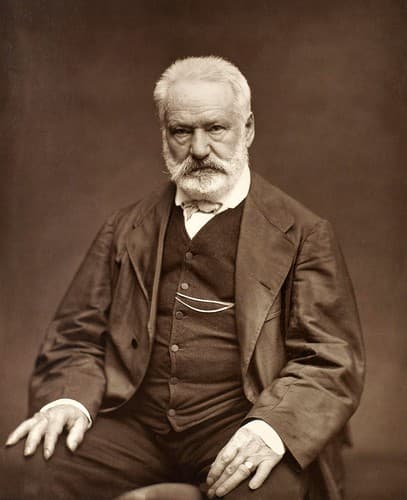
Victor-Marie Hugo was a French Romantic writer and politician. During a literary career that spanned more than sixty years, he wrote in a variety of genres and forms. He is considered to be one of the greatest French writers of all time.
Similar books
- Les Misérables
Victor Hugo
4.2 (683k) average on GoodreadsHistorical FictionShares Hugo's characteristic social critique, epic scope, and exploration of human suffering and redemption.
- Frankenstein: The 1818 Text
Mary Shelley
3.8 (1.2M) average on GoodreadsFantasyExplores the monstrous and the human, societal fear of the 'other,' and the pain of isolation.
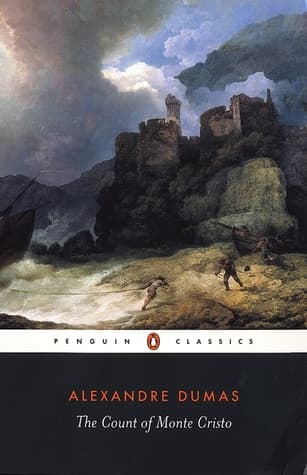
- The Count of Monte Cristo
Alexandre Dumas
4.3 (746k) average on GoodreadsHistorical FictionWhile both share epic scope and themes of injustice and revenge, Hugo's work is more overtly philosophical and politically charged, using individual suffering to critique broader societal structures, whereas Dumas focuses more on individual retribution and intricate plot mechanics.
- A Tale of Two Cities
Charles Dickens
3.9 (810k) average on GoodreadsHistorical FictionBoth critique social inequality during revolutionary periods. However, Hugo's novel is less focused on the minutiae of historical events and more on the symbolic power of its central protagonist. Dickens's characters often feel more grounded in everyday reality, while Hugo's operate on a grander, more allegorical stage.
- To Kill a Mockingbird
Harper Lee
4.3 (4.5M) average on GoodreadsHistorical FictionIn the 1930s Jim Crow South, Harper Lee writes about racial injustice, moral growth, and the quiet courage of a lawyer father, Atticus Finch, as seen through his young daughter's eyes.
- The Great Gatsby
F. Scott Fitzgerald
3.9 (3.8M) average on GoodreadsHistorical FictionIn the opulent Roaring Twenties, a mysterious millionaire's lavish parties hide his desperate, tragic pursuit of a lost love, exposing the emptiness within the American Dream.




Enjoyed the summary?
A summary gives you the shape of the book. The book itself has the detail, the examples and the voice.
Find The Man Who Laughs on AmazonAs an Amazon Associate, BookBrief earns from qualifying purchases. How we're funded