
Synopsis
Covers the whole plot, including the ending.
- Difficulty
- Medium
- Pacing
- Moderate
- Mood
- Adventurous, Tragic, Cynical, Exotic
- Read it if
- You enjoy classic adventure stories about ambition, colonialism, and the clash of cultures, with a focus on character-driven narrative and a cynical edge.
- Skip it if
- You prefer modern sensibilities regarding themes of empire and race, or if you dislike stories with tragic endings for ambitious protagonists.
The Man Who Would Be King Plot Summary
Covers the whole plot, including the ending.
The Narrator's Encounter
The story begins with the narrator, a journalist, recounting his first meeting with Peachy Carnehan. Peachy, a former soldier, tries to blackmail the narrator after catching him on a train with an unregistered parcel. The narrator, intrigued by Peachy's boldness, helps him and later meets Peachy's partner, Daniel Dravot, also a former soldier. Both men are adventurous, cunning, and somewhat disreputable, always seeking new ways to get rich. They often visit the narrator, using his office as a meeting place and discussing their various, often questionable, ventures across India, showing their restless and ambitious natures.
The Grand Scheme
One night, Peachy and Daniel visit the narrator and reveal their plan: to travel to Kafiristan, an uncharted and isolated region in Afghanistan, and become its kings. They believe the people there are simple and can be easily manipulated. They intend to bring twenty Martini-Henry rifles and ammunition, train a native army, and establish themselves as rulers, eventually exploiting the region's resources. They make the narrator witness and sign a 'Contract' outlining their agreement to share all spoils equally and to abstain from women and drink until they are established. The narrator is skeptical but intrigued by their audacity, providing them with maps and advice for their dangerous journey.
The Departure and Long Silence
After getting their supplies and the narrator's reluctant blessing, Peachy and Daniel set off on their dangerous trip to Kafiristan. The narrator gives them a compass and some final words of caution. For a long time, there is no news of the two men. The narrator, busy with his work, occasionally thinks of them, wondering if they succeeded or died in the unforgiving mountains. Their absence creates suspense and mystery, emphasizing the extreme remoteness and danger of their chosen path. The narrator continues his life, assuming they are either dead or have simply disappeared into the unknown.
Peachy's Return
About a year later, a tattered, frostbitten, and injured Peachy Carnehan stumbles back into the narrator's office. He is barely recognizable, having lost fingers and toes to frostbite, and is in distress. He carries a grim memento: Daniel Dravot's severed, mummified head, still wearing a crown. Peachy demands brandy and begins to tell the story of their success and downfall in Kafiristan, a tale that moves between triumph and tragedy, astonishing the narrator with its detail and the improbability of their achievements.
The Ascent to Power
Peachy explains how he and Daniel, after a brutal journey, reached Kafiristan. They first used their rifles to impress and subdue local tribes, quickly gaining military control. A key moment came when Daniel, by chance, showed a Masonic keystone, which the high priest recognized as a symbol of their ancient god, Sikander (Alexander the Great). Daniel's fair hair and blue eyes, combined with his authoritative manner and the discovery of other Masonic symbols, convinced the Kafiristanis that he was a divine descendant of Sikander. They were hailed as gods, and Daniel was crowned king, with Peachy as his loyal general.
The Golden Reign
Under Daniel and Peachy's rule, Kafiristan thrived. They trained an army, introduced more advanced weapons, and began to administer justice and collect tribute. The Kafiristanis revered Daniel as a god and a wise ruler, while Peachy handled the practicalities of governance and military command. They amassed wealth in gold and jewels, fulfilling their ambition. Daniel became more absorbed in his role, believing in his own divinity and the destiny to create a vast empire. Peachy, though enjoying the power, remained more grounded, observing Daniel's growing arrogance with a mix of admiration and unease, recognizing the danger of their position.
The Fatal Mistake
Daniel, despite their 'Contract' and Peachy's warnings, decides to marry a Kafiristani woman, believing it will solidify his divine lineage and secure his dynasty. During the wedding ceremony, the bride, terrified by the 'god' she is forced to marry, bites Daniel. When she draws blood, the Kafiristani priests and people realize Daniel is mortal, not a god. The illusion is shattered instantly. The Kafiristanis, feeling betrayed, turn on their former rulers with furious vengeance. This act of arrogance and breaking their vow proves to be the undoing of their empire.
The Flight and Daniel's End
The Kafiristanis, enraged by Daniel's proven mortality, immediately turn on the two men. Daniel and Peachy are pursued relentlessly. They try to escape, fighting bravely, but are overwhelmed by the numbers of their former subjects. Daniel is cornered on a rope bridge over a deep chasm. The Kafiristanis cut the ropes, sending Daniel falling to his death. Peachy, seeing his partner die, is captured, crucified between two pine trees, and left for dead. He endures torture, but is eventually cut down by some merciful tribesmen who remember his kindness, leaving him broken but alive.
Peachy's Ordeal and Return Journey
After being cut down from the crucifixion, Peachy, severely injured and frostbitten, begins his difficult journey back to India. He suffers pain and hardship, losing fingers and toes to the extreme cold. He carries Daniel's severed head, a grim trophy and a constant reminder of their shared ambition and tragic end. His return shows his resilience and will to survive, even after enduring physical and emotional trauma. He eventually makes his way back to the narrator's office, a shadow of his former boastful self, seeking solace and an audience for his unbelievable tale.
The Narrator's Burden
After Peachy finishes his story, he collapses from exhaustion and his severe injuries. The narrator, deeply affected by the tale and the physical evidence of Daniel's mummified head, arranges for Peachy to be taken to a hospital. The next day, the narrator visits the hospital, only to find that Peachy Carnehan has died during the night, likely from the combined effects of his injuries, exposure, and exhaustion. The narrator is left alone with Daniel's crowned head and the gold and jewels Peachy brought back, tangible proof of an adventure so extraordinary it defies belief, yet is real. He keeps the crown and head as a solemn reminder of their impossible dream.
The Man Who Would Be King Characters
Daniel Dravot
Protagonist
An ambitious and charismatic former British soldier who becomes a god-king.
Daniel Dravot is a tall, red-bearded, and charismatic former soldier in the British Indian Army. He is the more visionary and ambitious of the two partners, possessing a natural authority and a flair for leadership. He genuinely believes in their grand scheme and, once established in Kafiristan, fully embraces his role as a divine ruler, becoming increasingly convinced of his own godhood and destiny. His hubris and eventual disregard for their 'Contract' ultimately lead to their tragic downfall. He is brave, cunning, and persuasive, but also prone to self-delusion.
Relationships: Peachy Carnehan (Best friend, partner in crime, fellow adventurer); The Narrator (Acquaintance, facilitator of their journey)
Peachy Carnehan
Protagonist/Narrator of the main plot
A pragmatic and loyal former British soldier, Daniel's partner.
Peachy Carnehan is a shorter, wirier, and more pragmatic former British soldier, often described as having a 'dirty' look. He is the more grounded and cautious of the pair, serving as Daniel's loyal lieutenant and the practical enforcer of their schemes. While equally ambitious for wealth and power, Peachy maintains a cynical realism that Daniel eventually loses. He is brave, resourceful, and incredibly resilient, enduring horrific torture and a perilous journey back to civilization. He is the one who recounts their incredible story to the narrator, providing the primary perspective on their adventure.
Relationships: Daniel Dravot (Best friend, partner in crime, fellow adventurer); The Narrator (Acquaintance, confidante, recipient of his story)
The Narrator (Rudyard Kipling)
Frame Narrator/Supporting
A journalist in India who serves as the skeptical witness to the adventurers' tale.
The narrator is a journalist and editor for an Indian newspaper, closely based on Rudyard Kipling himself. He is intelligent, observant, and initially skeptical of Peachy and Daniel's grand ambitions, yet he is also fascinated by their audacity and spirit. He provides them with maps and advice, becoming a reluctant facilitator and later the sole recipient of their incredible story. He acts as the frame for the narrative, lending a sense of authenticity and grounding the fantastical elements of the tale in a believable reality. He is a detached observer, yet deeply affected by the events he witnesses and hears.
Relationships: Daniel Dravot (Acquaintance, object of fascination); Peachy Carnehan (Acquaintance, source of the main story, object of pity)
The Kafiristani High Priest
Supporting
The religious leader who initially validates Daniel's divinity.
The High Priest of Kafiristan is a powerful and influential figure within the isolated society. He is deeply learned in the traditions and symbols of his people, especially those related to their ancient god, Sikander. His recognition of Daniel Dravot's Masonic keystone as a symbol of Sikander is crucial in establishing Daniel's divine status among the Kafiristanis. He represents the established religious authority and traditions of Kafiristan. His initial acceptance of Daniel as a god, and subsequent outrage upon discovering his mortality, drives the dramatic shift in the Kafiristanis' allegiance.
Relationships: Daniel Dravot (Initially revered, then condemned); Peachy Carnehan (Initially tolerated, then persecuted)
The Kafiristani Bride
Mentioned
The native woman whose terror exposes Daniel's mortality.
The Kafiristani bride is a young native woman chosen by Daniel Dravot to be his wife, intended to solidify his divine lineage. Her role, though brief, is pivotal to the plot. Terrified by the prospect of marrying a 'god,' she bites Daniel during the wedding ceremony, drawing blood. This act shatters the illusion of Daniel's divinity, revealing him to be a mortal man. Her fear and subsequent action serve as the catalyst for the Kafiristanis' revolt and the downfall of Daniel and Peachy.
Relationships: Daniel Dravot (Unwilling bride, accidental betrayer)
The Man Who Would Be King Themes
Imperialism and Colonialism
The story directly addresses imperialism and colonialism through Daniel and Peachy's actions. They enter an 'uncivilized' land with the intention of conquering, exploiting, and ruling its people, mirroring the historical context of British expansion. They bring Western technology (rifles) and impose Western systems of governance, believing themselves superior. Their success, though temporary, highlights how easily a technologically advanced power can dominate a less developed one. Their downfall is a cautionary tale about the limits and consequences of such arrogance, especially when cultural misunderstandings and perceived divine right clash with reality. For example, the Kafiristanis' initial reverence for Daniel as a god (Sikander) quickly turns to violent rejection once his mortality is exposed, showing the instability of rule based on deception and force.
“We have been all over India, and we have been partners to all kinds of games, but this great game is the last game we shall ever play, and it's the biggest.”
Ambition and Hubris
Ambition and arrogance are central to Daniel Dravot and Peachy Carnehan's downfall. Their initial ambition to become kings is bold but not destructive. However, Daniel's ambition turns into unchecked arrogance as he begins to believe in his own divinity and destiny. His decision to marry a Kafiristani woman, directly breaking their 'Contract' and ignoring Peachy's warnings, is the ultimate act of arrogance. This act reveals his mortal nature and shatters the illusion of his godhood, leading directly to their violent overthrow. The story suggests that while ambition can drive extraordinary achievements, unchecked pride and disregard for boundaries or agreements lead to ruin. Peachy, though ambitious, remains more grounded, recognizing the dangers of Daniel's growing self-delusion.
“We're Kings, and we'll have a Queen. I've been a King for a year—what's the good of a King that ain't got a Queen?”
The Nature of Power and Authority
The story explores how power is gained, maintained, and lost. Daniel and Peachy first gain power through military superiority (rifles), manipulation, and a lucky coincidence (Masonic symbols aligning with local religion). Their authority is initially absolute, based on the Kafiristanis' belief in Daniel's divinity. The story shows how fragile this authority can be when based on illusion. The moment Daniel's mortality is revealed, his power disappears instantly, leading to a violent rejection of his rule. This shows that true, lasting power often requires more than just force or deception; it requires genuine legitimacy, cultural understanding, or a shared belief system. The rapid shift from worship to violent rebellion highlights the volatile nature of power when its foundations are false.
“And when the priests saw that, they were afraid, and they said, 'He is Sikander!'”
Brotherhood and Loyalty
Despite their roguish nature, the deep bond between Daniel Dravot and Peachy Carnehan is a strong theme. They are partners, bound by a shared past, a daring 'Contract,' and loyalty. Peachy consistently supports Daniel, even when disagreeing with his decisions, and stays by his side until Daniel's death. His agonizing journey back, carrying Daniel's severed head, shows this loyalty and brotherhood, transcending even death. While Daniel's arrogance ultimately dooms them, Peachy's commitment to their shared dream and to Daniel himself provides an emotional core to the story, showing the strength of their bond against all odds. Their 'Contract' represents this loyalty, which Daniel ultimately breaks.
“We have been all over India, and we have been partners to all kinds of games, but this great game is the last game we shall ever play, and it's the biggest.”
Plot Devices & Literary Techniques
The Frame Narrative
The story is told by a journalist who encounters the adventurers before and after their journey.
Kipling uses a frame narrative structure, where the main story of Daniel and Peachy's adventure is embedded within the narrator's personal encounters with them. This device serves several purposes: it grounds the fantastical tale in a believable reality, as the narrator, a journalist, provides a skeptical yet fascinated perspective. It also allows for the gradual revelation of information, building suspense. The narrator acts as a witness, lending credibility to an otherwise incredible story, and provides a moral compass through his observations. The frame also allows for a sense of historical context, placing the events within the broader British colonial experience in India.
The 'Contract'
A written agreement between Daniel and Peachy outlining their rules for conquest.
The 'Contract' is a formal, written agreement signed by Daniel and Peachy, witnessed by the narrator. It stipulates their shared goals, their commitment to abstain from women and drink until their kingdom is established, and their equal division of spoils. This document serves as a powerful symbol of their initial bond, their shared ambition, and their self-imposed rules. Its eventual breach by Daniel, particularly his decision to marry, is the direct catalyst for their downfall, highlighting themes of loyalty, discipline, and the consequences of broken vows. It underscores the idea that even self-proclaimed kings are bound by agreements.
Masonic Symbols
Ancient symbols recognized by both Daniel and the Kafiristani priests.
The discovery of Masonic symbols (like the keystone) in Kafiristan, which Daniel Dravot also knows, is a critical plot device. It provides the 'divine' justification for Daniel's rule, as the Kafiristani priests interpret these symbols as proof of his connection to their god, Sikander (Alexander the Great). This coincidence fuels their ascent to power, but it is ultimately a misunderstanding. The Masonic symbols represent a shared, ancient heritage that transcends geographical boundaries, but in this context, they become a tool for manipulation and a foundation for a false godhood, highlighting themes of cultural interpretation and the arbitrary nature of belief.
Daniel's Severed Head
The physical, mummified proof of Daniel's death and their adventure.
Peachy Carnehan's return with Daniel Dravot's severed, mummified head, still wearing its crown, serves as a powerful and gruesome plot device. It is the ultimate, undeniable proof of their incredible journey and tragic end. This tangible artifact transforms Peachy's fantastical tale from mere boastful recounting into a harrowing, verifiable truth. It also acts as a profound symbol of Daniel's hubris and downfall, a memento mori that underscores the fragility of power and life. For the narrator, it is a burden of truth, forcing him to confront the reality of an impossible adventure.
The Man Who Would Be King Quotes
“We have no King and we do not want one.”
“The only way to manage a native is to let him think he is managing you.”
“Brothers, we are not here to fight, but to rule!”
“Give a man a pipe he can smoke, give a man a horse he can ride, give a man a woman he can love, and his exuberancy is a joy to behold.”
“Take all you can get and keep all you have.”
“We'll be Kings, Peachy, you and me! Kings of Kafiristan!”
“A King's not a man, Peachy. He's a God.”
“There are no Ten Commandments in the Army.”
“It's a great thing to be a King.”
“The Lord God of Hosts is with us.”
“Every man has his price, and the price of a King is a good deal more than a common man.”
“We did not come here for money, but for power and glory.”
“He died a King, and that's more than most men can say.”
“You can't expect to run a country without a bit of blood.”
Quiz
10 questions on the plot and the characters. Each answer comes with a short explanation.
Question 1
What is the primary motivation for Daniel Dravot and Peachey Carnehan to embark on their adventure to Kafiristan?
- To establish a new British colony and expand the Empire.
- To find ancient gold mines and become fabulously wealthy.
- To escape the law in British India after committing a crime.
- To convert the natives of Kafiristan to Christianity.
Show answer
B. To find ancient gold mines and become fabulously wealthy. Their initial and driving goal is to exploit the 'uncivilized' people of Kafiristan for personal gain, specifically vast riches.
Question 2
How do Daniel Dravot and Peachey Carnehan initially convince the Kafiristanis of Daniel's divine status?
- By demonstrating advanced weaponry and military tactics.
- By performing a miraculous healing on a sick villager.
- By a bullet being stopped by a cartridge belt, which the natives mistake for invulnerability.
- By claiming to be descendants of Alexander the Great.
Show answer
C. By a bullet being stopped by a cartridge belt, which the natives mistake for invulnerability. Daniel is shot in the chest, but the bullet is stopped by his bandolier of cartridges, leading the natives to believe he is impervious to harm, fulfilling a prophecy.
Question 3
What specific 'sign' do the Kafiristanis associate with Daniel Dravot's supposed divinity, relating to a past historical figure?
- A distinctive birthmark on his chest.
- A tattoo of a lion on his arm.
- A Masonic emblem that resembles a symbol used by Alexander the Great.
- His ability to speak their ancient dialect fluently.
Show answer
C. A Masonic emblem that resembles a symbol used by Alexander the Great. The Kafiristanis find a Masonic jewel on Daniel's neck, which they recognize as a symbol of Sikander (Alexander the Great), a figure of prophecy and a past ruler of their land, thus confirming his divine status in their eyes.
Question 4
Who is the narrator of the story, and what is his profession?
- Peachey Carnehan, a former British Army officer.
- Rudyard Kipling himself, a British author.
- A journalist/editor for a newspaper in British India.
- Daniel Dravot, a British adventurer.
Show answer
C. A journalist/editor for a newspaper in British India. The unnamed narrator is a journalist working in India, who first encounters Dravot and Carnehan when they try to blackmail him.
Question 5
What ultimately leads to Daniel Dravot's downfall and the Kafiristanis' realization that he is not a god?
- He attempts to introduce modern technology, which the natives reject.
- He falls in love with a native woman and tries to marry her.
- He makes a critical tactical error in a battle, leading to heavy losses.
- Peachey Carnehan betrays him to a rival tribe.
Show answer
B. He falls in love with a native woman and tries to marry her. Daniel's decision to take a Kafiristani bride, a mortal act, shatters the illusion of his divinity, as a god would not marry a human woman.
Question 6
What is the ultimate fate of Daniel Dravot?
- He escapes Kafiristan with a fortune and returns to India.
- He is killed by the Kafiristanis by being thrown from a rope bridge into a gorge.
- He settles down in Kafiristan and rules as a benevolent king until his death.
- He is captured by rival tribes and sold into slavery.
Show answer
B. He is killed by the Kafiristanis by being thrown from a rope bridge into a gorge. After his divinity is disproved, Daniel is cast to his death from a rope bridge by the enraged Kafiristanis.
Question 7
What evidence does Peachey Carnehan bring back to the narrator to prove their incredible story?
- A large sack of gold coins and precious jewels.
- Daniel Dravot's severed head, still wearing his crown.
- A signed proclamation from the Kafiristani elders.
- A map detailing the location of their hidden kingdom.
Show answer
B. Daniel Dravot's severed head, still wearing his crown. Peachey appears before the narrator broken and mad, carrying Daniel's mummified head, still crowned, as grim proof of their adventure.
Question 8
Which of the following themes is most prominent in 'The Man Who Would Be King'?
- The triumph of justice over greed.
- The corrupting nature of power and unchecked ambition.
- The noble pursuit of exploration and discovery.
- The importance of friendship and loyalty.
Show answer
B. The corrupting nature of power and unchecked ambition. The story explicitly shows how Daniel's ambition, once he assumes the role of a god-king, leads to his ultimate hubris and destruction, highlighting the corrupting influence of power.
Question 9
What is the significance of the 'Grand Orient' and the Masonic brotherhood in the story?
- It represents the formal British colonial administration.
- It provides a secret network for adventurers to find lost kingdoms.
- It is the symbol that links Daniel to the prophecy of Sikander (Alexander the Great) among the Kafiristanis.
- It is the source of the advanced weaponry Daniel and Peachey use.
Show answer
C. It is the symbol that links Daniel to the prophecy of Sikander (Alexander the Great) among the Kafiristanis. The Masonic jewel worn by Daniel, bearing the symbol of the Grand Orient, is recognized by the Kafiristani high priest as a sign of Sikander, a legendary figure, solidifying Daniel's 'divine' claim.
Question 10
What happens to Peachey Carnehan after Daniel's death?
- He successfully flees Kafiristan and lives a quiet life in India.
- He becomes the new king of Kafiristan, ruling wisely.
- He is tortured and maimed by the Kafiristanis, eventually dying in an asylum in India.
- He joins another expedition to find a different lost kingdom.
Show answer
C. He is tortured and maimed by the Kafiristanis, eventually dying in an asylum in India. Peachey is subjected to torture by the Kafiristanis, including having his hands and feet mutilated, before eventually making his way back to India where he dies in an asylum, driven mad by his experiences.
The Man Who Would Be King FAQ
What is the basic premise of 'The Man Who Would Be King'?
The story follows two disreputable British adventurers, Daniel Dravot and Peachy Carnehan, in colonial India. They concoct a plan to travel to the remote land of Kafiristan, arm a local population, and establish themselves as rulers, believing themselves beyond the reach of British law and society.
Who are Daniel Dravot and Peachy Carnehan, and what motivates them?
Daniel Dravot and Peachy Carnehan are former soldiers and con men, restless and ambitious. They are driven by a desire for wealth, power, and a kingdom of their own, seeing Kafiristan as an untapped opportunity to escape their mundane lives and make their mark on history.
How do Daniel and Peachy initially gain power in Kafiristan?
They use their military experience and modern rifles to train and lead one Kafir tribe against its rivals. During a battle, a stray arrow lodges in Daniel's bandolier, making the locals believe he is immortal and a god, significantly elevating their status and power.
What role does the narrator play in the story?
The narrator is Rudyard Kipling himself, a journalist in India whom Daniel and Peachy approach for maps and advice. He serves as a skeptical but ultimately intrigued witness to their grand scheme, and is the one to whom Peachy eventually returns to recount the tragic end of their adventure.
What is Kafiristan, and why is it significant to the plot?
Kafiristan is a remote, unconquered region in the Hindu Kush mountains, inhabited by a people distinct from their Muslim neighbors. Its isolation and lack of external influence make it the perfect 'blank slate' for Daniel and Peachy's imperial ambitions, allowing them to impose their will without immediate external interference.
How does the 'sacred jewel' or 'Amulet of Alexander' tie into Daniel's perceived divinity?
The Kafirs possess an ancient amulet that resembles a Masonic keystone, which Daniel, a Freemason, recognizes. This coincidence, coupled with his fair skin and resemblance to depictions of Alexander the Great (who supposedly visited the region), solidifies the locals' belief that he is a returning deity or descendant of Alexander.
What specific detail about Daniel's past foreshadows his eventual downfall?
Daniel's impulsive decision to take a local Kafir woman as his queen, despite Peachy's warnings, directly leads to his downfall. This act of hubris breaks their own rules and reveals his mortal nature to the suspicious Kafir priests, who then expose him.
How does Peachy's loyalty to Daniel evolve throughout their adventure?
Peachy initially views their venture as a shared con, but as Daniel embraces his role as a god-king, Peachy's loyalty shifts. He becomes Daniel's devoted follower, trying to protect him from his own excesses, even as he recognizes the impending doom.
What does the narrator's final encounter with Peachy reveal about the nature of their quest?
Peachy returns to the narrator a broken man, carrying Daniel's severed head and crown, a stark symbol of their failed empire. This grotesque trophy underscores the brutal reality of their ambition and the ultimate futility of their grand design, bringing their story full circle.
Analyze Daniel Dravot's psychological transformation from adventurer to 'god-king.'
Daniel initially seeks power and wealth, but once he is worshipped, his ego inflates dramatically. He genuinely begins to believe in his own divinity and the righteousness of his rule, losing touch with the reality of his human limitations and the precariousness of his position, leading to hubris.
How does Peachy Carnehan's pragmatism contrast with Daniel's idealism?
Peachy remains grounded in the practicalities of their scheme, constantly assessing risks and trying to maintain their cover. He warns Daniel against marrying and pushing their luck, demonstrating a survival instinct that Daniel, blinded by his newfound godhood, lacks, highlighting the tension between their approaches.
What psychological impact does the isolation of Kafiristan have on the protagonists?
The extreme isolation and lack of external checks allow Daniel's delusions of grandeur to flourish unchecked. For both men, it fosters a sense of absolute power and invincibility, leading them to believe they are truly above conventional laws and morality, accelerating their descent into their own created reality.
How does the story explore themes of ambition and colonial fantasy?
The story vividly portrays the unchecked ambition of two ordinary men who dream of creating their own empire. It satirizes and critiques the colonial mindset by showing how easily such fantasies can be constructed in isolated lands, and how brutally they can unravel when confronted by local realities and human nature.
Is 'The Man Who Would Be King' a critique or a celebration of British imperialism?
It can be interpreted as both. While it satirizes the hubris and ultimate failure of individual imperial ambition, it also romanticizes the daring and resourcefulness of British adventurers. Kipling, a proponent of imperialism, simultaneously exposes its absurdities and the allure of its power.
What is the significance of the Masonic symbolism in the story?
The Masonic symbolism, particularly the keystone, serves as a crucial plot device that reinforces Daniel's perceived divinity among the Kafirs. It also subtly suggests a universal brotherhood or ancient connection that transcends cultures, yet ultimately fails to save Daniel from his fate.
How does the ending of the story reinforce its central themes?
The tragic and gruesome ending, with Daniel's severed head and crown, powerfully underscores the story's themes of hubris, the fragility of power, and the ultimate futility of unchecked ambition. It serves as a stark warning against playing God and attempting to impose one's will on an unwilling populace.
Discuss the role of fate vs. free will in Daniel and Peachy's journey.
While their initial journey is a product of their free will and ambition, elements like the arrow in Daniel's bandolier or the discovery of the Masonic keystone introduce elements of fate. Ultimately, Daniel's own choices, particularly his marriage, are what seal his and Peachy's doom, suggesting that free will, guided by hubris, dictates their tragic end.
About the author
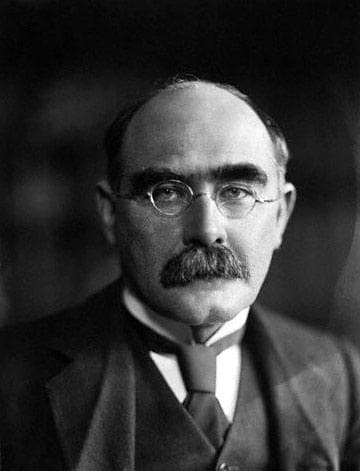
Joseph Rudyard Kipling was an English novelist, short-story writer, poet, and journalist. He was born in British India, which inspired much of his work.
Similar books
- Heart of Darkness
Joseph Conrad
3.4 (415k) average on GoodreadsHistorical FictionExplores themes of colonialism, ambition, and the corrupting influence of power in remote settings.
- Kim
Rudyard Kipling
3.7 (33k) average on GoodreadsHistorical FictionAnother Kipling work set in India, focusing on adventure, espionage, and cultural immersion.
- King Solomon's Mines
H. Rider Haggard
3.8 (43k) average on GoodreadsFantasyHaggard's work is a more straightforward, uncritical imperial adventure. Its British protagonists are unequivocally heroic and benevolent, succeeding in their quest and leaving a positive impact. Kipling's story, in contrast, introduces significant moral ambiguity and ultimately ends in tragedy for its protagonists, offering a more cautionary tale about the dangers and potential failures of imperial ambition, even if it doesn't fully deconstruct the ideology.
- To Kill a Mockingbird
Harper Lee
4.3 (4.5M) average on GoodreadsHistorical FictionIn the 1930s Jim Crow South, Harper Lee writes about racial injustice, moral growth, and the quiet courage of a lawyer father, Atticus Finch, as seen through his young daughter's eyes.
- The Great Gatsby
F. Scott Fitzgerald
3.9 (3.8M) average on GoodreadsHistorical FictionIn the opulent Roaring Twenties, a mysterious millionaire's lavish parties hide his desperate, tragic pursuit of a lost love, exposing the emptiness within the American Dream.
- Pride and Prejudice
Jane Austen
4.3 (3M) average on GoodreadsHistorical FictionIn a society focused on status and money, Elizabeth Bennet navigates love and pride, challenging Mr. Darcy and social expectations to find true affection.




Enjoyed the summary?
A summary gives you the shape of the book. The book itself has the detail, the examples and the voice.
Find The Man Who Would Be King on AmazonAs an Amazon Associate, BookBrief earns from qualifying purchases. How we're funded