

Core Idea
- Difficulty
- Hard
- Read it if
- You are interested in the history and philosophy of science, critical analysis of psychological testing, the social construction of scientific 'truth,' or a robust argument against biological determinism and scientific racism.
- Skip it if
- You are looking for a quick read, prefer a strictly narrative history, or are not prepared for detailed critiques of statistical methods and historical scientific figures.
Key Takeaways from The Mismeasure of Man
The Peril of Reification
Treating abstract concepts like intelligence as concrete, measurable entities leads to scientific and social harm.
Gould argues that the main error in the history of intelligence measurement is treating 'intelligence' itself as a concrete thing. Instead of seeing intelligence as complex, varied, and tied to culture, early researchers (and many now) viewed it as a single, measurable 'thing' in the brain. This allowed them to assign numbers, create hierarchies, and justify social inequalities as objective science. This process hides the flexible, adaptable nature of human thinking and replaces it with a rigid, fixed framework that serves political and social goals more than scientific truth.
“The error of reification—the conversion of an abstract concept into a thing—is the central fallacy of biological determinism.”
In the book: Gould details how early craniometrists like Paul Broca meticulously measured skull sizes, attempting to correlate them with intelligence, despite the inherent biases and inconsistencies in their methods and interpretations. The very act of measuring 'cranial capacity' as a proxy for intelligence is a prime example of reification.
Try this: When encountering any 'objective' measure of a complex human trait (like leadership potential, creativity, or even happiness), question the underlying assumption that it is a singular, stable, and perfectly quantifiable entity. Always ask: 'What is being reified here, and why?'
Related ideas: reification, biological-determinism, quantification-bias
Science as a Social Construct
So-called objective scientific measurements of intelligence have historically been driven and shaped by prevailing social biases.
Gould shows that the history of intelligence measurement is not one of unbiased study. Instead, it is a record of how scientists, often without knowing it, shaped their 'objective' findings to fit existing social hierarchies. Whether using craniometry, psychometrics, or factor analysis, the methods and interpretations consistently supported the supposed superiority of white European males. They also justified the oppression of women, racial minorities, and lower classes. This does not mean scientists are always malicious. It means they work within a cultural context that influences their hypotheses, data collection, and conclusions, especially on sensitive topics like human worth.
“Science is a social activity, and its results are deeply influenced by social prejudice and cultural context.”
In the book: The shifting 'standards' of intelligence measurement, from cranial volume to IQ tests, are a key example. When early craniometry failed to consistently demonstrate the superiority of white males (e.g., some 'inferior' groups had larger average brain sizes), the methodology was either reinterpreted or discarded in favor of new approaches that could produce the 'desired' results. Gould details how Broca, for instance, massaged his data to maintain the perceived superiority of European men.
Try this: Cultivate a critical eye towards any scientific claim, especially those that reinforce existing power structures or attribute complex human traits to simple biological determinants. Always investigate the historical, social, and political context in which scientific theories emerge and gain prominence.
Related ideas: social-construction-of-science, confirmation-bias, scientific-racism
The Fallacy of Unipolar Intelligence
The assumption that intelligence is a single, general factor (g) that can be ranked on a linear scale is fundamentally flawed.
A main idea in the IQ field is the belief in a single, underlying general intelligence factor, 'g.' This factor is thought to explain performance across many cognitive tasks. Gould argues that 'g' is a statistical artifact, a result of the mathematical techniques (factor analysis) used to analyze test scores, not a biological entity. Attributing all cognitive abilities to this single factor oversimplifies human intelligence, which is clearly multi-faceted. It includes distinct skills and aptitudes (e.g., verbal, spatial, musical, emotional). Focusing too much on 'g' leads to a narrow view that ignores the richness and variety of human intellectual abilities.
“The most serious error of factor analysis has been the reification of 'g' as a real entity in the brain.”
In the book: Gould dissects the work of Charles Spearman and his development of 'g' through factor analysis. He explains how the statistical method, designed to find common variance among different tests, was misinterpreted as evidence for a single, underlying biological entity. The very structure of IQ tests, with their emphasis on certain types of problem-solving, inevitably creates a correlational pattern that can be statistically 'reduced' to a 'g' factor, but this doesn't mean 'g' exists as a physical thing in the brain.
Try this: Resist the urge to label individuals as 'smart' or 'unsmart' based on a single score. Recognize and value the diverse forms of intelligence and cognitive strengths that individuals possess. When evaluating someone's capabilities, consider a broad spectrum of their skills and context, not just a narrow test result.
Related ideas: general-intelligence-g, factor-analysis, reductionism
The Political Economy of Testing
IQ testing became institutionalized not purely for scientific advancement, but to maintain social stratification and control.
Gould reveals that the widespread use and establishment of IQ testing in the 20th century were closely linked to society's need for categorization and control. This was especially true in mass education, immigration, and military recruitment. These tests were not neutral tools for understanding human potential. They became powerful tools for placing people into predetermined social roles, often strengthening existing class, racial, and gender inequalities. By presenting these classifications as 'objective' and 'scientific,' the system legitimized different access to resources, opportunities, and power. This created a self-perpetuating cycle that benefited those already privileged.
“The greatest tragedy of the IQ testing movement has been its social use, for it has served to rank people and to provide a 'scientific' justification for the maintenance of social hierarchies.”
In the book: The use of IQ tests for immigration screening at Ellis Island is a stark example. Psychologists like Henry Goddard administered biased tests to new immigrants, often in English to non-English speakers, leading to high rates of 'feeblemindedness' diagnoses among Southern and Eastern Europeans. These results were then used to justify restrictive immigration policies. Similarly, the use of Army Alpha and Beta tests during WWI helped classify recruits, leading to a system where scores determined roles and opportunities.
Try this: Be highly skeptical of standardized tests that claim to measure inherent worth or potential, especially when they are used as gatekeepers for significant life opportunities (education, employment). Advocate for holistic assessment methods that account for individual differences, cultural backgrounds, and diverse forms of intelligence.
Related ideas: eugenics, social-stratification, standardized-testing
The Bell Curve's Recycled Fallacies
Modern arguments for biological determinism, like 'The Bell Curve,' merely rehash old, discredited scientific racism.
In the revised edition, Gould strongly criticizes Herrnstein and Murray's 'The Bell Curve.' He argues it is not new science but a return to 19th-century biological determinism, disguised with complex statistics. He systematically dismantles their main arguments: the idea that 'g' is a real thing, the claim it is inherited, and the assertion of significant, unchanging racial differences in intelligence. Gould shows how Herrnstein and Murray selected data, misinterpreted statistical results, and ignored important environmental factors to reach conclusions that support a regressive political agenda. This agenda justifies social inequality as a natural outcome of inherent biological differences.
“The Bell Curve is a tract of social science that is both shoddy and dangerous. Its arguments are old, recycled fallacies dressed in new statistical clothes.”
In the book: Gould points out that 'The Bell Curve' relies heavily on the concept of 'g' as a fixed, measurable entity, despite its statistical origins. He critiques their selective use of heritability studies, explaining that heritability within a population says nothing about the causes of differences *between* populations (e.g., racial groups), especially when environmental factors are vastly unequal. He exposes their failure to account for socioeconomic status, nutrition, education, and cultural biases in testing.
Try this: When confronted with claims about 'innate' group differences in complex traits, particularly intelligence, immediately question the methodology, the definition of the trait, the political context, and the potential for environmental factors to explain observed differences. Be wary of complex statistical arguments that seem to 'prove' simple, biologically deterministic conclusions.
Related ideas: the-bell-curve, heritability-fallacy, racial-intelligence
The Malleability of Intelligence
Human intelligence is profoundly shaped by environment, education, and opportunity, not solely fixed by genetics.
Against deterministic views, Gould suggests that human intelligence is highly adaptable and responsive to environmental influences. While genetics play a part in individual differences, the capacity for cognitive growth, learning, and skill development is huge. It can be greatly helped or hindered by factors like nutrition, education, cultural enrichment, and social support. The historical focus on fixed, inherited intelligence rationalized inaction on social inequalities. Understanding malleability, however, highlights the importance of equal opportunities for everyone to reach their full cognitive potential.
“To say that intelligence is highly heritable is not to say that it is unchangeable. Heritability measures only the proportion of variation within a given population that is due to genetic differences, not the absolute magnitude of a trait nor its capacity for change.”
In the book: Though Gould focuses on dismantling determinism, his critique inherently highlights the neglected role of environment. For instance, the Flynn Effect (the observed generational rise in IQ scores) provides strong evidence for environmental influence, as genetic changes cannot explain such rapid shifts. Gould also points to the impact of improved nutrition, schooling, and reduced lead exposure on cognitive development, which deterministic models often downplay or ignore.
Try this: Invest in educational equity, early childhood development, and policies that reduce socioeconomic disparities. Recognize that fostering diverse forms of intelligence requires creating enriching environments and providing targeted support, rather than simply identifying and 'tracking' supposedly fixed abilities.
Related ideas: flynn-effect, nature-vs-nurture, cognitive-plasticity
The Danger of Numerical Fetishism
Reducing complex human traits to single numbers creates a false sense of precision and obscures meaningful nuance.
Gould criticizes society's 'numerical fetishism,' the tendency to give quantitative data, especially single scores, undeserved authority and truth. While numbers can be useful, when applied to concepts like intelligence, they often lead to a narrow distortion. A single IQ score, for example, cannot capture the many aspects of human thinking, creativity, practical wisdom, or emotional intelligence. This fetishism allows for simple comparisons and hierarchies. It often serves as a convenient shortcut to avoid dealing with the complex, qualitative realities of human diversity and potential. It replaces understanding with mere ranking.
“We are a society that loves numbers, and we tend to believe that any phenomenon expressed in numbers must be real and objective.”
In the book: The entire history of IQ testing, from its inception, is built on this numerical fetishism. The idea that a person's entire intellectual worth could be summarized by a single three-digit number (their IQ) allowed for the easy categorization and sorting of millions, regardless of the inherent limitations and biases of the tests themselves. Gould shows how the 'precision' of the number was used to mask the imprecision and subjectivity of what was actually being measured.
Try this: Be critical of any system that attempts to reduce a person's entire worth or ability to a single numerical score (e.g., student test scores, employee performance metrics, social credit scores). Always inquire about what is being measured, what is being left out, and the potential biases inherent in the quantification process. Prioritize rich, qualitative understanding over simplistic numerical ranking.
Related ideas: quantification-bias, reductionism, statistical-fallacy
The Moral Imperative of Anti-Determinism
Rejecting biological determinism is crucial for fostering a just and equitable society.
Beyond scientific inaccuracies, Gould stresses the deep moral and ethical implications of biological determinism. The belief that human worth, intelligence, or social standing is fixed by unchangeable biological factors (like genes or brain size) has historically been used to justify racism, sexism, classism, eugenics, and other forms of oppression. By disproving these deterministic arguments, Gould clears the way for a more equal vision of society. This vision recognizes the inherent dignity and potential of all individuals. It shifts the focus from 'who is inherently superior' to 'how can we create conditions for everyone to thrive,' making it a deeply freeing and humanistic effort.
“Biological determinism is a political argument, not a scientific conclusion, and it is an argument that has been used to justify the grossest inequalities.”
In the book: The direct link between biological determinism and the eugenics movement, which advocated for selective breeding and forced sterilization based on 'intelligence' scores, is a powerful example. Gould also highlights how deterministic arguments were used to justify slavery, colonialism, and later, segregation, by framing 'inferior' groups as naturally suited to their subordinate positions.
Try this: Actively challenge and expose arguments that attribute complex social problems (like poverty, crime, or educational disparities) solely to the inherent biological deficiencies of certain groups. Advocate for policies and social structures that promote equity, opportunity, and respect for diversity, understanding that human potential is not fixed by birthright.
Related ideas: eugenics, social-justice, moral-philosophy-of-science
The Legacy of Craniometry
The historical obsession with skull measurement exemplifies the flawed, biased roots of intelligence research.
Gould focuses on craniometry, the 19th-century practice of measuring skulls to guess intelligence. He uses it as a key example of the biases in intelligence research. He details how scientists like Paul Broca, driven by existing beliefs about racial and gender hierarchies, manipulated data, ignored conflicting evidence, and developed methods that consistently 'proved' the intellectual superiority of white European men. This historical examination serves as a strong warning. It shows how easily scientific 'objectivity' can be corrupted by social prejudices and how these early, flawed methods set the stage for later, equally biased approaches to intelligence measurement.
“Broca's work stands as a primary example of the a priori conviction that 'man's superiority' must be reflected in his brain.”
In the book: Gould meticulously recounts Broca's various attempts to prove male intellectual superiority through brain size. Broca found that men's brains were generally larger than women's, but then had to explain away why certain 'inferior' groups also had large brains, or why the largest brain on record belonged to a mentally ill individual. He employed various statistical adjustments and reinterpretations to maintain his initial hypothesis, demonstrating a clear case of confirmation bias guiding scientific inquiry.
Try this: When evaluating scientific claims, especially historical ones, always consider the societal context and potential biases of the researchers. Understand that even seemingly 'hard' data can be interpreted and presented in ways that reflect pre-existing beliefs rather than objective truth. Learn from history to identify similar patterns in contemporary research.
Related ideas: craniometry, paul-broca, confirmation-bias
The Multifactorial Nature of Human Worth
Human value and capability are rich, diverse, and cannot be reduced to a single metric.
Gould's main message is a strong affirmation of human diversity and the inherent worth of every person, regardless of their performance on narrow, culturally biased tests. By exposing the flawed scientific and political reasons behind the IQ industry, he frees us from the control of a single, simplified measure of intelligence. True human ability is complex, made up of many cognitive, emotional, social, and practical skills. None of these can be fully captured by a number. Recognizing this multi-faceted nature encourages a more inclusive and appreciative understanding of human potential. It helps create societies that celebrate varied strengths rather than punishing perceived weaknesses.
“The error of reification, the assumption that intelligence is a single, measurable thing, leads inevitably to the ranking of people as 'more' or 'less' intelligent, and thus 'more' or 'less' worthy.”
In the book: The book itself, by systematically dismantling every attempt to establish a singular, hierarchical measure of intelligence, implicitly argues for a more complex and inclusive view. Gould's discussions of the arbitrary nature of 'intelligence' definitions and measurements across different historical periods and cultures reinforce the idea that 'intelligence' is not a fixed, universal entity but a culturally constructed concept.
Try this: Actively cultivate an appreciation for the diverse strengths and talents of individuals around you. Challenge systems that narrowly define success or ability. Advocate for educational and professional environments that recognize and nurture a wide range of human capabilities, moving beyond simplistic ranking based on limited metrics.
Related ideas: human-diversity, inclusive-society, holistic-assessment
The Mismeasure of Man Quotes
“The most important, and ultimately the most truly human, lesson that science can teach us is humility.”
“Science is a human activity, and like all human activities, it is embedded in a social context.”
“We are not raw data, and our lives are not statistical distributions.”
“The history of science is not a chronicle of data accumulating towards an obvious truth, but a complex interplay of observation, theory, and social context.”
“The idea that intelligence is a single, measurable entity, and that it can be ranked on a linear scale, is a profound error.”
“Numerical precision is a cosmetic for argument, not a guarantee of validity.”
“The Mismeasure of Man is about the scientific misuse of intelligence testing, but it is also about the larger issue of how science can be used to justify social hierarchies.”
“We stand on the shoulders of giants, but we must also look at their feet and see the mud.”
“The fallacy of reification is the conversion of an abstract concept into a concrete entity.”
“Human variation is a continuum, not a set of discrete categories.”
“The primary error of biological determinism lies in its assumption that inherited traits are immutable and that social arrangements are natural consequences of biology.”
“Data do not interpret themselves; theories are not read off the world.”
“The greatest danger of the reification of 'g' (general intelligence) is its potential to legitimize social inequality.”
“Science, since people must do it, is a socially embedded activity.”
Quiz
10 questions on the main ideas. Each answer comes with a short explanation.
Question 1
Which of the following historical figures does Gould critique for promoting theories of intelligence based on cranial size?
- Francis Galton
- Paul Broca
- Alfred Binet
- Charles Darwin
Show answer
B. Paul Broca Gould extensively critiques Paul Broca, a prominent 19th-century French anatomist, for his attempts to link intelligence to brain size and for manipulating data to support preconceived notions about racial and gender hierarchy.
Question 2
Gould argues that the historical motivation behind attempts to quantify intelligence was primarily to:
- Improve educational methods for all children.
- Understand the true nature of human cognitive abilities.
- Provide objective data for social policy reforms.
- Maintain existing power structures and social hierarchies.
Show answer
D. Maintain existing power structures and social hierarchies. Gould's central argument is that the 'mismeasure of man' was driven by a desire to justify existing social inequalities and maintain the power of dominant groups, such as European men of the 19th century, by scientifically 'proving' their superiority.
Question 3
What is one of the key fallacies Gould identifies in the historical attempts to measure intelligence?
- The belief that intelligence is entirely determined by environment.
- The reification of intelligence as a single, quantifiable entity.
- The overemphasis on qualitative rather than quantitative data.
- The failure to acknowledge the role of genetics in cognitive function.
Show answer
B. The reification of intelligence as a single, quantifiable entity. Gould argues that intelligence is multifactorial and cannot be accurately represented by a single number or 'thing.' He critiques the reification of intelligence, treating an abstract concept as a concrete, measurable entity.
Question 4
The revised edition of 'The Mismeasure of Man' includes a scathing critique of which controversial book?
- Origin of Species by Charles Darwin
- The Bell Curve by Herrnstein and Murray
- Influence: The Psychology of Persuasion by Robert Cialdini
- Thinking, Fast and Slow by Daniel Kahneman
Show answer
B. The Bell Curve by Herrnstein and Murray The provided text explicitly states that the revised edition 'includes a scathing critique of Herrnstein and Murray's The Bell Curve,' taking them to task for rehashing old arguments.
Question 5
Gould criticizes the historical tendency of scientists to 'discard and replace' measures of intelligence when:
- New, more accurate scientific instruments became available.
- The previous measure failed to support their preconceived notions of hierarchy.
- Funding for the research was withdrawn.
- The political climate shifted to favor different research priorities.
Show answer
B. The previous measure failed to support their preconceived notions of hierarchy. The text states: 'When one measure was found to place members of some 'inferior' group such as women or Southeast Asians over the supposedly rightful champions, it would be discarded and replaced with a new, more comfortable measure.' This illustrates Gould's argument about bias.
Question 6
Gould argues that the 20th-century institutionalization of IQ testing led to what 'regressive' outcome?
- A decrease in overall societal intelligence.
- A feedback loop rewarding the rich and powerful.
- An overemphasis on artistic and creative intelligence.
- The complete eradication of social mobility.
Show answer
B. A feedback loop rewarding the rich and powerful. The text explains that the institutionalization of IQ testing led to 'subsequent assignment to work (and rewards) commensurate with the score, shown by Gould to be not simply misguided... but also regressive, creating a feedback loop rewarding the rich and powerful.'
Question 7
What specific criticism does Gould level against Herrnstein and Murray's 'The Bell Curve' in the revised edition?
- Their failure to use advanced statistical methods.
- Their reliance on outdated biological theories of race.
- Their rehash of old, discredited arguments to exploit a new political wave.
- Their suggestion that intelligence is entirely environmental.
Show answer
C. Their rehash of old, discredited arguments to exploit a new political wave. The text states Gould takes Herrnstein and Murray 'to task for rehashing old arguments to exploit a new political wave of uncaring belt tightening.' This highlights Gould's view that 'The Bell Curve' recycled flawed ideas for political gain.
Question 8
Gould's argument implies that the definition and measurement of intelligence are fundamentally influenced by:
- Universal, objective scientific principles.
- The inherent biological differences between individuals.
- Sociopolitical contexts and the desire to maintain power.
- The evolving understanding of neuroscience.
Show answer
C. Sociopolitical contexts and the desire to maintain power. Gould's consistent theme is that 'power maintains itself,' and that the 'scientific' pursuit of intelligence measurement has historically been a tool to justify existing social hierarchies and biases, rather than a purely objective endeavor.
Question 9
What is the primary implication of Gould's assertion that intelligence is 'multifactorial'?
- That intelligence can be easily improved through education.
- That IQ tests are inherently incapable of capturing its full complexity.
- That genetic factors are irrelevant to intelligence.
- That different cultures have different types of intelligence.
Show answer
B. That IQ tests are inherently incapable of capturing its full complexity. If intelligence is multifactorial, as Gould argues ('for surely intelligence is multifactorial'), then any single-score test like an IQ test would be an inadequate and misleading measure of a person's overall cognitive abilities and worth.
Question 10
Gould's work, as described, primarily serves as a refutation to the idea that intelligence is:
- Entirely learned.
- Unipolar and objectively quantifiable.
- Irrelevant to success in life.
- Primarily emotional.
Show answer
B. Unipolar and objectively quantifiable. The text highlights Gould's dissection of 'How did scientists decide that intelligence was unipolar and quantifiable?' and his argument that it is 'multifactorial,' directly refuting the idea of a single, quantifiable intelligence.
The Mismeasure of Man FAQ
What is the main argument of 'The Mismeasure of Man'?
Stephen Jay Gould's 'The Mismeasure of Man' argues against the concept of fixed, quantifiable intelligence, particularly as measured by IQ tests. He demonstrates how historical attempts to measure intelligence have been biased, culturally influenced, and often used to support social hierarchies and justify discrimination, rather than reflecting true scientific understanding.
Does 'The Mismeasure of Man' refute the idea of intelligence itself?
No, the book doesn't refute the idea of intelligence, but rather the notion that intelligence is a single, unipolar, and precisely quantifiable entity that can be ranked on a linear scale. Gould argues that intelligence is multifactorial and complex, making simplistic measurement inherently flawed and misleading.
How does Gould's book relate to 'The Bell Curve'?
'The Mismeasure of Man' provides a definitive refutation to the arguments presented in 'The Bell Curve' by Herrnstein and Murray. The revised edition includes a direct and scathing critique, demonstrating how 'The Bell Curve' rehashes old, discredited arguments about fixed intelligence and its social implications, often for political ends.
What historical examples does Gould use to support his claims?
Gould delves into various historical practices, such as 19th-century craniometry (measuring skull size) and early 20th-century IQ testing, to show how 'scientific' methods were manipulated. He illustrates how researchers consistently found ways to 'prove' the intellectual superiority of dominant groups (e.g., European men) by discarding inconvenient data or inventing new measures.
Does 'The Mismeasure of Man' suggest that intelligence tests are entirely useless?
Gould argues that intelligence tests are deeply flawed when used to assign fixed worth or to justify social stratification, especially given their historical biases. While he acknowledges they might measure certain cognitive skills, he critiques their interpretation as definitive measures of overall, innate intelligence, highlighting their potential for misuse and regressive outcomes.
What is 'craniometry' and why is it important in the book?
Craniometry is the measurement of human skulls, a practice prevalent in the 19th century. Gould uses it as a key example of how scientists, driven by preconceived notions of racial and gender hierarchy, would manipulate data and methods to 'prove' that certain groups had larger (and thus supposedly more intelligent) brains than others, despite contradictory evidence.
What is Gould's view on the motivation behind efforts to measure intelligence?
Gould argues that the motivations behind attempts to measure and rank intelligence were often rooted in the desire to maintain power and justify existing social hierarchies. He suggests that 'scientific' measurements were frequently used to rationalize the superiority of dominant groups and the subjugation of others, rather than purely to advance knowledge.
How does the book contribute to the understanding of scientific bias?
The book brilliantly illustrates how scientific inquiry can be influenced by societal biases, political agendas, and personal preconceptions. Gould exposes how even seemingly objective measurements were often designed or interpreted to confirm existing prejudices, demonstrating the crucial need for critical thinking and awareness of potential biases in scientific research.
Is 'The Mismeasure of Man' still relevant today?
Absolutely. Despite being written decades ago, its arguments against simplistic, biased measures of intelligence and its critique of using such measures to justify social inequality remain highly relevant. It provides essential tools for critically evaluating claims about intelligence, heredity, and social stratification that continue to surface in public discourse.
About the author
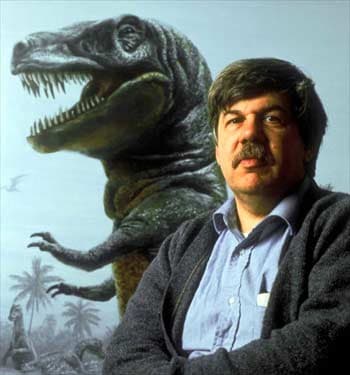
Stephen Jay Gould was an American paleontologist, evolutionary biologist, and historian of science. He is best known for his work on the theory of punctuated equilibrium and his book The Mismeasure of Man, which critiques the historical misuse of intelligence testing. Gould's writings often explored the intersection of science and philosophy, making significant contributions to public understanding of evolutionary theory.
Similar books
- Bad Science
Ben Goldacre
4.1 (38k) average on GoodreadsPsychologyCritiques the misuse of science and statistics to support flawed conclusions, focusing on contemporary issues.
- The Perks of Being a Wallflower
Stephen Chbosky
4.2 (1.3M) average on GoodreadsPsychologyThrough letters, a shy high school freshman learns to navigate first love, trauma, and self-discovery, stepping off the sidelines and into life.
- Eleanor Oliphant Is Completely Fine
Gail Honeyman
4.3 (708k) average on GoodreadsLiterary FictionA lonely woman's structured life changes when an IT guy and an elderly man help her learn to open her heart.
- One Flew Over the Cuckoo's Nest
Ken Kesey
4.2 (631k) average on GoodreadsPsychologyIn a mind-bending asylum, the boisterous Randle McMurphy wages a defiant war against the tyrannical Nurse Ratched, inspiring his fellow inmates, including the seemingly catatonic Chief Bromden, to reclaim their lost humanity.
- The Bell Jar
Sylvia Plath
4.0 (591k) average on GoodreadsPsychologyIn the suffocating grip of 1950s expectations, a brilliant young woman's descent into mental illness is painted with such vivid, internal clarity that her 'insanity' feels terrifyingly rational and inevitable.
- The Subtle Art of Not Giving a F*ck: A Counterintuitive Approach to Living a Good Life
Mark Manson
3.9 (530k) average on GoodreadsBusinessEmbrace your flaws and stomach life's lemons, because true happiness isn't about relentless positivity, but about choosing what truly matters to give a f*ck about.






Enjoyed the summary?
A summary gives you the shape of the book. The book itself has the detail, the examples and the voice.
Find The Mismeasure of Man on AmazonAs an Amazon Associate, BookBrief earns from qualifying purchases. How we're funded