
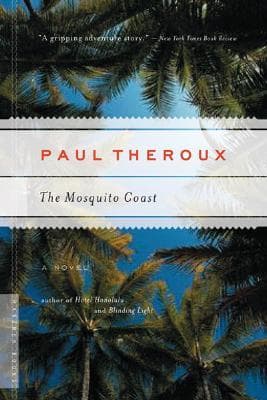
Synopsis
Covers the whole plot, including the ending.
- Difficulty
- Medium
- Pacing
- Moderate
- Mood
- Intense, Disillusioning, Adventurous, Dark
- Read it if
- You enjoy survival stories with a psychological edge, exploring the darker side of human ambition and the perils of idealism.
- Skip it if
- You prefer fast-paced thrillers or stories with clear-cut heroes and villains, or find it difficult to read about a protagonist's descent into madness.
The Mosquito Coast Plot Summary
Covers the whole plot, including the ending.
The Seeds of Discontent
Allie Fox, an inventor, lives with his wife, Mother, and four children—Charlie, Jerry, April, and Clover—in Hatfield, Massachusetts. Allie constantly tinkers with inventions, from an ice-making machine to a giant bicycle. He strongly dislikes modern American life, seeing it as wasteful, corrupt, and morally bankrupt. His eldest son, Charlie, narrates their story, often reflecting on his father's grand statements and increasingly erratic behavior. Allie frequently rants about the coming collapse of civilization, fueled by his paranoia and desire to escape what he sees as a decaying society. He begins to plan an escape, believing he can build a better world elsewhere.
The Escape to Honduras
Driven by his utopian vision and growing contempt for America, Allie sells his house and most of their belongings, to the confusion and quiet worry of his family. He buys an old freighter, the 'Sybil', which he meticulously overhauls and fills with tools, machinery, and supplies. With his family, they embark on a dangerous sea journey to the Mosquito Coast of Honduras. Allie's determination is unwavering, despite the obvious dangers and the family's underlying anxieties. He believes this remote, untamed land offers the perfect place for his new civilization, free from the perceived evils of the developed world. Charlie, though often bewildered, remains loyal to his father's grand scheme.
Arrival at Jeronimo
Upon reaching the Mosquito Coast, Allie finds a suitable location deep within the jungle, a remote clearing he renames Jeronimo. He immediately sets his family to work clearing land and building a basic shelter. His main project is building a large ice-making machine, which he believes will change the lives of the local people and prove his ingenuity. The first days are filled with hard work and the constant threat of the jungle, but Allie's infectious energy and strong belief in his vision keep the family going. They meet a small community of Miskito Indians, who watch the strange newcomers with a mix of curiosity and suspicion.
The Wonders of Ice
Through sheer will and tireless effort, Allie manages to build his colossal ice-making machine. The machine, an engineering marvel in the remote jungle, begins to produce ice. This technological feat amazes the local Miskito Indians, who have never seen anything like it. Allie distributes the ice, and its cooling properties become a source of wonder and use for the community, especially for preserving fish. This success boosts Allie's confidence and reinforces his belief in his own genius and the viability of his utopian experiment. For a time, Jeronimo thrives, and the family finds a sense of purpose in their isolation, even as the jungle's challenges remain.
Encounter with the Missionaries
The family's fragile peace is broken by the arrival of Reverend Spellgood and his family, American Christian missionaries. Allie immediately sees them as an ideological threat, representing the very society he sought to escape. He dislikes their religious dogma and their attempts to 'civilize' the Miskito people, seeing it as an imposition on native culture. Allie argues with Reverend Spellgood, mocking his beliefs and asserting his own secular, scientific worldview. This confrontation marks a turning point, as Allie's paranoia and hostility towards outsiders grow, foreshadowing future conflicts and the breakdown of his rational judgment.
The Machine's Demise
One day, while trying to repair or modify his ice machine, Allie accidentally causes it to malfunction. The machine, which uses highly flammable chemicals, becomes unstable. Despite his family's pleas to abandon it, Allie stubbornly tries to fix it, resulting in a massive explosion that completely destroys the machine and much of their settlement. The blast is devastating, both physically and psychologically. Allie, deeply affected by the loss of his greatest invention and the symbol of his utopian dream, begins a rapid descent into delusion and paranoia. He interprets the destruction as sabotage, blaming external forces and further retreating into his own distorted reality.
The River Journey and Isolation
After the explosion, Allie becomes convinced that America has been destroyed by nuclear war and that their former settlement is no longer safe. He forces his family to abandon Jeronimo and embark on a grueling journey up a remote river, seeking a new, even more isolated refuge. The family's resources dwindle, and the journey is filled with danger, disease, and starvation. Charlie watches his father's increasing irrationality and dictatorial behavior, as Allie enforces his will with growing severity. The children, especially, suffer from the extreme conditions and their father's unyielding demands, losing their innocence and facing the harsh realities of survival.
The Floating House
Deep in the interior, Allie builds a new, elaborate dwelling: a large, self-sufficient floating house on a river. This mobile home is designed to be safe from outside threats and to provide for all their needs, further cementing their isolation. Allie continues to preach his distorted version of reality, insisting that the outside world is gone and that they are the last people left. The children, though weary and skeptical, are bound by their loyalty and dependence on their father. The floating house becomes a symbol of Allie's increasingly fractured mind, a physical representation of his desire to control every aspect of his family's existence and their perceived reality.
The Attack and Retreat
Their isolation is violently interrupted when armed bandits attack the floating house, seeking supplies and plunder. The family is forced to fight for their lives, and in the chaos, the floating house is severely damaged. This traumatic event shatters any remaining illusion of safety and reinforces Allie's paranoia. He sees the attack as further proof of the world's hostility and their need for deeper concealment. The family, now even more lacking in resources and hope, is forced to abandon their latest refuge and continue their desperate, aimless flight further into the wilderness, their survival becoming increasingly uncertain.
Return to the Coast
After months of wandering, suffering from starvation and illness, the Fox family slowly makes their way back towards the coast, their utopian dream completely shattered. Allie is severely weakened, both physically and mentally; his delusions become more pronounced and his leadership falters. They eventually find a small coastal settlement, where some of the Miskito Indians they had known from Jeronimo recognize them. The family's desperate state evokes pity and concern, a stark contrast to Allie's former pride and self-sufficiency. This brief return to a semblance of civilization brings them face-to-face with the reality they had tried so hard to escape.
The Final Confrontation
In a final, desperate act of defiance and delusion, Allie, now gravely ill and barely coherent, encounters Reverend Spellgood's mission. Still believing himself to be in a post-apocalyptic world and seeing the missionaries as everything he dislikes, he tries to set fire to the mission. His actions are driven by his deep-seated hatred for organized religion and what he perceives as its corrupting influence. This act is the culmination of his unraveling, a tragic attempt to destroy the remnants of the 'old world' that he believes still threatens his family, even in his dying moments.
Allie's Demise and the Children's Escape
During his attempt to burn down the mission, Allie is shot by one of Reverend Spellgood's followers. Mortally wounded, he is carried away by his family. In his final moments, Allie remains in his delusion, believing he has succeeded in his mission and that they are truly free. His death, though tragic, ends his tyrannical hold over his family. With Allie gone, the children are finally free to make their own choices. Charlie, Mother, and the younger children decide to leave the Mosquito Coast, seeking passage on a boat to return to the world Allie so strongly rejected, forever marked by their father's grand, destructive experiment.
Principal Figures
Allie Fox
Protagonist/Antagonist
A brilliant but increasingly paranoid inventor who seeks to escape modern society.
Allie Fox is a self-proclaimed genius, an inventor of remarkable skill and boundless energy. He possesses a charismatic personality and an unwavering belief in his own superiority. However, his brilliance is overshadowed by an escalating paranoia and a deep-seated contempt for modern American consumerism, which he views as corrupt and wasteful. He is fiercely independent, authoritarian, and utterly convinced of his own rightness, often ignoring the practical concerns or emotional needs of his family. His drive to create a utopian society is ultimately consumed by his delusions and his inability to compromise or adapt.
Relationships: Mother (Husband; she is his submissive and loyal wife.); Charlie Fox (Father; Charlie is his devoted but increasingly disillusioned eldest son and narrator.); Jerry, April, Clover (Father; he is their demanding and controlling father.); Reverend Spellgood (Ideological adversary; Allie despises his religious beliefs.)
Charlie Fox
Protagonist/Narrator
Allie's eldest son, who narrates the story and grapples with his father's escalating madness.
Charlie is the observant and thoughtful narrator of the story. Initially, he idolizes his father and is swept up in Allie's grand vision, eager to please and prove his loyalty. As the family's journey progresses and Allie's behavior becomes more erratic and dangerous, Charlie's loyalty is tested by his growing disillusionment and fear. He matures rapidly, forced to confront the harsh realities of survival and the destructive nature of his father's obsessions. Charlie's internal conflict between filial duty and self-preservation forms the emotional core of the narrative.
Relationships: Allie Fox (Son; he initially admires and later becomes disillusioned with his father.); Mother (Son; he shares a bond of quiet understanding and concern with his mother.); Jerry, April, Clover (Older brother; he cares for his younger siblings and shares their struggles.)
Mother (Margot Fox)
Supporting
Allie's long-suffering and quietly resilient wife, who endures his extreme decisions.
Mother, whose given name is Margot, is Allie's loyal and submissive wife. She rarely challenges Allie directly, instead offering quiet support and attempting to mitigate the worst of his demands. She is the anchor of the family, providing emotional stability and practical care for her children amidst the chaos of Allie's grand schemes. Despite her outward compliance, she possesses an inner strength and resilience, always prioritizing the well-being of her children, even when it means enduring immense hardship.
Relationships: Allie Fox (Wife; she is loyal and submissive to her husband.); Charlie, Jerry, April, Clover (Mother; she is a loving and protective mother to her children.)
Jerry Fox
Supporting
Allie's second son, who is more pragmatic and less prone to idealism than Charlie.
Jerry is Charlie's younger brother, a more grounded and practical child than Charlie. He is less swayed by Allie's grandiose pronouncements and often expresses his skepticism or discomfort more openly than Charlie dares. Jerry represents a more direct, less romanticized perspective on their father's experiment. He is resourceful and resilient, adapting to the harsh conditions but never fully embracing Allie's delusions, providing a contrast to Charlie's internal struggle.
Relationships: Allie Fox (Son; he is less reverent of his father than Charlie.); Charlie Fox (Younger brother; he shares the hardships with Charlie.)
Reverend Spellgood
Supporting
An American Christian missionary who clashes ideologically with Allie Fox.
Reverend Spellgood is an American Christian missionary working in Honduras. He is devout and earnest in his faith, believing it is his duty to convert the local Miskito population. He represents the established 'civilized' world that Allie so despises, embodying religious dogma and the perceived hypocrisy of Western society. His interactions with Allie are marked by heated ideological debates, where Allie ridicules his faith and Spellgood views Allie as a godless, dangerous infidel. He is ultimately responsible for Allie's death, though unintentionally.
Relationships: Allie Fox (Ideological adversary; they deeply despise each other's beliefs.)
Mr. Haddy
Supporting
The local Miskito Indian chief who helps the Fox family initially but remains wary.
Mr. Haddy is the chief of the local Miskito Indian community near Jeronimo. He is initially helpful and curious about Allie's inventions, particularly the ice machine, and establishes a cautious relationship with the Fox family. He represents the indigenous people whose lives are subtly disrupted by Allie's presence. He is shrewd and observant, understanding the potential benefits but also sensing the underlying strangeness and eventual danger of Allie's experiment. He serves as a bridge between the Fox family's isolated world and the existing local culture.
Relationships: Allie Fox (Local contact; he initially helps Allie but grows wary of his actions.)
Ma Kennywick
Mentioned
An old, eccentric woman living in the jungle who Allie dismisses as crazy.
Ma Kennywick is an elderly, isolated white woman living in the Honduran jungle, whom the Fox family briefly encounters. She is perceived by Allie as a madwoman, a cautionary tale of what happens to those who try to live outside society. Her presence, however, suggests that others have attempted similar escapes, hinting at the difficulties of such a life. She serves as a minor, symbolic character, reflecting the potential for madness in isolation.
Relationships: Allie Fox (Brief acquaintance; Allie dismisses her as mad.)
April Fox
Supporting
Allie's younger daughter, who suffers from the hardships of jungle life.
April is one of Allie's younger daughters. Like her siblings, she endures the increasing privations and dangers of their journey. Her character often highlights the vulnerability of the children to their father's extreme decisions, as she falls ill and struggles with the harsh environment. She represents the innocent victims of Allie's grand, misguided experiment.
Relationships: Allie Fox (Daughter; she is subject to his control.); Mother (Daughter; she is cared for by her mother.); Charlie Fox (Younger sister; she relies on her older brother for support.)
Clover Fox
Supporting
Allie's youngest daughter, who is too young to fully comprehend their situation.
Clover is the youngest of the Fox children. Her youth and innocence mean she understands very little of the dangers and implications of their situation, often finding simple joys or expressing simple fears. Her perspective serves to underscore the profound impact of Allie's decisions on those too young to consent or fully grasp the unfolding tragedy. Her journey is one of endurance and survival, protected as much as possible by her older siblings and mother.
Relationships: Allie Fox (Daughter; she is subject to his control.); Mother (Daughter; she is cared for by her mother.); Charlie Fox (Youngest sister; she is protected by her older brother.)
Themes & Insights
The Dangers of Utopianism and Idealism
The novel explores how the pursuit of an idealized, perfect society can lead to destruction and tyranny. Allie Fox's initial dream of creating a purer civilization, free from the perceived evils of America, slowly becomes a nightmare of isolation, delusion, and suffering. His rigid adherence to his vision, without regard for reality or the needs of others, ultimately destroys his family and himself. This theme is clear from Allie's initial rants about American society to his desperate, delusional attempts to burn down the mission, showing how good intentions can be corrupted by unchecked fanaticism.
“What I have in mind is a place where we won't need money, where we won't need doctors, where we won't need the government. Where we can be free.”
The Corruption of Power and Control
As the Fox family becomes more isolated, Allie's control over them grows, turning him into a dictatorial figure. His initial charisma and ingenuity give way to a paranoid and manipulative dominance, where he dictates their reality, suppresses dissent, and punishes any challenge to his authority. This is powerfully shown through Charlie's narrative, as he watches his father's transformation from a beloved leader to an oppressive tyrant, especially after the destruction of the ice machine and their subsequent flight upriver. Allie's power, born from his vision, ultimately corrupts him and enslaves his family.
“He didn't just want us to obey him, he wanted us to believe him. He wanted us to think what he thought.”
The Nature of Civilization vs. Wilderness
The novel contrasts the perceived corruption of 'civilization' (America) with the raw, unforgiving reality of the 'wilderness' (the Honduran jungle). Allie believes he can build a superior civilization in the jungle, but the wilderness does not care about his ideals, posing constant threats of disease, starvation, and natural disaster. Ultimately, the jungle strips away the family's illusions and exposes the fragility of human constructs. This is clear in the constant struggle against the elements, the family's declining health and resources, and the eventual failure of all of Allie's grand inventions to truly conquer or tame the environment.
“The jungle was not a place for new beginnings. It was a place for endings.”
Family Loyalty and Disillusionment
The narrative deeply explores the complex dynamics of family loyalty, especially between Charlie and his father. Initially, Charlie's admiration for Allie is absolute, driving him to support his father's every decision. However, as Allie's paranoia grows and his actions become increasingly dangerous and irrational, Charlie experiences deep disillusionment. This theme is central to the story, as Charlie struggles with his love for his father versus the need to protect himself and his siblings, culminating in his eventual acceptance of Allie's madness and the necessity of their escape. Mother's unwavering, though quiet, loyalty also highlights this theme.
“I loved him, but I was afraid of him. And I was afraid of what he was doing to us.”
The Illusion of Control and Self-Sufficiency
Allie Fox's entire endeavor is based on his belief that he can control his environment and provide for his family entirely through his own ingenuity, free from outside dependencies. He builds an ice machine, a self-sufficient floating house, and tries to dictate every aspect of their lives. However, the novel consistently shows the futility of this illusion. Natural disasters, bandit attacks, and his own mental decline expose the limits of his control and the inherent interconnectedness of human existence. The destruction of his ice machine and the floating house are powerful symbols of his inability to truly control his destiny.
“He thought he could make his own world. He thought he could make his own rules. But the world had its own rules.”
Plot Devices & Literary Techniques
First-Person Narration (Charlie Fox)
The story is told through the eyes of Allie's eldest son, Charlie.
Charlie's first-person narration provides an intimate and subjective perspective on the events, filtering Allie's increasingly erratic behavior through the lens of a loyal but increasingly disillusioned son. This allows the reader to witness Allie's descent into madness and the family's suffering, while also experiencing Charlie's internal conflict and growth. His youthful perspective also highlights the impact of Allie's choices on his children, making the narrative more poignant and empathetic. The reader relies on Charlie's observations and interpretations, which evolve as he matures and understands more.
The Ice Machine
Allie's grand invention, symbolizing his utopian aspirations and eventual downfall.
The ice machine is a central symbolic object. Initially, it represents Allie's genius, his ability to harness technology for a better world, and his hope for a self-sufficient utopia. Its successful operation brings temporary admiration and utility. However, its dramatic destruction through Allie's own carelessness marks a critical turning point, symbolizing the fragility of his dreams and the beginning of his mental unraveling. It becomes a powerful metaphor for the collapse of his entire project and the dangers of unchecked ambition.
The Honduran Jungle
The setting functions as both an idealized escape and a hostile, indifferent force.
The Honduran jungle is more than just a backdrop; it acts as a character itself. For Allie, it initially represents a pristine, untainted canvas for his new world. However, it quickly becomes a relentless, indifferent antagonist, presenting constant challenges of disease, heat, insects, and isolation. Its vastness and wildness strip away the family's comforts and illusions, forcing them into a raw struggle for survival. The jungle symbolizes the unyielding reality that Allie's idealism cannot overcome, ultimately breaking his spirit and his grand vision.
Allie's Delusions
Allie's escalating mental instability and false beliefs drive the plot's tragic trajectory.
Allie's progressive delusions, particularly his belief in an impending nuclear war and his absolute conviction in his own rightness, serve as a primary plot device. These delusions directly dictate the family's movements and actions, pushing them further into isolation and danger. They create internal conflict for Charlie and Mother, who must navigate their love and loyalty against the undeniable evidence of their father's failing mind. The delusions escalate throughout the book, ultimately leading to Allie's fatal confrontation and the tragic end of his experiment.
The Floating House
A bizarre, mobile dwelling symbolizing Allie's increasing isolation and control.
The floating house is a physical manifestation of Allie's deepening paranoia and his desire for absolute control and self-sufficiency. It represents his attempt to create an impenetrable, self-contained world, completely cut off from any perceived external threats. Its mobility reflects his constant flight from reality. When it is attacked and damaged by bandits, it further emphasizes the futility of his attempts to escape the world's dangers, highlighting how his efforts to create safety only lead to greater vulnerability and the stripping away of their last remaining resources.
The Mosquito Coast Quotes
“Every man has his own idea of paradise.”
“The world is going to hell in a handbasket.”
“You can't eat money, you can't drink money, you can't build with money.”
“We were going to make a new world, a better world.”
“A man's got to make his own way, even if he has to smash everything in sight to do it.”
“The jungle doesn't care who you are or what you think you're going to do.”
“He always had a reason, even if it was a crazy one.”
“It's not what you do, it's what you think you're doing.”
“The more you try to get away from something, the closer you get to it.”
“You can't escape your own head, no matter how far you go.”
“He wanted to live in a place where he could make all the rules.”
“The silence was so heavy you could almost hear it.”
“Sometimes you have to break things to make them better.”
“He built a world, and then he broke it.”
Quiz
10 questions on the plot and the characters. Each answer comes with a short explanation.
Question 1
What is the name of Allie Fox's eldest son and the narrator of the story?
- Charlie Fox
- Jerry Fox
- Richard Fox
- Spencer Fox
Show answer
A. Charlie Fox Charlie Fox is the narrator and eldest son, providing the reader with his perspective on his father's increasingly erratic behavior.
Question 2
What is the primary invention Allie Fox brings to the jungle that he believes will revolutionize their lives?
- A self-sustaining hydroponic farm
- A giant ice-making machine
- A perpetual motion generator
- A system for desalinating seawater
Show answer
B. A giant ice-making machine Allie Fox's most ambitious project in the jungle is 'Fat Boy,' a massive ice-making machine, which he believes will bring civilization and prosperity to the remote area.
Question 3
Why does Allie Fox initially decide to leave the United States and move his family to Central America?
- He is running from the law after a failed business venture.
- He inherits land in Honduras and wants to develop it.
- He despises American consumerism, materialism, and what he sees as its impending collapse.
- He is offered a scientific research position studying jungle ecosystems.
Show answer
C. He despises American consumerism, materialism, and what he sees as its impending collapse. Allie's deep-seated contempt for modern American society, which he views as corrupt and decadent, is the driving force behind his decision to seek a 'purer' life in the jungle.
Question 4
What event leads to the destruction of Allie's ice machine and the family's initial settlement?
- A massive tropical storm floods the river.
- A group of indigenous people attack their compound.
- Allie accidentally causes an explosion while experimenting with chemicals.
- The machine breaks down beyond repair due to lack of spare parts.
Show answer
C. Allie accidentally causes an explosion while experimenting with chemicals. Allie, in his attempt to scare away three armed bandits, accidentally ignites a large quantity of chemicals and fuel, causing a catastrophic explosion that destroys his settlement and the ice machine.
Question 5
After the destruction of their first settlement, where does Allie claim they are going to find a new, even better place?
- Further up the river into uncharted territory.
- To the coast of Belize.
- To the interior mountains of Honduras.
- To a 'new' America, which he claims is a lie.
Show answer
D. To a 'new' America, which he claims is a lie. After the explosion, Allie's paranoia intensifies, and he tells his family that America has been destroyed and they are now going to a 'new' America, further cementing his deluded worldview.
Question 6
What is the name of the missionary Allie Fox encounters and clashes with throughout the story?
- Reverend Spellgood
- Father Michael
- Brother Thomas
- Pastor Jenkins
Show answer
A. Reverend Spellgood Allie has a contentious relationship with Reverend Spellgood, a fundamentalist missionary, whose values and beliefs directly conflict with Allie's secular, self-reliant ideology.
Question 7
What recurring theme is explored through Allie Fox's attempts to control nature and his family's environment?
- The triumph of human ingenuity over adversity.
- The futility of escaping civilization's problems by retreating into nature.
- The destructive consequences of hubris and the illusion of absolute control.
- The beauty and tranquility of an untouched wilderness.
Show answer
C. The destructive consequences of hubris and the illusion of absolute control. Allie's relentless attempts to dominate and reshape the jungle, from building his ice machine to creating a new civilization, highlight the theme of human hubris and the ultimately futile and destructive nature of trying to exert absolute control over the natural world and others.
Question 8
As Allie's mental state deteriorates, what does he force his family to do to avoid perceived threats and maintain his delusion?
- They must speak only in a made-up language he invents.
- They are forbidden from interacting with any outsiders or local inhabitants.
- They are made to live on a constantly moving raft on the river, never settling.
- They must wear specific uniforms he designs to distinguish them from 'corrupt' society.
Show answer
C. They are made to live on a constantly moving raft on the river, never settling. In the later stages of his decline, Allie forces his family to live on a raft, constantly moving up and down the river, a metaphor for his aimless and increasingly desperate flight from reality and perceived threats.
Question 9
What is the ultimate fate of Allie Fox?
- He is arrested by the Honduran authorities and deported.
- He succumbs to a jungle illness after refusing modern medicine.
- He is shot by a local while attempting to burn down a village.
- He voluntarily returns to the United States, admitting his failure.
Show answer
C. He is shot by a local while attempting to burn down a village. Allie Fox meets his end when he is shot by a local while attempting to set fire to Reverend Spellgood's mission, an act of extreme delusion and aggression.
Question 10
What is the significance of the title 'The Mosquito Coast' in relation to the novel's themes?
- It literally refers to a region known for its high mosquito population, a minor plot point.
- It symbolizes the constant, irritating, and inescapable problems of humanity, even in remote areas.
- It refers to a specific indigenous tribe known as 'The Mosquito People' who help the Fox family.
- It is a metaphor for Allie's inventions, which are small but impactful.
Show answer
B. It symbolizes the constant, irritating, and inescapable problems of humanity, even in remote areas. The 'Mosquito Coast' can be interpreted as symbolizing the inescapable irritations and challenges of life, both natural and human-made, that Allie tries to flee but ultimately cannot escape, demonstrating that one cannot simply outrun the fundamental problems of existence.
The Mosquito Coast FAQ
What is Allie Fox's primary motivation for moving his family to Honduras?
Allie Fox is driven by a profound disdain for American consumerism, materialism, and what he perceives as a decaying society. He believes he can create a more authentic, self-sufficient, and 'purer' civilization in the Honduran jungle, free from the corrupting influences of modern life, where his genius can thrive unhindered.
Who narrates the story, and how does their perspective shape the narrative?
The story is narrated by Allie's eldest son, Charlie Fox, who is around 13-14 years old at the beginning of their adventure. His perspective is crucial because it offers a blend of youthful admiration for his father's brilliance and growing unease as Allie's idealism transforms into dangerous delusion, providing an intimate yet increasingly critical view of the events.
What is 'Fat Boy,' and what does it symbolize in Allie's grand plan?
'Fat Boy' is the massive ice-making machine Allie invents and transports to the jungle. It symbolizes his ambition to bring 'civilization' and his own brand of progress to the wilderness, demonstrating his ingenuity and control over nature. Initially, it's a tool for survival and community, but its eventual destruction mirrors the collapse of Allie's entire utopian vision.
How does the family initially adapt to life in Jeronimo?
Initially, the Fox family, particularly Charlie, is excited and industrious, working tirelessly under Allie's direction to clear land, build their home, and make the ice machine functional. They experience a sense of purpose and community, even attracting local villagers with the promise of ice, fulfilling Allie's early vision of a self-sustaining paradise.
What event marks the definitive turning point from utopia to Allie's paranoia and downfall?
The arrival of the three armed missionaries at Jeronimo, whom Allie perceives as a threat to his isolated paradise and moral authority, is the definitive turning point. His violent confrontation with them, leading to the destruction of his community and the subsequent explosion of 'Fat Boy,' shatters his dream and accelerates his descent into madness and further flight.
What is the significance of Allie consistently referring to his wife as 'Mother' and his children by their roles rather than names?
Allie's consistent use of 'Mother' and 'Children' rather than personal names underscores his tendency to view his family not as individuals but as extensions of himself and instruments in his grand designs. It highlights his self-centeredness and his inability to truly connect with them on an emotional level, subsuming their identities into his patriarchal vision.
The book hints at Allie having a past in America that he's fleeing. What details are subtly revealed about this, and why are they important?
While never explicitly stated, it's implied Allie had various failed inventions or businesses and possibly legal troubles, leading to his deep distrust of American society. These subtle hints suggest that his move to Honduras isn't just idealism but also an escape from personal failures and a lack of recognition in the world he despises, fueling his need for absolute control.
What role does Mr. Haddy play, and what does his ultimate fate signify?
Mr. Haddy is a local boatman and Allie's initial contact and supporter, representing the native Honduran perspective and a more grounded, practical wisdom. His eventual decision to leave Allie, and his later death (implied to be at Allie's hand), signifies Allie's complete alienation from any form of local community or sanity, and his increasing willingness to eliminate anyone who challenges his authority or vision.
How does Allie's character embody a specific type of hubris?
Allie's character embodies intellectual hubris, believing his genius and moral superiority allow him to dictate reality and control nature and other people. He sees himself as a god-like figure, able to create a perfect world, and his refusal to acknowledge any limits or flaws ultimately leads to his catastrophic downfall.
Discuss Charlie's psychological journey throughout the novel, from admiration to disillusionment.
Charlie begins with almost unquestioning admiration for his brilliant father, seeing him as a hero and an oracle. As Allie's actions become increasingly erratic and violent, Charlie experiences a slow, painful process of disillusionment, recognizing his father's madness and the danger he poses. This journey forces Charlie to mature rapidly, developing his own moral compass and a will to survive independent of Allie.
How does the 'Mother' character cope with Allie's escalating madness, and what does her resilience suggest?
The 'Mother' character copes by maintaining a stoic, quiet resilience, prioritizing the safety of her children and providing a stabilizing, if often helpless, presence. Her unwavering loyalty to Allie, despite his abuses, suggests a deep-seated devotion or perhaps a learned helplessness, but her quiet strength also highlights the emotional cost of living under a tyrannical personality.
In what ways can Allie Fox be seen as a tragic figure rather than purely villainous?
Allie can be seen as tragic because his initial motivations stem from a genuine, albeit misguided, desire for a better world and a purer life, driven by a brilliant mind. His downfall is a result of his own fatal flaws—his pride, paranoia, and inability to compromise—which corrupt his noble intentions, making him a victim of his own genius rather than purely evil.
Is the novel a critique of American society, utopian ideals, or both?
The novel functions as a critique of both. It critiques American society through Allie's eyes, highlighting its perceived materialism and conformity. However, it more profoundly critiques utopian ideals by demonstrating how even the most well-intentioned attempts to create a 'perfect' society, especially when driven by an autocratic and deluded leader, can devolve into tyranny, destruction, and profound suffering.
How does the setting of the Honduran jungle contribute to the novel's themes?
The Honduran jungle setting is crucial, serving as both a symbol of pristine nature and a harsh, unforgiving environment. It initially represents Allie's canvas for creation and escape, but its untamed, indifferent nature ultimately highlights his inability to control the world around him, mirroring the wildness of his own mind and the futility of his attempts to impose order.
What is the ultimate message or warning conveyed by Allie Fox's story?
The ultimate message is a warning against unchecked idealism, the dangers of hubris, and the corrupting influence of absolute power, even when wielded with good intentions. It suggests that true freedom and a better life cannot be imposed through force or isolation, and that escaping one form of perceived oppression can lead to creating another, far more dangerous one.
How does Allie's relationship with nature evolve throughout the book?
Initially, Allie sees nature as a resource to be conquered and molded to his will, demonstrating his mastery through inventions like 'Fat Boy.' As his sanity erodes, his relationship becomes increasingly adversarial; he views the jungle not as a paradise but as an enemy to be fought, reflecting his internal battle and his growing paranoia against external forces.
What is the significance of the Fox family's journey up the river and then down towards the coast?
The journey upriver symbolizes their initial ascent into Allie's utopian dream and isolation from civilization. The subsequent, frantic journey downriver signifies their desperate, forced return towards the world they tried to escape, mirroring Allie's rapid descent into madness and the family's ultimate struggle for survival and escape from his tyrannical control.
How does the ending of the novel reflect the cyclical nature of Allie's delusion?
The ending, with Allie's final, delusional pronouncements of having found paradise and his family's quiet, desperate escape, reflects the cyclical nature of his madness. Even in death, he remains convinced of his triumph, ensuring that his family is forever scarred by his inability to confront reality, highlighting the futility of their entire ordeal and the enduring impact of his warped vision.
About the author
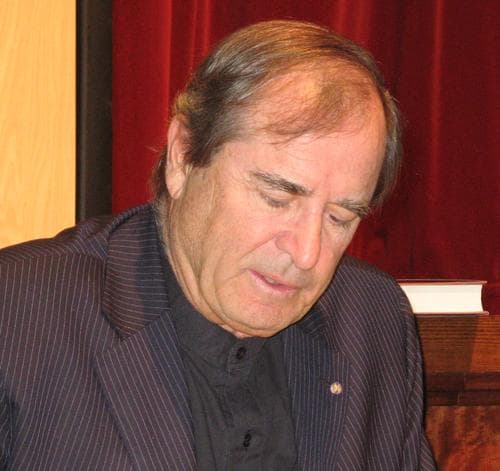
Paul Theroux is an American author known for his fiction and travel writing. His notable works include "The Great Railway Bazaar," a travel narrative chronicling his journey by train through various countries, and "The Mosquito Coast," a novel about an idealistic inventor who takes his family to Central America. Theroux's writing often explores themes of adventure and cultural encounters.
Similar books
- Lord of the Flies
William Golding
3.7 (2.3M) average on GoodreadsYoung AdultExplores the breakdown of societal order and human nature in an isolated, wild setting.
- Heart of Darkness
Joseph Conrad
3.4 (415k) average on GoodreadsHistorical FictionFeatures a journey into a remote wilderness that reveals the darkness within a charismatic, obsessive figure.
- Into the Wild
Jon Krakauer
3.7 (2k) average on GoodreadsFantasyNon-fiction, but shares themes of rejecting society and seeking a purer life in the wilderness, with tragic consequences.
- The Old Man and the Sea
Ernest Hemingway
3.8 (831k) average on GoodreadsLiterary FictionA Cuban fisherman's long struggle with a giant marlin becomes a story of endurance and dignity, now retold for young adults with illustrations, phonetic guides, and writing prompts in Traditional Chinese.
- One Hundred Years of Solitude
Gabriel García Márquez
4.1 (753k) average on GoodreadsLiterary FictionThrough the multi-generational story of the Buendía family, a mythical town deals with the repeating patterns of time, love, and solitude, as the extraordinary mixes with the ordinary.
- The Goldfinch
Donna Tartt
3.9 (720k) average on GoodreadsLiterary FictionHaunted by a tragic explosion and clutching a stolen Dutch masterpiece, a young orphan navigates the opulent drawing rooms of New York and the gritty underbelly of the art world, desperately seeking connection and redemption amidst a life spiraling into crime and obsession.






Enjoyed the summary?
A summary gives you the shape of the book. The book itself has the detail, the examples and the voice.
Find The Mosquito Coast on AmazonAs an Amazon Associate, BookBrief earns from qualifying purchases. How we're funded