

Synopsis
Covers the whole plot, including the ending.
- Difficulty
- Medium
- Pacing
- Slow
- Mood
- Introspective, Philosophical, Melancholy, Poignant
- Read it if
- You enjoy introspective literary fiction that explores themes of alienation, existentialism, and the search for meaning in modern life, particularly with a Southern American sensibility.
- Skip it if
- You prefer fast-paced plots, clear-cut resolutions, or stories with strong external conflict and action.
The Moviegoer Plot Summary
Covers the whole plot, including the ending.
Binx Bolling's Everyday Search
The novel opens with Binx Bolling, a New Orleans stockbroker nearing his thirtieth birthday, describing his routine and his peculiar 'search.' He lives a comfortable but emotionally distant life, finding solace and a sense of reality primarily in movie theaters, where he feels more present than in his actual life. He observes the world and its inhabitants, including his secretary Sharon Kincaid, through a detached, almost cinematic lens. Binx often reflects on the pervasive 'malaise' of modern existence, a feeling of unreality and spiritual emptiness that he believes afflicts many. He lives in a furnished room in Gentilly, away from his wealthy Garden District family, further emphasizing his sense of alienation. He meticulously tracks his moviegoing habits and categorizes people into 'moviegoers' and 'non-moviegoers,' defining his own existence by his observations of the cinematic world.
A Weekend with Aunt Emily and Kate
Binx spends a weekend at his aunt Emily Cutrer's house in the Garden District. Aunt Emily, a matriarch of the old Southern aristocracy, embodies a strong sense of duty and tradition, often expressing her disappointment in Binx's aimlessness despite his financial success. During this visit, he encounters his cousin Kate Cutrer, who is deeply troubled and has recently attempted suicide. Kate is emotionally fragile, prone to panic attacks, and struggles with an overwhelming sense of dread. Binx feels a complex pull towards her, recognizing a shared, albeit more extreme, spiritual emptiness. Their interactions show a delicate tension, with Binx observing her with a mixture of concern and a peculiar fascination, seeing in her a reflection of the 'malaise' he constantly seeks to understand.
The Mardi Gras Interlude and Proposed Trip
As Mardi Gras festivities begin to envelop New Orleans, Binx and Kate find themselves drawn together. Kate, in one of her more lucid moments, asks Binx to take her away from the city and her suffocating family environment. Binx, seeing an opportunity for a 'lunge' out of his malaise, impulsively agrees to take her on a trip. He suggests Chicago, a place far removed from their Southern roots and the expectations of their family. This decision is made amidst the chaotic and vibrant backdrop of Mardi Gras, an event that Binx views with his characteristic detachment, seeing it as another form of escape or distraction for the masses. Their shared sense of unreality and desire for an authentic experience fuels this sudden plan.
The Train Journey and Intimacy
Binx and Kate board a train for Chicago, starting a period of intense, if unconventional, intimacy. On the train, they pretend to be a newlywed couple, a role-play that Binx finds both absurd and strangely comforting, as it provides a ready-made identity. Kate's emotional fragility is evident, but she also exhibits moments of clarity and a desperate need for connection. Their conversations explore their shared feelings of alienation, dread, and the search for meaning. Binx observes Kate's anxieties and tries to offer a grounded presence, even as he struggles with his own existential questions. The train journey symbolizes their attempt to escape their past and find a new reality together, however temporary.
Chicago and the Honeymoon Pretense
In Chicago, Binx and Kate continue their pretense of being newlyweds, checking into hotels and exploring the city as if on a honeymoon. This role-playing provides a temporary structure and meaning to their interactions, allowing them to bypass the awkwardness of their real, complicated relationship. Binx finds himself more engaged in the present moment through this charade, observing the mundane details of their hotel rooms and the city with a heightened awareness. Kate, too, seems to find a fragile stability in the performance, though her underlying anxieties occasionally resurface. They engage in physical intimacy, which Binx perceives as another form of escape or a way to feel 'real,' rather than a deep emotional connection. Their time in Chicago is a series of staged moments, further blurring the lines between reality and performance.
Aunt Emily's Intervention
Their 'honeymoon' is abruptly interrupted when Aunt Emily, having discovered their whereabouts, sends her lawyer, Mr. McGehee, to bring them back to New Orleans. This intervention forces Binx and Kate to abandon their charade and confront the reality of their situation. Mr. McGehee's presence represents the societal expectations and family pressures they tried to escape. Binx feels a familiar sense of detachment even as he deals with the consequences of his actions. Kate, predictably, becomes more distressed and withdrawn, showing her inability to cope with external pressures. This event marks a turning point, signaling the end of their spontaneous escape and the necessity of returning to their established lives, albeit changed by their experience.
Return to New Orleans and Reconciliation
Back in New Orleans, Binx and Kate face Aunt Emily's disapproval and the weight of their family's expectations. Binx reflects on his past, particularly the death of his brother, Jack, during the Korean War, and his own near-death experience, events that profoundly shaped his detached worldview. He begins to see that his 'search' has been largely intellectual and observational, and that a different kind of engagement might be necessary. He has conversations with Aunt Emily, who, despite her traditional views, genuinely cares for him and Kate. Binx starts to consider a more committed relationship with Kate, seeing in her not just a reflection of his malaise, but also a potential path to genuine connection and responsibility. He proposes marriage to her, offering a new kind of 'lunge' into a more integrated life.
Binx's Decision and a New Path
Binx, having proposed to Kate, makes a conscious decision to commit to her and to a different way of living. He recognizes that his former life of detached observation and cinematic escapism, while intellectually stimulating, has left him unfulfilled. He decides to enroll in medical school, a move that surprises his family, as it signifies a shift from his financially successful but spiritually empty career as a stockbroker. This decision is not presented as a definitive solution to his existential 'malaise,' but rather as a deliberate step towards engagement and responsibility. He understands that the 'search' might not end, but that he can choose to live a life of active participation rather than passive observation. His marriage to Kate and his choice of profession represent a commitment to the tangible world and to others.
A Glimpse into the Future
The novel concludes with a brief epilogue several years later. Binx and Kate are married and have children. Binx is indeed studying medicine, working as an intern in a New Orleans hospital. He now finds meaning in the practical demands of his work, attending to the sick and dying, recognizing the inherent value in direct human connection and service. Kate, though still prone to anxiety, finds solace in their shared life and the responsibilities of family. Binx reflects that while the 'search' for meaning hasn't entirely disappeared, it has transformed. He no longer relies on movies for a sense of reality but finds it in the everyday struggles and joys of his family and his profession. He has moved from an intellectualized detachment to a more engaged, albeit still questioning, existence, finding a fragile peace in commitment and responsibility.
The Moviegoer Characters
Binx Bolling
Protagonist
A New Orleans stockbroker searching for meaning in a world he perceives as unreal.
Binx is a thirty-year-old stockbroker from a prominent New Orleans family who feels a profound sense of detachment and spiritual emptiness, which he terms 'the malaise.' He spends much of his time observing the world through a cinematic lens, finding more reality in movies than in his own life. His 'search' is an attempt to break through this unreality and find authentic meaning. He is intelligent, cynical, and deeply introspective, constantly analyzing his own feelings and the behavior of others. Despite his outward success, he struggles with a lack of purpose and a pervasive sense of alienation.
Relationships: Kate Cutrer (cousin and later wife, with whom he shares a complex, troubled intimacy); Aunt Emily Cutrer (maternal aunt who represents traditional Southern values and authority); Sharon Kincaid (his secretary, a casual romantic interest whom he observes with his characteristic detachment)
Kate Cutrer
Supporting
Binx's emotionally fragile cousin, struggling with anxiety and suicidal ideation.
Kate is Binx's younger cousin, a beautiful but deeply troubled young woman who has recently attempted suicide. She suffers from severe anxiety, panic attacks, and a profound sense of dread, often feeling overwhelmed by the demands of everyday life. Unlike Binx, whose malaise is intellectual, Kate's is visceral and debilitating. She is desperate for someone to 'save' her and finds a peculiar comfort and understanding in Binx's presence. Her vulnerability and need for connection serve as a catalyst for Binx's own journey, as he sees in her a more extreme manifestation of the emptiness he himself experiences.
Relationships: Binx Bolling (cousin and later husband, her primary source of connection and stability); Aunt Emily Cutrer (mother figure, whose expectations often overwhelm Kate)
Aunt Emily Cutrer
Supporting
Binx's formidable aunt, a matriarch embodying traditional Southern values.
Aunt Emily is Binx's maternal aunt and a strong, dignified matriarch of the old Southern aristocracy. She represents a bygone era of duty, honor, and tradition. She is critical of Binx's aimlessness and Kate's fragility, urging them to find their place in the world and uphold their family's reputation. Despite her stern exterior and adherence to social conventions, she genuinely cares for Binx and Kate, offering them guidance and support in her own way. Her perspective provides a contrast to Binx's modern alienation, highlighting the clash between traditional values and contemporary existential angst.
Relationships: Binx Bolling (nephew, whom she tries to guide and often scolds); Kate Cutrer (daughter, whose struggles she tries to manage and protect)
Sharon Kincaid
Supporting
Binx's secretary and casual romantic interest, a 'moviegoer' in his classification.
Sharon is Binx's secretary, a young woman with whom he has a casual, intermittent physical relationship. Binx classifies her as a 'moviegoer,' someone who, like him, finds a sense of reality and emotional resonance in films. She is depicted as somewhat naive and conventional, aspiring to a traditional life with a husband and children. Binx observes her with his typical detachment, using her as another subject for his 'search' and a way to feel momentarily 'real,' without deep emotional investment. She represents a more conventional path that Binx considers but ultimately rejects.
Relationships: Binx Bolling (employer and casual lover)
Walter Wade
Mentioned
Kate's former fiancé, a conventional and stable figure.
Walter Wade is Kate's former fiancé, a seemingly stable and conventional young man from a good family. Kate broke off their engagement due to her overwhelming anxiety and inability to cope with the expectations of a normal life. Walter represents the kind of 'normal' existence that Binx and Kate both struggle to embrace. He is mentioned as a contrast to Binx, embodying the kind of straightforward, un-searching individual that Binx finds both enviable and ultimately unfulfilling.
Relationships: Kate Cutrer (former fiancé)
Mr. McGehee
Supporting
Aunt Emily's lawyer, sent to retrieve Binx and Kate.
Mr. McGehee is Aunt Emily's lawyer, a respectable and efficient man who is sent to Chicago to bring Binx and Kate back to New Orleans. He represents the practical, legal arm of the family's authority and social expectations. His appearance signals the end of Binx and Kate's impulsive escape and forces them to confront the consequences of their actions. Binx observes him with a mixture of amusement and resignation, seeing him as another figure in the conventional world he is trying to navigate.
Relationships: Aunt Emily Cutrer (legal counsel and family agent)
Jack Bolling
Mentioned
Binx's deceased younger brother, whose death profoundly impacted Binx.
Jack was Binx's younger brother, who died heroically in the Korean War. His death, along with Binx's own near-death experience, is a significant event in Binx's past that contributed to his existential detachment. Binx often reflects on Jack's life and death, seeing him as a figure who lived a more straightforward, honorable existence. Jack represents a lost innocence and a more traditional form of heroism, providing a counterpoint to Binx's cynical and searching modern consciousness. His memory haunts Binx and informs his understanding of life and death.
Relationships: Binx Bolling (younger brother)
The Moviegoer Themes
The Search for Meaning and Authenticity
The central theme is Binx Bolling's existential 'search' for meaning in a world he perceives as inauthentic and devoid of spiritual substance. He constantly tries to break through the 'malaise' of modern life, which he defines as a feeling of unreality and spiritual emptiness. This search appears in his meticulous observations of others, his fascination with movies, and his attempts to find 'lapses' or 'moments of disclosure' where reality might break through. His journey with Kate is a significant part of this search, as he tries to find authenticity not in abstract thought, but in concrete human connection and responsibility. The novel suggests that while the search may never fully end, a more authentic existence can be found in commitment to others and the tangible world.
“What is the nature of the search? From time to time I have undertaken to put it down, but it is like trying to cram a foot into a shoe too small for it.”
Alienation and Detachment
Binx embodies modern alienation and detachment. He feels a deep separation from the world and the people in it, observing them as if through a pane of glass. This detachment allows him to analyze and categorize, but prevents him from fully participating in life. His preference for movies over real-life interactions shows his inability to connect authentically. Kate's extreme anxiety and dread are another sign of this alienation, as she feels disconnected from her own emotions and the demands of existence. The novel explores how this detachment can be both a coping mechanism and a source of deep loneliness, suggesting that true engagement requires overcoming this barrier.
“The movies are onto the search, but they screw it up. The search always ends in a woman.”
Reality vs. Illusion/Performance
A theme is the blurred line between reality and illusion, particularly in modern life and Binx's cinematic worldview. Binx often feels that life itself is a performance, and people are playing roles. He finds more 'reality' in the fabricated worlds of movies than in his own mundane existence. His and Kate's pretense of being newlyweds in Chicago exemplifies this, as they create an artificial reality to escape their authentic troubles. The novel questions what constitutes 'real' experience and suggests that modern society often encourages a kind of living that is superficial and performative, making it difficult to find genuine substance.
“The surest way to arouse and hold the attention of the red-blooded American male is to promise him something that can be attained by the purchase of an automobile, a refrigerator, a suit of clothes, or a laxative.”
The Role of Faith and Spirituality
Though not overtly religious, the novel explores questions of faith and spirituality, particularly in a post-religious, secular age. Binx's 'malaise' is essentially a spiritual void, a lack of transcendent meaning. His 'search' can be interpreted as a quest for a spiritual anchor, even if he doesn't frame it in traditional religious terms. Aunt Emily represents a more traditional, duty-bound spirituality, while Binx struggles with the absence of such clear guidance. The ending, with Binx finding purpose in service and responsibility, suggests a path towards a lived spirituality, rather than an intellectual or dogmatic one, hinting at the Catholic existentialism that influenced Percy.
“Either I'm a anachronism or I'm a sport. If I'm an anachronism, I'm a lost cause. If I'm a sport, I'm a new species.”
Southern Identity and Tradition
The novel uses Southern identity and tradition, particularly through Aunt Emily and the New Orleans setting. Aunt Emily embodies aristocratic Southern values of honor, duty, and family lineage, providing a stark contrast to Binx's modern alienation. The Mardi Gras setting, with its blend of celebration and underlying melancholy, reflects the complex cultural environment. Binx's struggle to find meaning within this traditional framework shows the tension between a romanticized past and a disillusioned present. The South is both a source of Binx's heritage and a cultural context from which he feels deeply detached.
“The great thing about the South is that it has a past. The great thing about the North is that it has a future.”
Plot Devices & Literary Techniques
First-Person Narrator (Binx Bolling)
The entire story is filtered through Binx's introspective and detached consciousness.
The novel is told entirely from Binx Bolling's perspective, allowing readers direct access to his complex inner world, his philosophical ponderings, and his unique observations. This device immerses the reader in Binx's 'search' and his feeling of 'malaise,' as every event and character is filtered through his cynical, yet deeply introspective, lens. It emphasizes the subjective nature of reality and the protagonist's intellectual detachment, making his internal monologue the primary action of the novel. The reader experiences his existential angst and his attempts to make sense of the world alongside him.
The 'Search' and the 'Malaise'
Binx's intellectual framework for understanding his spiritual emptiness and quest for meaning.
These are not just themes, but integral plot devices that structure Binx's narrative and his interactions. The 'malaise' is the pervasive feeling of unreality and spiritual emptiness that Binx identifies in himself and others. The 'search' is his conscious, intellectual attempt to break through this malaise and find authentic meaning. These concepts provide the internal motivation for all of Binx's actions, from his moviegoing habits to his impulsive trip with Kate. They serve as a constant internal monologue, guiding his observations and reflections, and defining his unique way of perceiving the world and his place in it.
Cinematic Metaphor/Moviegoing
Movies serve as a lens through which Binx understands and experiences reality.
Movies are a pervasive metaphor and a central plot device. Binx finds more reality and emotional resonance in films than in his own life, often categorizing people as 'moviegoers' or 'non-moviegoers.' He uses cinematic terms to describe his experiences and observes life as if it were a film. This device highlights his detachment from authentic experience and his preference for mediated reality. It also serves as a commentary on modern culture's reliance on manufactured experiences for meaning, and how these can both offer escape and further alienate individuals from their own lives. His eventual move away from this reliance signals his growth.
Role-Playing and Pretense
Characters adopt roles to cope with reality or to find temporary meaning.
The act of role-playing, particularly Binx and Kate pretending to be newlyweds, is a significant plot device. This pretense allows them to bypass the complexities of their actual troubled relationship and find a temporary, structured identity. For Binx, it's another way to feel 'real' by adopting a ready-made narrative. For Kate, it offers a fragile sense of normalcy and protection from her anxieties. This device underscores the theme of reality vs. illusion, suggesting that sometimes adopting a role can be a way to navigate a world that feels inauthentic, or even a step towards finding a more genuine self.
The Moviegoer Quotes
“The search is what anyone would undertake if he were not sunk in the everydayness of his own life.”
“The only thing I am a sucker for is a movie.”
“Why is it that on the one hand we understand all about the Cosmos and on the other hand we don't know beans about ourselves?”
“The movies are onto the search, but they screw it up.”
“To become a castaway is to be a person who has taken the first step in the search.”
“It is a sweet mystery, the movie house, so dark and intimate and sad.”
“The moviegoer has been everywhere and seen everything.”
“Nowadays, the only way to be a hero is to be a movie star.”
“Am I in a movie? I wonder.”
“The fact is I am a moviegoer and I have been a moviegoer ever since I can remember.”
“There is a difference between the everydayness of the world and the everydayness of a movie.”
“What does a man do when he is no longer a moviegoer?”
“It is possible for a man to attain the double freedom: freedom from the world and freedom for himself.”
“The movies are onto the search, but they screw it up.”
Quiz
10 questions on the plot and the characters. Each answer comes with a short explanation.
Question 1
What is Binx Bolling's primary occupation at the beginning of the novel?
- A philosophy professor
- A stockbroker
- An aspiring filmmaker
- A jazz musician
Show answer
B. A stockbroker Binx Bolling works as a stockbroker in New Orleans, a profession that contributes to his feeling of detachment and the 'falseness' of his daily life.
Question 2
What significant event is taking place in New Orleans during the novel's timeline?
- The Jazz Festival
- A major political convention
- Mardi Gras
- A hurricane evacuation
Show answer
C. Mardi Gras The novel is set during Mardi Gras, which provides a backdrop of excess, carnival, and a sense of unreality that mirrors Binx's internal state.
Question 3
What is Binx's primary escape or refuge from the 'falseness of his life'?
- Long walks in the French Quarter
- His family's country estate
- The movie theater
- Reading philosophical texts
Show answer
C. The movie theater Binx finds solace and a sense of authenticity in the movie theater, where he can observe life played out on screen, often feeling more real than his own experiences.
Question 4
Who is Kate, and what is her relationship to Binx?
- His estranged sister
- His business partner
- His cousin
- His therapist
Show answer
C. His cousin Kate is Binx's cousin, and their complex relationship is central to the novel's exploration of shared existential struggles and the possibility of connection.
Question 5
What is the 'malaise' that Binx often feels and describes?
- A physical illness brought on by the Mardi Gras festivities
- A feeling of spiritual emptiness, detachment, and anomie
- Financial anxiety due to his stock market investments
- Nostalgia for a simpler past that he can't recapture
Show answer
B. A feeling of spiritual emptiness, detachment, and anomie Binx's 'malaise' is a profound sense of spiritual emptiness and alienation, a common theme in existentialist literature, where he feels disconnected from the world and lacks true purpose.
Question 6
What is Binx's 'search' primarily concerned with?
- Finding a new career path outside of finance
- Discovering a lost family treasure
- Understanding the nature of reality and finding meaning in life
- Escaping his responsibilities and moving to a different city
Show answer
C. Understanding the nature of reality and finding meaning in life Binx's 'search' is an internal, philosophical quest for meaning, authenticity, and a way to overcome his pervasive sense of alienation in modern existence.
Question 7
How does Binx often relate to his experiences in the real world compared to his experiences in movies?
- He finds the real world consistently more engaging and authentic.
- He often feels that life in movies is more real or significant than his own life.
- He consciously tries to recreate movie scenes in his daily life.
- He uses movies as a way to avoid any form of emotional engagement.
Show answer
B. He often feels that life in movies is more real or significant than his own life. A central paradox for Binx is that the fabricated reality of movies often feels more authentic and meaningful to him than his own lived experiences, highlighting his detachment.
Question 8
What is the significance of the 'vertical' and 'horizontal' forms of existence that Binx contemplates?
- They refer to his posture and physical health.
- They describe the layout of New Orleans' streets.
- They represent the mundane, everyday life versus moments of profound insight or transcendence.
- They are terms from his stock market analysis.
Show answer
C. They represent the mundane, everyday life versus moments of profound insight or transcendence. Binx uses 'horizontal' to describe the repetitive, mundane, and inauthentic aspects of everyday life, and 'vertical' to refer to rare moments of genuine insight, awareness, or spiritual awakening that break through the ordinary.
Question 9
What role does Binx's Aunt Emily play in his life and worldview?
- She is a source of financial support and encourages his stock market career.
- She represents the traditional Southern values and expectations that Binx struggles against.
- She is his confidante and understands his existential struggles.
- She is an eccentric character who provides comic relief.
Show answer
B. She represents the traditional Southern values and expectations that Binx struggles against. Aunt Emily embodies the established, genteel Southern society and its conventional expectations, which Binx finds stifling and contributes to his sense of inauthenticity, even as he respects her in some ways.
Question 10
By the end of the novel, what kind of resolution, if any, does Binx find for his 'search'?
- He completely abandons his old life and becomes a movie critic.
- He achieves a definitive philosophical breakthrough and finds absolute meaning.
- He finds a tentative, quiet acceptance of ordinary life and a commitment to responsibility, particularly with Kate.
- He decides to leave New Orleans and travel the world, still searching.
Show answer
C. He finds a tentative, quiet acceptance of ordinary life and a commitment to responsibility, particularly with Kate. Binx doesn't find a grand, definitive answer. Instead, he moves towards a more grounded existence, accepting the responsibilities of ordinary life and finding a quiet, if imperfect, connection with Kate, suggesting that meaning can be found in commitment rather than abstract searching.
The Moviegoer FAQ
What is "The Moviegoer" about?
"The Moviegoer" is about Binx Bolling, a young New Orleans stockbroker nearing his thirtieth birthday, who feels a profound sense of alienation and meaninglessness in his everyday life. He seeks escape and a sense of 'authenticity' through watching movies, which he finds more real than his own existence. The novel follows his internal and external journey, particularly during Mardi Gras, as he grapples with existential questions and navigates complex relationships with his family, especially his troubled cousin Kate Cutrer.
Why should I read "The Moviegoer"?
You should read "The Moviegoer" for its profound exploration of modern alienation, the search for meaning in a consumerist society, and its unique blend of philosophical depth with a compelling narrative. Walker Percy's elegant prose and the relatable struggle of Binx Bolling to find 'the way' make it a deeply introspective and thought-provoking experience, offering both intellectual stimulation and emotional resonance about the human condition.
What is the background/setting of "The Moviegoer"?
The novel is primarily set in New Orleans during Mardi Gras, a vibrant and chaotic backdrop that contrasts sharply with Binx Bolling's internal ennui. The city's unique Southern charm, its entrenched social customs, and the spiritual decay Binx perceives within it, all contribute to the atmosphere. The setting emphasizes the tension between outward appearances and inner realities, and the search for meaning amidst superficiality.
What are the most memorable quotes?
Some memorable quotes include Binx's observation, "The search is what anyone would undertake if he were not sunk in the everydayness of his own life." Another is his reflection on the disconnect between life and art: "The movies are onto the search, but they screw it up." These quotes encapsulate Binx's existential quest and his unique perspective on reality versus cinematic fantasy.
What writing style does the author use?
Walker Percy employs a first-person narrative, primarily through Binx Bolling's stream-of-consciousness, characterized by its introspective, philosophical, and often dryly humorous tone. The prose is elegant and precise, filled with keen observations about human behavior and the absurdities of modern life. He uses a direct, almost diaristic style that invites the reader deep into Binx's mind.
What minor details add significant meaning?
Binx's habit of making lists and meticulously observing 'phenomena' in his daily life, whether it's the specific types of people he sees or the mundane details of his surroundings, reveals his desperate attempt to categorize and understand a world he feels disconnected from. These seemingly minor actions are profound indicators of his 'search' for meaning and authenticity beyond superficial existence.
What are some subtle foreshadowing moments?
Early in the novel, Binx's frequent contemplation of death and his family's history of mental illness subtly foreshadow Kate's own profound struggles with depression and suicidal ideation. His own detached observations of others' suffering also hint at the emotional challenges he will face when he becomes more deeply involved in Kate's precarious mental state, moving beyond mere observation to active participation.
What unexpected character connections exist?
The unexpected connection between Binx and his emotionally fragile cousin, Kate Cutrer, develops into a central relationship. Though initially a figure Binx observes with a detached fascination, their shared sense of alienation and brokenness, despite their different manifestations, draws them together in a deeply intimate and healing way that neither fully anticipates, offering each a unique form of solace.
What are unspoken character motivations?
Binx's unspoken motivation is a profound fear of succumbing to the 'everydayness' and 'malaise' that he sees afflicting others, and even himself. His constant 'search' and his moviegoing are not just pastimes but desperate attempts to avoid confronting this existential dread and to find an authentic 'way' to live, rather than merely exist, which he feels his family and society have failed to do.
What psychological complexities do characters exhibit?
Binx exhibits a complex blend of intellectual detachment and a deep, unacknowledged yearning for connection and meaning. He intellectualizes his alienation as 'the search' while simultaneously engaging in superficial affairs. Kate, on the other hand, struggles with severe depression, self-destructive tendencies, and a desire for annihilation, yet she also possesses a fragile capacity for love and a desperate need for someone to anchor her to reality.
What are the major emotional turning points?
A major emotional turning point occurs when Binx decides to take responsibility for Kate's well-being after her suicide attempt, moving beyond his detached observation to active engagement. Another is his realization that 'the search' cannot be fulfilled by intellectualizing or moviegoing alone but requires commitment to another person, culminating in his decision to marry Kate, signifying a shift from individual quest to shared existence.
How do relationship dynamics evolve?
The relationship between Binx and Kate evolves from one of distant, albeit curious, familial connection to a deep, co-dependent bond. Initially, Binx observes Kate's fragility with a degree of clinical interest, but as they spend more time together, particularly during their road trip, their shared brokenness fosters a profound intimacy. Their dynamic shifts from two isolated individuals to a couple finding a tentative form of salvation in each other.
Which parts remain ambiguous or open-ended?
The ultimate success of Binx and Kate's marriage remains somewhat ambiguous. While Binx finds a temporary 'way' through commitment to Kate and his medical studies, the novel doesn't guarantee a lasting cure for their existential anxieties. The reader is left to ponder whether their shared brokenness will truly lead to sustained happiness or if it's merely a temporary reprieve from 'the malaise,' leaving the future of their 'new life' open to interpretation.
What are controversial scenes or decisions?
Binx's decision to marry Kate, despite her severe mental instability and his own prior detachment, can be seen as controversial. Some might view it as a genuine act of love and commitment, while others might interpret it as a desperate, perhaps even misguided, attempt by Binx to find meaning, or an unhealthy codependency given Kate's fragile state. His prior string of casual affairs also showcases his moral ambiguity.
"The Moviegoer" ending explained: how it ends & what it means
The novel ends with Binx having married Kate, now studying medicine, and raising a family in a more conventional, committed way. He finds a tentative 'way' not through philosophical abstraction or moviegoing, but through the concrete responsibilities of family life and a practical profession. This ending suggests that meaning can be found in ordinary existence and commitment to others, rather than in an endless, solitary 'search,' though it acknowledges the 'malaise' may still linger, requiring constant vigilance and a 'sign' to navigate life.
About the author

Walker Percy, OblSB was an American writer whose interests included philosophy and semiotics. Percy is noted for his philosophical novels set in and around New Orleans; his first, The Moviegoer, won the National Book Award for Fiction.
Similar books
- The Stranger
Albert Camus
4.1 (3k) average on GoodreadsFantasyExplores themes of existential alienation and detachment from societal norms.
- A Confederacy of Dunces
John Kennedy Toole
3.9 (231k) average on GoodreadsLiterary FictionFeatures an eccentric, intellectual protagonist navigating New Orleans, though with a more comedic tone.
- Herzog
Saul Bellow
3.8 (19k) average on GoodreadsLiterary FictionFocuses on a highly intellectual protagonist grappling with personal and philosophical crises through introspection.
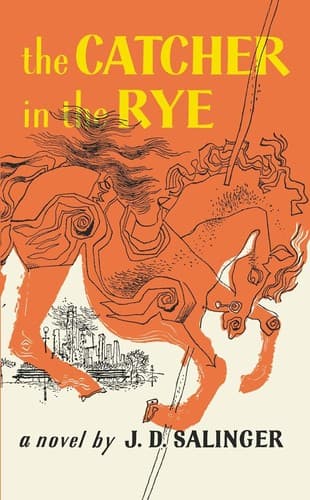
- The Catcher in the Rye
J.D. Salinger
3.8 (2.7M) average on GoodreadsYoung AdultWhile both novels feature alienated protagonists disillusioned with societal 'phoniness,' Holden Caulfield's angst is more adolescent and overtly rebellious. Binx Bolling's malaise is an adult, more intellectually sophisticated, and rooted in a deeper philosophical quest for meaning rather than just a rejection of superficiality.
- The Old Man and the Sea
Ernest Hemingway
3.8 (831k) average on GoodreadsLiterary FictionA Cuban fisherman's long struggle with a giant marlin becomes a story of endurance and dignity, now retold for young adults with illustrations, phonetic guides, and writing prompts in Traditional Chinese.
- One Hundred Years of Solitude
Gabriel García Márquez
4.1 (753k) average on GoodreadsLiterary FictionThrough the multi-generational story of the Buendía family, a mythical town deals with the repeating patterns of time, love, and solitude, as the extraordinary mixes with the ordinary.





Enjoyed the summary?
A summary gives you the shape of the book. The book itself has the detail, the examples and the voice.
Find The Moviegoer on AmazonAs an Amazon Associate, BookBrief earns from qualifying purchases. How we're funded