
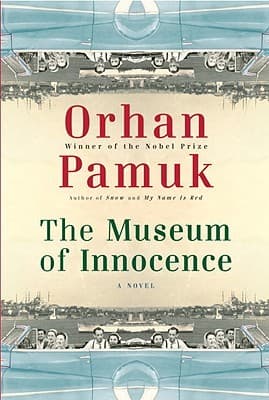
Synopsis
Covers the whole plot, including the ending.
- Difficulty
- Medium
- Pacing
- Slow
- Mood
- Melancholic, Obsessive, Reflective, Nostalgic, Atmospheric
- Read it if
- You enjoy deep dives into obsessive love, historical Istanbul, and the philosophical significance of objects and memory.
- Skip it if
- You prefer fast-paced plots or find unrequited, obsessive love stories frustrating and melancholic.
The Museum of Innocence Plot Summary
Covers the whole plot, including the ending.
The First Kiss and the Fateful Encounter
In the spring of 1975, Kemal Basmacı, a wealthy Istanbul socialite, prepares for his engagement to Sibel, an elegant woman from a prominent family. While looking for a handbag for Sibel, he meets Füsün, a beautiful, poor shopgirl who is a distant relative. Despite his upcoming marriage, Kemal is immediately drawn to Füsün. Their first meetings have an unspoken tension, and Kemal likes her innocence and directness. This shopping trip starts a lasting obsession, sending Kemal on a different path from his privileged life.
The Secret Affair Begins
After their first meeting, Kemal arranges more encounters with Füsün. He uses an empty apartment his family owns, meant for his future life with Sibel, as their secret meeting place. There, their affair becomes passionate and intense. Kemal is consumed by Füsün, feeling a happiness he has never known. He thinks about her constantly, neglecting his social duties and even Sibel. During these secret meetings, Füsün shares details of her simple life, making Kemal like her more, while he is both thrilled by their secrecy and troubled by his deception.
The Engagement Party and the Breakup
The day of Kemal and Sibel's engagement party arrives, and Kemal is conflicted. He goes through the motions, surrounded by Istanbul's elite, but thinks only of Füsün. The next day, he decides to break off his engagement to Sibel, believing he can now openly be with Füsün. However, when he goes to Füsün, expecting her to be happy, he finds she has disappeared. Her family, having learned of the affair, took her away, feeling ashamed and protective. This sudden loss sends Kemal into deep sadness, marking the start of his long suffering.
Years of Despair and Searching
For a year after Füsün's disappearance, Kemal is consumed by grief and a constant search for her. He visits every possible place, asks mutual acquaintances, and falls into a state of deep sadness. He neglects his business, pushes friends away, and withdraws from society. His family, at first sympathetic, grows worried and frustrated by his obsession. During this time, Kemal begins to collect small objects that remind him of Füsün—a hair clip, a cigarette butt, a teacup—unknowingly starting his future museum. This year is a turning point, solidifying his obsessive love and setting the stage for his unique way of mourning.
Füsun's Return and the Dinner Visits
After a year, Kemal finally finds Füsün. To his dismay, she is now married to Feridun, a struggling filmmaker. Despite this news, Kemal cannot give up his love. He begins a strange routine: for the next eight years, he finds reasons to visit Füsün and her family at their humble home in Nişantaşı, attending their nightly dinners. He endures the presence of Füsün's husband and her parents, silently hoping for a sign of her affection or a chance to restart their love. During these visits, he carefully watches Füsün, collecting hundreds of objects from her home—salt shakers, cigarette stubs, playing cards—each a reminder of her presence.
The Film Career Dream
Driven by his wish to be near Füsün, Kemal tries to help her achieve her dream of becoming an actress. He funds Feridun's film projects, believing that by making Füsün a star, he can create situations where they might be together again. He spends time on film sets, enduring Feridun's company and the seedier parts of the Turkish film industry. This venture is less about Füsün's career and more about Kemal's constant pursuit of her. He hopes that shared ambition and closeness will rekindle her feelings for him, but these efforts mostly cause frustration and further involvement in her family's life.
The Road Trip and Rekindled Hope
One summer, Kemal, Füsün, and Feridun take a road trip across Turkey, supposedly for Feridun's film. This journey becomes a time of heightened tension and fragile hope for Kemal. During the long drives and stops, he experiences brief moments of closeness and connection with Füsün, especially when Feridun is distracted or absent. He sees her glances and gestures as signs that her feelings for him might still exist. These moments, though few, fuel his hope and strengthen his belief that their love is meant to be. The road trip is a tempting glimpse of a possible future, but ultimately a false hope.
Feridun's Death and a New Beginning?
Years into Kemal's dinner visits, a tragic event occurs: Feridun dies in a car accident. This unexpected turn of events seemingly removes the main obstacle to Kemal and Füsün's reunion. Kemal feels renewed hope, believing that fate has finally helped them. He imagines a future where they can openly express their love and build a life together. Füsün, though grieving, slowly allows Kemal to become a more central figure in her life. This period is marked by a delicate dance of unspoken expectations and tentative steps towards a potential future, weighed down by their past.
The Engagement Drive and the Final Tragedy
After Feridun's death, Kemal and Füsün spend time together, slowly rebuilding their connection. They decide to announce their engagement. On the day they are to tell Füsün's parents, Kemal picks Füsün up in his car. As they drive, filled with anticipation and a fragile happiness, Füsün says she wants to drive. Kemal, hesitant but wanting to please her, lets her take the wheel. Tragically, Füsün, perhaps inexperienced or distracted, loses control of the car, and they are in a fatal accident. Füsün dies instantly, leaving Kemal physically injured but, more deeply, devastated and alone. This mirroring of Feridun's death is a cruel twist of fate.
The Creation of the Museum
Following Füsün's death, Kemal's grief is absolute. He realizes that his love for her, though unfulfilled in life, can be made eternal. He spends the rest of his life and fortune creating The Museum of Innocence, a physical representation of his obsessive love. He turns Füsün's childhood home into a museum, carefully arranging the thousands of objects he collected over the years—each item a memory of Füsün, their time together, and his strong devotion. The museum becomes his sanctuary, his project, and his way of sharing his deep love with the world, ensuring Füsün's memory lives on.
The Museum's Philosophy and Legacy
Kemal works tirelessly on the museum, arranging the objects thematically rather than chronologically, creating scenes that evoke specific moments, feelings, and details of Füsün's life and his love for her. He sees it as a 'real' museum, one that tells a personal story rather than a grand historical one. He includes everyday items, personal effects, and even trivial things that held meaning for him. The museum also serves as a record of Istanbul society in the late 20th century, particularly the contrast between its Westernized elite and its more traditional middle class. It becomes a unique record of memory, obsession, and the lasting power of a singular, unrequited love, inviting visitors to share in his experience.
Principal Figures
Kemal Basmacı
Protagonist
A wealthy Istanbul socialite consumed by an obsessive love for Füsun.
Kemal is a scion of one of Istanbul's wealthiest and most Westernized families. Initially portrayed as a conventional, somewhat detached member of the elite, his life takes a dramatic turn after he falls obsessively in love with Füsun. He is deeply sentimental, possessive, and ultimately self-destructive in his pursuit of her. His love is both pure and selfish, driving him to neglect his social standing, family, and even his own well-being. He finds solace in collecting objects, which become proxies for his beloved and a way to preserve their shared (and unshared) history. He represents the melancholic, nostalgic side of Istanbul's upper class.
Relationships: Füsun (Obsessive, unrequited love, central to his existence.); Sibel (Former fiancée, a representation of the life he abandons.); Feridun (Rival, husband of Füsun, whom Kemal tolerates and even helps for access to Füsun.); Orhan Pamuk (narrator) (The author figure to whom Kemal dictates his story and museum plans.)
Füsun
Love Interest
A beautiful, modest shopgirl and Kemal's distant cousin, the object of his obsession.
Füsun is a young woman from a more traditional, middle-class Istanbul family. She is beautiful, spirited, and initially innocent. Her initial affair with Kemal is passionate, but her subsequent marriage to Feridun and her pursuit of an acting career suggest a desire for independence and a life beyond the confines of her family. She remains somewhat enigmatic, her true feelings often obscured by her circumstances and Kemal's biased narration. She embodies the allure of the traditional, less Westernized Istanbul for Kemal, becoming a symbol of a lost past and an unattainable future. Her actions are often reactive to Kemal's relentless pursuit.
Relationships: Kemal Basmacı (Her obsessive lover, whose relentless pursuit defines much of her adult life.); Feridun (Her husband, a struggling filmmaker.); Her parents (Traditional, protective, represent the societal norms she navigates.)
Sibel
Supporting
Kemal's original fiancée, a sophisticated woman from Istanbul's elite.
Sibel represents the life Kemal was expected to lead: one of wealth, social standing, and conventional happiness within Istanbul's Westernized high society. She is intelligent, elegant, and well-educated, embodying the ideal partner for a man of Kemal's background. Her engagement to Kemal is a social arrangement, but she genuinely cares for him. Her heartbreak and subsequent marriage to another man highlight the profound impact of Kemal's choices. She serves as a stark contrast to Füsun, symbolizing the path Kemal consciously rejects for his obsessive love.
Relationships: Kemal Basmacı (His fiancée, later abandoned for Füsun.); Her family (Part of the same social circle as Kemal's family.)
Feridun
Supporting
Füsun's husband, a struggling filmmaker.
Feridun is a somewhat pathetic but ambitious character, a struggling filmmaker who marries Füsun after her affair with Kemal. He serves as an unwitting rival to Kemal, though Kemal often views him with a mixture of disdain and pity. Feridun's aspirations in the Turkish film industry provide Kemal with an excuse to remain close to Füsun, as Kemal often finances his projects. His presence at the dinner table for eight years is a constant reminder of Kemal's unfulfilled desires. Feridun represents the lower-middle-class aspirations and the sometimes-seedy realities of Istanbul's emerging cultural scene.
Relationships: Füsun (Her husband.); Kemal Basmacı (His benefactor and rival for Füsun's affection.)
Orhan Pamuk (Narrator)
Mentioned
The author figure to whom Kemal dictates his story and museum plans.
Orhan Pamuk appears as a character within the narrative, introduced as the 'author' whom Kemal approaches to write his story and design his museum. He acts as a listener and chronicler of Kemal's obsessive tale, providing an external, somewhat detached perspective. His inclusion blurs the line between fiction and reality, a characteristic of Pamuk's work. He is presented as a neutral party, tasked with faithfully relaying Kemal's version of events and helping to realize his vision for the Museum of Innocence. His role is primarily structural, giving Kemal's narrative a frame.
Relationships: Kemal Basmacı (The person who commissions him to write his story and help create the museum.)
Cemal
Supporting
Kemal's long-suffering driver, a witness to his obsession.
Cemal is Kemal's loyal and long-suffering driver, who witnesses the entirety of Kemal's obsessive pursuit of Füsun. He is a quiet, observant presence, often driving Kemal to Füsun's house for eight years of dinners. Cemal represents the silent, often unacknowledged working class in Istanbul, who are privy to the eccentricities and dramas of the wealthy elite. His presence underscores the social stratification of the city and the lengths Kemal goes to maintain his strange ritual. Cemal's stoicism offers a subtle commentary on Kemal's self-indulgence.
Relationships: Kemal Basmacı (His employer and the object of his silent observation.)
Nedim
Supporting
Füsun's father, a traditional, proud man.
Nedim is Füsun's father, a proud and traditional man who works as a tailor. He initially approves of Füsun's relationship with Kemal, hoping for a good match, but is deeply shamed by the affair and Füsun's subsequent elopement. He tolerates Kemal's presence at his dinner table for years, driven by a blend of politeness, hope for financial assistance, and perhaps a subtle understanding of Kemal's devotion. He represents the values and struggles of Istanbul's middle class, navigating the changing social landscape. His interactions with Kemal are always tinged with a complex mix of resentment and hospitality.
Relationships: Füsun (His daughter.); Sema (Füsun's mother) (His wife.); Kemal Basmacı (His daughter's lover, later a frequent dinner guest and benefactor.)
Sema
Supporting
Füsun's mother, a kind and pragmatic woman.
Sema is Füsun's mother, a more pragmatic and often kinder presence than her husband. She is initially hurt and worried by Füsun's affair and subsequent marriage, but she grows to accept Kemal's regular visits, perhaps seeing his enduring presence as a form of stability or even hope for her daughter. She often acts as a mediator between Kemal and Nedim, and her domestic rituals, particularly the dinner table, become central to Kemal's eight-year routine. Sema represents the nurturing, resilient spirit of the traditional Turkish mother, adapting to difficult circumstances.
Relationships: Füsun (Her daughter.); Nedim (Füsun's father) (Her husband.); Kemal Basmacı (A frequent guest in her home, whose presence she tolerates.)
Themes & Insights
Obsessive Love and Unrequited Desire
The novel explores obsessive love, as Kemal's life is defined by his desire for Füsün. From their first meeting, he is consumed by her. Even after she marries, he spends eight years visiting her family's home, hoping for a sign of her affection. This obsession is not just romantic; it is a deep need to possess and preserve Füsün, ending with the museum's creation. The unfulfilled nature of his love fuels his sad devotion, making his pursuit both tragic and romantic. His love shows itself as a form of collecting, where every object becomes a stand-in for his beloved, as seen in his careful gathering of her personal items.
“It was the happiest moment of my life, though I didn’t know it.”
Memory and Nostalgia
Memory is central to Kemal's story and the novel's structure. His entire project—the museum and his story—is an attempt to fix and preserve memories of Füsün and their time together. He carefully collects objects, each acting as a reminder, triggering specific recollections and emotions. The novel itself is an act of memory, written years after the events, filled with Kemal's sad longing for a lost love and a past Istanbul. This theme shows how people build their pasts and find meaning in personal items, turning personal grief into a tangible, shared experience. The museum is a physical archive of one man's memory.
“I want to collect and exhibit the innocence of the human heart, its purity and simplicity, its ability to love without calculation.”
The Clash of Tradition and Modernity in Istanbul
The novel shows the social and cultural tensions in Istanbul during the 1970s and 80s, especially the gap between its Westernized upper class and its more traditional, conservative middle class. Kemal, from a wealthy, Europeanized family, falls for Füsün, who comes from a more traditional background. Their affair crosses social lines and highlights the different moral codes and expectations of these two worlds. The lavish parties of Kemal's circle contrast sharply with the humble, television-centered dinners at Füsün's home. This theme is explored through character interactions, settings, and Kemal's observations, reflecting a city struggling with its identity. The museum itself, a modern idea, is filled with traditional artifacts.
“In Istanbul, every street corner is a museum of memories, and every memory carries the weight of history.”
The Nature of Collecting and Museums
Collecting is not just a hobby for Kemal; it is his main way of expressing love, grief, and existence. He collects thousands of objects linked to Füsün, each with personal meaning. The novel explores the idea of collecting, arguing that true museums should be personal, emotional stories rather than dry historical accounts. Kemal's Museum of Innocence challenges traditional museum practices by presenting a deeply subjective, intimate collection that tells the story of one man's heart. This theme explores how objects can hold memory, emotion, and identity, turning ordinary things into something special. His collection maps his troubled heart.
“The purpose of my museum is to show that a truly happy life is one lived without calculation, without fear of loss, in innocent abandon to the moment.”
Social Class and Hypocrisy
The novel subtly critiques Istanbul's social hypocrisy and rigid class structures. Kemal's initial engagement to Sibel is about social convenience and status, while his secret affair with Füsün highlights the double standards in society. The wealthy elite, while outwardly modern and Westernized, often follow conservative moral codes, especially concerning female virginity and family honor. Kemal's ability to keep his social standing while pursuing Füsün through various means, including financially supporting her husband, reveals the power dynamics and unspoken rules of his class. The contrast between Kemal's opulent life and Füsün's modest existence underscores these social divides.
“We were all hypocrites, of course, but it was a hypocrisy rooted in the desire to be loved.”
Plot Devices & Literary Techniques
First-Person Narration (Kemal's Voice)
The entire story is told from Kemal's subjective and often unreliable perspective.
The novel is narrated entirely by Kemal Basmacı, recounting his life-defining obsession with Füsun. This first-person perspective allows readers deep insight into Kemal's thoughts, emotions, and justifications for his actions, creating an intimate and confessional tone. However, it also means the reader only sees Füsun and other characters through Kemal's biased lens, making her motivations and feelings somewhat ambiguous. This device emphasizes the subjective nature of love and memory, and how one person's narrative can dominate and shape the interpretation of events, aligning with the idea of a personal museum.
The Museum of Innocence (as a physical entity and metaphor)
A real-life museum created by Kemal to house objects related to Füsun, serving as a central metaphor.
The Museum of Innocence is both a fictional construct within the novel and a real-life museum founded by Orhan Pamuk in Istanbul. In the story, it is Kemal's life's work, a collection of thousands of objects associated with Füsun and their relationship. As a plot device, it provides a tangible goal for Kemal after Füsun's death, giving his grief a purpose. Metaphorically, the museum represents the power of memory, the nature of obsessive love, and the idea that personal history can be curated and preserved. It challenges conventional notions of museums, asserting the value of individual experience over grand narratives.
Collecting Objects (Mnemonic Devices)
Kemal's compulsive habit of collecting objects linked to Füsun.
Throughout the novel, Kemal compulsively collects objects that remind him of Füsun—her hairpins, cigarette stubs, teacups, earrings, even movie tickets. These items serve as powerful mnemonic devices, each triggering a specific memory, emotion, or moment from his past with her. This act of collecting is central to Kemal's character and his obsession, transforming mundane items into sacred relics. It foreshadows the eventual creation of the museum and provides a structural framework for his narrative, as he often recounts stories prompted by a specific object. The collection represents his attempt to physically possess and preserve Füsun's essence.
The Dinner Table Ritual
Kemal's eight-year routine of dining at Füsun's family home.
For eight years, Kemal makes it a routine to visit Füsun's family home for dinner, enduring the presence of her husband, Feridun. This ritual is a crucial plot device, allowing Kemal to remain physically close to Füsun despite her marriage. It highlights his unwavering obsession and his capacity for self-humiliation. The dinner table becomes a stage for unspoken desires, subtle glances, and Kemal's meticulous observation of Füsun. This prolonged, uncomfortable social arrangement underscores the cultural norms of politeness and hospitality, even in the face of underlying tension and unrequited love, and provides countless opportunities for Kemal to collect his 'innocent' objects.
The Museum of Innocence Quotes
“I want to be the first to open your shirt, your dress, your heart, your life, your soul.”
“Happiness is holding someone in your arms and knowing you hold the whole world.”
“Real museums are places where time is transformed into space.”
“It was the happiest moment of my life, though I didn't know it.”
“To forget, one must be able to remember.”
“I’ve learned that life is a game of waiting. You wait for the right moment, the right person, the right words.”
“Every object, however small, contains a universe within it.”
“The greatest joy of my life was to be in Füsun’s presence, even if it was just to watch her eat.”
“A genuine museum is where we can see time transform into space.”
“My obsession with Füsun was not a sickness, but a way of life.”
“If you really loved someone, you would want to collect every piece of them.”
“The feeling of being in love is the most beautiful lie in the world.”
“All that a museum can do is to remind us that we are all, in our own way, collectors of lost time.”
“I had finally found the love of my life, but I had found her in the wrong life.”
“The objects we collect are not just objects; they are witnesses to our lives.”
Quiz
10 questions on the plot and the characters. Each answer comes with a short explanation.
Question 1
In what year does Kemal's story of obsessive love for Füsun begin?
- 1965
- 1975
- 1985
- 1995
Show answer
B. 1975 The novel explicitly states that the story begins in '1975, a perfect spring in Istanbul,' when Kemal encounters Füsun.
Question 2
What is Kemal's social standing at the beginning of the novel?
- He is a struggling artist from a working-class background.
- He is the scion of one of Istanbul's wealthiest families.
- He is a respected academic and intellectual.
- He is a successful entrepreneur who made his own fortune.
Show answer
B. He is the scion of one of Istanbul's wealthiest families. The description states Kemal is 'scion of one of the city’s wealthiest families,' highlighting his privileged background.
Question 3
What is the primary purpose of the 'museum' Kemal creates at the end of the novel?
- To showcase a collection of rare Turkish antiquities.
- To serve as a public art gallery for contemporary Turkish artists.
- To chronicle his lovelorn progress and his afflicted heart’s reactions through collected objects.
- To preserve the architectural history of Istanbul's Bosphorus mansions.
Show answer
C. To chronicle his lovelorn progress and his afflicted heart’s reactions through collected objects. Kemal's museum is described as a collection of 'objects that chronicle his lovelorn progress and his afflicted heart’s reactions,' a testament to his obsessive love.
Question 4
Who is Sibel in relation to Kemal at the beginning of the story?
- She is Füsun's older sister.
- She is a distant relative whom Kemal has a platonic relationship with.
- She is the woman Kemal is about to become engaged to.
- She is a close friend from his university days.
Show answer
C. She is the woman Kemal is about to become engaged to. Kemal 'is about to become engaged to Sibel, daughter of another prominent family,' before he meets Füsun.
Question 5
For how many years does Kemal find excuses to visit Füsun in the impoverished backstreets after breaking off his engagement?
- Two years
- Five years
- Eight years
- Ten years
Show answer
C. Eight years The text states, 'For eight years Kemal will find excuses to visit another Istanbul, that of the impoverished backstreets where Füsun... lives.'
Question 6
What specific promise does Kemal make to Füsun that takes them into Istanbul's film circles?
- To help her start her own business.
- To make her a star.
- To write a screenplay for her.
- To introduce her to famous directors.
Show answer
B. To make her a star. Kemal's obsessive love leads him to the 'demimonde of Istanbul film circles (where he promises to make Füsun a star).'
Question 7
What contrast does Kemal's pursuit of Füsun highlight regarding Istanbul society?
- The conflict between religious fundamentalism and secularism.
- The divide between its Westernized bourgeoisie and the impoverished backstreets.
- The difference between ancient traditions and modern technological advancements.
- The distinction between urban sophistication and rural simplicity.
Show answer
B. The divide between its Westernized bourgeoisie and the impoverished backstreets. The novel highlights 'a rift... between Kemal and the world of the Westernized Istanbul bourgeosie' and 'another Istanbul, that of the impoverished backstreets,' illustrating a societal divide.
Question 8
The opening line, “It was the happiest moment of my life, though I didn’t know it,” suggests what about Kemal's perspective on his past?
- He is unable to distinguish between happiness and sadness.
- He gains a deeper understanding and appreciation of past moments only in retrospect.
- He constantly lives in the present, oblivious to future consequences.
- He believes true happiness is always fleeting and cannot be recognized at the time.
Show answer
B. He gains a deeper understanding and appreciation of past moments only in retrospect. This reflective opening line indicates Kemal's narrative is from a future perspective, where he now understands the significance of a past moment he couldn't fully grasp then, a common theme in Pamuk's works about memory and time.
Question 9
What does Kemal discover as a 'consolation' during his eight years of visiting Füsun in the backstreets?
- The thrill of secret rendezvous and forbidden passion.
- The excitement of Istanbul's burgeoning art scene.
- The simple pleasures of middle-class life at a dinner table in front of the television.
- The intellectual stimulation of engaging in political discussions.
Show answer
C. The simple pleasures of middle-class life at a dinner table in front of the television. During his visits, Kemal 'discovers the consolations of middle-class life at a dinner table in front of the television,' a stark contrast to his own wealthy background.
Question 10
How does Füsun's demeanor change after Kemal breaks off his engagement to Sibel, only to find his resolve comes 'too late'?
- She becomes more openly affectionate and forgiving.
- She becomes indifferent and moves away from Istanbul.
- Her heart becomes hardened towards Kemal.
- She immediately marries another man in defiance.
Show answer
C. Her heart becomes hardened towards Kemal. The text states that after Kemal's delayed resolve, Füsun lives with her parents, and 'her heart now hardened,' indicating a change in her emotional state towards him.
The Museum of Innocence FAQ
What is the central premise of 'The Museum of Innocence'?
The novel follows Kemal, a wealthy Istanbul socialite, who falls obsessively in love with Füsun, a shopgirl and distant relative, just before his engagement to Sibel. This illicit affair derails his life, leading him into a prolonged, unrequited pursuit of Füsun across eight years and various social strata of Istanbul, culminating in his creation of a museum dedicated to their love and its collected artifacts.
Who are the primary characters, and what are their initial social standings?
Kemal Basmacı is the wealthy scion of a prominent Istanbul family, representing the Westernized bourgeoisie. Füsun is a beautiful shopgirl from a modest, traditional background, a distant relation to Kemal. Sibel is Kemal's sophisticated fiancée, from an equally affluent and Westernized family, embodying the life Kemal initially expects.
How does Kemal's relationship with Füsun impact his life and social standing?
Kemal's affair with Füsun leads him to break off his engagement to Sibel, alienating him from his elite social circle. He becomes increasingly isolated, abandoning his previous life in pursuit of Füsun, which takes him into the poorer districts and the nascent, struggling Turkish film industry, far removed from his opulent origins.
What role do 'objects' play in Kemal's obsession and the narrative?
Kemal compulsively collects thousands of objects associated with Füsun and their time together, from her hairpins and earrings to cigarette butts and salt shakers. These objects serve as tangible memories, anchors for his love, and eventually form the core of the Museum of Innocence, becoming a physical manifestation of his profound, unyielding devotion.
How does the city of Istanbul function as more than just a setting?
Istanbul is a character itself, reflecting the novel's themes of tradition versus modernity and East versus West. Kemal navigates its opulent Bosphorus mansions, its impoverished backstreets, and its burgeoning film studios, each district representing a different facet of Turkish society and a stage for his unfolding obsession, imbued with a sense of melancholy and decay.
What is the significance of Füsun's virginity in the early stages of their relationship?
Füsun's virginity is a crucial element, as its violation by Kemal is seen as a profound transgression within their conservative society, especially for a woman. It creates an irreversible rift, not only between them and societal expectations but also between Kemal and his former life, setting the stage for his subsequent guilt and obsessive atonement.
How does Pamuk use the 'Museum of Innocence' itself as a narrative device?
The museum is not merely a collection but the physical embodiment of Kemal's narrative, curated by him and presented as a guide for visitors. It blurs the lines between fiction and reality, as Pamuk himself, as the author, is depicted as collaborating with Kemal to write the book, suggesting a meta-fictional layer where the museum is the book and the book is the museum.
What is the implied fate of Füsun after she marries Ferid?
After marrying Ferid, Füsun appears to accept her new life, though she remains largely unfulfilled in her acting ambitions. Her 'heart hardened' suggests a resignation and perhaps resentment towards Kemal for his past actions and unkept promises, even as she allows his continued presence at family dinners, maintaining a complex, emotionally guarded distance.
Beyond romance, what larger societal conflict does the novel explore through Kemal's journey?
The novel deeply explores the tension between traditional Turkish values and the encroaching Westernization of Istanbul society in the 1970s. Kemal's internal conflict and his movement between different social spheres highlight the cultural clash, the erosion of old customs, and the search for identity within a rapidly changing nation, reflected in the manners and mores of the time.
Analyze Kemal's motivation for collecting objects; is it purely love or something else?
While driven by love, Kemal's collecting is also a manifestation of his inability to move on, a way to freeze time and preserve a past that he idealizes. It's a compulsive act born of regret, guilt, and a profound sense of loss, serving as a substitute for the emotional connection he craves but cannot fully regain, reflecting a desire for control over a chaotic emotional landscape.
How does Kemal's perception of Füsun evolve throughout his obsession?
Initially, Füsun is an idealized, innocent figure, a symbol of forbidden passion. Over time, as she becomes hardened and distant, Kemal's perception shifts. He continues to project his ideal onto her, but also grapples with her reality, her unfulfilled dreams, and her quiet resentment, leading to a more complex, albeit still obsessive, understanding of her as a person beyond his fantasy.
Discuss the psychological impact of unrequited love on Kemal.
Unrequited love consumes Kemal, leading to a profound psychological deterioration. He experiences extreme jealousy, self-pity, humiliation, and a debilitating inability to form other relationships. His obsession isolates him, distorts his reality, and ultimately defines his entire existence, turning him into a solitary figure whose life revolves solely around the object of his affection.
What does Kemal's final decision to create the museum reveal about his character and his journey?
The museum is Kemal's ultimate act of love, atonement, and self-preservation. It reveals his enduring, almost pathological devotion, but also a final acceptance that the physical manifestation of his love is all he can truly possess. It signifies his transformation from a passive, regretful lover to an active, albeit melancholic, archivist of his own broken heart and a bygone era.
Is Kemal a sympathetic character, or is he a problematic representation of obsessive love?
Kemal is a complex character who elicits mixed reactions. While his deep love and suffering can be sympathetic, his actions are often self-serving, manipulative, and ultimately harmful to Füsun and others. His obsession can be seen as problematic, bordering on stalking, highlighting the darker, destructive aspects of unbridled romantic attachment rather than pure heroism.
How does the novel challenge traditional notions of romantic love?
The novel challenges traditional romance by portraying love not as an uplifting, mutually fulfilling experience, but as a consuming, often destructive obsession rooted in regret, guilt, and a desire to possess. It explores the darker, melancholic aspects of love, suggesting that its most profound forms can be solitary, unrequited, and found in the act of remembrance and collection rather than shared happiness.
What is the significance of the opening line: 'It was the happiest moment of my life, though I didn’t know it'?
This poignant opening line encapsulates Kemal's entire journey, highlighting the irony of fleeting happiness and the retrospective nature of memory. It foreshadows the profound regret and loss that will define his life, suggesting that true happiness is often unrecognized in the moment and only appreciated, or mourned, in hindsight after it has irrevocably passed, fueling his lifelong obsession.
Does Füsun ever truly love Kemal, or is she merely a victim of his obsession?
Füsun's feelings for Kemal are ambiguous and evolve significantly. While there might have been genuine affection or attraction initially, her later actions suggest a mix of resignation, manipulation (to advance her acting career), and a desire for stability with Ferid. She appears more a victim of Kemal's relentless pursuit and societal constraints, rather than a willing partner in his idealized love story, her heart hardened by circumstance.
How does the novel comment on the role of women in 1970s Turkish society?
The novel subtly critiques the limited roles and expectations placed upon women in 1970s Turkish society. Füsun's initial struggle with virginity, her unfulfilled acting ambitions, and her eventual resignation to a conventional marriage with Ferid, despite Kemal's presence, all highlight the societal pressures and lack of agency experienced by women, regardless of their social class.
About the author
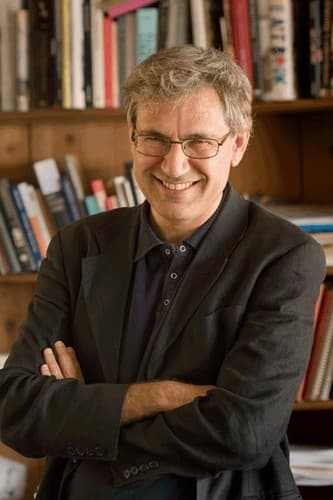
Ferit Orhan Pamuk is a Turkish novelist, screenwriter, academic, and recipient of the 2006 Nobel Prize in Literature. One of Turkey's most prominent novelists, he has sold over 13 million books in 63 languages, making him the country's best-selling writer.
Similar books
- One Hundred Years of Solitude
Gabriel García Márquez
4.1 (753k) average on GoodreadsLiterary FictionExplores the passage of time, intricate family dynamics, and a strong sense of place with a melancholic tone.
- Love in the Time of Cholera
Gabriel García Márquez
3.9 (412k) average on GoodreadsLiterary FictionFeatures a lifelong, obsessive love story spanning decades, much like Kemal's devotion to Füsun.
- The Great Gatsby
F. Scott Fitzgerald
3.9 (3.8M) average on GoodreadsHistorical FictionBoth The Museum of Innocence and The Great Gatsby explore themes of obsessive love, class aspirations, and the pursuit of an idealized past. However, Pamuk's Kemal is a more introspective and passive figure compared to Gatsby's ambitious and enigmatic drive. While Gatsby attempts to recreate the past through wealth and spectacle, Kemal's obsession manifests in a quieter, more melancholic accumulation of objects. The cultural settings – 1920s American high society versus mid-to-late 20th century Istanbul – also provide distinct backdrops for their respective critiques of societal values and the elusive nature of happiness.
- To Kill a Mockingbird
Harper Lee
4.3 (4.5M) average on GoodreadsHistorical FictionIn the 1930s Jim Crow South, Harper Lee writes about racial injustice, moral growth, and the quiet courage of a lawyer father, Atticus Finch, as seen through his young daughter's eyes.
- Pride and Prejudice
Jane Austen
4.3 (3M) average on GoodreadsHistorical FictionIn a society focused on status and money, Elizabeth Bennet navigates love and pride, challenging Mr. Darcy and social expectations to find true affection.
- Angels & Demons
Dan Brown
3.9 (2.7M) average on GoodreadsThrillerA Harvard symbologist races through Rome's ancient sites, deciphering cryptic clues to unmask the Illuminati and stop a vengeful plot to destroy the Vatican with a stolen antimatter weapon.






Enjoyed the summary?
A summary gives you the shape of the book. The book itself has the detail, the examples and the voice.
Find The Museum of Innocence on AmazonAs an Amazon Associate, BookBrief earns from qualifying purchases. How we're funded