
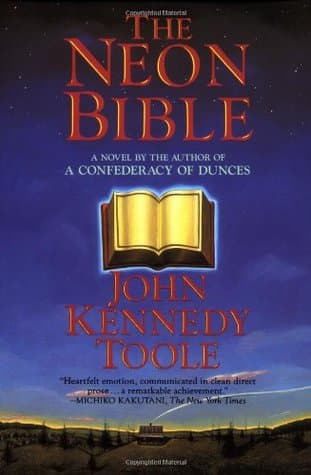
Synopsis
Covers the whole plot, including the ending.
- Difficulty
- Medium
- Pacing
- Slow
- Mood
- Melancholy, Reflective, Poignant, Observational
- Read it if
- You appreciate poignant coming-of-age stories, Southern Gothic literature, or a powerful, reflective narrative voice.
- Skip it if
- You prefer fast-paced plots, or are looking for a story with a clear, optimistic resolution.
The Neon Bible Plot Summary
Covers the whole plot, including the ending.
A Quiet Beginning in a Mountain Valley
The story opens with young David, around six years old, living with his mother, grandparents, and Aunt Mae in a small, isolated house in a mountain valley. His life is characterized by a lack of material possessions and a deep connection to nature. His grandmother, a stern but loving figure, teaches him about God and the Bible, often with a focus on fire and brimstone. His grandfather is a quiet, hardworking man, while his mother is gentle and often sad. Aunt Mae, a lively and somewhat eccentric woman, contrasts with the family's somber tone, singing country songs and offering a different perspective on life.
The Arrival of Aunt Mae's 'Gentlemen Callers'
Aunt Mae, who works in town, frequently brings home different men, whom she refers to as her 'gentlemen callers.' These visits, often with music and laughter, create a stir in the quiet household and become a source of gossip among the neighbors. David, though young, observes these interactions with curiosity and confusion. His grandmother disapproves of Aunt Mae's lifestyle, viewing it as sinful and a source of shame for the family. These events expose David to the community's hypocrisy and judgmental nature, as well as the different ways people seek companionship and happiness.
The Town and Its People
As David grows older, he begins to accompany his family to the nearby town, which he perceives as a place of both wonder and fear. He observes the townspeople, many of whom are gossipy and quick to judge. The church is central to the town's social life, and David is exposed to the fervent, often theatrical, sermons of various preachers. He notices the stark differences between the town's more affluent residents and his own family's poverty. These excursions highlight the social stratification and the pervasive religious influence in their Southern community, shaping David's understanding of the world beyond his isolated home.
The War and Its Impact
World War II profoundly affects David's family. His father, who had been largely absent and a source of tension, enlists in the army and goes off to fight. This departure, while creating a void, also removes a source of conflict. The war's influence is felt even in their remote valley, as rationing and news from the front become part of daily life. The family is eventually forced to move from their mountain home due to economic hardship and the need for work, relocating to a small, dilapidated house closer to town. This move marks a significant shift in David's life, forcing him to adapt to a new environment and new challenges.
Life in the New Town
In their new home, the family faces even greater financial difficulties. David's mother takes on menial jobs, and Aunt Mae continues to work, but their poverty is evident. They are seen as outsiders by the townspeople, who are quick to judge them, particularly Aunt Mae, for her unconventional lifestyle. David experiences firsthand the sting of social ostracism and the harsh realities of being poor in a judgmental community. He finds solace in his observations of the world around him and his quiet internal life, but the constant struggle for acceptance and basic necessities weighs heavily on him and his family.
The Revival Tent and Bobbie Lee Taylor
A traveling revival tent comes to town, bringing with it the charismatic boy evangelist, Bobbie Lee Taylor. The townspeople flock to the tent, eager for spiritual salvation and entertainment. David attends with his family and is both fascinated and bewildered by the spectacle. Bobbie Lee's sermons are fiery and emotional, focusing on sin and redemption. David observes the fervent reactions of the congregation, the dramatic conversions, and the financial contributions. He questions the sincerity of some attendees and the manipulative tactics employed by the evangelist, developing a nuanced perspective on faith and performance.
David's First Love
David encounters a young girl his age in town and experiences the confusing and exhilarating emotions of first love. Their interactions are shy and tentative, marked by stolen glances and unspoken feelings. He is drawn to her innocence and kindness, and their brief moments together offer a respite from the harsh realities of his life. This experience is both sweet and painful, as David navigates the complexities of his own emotions and the societal expectations that often keep them apart. It is a universal coming-of-age moment, highlighting David's growing awareness of intimacy and personal connection.
Aunt Mae's Decline
Aunt Mae, who has always been a vibrant and independent spirit, begins to show signs of illness. Her energy wanes, and she becomes increasingly frail. The family struggles to afford medical care, and her condition worsens. She is eventually hospitalized, a distressing experience for David, who deeply loves and admires his aunt. He visits her, witnessing her suffering and the impersonal nature of the hospital environment. This period is a turning point, as David confronts the fragility of life and the inevitability of loss, particularly for someone who brought so much color into his world.
The Death of Aunt Mae
Despite the family's hopes, Aunt Mae succumbs to her illness and dies. Her death is a devastating blow to David, who feels a deep sense of grief and emptiness. Her lively presence, her songs, and her unconventional wisdom had been a constant source of comfort and inspiration for him. The funeral is a somber affair, attended by few, reflecting the town's continued judgment. David grapples with the finality of death and the unfairness of losing someone so vital. This loss further isolates David and his mother, emphasizing their vulnerability in the world.
David's Mother's Descent
Following Aunt Mae's death, David's mother, already prone to sadness, spirals into a deep depression. She becomes increasingly withdrawn, loses interest in daily life, and her mental state deteriorates. David observes her decline with a growing sense of fear and helplessness. He tries to care for her, taking on more responsibilities, but her condition worsens, often manifesting in strange behaviors and periods of unresponsiveness. This places an immense burden on young David, forcing him to mature rapidly and confront the terrifying prospect of losing another loved one, this time to an internal struggle.
The Asylum and David's Isolation
David's mother's mental illness eventually reaches a point where she can no longer function, and she is institutionalized in an asylum. This event leaves David completely alone, as his grandparents have also passed away or are no longer able to care for him. He is left to fend for himself, facing the harsh realities of poverty and loneliness without the protective presence of his family. The asylum, a cold and impersonal place, symbolizes the final severance of his childhood innocence and the complete unraveling of his family unit. David is forced to confront his future as an orphan in a world that has shown him little kindness.
A Life of Survival
The narrative concludes with David, now a young man, reflecting on his difficult childhood and his current circumstances. He is alone, working menial jobs to survive, and the memories of his family, particularly Aunt Mae and his mother, haunt him. He carries the weight of his past, the lessons learned from his grandmother's faith, Aunt Mae's resilience, and his mother's fragility. Despite the losses and hardships, David's spirit, though scarred, endures. He has developed a keen observational eye and a deep understanding of human nature, shaped by the people and events that defined his formative years in the isolated Southern setting.
The Neon Bible Characters
David
Protagonist
A sensitive and observant boy grappling with poverty, loss, and the complexities of human nature in the rural South.
David is the central character and narrator, a young boy growing up in challenging circumstances. He possesses a keen observational eye, a sensitive nature, and a quiet resilience. He is often an outsider, preferring to observe and reflect rather than actively participate in the town's social dynamics. His experiences with poverty, religious fervor, and loss force him to mature quickly and develop a nuanced understanding of the world. He finds comfort in nature and the simple pleasures of life, but is deeply affected by the suffering of those he loves, particularly his mother and Aunt Mae.
Relationships: Mother (Loving but fragile; David is her protector); Aunt Mae (Confidante, source of joy and unconventional wisdom); Grandmother (Strict but loving, religious guide); Grandfather (Quiet, hardworking, distant but present); First Love (unnamed girl) (Brief, innocent romantic interest)
Mother
Supporting
David's gentle and often melancholic mother, who eventually succumbs to mental illness.
David's mother is a quiet, gentle woman, often burdened by sadness and the hardships of their poverty. She is loving towards David but lacks the resilience or assertiveness of Aunt Mae. Her emotional fragility is a recurring theme, exacerbated by the departure of her husband and the death of her sister. She represents the vulnerability of individuals in a harsh world, ultimately unable to cope with the accumulated grief and stress, leading to a tragic decline in her mental health. David's profound love for her and his helplessness in the face of her illness are central to his emotional journey.
Relationships: David (Her son, whom she loves deeply); Aunt Mae (Her sister, a source of companionship and support); Father (Her absent and emotionally distant husband)
Aunt Mae
Supporting
David's spirited, unconventional aunt who brings joy and a different perspective to his life.
Aunt Mae is David's vibrant and independent aunt, a stark contrast to the somber tone of the rest of the family. She works in town, enjoys music, and has a series of 'gentlemen callers,' which makes her a subject of gossip and disapproval from the grandmother and the townspeople. Despite societal judgment, she maintains a free spirit and a zest for life. She is a source of comfort, laughter, and unconventional wisdom for David, offering him a glimpse into a world beyond strict religious dogma and social conformity. Her eventual illness and death are deeply impactful on David.
Relationships: David (Her beloved nephew, whom she teaches and comforts); Mother (Her sister, with whom she shares a bond of family); Grandmother (Object of her disapproval and criticism)
Grandmother
Supporting
David's stern, deeply religious grandmother who instills a fear-based understanding of God.
David's grandmother is a formidable figure, deeply religious and often stern, particularly in her interpretation of the Bible. She teaches David about God with a focus on sin, hellfire, and judgment, which often frightens him. Despite her rigid exterior, she possesses a underlying love and concern for her family, especially David. She disapproves of Aunt Mae's lifestyle and the perceived moral failings of the town. She represents the entrenched, often hypocritical, religious fervor prevalent in the rural South, and her teachings leave a lasting impression on David's developing worldview.
Relationships: David (Her grandson, whom she attempts to guide spiritually); Aunt Mae (Her daughter, whose lifestyle she disapproves of); Grandfather (Her husband, with whom she shares a quiet, traditional life)
Grandfather
Supporting
David's quiet, hardworking grandfather, a stoic presence in his early life.
David's grandfather is a quiet, hardworking man, deeply connected to the land and his labor. He is a less vocal presence than the grandmother or Aunt Mae, often observed through David's child-like perspective as a steady, reliable figure. He doesn't offer much in terms of emotional guidance or conversation, but his presence signifies stability and the traditional values of a rural, agrarian life. He represents a stoic masculinity, enduring hardship without complaint. His eventual passing is another quiet loss in David's life, marking the erosion of his childhood security.
Relationships: David (His grandson, for whom he provides a quiet, stable presence); Grandmother (His wife, with whom he shares a traditional life)
Bobbie Lee Taylor
Mentioned
A charismatic boy evangelist who holds a revival in David's town.
Bobbie Lee Taylor is a young, charismatic boy evangelist who comes to David's town with a traveling revival tent. He preaches with fervor and theatricality, captivating the townspeople with his sermons about sin and salvation. David observes him with a mixture of fascination and skepticism, noting the manipulative aspects of his performance and the emotional responses he elicits. Bobbie Lee represents the pervasive influence of evangelical religion in the rural South and the way faith can be both a source of comfort and a form of entertainment or control.
Relationships: David (Object of David's observation and skepticism)
The Neon Bible Themes
Loss and Grief
The novel is steeped in themes of loss, from the gradual erosion of David's family unit to the more acute pains of death and abandonment. David experiences the loss of his idyllic childhood home, the departure of his father, the death of his beloved Aunt Mae, and the tragic mental decline and institutionalization of his mother. Each loss strips away a layer of his innocence and security, forcing him to confront the fragility of life and the inevitability of suffering. His silent processing of these events highlights the impact of grief on a young, sensitive soul, culminating in his isolated existence.
“And the sadness was growing like a great big cloud inside of me, and I couldn't make it go away.”
Poverty and Social Class
Poverty is a constant, oppressive force in David's life, shaping his experiences and limiting his opportunities. The family's struggles for basic necessities, their dilapidated homes, and their inability to afford medical care are starkly portrayed. This theme is intertwined with social class, as the family is seen as outsiders and judged by the more affluent townspeople. David keenly observes the disparities between his family's destitution and the relative comfort of others, fostering a sense of shame and isolation. The economic hardship directly contributes to the family's decline, particularly his mother's illness.
“We were poor, but not 'poor' in the way the town knew 'poor.' We just didn't have anything, that's all.”
Religion and Hypocrisy
The pervasive influence of fundamentalist Christianity is a major theme, particularly through the grandmother's teachings and the town's revival culture. David is exposed to a fear-based, judgmental interpretation of God, often contrasted with the more loving, tolerant spirit of Aunt Mae. The novel explores the hypocrisy within the religious community, where outward piety often coexists with gossip, judgment, and a lack of genuine compassion for those deemed 'sinful' like Aunt Mae. David's observations of the boy evangelist, Bobbie Lee Taylor, further highlight the theatricality and potential manipulation inherent in some religious practices.
“The preacher talked about hell, and it sounded like a place where the fire was always burning and nobody ever stopped screaming.”
Innocence and Experience
David's journey is a classic coming-of-age narrative, tracing his transition from childhood innocence to an understanding of the harsh realities of the adult world. His initial naive perceptions of his family and town slowly give way to a more critical and melancholic perspective as he witnesses poverty, illness, death, and mental breakdown. He retains a core sensitivity, but his experiences strip away his illusions, forcing him to confront the complexities and cruelties of human existence. The novel charts the painful but inevitable loss of childhood protection and the forging of an individual identity amidst adversity.
“I was just a kid then, and I didn't know much about anything, but I knew that some things were sad and some things were not.”
Plot Devices & Literary Techniques
First-Person Naive Narrator
The story is told through the eyes of young David, whose innocent perspective provides sharp, often ironic, observations.
The entire novel is narrated by David from his childhood perspective, even as an adult reflecting on his past. This device allows for a uniquely intimate and emotionally direct account. David's naive understanding of adult situations, combined with his keen observational skills, creates a poignant blend of innocence and accidental wisdom. His voice is disarmingly honest, often highlighting the absurdities and hypocrisies of the adult world without explicit judgment, making the reader privy to both the surface events and the deeper, often unstated, emotional truths. The simple, unadorned language amplifies the impact of the tragic events.
Symbolism of the 'Neon Bible'
The titular 'neon bible' represents a clash between traditional faith and modern, commercialized, or superficial spirituality.
While not explicitly present as a physical object throughout the entire narrative, the 'neon bible' of the title serves as a powerful symbolic motif. It suggests a contrast between the grandmother's stern, literal interpretation of the Bible and a more modern, perhaps superficial, or performative version of faith, as seen in the revival tent. It can also symbolize the allure of the outside world, with its artificial lights and promises, against the natural, unadorned world of David's childhood. It hints at the commercialization of spirituality and the struggle to find genuine meaning amidst conflicting religious messages.
Setting as Character
The isolated Southern mountain valley and the judgmental small town function as active forces shaping David's life.
The setting plays a crucial role, almost acting as a character itself. The initial isolated mountain valley represents a protective, natural world, a haven before the family's decline. The subsequent move to the small, judgmental Southern town exposes David to social ostracism, poverty, and the rigid moral codes of the community. The oppressive atmosphere of the town, with its gossip, religious fervor, and lack of compassion, directly contributes to the family's suffering and David's sense of isolation. The physical environment mirrors the emotional landscape of David's life, from the quiet beauty of nature to the harsh realities of societal judgment.
Foreshadowing
Subtle hints and recurring motifs subtly prepare the reader for future tragedies and emotional shifts.
Toole employs subtle foreshadowing throughout the narrative, often through David's innocent observations or recurring imagery. The grandmother's teachings about hellfire, the mother's pervasive sadness, and Aunt Mae's unconventional lifestyle all hint at future conflicts and eventual tragedies. The recurring motif of sadness or a sense of impending doom, articulated through David's child's logic, subtly prepares the reader for the losses that will unfold. This device creates a sense of inevitability and heightens the emotional impact when the predicted events, such as Aunt Mae's death or the mother's mental decline, finally occur.
The Neon Bible Quotes
“I was born in a very small town, and it was a town where people just like to talk. And they talked about everything.”
“When you have a voice like that, you don't need a piano.”
“I never did get over the feeling that the world was just a big, dangerous place, and that I was just a little boy in it.”
“She was a good woman, my mama, but she worried too much. She worried about everything.”
“The church was just a big, empty building when nobody was in it. It didn't feel like God was there then.”
“I wondered if God had a special place for people who just sat and thought.”
“Miss Mae said that singing was praying twice. I liked that idea.”
“It seemed like the world was full of things that could make you sad, and not many things that could make you happy for long.”
“I thought about all the people who were gone, and how they never really left you, not if you remembered them.”
“The neon bible was always there, glowing in the dark, a promise of something that I didn't quite understand.”
“Maybe heaven was just being with the people you loved, and not having to worry about anything anymore.”
“I wanted to know if God cared about little boys who were afraid of the dark, and if He listened to their prayers.”
“Sometimes I just wanted to run away and keep running until I found a place where nobody knew me and nobody cared.”
“Miss Mae said that everybody had a song inside them, and that you just had to let it out.”
“I wondered if I would ever understand anything, or if I would just keep wondering forever.”
Quiz
10 questions on the plot and the characters. Each answer comes with a short explanation.
Question 1
What is the name of the young boy whose story is told in 'The Neon Bible'?
- Bobby Lee
- David
- John Kennedy
- Toole
Show answer
B. David The book explicitly states that 'The Neon Bible tells the story of David, a young boy growing up in a small Southern town'.
Question 2
In what decade does the story of 'The Neon Bible' primarily take place?
- 1920s
- 1930s
- 1940s
- 1950s
Show answer
C. 1940s The synopsis clearly states that David is 'a young boy growing up in a small Southern town in the 1940s'.
Question 3
Who is the 'boy evangelist' mentioned in the synopsis?
- David
- Bobbie Lee Taylor
- John Kennedy Toole
- The town preacher
Show answer
B. Bobbie Lee Taylor The text states, 'we participate in boy evangelist Bobbie Lee Taylor's revival'.
Question 4
What significant event in David's life is explicitly mentioned as an 'awkward, painful, universally recognizable encounter'?
- His first experience with public speaking
- His first love
- His first time leaving his small town
- His first encounter with the bigoted townspeople
Show answer
B. His first love The synopsis describes David's voice as 'drawing us into his world through the sure artistry of John Kennedy Toole' and states, 'Through it we share his awkward, painful, universally recognizable encounter with first love'.
Question 5
What kind of people are the townspeople described as in relation to David's experience?
- Welcoming and supportive
- Indifferent and quiet
- Pious and bigoted
- Modern and progressive
Show answer
C. Pious and bigoted The synopsis mentions, 'we meet the pious, bigoted townspeople', indicating their character.
Question 6
How old was John Kennedy Toole when he wrote 'The Neon Bible'?
- Sixteen
- Twenty
- Thirty-one
- Thirty-five
Show answer
A. Sixteen The information provided states, 'John Kennedy Toole... wrote The Neon Bible for a literary contest at the age of sixteen'.
Question 7
What was the initial purpose for which John Kennedy Toole wrote 'The Neon Bible'?
- To publish it immediately as his debut novel
- For a literary contest
- As a personal diary of his youth
- To gain a posthumous Pulitzer Prize
Show answer
B. For a literary contest The text explicitly states, 'John Kennedy Toole... wrote The Neon Bible for a literary contest at the age of sixteen'.
Question 8
What was the fate of 'The Neon Bible' manuscript after it was written, prior to its eventual publication?
- It was immediately published and became a best-seller.
- It was lost and rediscovered decades later.
- It languished in a drawer and became the subject of a legal battle.
- It was rejected by all publishers and forgotten.
Show answer
C. It languished in a drawer and became the subject of a legal battle. The synopsis details, 'The manuscript languished in a drawer and became the subject of a legal battle among Toole's heirs'.
Question 9
How many years after John Kennedy Toole's suicide was 'The Neon Bible' finally published?
- Fifteen years
- Twenty years
- Thirty-five years
- Forty years
Show answer
B. Twenty years Toole committed suicide at thirty-one (1969), and the book was published in 1989. The text states, 'It was only in 1989, thirty-five years after it was written and twenty years after Toole's suicide at thirty-one, that this amazingly accomplished and evocative novel was freed for publication'.
Question 10
What other famous work by John Kennedy Toole won a posthumous Pulitzer Prize?
- The Neon Cross
- A Confederacy of Dunces
- Southern Boy
- The Revivalist
Show answer
B. A Confederacy of Dunces The description mentions, 'John Kennedy Toole, who won a posthumous Pulitzer Prize for his best-selling comic masterpiece A Confederacy of Dunces'.
The Neon Bible FAQ
What is the central premise of 'The Neon Bible'?
The Neon Bible follows the coming-of-age of David, a sensitive and observant young boy, as he navigates the complexities of life in a small, conservative Southern town during World War II. It explores his spiritual awakening, encounters with love and loss, and his struggle to reconcile his inner world with the often harsh realities of his surroundings.
Who are the key figures in David's early life?
David's early life is shaped primarily by his ailing, gentle mother and his eccentric, free-spirited Aunt Mae, who introduces him to music and a more open worldview. His father is absent, fighting in the war, and his grandmother represents the town's rigid religious and social norms.
How does the war impact David and his family?
The war casts a long shadow over David's family, as his father is away fighting, leading to financial hardship and emotional strain. The conflict also creates a sense of anxiety and uncertainty in the town, contributing to the community's insular and often judgmental attitudes.
What role does religion play in David's town?
Religion is a dominant and often oppressive force in David's town, characterized by strict fundamentalism, public revivals, and a pervasive sense of judgment. David struggles to reconcile the harsh, fear-based sermons with his own burgeoning spiritual understanding and the kindness he observes in individuals like Aunt Mae.
What is the significance of the 'neon bible' in the title?
The 'neon bible' refers to the illuminated signs of the town's church and revival tents, symbolizing the superficial, commercialized, and often hypocritical aspects of organized religion David observes. It contrasts with his more genuine, internal spiritual quest and his search for authentic meaning.
How does Aunt Mae influence David's perception of the world?
Aunt Mae is a crucial figure who offers David a different perspective than the town's rigid norms. Her love for music, her unconventional lifestyle, and her open-mindedness provide David with comfort, inspiration, and an introduction to beauty and joy outside the confines of strict religious dogma.
What is the nature of David's first love?
David's first love is a poignant and awkward encounter with a girl named Jo. Their shared moments are characterized by innocence, shyness, and a tentative exploration of intimacy, providing David with a brief escape from his anxieties and a glimpse into the complexities of human connection.
What does the character of Bobbie Lee Taylor represent?
Boy evangelist Bobbie Lee Taylor represents the manipulative and theatrical side of revivalist religion, using emotional appeals and spectacle to draw in followers. David observes him with a mixture of fascination and skepticism, seeing through the performance to the potential insincerity beneath.
How does David's sensitivity contribute to his psychological development?
David's heightened sensitivity makes him deeply observant of his surroundings and the nuances of human behavior, but also leaves him vulnerable to the harshness and hypocrisy he encounters. This sensitivity fuels his internal reflections and shapes his unique, often melancholic, worldview.
Discuss the theme of innocence lost in the novel.
The novel charts David's gradual loss of innocence as he confronts illness, death, the complexities of human relationships, and the often-disappointing realities of his community. His initial naiveté slowly gives way to a more profound understanding of suffering and the imperfections of the adult world.
How does David cope with the isolation he often experiences?
David often retreats into his own mind, finding solace in observation, imagination, and his personal reflections. His internal monologue serves as a coping mechanism, allowing him to process the confusing and sometimes painful events around him, even when he lacks external support.
What psychological impact does his mother's illness have on David?
His mother's prolonged illness and eventual death are profoundly traumatic for David, forcing him to confront mortality and the fragility of life at a young age. It instills in him a deep sense of loss, responsibility, and an enduring melancholy that colors his perspective.
Is 'The Neon Bible' ultimately a story of despair or resilience?
While the novel is imbued with sadness and depicts significant hardship, David's enduring curiosity, his capacity for love, and his internal strength suggest a profound resilience. He continues to seek meaning and beauty despite his circumstances, making it a nuanced exploration of both despair and the human spirit's ability to persist.
How does David's narrative voice contribute to the book's overall tone?
David's narrative voice is disarmingly direct, blending childlike innocence with sharp observation and a nascent philosophical depth. This unique perspective allows for moments of unexpected humor alongside profound sadness, creating a tone that is both intimate and universally resonant.
What is the novel's stance on organized religion versus personal spirituality?
The novel critiques the hypocrisy and narrow-mindedness often found in organized religion, particularly the fundamentalist variety prevalent in David's town. In contrast, it subtly champions a more personal, intuitive form of spirituality, one found in nature, music, human connection, and genuine empathy, as exemplified by Aunt Mae.
How does the ending leave David's future open to interpretation?
The ending leaves David's future ambiguous, as he is left alone and facing an uncertain path forward. This open conclusion allows readers to ponder whether David will succumb to the harshness of his world or find a way to forge his own meaningful existence, drawing upon the resilience he has developed.
What parallels can be drawn between 'The Neon Bible' and Toole's later work, 'A Confederacy of Dunces'?
While stylistically different, both novels feature protagonists who are outsiders struggling against a society they find absurd or oppressive. Both also exhibit Toole's keen ear for dialect and his ability to craft memorable, eccentric characters, though 'The Neon Bible' is more melancholic and less overtly comedic.
About the author
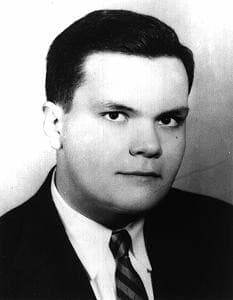
John Kennedy Toole was an American novelist from New Orleans, Louisiana, whose posthumously published novel, A Confederacy of Dunces, won the Pulitzer Prize for Fiction in 1981; he also wrote The Neon Bible. Although several people in the literary world felt his writing skills were praiseworthy, Toole's novels were rejected during his lifetime. Due in part to these failures, he suffered from paranoia and depression, dying by suicide at the age of 31.
Similar books
- To Kill a Mockingbird
Harper Lee
4.3 (4.5M) average on GoodreadsHistorical FictionFeatures a child's perspective on Southern life, social injustice, and moral growth.
- The Catcher in the Rye
J.D. Salinger
3.8 (2.7M) average on GoodreadsYoung AdultNarrated by a sensitive, observant, and somewhat alienated young protagonist reflecting on society.
- Eat, Pray, Love
Elizabeth Gilbert
3.6 (1.5M) average on GoodreadsLifestyleA heartbroken writer leaves her conventional life for a year-long global search for pleasure in Italy, spiritual devotion in India, and unexpected love and balance in Bali.
- Educated
Tara Westover
4.5 (796k) average on GoodreadsBiographyRaised in the Idaho mountains by fundamentalist survivalists, a young woman forges her own path to education, battling fierce family loyalty and personal demons to discover a world beyond her isolated upbringing.
- The Poisonwood Bible
Barbara Kingsolver
4.1 (659k) average on GoodreadsLiterary FictionA zealous missionary's rigid faith clashes with the Belgian Congo's wilderness and people, unraveling his family through the eyes of his five unforgettable women.
- Siddhartha
Hermann Hesse
4.0 (583k) average on GoodreadsHistorical FictionSiddhartha leaves a life of privilege and piety, embracing asceticism, wealth, and love to find enlightenment not in dogma, but in the whispers of a river and the unity of all existence.






Enjoyed the summary?
A summary gives you the shape of the book. The book itself has the detail, the examples and the voice.
Find The Neon Bible on AmazonAs an Amazon Associate, BookBrief earns from qualifying purchases. How we're funded