

Synopsis
Covers the whole plot, including the ending.
- Difficulty
- Hard
- Pacing
- Slow
- Mood
- Atmospheric, Bleak, Melancholy, Meditative
- Read it if
- You appreciate sparse, lyrical prose, complex character studies, and a deep exploration of the American South, themes of isolation, and the fading wilderness.
- Skip it if
- You prefer fast-paced plots, clear moral lines, or explicit resolution to all narrative threads.
The Orchard Keeper Plot Summary
Covers the whole plot, including the ending.
The Dead Man in the Orchard
Kenneth Rattner, a local man, is killed by Marion Sylder, a bootlegger, during an argument over Sylder's broken-down car. Sylder, in a panic, buries Rattner's body in a shallow grave in an old, neglected apple orchard. Sylder does not know that Rattner's young son, John Wesley Rattner, is nearby and later finds the disturbed ground and feels a vague unease, though he does not understand what it means. Sylder tries to get his car back, but the situation is made harder by an old man, Arthur Ownby, who lives near the orchard and watches Sylder. This event connects the lives of the three main characters.
A Boy's Solitary Life
After his father disappears, John Wesley Rattner lives mostly alone. His mother moves away, leaving him to live with his aunt and uncle, but he spends much time exploring the wild areas around his home. He often visits the old apple orchard, drawn to it, and often brings his rifle for hunting. During these visits, he meets Arthur Ownby, the quiet old man who lives in a rundown shack nearby. Ownby, who calls himself the 'keeper' of the orchard, first views John Wesley with suspicion but slowly starts to accept and even guide the boy, teaching him about the land, though their talks are often brief and unclear.
Marion Sylder's Life on the Margins
Marion Sylder continues his life as a bootlegger and small-time criminal, always moving and avoiding the law. The memory of Kenneth Rattner's death, though he tries to forget it, stays with him. He occasionally passes by the old orchard, often from curiosity or a need to check on the undisturbed grave. During these trips, he often sees Arthur Ownby and knows the old man watches him. Sylder's interactions with other outlaws and his constant watch against authorities show his isolation and the unstable nature of his life, a sharp contrast to the natural world he lives in.
The Old Man's Vigil
Arthur Ownby, the 'orchard keeper,' lives a life tied to the land. He spends his days gardening, watching nature, and keeping an eye on the apple orchard and its secrets. He sees John Wesley Rattner's frequent visits and Marion Sylder's occasional appearances. Ownby, with his deep connection to nature and old way of life, acts as a silent guardian of the orchard, knowing the unspoken truths buried there. His wisdom, often in unclear statements, shows a deep understanding of life and death, and the lasting power of the land.
A Shared Moment and Lingering Unease
One day, John Wesley Rattner, while hunting, meets Marion Sylder in the woods. Their talk is short and simple, a chance meeting between two strangers. Neither character knows the tragic connection that binds them – that Sylder killed John Wesley's father. The meeting has a quiet tension, a subtle unease that neither fully understands. This moment shows the novel's look at fate and the hidden forces that shape human lives, as the two men move through the same landscape, their pasts linked but their present selves unaware.
Sylder's Capture and Imprisonment
Marion Sylder's life on the run ends. After many close calls and continued bootlegging, the authorities catch him. The details of his capture are presented with McCarthy's direct style, showing the harsh and unavoidable nature of the law. Sylder is imprisoned, a big change from his free, wandering life. His time in jail is marked by confinement and thought, a forced quiet that sharply contrasts with his former life. This event removes him from the immediate setting of the orchard, but his presence still affects the story.
Ownby's Decline and the Orchard's Fate
As time passes, Arthur Ownby, the old orchard keeper, becomes weaker. His health declines, and he can no longer care for the orchard. The orchard, once full of life and secrets, begins to show signs of neglect, its trees slowly returning to a wild state. Ownby's deep connection to the land means his decline reflects that of the orchard. John Wesley Rattner continues to visit, seeing the changes in both the old man and nature, a quiet witness to time passing and unavoidable decay. Ownby's death marks the end of an era for the orchard.
John Wesley's Reckoning
Years later, John Wesley Rattner, now a young man, starts to put together the fragmented memories and questions about his father's disappearance. The disturbed earth in the orchard, Ownby's unclear comments, and local talk combine into a growing understanding. He eventually learns, indirectly and through his own feelings, that his father was killed and buried in the orchard. This discovery is a painful turning point for John Wesley, changing his understanding of his past and his place in the world. He deals with the meaning of this violent truth, which has quietly shaped his entire life.
Sylder's Release and Return
After serving his time, Marion Sylder is released from prison. He returns to the familiar, wild landscape of his youth, a landscape that has also changed. His return is quiet, marked by a feeling of displacement and the weight of his past actions. He is drawn back to the orchard area, a place that holds both the secret of his crime and a strange, lasting connection to the land. Sylder finds himself a stranger in a world that has moved on, yet the old patterns and connections remain, pulling him back to the place where his fate was decided.
The Final Confrontation
The story ends with a final, tense meeting between John Wesley Rattner and Marion Sylder. John Wesley, now knowing Sylder killed his father, confronts him. The confrontation is not a dramatic fight, but a quiet, almost accepting moment of recognition and unspoken understanding. The violence has already happened, and what remains is the weight of its results. The scene has a sense of fate and the lasting cycle of violence and its aftermath, leaving the reader with a strong sense of the characters' connected destinies and how the past always affects the present.
The Orchard Keeper Characters
John Wesley Rattner
Protagonist
A solitary boy who grows into a young man, unknowingly connected to a murder.
John Wesley is introduced as a young boy living in the Appalachian wilderness. Following his father's disappearance, he leads a largely solitary life, spending his days hunting, exploring, and frequently visiting the old apple orchard. He is observant and intuitive, absorbing the rhythms of the natural world. His connection to the land is profound, and he forms a unique, often silent, bond with Arthur Ownby. As he matures, he gradually pieces together the truth of his father's fate, a revelation that shapes his understanding of himself and the world around him. He represents innocence corrupted by unseen violence and the slow, inevitable march towards truth.
Relationships: Kenneth Rattner (His murdered father, whose absence defines John Wesley's early life.); Arthur Ownby (An eccentric old man and mentor figure who guides him in the ways of the land.); Marion Sylder (His father's killer, with whom he has an unknown, fated connection.)
Marion Sylder
Antagonist/Supporting
A bootlegger and outlaw haunted by an accidental murder.
Marion Sylder is a bootlegger and drifter, a man living on the fringes of society. He is responsible for the accidental death of Kenneth Rattner and subsequently buries the body in the orchard. Sylder is a pragmatic, survival-driven character, constantly evading the law and the consequences of his actions. Despite his criminal lifestyle, he is not entirely devoid of a moral compass; the murder weighs on him, though he rarely acknowledges it directly. His life is characterized by movement and a deep, almost instinctual connection to the wild, untamed aspects of the landscape. He represents the wild, lawless spirit of the mountains and the inevitable consequences of violence.
Relationships: Kenneth Rattner (The man he accidentally killed and buried.); Arthur Ownby (The old man who silently observes his movements and knows his secret.); John Wesley Rattner (The son of the man he killed, with whom he has a fated, unknown connection.)
Arthur Ownby
Supporting
An eccentric, reclusive old man who acts as the 'orchard keeper' and silent observer.
Arthur Ownby is a reclusive old man living in a dilapidated shack near the orchard. He is deeply connected to the land, an anachronistic figure who embodies the ancient ways of the mountains. He observes all who pass through his domain, silently aware of the secrets buried in the orchard, including Kenneth Rattner's grave. Ownby serves as a mentor figure to John Wesley, teaching him about nature and survival, often through cryptic pronouncements. He is a guardian of the natural order and a repository of local knowledge, representing the wisdom of the land and the passage of time. His presence lends a mythic quality to the narrative.
Relationships: John Wesley Rattner (A young boy he informally mentors and observes.); Marion Sylder (The killer he silently watches, aware of his crime.)
Kenneth Rattner
Mentioned
John Wesley's father, whose murder is the central inciting incident.
Kenneth Rattner is John Wesley's father, whose accidental murder by Marion Sylder and subsequent burial in the orchard sets the entire plot in motion. Although he is dead before the main narrative begins, his absence and the mystery surrounding his disappearance are the driving forces behind John Wesley's journey of discovery. His grave in the orchard becomes a symbolic focal point, a silent testament to the violence that underpins the natural world. His character is largely defined by his role as a victim and the catalyst for the interconnected fates of the other characters.
Relationships: John Wesley Rattner (His son, who seeks to uncover the truth of his disappearance.); Marion Sylder (His accidental killer.)
Aunt and Uncle
Supporting
John Wesley's guardians after his father's disappearance.
John Wesley's aunt and uncle take him in after his father's disappearance and his mother's subsequent departure. They provide him with a home but are largely peripheral figures in his life. Their presence highlights John Wesley's solitary nature and his preference for the wilderness over domesticity. They represent the conventional, settled world that John Wesley often drifts away from, serving as a contrast to the wilder, more primal existence he experiences in the mountains and the orchard. Their inability to fully understand or connect with John Wesley underscores his isolation.
Relationships: John Wesley Rattner (His guardians, though their relationship is somewhat distant.)
The Sheriff
Mentioned
The law enforcement figure who eventually apprehends Marion Sylder.
The Sheriff represents the formal law and order that Marion Sylder constantly evades. Although not a deeply developed character, his pursuit and eventual capture of Sylder are crucial plot points, removing Sylder from the immediate narrative for a period. He embodies the forces of justice, however slow or imperfect, that operate within the wild landscape. His presence reminds the reader of the external societal structures that exist beyond the isolated world of the orchard and the outlaws, eventually intruding upon their lives.
Relationships: Marion Sylder (His pursuer and captor.)
The Mother
Mentioned
John Wesley's mother, who leaves after her husband's disappearance.
John Wesley's mother is a fleeting presence in the narrative. After her husband, Kenneth Rattner, disappears, she eventually leaves, entrusting John Wesley to his aunt and uncle. Her departure further emphasizes John Wesley's isolation and the profound impact of his father's absence on his life. She represents the fragility of domestic life in the face of tragedy and the harsh realities of the Appalachian setting. Her absence is a contributing factor to John Wesley's solitary and self-reliant nature, forcing him to find solace and guidance in the natural world.
Relationships: John Wesley Rattner (Her son, whom she eventually leaves in the care of relatives.); Kenneth Rattner (Her disappeared husband.)
The Orchard Keeper Themes
The Enduring Cycle of Violence and Its Consequences
Violence, both open and implied, is present throughout 'The Orchard Keeper.' The novel begins with Kenneth Rattner's murder, an act that quietly affects the entire story, shaping the lives of John Wesley Rattner and Marion Sylder. McCarthy shows how violence, even if unpunished or unknown, leaves a lasting mark on people and the land. Sylder's life on the run and later imprisonment happen because of his actions, while John Wesley's journey is about finding the truth of his father's violent death. The final confrontation, though quiet, shows that past violence cannot be escaped.
“The tree stood in the orchard, not dead, not living, a tree long past fruit, but a tree that was still a tree.”
Man's Relationship with the Wilderness
The Appalachian wilderness is not just a background but a character, deeply affecting the lives and fates of the characters. John Wesley Rattner finds peace and identity in the woods, learning its ways from Arthur Ownby. Marion Sylder's life as a bootlegger is closely tied to the hidden paths and isolation of the mountains. Ownby, the 'orchard keeper,' shows a spiritual connection to the land, acting as its silent guardian. The wilderness offers both safety and harsh reality, a place where society's rules are often less important than basic instincts and nature's order of life and death. The land holds secrets and endures, uncaring of human struggles.
“The world was not a thing of men, nor did it belong to them. It was a world of the tree and the rock and the river, and of the things that moved among them.”
Fate, Memory, and the Unseen Past
The novel explores how past events, especially hidden ones, always shape the present and future. John Wesley Rattner unknowingly lives in the shadow of his father's murder, a secret buried in the land he lives on. Marion Sylder is troubled by his actions, even as he tries to outrun them. Arthur Ownby, with his deep wisdom, understands how memory and fate last, watching the story unfold with a knowing silence. The story structure, often broken and non-linear, reflects how memory works, with truths slowly appearing and connecting seemingly separate events. The past is not just an introduction; it is an active, living force.
“The past was not dead. It was not even past.”
Isolation and Solitude
Each main character in 'The Orchard Keeper' lives a very isolated life. John Wesley Rattner, after his father's death, finds himself mostly alone, seeking company in the wilderness. Marion Sylder is a solitary outlaw, always moving and not trusting others. Arthur Ownby is a recluse, living apart from regular society, his only true companion the land itself. This isolation is not always shown as bad; it allows for a deeper connection to nature and a sense of self-reliance. However, it also shows the characters' inability to fully connect with others, leading to unspoken truths and unresolved emotional burdens.
“He lived alone and had no need of company, but he watched the world with a fierce and knowing eye.”
Plot Devices & Literary Techniques
The Orchard
A central symbolic setting where life, death, and secrets converge.
The old apple orchard serves as the primary symbolic setting of the novel. It is the burial site of Kenneth Rattner, making it a place of hidden violence and death. However, it is also a place of wild growth, natural cycles, and enduring life, 'kept' by Arthur Ownby. The orchard represents the intersection of human action and the indifferent power of nature, a place where secrets are buried but also slowly revealed. Its decaying yet persistent existence mirrors the themes of memory, the past, and the cyclical nature of life and death, making it a silent witness to the characters' fates.
The Unseen Connection
The narrative device of characters being unknowingly connected by a past event.
A key plot device is the prolonged ignorance of John Wesley Rattner regarding the true circumstances of his father's death and Marion Sylder's role in it. For much of the novel, John Wesley and Sylder's paths cross without either understanding their profound, tragic connection. This creates dramatic irony and a pervasive sense of suspense. It highlights themes of fate and the lingering effects of the past, emphasizing how an unknown truth can silently shape destinies. The slow revelation of this connection drives much of John Wesley's character development and leads to the novel's quiet, inevitable climax.
Cryptic Dialogue and Sparse Prose
McCarthy's minimalist style, often with unattributed dialogue, to create atmosphere and mystery.
McCarthy's distinctive prose style, characterized by its sparse nature, lack of quotation marks, and often unassigned dialogue, functions as a plot device by creating an atmosphere of ambiguity and realism. The cryptic conversations, particularly those involving Arthur Ownby, force the reader to actively interpret meaning and piece together information, mirroring John Wesley's own journey of discovery. This style immerses the reader in the characters' often isolated and internal experiences, emphasizing the unspoken truths and the raw, unadorned reality of their lives in the wilderness. It lends a mythic quality to ordinary events.
Foreshadowing through Natural Imagery
The use of natural elements to subtly hint at future events or underlying tensions.
McCarthy frequently employs natural imagery to foreshadow events and underscore thematic elements. The decaying orchard itself, the cycles of nature, and the behavior of animals often subtly reflect the human drama unfolding. For instance, the disturbed earth in the orchard hints at the buried secret long before John Wesley understands its meaning. The harshness of the wilderness often mirrors the brutal realities of the characters' lives. This device deepens the connection between man and nature, suggesting that the natural world is a silent, knowing observer of human actions, subtly revealing truths through its own language.
The Orchard Keeper Quotes
“The child, whose name was John Wesley Rattner, was in the woods with his mother, who was named Martha, looking for their cow.”
“He'd had enough of it. He'd had enough of the world. He was done with it. He was done with the world and all its ways.”
“He went down the road and the road was dark.”
“The world was not a thing to be improved. It was a thing to be endured.”
“He carried the shotgun like a stick.”
“He watched the smoke rise slow and perfect into the cold morning air.”
“The past was a thing that would not let go.”
“He felt the old man's eyes on him like a weight.”
“The orchard was a place where things were left to rot.”
“He heard the sounds of the night, the small, secret sounds.”
“The trees stood like sentinels, silent and old.”
“He knew that some things were beyond understanding, and that was the way of it.”
“The old man was a kind of monument to something gone.”
“The sun was a cold eye in the sky.”
Quiz
10 questions on the plot and the characters. Each answer comes with a short explanation.
Question 1
What is the initial, unwitting connection between John Wesley Rattner and Marion Sylder?
- Sylder is Rattner's estranged uncle.
- Sylder has killed Rattner's father.
- They are both hiding from the law in the same area.
- Rattner witnessed Sylder committing a crime.
Show answer
B. Sylder has killed Rattner's father. The central dramatic irony of the novel is that Marion Sylder, the outlaw who befriends John Wesley, is the very man who killed John Wesley's father, Kenneth, and left his body in the orchard.
Question 2
What happens to John Wesley Rattner's father early in the novel?
- He abandons his family and moves away.
- He is arrested and imprisoned for bootlegging.
- He is killed by Marion Sylder and his body hidden in an orchard.
- He dies of a sudden illness, leaving John Wesley an orphan.
Show answer
C. He is killed by Marion Sylder and his body hidden in an orchard. John Wesley's father, Kenneth, is killed by Marion Sylder in a dispute over a debt. Sylder then hides the body in an old apple orchard, which becomes a silent tomb for years.
Question 3
Who is Arthur Ownby, also known as the 'orchard keeper'?
- A reclusive old man who watches over the orchard where Kenneth Rattner's body is buried.
- The owner of the general store in the nearest town.
- A law enforcement officer tracking Marion Sylder.
- John Wesley's grandfather, who lives on a nearby farm.
Show answer
A. A reclusive old man who watches over the orchard where Kenneth Rattner's body is buried. Arthur Ownby is an eccentric old man who lives near the orchard and takes it upon himself to protect it. Unbeknownst to him, he is guarding the remains of John Wesley's father, and his presence often brings him into contact with both Sylder and John Wesley.
Question 4
What is Marion Sylder's primary occupation or trade?
- A farmer and land owner.
- A traveling salesman.
- A bootlegger and outlaw.
- A lumberjack.
Show answer
C. A bootlegger and outlaw. Marion Sylder is characterized as a bootlegger and an outlaw, involved in illicit activities, which ultimately leads to his fatal encounter with Kenneth Rattner and his ongoing evasion of the law.
Question 5
How does John Wesley Rattner first encounter Marion Sylder after his father's disappearance?
- Sylder shows up at Rattner's house looking for work.
- Rattner finds Sylder injured and helps him.
- They meet in town at the general store.
- Sylder is arrested by the local sheriff while Rattner is present.
Show answer
B. Rattner finds Sylder injured and helps him. John Wesley first encounters Sylder when Sylder is injured, having been shot during an altercation. Rattner, unaware of Sylder's connection to his father's death, helps him, beginning their strange, paternalistic relationship.
Question 6
What is a recurring theme explored through the character of Arthur Ownby and the orchard itself?
- The corrupting influence of modern technology.
- The inevitable decline of traditional farming practices.
- The preservation of the past and the land against the forces of change.
- The futility of individual efforts against natural disasters.
Show answer
C. The preservation of the past and the land against the forces of change. Arthur Ownby, the orchard keeper, embodies the struggle to preserve the old ways and the natural world against encroaching modernity and neglect. The orchard, holding the secret of the past, symbolizes this theme of enduring history and the land's memory.
Question 7
How does the novel portray the relationship between John Wesley Rattner and Marion Sylder over time?
- It remains purely antagonistic, as Rattner seeks revenge.
- It evolves into a complex, almost paternal bond, despite the unspoken truth.
- They become business partners in bootlegging.
- They largely avoid each other after their initial encounter.
Show answer
B. It evolves into a complex, almost paternal bond, despite the unspoken truth. Despite Sylder being his father's killer, a strange, almost paternal bond develops between him and John Wesley. Sylder takes a protective, guiding role towards the boy, highlighting the novel's themes of fate and hidden truths.
Question 8
What is the ultimate fate of Marion Sylder?
- He successfully flees the state and lives out his days in peace.
- He is killed in a shootout with federal agents.
- He is arrested, tried, and executed.
- He disappears into the wilderness, never to be seen again.
Show answer
C. He is arrested, tried, and executed. Marion Sylder is eventually caught by the law. He is arrested, tried, and sentenced to death, ultimately being executed, bringing a grim end to his life as an outlaw.
Question 9
How does John Wesley Rattner react when the remains of his father are finally discovered in the orchard?
- He immediately suspects Marion Sylder and seeks revenge.
- He is indifferent, having long since moved on from his father's disappearance.
- He experiences a profound emotional reckoning, but the specific details of the killer remain obscured to him.
- He blames Arthur Ownby for not reporting the body sooner.
Show answer
C. He experiences a profound emotional reckoning, but the specific details of the killer remain obscured to him. When Kenneth Rattner's remains are discovered, it brings a sense of closure but also a deep, internal impact on John Wesley. The novel emphasizes the lingering impact of the past and the often-unspoken truths that shape lives, rather than a clear, immediate understanding of Sylder's guilt on John Wesley's part.
Question 10
What larger societal changes or historical context does 'The Orchard Keeper' subtly reflect?
- The rise of industrialization and urban migration.
- The transition from traditional, isolated rural life towards encroaching modernity and law enforcement.
- The impact of the Great Depression on Appalachian communities.
- The specific political struggles of the Prohibition era.
Show answer
B. The transition from traditional, isolated rural life towards encroaching modernity and law enforcement. The novel is set in a period where traditional, isolated mountain communities are beginning to feel the pressures of external law and a more connected, modern world. The presence of bootleggers, the eventual capture of Sylder, and the changing landscape around the orchard all point to this slow but inevitable shift.
The Orchard Keeper FAQ
What is 'The Orchard Keeper' about?
'The Orchard Keeper' is a haunting tale set in rural Appalachia in the 1930s, following the intertwined lives of John Wesley Rattner, a boy whose father mysteriously disappears, and Marion Sylder, an outlaw and bootlegger who, unbeknownst to John, is responsible for his father's death. The novel explores themes of loss, justice, and the fading wilderness through their complex, almost familial, relationship and the watchful presence of an old man, Arthur Ownby, who guards an abandoned orchard where John's father is buried.
Why should I read 'The Orchard Keeper'?
You should read 'The Orchard Keeper' for its evocative prose, deep character studies, and its unflinching portrayal of a disappearing way of life in the American South. McCarthy's minimalist style and lyrical descriptions of nature create an immersive atmosphere, while the novel's exploration of fate, violence, and the bonds between unlikely individuals offers a profound literary experience.
What is the background/setting of 'The Orchard Keeper'?
The novel is set primarily in the remote, mountainous regions of rural Tennessee during the Great Depression era of the 1930s. The landscape itself is a central character, reflecting the harsh realities and isolation of the characters' lives, with its dense forests, hidden hollows, and the remnants of old orchards symbolizing both decay and enduring life.
What are the most memorable quotes?
While McCarthy's style often prioritizes atmosphere over quotable lines, memorable passages include descriptions of the natural world, such as 'He never saw them again, nor did he ever again see his father.' and 'The world is not a game, he thought. It is a thing which is, and which is not, and which is again.' These quotes reflect the novel's themes of loss and cyclical existence.
What writing style does the author use?
Cormac McCarthy employs a sparse, poetic, and often unpunctuated style, particularly in dialogue, which gives the prose a raw, unvarnished quality. His descriptions are highly sensory and vivid, focusing on the natural world and the stark realities of his characters' lives, creating an almost mythic tone that blends realism with a sense of timelessness.
What minor details add significant meaning?
The recurring image of the abandoned orchard, meticulously tended by Arthur Ownby, despite its owner being dead and buried within it, is a minor detail that carries profound meaning. It symbolizes the persistence of memory, the futility of holding onto the past, and the natural world's indifference to human tragedy, all while ironically marking a grave.
What are some subtle foreshadowing moments?
Early descriptions of John Wesley Rattner's father's disappearance are shrouded in ambiguity, subtly hinting at violence. The way Marion Sylder disposes of the body and his subsequent casual encounters with John, even offering him a ride, are laden with dramatic irony, foreshadowing the eventual, though never fully revealed, understanding of their connection.
What unexpected character connections exist?
The most unexpected connection is the unwitting bond that forms between John Wesley Rattner and Marion Sylder. Sylder, the killer of John's father, becomes a surrogate father figure to the boy, offering him guidance and protection, a cruel twist of fate that neither character fully comprehends, creating a deeply unsettling dynamic.
What are unspoken character motivations?
Marion Sylder's motivation for protecting John Wesley Rattner, despite having killed his father, remains largely unspoken. It could stem from a subconscious guilt, a desire for redemption, or perhaps a simple, almost animalistic, paternal instinct that transcends the violence he committed, adding to his moral ambiguity.
What psychological complexities do characters exhibit?
John Wesley Rattner exhibits a complex blend of innocence, resilience, and a deep-seated longing for his father, which manifests as a quiet, watchful demeanor. Marion Sylder, despite his outlaw status, shows moments of unexpected tenderness and a code of ethics that is both violent and protective, revealing a conflicted inner world.
What are the major emotional turning points?
A major emotional turning point, though understated, is when John Wesley Rattner truly begins to accept Marion Sylder's presence in his life as a guiding force, unknowingly replacing the father Sylder took. Another is the old man Arthur Ownby's steadfast commitment to the orchard, which becomes a quiet testament to enduring grief and duty.
How do relationship dynamics evolve?
The relationship between John Wesley Rattner and Marion Sylder evolves from a chance encounter between a boy and a stranger to a complex, almost paternal, mentorship. Sylder takes on a protective role, teaching John about survival, while John looks up to Sylder with a naive admiration, unaware of the dark secret that binds them.
Which parts remain ambiguous or open-ended?
The novel leaves much ambiguous, particularly the full extent of John Wesley Rattner's eventual understanding of Marion Sylder's role in his father's death. The precise motivations behind many characters' actions are often left to the reader's interpretation, and the ultimate fate of several characters is not explicitly stated, mirroring the harsh uncertainties of life.
What are controversial scenes or decisions?
Marion Sylder's cold-blooded murder of John Wesley Rattner's father, followed by his casual, almost familial, interaction with John, is a morally controversial sequence. It forces readers to confront the complex nature of good and evil, and the idea that a 'bad man' can still possess redeeming qualities or unknowingly fulfill a necessary role in another's life.
'The Orchard Keeper' ending explained: how it ends & what it means
The novel ends with John Wesley Rattner as an adult, having served in WWII, returning to a greatly changed landscape. Marion Sylder is in prison, and Arthur Ownby has died, his orchard now fully abandoned and overgrown. The ending signifies the irreversible passage of time, the fading of the old world, and the idea that some mysteries and injustices, like the burial in the orchard, remain buried, only to be reclaimed by nature.
About the author
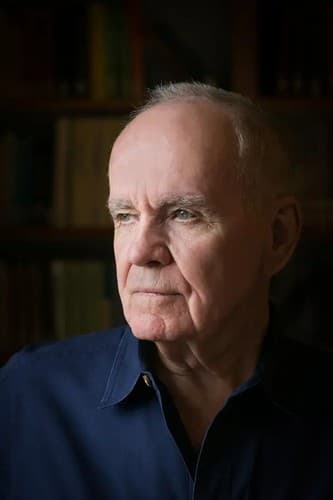
Cormac McCarthy was an American writer who authored twelve novels, two plays, five screenplays, and three short stories, spanning the Western and postapocalyptic genres. He was known for his graphic depictions of violence and his unique writing style, recognizable by a sparse use of punctuation and attribution. McCarthy is widely regarded as one of the greatest American novelists.
Similar books
- As I Lay Dying
William Faulkner
3.7 (137k) average on GoodreadsLiterary FictionExplores rural Southern life, complex family dynamics, and a fragmented narrative style with a focus on interiority.
- Suttree
Cormac McCarthy
4.2 (18k) average on GoodreadsLiterary FictionFeatures an alienated protagonist in the South, with rich, descriptive language and philosophical undertones.
- The Old Man and the Sea
Ernest Hemingway
3.8 (831k) average on GoodreadsLiterary FictionA Cuban fisherman's long struggle with a giant marlin becomes a story of endurance and dignity, now retold for young adults with illustrations, phonetic guides, and writing prompts in Traditional Chinese.
- One Hundred Years of Solitude
Gabriel García Márquez
4.1 (753k) average on GoodreadsLiterary FictionThrough the multi-generational story of the Buendía family, a mythical town deals with the repeating patterns of time, love, and solitude, as the extraordinary mixes with the ordinary.
- The Goldfinch
Donna Tartt
3.9 (720k) average on GoodreadsLiterary FictionHaunted by a tragic explosion and clutching a stolen Dutch masterpiece, a young orphan navigates the opulent drawing rooms of New York and the gritty underbelly of the art world, desperately seeking connection and redemption amidst a life spiraling into crime and obsession.
- Little Fires Everywhere
Celeste Ng
4.1 (713k) average on GoodreadsLiterary FictionIn Shaker Heights, an artist and her daughter move in, and their free-spirited lives clash with a rule-bound matriarch, revealing hidden conflicts beneath a perfect surface.




Enjoyed the summary?
A summary gives you the shape of the book. The book itself has the detail, the examples and the voice.
Find The Orchard Keeper on AmazonAs an Amazon Associate, BookBrief earns from qualifying purchases. How we're funded