

Synopsis
Covers the whole plot, including the ending.
- Difficulty
- Medium
- Pacing
- Moderate
- Mood
- Dark, Philosophical, Unsettling, Reflective
- Read it if
- You enjoy morally complex character studies, speculative science, and a deep dive into the consequences of ambition and scientific hubris.
- Skip it if
- You prefer lighthearted reads, clear-cut heroes, or stories with a straightforward, optimistic outlook.
The People in the Trees Plot Summary
Covers the whole plot, including the ending.
The Recruitment and the Lure of Ivu'ivu
In 1950, a young, ambitious research scientist named Norton Perina works at the University of Hawaii. He gets an invitation to join a secret expedition from the renowned, yet controversial, anthropologist Paul Tallent. Tallent is known for his unusual methods and discoveries. He needs a medical professional for a trip to the remote Micronesian island of Ivu'ivu, rumored to have a lost tribe. Perina, wanting recognition and a way to escape his past, accepts. He sees it as a chance to make a big scientific discovery and secure his place in history, even with the mysterious nature of Tallent's goals.
Arrival on Ivu'ivu and the O'wu
Upon arriving on the lush, isolated island of Ivu'ivu, Perina and Tallent meet the local O'wu tribe. The O'wu are cautious but eventually accept the outsiders, showing them their cultural practices and the island's difficult terrain. Perina observes the O'wu's deep respect for nature and their unique social structures. He starts documenting their customs and language, but his main focus is Tallent's ultimate goal: to find the rumored 'Dreamers,' a legendary group said to live extraordinarily long lives, which Paul Tallent believes is key to his research.
Discovery of the Dreamers
After extensive trekking through the dense Ivu'ivu jungle, Perina and Tallent find the 'Dreamers' — a small, isolated community living deep within the forest. These individuals appear very old, showing extreme physical weakness and advanced senility, yet they are alive, far beyond any known human lifespan. Perina is fascinated by their condition, recognizing its huge scientific importance. He begins to carefully observe and document their behavior, noting their childlike innocence and deep detachment from reality. Tallent, meanwhile, seems to have an existing, almost mystical connection to the Dreamers, further fueling Perina's curiosity and ambition.
The Longevity Secret: The Green Turtle
Through careful observation and analysis of the Dreamers' diet and environment, Perina theorizes that their long lives come from a rare, bioluminescent green sea turtle native to Ivu'ivu. He notices the Dreamers' ritualistic eating of the turtle's meat and their respect for the creature. Driven by scientific curiosity and the tempting idea of eternal life, Perina secretly hunts and kills one of these sacred turtles, dissecting it and taking samples for study. This act deeply violates the O'wu and Dreamers' customs, but Perina's ambition outweighs any ethical concerns, putting him on a dangerous path.
Smuggling the Turtle and Return to Civilization
With samples of the green turtle's meat, Perina decides to leave the expedition and Paul Tallent, feeling his own scientific discovery is most important. He secretly arranges passage back to the United States, leaving Tallent and the O'wu without a full explanation. The journey back is filled with anxiety, as Perina carefully protects his valuable cargo, understanding its potential to change medicine and bring him unmatched fame. He is consumed by the thought of his upcoming breakthrough, eager to prove his theory and secure his legacy in science.
The Nobel Prize and Global Fame
Back in the U.S., Perina's research laboratory becomes very busy. He carefully isolates the active compound from the green turtle's meat, proving its extraordinary ability to stop and even reverse aging at a cellular level. The scientific community is shocked, and Perina's findings are met with both praise and doubt. However, the evidence is clear. His discovery earns him the Nobel Prize in Medicine, making him internationally famous and a scientific icon. The world praises him as the man who conquered death, forever changing humanity's understanding of life and mortality.
The Unveiling of the Cost: Senility
As the longevity drug, called 'Boojum,' is developed and distributed, its miraculous effects on aging are clear. However, a horrifying side effect soon appears: those who take Boojum begin to show increasing, irreversible senility, mirroring the Dreamers' condition on Ivu'ivu. The initial joy and scientific triumph turn to horror as recipients slowly lose their minds, becoming childlike and detached from reality. Perina must face the terrible cost of his discovery, realizing he has unleashed a plague of eternal childhood rather than eternal youth, like the Dreamers' fate.
The Children of Boojum and Ethical Dilemmas
The world is now filled with the 'Children of Boojum' — individuals who live indefinitely but are stuck in advanced cognitive decline. Society struggles with the ethical and practical issues of a perpetually senile population. Perina, once a hero, becomes a figure of intense criticism and condemnation. He is burdened by guilt and the realization that his ambition has caused a global disaster. He tries to find a cure or a way to lessen the senility, but his efforts are mostly useless, deepening his despair and forcing him to confront the devastating results of his scientific arrogance.
Paul Tallent's Reappearance and Revelation
During the global crisis, Paul Tallent, who had disappeared after Perina left Ivu'ivu, reappears. Tallent confronts Perina, revealing that he had known all along about the turtle meat's senility-inducing side effect. His earlier research on Ivu'ivu had already shown him the full truth of the Dreamers' condition. Tallent reveals his own complex, almost spiritual, understanding of the Boojum, seeing it not as a cure for death but as a different form of existence, one he had tried to protect. His reappearance makes Perina acknowledge Tallent's deeper wisdom and his own serious misjudgment.
Perina's Retreat and Personal Decline
Haunted by the global disaster he caused and the personal betrayals he committed, Norton Perina withdraws from public life, becoming a recluse. He is consumed by guilt, regret, and the weight of his scientific legacy. His personal life falls apart as he struggles with the consequences of his ambition. The story goes into his past, revealing childhood traumas and a deep need for validation that fueled his relentless pursuit of discovery. He grapples with his own morality, his scientific curiosity, and the irreversible harm he has caused humanity and himself.
The Trial and Public Scrutiny
Years after the Boojum crisis, Norton Perina is brought to trial, facing charges related to his role in the global catastrophe. The trial becomes a highly publicized event, with Perina's life and scientific ethics under intense scrutiny. During the proceedings, his past actions, motivations, and the full extent of the Boojum's devastating effects are revealed to the world. This public reckoning forces Perina to confront his guilt directly, offering him a chance, however painful, to acknowledge the profound impact of his choices and the irreversible changes he brought upon humanity.
A Life in Exile and Reflection
Following the trial, Norton Perina lives a quiet life in exile, stripped of his awards and scientific standing. He spends his remaining years alone, consumed by reflection. The story explores his inner world, his memories of Ivu'ivu, Tallent, and the Dreamers, and his attempts to understand his life's monumental discovery and its tragic aftermath. He grapples with the philosophical implications of his actions, thinking about the true meaning of life, death, and consciousness, and the dangers of scientific ambition unchecked by ethics. His existence shows the unforeseen consequences of playing God.
Principal Figures
Dr. Norton Perina
Protagonist
A brilliant but morally compromised research scientist who discovers the secret to longevity.
Norton Perina is a highly intelligent, ambitious, and ultimately flawed research scientist. Driven by a deep-seated need for recognition and validation, stemming from a challenging childhood and a desire to escape his past, he pursues scientific discovery with relentless zeal. His brilliance is undeniable, but it is coupled with a profound lack of ethical consideration and an inability to foresee the long-term consequences of his actions. He is initially portrayed as a hero but becomes a tragic figure, consumed by guilt and the devastating legacy of his 'cure' for aging.
Relationships: Paul Tallent (mentor/rival, complex and strained scientific collaboration); The Dreamers (subjects of scientific study, source of his discovery)
Paul Tallent
Supporting/Antagonist
An enigmatic and ethically ambiguous anthropologist who guides Perina to Ivu'ivu.
Paul Tallent is a mysterious and controversial anthropologist with a deep, almost spiritual, connection to the indigenous cultures he studies. He is Perina's guide and initial collaborator, but his motivations are far more complex and nuanced than Perina's. Tallent possesses a profound understanding of the Dreamers and the true nature of their longevity, which he attempts to protect. He represents a more holistic, less exploitative approach to knowledge, contrasting sharply with Perina's purely scientific and ambitious drive. His reappearance forces Perina to confront the deeper ethical dimensions of his discovery.
Relationships: Norton Perina (mentor/rival, complex and strained scientific collaboration); The O'wu and Dreamers (deeply connected, respectful observer)
The Dreamers
Supporting/Catalyst
An isolated tribe on Ivu'ivu exhibiting extreme longevity coupled with advanced senility.
The Dreamers are an ancient, isolated group living deep within the forests of Ivu'ivu. They are characterized by their extraordinarily long lifespans, which come at the cost of severe cognitive decline and a childlike, detached state of senility. They are the living embodiment of the Boojum's side effect, serving as a cautionary tale that Perina initially fails to heed. Their existence is central to the plot, as they are both the source of Perina's discovery and the tragic foreshadowing of its global consequences. They represent a different, perhaps more natural, understanding of existence.
Relationships: Norton Perina (subjects of scientific study); Paul Tallent (understood and protected)
The O'wu Tribe
Supporting
The indigenous inhabitants of Ivu'ivu who interact with Perina and Tallent.
The O'wu are the primary indigenous tribe on Ivu'ivu, acting as the initial point of contact for Perina and Tallent. They possess a rich culture, deep respect for their environment, and a complex relationship with the sacred green turtles and the mysterious Dreamers. They are initially wary but eventually offer guidance and insight to the expedition. Their customs and traditions are often violated by Perina's scientific ambition, highlighting the theme of cultural exploitation and the clash between Western scientific methods and indigenous wisdom. They represent the natural order disrupted by outside interference.
Relationships: Norton Perina (initial hosts, later betrayed); Paul Tallent (respected outsider, collaborator)
Ronald Kubodera
Supporting
A colleague and friend of Perina's, often serving as his moral compass.
Ronald Kubodera is a fellow scientist and, for a time, a close friend and confidant of Norton Perina. He often serves as a sounding board for Perina's ideas and expresses ethical concerns about the implications of the longevity research. Kubodera represents the more cautious and ethically minded side of the scientific community, contrasting Perina's single-minded pursuit of fame. His relationship with Perina deteriorates as Perina's ambition and moral compromises deepen, highlighting the isolation that comes with Perina's choices.
Relationships: Norton Perina (colleague, friend, later estranged)
The Green Turtle
Mentioned/Catalyst
The rare, sacred creature whose meat holds the secret to longevity.
The green turtle of Ivu'ivu is not a character in the traditional sense, but it is a pivotal element of the plot. This rare, possibly bioluminescent, species is sacred to the O'wu and is the source of the longevity compound that Perina discovers. Its existence and the cultural reverence surrounding it highlight themes of ecological exploitation and the clash between scientific progress and indigenous beliefs. Perina's act of killing and exploiting the turtle is the primary catalyst for the entire narrative's tragic events.
Relationships: Norton Perina (source of discovery, victim of exploitation); The O'wu and Dreamers (sacred, revered)
The Children of Boojum
Supporting
The global population afflicted with eternal senility due to Perina's drug.
The 'Children of Boojum' are the tragic human consequence of Perina's discovery. They are individuals who have taken the longevity drug and now exist in a state of perpetual, childlike senility. They are a collective character, representing the devastating societal impact of unchecked scientific ambition. Their existence forces humanity to confront profound ethical and philosophical questions about life, death, consciousness, and the true meaning of 'living.' They are a constant, living testament to Perina's catastrophic legacy.
Relationships: Norton Perina (victims of his discovery)
Themes & Insights
The Perils of Unchecked Scientific Ambition
The novel carefully shows how Norton Perina's relentless pursuit of scientific fame, driven by personal ambition and a need for validation, leads to terrible results. His desire to 'conquer' death makes him ignore ethics and the possibility of unforeseen side effects. This theme is clear from his decision to leave Paul Tallent and the Ivu'ivu expedition, to his smuggling of the turtle meat, and ultimately, to the global epidemic of senility caused by 'Boojum.' The story is a strong warning against putting discovery before responsibility.
“What is the good of science if it only gives us what we want, and not what we need?”
The Nature of Life, Death, and Consciousness
The book explores philosophical questions about what it means to truly live, die, and be conscious. The Dreamers and later the 'Children of Boojum' challenge common definitions of life, as they exist in a state of continuous senility, without memory or control. Perina's 'cure' for aging ultimately traps people in an eternal childhood, raising deep questions about the value of a life without mental function or self-awareness. The story makes readers consider if extending life at any cost is truly a blessing or a curse.
“To live forever, but to forget forever; is that a life at all?”
Colonialism, Exploitation, and Indigenous Knowledge
The expedition to Ivu'ivu and Perina's actions represent a modern form of colonialism. Indigenous land, resources, and knowledge are exploited for Western scientific gain. Perina's disregard for the O'wu's sacred beliefs and his decision to kill the green turtle show this exploitation. The novel highlights the conflict between Western scientific thinking and indigenous wisdom, suggesting that the latter often has a deeper, more complete understanding of the natural world. Paul Tallent, in contrast, shows a more respectful, though still complex, interaction with indigenous cultures.
“We came to their world and took what we wanted, believing it was ours for the taking.”
Guilt, Regret, and Redemption
Norton Perina's journey is deeply marked by guilt and regret. From the moment he realizes Boojum's devastating side effects, he is haunted by the consequences of his actions. The story carefully tracks his psychological decline as he deals with the global disaster he caused and the personal betrayals he committed. While full redemption is elusive, his public trial and subsequent isolation force him into a deep period of self-reflection, making him confront his past and the irreversible harm he caused. This offers a form of penance, if not full forgiveness.
“The price of my ambition was paid by the world, and I was left to count the cost.”
Plot Devices & Literary Techniques
Frame Narrative
The story is presented as Perina's memoir, edited and annotated by his lawyer.
The novel utilizes a frame narrative, presenting Norton Perina's autobiography (titled 'The Ambrosia Years') as the primary text, which is then heavily annotated, footnoted, and contextualized by his lawyer, Ronald Kubodera. This device allows for multiple perspectives and introduces an element of unreliability to Perina's own account, as Kubodera often questions or contradicts Perina's recollections and justifications. It also provides a crucial meta-commentary on the events, offering ethical and legal perspectives that Perina often overlooks, deepening the reader's understanding of the moral complexities.
Foreshadowing (The Dreamers)
The Dreamers' condition on Ivu'ivu directly foreshadows the Boojum's later side effects.
The existence and condition of 'The Dreamers' on Ivu'ivu serve as potent foreshadowing. Their extreme longevity coupled with advanced senility is a direct, living example of the very side effect that will later plague the recipients of Boojum. Perina, in his scientific fervor, initially dismisses or misinterprets this crucial clue, blinded by the promise of eternal life. This device creates dramatic irony, as the reader (and Paul Tallent) understands the impending tragedy long before Perina does, highlighting his hubris and the dangers of ignoring natural warnings.
The 'Boojum' (MacGuffin/Symbol)
The longevity drug is both a plot driver and a symbol of scientific hubris.
The 'Boojum' – the compound derived from the green turtle that grants longevity – functions as a central MacGuffin, driving the plot forward through Perina's quest to discover, synthesize, and distribute it. However, it transcends a mere plot device to become a powerful symbol. It represents the seductive yet dangerous allure of scientific progress unchecked by ethical consideration, and humanity's desire to defy natural limits. Its catastrophic side effect transforms it into a symbol of unintended consequences and the profound philosophical questions surrounding life, death, and consciousness.
Ethical Monologue/Dialogue
Perina's internal reflections and conversations with Tallent and Kubodera explore moral dilemmas.
Throughout the novel, Perina engages in extensive internal monologues and dialogues with characters like Paul Tallent and Ronald Kubodera, which serve as platforms for exploring complex ethical dilemmas. These discussions, often argumentative or reflective, force Perina (and the reader) to confront the moral implications of his actions, the responsibilities of a scientist, and the line between discovery and exploitation. This device is crucial for developing the novel's thematic depth, allowing for a nuanced examination of scientific ethics, cultural respect, and personal accountability.
The People in the Trees Quotes
“Science is not about making the world a better place. It’s about understanding what the world is.”
“The greatest gift you can give someone is to want nothing from them.”
“Memory is not a static thing; it's a living, breathing creature that changes with every retelling.”
“People don't want to be cured, not really. They want to be understood.”
“To be truly alone, you must be alone with your thoughts, and not with the ghosts of others.”
“We are all, in the end, just stories. Some of us are told more often than others.”
“There are some things, once you learn them, you can never unlearn. They become a part of you, whether you want them to or not.”
“The world is full of things we don't understand, and sometimes, it's better that way.”
“Every discovery is a kind of violence, a tearing away of the veil.”
“Love, in its purest form, is a kind of madness. A beautiful, terrifying madness.”
“Even paradise has its price. Always.”
“To forgive is not to forget, but to remember without pain.”
“The past is never truly gone; it simply waits for us to return to it.”
Quiz
10 questions on the plot and the characters. Each answer comes with a short explanation.
Question 1
What is the name of the remote Micronesian island where Norton Perina and Paul Tallent conduct their expedition?
- O'ahu
- Ivu'ivu
- Pohnpei
- Kosrae
Show answer
B. Ivu'ivu The book explicitly states that the expedition takes place on the remote Micronesian island of Ivu'ivu.
Question 2
What unique characteristic do 'The Dreamers,' the forest dwellers discovered by Perina and Tallent, possess?
- They can communicate telepathically.
- They are capable of flight.
- They are fantastically long-lived but progressively more senile.
- They have the ability to change their physical appearance.
Show answer
C. They are fantastically long-lived but progressively more senile. The description clearly states that 'The Dreamers' are fantastically long-lived but progressively more senile, a key detail about their unique biology.
Question 3
What animal does Norton Perina suspect is the source of 'The Dreamers'' longevity?
- A rare bird
- A unique fish
- A hard-to-find turtle
- A specific type of tree frog
Show answer
C. A hard-to-find turtle Perina's central hypothesis revolves around a hard-to-find turtle being the source of the longevity, leading him to kill one for his research.
Question 4
What is the immediate consequence for Norton Perina after he publishes his scientific findings on longevity?
- He is ostracized by the scientific community.
- He earns worldwide fame and the Nobel Prize.
- He is immediately arrested for smuggling.
- He becomes independently wealthy through investments.
Show answer
B. He earns worldwide fame and the Nobel Prize. Upon proving his thesis, Perina achieves significant recognition, earning worldwide fame and the Nobel Prize, a major plot point.
Question 5
What is the 'terrible price' Norton Perina discovers comes with the miraculous property of longevity?
- It causes rapid physical deterioration.
- It leads to extreme social isolation.
- It comes with a devastating personal consequence, implied to be mental or moral decay.
- It requires continuous consumption of the turtle meat.
Show answer
C. It comes with a devastating personal consequence, implied to be mental or moral decay. The text states he 'discovers that its miraculous property comes at a terrible price,' followed by 'devastating personal consequences,' hinting at the ethical and psychological toll rather than a simple physical requirement.
Question 6
In what year does Norton Perina sign on for the expedition to Ivu'ivu?
- 1945
- 1950
- 1960
- 1975
Show answer
B. 1950 The opening sentence of the summary clearly states that 'In 1950, a young doctor called Norton Perina signs on' for the expedition.
Question 7
What is the primary academic field of Paul Tallent, Perina's expedition partner?
- Biology
- Linguistics
- Anthropology
- Geology
Show answer
C. Anthropology The summary identifies Paul Tallent as an 'anthropologist,' indicating his primary field of study and the nature of their expedition to find a lost tribe.
Question 8
The narrative suggests that as things spiral out of Perina's control, his 'own demons take hold.' What does this primarily imply about the novel's thematic focus?
- The external pressures of fame are too much for him.
- The scientific community turns against him, causing his downfall.
- The pursuit of immortality corrupts his character and morality.
- He faces legal repercussions for his actions on the island.
Show answer
C. The pursuit of immortality corrupts his character and morality. The phrase 'his own demons take hold, with devastating personal consequences' strongly suggests that the central theme is the corrupting influence of the pursuit of immortality and the moral compromises made along the way, leading to internal decay.
Question 9
Which of the following best describes the initial motivation for Perina and Tallent's expedition to Ivu'ivu?
- To exploit natural resources for pharmaceutical companies.
- To study the unique geological formations of the island.
- To find a rumored lost tribe.
- To establish a new scientific research outpost.
Show answer
C. To find a rumored lost tribe. Their initial goal is clearly stated: 'in search of a rumored lost tribe,' which they succeed in finding, alongside 'The Dreamers.'
Question 10
The description mentions that 'The Dreamers' are 'progressively more senile' despite their longevity. What complex ethical dilemma does this detail foreshadow regarding the 'miraculous property' of the turtle meat?
- The challenge of adapting human society to extreme population growth.
- The potential that extended life comes at the cost of mental faculties and quality of life.
- The difficulty of distributing the longevity cure equitably across the globe.
- The danger of ecological collapse due to over-harvesting the turtle.
Show answer
B. The potential that extended life comes at the cost of mental faculties and quality of life. The specific detail about 'The Dreamers' being 'progressively more senile' directly foreshadows that the 'terrible price' of longevity might involve a decline in cognitive function, making eternal life less desirable or even a curse, a complex ethical consideration.
The People in the Trees FAQ
What is the central premise of 'The People in the Trees'?
The novel follows Dr. Norton Perina, who discovers a lost tribe on the Micronesian island of Ivu'ivu whose members, known as 'The Dreamers,' possess extraordinary longevity at the cost of their cognitive function. Perina isolates the source of this longevity to the meat of a rare turtle, bringing it back to the Western world, which ultimately leads to global fame and personal ruin.
Who is Dr. Norton Perina and what is his primary motivation?
Norton Perina is a brilliant but morally ambiguous scientist and the protagonist of the story. His primary motivation is a relentless pursuit of scientific discovery and personal glory, driven by a deep-seated ambition to leave a significant mark on the world, even if it means compromising his ethics.
What is the significance of the 'Dreamers' and their unique condition?
The Dreamers are a group of forest dwellers on Ivu'ivu who exhibit extreme longevity, living for centuries, but suffer from progressive senility and memory loss. Their condition highlights the novel's exploration of what it means to live a long life without the capacity for memory or coherent thought, questioning the true value of immortality.
How does Perina's discovery impact the world and his personal life?
Perina's discovery of the longevity-granting turtle meat brings him international fame, a Nobel Prize, and immense scientific renown. However, it also leads to a devastating personal cost, as he grapples with the ethical implications of his actions, the subsequent global spread of the 'cure,' and his own deteriorating mental and moral state.
What role does Paul Tallent play in Perina's journey?
Paul Tallent is the anthropologist who leads the expedition to Ivu'ivu, initially bringing Perina into contact with the indigenous tribes and the secrets of the island. Tallent serves as a mentor figure early on, but his more ethical and cautious approach contrasts sharply with Perina's ambition, highlighting their divergent scientific philosophies.
What is the 'terrible price' of the longevity cure that Perina discovers?
The terrible price is the progressive and irreversible senility that accompanies the extended lifespan. While the turtle meat grants immense longevity, it systematically erodes memory, cognitive function, and personality, reducing individuals to a state of profound mental deterioration, mirroring the condition of the original Dreamers.
Are there any clues about Perina's past that foreshadow his later actions?
Yes, the narrative subtly reveals Perina's early life experiences, including his difficult relationship with his mother and his feelings of inadequacy, which fuel his relentless drive for recognition and validate his willingness to sacrifice ethics for scientific breakthrough. These early traumas lay the groundwork for his later moral compromises.
How does the structure of the novel, with its interviews and memoirs, contribute to the reader's understanding?
The fragmented structure, presented as Perina's memoir interspersed with interviews and research notes, creates an unreliable narrative, forcing the reader to piece together the truth. This multifaceted perspective allows for a deeper, more critical examination of Perina's character and the complex ethical dilemmas at play, revealing his self-serving biases.
What is the significance of the recurring motif of trees in the novel?
The trees symbolize ancient wisdom, hidden knowledge, and the deep, intertwining roots of nature and humanity. They represent both the enduring mystery of Ivu'ivu and the cyclical nature of life and decay, reflecting the Dreamers' long existence and Perina's eventual decline into a state of mental fog.
How does Perina's childhood trauma influence his scientific pursuits?
Perina's childhood trauma, particularly his complex relationship with his emotionally distant mother and his feelings of being an outsider, fuels an intense need for validation and control. This psychological void manifests in his relentless pursuit of scientific breakthroughs, seeing them as a means to achieve the recognition and significance he craved.
In what ways does Perina exhibit narcissistic tendencies?
Perina consistently displays narcissistic tendencies through his inflated sense of self-importance, his conviction that he is above conventional morality, and his profound lack of empathy for others, including the indigenous people and even his own adopted children. His actions are almost always self-serving, aimed at bolstering his own legacy.
How does the novel explore the concept of memory and identity in the context of extreme longevity?
The novel profoundly explores how memory is integral to identity, showing that without it, even an extended life loses its meaning. The Dreamers and later recipients of the cure become shells of their former selves, illustrating that mere biological existence without a coherent narrative of one's past renders identity essentially meaningless.
What psychological impact does Perina's 'cure' have on society at large?
Perina's 'cure' creates a societal obsession with physical longevity, leading to a profound devaluation of mental acuity and the natural aging process. It fosters a culture where the pursuit of eternal youth overrides ethical considerations and the acceptance of human mortality, ultimately leading to widespread suffering from cognitive decline.
Is Perina a villain, a tragic hero, or something more complex?
Perina is a complex figure who defies simple categorization. While his actions are deeply unethical and cause immense suffering, his internal struggles, his scientific brilliance, and his own eventual decline into the very condition he unleashed on the world suggest elements of a tragic hero, albeit one driven by profound flaws and selfishness.
What is the novel's stance on scientific progress versus ethical responsibility?
The novel strongly critiques unchecked scientific progress, arguing that breakthroughs devoid of ethical consideration can lead to catastrophic consequences. It suggests that the pursuit of knowledge for its own sake, especially when it involves exploiting indigenous populations or altering fundamental human conditions, carries immense moral responsibility.
How does the book challenge traditional notions of 'immortality' or 'eternal life'?
The book challenges the romanticized notion of immortality by depicting it not as a blessing, but as a curse when coupled with cognitive decay. It suggests that true life is not merely about existing for a long time, but about the quality of that existence, including the ability to remember, learn, and maintain one's identity.
What philosophical questions does 'The People in the Trees' raise about what it means to be human?
The novel raises profound questions about the essence of humanity, particularly the role of memory, consciousness, and mortality in defining who we are. It explores whether an extended physical life without a coherent mind is truly 'living,' and questions the human impulse to defy natural limits.
What is the significance of the ending for Perina?
The ending sees Perina succumbing to the very senility that his longevity cure inflicts, a poetic and tragic justice. It signifies the ultimate futility of his quest for eternal life and glory, as he loses his mind and his legacy, becoming another 'Dreamer' adrift in a sea of forgotten memories, his ambition ultimately consuming him.
About the author

Hanya Yanagihara is an American author known for her fiction. She gained significant attention for her novel "A Little Life," which explores themes of friendship and trauma, as well as for "The People in the Trees," a narrative that delves into issues of morality and exploitation. Yanagihara's work often addresses complex human experiences and has garnered a dedicated readership.
Similar books
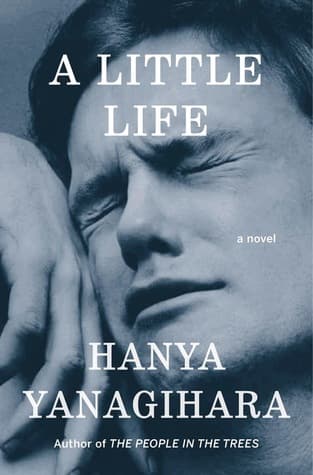
- A Little Life
Hanya Yanagihara
4.3 (212k) average on GoodreadsLiterary FictionExplores complex characters, moral ambiguity, and the dark side of human nature with a similarly immersive and often uncomfortable narrative style.
- The Island of Doctor Moreau
H.G. Wells
3.7 (96k) average on GoodreadsFantasyDeals with scientific experimentation, ethical boundaries, and the horrific consequences of playing God, set in an isolated, exotic location.
- Heart of Darkness
Joseph Conrad
3.4 (415k) average on GoodreadsHistorical FictionFeatures a journey into a remote, 'uncivilized' land that reveals the darkness within humanity and the corrupting nature of power and ambition.
- The Dispossessed
Ursula K. Le Guin
4.2 (88k) average on GoodreadsPoliticsWhile both novels engage with speculative elements and societal structures, Le Guin's 'The Dispossessed' offers a more philosophical and less graphic exploration of utopian and dystopian ideals. Yanagihara's novel adopts a more visceral and confrontational approach to its themes of exploitation and scientific ethics, focusing on the raw human cost rather than primarily intellectual discourse. Le Guin prioritizes societal models and political theory, whereas Yanagihara delves into the individual's moral corruption and the immediate, devastating consequences of their actions.
- The Old Man and the Sea
Ernest Hemingway
3.8 (831k) average on GoodreadsLiterary FictionA Cuban fisherman's long struggle with a giant marlin becomes a story of endurance and dignity, now retold for young adults with illustrations, phonetic guides, and writing prompts in Traditional Chinese.
- One Hundred Years of Solitude
Gabriel García Márquez
4.1 (753k) average on GoodreadsLiterary FictionThrough the multi-generational story of the Buendía family, a mythical town deals with the repeating patterns of time, love, and solitude, as the extraordinary mixes with the ordinary.



Enjoyed the summary?
A summary gives you the shape of the book. The book itself has the detail, the examples and the voice.
Find The People in the Trees on AmazonAs an Amazon Associate, BookBrief earns from qualifying purchases. How we're funded