
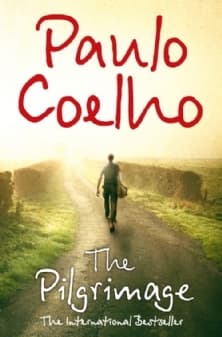
Core Idea
- Difficulty
- Medium
- Read it if
- You are interested in a spiritual journey narrative, enjoy parables and allegories, or are seeking inspiration for personal growth and self-discovery through a non-traditional lens.
- Skip it if
- You prefer practical, evidence-based self-help, dislike allegorical or mystical storytelling, or are looking for a straightforward travelogue rather than a philosophical exploration.
Key Takeaways from The Pilgrimage
The Ordinary Path to the Extraordinary
True miracles reside not in grand spectacles, but in the simple, everyday acts of life.
Coelho's trip to find a mythical sword at first suggests that important truths are in secret knowledge or supernatural events. But the pilgrimage keeps showing him (and the reader) the wisdom in everyday things. The 'miraculous' becomes clear and available to everyone, showing up in the kindness of strangers, human strength, and the simple act of walking. This idea challenges the common human desire for outside, dramatic proof of spiritual growth. Instead, it suggests recognizing the sacred in the present moment. It is a strong reminder that enlightenment is not an end point, but how you see the journey.
“The extraordinary is always found in the ordinary and simple ways of everyday people.”
In the book: Coelho's encounters with various 'ordinary' people along the Camino, who, through their simple acts of generosity or shared wisdom, impart profound lessons that far outweigh the magical allure of the sword.
Try this: Practice mindful observation of daily routines. Look for moments of connection, beauty, or insight in interactions with service providers, nature walks, or even household chores. Acknowledge and appreciate the 'small' miracles.
Related ideas: mindfulness, sacred-ordinary, present-moment
Mastering the Ram: The Power of Intent
True power comes from aligning intent with action, transcending brute force.
Coelho introduces 'The Ram' as a spiritual practice, a way to focus mental energy and intention to get past difficulties. It is not about physical aggression, but about a disciplined, steady inner force. This idea is important because it changes what power means, from outside control to inner mastery. The Ram teaches that many of our limits are self-imposed and can be removed with focused intention and belief. This technique is a basic part of Coelho's ideas, emphasizing that our inner state controls our outer life, and true strength comes from our ability to direct our will.
“The Ram is the force that allows us to break down obstacles, to overcome our own fears and limitations.”
In the book: Coelho's personal struggles with fear and doubt during the pilgrimage, which he learns to overcome by consciously applying the principles of The Ram, such as visualizing the obstacle being overcome.
Try this: When facing a daunting task or fear, close your eyes and visualize yourself successfully completing it, feeling the emotions of achievement. Repeat this visualization with strong intent daily.
Related ideas: willpower, visualization, self-mastery
The Language of the World: Listening to Omens
The universe constantly communicates; we must cultivate the sensitivity to perceive its signs.
A repeated idea in Coelho's work, omens, is looked at closely here. It is not about superstition, but about developing an intuitive sensitivity to life's subtle clues and coincidences. Petrus helps Coelho look past the obvious, to see the deeper patterns and messages in daily events. This encourages a more involved and less purely logical way of living, suggesting that there is a guiding intelligence or flow we can connect with if we learn to 'listen.' It promotes a view where everything is connected and can have meaning, creating a sense of wonder and active involvement in one's destiny.
“The world speaks to us in signs and symbols. We need only to learn to interpret them.”
In the book: Petrus frequently points out 'omens' to Coelho – a particular bird, a chance encounter, a feeling – and guides him to interpret their significance in relation to his journey and internal state.
Try this: Pay attention to recurring symbols, chance encounters, or sudden insights throughout your day. Journal about them and reflect on what they might signify in the context of your current challenges or aspirations.
Related ideas: synchronicity, intuition, cosmic-guidance
The Teacher Appears When the Student is Ready
Mentorship emerges precisely when an individual is open and prepared for guidance.
Petrus, Coelho's mysterious guide, shows this old wisdom. His arrival and his teachings depend on Coelho's readiness to learn and grow. This idea emphasizes that personal growth starts inside; outside helpers (teachers, books, experiences) only work when someone is ready inside. It is a challenge to actively look for knowledge and prepare for change, rather than just waiting for enlightenment to happen. It also shows how important it is to recognize and value the teachers who appear, even if they are not what you expect.
“When the student is ready, the teacher will appear.”
In the book: Petrus's initial reluctance to guide Coelho and his gradual revelation of teachings as Coelho demonstrates commitment and openness to the spiritual path.
Try this: Actively seek out mentors or learning resources for areas where you desire growth. More importantly, cultivate an open mind and a humble attitude, ready to receive wisdom from unexpected sources.
Related ideas: mentorship, spiritual-guidance, openness-to-learn
Embracing the Shadow: Confronting Personal Demons
True self-discovery requires acknowledging and integrating one's fears and weaknesses.
The pilgrimage is not just an outside journey, but a deep inside one. Coelho has to face his own fears, doubts, and worries, often shown through the difficulties he meets. This idea shows the need for shadow work – acknowledging and accepting the less desirable parts of oneself. It is an important step for true self-knowledge and freedom. Without facing these inner 'demons,' someone stays incomplete and cannot fully use their potential. The book says that true strength is not the absence of fear, but the courage to face it.
“Every man has his demon, and that demon is himself.”
In the book: Coelho's internal monologues and struggles with his own ego, his fear of failure, and his doubts about the spiritual path, which are often amplified by Petrus's challenging tasks.
Try this: Engage in self-reflection through journaling or meditation to identify your recurring fears or negative self-talk. Instead of suppressing them, acknowledge their presence and explore their origins without judgment.
Related ideas: shadow-work, self-confrontation, inner-demons
The Power of Ritual and Repetition
Meaningful rituals, even simple ones, anchor our intentions and facilitate transformation.
During the pilgrimage, Coelho learns various rituals and exercises, from the simple 'Ram' to more complex meditation practices. This shows the deep psychological and spiritual effect of doing things on purpose repeatedly. Rituals create special space and time, letting us focus our energy and give deeper meaning to ordinary actions. They are not just superstitious acts, but tools for self-discipline, concentration, and connecting to a larger purpose. This idea suggests that adding conscious rituals to daily life can greatly improve one's spiritual journey and sense of purpose.
“Every act can become a ritual if we invest it with meaning.”
In the book: The specific exercises and rituals Petrus teaches Coelho, such as the 'Water Exercise' or the 'Messenger's Ritual,' which require focused intention and repeated practice to yield results.
Try this: Choose a daily activity (e.g., making coffee, walking) and consciously imbue it with an intention. For instance, while making coffee, focus on gratitude or clarity for the day ahead.
Related ideas: mindful-rituals, sacred-practice, intention-setting
The Journey as the Destination
True fulfillment is found in the process of growth, not solely in achieving a specific outcome.
While Coelho's clear goal is to find a sword, the real change happens during the difficult journey itself. The challenges, lessons, and meetings along the Camino are much more important than the mythical object. This idea is a strong counter to thinking only about results, suggesting a process-focused way to live. It says that growth, learning, and self-discovery are the real treasures, and they are gained step by step. The value is in the experience, the becoming, rather than just the arrival. This view encourages resilience and being present, reminding us that life's richness is in how it unfolds.
“The path is the goal. The journey is the destination.”
In the book: Coelho's ultimate realization that the physical sword is less important than the spiritual transformation he underwent and the wisdom he gained on the Camino.
Try this: When working towards a long-term goal, regularly pause to appreciate the small victories, the skills you're acquiring, and the person you're becoming, rather than solely focusing on the end result.
Related ideas: process-over-outcome, spiritual-journey, growth-mindset
The Value of Discomfort and Challenge
Growth often requires stepping outside comfort zones and embracing difficult experiences.
Coelho's pilgrimage is hard; it has physical difficulty, emotional struggles, and spiritual tests. This constant discomfort is shown not as punishment, but as a test for change. The book says that true growth rarely happens when things are easy; it is by pushing limits, facing fears, and going through hardship that someone finds inner strength and grows. This idea encourages seeing challenges differently, as chances for learning and growth rather than things to avoid. It is a strong but hopeful message about the need for struggle.
“The greatest challenges often bring the greatest rewards.”
In the book: The physical exhaustion of walking the Camino, the fear he experiences in certain situations, and the difficult spiritual exercises Petrus assigns, all of which push Coelho beyond his perceived limits.
Try this: Intentionally seek out new experiences that challenge you, whether it's learning a new skill, engaging in a difficult conversation, or taking on a project outside your expertise. Embrace the discomfort as a sign of growth.
Related ideas: resilience, personal-growth, comfort-zone
Unlocking Personal Legend: Finding Your Purpose
Every individual possesses a unique destiny, waiting to be discovered and lived.
While 'Personal Legend' is more clearly talked about in 'The Alchemist,' its beginnings are in 'The Pilgrimage.' Coelho's journey is about finding and following his unique purpose. This idea suggests that deep inside each of us is a natural calling or destiny, often forgotten because of societal pressures. The spiritual journey, then, is about remembering and following this true path. It is a strong statement about individual purpose and the idea that life gets deep meaning when lived in line with one's truest self. The book encourages looking inward and having the courage to follow one's inner guide, even if it leads away from common paths.
“Your Personal Legend is what you have always wanted to accomplish. Everyone, when they are young, knows what their Personal Legend is.”
In the book: Coelho's own quest for meaning and purpose, which ultimately led him to write books like 'The Alchemist,' fulfilling a destiny that began to clarify during his pilgrimage.
Try this: Reflect on your childhood dreams and passions. What did you truly want to do or be before external pressures influenced you? Explore ways to integrate those elements into your current life or future goals.
Related ideas: life-purpose, destiny, self-discovery
The Power of Storytelling and Parable
Profound truths are often best conveyed through narrative and symbolic tales.
Coelho's entire work, especially 'The Pilgrimage,' shows the lasting power of storytelling. The book itself mixes autobiography and fable, using a compelling story to share complex philosophical and spiritual ideas. This idea highlights how stories and personal tales can get past intellectual resistance and connect deeply with people, making abstract ideas understandable and memorable. It shows that stories are not just for fun, but old ways to share wisdom, able to guide people to self-discovery and understanding through relatable experiences and symbols. The story structure itself becomes part of the lesson.
“A story can be a way of teaching without seeming to teach.”
In the book: The entire structure of 'The Pilgrimage' as a personal adventure woven with spiritual lessons, and Petrus's frequent use of stories and allegories to explain concepts to Coelho.
Try this: When trying to explain a complex idea or inspire others, consider using personal anecdotes, metaphors, or simplified narratives to make your message more engaging and relatable.
Related ideas: narrative-therapy, allegory, symbolism
The Pilgrimage Quotes
“The secret is here in the present. If you pay attention to the present, you can improve upon it. And, if you improve on the present, what comes later will also be better.”
“When you want something, all the universe conspires in helping you to achieve it.”
“The only way to learn is through action. Everything you need to know you have learned through your journey.”
“The good fight is the one we fight because our heart asks it of us.”
“You have to take risks. We will only understand the miracle of life fully when we allow the unexpected to happen.”
“The world is in a constant state of change, and we must learn to flow with it.”
“Every blessing ignored becomes a curse.”
“There is only one thing that makes a dream impossible to achieve: the fear of failure.”
“The two hardest tests on the spiritual road are the patience to wait for the right moment and the courage not to be disappointed with what we encounter.”
“Your eyes show the strength of your soul.”
“We are afraid of losing what we have, whether it's our life or our possessions and property. But this fear evaporates when we understand that our life stories and the history of the world were written by the same hand.”
“The ship is safest when it is in port, but that's not what ships were built for.”
“Listen to your heart. It knows all things.”
“The extra mile is never crowded.”
Quiz
10 questions on the main ideas. Each answer comes with a short explanation.
Question 1
What is the primary goal of Paulo Coelho's journey in 'The Pilgrimage'?
- To find the Holy Grail
- To discover a miraculous sword
- To reach the Cathedral of Santiago de Compostela
- To become a master of alchemy
Show answer
B. To discover a miraculous sword The book's central quest is for Coelho to find a miraculous sword, which symbolizes spiritual mastery and self-discovery, as described in the book's premise.
Question 2
Who is Paulo Coelho's mysterious mentor during the pilgrimage?
- Santiago
- Petrus
- Melchizedek
- The Alchemist
Show answer
B. Petrus Petrus is the guide who accompanies Coelho on the journey, teaching him spiritual exercises and insights along the Road to Santiago.
Question 3
According to the book, what must one do to truly comprehend 'The Pilgrimage' and 'The Alchemist'?
- Read them in chronological order
- Read both volumes as companions
- Practice the exercises described in 'The Pilgrimage'
- Undertake a physical pilgrimage
Show answer
B. Read both volumes as companions The book description states that these two volumes are companions, and to truly comprehend one, you must read the other, highlighting their interconnected themes of spiritual journey.
Question 4
What is a key theme explored in 'The Pilgrimage' regarding personal growth?
- The importance of wealth accumulation
- The need to find one's own path
- The superiority of intellectual knowledge
- The inevitability of suffering
Show answer
B. The need to find one's own path The book description emphasizes that this parable explores the need to find one's own path, which is central to Coelho's journey of self-discovery.
Question 5
Which of the following best describes the narrative style of 'The Pilgrimage'?
- A purely fictional adventure story
- A historical documentary
- Part adventure story, part guide to self-discovery
- A scientific treatise on spirituality
Show answer
C. Part adventure story, part guide to self-discovery The book is described as part adventure story and part guide to self-discovery, blending narrative elements with practical spiritual insights.
Question 6
What does the book suggest about where the extraordinary can be found?
- In distant, exotic lands
- In the ordinary and simple ways of everyday people
- Only through rigorous meditation
- In ancient religious texts
Show answer
B. In the ordinary and simple ways of everyday people The book's description concludes that the extraordinary is always found in the ordinary and simple ways of everyday people, reflecting its philosophical message.
Question 7
In what way does 'The Pilgrimage' serve as a precursor to 'The Alchemist'?
- It introduces the character of Santiago
- It establishes Coelho's reputation as a novelist
- It paved the way to Coelho's international bestselling novel
- It contains the same plot as 'The Alchemist'
Show answer
C. It paved the way to Coelho's international bestselling novel According to the book description, 'The Pilgrimage' paved the way to Coelho's international bestselling novel 'The Alchemist', indicating its role in his literary career.
Question 8
What is the significance of the Road to Santiago in the context of the book?
- It is merely a physical route across Spain
- It symbolizes the internal journey of self-discovery
- It is used primarily for historical tourism
- It represents a political boundary
Show answer
B. It symbolizes the internal journey of self-discovery The Road to Santiago serves as a metaphor for the spiritual and personal journey that Coelho undergoes, aligning with the book's themes of finding one's path.
Question 9
How does 'The Pilgrimage' blend practical application with its narrative?
- By including step-by-step financial advice
- Through spiritual exercises and insights taught by Petrus
- By providing maps of the pilgrimage route
- By detailing Coelho's daily diet and routine
Show answer
B. Through spiritual exercises and insights taught by Petrus As a guide to self-discovery, the book incorporates practical spiritual exercises and teachings from Petrus, making it applicable to readers' own journeys.
Question 10
What broader philosophical insight does 'The Pilgrimage' offer about life's journey?
- That success is measured by material achievements
- That enlightenment requires isolation from society
- That the search for meaning is intertwined with everyday experiences
- That spiritual truths are only accessible to a select few
Show answer
C. That the search for meaning is intertwined with everyday experiences The book emphasizes that the extraordinary is found in the ordinary, suggesting that meaning and spiritual growth are discovered through engagement with daily life and simple people.
The Pilgrimage FAQ
What is 'The Pilgrimage' by Paulo Coelho about?
'The Pilgrimage' is a spiritual memoir recounting Paulo Coelho's journey along the Camino de Santiago in Spain, guided by his mentor Petrus, as they seek a miraculous sword. It blends adventure with philosophical insights into self-discovery, emphasizing finding extraordinary meaning in ordinary life.
How is 'The Pilgrimage' different from 'The Alchemist'?
While both are spiritual allegories by Coelho, 'The Pilgrimage' is a more autobiographical account of his personal journey on the Camino de Santiago, focusing on practical spiritual exercises. 'The Alchemist' is a fictional fable about a shepherd's quest for treasure, with broader metaphorical themes. They are considered companion pieces.
Does 'The Pilgrimage' work as a guide for self-discovery?
Yes, 'The Pilgrimage' serves as both an adventure story and a practical guide to self-discovery, introducing spiritual exercises like the 'Speed Exercise' and 'Breathing Exercise' that readers can apply to find their own path and inner wisdom.
What is the Road to Santiago in 'The Pilgrimage'?
The Road to Santiago, or Camino de Santiago, is the ancient pilgrimage route in Spain that Coelho travels in the book. It symbolizes a journey of personal transformation, where physical challenges mirror spiritual growth and the search for deeper meaning.
How does 'The Pilgrimage' explore spirituality?
The book explores spirituality through Coelho's encounters and lessons from his mentor Petrus, emphasizing mindfulness, simplicity, and the idea that spiritual enlightenment is found in everyday experiences and ordinary people, rather than in grand gestures.
Is 'The Pilgrimage' based on a true story?
Yes, 'The Pilgrimage' is largely autobiographical, based on Coelho's own pilgrimage along the Camino de Santiago in 1986. It blends real experiences with allegorical elements to convey philosophical and spiritual insights.
What are the key lessons from 'The Pilgrimage'?
Key lessons include the importance of listening to one's heart, embracing simplicity, finding wisdom in daily life, and understanding that personal growth often comes through challenges and guidance, as illustrated by Coelho's journey and Petrus's teachings.
How different is 'The Pilgrimage' from other spiritual books?
Unlike purely theoretical spiritual books, 'The Pilgrimage' combines narrative adventure with hands-on exercises, making it more experiential. Its focus on a personal, physical journey sets it apart from abstract philosophical texts, offering a relatable path to self-discovery.
What is the role of Petrus in 'The Pilgrimage'?
Petrus is Coelho's mysterious mentor in the book, guiding him through spiritual exercises and challenges on the pilgrimage. He represents wisdom and practical spirituality, helping Coelho uncover inner truths and navigate the journey's trials.
Does 'The Pilgrimage' require reading 'The Alchemist' to understand?
No, 'The Pilgrimage' stands on its own as a complete work. However, reading both books can enhance understanding, as they share thematic connections and are considered companions in Coelho's exploration of spiritual quests and personal destiny.
About the author

Paulo Coelho de Souza is a Brazilian lyricist and novelist and a member of the Brazilian Academy of Letters since 2002. His novel The Alchemist became an international best-seller and he has published 30 more books since then.
Similar books
- THE ALCHEMIST
Paulo Coelho
3.6 (3k) average on GoodreadsFictionShares the same author's distinctive style, themes of personal legend, spiritual journeys, and following omens.
- Siddhartha
Hermann Hesse
4.0 (583k) average on GoodreadsHistorical FictionExplores a spiritual journey of self-discovery and enlightenment through a protagonist's experiences and philosophical reflections.
- The Power of Now: A Guide to Spiritual Enlightenment
Eckhart Tolle
4.1 (211k) average on GoodreadsPsychologyThe Pilgrimage uses a narrative, semi-autobiographical journey to convey spiritual lessons, making them relatable through experience. In contrast, The Power of Now presents direct, non-narrative spiritual teachings focused on present moment awareness. While Tolle offers a more structured and immediate guide to spiritual practice, Coelho's storytelling approach might be more engaging for readers who prefer to absorb wisdom through a character's journey.
- The Way of Zen
Alan W. Watts
4.2 (16k) average on GoodreadsPsychologyCoelho's The Pilgrimage offers an accessible, New Age perspective on personal spiritual awakening, often through mystical experiences and allegorical teachings. Alan Watts' The Way of Zen, however, provides a more scholarly and philosophically rigorous exploration of Eastern thought, particularly Zen Buddhism. While both aim to guide readers towards deeper understanding, Watts delves into the historical, cultural, and philosophical nuances with greater depth and intellectual precision, whereas Coelho prioritizes emotional resonance and broad accessibility, sometimes at the expense of intellectual rigor.
- The Diary of a Young Girl
Anne Frank
4.2 (2.7M) average on GoodreadsBiographyDuring the Nazi occupation, a teenage girl's diary, written from a secret annex, shares observations on humanity, hope, and the wait for freedom.
- Eat, Pray, Love
Elizabeth Gilbert
3.6 (1.5M) average on GoodreadsLifestyleA heartbroken writer leaves her conventional life for a year-long global search for pleasure in Italy, spiritual devotion in India, and unexpected love and balance in Bali.




Enjoyed the summary?
A summary gives you the shape of the book. The book itself has the detail, the examples and the voice.
Find The Pilgrimage on AmazonAs an Amazon Associate, BookBrief earns from qualifying purchases. How we're funded