

Synopsis
Covers the whole plot, including the ending.
- Difficulty
- Hard
- Pacing
- Slow
- Mood
- Dark, unsettling, theological, psychological, mysterious
- Read it if
- You enjoy psychological thrillers wrapped in historical and theological debate, with an unreliable narrator and a strong sense of gothic mystery.
- Skip it if
- You dislike ambiguity, dense theological discussions, or stories with a dark, unsettling tone.
The Private Memoirs and Confessions of a Justified Sinner Plot Summary
Covers the whole plot, including the ending.
The Editor's Narrative Begins
The novel begins with an unnamed editor's preface, setting the stage for the 'memoirs' that follow. The editor claims to have found an old manuscript detailing the life of a man driven to extreme religious fanaticism and crime. He presents this document, along with his own introduction, to the reader. This editorial frame creates a sense of historical authenticity and distance, prompting the reader to consider the truth of the events and the protagonist's confessions. The editor describes the historical context of early 18th-century Scotland, including the intense religious divisions and the rise of Antinomianism, a doctrine central to the sinner's justification.
The Laird's Family and the Minister's Influence
The editor tells the story of George Colwan, the Laird of Dalcastle, a cheerful but somewhat reckless man, and his religious wife, Rabina, who dislikes him. Rabina comes under the influence of the extreme Calvinist minister, Mr. Wringhim, a man of rigid beliefs. After a period of separation, Rabina gives birth to a second son, Robert, whose father is strongly implied to be Mr. Wringhim, though he is publicly acknowledged as George Colwan's son. This birth, surrounded by religious fervor and marital conflict, sets the stage for Robert's upbringing and the deep resentments that will drive his future actions.
Robert's Fanatical Upbringing
Robert is raised by Mr. Wringhim, not Laird Dalcastle, in an environment filled with extreme Calvinist teachings, especially the doctrine of 'justification by faith alone' to the point of Antinomianism. He is taught that he is one of God's elect, destined for salvation, and thus incapable of true sin. This belief system fosters in Robert intense spiritual pride and a chilling disregard for conventional morality. His adoptive father, Mr. Wringhim, strengthens these convictions, shaping Robert into a rigid, self-righteous, and increasingly isolated young man, convinced of his divine favor and the damnation of others.
The Encounter with Gil-Martin
As Robert grows up, he meets a mysterious figure named Gil-Martin, who appears to him in different forms and at opportune times. Gil-Martin is an enigmatic, almost supernatural being who quickly gains Robert's trust and becomes his constant companion and confidant. Gil-Martin reinforces Robert's belief in his own election and subtly, then openly, encourages him to act on his most extreme interpretations of religious doctrine. He suggests that those who oppose Robert's 'righteous' path are agents of the devil and that removing them would serve God. This partnership is a turning point, moving Robert towards violence.
The Murder of George Colwan
Robert's elder brother, George Colwan, is the rightful heir to Dalcastle and a popular, kind young man. Robert, driven by jealousy, a religious conviction that George is damned, and Gil-Martin's subtle suggestions, begins to see George as an barrier to God's will and his own destiny. Gil-Martin arranges circumstances that lead Robert to believe he must eliminate George. During a wrestling match, George is found dead, seemingly from a fall, but the story strongly implies Robert's direct involvement, possibly with Gil-Martin's supernatural help. This act of fratricide is Robert's first major crime, which he believes is divinely sanctioned.
The Minister's Demise and the Pursuit of Purity
After George's death, Robert's actions become more erratic and violent. He murders a minister who preaches against Antinomianism, seeing him as a false prophet. Later, he turns against his adoptive father, Mr. Wringhim, believing him to be an obstacle to his spiritual purity and perhaps resenting his true parentage. Gil-Martin continues to manipulate Robert, making him believe these murders are righteous acts of purification, removing obstacles to the spread of God's true doctrine. Robert's paranoia and self-deception deepen, as he interprets every event through his distorted faith.
Robert's Descent into Madness and Isolation
As his crimes increase, Robert becomes a fugitive, constantly on the run and increasingly isolated. He is troubled by visions and hallucinations, often involving Gil-Martin, who now appears in more terrifying, demonic forms. Robert's mental state quickly worsens, blurring the lines between reality and his tormented imagination. He starts to question Gil-Martin's true nature, suspecting him to be the Devil, but remains under his influence. His confessions show a man torn between his belief in his own justification and the growing horror of his deeds, leading to deep psychological distress and despair.
The Editor's Investigation and Doubts
After presenting Robert's memoirs, the editor returns to offer his own comments and investigation. He tries to confirm Robert's account with historical records and local testimonies. While some events match, many details are fantastical or defy rational explanation, especially regarding Gil-Martin's appearances and disappearances. The editor struggles to reconcile Robert's unwavering belief in his divine justification with the undeniable evidence of his terrible crimes. He considers the possibility of demonic possession, extreme psychological delusion, or even a clever literary deception, leaving the reader to ponder the true nature of Robert's experiences.
The Discovery of Robert's Body
The editor describes how, many years after the events of the memoirs, Robert's mummified body is found buried upright on a remote hill, along with the very manuscript the editor has been presenting. The discovery is surrounded by a supernatural aura, with local legends and superstitions about the site. The body's preserved state and the strange way it was buried add another layer of mystery and horror to Robert's story, suggesting an unnatural end. This discovery confirms the editor's belief in the 'justified sinner' and the authenticity, however strange, of his confessions.
The Editor's Concluding Reflections
In his concluding remarks, the editor offers a final, detailed analysis of Robert Wringhim's life and confessions. He discusses the dangers of religious fanaticism, particularly the Antinomian doctrine that led Robert to believe he was above moral law. The editor reflects on the nature of evil, whether it comes from human depravity, psychological illness, or genuine demonic influence. He lets the reader draw their own conclusions about Robert's sanity, the reality of Gil-Martin, and the moral implications of the story. The editor emphasizes the historical context and the lasting mystery of Robert's tormented soul.
The Private Memoirs and Confessions of a Justified Sinner Characters
Robert Wringhim
Protagonist/Antagonist
The 'justified sinner,' a fanatical young man driven to murder by extreme religious belief.
Robert is the central figure, a young man raised under the strict, Antinomian Calvinist teachings of Mr. Wringhim. He believes himself to be one of God's 'elect,' predestined for salvation, which leads him to conclude he is incapable of sin and therefore justified in any action. This conviction, coupled with his deep-seated pride and resentment, makes him susceptible to the influence of Gil-Martin. He is intelligent but dangerously deluded, interpreting all events through the warped lens of his extremist faith. His journey is one of increasing paranoia, violence, and psychological torment.
Relationships: Gil-Martin (Constant companion, manipulator, possibly the Devil); Mr. Wringhim (Adoptive father, religious mentor); George Colwan (Elder half-brother, victim); Rabina Colwan (Biological mother)
Gil-Martin
Antagonist
A mysterious, enigmatic figure who acts as Robert's companion and demonic tempter.
Gil-Martin is the novel's most enigmatic and terrifying character. He appears to Robert in various guises, always charming and persuasive, reinforcing Robert's extremist religious beliefs and encouraging him towards violence. His true nature is ambiguous: he could be a manifestation of Robert's own psychological demons, a figment of his imagination, or, as heavily implied, the Devil himself. Gil-Martin possesses supernatural abilities, appearing and disappearing at will, changing his form, and influencing events. He is the ultimate catalyst for Robert's crimes, cleverly manipulating Robert's pride and fanaticism.
Relationships: Robert Wringhim (Manipulator, tempter, 'friend')
The Editor
Narrator/Supporting
The unnamed individual who discovers, presents, and comments on Robert's memoirs.
The Editor serves as the primary narrator for the framing narrative of the novel. He is presented as a rational, scholarly, but somewhat credulous individual who stumbles upon Robert's manuscript and becomes fascinated by its contents. His role is to introduce the historical context, provide a more objective account of events (though often speculative), and offer moral commentary. He attempts to corroborate Robert's wild claims with historical fact, often finding discrepancies but ultimately accepting the core truth of the 'justified sinner's' existence. He grapples with the supernatural elements, trying to rationalize them while acknowledging their profound impact.
Relationships: Robert Wringhim (Subject of his historical investigation)
George Colwan
Supporting
Laird Dalcastle's elder, legitimate son and Robert's half-brother, a popular and good-natured man.
George Colwan is the legitimate heir to the Dalcastle estate and the elder son of Laird Dalcastle and Rabina. In contrast to Robert, George is portrayed as a jovial, popular, and morally upright young man, well-liked by his peers and the community. He represents the worldly, natural man whom Robert, guided by Gil-Martin, views as an embodiment of the damned. His existence is an affront to Robert's belief in his own divine right and superior spiritual status. George's murder by Robert is a pivotal event, marking Robert's descent into overt criminality.
Relationships: Robert Wringhim (Half-brother, victim); Laird Dalcastle (Father); Rabina Colwan (Mother)
Mr. Wringhim
Supporting
A zealous, Antinomian Calvinist minister who raises Robert and influences his extreme beliefs.
Mr. Wringhim is the minister who becomes Rabina's spiritual advisor and Robert's adoptive father. He is a staunch Antinomian, preaching that those who are 'elect' are incapable of sin and thus are above moral law. He instills these extreme doctrines in Robert from a young age, fostering his spiritual pride and self-righteousness. Although he genuinely believes in his teachings, his influence is profoundly destructive. He is likely Robert's biological father, adding a layer of hypocrisy and complicated paternity to the narrative. He eventually becomes a target of Robert's 'purification' efforts.
Relationships: Robert Wringhim (Adoptive (and likely biological) father, religious mentor); Rabina Colwan (Spiritual confidante, possibly lover)
Rabina Colwan
Supporting
Laird Dalcastle's devoutly religious wife and the mother of George and Robert.
Rabina is Laird Dalcastle's wife, a woman of intense religious piety who despises her husband's more worldly ways. She is drawn to the austere and extreme Calvinism preached by Mr. Wringhim, becoming his fervent disciple. Her deep unhappiness in her marriage and her spiritual fervor lead to her affair with Mr. Wringhim, resulting in Robert's birth. She is a figure of rigid morality, but her choices and the environment she creates contribute significantly to Robert's warped upbringing. She is largely absent from Robert's direct narrative, but her early decisions cast a long shadow over his life.
Relationships: Laird Dalcastle (Husband); Mr. Wringhim (Spiritual advisor, possibly lover); George Colwan (Son); Robert Wringhim (Son)
Laird Dalcastle
Supporting
The jovial, worldly, but somewhat dissolute father of George Colwan.
Laird Dalcastle is the patriarch of the Colwan family, a man of good humor and a more traditional, less fanatical religious outlook than his wife. He enjoys the pleasures of life, which puts him at odds with Rabina's severe piety. He is the legitimate father of George Colwan and the presumed father of Robert. His easygoing nature and lack of extreme religious fervor make him a target of Rabina's scorn and, by extension, Robert's contempt. He represents the older, more moderate Scottish gentry, in contrast to the rising tide of religious extremism.
Relationships: Rabina Colwan (Wife); George Colwan (Son); Robert Wringhim (Presumed son)
The Private Memoirs and Confessions of a Justified Sinner Themes
Religious Fanaticism and Antinomianism
The novel explores the dangers of religious extremism, especially the Antinomian doctrine, which states that God's chosen (the elect) are free from moral law. Robert Wringhim's life is shaped by this belief, taught by Mr. Wringhim, leading him to commit terrible crimes, convinced he is doing God's will. His 'justification' leads him to murder his brother, ministers, and others he considers 'reprobate,' showing how absolute faith, without compassion or reason, can lead to deep moral corruption and violence. The editor's narrative provides historical context for this dangerous theological trend.
“For my part, I never once had a doubt of my own salvation; and believe, I was rather more elevated on account of my assurance than I had any right to be.”
Duality and Psychological Fragmentation
Duality is a central theme, seen in both the narrative structure and Robert's mind. The novel presents two narratives (the editor's and Robert's), often giving conflicting views of the same events. Psychologically, Robert experiences a deep split: his public image as a devout, righteous man versus his private descent into murder and madness. Gil-Martin embodies this duality, appearing sometimes as a trusted friend, other times as a terrifying demon, blurring the line between external tempter and internal psychological projection. This fragmentation suggests that Robert's crimes are not just religious acts but also symptoms of a deeply disturbed mind struggling with its identity and morality.
“I was never so blest as in my moments of secret devotion; but I was never so tormented as in the moments of my public ministrations. I was a hypocrite, and a deceiver.”
The Nature of Evil
The novel constantly questions the source and nature of evil. Is it inherent in human nature (Robert's pride and resentment)? Is it a product of environment (his extreme upbringing)? Or is it the result of genuine supernatural intervention (Gil-Martin as the Devil)? The editor grapples with these questions, acknowledging the historical reality of Robert's actions but struggling to explain the supernatural elements. Robert, in his confessions, attributes his actions to divine guidance, even as he increasingly suspects Gil-Martin's demonic nature. The ambiguity around Gil-Martin means the reader, like the editor, must face the unsettling possibility of both human depravity and malevolent spiritual forces.
“I was all the while in the dark concerning the being with whom I was so closely connected... I was now convinced that he was the devil.”
Truth and Narrative Reliability
Hogg skillfully plays with the concept of truth and narrative reliability through the novel's structure. The 'Editor's Narrative' provides an objective, historical account, while 'The Private Memoirs and Confessions' offer a first-person, subjective, and increasingly delusional perspective. The editor often questions Robert's sanity and the truth of his supernatural encounters, leaving the reader to decide what is real, what is delusion, and what is demonic. This narrative framing forces the reader to actively participate in understanding the truth, highlighting the subjective nature of historical accounts and the difficulty of distinguishing fact from fanatical belief or mental illness.
“I will not vouch for the authenticity of the relation, for I had it from a crazy woman, whom I knew to be a liar.”
Social and Religious Hypocrisy
The novel critiques the hypocrisy in certain religious circles of the early 18th century. Mr. Wringhim, the minister, preaches strict piety while having an affair with Rabina. Robert, while publicly appearing devout, secretly harbors murderous intentions and commits terrible acts, justified by his distorted faith. The society depicted is one where outward shows of piety can hide deep moral corruption and where rigid religious doctrines can be twisted to serve personal vengeances. This theme explores the dangerous gap between professed belief and actual conduct, and how religious zeal can rationalize unholy deeds.
“The greater the sinner, the greater the saint. That is a saying of great comfort, and I know it to be true.”
Plot Devices & Literary Techniques
Frame Narrative
Two distinct narratives, the Editor's and Robert's, presented as found documents.
The novel employs a sophisticated frame narrative, consisting of two main sections: 'The Editor's Narrative' and 'The Private Memoirs and Confessions of a Justified Sinner.' The Editor's section acts as an objective, historical account, setting the scene and attempting to verify the events. Robert's memoirs then provide a first-person, subjective, and increasingly unreliable perspective. These two narratives often overlap, contradict, and comment on each other, creating dramatic irony and forcing the reader to constantly question the truth and reliability of the events described. This structure enhances the mystery and psychological depth of the story, allowing for multiple interpretations of Robert's experiences.
Unreliable Narrator
Robert Wringhim's first-person account is deeply biased and influenced by delusion.
Robert Wringhim serves as a classic unreliable narrator in his 'Confessions.' His narrative is filtered through his extreme Antinomian beliefs, his spiritual pride, and his deteriorating mental state. He interprets every event, including his own heinous crimes, as divinely sanctioned or as necessary acts of purification. He fails to recognize Gil-Martin's true nature until very late, consistently justifying his companion's insidious suggestions. This unreliability forces the reader to critically analyze his perspective, distinguishing between what Robert believes happened and what likely occurred, making the reader actively involved in deciphering the 'truth' of the story.
Doppelgänger
Gil-Martin acts as a physical and psychological double for Robert Wringhim.
Gil-Martin functions as a doppelgänger for Robert Wringhim. He not only physically resembles Robert at times but also mirrors and amplifies Robert's inner thoughts and desires. Gil-Martin vocalizes Robert's darkest impulses, validates his most extreme religious interpretations, and helps him carry out his murderous intentions. This duality raises questions about whether Gil-Martin is an external demonic entity or a psychological manifestation of Robert's own suppressed evil. The doppelgänger motif effectively externalizes Robert's internal struggle, making his descent into madness and sin more visceral and terrifying for the reader.
Supernatural Ambiguity
The presence of supernatural elements is left open to multiple interpretations.
The novel deliberately maintains ambiguity regarding the supernatural. Gil-Martin's appearances, disappearances, and abilities are overtly supernatural, suggesting he is the Devil. However, the Editor, a rationalist, often tries to find natural explanations or suggests Robert's experiences could be the result of delusion or mental illness. This ambiguity is crucial to the novel's lasting power. It prevents a simple reading, forcing the reader to consider whether Robert is a victim of demonic possession, a madman, or a man whose extreme faith has warped his perception of reality. This device allows for both a gothic horror and a psychological thriller interpretation.
The Private Memoirs and Confessions of a Justified Sinner Quotes
“I was educated in the strictest principles of religion and morality, and had the good fortune to be trained up under the eye of a mother who was a perfect pattern of every female virtue.”
“There are some dark passages in the history of every man, which he would willingly bury in oblivion; and happy is he who has the power to do so.”
“I was convinced that I was one of the elect, and that I could not fall from grace.”
“The greatest danger to the Christian is not open persecution, but subtle temptation.”
“He seemed to possess the power of changing his features at will, and of assuming any form that suited his purpose.”
“My conscience, for a time, was a severe monitor; but by degrees, its voice became fainter and fainter, till at last it was entirely silenced.”
“It is a fearful thing to fall into the hands of the living God.”
“The most dangerous of all delusions is that which persuades us we are doing God service, when in reality we are only gratifying our own evil passions.”
“I found myself involved in a labyrinth of difficulties, from which I saw no way of extricating myself.”
“The human mind is a strange and intricate machine, and its workings are often inscrutable even to itself.”
“Every man is a mystery to himself, and a still greater mystery to others.”
“I was perfectly convinced that I was acting under the immediate impulse of the Holy Spirit.”
“There are more things in heaven and earth, Horatio, than are dreamt of in your philosophy.”
“The editor has only to regret that he cannot bring to light the whole truth concerning the extraordinary circumstances of this narrative.”
Quiz
10 questions on the plot and the characters. Each answer comes with a short explanation.
Question 1
What is the primary narrative structure of 'The Private Memoirs and Confessions of a Justified Sinner'?
- A linear, third-person narrative following the protagonist from birth to death.
- A collection of letters and diary entries from multiple characters.
- An editor's account followed by the protagonist's own memoir, offering conflicting perspectives.
- A series of flashbacks from the protagonist's deathbed.
Show answer
C. An editor's account followed by the protagonist's own memoir, offering conflicting perspectives. The novel is famously structured as an editor's introduction and account, followed by the 'private memoirs and confessions' written by the sinner, Robert Wringhim, himself, providing two distinct and often contradictory viewpoints on the events.
Question 2
Who is the mysterious figure that constantly appears to Robert Wringhim and encourages his extremist religious views and violent acts?
- His biological father, George Colwan
- His spiritual mentor, the Rev. Wringhim
- Gil-Martin
- His brother, George Colwan Jr.
Show answer
C. Gil-Martin Gil-Martin is the enigmatic and sinister companion who manipulates Robert Wringhim throughout the novel, often interpreted as the Devil or a manifestation of Robert's own corrupted psyche.
Question 3
What is the extreme Calvinist doctrine that Robert Wringhim adheres to, believing he is one of the 'elect' and therefore justified in his actions?
- Universalism
- Arminianism
- Antinomianism
- Methodism
Show answer
C. Antinomianism Robert Wringhim's belief that his salvation is predetermined and that he is therefore exempt from moral law is a core tenet of antinomianism, a radical interpretation of Calvinist predestination.
Question 4
What is the fate of Robert Wringhim's biological brother, George Colwan Jr.?
- He flees to America to escape his brother's influence.
- He is murdered, and Robert is implicated in the crime.
- He becomes a minister and tries to counsel Robert.
- He commits suicide out of despair.
Show answer
B. He is murdered, and Robert is implicated in the crime. George Colwan Jr. is murdered, and while Robert Wringhim is present and encouraged by Gil-Martin, the details of who struck the fatal blow are ambiguous, adding to the novel's psychological complexity.
Question 5
How does the editor's account of Robert Wringhim's death differ from Robert's own description in his memoirs?
- The editor claims Robert died peacefully in his sleep, while Robert describes a violent struggle.
- The editor reports Robert's body was found in a grave, while Robert claims he was raptured to heaven.
- The editor describes Robert's body being found inexplicably preserved and buried, while Robert's memoir ends with him being pursued and committing suicide.
- The editor states Robert was executed for his crimes, but Robert claims he escaped justice.
Show answer
C. The editor describes Robert's body being found inexplicably preserved and buried, while Robert's memoir ends with him being pursued and committing suicide. The editor's account details the discovery of Robert's remarkably preserved body in a grave, while Robert's memoir concludes with him being relentlessly pursued by Gil-Martin and taking his own life by hanging.
Question 6
What significant detail does the editor discover about the grave where Robert Wringhim's body is found?
- It contains the remains of Gil-Martin as well.
- It is located in a consecrated churchyard.
- It is surprisingly shallow and contains a well-preserved corpse, indicating a peculiar burial.
- It is marked with a monument dedicated to his 'piety'.
Show answer
C. It is surprisingly shallow and contains a well-preserved corpse, indicating a peculiar burial. The editor describes finding Robert's body in a shallow grave, remarkably preserved, and notes the unusual circumstances of its burial, adding to the supernatural and mysterious elements of the story.
Question 7
What is the relationship between Robert Wringhim and the Rev. Wringhim?
- The Rev. Wringhim is Robert's biological father.
- The Rev. Wringhim is Robert's adoptive father and a strict Calvinist who instills extremist views in him.
- The Rev. Wringhim is Robert's estranged uncle.
- The Rev. Wringhim is a rival minister who preaches against Robert's doctrines.
Show answer
B. The Rev. Wringhim is Robert's adoptive father and a strict Calvinist who instills extremist views in him. The Rev. Wringhim adopts Robert and raises him with an extreme interpretation of Calvinist doctrine, heavily influencing Robert's self-perception as a 'justified sinner'.
Question 8
What role does the concept of 'doubles' or doppelgängers play in the novel, particularly concerning Gil-Martin?
- It represents the idea that all humans have a hidden twin.
- It highlights the theme of mistaken identity and comedic errors.
- Gil-Martin is often perceived as having an uncanny resemblance to Robert, or even transforming into him, blurring the lines of identity and suggesting a psychological projection or demonic possession.
- It symbolizes the contrast between good and evil through two distinct physical forms.
Show answer
C. Gil-Martin is often perceived as having an uncanny resemblance to Robert, or even transforming into him, blurring the lines of identity and suggesting a psychological projection or demonic possession. Gil-Martin frequently appears identical to Robert, or at least uncannily similar, leading to confusion and suggesting that he might be a manifestation of Robert's own evil impulses or a literal demonic double.
Question 9
What happens to the young woman named Bell Calvert, who Robert Wringhim is accused of persecuting?
- She successfully sues Robert for defamation.
- She marries George Colwan Jr. and lives happily.
- She is driven to madness and eventually commits suicide by drowning.
- She exposes Robert's crimes to the authorities.
Show answer
C. She is driven to madness and eventually commits suicide by drowning. Bell Calvert is relentlessly persecuted by Robert and Gil-Martin, leading to her mental collapse and eventual suicide, a tragic example of the destructive power of their actions.
Question 10
The novel explores the dangers of religious fanaticism and the potential for an individual to justify horrific acts based on a distorted interpretation of divine will. Which philosophical concept does this most directly relate to?
- Utilitarianism
- Moral relativism
- The abuse of free will and the corrupting influence of absolute certainty.
- The inherent goodness of human nature.
Show answer
C. The abuse of free will and the corrupting influence of absolute certainty. The novel powerfully demonstrates how Robert's unwavering belief in his own election, and his 'justification' through divine decree, leads him to commit heinous acts without remorse, highlighting the dangers of unchecked zealotry and a perversion of moral responsibility.
The Private Memoirs and Confessions of a Justified Sinner FAQ
What is the central premise of 'The Private Memoirs and Confessions of a Justified Sinner'?
The novel explores the psychological and spiritual descent of Robert Wringhim, a young man indoctrinated into extreme Calvinist predestination. Convinced he is one of the 'elect' and justified in his actions, he commits heinous crimes, including fratricide, under the manipulative influence of a mysterious figure named Gil-Martin, whom he believes to be the Devil.
Who are the two primary narrators, and how do their perspectives differ?
The book features two main narrative voices: an unnamed 'Editor' and Robert Wringhim himself. The Editor, presenting the story as a historical account, offers a rational, albeit biased, perspective, often attributing Wringhim's actions to madness or religious fanaticism. Wringhim's 'Memoirs' provide a first-person, highly subjective account, detailing his conviction of divine justification and his interactions with Gil-Martin.
What is the relationship between Robert Wringhim and George Colwan?
Robert Wringhim and George Colwan are half-brothers, though Wringhim's mother, Mrs. Wringhim, denies George's legitimacy, claiming him to be the illegitimate son of her husband by another woman. This familial animosity, fueled by religious zealotry and perceived injustice, culminates in Robert's murder of George.
Who is Gil-Martin, and what role does he play in Robert's downfall?
Gil-Martin is a mysterious, enigmatic figure who befriends and manipulates Robert Wringhim. He appears as a doppelgänger, capable of changing his appearance, and convinces Robert that he is a divine agent assisting him in his 'justified' mission to eliminate sinners. Gil-Martin is widely interpreted as the Devil, a manifestation of Robert's own psychosis, or a combination of both.
What historical period and religious context are crucial to understanding the novel?
The novel is set in late 17th and early 18th-century Scotland, a period marked by intense religious fervor and the lingering influence of extreme Calvinism, particularly the concept of predestination. This theological backdrop, emphasizing the 'elect' and the 'damned,' directly informs Robert Wringhim's distorted worldview and his belief in his own justified sinfulness.
How does the novel subtly hint at the true identity of Gil-Martin before his reveal?
Gil-Martin's true nature is hinted at through his uncanny ability to appear and disappear, his shifting physical form, his knowledge of Robert's innermost thoughts, and his constant encouragement of Robert's violent impulses. The Editor's historical account also includes testimonies from others who describe a strange, unnerving companion to Robert, often with a 'dreadful' or 'unearthly' aspect.
What is the significance of the recurring motif of doppelgängers or doubles in the narrative?
The doppelgänger motif is central, primarily through Gil-Martin's resemblance to Robert and his ability to assume the form of others. This blurs the line between reality and hallucination, suggesting that Gil-Martin might be a projection of Robert's own corrupted psyche or a manifestation of his repressed desires. It also highlights the theme of identity and the internal struggle between good and evil.
Are there any clues within the Editor's narrative that suggest the unreliability of his own account?
The Editor's narrative, while seemingly objective, is subtly biased. He frequently interjects his own judgments, dismisses supernatural explanations in favor of rational ones (like madness), and occasionally omits details or presents them with a clear agenda. His desire to present a 'true' historical account sometimes conflicts with the unsettling evidence he himself presents, hinting at his own subjective interpretation.
How does Robert Wringhim's upbringing contribute to his psychological fragility?
Robert's upbringing under the rigid, fanatical tutelage of his mother and the Reverend Wringhim instills in him an extreme and unyielding interpretation of Calvinist doctrine. This environment fosters a sense of self-righteousness, an inability to question authority (especially religious), and a complete lack of empathy, making him highly susceptible to Gil-Martin's manipulations and prone to psychological delusion.
What psychological concept might explain Robert's belief that Gil-Martin is a divine agent rather than the Devil?
Robert's conviction that Gil-Martin is a divine agent can be explained through cognitive dissonance and confirmation bias. His extreme predestinarian beliefs lead him to interpret Gil-Martin's destructive suggestions as divine commands, reinforcing his self-perception as one of the elect. He actively ignores or reinterprets any evidence that might contradict his pre-existing theological framework, leading to a profound delusion.
How does the novel explore the concept of 'justification' from a psychological perspective?
The novel delves into the psychological dangers of extreme religious justification, showing how Robert's belief in his 'justified' status allows him to externalize blame and absolve himself of moral responsibility. This psychological mechanism enables him to commit heinous acts without remorse, convincing himself that he is merely an instrument of divine will, rather than a moral agent.
In what ways does Robert Wringhim exhibit symptoms of paranoia and delusion?
Robert exhibits classic symptoms of paranoia, believing himself to be persecuted by those who oppose his 'righteous' mission, particularly his half-brother George. His delusions include the unwavering conviction of his own election, the belief that Gil-Martin is a divine emissary, and the inability to distinguish between his own thoughts and external influences, leading to a break with reality.
Is Gil-Martin a literal manifestation of the Devil, a psychological projection, or both?
This is a central interpretive debate. Many argue Gil-Martin is a literal Devil figure, aligning with gothic traditions and the supernatural elements. Others contend he is a psychological projection of Robert's repressed evil, a hallucination brought on by extreme religious fanaticism and guilt. The ambiguity allows for both interpretations, suggesting the Devil may reside within the human psyche.
How does the novel's structure, with its two conflicting narratives, contribute to its themes?
The dual narrative structure highlights themes of subjectivity vs. objectivity, religious fanaticism vs. rationalism, and the unreliability of truth. The Editor's 'historical' account attempts to impose order and reason, while Robert's 'confessions' plunge the reader into a chaotic, deluded mind. This juxtaposition forces the reader to actively interpret events and question the nature of reality and belief.
What is the significance of the novel being published anonymously and presented as a found document?
The anonymous publication and 'found document' framing enhance the novel's gothic mystery and its exploration of truth and deception. It blurs the line between fiction and reality, creating an immersive experience where the reader, like the Editor, must sift through conflicting accounts to discern what truly happened. This also allowed Hogg to critique religious extremism more freely.
Does the novel ultimately condemn religious faith, or only its extreme interpretations?
The novel does not condemn religious faith itself, but rather the dangerous and destructive consequences of its extreme, dogmatic interpretations, particularly predestinarian Calvinism. It critiques how such beliefs can be twisted to justify moral depravity and how they can lead to psychological breakdown and social alienation, rather than spiritual enlightenment.
What kind of ending does Robert Wringhim meet, and how does it leave the reader with lingering questions?
Robert Wringhim meets a mysterious and ambiguous end, found dead in a posture suggesting suicide, yet with signs of a struggle. His burial site is later disturbed, and his body unearthed, leading to further confusion and sensationalism. The Editor's account of finding Wringhim's actual grave leaves the reader questioning the very nature of the narrative's authenticity and the ultimate fate of the sinner.
About the author
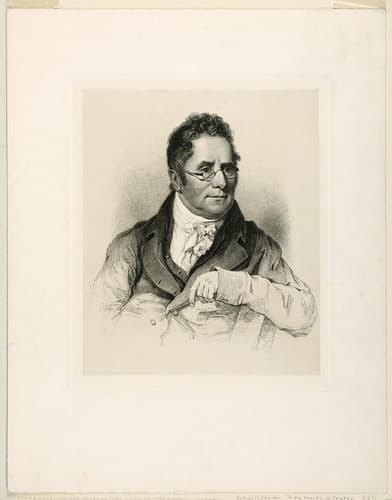
James Hogg was a Scottish poet, novelist and essayist who wrote in both Scots and English. As a young man he worked as a shepherd and farmhand, and was largely self-educated through reading. He was a friend of many of the great writers of his day, including Sir Walter Scott, of whom he later wrote an unauthorised biography. He became widely known as the "Ettrick Shepherd", a nickname under which some of his works were published, and the character name he was given in the widely read series Noctes Ambrosianae, published in Blackwood's Magazine. He is best known today for his novel The Private Memoirs and Confessions of a Justified Sinner. His other works include the long poem The Queen's Wake (1813), his collection of songs Jacobite Relics (1819), and his two novels The Three Perils of Man (1822), and The Three Perils of Woman (1823).
Similar books
- Frankenstein: The 1818 Text
Mary Shelley
3.8 (1.2M) average on GoodreadsFantasyExplores themes of creation, morality, and the monstrous, with a gothic atmosphere.
- Wuthering Heights
Emily Brontë
3.9 (1.3M) average on GoodreadsHistorical FictionA dark, intense gothic novel with complex characters and a sense of inescapable fate.
- The Turn of the Screw
Henry James
3.4 (104k) average on GoodreadsMysteryLike Justified Sinner, James's The Turn of the Screw (1898) thrives on narrative ambiguity and the unreliability of its narrator (the governess). Both novels leave the reader questioning the reality of the supernatural elements – are the ghosts real, or are they products of the governess's disturbed mind? Is Gil-Martin a devil or a manifestation of Robert's madness? However, Hogg's novel adds a layer of editorial commentary, explicitly highlighting the discrepancies and inviting critical engagement with the text's construction, whereas James relies more subtly on the governess's subjective account to create his unsettling effect. Both are brilliant studies in psychological suspense and the power of suggestion.
- To Kill a Mockingbird
Harper Lee
4.3 (4.5M) average on GoodreadsHistorical FictionIn the 1930s Jim Crow South, Harper Lee writes about racial injustice, moral growth, and the quiet courage of a lawyer father, Atticus Finch, as seen through his young daughter's eyes.
- The Great Gatsby
F. Scott Fitzgerald
3.9 (3.8M) average on GoodreadsHistorical FictionIn the opulent Roaring Twenties, a mysterious millionaire's lavish parties hide his desperate, tragic pursuit of a lost love, exposing the emptiness within the American Dream.
- Pride and Prejudice
Jane Austen
4.3 (3M) average on GoodreadsHistorical FictionIn a society focused on status and money, Elizabeth Bennet navigates love and pride, challenging Mr. Darcy and social expectations to find true affection.






Enjoyed the summary?
A summary gives you the shape of the book. The book itself has the detail, the examples and the voice.
Find The Private Memoirs and Confessions of a Justified Sinner on AmazonAs an Amazon Associate, BookBrief earns from qualifying purchases. How we're funded