

Core Idea
- Difficulty
- Medium
Key Takeaways from The Psychopath Test
The Elusive Nature of Psychopathy
Psychopathy is not a clear-cut diagnosis but a complex spectrum, often influenced by subjective interpretation and societal context.
Ronson starts his journey by trying to identify psychopaths using Dr. Robert Hare's Psychopathy Checklist-Revised (PCL-R). He quickly finds that applying the checklist is not straightforward. Criteria like 'lack of remorse' or 'superficial charm' are open to interpretation, meaning different clinicians can get very different scores for the same person. This subjectivity is clear in the case of Tony, a patient in Broadmoor, who carefully breaks down the PCL-R to argue he is sane. Tony shows how 'psychopathic' traits can be seen as reasonable reactions to a bad environment. This shows the limits of diagnostic tools in understanding complex human behavior.
“The problem with psychopathy, I was learning, was that it wasn't a static, easily definable thing. It was a shifting, slippery diagnosis, often dependent on who was doing the diagnosing and what they wanted to achieve.”
In the book: The application of the PCL-R to individuals like Tony, the patient at Broadmoor, and the various interpretations of his responses by different experts.
Try this: Approach psychological diagnoses, especially those with significant social stigma, with a critical eye, understanding that they are constructs, not absolute truths. Seek multiple perspectives and consider the context of behavior.
The Power and Peril of Labels
Diagnostic labels, while seemingly offering clarity, can profoundly alter perceptions, constrain identities, and dictate destinies.
Ronson clearly shows how a diagnosis can become a self-fulfilling prophecy or a trap. The people he meets, especially those in institutions, find their lives defined by their label. Tony, despite his clear arguments for sanity, remains stuck with the 'psychopath' label. Similarly, the story of the alleged hoax, where psychiatrists were supposedly tricked into diagnosing sane people as insane, shows how powerful a label can be in changing reality. This reveals the ethical problems in the 'madness industry,' where a diagnosis can be more important than the actual condition, leading to normal or odd behaviors being seen as illnesses.
“Once you're labeled a psychopath, it's very hard to un-label yourself. It becomes your identity, and everything you do is seen through that lens.”
In the book: The ongoing institutionalization of Tony and his struggle against the 'psychopath' label, despite his rational arguments. The historical context of the alleged 'hoax' where sane people were admitted to asylums based on fabricated symptoms.
Try this: Be cautious about applying or accepting labels, both for oneself and others. Recognize that labels can simplify complex realities and may not fully represent an individual's identity or potential. Advocate for nuanced understanding over categorical judgment.
The 'Madness Industry' as a Self-Perpetuating System
The institutions and individuals dedicated to studying madness can become consumed by their own obsessions, mirroring the very conditions they seek to understand.
This is one of the book's strongest insights, showing a troubling cycle in the 'madness industry.' Ronson observes how some experts' strong belief in their theories, especially Dr. Hare's firm conviction that psychopathy is common, seems obsessive. He notes that constantly looking for psychopathy can lead to 'seeing' it everywhere, even in normal behaviors. The 'hoax' story shows this, where the desire to prove a point or find a flaw in the system led to elaborate deceptions. The book suggests that the drive to define and control madness can, ironically, lead to a form of madness in those doing the defining, blurring the lines between observer and observed.
“Sometimes the personalities at the helm of the madness industry are, with their drives and obsessions, as mad in their own way as those they study.”
In the book: Dr. Robert Hare's almost evangelical zeal in identifying psychopaths in various societal roles, and Ronson's observation of the intense focus and sometimes dogmatic adherence to his checklist. The elaborate nature of the alleged hoax itself.
Try this: Maintain a healthy skepticism towards any system or expert claiming absolute authority, especially in complex fields like human psychology. Be aware of confirmation bias and the potential for a group's shared obsession to distort reality.
Psychopathy in the Corridors of Power
The traits associated with psychopathy – ruthlessness, charisma, lack of empathy – can paradoxically be advantageous in certain high-stakes corporate and political environments.
Ronson's look into the world of CEOs and politicians is especially disturbing. He learns from Dr. Hare that many corporate leaders score high on the PCL-R. The book describes cases where people with psychopathic traits—their ability to make tough decisions without emotion, their charm, and their relentless drive—succeed in competitive environments. This raises an ethical question: if certain 'mad' traits are rewarded and even needed for success today, what does that say about society? This challenges common ideas of morality and success, suggesting a darker side to ambition and power.
“It was becoming increasingly clear that the very traits that made you a psychopath could also make you incredibly successful in certain walks of life.”
In the book: Dr. Hare's research and assertions about the prevalence of psychopathy in corporate leadership. The anecdotal examples of powerful figures, like Al Dunlap ('Chainsaw Al'), whose ruthless business practices align with psychopathic traits.
Try this: Develop a critical awareness of the leadership styles prevalent in organizations and politics. Understand that perceived 'strength' or 'decisiveness' might sometimes mask a lack of empathy or a willingness to exploit others. Advocate for ethical leadership that prioritizes well-being over sheer profit or power.
The Fine Line Between Sanity and Insanity
The boundaries between 'normal' and 'mad' are often arbitrary, fluid, and shaped by cultural norms and institutional power.
Throughout his investigation, Ronson often questions what madness really is. The book begins with the alleged hoax where sane people were admitted to asylums just by pretending to have symptoms, showing how fragile the diagnostic process is. Later, he meets people like Tony, who, despite being called a psychopath, gives convincing, rational arguments for his views. The book suggests that what is called 'mad' can often be a deviation from societal expectations or a challenge to authority, rather than an inherent flaw. This blurring of lines makes readers confront their own ideas about mental illness and the often unfair ways society categorizes people.
“Maybe the line between sanity and insanity wasn't a line at all, but a blurry, shifting border, and we were all just doing our best not to fall off.”
In the book: The initial premise of the book, the alleged hoax by Rosenhan, where sane individuals gained admission to mental institutions by feigning minor symptoms. The detailed arguments presented by Tony in Broadmoor, which, from his perspective, are entirely rational.
Try this: Cultivate empathy and an open mind when encountering behaviors that seem unconventional or 'mad.' Question the societal narratives around mental illness and understand that perspectives on sanity can vary widely across cultures and individuals.
The Danger of Oversimplification
Reducing complex human beings to a checklist of traits risks dehumanization and overlooks the nuanced narratives of individual lives.
Ronson deals with the ethical problems of the PCL-R. While he acknowledges its use as a research tool, he points out how its strict application can lead to a narrow understanding of individuals. He spends time with figures like Al Dunlap, the CEO known as 'Chainsaw Al,' whose ruthless business practices match psychopathic traits. However, reducing Dunlap solely to his PCL-R score ignores the larger context of his life, motivations, and the economic pressures that might have shaped his decisions. This argument has limits, as the PCL-R aims to identify a specific condition, but Ronson's point is that such tools are often applied without enough human perspective, turning complex people into mere diagnostic categories.
“The problem with the checklist, I was realizing, was that it reduced people to a series of bullet points, stripping away their stories, their complexities, their very humanity.”
In the book: Ronson's personal interactions with individuals assessed by the PCL-R, such as Tony and Al Dunlap, and his internal struggle with how the checklist simplifies their multifaceted personalities.
Try this: When evaluating others, especially in professional or clinical settings, strive to understand the full narrative of their lives rather than relying solely on checklists or simplified diagnostic criteria. Recognize the inherent dignity and complexity of every individual.
The Allure of the 'Mad' Other
Society's fascination with madness, particularly psychopathy, often stems from a desire to understand and control the 'other,' but also reveals our own anxieties.
Ronson's entire journey is driven by society's interest in psychopathy. He notes how the media and even academic discussions often sensationalize these conditions. This interest is not just academic; it serves a social purpose. By labeling certain individuals as 'mad' or 'psychopathic,' society tries to create a clear boundary between 'us' and 'them,' providing a sense of security. However, Ronson suggests that this focus also reflects our own worries about control, morality, and the darker parts of human nature. The discomfort many feel when faced with the idea of 'successful psychopaths' in power highlights this tension, as it challenges our ideal view of leadership and meritocracy.
“We are drawn to stories of madness because they help us define ourselves, to delineate the boundaries of what is normal and what is not. But sometimes, in looking at the mad, we see too much of ourselves.”
In the book: The widespread public interest in the topic of psychopathy, Ronson's own motivation for writing the book, and the media's portrayal of 'mad' individuals.
Try this: Examine your own motivations when consuming or discussing stories about 'madness.' Question whether the focus is on understanding, or on reinforcing societal norms and fears. Seek out diverse perspectives on mental health beyond sensationalized narratives.
The Unintended Consequences of Diagnosis
A diagnosis, intended to help, can sometimes lead to unforeseen negative outcomes, reinforcing cycles of institutionalization or social exclusion.
This shows the ethical challenges in the 'madness industry.' While diagnostic tools aim to provide appropriate care, Ronson shows how they can unintentionally lead to negative effects. Tony's case is a prime example: his diagnosis, while perhaps clinically accurate from one view, has led to decades of institutionalization, limiting his freedom. The book also touches on the broader societal impact, where people labeled 'psychopaths' face extreme prejudice and are often denied chances for rehabilitation. This raises questions about the balance between societal protection and individual rights, and whether current diagnostic practices truly serve the best interests of those diagnosed.
“The intention was good, I suppose, to understand and help. But sometimes, the act of understanding, of labeling, could trap you more deeply than the illness itself.”
In the book: Tony's long-term institutionalization in Broadmoor and his inability to secure release despite his articulate arguments. The broader societal prejudice against individuals diagnosed with psychopathy.
Try this: Advocate for mental health systems that prioritize rehabilitation, reintegration, and individual agency over punitive or purely custodial approaches. Support policies that reduce stigma and offer pathways to recovery and meaningful lives for those with diagnoses.
The Personal Cost of Proximity to Madness
Engaging deeply with the subject of madness can have a psychological toll on the investigator, blurring personal boundaries and inducing anxiety.
Ronson does not just observe; he becomes deeply involved, and the personal impact of his investigation is a subtle but strong theme throughout the book. He starts seeing psychopathic traits in everyday interactions and even questions his own sanity, which is common for those who study mental illness. This self-reflection is important, as it humanizes the scientific effort and highlights the emotional work involved in understanding such difficult subjects. It is a warning, suggesting that seeking knowledge about madness can, ironically, make one confront their own psychological weaknesses and the arbitrary nature of the 'sane' label.
“The more I looked for psychopaths, the more I started to see them everywhere. And the more I worried if I was one myself, or if I was just going mad from the search.”
In the book: Ronson's personal anecdotes of starting to see psychopathic traits in everyday people and his growing anxiety about his own behaviors and those of his friends, leading him to question himself.
Try this: When engaging with intense or disturbing subject matter, practice self-care and maintain clear boundaries between your professional and personal life. Recognize the potential for psychological impact and seek support if needed.
The Ethical Imperative of Skepticism
In the face of powerful diagnostic tools and industries, a healthy dose of skepticism is crucial to protect individual liberties and promote nuanced understanding.
The book ultimately promotes critical thinking and skepticism, especially regarding the 'madness industry.' Ronson's initial trust in the PCL-R gives way to a nuanced understanding of its limits and potential for misuse. The alleged hoax, the subjective use of the checklist, and the institutionalization of people like Tony all highlight the need to question authority, even in scientific and medical fields. This is the book's concluding message: in a world increasingly eager to categorize and label, maintaining an open, questioning mind is not just intellectually sound, but ethically necessary to prevent harm and preserve the complexity of human experience.
“My journey had taught me that when it comes to the human mind, certainty is often a dangerous illusion. And skepticism, sometimes, is the kindest thing you can offer.”
In the book: Ronson's own evolving perspective throughout the book, from initial belief in the PCL-R's infallibility to a more critical and nuanced understanding of its application and implications.
Try this: Cultivate a habit of critical inquiry in all aspects of life, especially when confronted with powerful narratives or diagnostic claims. Seek out diverse viewpoints and challenge assumptions to foster a more just and empathetic society.
Quiz
10 questions on the main ideas. Each answer comes with a short explanation.
Question 1
What is the primary subject Jon Ronson investigates in 'The Psychopath Test'?
- The history of neurology
- Psychopaths and the industry that studies them
- The effectiveness of psychiatric treatments
- The social impact of mental illness
Show answer
B. Psychopaths and the industry that studies them The book follows Jon Ronson's journey into the world of psychopaths and the professionals who study them.
Question 2
According to the book, what is Jon Ronson's profession?
- Neurologist
- Psychologist
- Journalist
- CEO
Show answer
C. Journalist The text explicitly states that Jon Ronson is a 'bestselling journalist'.
Question 3
What potential hoax does Ronson uncover during his investigation?
- A hoax about the cure for psychopathy
- A hoax being played on the world's top neurologists
- A hoax involving a fraudulent CEO
- A hoax about the definition of psychopathy
Show answer
B. A hoax being played on the world's top neurologists Ronson's exploration leads him to investigate 'a potential hoax being played on the world's top neurologists'.
Question 4
What does an influential psychologist teach Ronson to identify psychopaths?
- Through brain scans and medical tests
- By analyzing their financial records
- By looking for little telltale verbal and nonverbal clues
- Through extensive interviews and personal histories
Show answer
C. By looking for little telltale verbal and nonverbal clues The text states that an influential psychologist teaches Ronson 'how to spot these high-flying individuals by looking out for little telltale verbal and nonverbal clues'.
Question 5
Which of the following individuals does Ronson spend time with?
- A renowned psychiatrist
- A patient in a mental institution who claims to be sane
- A politician suspected of fraud
- A scientist developing a new psychological theory
Show answer
B. A patient in a mental institution who claims to be sane Ronson spends time with 'a patient in an asylum for the criminally insane who insists he's sane and certainly not a psychopath'.
Question 6
What disturbing discovery does Ronson make about the people at the helm of the 'madness industry'?
- They are all secretly psychopaths themselves
- Their drives and obsessions make them mad in their own way
- They are intentionally perpetuating hoaxes
- They are unaware of the true nature of psychopathy
Show answer
B. Their drives and obsessions make them mad in their own way Ronson discovers, 'disturbingly, that sometimes the personalities at the helm of the madness industry are, with their drives and obsessions, as mad in their own way as those they study'.
Question 7
The book suggests that relatively ordinary people are increasingly being defined by what aspect of themselves?
- Their professional achievements
- Their social connections
- Their maddest edges
- Their intellectual pursuits
Show answer
C. Their maddest edges The text concludes that 'relatively ordinary people are, more and more, defined by their maddest edges'.
Question 8
What specific type of crime is the death-squad leader institutionalized for in the book?
- Murder
- Fraud
- Extortion
- Mortgage fraud
Show answer
D. Mortgage fraud Ronson spends time with 'a death-squad leader institutionalized for mortgage fraud in Coxsackie, New York'.
Question 9
The book implies a connection between the 'madness industry' and which other powerful sector?
- The legal system
- The entertainment industry
- The political and corporate world
- The educational system
Show answer
C. The political and corporate world Ronson's investigation takes him into the 'corridors of power' and suggests that individuals with psychopathic traits may be influential in 'important CEOs and politicians'.
Question 10
What is the overall tone of Jon Ronson's exploration in 'The Psychopath Test'?
- Solemn and academic
- Purely scientific and objective
- Madcap and fascinating
- Sensationalist and accusatory
Show answer
C. Madcap and fascinating The book is described as a 'madcap journey' and a 'fascinating exploration', indicating a less formal and more engaging tone.
The Psychopath Test FAQ
What is The Psychopath Test about?
The Psychopath Test by Jon Ronson is a journalistic investigation into the concept of psychopathy and the industry of professionals who study it. Ronson explores the definitions, diagnoses, and potential implications of psychopathy, particularly in powerful individuals.
Who is Jon Ronson?
Jon Ronson is a British investigative journalist, documentary filmmaker, and author known for his work exploring controversial topics and the fringes of society. He often uses humor and a personal narrative style in his explorations.
What is the 'madness industry'?
The 'madness industry' in the book refers to the collection of psychologists, psychiatrists, neurologists, and other professionals involved in the study, diagnosis, and treatment of mental illness, particularly psychopathy.
How does Ronson identify psychopaths?
Ronson learns from an influential psychologist how to identify potential psychopaths by observing subtle verbal and nonverbal clues. These clues are often related to their behavior, speech patterns, and emotional responses.
Does the book suggest psychopaths are in positions of power?
Yes, the book explores the theory that many CEOs and politicians might be psychopaths. Ronson interviews individuals in positions of power and examines the speculation surrounding their personalities.
What is the 'hoax' Ronson investigates?
Ronson investigates a potential hoax related to the diagnosis of psychopathy, which he believes might be misleading top neurologists. His journey leads him to question the reliability of certain diagnostic methods.
What is the main takeaway from The Psychopath Test?
A key takeaway is that the line between 'madness' and 'normality' can be blurred, and those who diagnose mental illness may themselves exhibit traits associated with it. It also questions how we define and categorize abnormal behavior.
Is The Psychopath Test a scientific study?
While the book delves into scientific concepts and research related to psychopathy, it is primarily a work of investigative journalism. Ronson's approach is anecdotal and narrative-driven rather than a formal scientific study.
Who would enjoy reading The Psychopath Test?
Readers interested in psychology, true crime, investigative journalism, and unusual social phenomena would likely enjoy this book. It's for those who appreciate a blend of humor, skepticism, and exploration of complex human behavior.
About the author

Jon Ronson is a British journalist and author known for his explorations of unusual and often controversial subjects. His notable work, "The Psychopath Test: A Journey Through the Madness Industry," examines the complexities of mental health and the concept of psychopathy. Ronson's writing often blends investigative journalism with personal narrative, contributing to his recognition in the realm of non-fiction.
Similar books
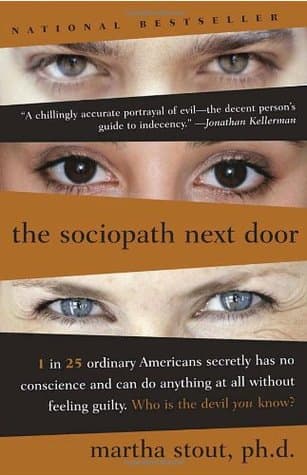
- The Sociopath Next Door
Martha Stout
3.8 (32k) average on GoodreadsPsychologyStout's 'The Sociopath Next Door' shares Ronson's aim of making psychopathy (or sociopathy, as she prefers) understandable to the general public, focusing on how these individuals impact everyday lives. However, Stout's approach is more prescriptive and less investigative than Ronson's. She provides a clear definition, common traits, and advice on how to protect oneself, often presenting sociopathy as a clear-cut condition. Ronson, by contrast, revels in the ambiguity and complexity, questioning the very boundaries and definitions, and exploring the ethical quagmire of diagnosis rather than simply identifying and avoiding. Ronson's journey is one of discovery and skepticism, while Stout's is more one of identification and warning.
- The Perks of Being a Wallflower
Stephen Chbosky
4.2 (1.3M) average on GoodreadsPsychologyThrough letters, a shy high school freshman learns to navigate first love, trauma, and self-discovery, stepping off the sidelines and into life.
- Eleanor Oliphant Is Completely Fine
Gail Honeyman
4.3 (708k) average on GoodreadsLiterary FictionA lonely woman's structured life changes when an IT guy and an elderly man help her learn to open her heart.
- One Flew Over the Cuckoo's Nest
Ken Kesey
4.2 (631k) average on GoodreadsPsychologyIn a mind-bending asylum, the boisterous Randle McMurphy wages a defiant war against the tyrannical Nurse Ratched, inspiring his fellow inmates, including the seemingly catatonic Chief Bromden, to reclaim their lost humanity.
- The Bell Jar
Sylvia Plath
4.0 (591k) average on GoodreadsPsychologyIn the suffocating grip of 1950s expectations, a brilliant young woman's descent into mental illness is painted with such vivid, internal clarity that her 'insanity' feels terrifyingly rational and inevitable.
- The Subtle Art of Not Giving a F*ck: A Counterintuitive Approach to Living a Good Life
Mark Manson
3.9 (530k) average on GoodreadsBusinessEmbrace your flaws and stomach life's lemons, because true happiness isn't about relentless positivity, but about choosing what truly matters to give a f*ck about.





Enjoyed the summary?
A summary gives you the shape of the book. The book itself has the detail, the examples and the voice.
Find The Psychopath Test on AmazonAs an Amazon Associate, BookBrief earns from qualifying purchases. How we're funded