

Synopsis
Covers the whole plot, including the ending.
- Difficulty
- Medium
- Pacing
- Slow
- Mood
- Gritty, thought-provoking, melancholic, educational, satirical
- Read it if
- you are interested in classic working-class literature, social realism, the history of socialism, or a detailed depiction of early 20th-century British working life.
- Skip it if
- you prefer fast-paced plots, light-hearted themes, or are not interested in political and economic discussions within fiction.
The Ragged Trousered Philanthropists Plot Summary
Covers the whole plot, including the ending.
The Arrival of Frank Owen
The novel begins by introducing the main characters, a group of painters and decorators working for Rushton & Co. in the fictional town of Mugsborough. Frank Owen, a skilled but quiet new hand, arrives and quickly sees the harsh working conditions and how his fellow workers are exploited. Some of the more conservative and less educated men, especially Philpot and Crass, who strongly believe in the current social order, initially view him with suspicion and ridicule. Owen, however, has a sharp mind and understands economic injustice, which he tries to explain to his colleagues, often using stories and comparisons, much to their initial confusion and dismissal.
The Great Money Trick
One important scene shows Owen trying to explain 'The Great Money Trick' to his confused workmates during their dinner break. Using loaves of bread and coins, he demonstrates how the capitalist system, through wages and profit, consistently takes the full value of workers' labor, keeping them poor while employers get rich. Despite his clear and patient explanation, many of the men, especially Crass and Philpot, struggle to understand the idea. Their ingrained beliefs and lack of education make them resistant to new concepts. Owen's frustration is clear as he tries to break through their existing mindset.
The Job at 'The Cave'
The painters are given a particularly difficult and poorly planned job at a large house called 'The Cave.' The foreman, Hunter, plans the work badly, and the men have to work inefficiently, often redoing tasks because of changed orders or poor materials from Rushton. This section clearly shows the waste and incompetence in a profit-driven system, where quality and worker well-being come second to cutting costs and making the most money. The men are constantly pressured to work faster, even if it means risking their health and the quality of their work, all while being paid very little.
Religious Hypocrisy and Social Control
The story often exposes the hypocrisy of the established church and the wealthy elite. Mr. Sweater, a prominent churchgoer and 'philanthropist,' is shown to be a ruthless exploiter of his workers, paying them starvation wages while publicly supporting charity. Owen challenges the idea that religion offers real comfort or a path to social justice. He argues instead that it distracts the poor from the true causes of their suffering and encourages them to accept their situation. The 'charitable' acts of the rich are presented as superficial gestures that do little to fix systemic poverty, instead making the working class more dependent.
The Christmas Dinner
A rare moment of shared enjoyment happens during a Christmas dinner organized by the men. Despite their poverty, they combine their small resources to share a meal and some drinks. This scene offers a look at the friendship and resilience of the working class, their ability to find joy and unity even in their difficulties. However, even this brief break is marked by the underlying worries of unemployment and the constant struggle to survive, reminding the reader how uncertain their lives are and how temporary their happiness is.
The Medical Crisis and Financial Ruin
Owen's personal life reflects the wider struggles of the working class. His young son becomes ill, and the family faces extreme financial hardship because of the cost of medicine and Owen's lost wages when he takes time off to care for the child. This event clearly shows the harsh reality of poverty, where a single illness can push a family into destitution. The lack of social support and the inadequacy of 'charity' are highlighted, showing how the system fails those most in need. Owen's despair grows as he sees his loved ones suffer.
The Election Campaign
An election campaign sweeps through Mugsborough, and the workers attend various political rallies and speeches. Owen tries to explain that voting for either of the established parties is pointless, arguing that both serve the interests of the wealthy elite and offer no real solutions for the working class. However, his colleagues, influenced by patriotic talk, empty promises, and the appeal of free beer, mostly remain loyal to the existing system, showing how easily they are manipulated and how they cannot see beyond immediate, superficial gains. The election becomes a clear example of how the system maintains itself through engineered consent.
The Landlord's Greed
The issue of housing and rent is explored, further exposing the exploitation faced by the working class. Many of the characters struggle to pay their high rents, often living in poor conditions. Landlords, like Sweater, are shown as uncaring and driven only by profit, demanding payment even from those near starvation. This shows how the capitalist system affects every part of life, taking wealth from the poor at every turn, from their labor to their basic need for shelter. The constant threat of eviction hangs over many families.
Owen's Vision of a Socialist Future
In one of the novel's longest passages, Owen clearly outlines a vision of a socialist society, explaining how industries could be organized, wealth distributed, and social services provided for everyone's benefit. He describes a world free from poverty, exploitation, and war, where everyone contributes according to their ability and receives according to their needs. While his colleagues largely dismiss his vision or cannot fully grasp its complexity, Owen's passionate explanation is the main ideological part of the novel, presenting a clear alternative to the current capitalist system and offering hope for a better future.
The End of the Job and the Cycle Continues
As the job at 'The Cave' nears its end, the men face the grim reality of coming unemployment. The foreman, Hunter, dismisses them with little ceremony, and the cycle of poverty, temporary work, and uncertainty begins again for many. Owen's efforts to educate his colleagues have largely failed to inspire collective action, and they remain caught in their individual struggles. The novel ends on a somber note, emphasizing the lasting power of the capitalist system and the difficulty of overcoming deep-seated ignorance and apathy, even when injustice is clear. The future for the workers remains bleak.
Principal Figures
Frank Owen
Protagonist
The skilled painter and socialist idealist.
Owen is a highly intelligent, articulate, and deeply principled painter who serves as the moral and intellectual center of the novel. He is a socialist who tirelessly attempts to educate his fellow workers about the injustices of capitalism, often using parables and allegories to simplify complex economic concepts. Despite facing ridicule and resistance, he remains committed to his ideals, driven by a profound empathy for the suffering of the working class. He is a skilled craftsman, but his intelligence and unconventional views set him apart from most of his workmates.
Relationships: Crass (ideological opponent, colleague); Philpot (skeptical colleague); Hunter (foreman, employer representative); Nora Owen (wife)
Crass
Antagonist/Supporting
The foreman and staunch defender of the status quo.
Crass is one of the foremen and a vocal opponent of Owen's socialist ideas. He embodies the 'ragged trousered philanthropist' – a working man who, despite his own poverty, fiercely defends the capitalist system and the wealthy elite, often out of ignorance, fear, or a misguided hope of one day joining them. He is uneducated, prone to jingoism, and quick to dismiss anything that challenges his ingrained beliefs. He frequently engages in debates with Owen, but his arguments are often based on prejudice and a lack of understanding.
Relationships: Frank Owen (ideological opponent, colleague); Philpot (colleague, fellow conservative)
Philpot
Supporting
The good-natured but easily swayed worker.
Philpot is a generally good-hearted and jovial worker, but he is easily influenced by the prevailing opinions of his peers and lacks the intellectual capacity or inclination to deeply analyze social issues. He often struggles to understand Owen's complex explanations, frequently interjecting with simple, practical concerns or deflecting with humor. While not overtly hostile to Owen, he represents the passive acceptance and intellectual inertia common among many working-class individuals, making him an example of the 'philanthropist' who unwittingly supports his own exploitation.
Relationships: Frank Owen (colleague, intellectual pupil (reluctant)); Crass (colleague, conversational partner)
Hunter
Supporting
The incompetent and tyrannical foreman.
Hunter is another foreman for Rushton & Co., characterized by his incompetence, bullying nature, and slavish devotion to his employers. He frequently makes poor decisions regarding work planning and materials, leading to wasted effort and frustration for the painters. He is quick to criticize and threaten his subordinates, embodying the petty tyranny often exercised by those with a little power over those beneath them in the capitalist hierarchy. He is more concerned with appearing busy and pleasing his superiors than with efficient work or the welfare of his men.
Relationships: Frank Owen (employer (indirect), antagonist); Crass (colleague (foreman))
Rushton
Antagonist
The exploitative employer.
Rushton is the owner of Rushton & Co., the painting and decorating firm. He is a largely unseen but constantly felt presence, representing the capitalist class. He is portrayed as greedy, unscrupulous, and utterly indifferent to the welfare of his workers. He prioritizes profit above all else, cutting corners on materials, paying low wages, and constantly seeking to extract maximum labor for minimum cost. His actions directly result in the poverty and suffering of his employees, making him the primary antagonist of the working class.
Relationships: Frank Owen (employer); Hunter (employee, subordinate)
Nora Owen
Supporting
Owen's long-suffering wife.
Nora is Frank Owen's wife, a loving and supportive woman who shares his struggles but also endures the harsh realities of working-class poverty. She is often depicted as suffering silently, particularly during their child's illness and their constant financial hardship. Her character highlights the domestic burden and emotional toll that poverty takes on families, especially women, who are often left to manage the household with inadequate resources. Her resilience and quiet despair underscore the human cost of the capitalist system.
Relationships: Frank Owen (husband)
Bert White
Supporting
The young, impressionable apprentice.
Bert White is a young apprentice, eager to learn and somewhat more open to Owen's ideas than the older, more entrenched workers. He represents the potential for change and the hope for a future generation to understand and challenge the existing order. While still learning, he shows glimmers of understanding and a willingness to listen, contrasting with the stubborn resistance of characters like Crass. His youth allows him to be less jaded and more receptive to new perspectives, though he is still learning the harsh realities of his trade.
Relationships: Frank Owen (mentor, teacher); Crass (foreman)
Mr. Sweater
Antagonist/Supporting
The hypocritical 'philanthropist' and exploiter.
Mr. Sweater is a wealthy, ostensibly charitable man, a prominent churchgoer and landlord who embodies the hypocrisy of the capitalist elite. While publicly supporting 'philanthropic' causes and advocating for Christian values, he is a ruthless exploiter of his tenants and workers, demanding high rents and paying low wages. He represents the superficiality of bourgeois charity and the way the ruling class uses religion and 'good works' to mask their systemic exploitation and maintain their social standing. Owen frequently exposes the disconnect between Sweater's public persona and his private actions.
Relationships: Frank Owen (ideological opponent); Rushton (fellow capitalist)
Themes & Insights
The Exploitation of Labor
The main theme of the novel is the systematic exploitation of the working class under capitalism. Through descriptions of low wages, long hours, dangerous conditions, and the constant threat of unemployment, Tressell shows how workers are denied the full value of their labor. Frank Owen's 'Great Money Trick' is a powerful example of how profit is taken from workers, leaving them in constant poverty while their employers gain wealth. This theme highlights the injustice and inequality of the capitalist system, where human dignity and well-being are sacrificed for profit.
“They were called 'Hands' because they were not supposed to have brains. They were not supposed to think.”
Ignorance and False Consciousness
The novel carefully shows the widespread ignorance and 'false consciousness' among the working class, which stops them from seeing their own exploitation and uniting for change. Characters like Crass and Philpot, despite their suffering, strongly defend the capitalist system, often blaming the poor for their own poverty or holding onto nationalistic and religious sayings. This theme explores how a lack of education, misinformation, and ingrained social conditioning make workers participate in their own oppression, making Owen's efforts to educate them very difficult and often useless.
“The great majority of them were poor, not because they were idle, but because they worked, and not because they were ignorant, but because they were intelligent enough to understand that it was useless to fight against the inevitable.”
The Hypocrisy of the Ruling Class
Tressell exposes the hypocrisy of the wealthy elite and institutions that claim to uphold moral values while actively causing injustice. People like Mr. Sweater, who preach charity and Christian morality, are also ruthless exploiters of their workers and tenants. The novel demonstrates how religion, patriotism, and 'philanthropy' are often used by the ruling class to distract the poor, justify inequality, and keep their power and wealth. This theme criticizes the moral emptiness of a system built on exploitation, revealing the clear difference between public appearance and private actions.
“They were always talking about 'charity', but they never spoke of justice.”
The Socialist Alternative
Despite the grim portrayal of working-class life, the novel offers a powerful vision of a socialist alternative. Frank Owen explains in detail how a society based on collective ownership and cooperation could eliminate poverty, ensure fair distribution of wealth, and create a more just and humane world. This theme presents socialism not just as an abstract idea but as a practical and achievable solution to the problems in capitalism. Owen's vision is a beacon of hope and a plan for social change, urging readers to consider a fundamental restructuring of society.
“Poverty is not caused by the poor. It is caused by the system.”
Plot Devices & Literary Techniques
Allegory and Parable
Simplifying complex economic concepts.
Frank Owen frequently uses allegories and parables, most famously 'The Great Money Trick,' to explain complex socialist economic theories to his uneducated workmates. These simplified narratives serve as a didactic tool within the novel, allowing the reader to grasp the fundamental injustices of capitalism alongside the characters. They highlight Owen's intellectual prowess and his frustration at the workers' inability to understand, while also making the dense political arguments accessible and memorable for the audience.
Didactic Dialogue
Explaining socialist theory through conversation.
A significant portion of the novel consists of dialogues, particularly between Frank Owen and his colleagues, where Owen systematically debunks capitalist arguments and explains socialist principles. These conversations are often extended and detailed, serving a direct educational purpose. While sometimes slowing the narrative, they are crucial for conveying Tressell's political message and illustrating the ideological clashes within the working class, making the novel a powerful piece of propaganda as well as fiction.
Social Realism
Unflinching portrayal of working-class life.
The novel employs social realism by depicting the harsh, unvarnished realities of early 20th-century working-class life. Tressell meticulously details the poor working conditions, low wages, inadequate housing, constant threat of unemployment, and widespread poverty. This device immerses the reader in the characters' struggles, fostering empathy and underscoring the urgency of the social commentary. The grim humor and pitiless detail aim to expose the systemic injustices rather than romanticize or sensationalize poverty, making the suffering palpable.
Irony (The 'Ragged Trousered Philanthropists')
The ironic title highlights self-defeating behavior.
The novel's title itself is a key ironic device. The 'ragged trousered philanthropists' are the working men who, despite their own poverty and exploitation, unwittingly 'give' their labor, their votes, and their loyalty to the capitalist system that impoverishes them. They are 'philanthropists' in the sense that they enrich others at their own expense, often out of ignorance or misguided loyalty. This irony underscores the tragic self-defeating nature of their actions and their failure to recognize their collective power.
The Ragged Trousered Philanthropists Quotes
“It is a truth that the more you have, the more you want, and the more you get, the more you desire.”
“The rich are always with us, and the poor are always with us, and the rich will always have more than they need, and the poor will always have less than they need.”
“The majority of the people are slaves to the minority, and the slaves do not know that they are slaves.”
“It is only by the combination of labour that the workers can hope to achieve anything.”
“The whole of the system is based upon the principle of the exploitation of the many by the few.”
“We are all in the same boat, and if one man sinks, we all sink with him.”
“The masters, who are the owners of the means of production, are always in a position to dictate terms to the workers.”
“The more the workers produce, the more the masters get rich, and the more the workers remain poor.”
“The only way to end poverty is to abolish the system which creates it.”
“We do not want to be slaves; we want to be free men.”
“The capitalist system is a system of robbery.”
“It is the duty of every man to try and make himself as useful as possible to his fellow creatures.”
“The workers are the real producers of all wealth, and yet they are the poorest.”
“The only religion that is worth anything is the religion of humanity.”
Quiz
10 questions on the plot and the characters. Each answer comes with a short explanation.
Question 1
What is the primary theme of 'The Ragged Trousered Philanthropists'?
- The adventures of a group of wealthy industrialists.
- The struggles and lives of the working class and their views on Socialism.
- A historical account of the British monarchy.
- The development of early 20th-century technology.
Show answer
B. The struggles and lives of the working class and their views on Socialism. The book is described as revealing 'the lives and harts of his mates, their opinions of their betters, their political views, and their attitude toward Socialism.'
Question 2
Who edited the manuscript of 'The Ragged Trousered Philanthropists' after Robert Tressell's death?
- Robert Tressell's daughter alone.
- A friend of the family.
- Jessie Pope.
- No one, it was published posthumously without editing.
Show answer
C. Jessie Pope. The text states, 'Edited by Jessie Pope, who was handed the manuscript by a friend and the daughter of Tressell after her father's death.'
Question 3
What is the described tone of the book?
- Lighthearted and comedic.
- Grim humour and pitiless realism.
- Objective and detached historical analysis.
- Optimistic and forward-looking.
Show answer
B. Grim humour and pitiless realism. The description mentions 'grim humour and pitiless realism' to reveal the lives of the characters.
Question 4
Why are first editions of 'The Ragged Trousered Philanthropists' considered valuable and scarce?
- They contain exclusive interviews with the author.
- They were printed in very limited quantities for a private audience.
- Many early books, especially from the early 1900s, are rare and expensive.
- The original manuscript was lost and only a few copies survived.
Show answer
C. Many early books, especially from the early 1900s, are rare and expensive. The text notes, 'Many of the earliest books, particularly those dating back to the 1900s and before, are now extremely scarce and increasingly expensive.'
Question 5
What is the publisher's intention with their modern editions of classic works like this?
- To update the language and content for a modern audience.
- To create collector's items with unique bindings.
- To republish them in affordable, high-quality editions using the original text.
- To add new historical commentary and analysis.
Show answer
C. To republish them in affordable, high-quality editions using the original text. The publisher states, 'We are republishing these classic works in affordable, high quality, modern editions, using the original text and artwork.'
Question 6
The description categorizes 'The Ragged Trousered Philanthropists' as a classic piece of what genre?
- Working-class literature.
- Political satire.
- Socialist manifesto.
- Autobiographical fiction.
Show answer
A. Working-class literature. The text explicitly calls it 'This classic piece of working-class literature.'
Question 7
What does the book aim to reveal about the working class?
- Their aspirations for upward social mobility and wealth.
- Their daily lives, opinions, and political beliefs, including Socialism.
- Their secret networks and underground movements.
- Their leisure activities and entertainment.
Show answer
B. Their daily lives, opinions, and political beliefs, including Socialism. The description states Tressell 'reveals the lives and harts of his mates, their opinions of their betters, their political views, and their attitude toward Socialism.'
Question 8
The phrase 'opinions of their betters' in the description most likely refers to:
- The working class's views on their employers and the upper classes.
- The opinions of the book's characters about their own social standing.
- The views of the wealthy on the poor.
- The political opinions of the ruling party.
Show answer
A. The working class's views on their employers and the upper classes. In this context, 'betters' refers to those considered socially superior, i.e., employers and the upper classes, and the book reveals the working class's views on them.
Question 9
Considering the description, what can be inferred about Jessie Pope's role beyond editing?
- She was a close friend of Robert Tressell and helped him write parts of the book.
- She was a notable socialist activist who championed the book's message.
- She was a literary figure who facilitated the publication of the manuscript after Tressell's death.
- She discovered the manuscript by chance in a second-hand bookshop.
Show answer
C. She was a literary figure who facilitated the publication of the manuscript after Tressell's death. The text states she was 'handed the manuscript by a friend and the daughter of Tressell after her father's death,' implying she acted as an intermediary for its publication, fitting the role of a literary figure involved in its dissemination.
Question 10
The description emphasizes the 'grim humour and pitiless realism' of the book. This suggests that the portrayal of working-class life is:
- An idealized and romanticized version.
- A critical examination of societal flaws, presented without sentimentality.
- A series of humorous anecdotes with little social commentary.
- A purely academic and objective historical record.
Show answer
B. A critical examination of societal flaws, presented without sentimentality. The combination of 'grim humour' (acknowledging hardship with a dark wit) and 'pitiless realism' (unflinching honesty about harsh conditions) points to a critical, unsentimental examination of societal issues faced by the working class.
The Ragged Trousered Philanthropists FAQ
What is 'The Ragged Trousered Philanthropists' about?
The book offers a starkly realistic and often humorous portrayal of the lives of working-class men in early 20th-century Britain. It delves into their opinions of the wealthy, their political views, and their burgeoning interest in Socialism.
Who wrote 'The Ragged Trousered Philanthropists'?
The novel was written by Robert Tressell. It is considered a seminal work of working-class literature.
When was 'The Ragged Trousered Philanthropists' first published?
The book was first published in 1914, though the manuscript was completed by Tressell before his death.
Who edited 'The Ragged Trousered Philanthropists'?
The manuscript was edited by Jessie Pope, who received it from a friend and Tressell's daughter after the author's passing.
Why is 'The Ragged Trousered Philanthropists' considered important?
It's a significant piece of social history, providing an unvarnished look at the struggles and perspectives of the working class during a period of significant social and economic change.
What is the tone of the book?
The book is characterized by grim humor and pitiless realism, offering a candid and often poignant depiction of poverty and exploitation.
What is the relevance of 'The Ragged Trousered Philanthropists' today?
The book remains relevant for its exploration of themes like class inequality, economic injustice, and the power of collective action, which continue to resonate in contemporary society.
Where can I find an affordable copy of 'The Ragged Trousered Philanthropists'?
Many publishers are now releasing affordable, high-quality modern editions of classic works like 'The Ragged Trousered Philanthropists', using the original text.
Similar books
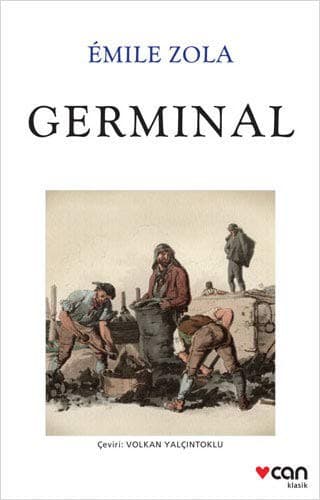
- Germinal
Emile Zola
4.2 (29k) average on GoodreadsHistorical FictionExplores the harsh realities of working-class life and labor struggles in 19th-century France.
- The Grapes of Wrath
John Steinbeck
4.0 (750k) average on GoodreadsHistorical FictionDepicts the struggles of an impoverished family during the Great Depression, focusing on economic hardship and social injustice.
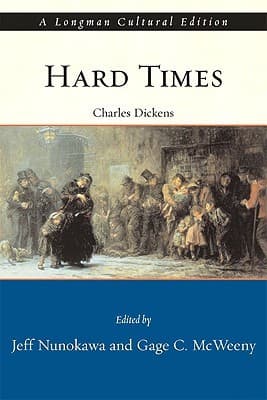
- Hard Times
Charles Dickens
4.0 (514) average on GoodreadsThrillerCritiques industrial society and the utilitarian philosophy, highlighting the plight of the working class in a fictional English city.
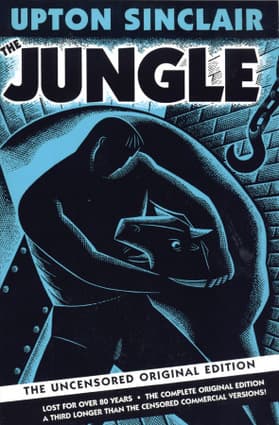
- The Jungle
Upton Sinclair
3.8 (129k) average on GoodreadsPoliticsSinclair's "The Jungle" shares Tressell's investigative and polemical spirit, aiming to expose the horrific conditions faced by immigrant workers in the American meatpacking industry. Both novels are works of 'muckraking' journalism disguised as fiction, designed to stir public conscience and advocate for socialist change. Sinclair's work is perhaps more focused on the visceral shock value of unsanitary conditions and individual tragedy, leading to immediate legislative reform (Pure Food and Drug Act). Tressell, while equally shocking in his depiction of poverty, dedicates more narrative space to explaining the systemic economic 'tricks' that perpetuate these conditions, offering a deeper, more theoretical critique of capitalism itself rather than just its most egregious symptoms.
- The Diary of a Young Girl
Anne Frank
4.2 (2.7M) average on GoodreadsBiographyDuring the Nazi occupation, a teenage girl's diary, written from a secret annex, shares observations on humanity, hope, and the wait for freedom.
- Night
Elie Wiesel
4.3 (970k) average on GoodreadsBiographyIn the darkness of Auschwitz and Buchenwald, a teenage Elie Wiesel faces the extermination of his family, the loss of his faith, and the lasting scars of humanity's deepest cruelty.



Enjoyed the summary?
A summary gives you the shape of the book. The book itself has the detail, the examples and the voice.
Find The Ragged Trousered Philanthropists on AmazonAs an Amazon Associate, BookBrief earns from qualifying purchases. How we're funded