
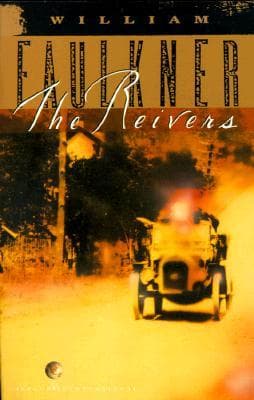
Synopsis
Covers the whole plot, including the ending.
- Difficulty
- Medium
- Pacing
- Moderate
- Mood
- Humorous, nostalgic, adventurous, reflective, poignant
The Reivers Plot Summary
Covers the whole plot, including the ending.
The Proposal
The story begins with an elderly Lucius Priest telling about a key event from his childhood. In 1905, eleven-year-old Lucius lives a sheltered life on his grandfather's Mississippi plantation. His grandfather, Boss Priest, has recently bought a new Winton Flyer automobile. Boon Hogganbeck, a temperamental but loyal family employee, is obsessed with the car and drives it often. When Boss Priest and Lucius's parents leave for a funeral, Boon sees a chance. He suggests to Lucius that they 'borrow' the car for a trip to Memphis, promising adventure and a visit to a woman named Miss Reba. Lucius, at first unsure, is swayed by Boon's charm and the appeal of the forbidden.
Ned's Intervention
As Boon and Lucius get ready for their secret trip, they find that Ned McCaslin, the Priests' clever black coachman, has hidden in the car. Ned, seeing the danger of their unsupervised adventure, insists on going with them, taking charge despite his lower position. His presence changes the dynamic, making Boon's reckless plan more controlled, though still risky. Ned's reasons are complex, driven by loyalty to the Priest family, a desire for personal gain, and a clear understanding of the world that Boon and Lucius lack. He quickly takes authority, annoying Boon and quietly relieving Lucius.
The Road to Memphis
The trip to Memphis has its problems. The Winton Flyer, new in rural Mississippi, draws attention, forcing the trio to navigate unfamiliar roads and social situations. They meet suspicious locals, deal with poor road conditions, and face the constant threat of being caught. Ned, with his street smarts, proves helpful, often outsmarting those who might stop them. Lucius, watching Ned's cleverness and Boon's impulsiveness, starts to lose his innocence, learning firsthand about the world's complexities beyond his upbringing. The car itself becomes a symbol of freedom and the modern age, but also a source of their trouble.
Arrival at Miss Reba's
In Memphis, Boon immediately takes them to Miss Reba's bordello, showing the real reason for his urgent trip. Lucius is introduced to a new world, full of the colorful characters who live there. Miss Reba, a strong but kind madam, looks after Lucius, providing some care amid the chaos. Boon reunites with his 'lady friend,' Miss Corrie, a prostitute with whom he has a difficult relationship. Ned, always practical, begins to check their money and the opportunities in this new place, already planning how to profit from their unusual situation.
The Horse Trade
Ned, realizing they are low on money and seeing an opportunity, makes a bold move: he trades the Winton Flyer for a run-down racehorse named Coppermine. This makes Boon furious and bewilders Lucius, as the car was their only way home and to avoid severe punishment. Ned, however, has a plan. He believes Coppermine, despite his looks, has hidden talent. Ned then arranges to enter Coppermine in a local horse race, betting their limited money and even the car's value (now the horse) against the odds. The stakes are high, as their future depends on Coppermine's performance.
The Race
The day of the race arrives, full of tension. Ned, using his knowledge of horses and people, uses tactics to give Coppermine the best chance to win. He manipulates the betting, distracts opponents, and even gets Lucius to ride Coppermine, believing the boy's innocence and small size will be an advantage. The race itself is exciting, with Coppermine, pushed by Ned's methods and Lucius's determined riding, performing better than expected. The race's outcome decides not only their money situation but also their ability to escape and return home.
Corrie's Honor
During the horse-racing drama, another conflict arises about Miss Corrie. A rival prostitute, Otis, tries to discredit Corrie, leading to a confrontation. Boon, protective of Corrie despite their difficult relationship, is provoked into a fight. Lucius, seeing the emotions and the defense of a woman's reputation, learns more about adult relationships and the code of honor that exists even in unconventional settings. The incident tests Boon's loyalty and shows the deep affection he has for Corrie, further complicating Lucius's simple view of morality.
The Deputy and the Jail
The actions of Boon, Ned, and Lucius, especially the horse-racing scheme and public fights, eventually get the attention of local police. A diligent deputy sheriff starts to investigate their unusual presence. Despite Ned's efforts to avoid being caught, the group is eventually arrested. They find themselves in a rural jail, a stark experience for Lucius, who has never faced the law directly. Their arrest forces them to confront the results of their actions and their difficult situation, far from the safety of Boss Priest.
Boss Priest's Arrival
Just when their situation seems worst, Boss Priest, informed of their location, arrives to get his grandson and the employees. His arrival marks the end of their adventure and the return to the plantation's structured world. Boss Priest, a man of firm principles, handles the situation with calm authority, negotiating their release and settling any debts. The reunion is a mix of relief and worry for Lucius, who knows he must face the consequences. Boon and Ned, though corrected, seem to have their own satisfaction from the escapade.
The Reckoning
Back at the plantation, Lucius is brought before his grandfather. Boss Priest, instead of simply punishing him, talks with Lucius about responsibility, morality, and the nature of good and bad. He explains that while Lucius broke a rule, he also learned valuable lessons about life, loyalty, and human nature. Boss Priest says that sometimes, breaking a rule is necessary to learn a deeper truth. Lucius thinks about his journey, the people he met, and the experiences that changed him from a sheltered boy into someone with a broader understanding of the world. The adventure, though forbidden, became a key part of his coming-of-age.
Principal Figures
Lucius Priest
Protagonist
An innocent boy transformed by a forbidden adventure.
Eleven-year-old Lucius begins the story as a naive and sheltered boy from a respectable Southern family. He is initially hesitant and morally conflicted about stealing his grandfather's car but is ultimately swayed by the allure of adventure and Boon's persuasion. Throughout the journey, Lucius is exposed to the complexities and ambiguities of the adult world, witnessing everything from bordellos and horse racing to violence and legal trouble. He grapples with moral dilemmas, loyalty, and the nature of good and evil, slowly shedding his innocence and gaining a deeper understanding of human nature.
Relationships: Boon Hogganbeck (friend/mentor (unreliable)); Ned McCaslin (guide/protector); Boss Priest (grandfather/moral compass); Miss Reba (temporary guardian)
Boon Hogganbeck
Supporting
The impulsive, loyal, and childlike retainer.
Boon is a large, volatile, and often childlike white man, technically a retainer of the Priest family but more akin to a perpetual adolescent. He is obsessed with the Winton Flyer and driven by impulse, particularly his desire to visit Miss Corrie in Memphis. Despite his recklessness and lack of foresight, Boon possesses a fierce loyalty, particularly to Lucius and Corrie. He is a character of contradictions: capable of great affection and sudden violence, often acting as a catalyst for the group's misadventures, yet ultimately well-intentioned in his own crude way. His morality is pragmatic and driven by immediate desires.
Relationships: Lucius Priest (friend/protégé); Ned McCaslin (rival/companion); Miss Corrie (lover)
Ned McCaslin
Supporting
The shrewd, resourceful, and pragmatic black coachman.
Ned is the Priests' black coachman, a man of immense resourcefulness, cunning, and practicality. He stows away on the trip, recognizing the folly of Boon and Lucius's plan, and quickly takes charge. Ned is the most intelligent and capable member of the trio, often acting as the strategist and problem-solver. His motivations are a blend of loyalty to the Priest family, self-preservation, and a desire for personal gain, exemplified by his audacious trade of the car for a horse. He represents a different kind of wisdom, born of experience and necessity, and often operates outside conventional morality to achieve his goals.
Relationships: Lucius Priest (protector/guide); Boon Hogganbeck (foil/companion); Boss Priest (employee/respectful subordinate)
Boss Priest
Supporting
Lucius's wise and morally grounded grandfather.
Boss Priest is Lucius's grandfather, a respected and authoritative figure who embodies the moral center of the family. He is a man of strong principles, wisdom, and a deep understanding of human nature. When he finally retrieves the trio, he doesn't merely punish Lucius but engages him in a profound conversation about the complexities of morality, responsibility, and the lessons learned from experience. He represents the established order and a certain kind of Southern gentleman, but one who understands that sometimes, the most valuable lessons come from breaking the rules and confronting the world's ambiguities.
Relationships: Lucius Priest (grandfather/mentor); Boon Hogganbeck (employer/long-suffering guardian); Ned McCaslin (employer/respected employee)
Miss Reba
Supporting
The formidable but kind-hearted madam of the bordello.
Miss Reba is the proprietor of the Memphis bordello where Boon intends to stay. She is a large, no-nonsense woman with a commanding presence but also a surprising maternal instinct. Despite her profession, she maintains a strict code of conduct within her establishment and shows genuine concern for Lucius's well-being, taking him under her wing. She represents a different facet of society, one that operates outside conventional norms but still adheres to its own unique set of ethics and loyalties. Her kindness and pragmatism offer a safe haven for Lucius amidst the chaos.
Relationships: Lucius Priest (temporary guardian); Boon Hogganbeck (client/acquaintance); Miss Corrie (employee/friend)
Miss Corrie
Supporting
Boon's lover, a prostitute with a sense of honor.
Miss Corrie is a prostitute at Miss Reba's establishment and Boon Hogganbeck's volatile lover. She is a woman of strong emotions, capable of both deep affection and fierce anger. Despite her profession, she possesses a distinct sense of honor and dignity, which Boon fiercely defends. Her relationship with Boon is tumultuous but deeply felt, representing a complex bond that transcends societal judgments. She challenges Lucius's preconceived notions about women and morality, showing him that human connections can be genuine even in unconventional circumstances.
Relationships: Boon Hogganbeck (lover); Miss Reba (employer/friend)
Coppermine
Supporting
The dilapidated racehorse that becomes the key to their fortune.
Coppermine is the old, seemingly worthless racehorse that Ned McCaslin shrewdly trades the Winton Flyer for. Despite his unpromising appearance, Ned sees hidden potential in him. Coppermine becomes the focus of the group's efforts and the instrument of their potential salvation, representing the unexpected value found in overlooked things. His performance in the race is crucial to the plot, symbolizing the triumph of cleverness and unconventional methods over brute force or conventional expectations. He is a silent but vital character, embodying hope and the possibility of a comeback.
The Deputy
Antagonist
The diligent lawman who apprehends the group.
The Deputy is a minor antagonist figure who represents the forces of law and order that eventually catch up with the trio. He is diligent and persistent in his pursuit, embodying the consequences of their illicit adventure. While not malicious, his role is to enforce the rules that Boon and Ned have so carelessly disregarded. His actions lead to the group's brief incarceration, forcing them to confront the tangible repercussions of their escapade and ultimately paving the way for Boss Priest's intervention. He serves as a reminder of the structured world they temporarily escaped.
Themes & Insights
Loss of Innocence and Coming of Age
A main theme is Lucius's change from an innocent boy to a young man who understands more about the world. His trip to Memphis exposes him to experiences beyond his privileged upbringing: bordellos, gambling, violence, and moral gray areas. He learns that the world is not simply black and white, and that good and bad can exist in unexpected places and people. This adventure, though illicit, is an unconventional education in the complexities of human nature and society.
“A boy has to do what he has to do. And what he has to do, he does. And he learns from it.”
Freedom vs. Responsibility
The novel explores the conflict between wanting complete freedom and the unavoidable weight of responsibility. Boon's impulsive desire for freedom causes the initial act of stealing the car, but Ned's presence and later events constantly force the characters to face the results of their actions. Lucius, in particular, struggles with the responsibility of his involvement and the moral implications of their choices. The story suggests that true freedom is often tied to understanding and accepting one's duties.
“There are some things a man must do for himself, else he ain't a man.”
The Nature of Morality and Honor
Faulkner examines the complex nature of morality, especially in a setting outside usual social norms. Characters like Miss Reba and Miss Corrie, though in 'immoral' professions, show their own codes of honor, loyalty, and kindness. Lucius sees how 'good' people can do questionable things, and 'bad' people can have admirable qualities. The story questions simple definitions of right and wrong, suggesting that true morality often comes from intent, loyalty, and the complex choices made in unclear situations.
“There are things a man can do and be forgiven for, and there are things a man can do and not be forgiven for.”
Social Class and Race Relations in the Jim Crow South
Set in 1905, the novel shows the social classes and racial dynamics of the Jim Crow South. Ned McCaslin, as a black man, navigates a world of discrimination, yet he is often the most intelligent and capable of the group, subtly challenging racial expectations through his cleverness. While the white characters hold formal power, Ned often has practical control, showing the complex power dynamics that existed under the surface of Southern society.
“They got the power, but we got the sense.”
The Allure and Perils of Modernity
The Winton Flyer automobile is a strong symbol of modernity entering a mostly farming society. It represents progress, freedom, and excitement, but also the potential for recklessness and disruption of traditional ways of life. The car's theft and subsequent adventures highlight both the liberating potential of new technologies and the dangers they pose when used by the irresponsible or the naive. It forces a clash between the old world (the plantation, horses) and the new (automobiles, urban life).
“It was the only car in Yoknapatawpha County, and it was going to Memphis.”
Plot Devices & Literary Techniques
First-Person Retrospective Narration
An older Lucius reflects on his childhood adventure.
The story is narrated by an older, wiser Lucius Priest, looking back on his childhood adventure from the vantage point of many years. This allows for a blend of youthful innocence in the recounted events and mature reflection on their meaning and impact. The retrospective lens provides a layer of philosophical insight, as the narrator can comment on the lessons learned and the broader significance of his experiences, guiding the reader's understanding of the themes and character development. It also adds a nostalgic and somewhat elegiac tone to the narrative.
Picaresque Journey
A series of episodic adventures encountered during a road trip.
The novel employs a picaresque structure, where the plot unfolds as a series of loosely connected, often humorous, and adventurous episodes during the trio's journey. Each encounter—from the horse trade to the race, the bordello, and the jail—serves to expose Lucius to new facets of the world and challenge his understanding of morality and society. This episodic nature allows for a wide range of colorful characters and situations to be introduced, contributing to the comic and adventurous tone while collectively building towards Lucius's coming-of-age.
Symbolism of the Automobile
The Winton Flyer represents modernity, freedom, and temptation.
The Winton Flyer automobile is more than just a vehicle; it's a potent symbol. It represents the advent of modernity, the allure of the new, and the promise of freedom from the constraints of the old agrarian South. For Boon, it symbolizes personal liberty and a means to his desires. For Lucius, it is an object of forbidden temptation and a gateway to a world beyond his experience. Its theft and subsequent trade for a horse underscore the clash between tradition and progress, and the unexpected ways in which value and freedom can be redefined.
Foil Characters
Boon and Ned serve as contrasting guides for Lucius.
Boon Hogganbeck and Ned McCaslin act as foil characters, highlighting each other's traits and offering Lucius contrasting models of behavior and morality. Boon is impulsive, emotional, and driven by immediate gratification, representing a kind of childlike recklessness. Ned, in contrast, is shrewd, pragmatic, and resourceful, embodying a more mature, if ethically flexible, intelligence. Their differing approaches to problems and life itself provide Lucius with a comprehensive, if confusing, education in human nature, forcing him to discern his own moral compass amidst their conflicting influences.
Quiz
10 questions on the plot and the characters. Each answer comes with a short explanation.
Question 1
What is the primary genre of "The Reivers" according to the description?
- Mystery
- Picaresque
- Romance
- Science Fiction
Show answer
B. Picaresque The description explicitly states that "The Reivers" is a picaresque novel.
Question 2
Who persuades Lucius Priest to steal his grandfather's car?
- Ned McCaslin
- Miss Reba
- Boon Hogganbeck
- Lucius's grandfather
Show answer
C. Boon Hogganbeck The text states, "Eleven-year-old Lucius Priest is persuaded by Boon Hogganbeck, one of his family's retainers, to steal his grandfather's car."
Question 3
Which of the following characters is described as a "black coachman"?
- Boon Hogganbeck
- Lucius Priest
- Miss Reba
- Ned McCaslin
Show answer
D. Ned McCaslin The description mentions, "The Priests' black coachman, Ned McCaslin, stows away."
Question 4
Where does the journey of the three unlikely car thieves ultimately end up?
- Rural Mississippi
- A jail cell
- Miss Reba's bordello in Memphis
- A train station
Show answer
C. Miss Reba's bordello in Memphis The text states that the odyssey "ends at Miss Reba's bordello in Memphis."
Question 5
What is NOT mentioned as an element of the "wild misadventures" that ensue?
- Horse smuggling
- Trainmen
- A bank robbery
- Sheriffs' deputies
Show answer
C. A bank robbery The description lists horse smuggling, trainmen, sheriffs' deputies, and jail as part of the misadventures. A bank robbery is not mentioned.
Question 6
The trip to Memphis is described as a "heroic odyssey" for which the characters are ill-equipped. What does this imply about their journey?
- They were highly skilled thieves.
- Their journey was destined for success.
- They were unprepared for the challenges they would face.
- They were seeking a heroic destiny.
Show answer
C. They were unprepared for the challenges they would face. The phrase "heroic odyssey, for which they are all ill-equipped" suggests that despite the grand description, they lacked the necessary skills or preparation for the events that unfolded.
Question 7
The description calls "The Reivers" one of Faulkner's "comic masterpieces." What does this suggest about the overall tone of the novel?
- It is a tragedy.
- It is dark and serious.
- It is humorous and light-hearted.
- It is suspenseful and thrilling.
Show answer
C. It is humorous and light-hearted. The term "comic masterpieces" directly indicates a humorous and light-hearted tone, despite the potentially serious nature of the events.
Question 8
Based on the description, what is the relationship between Boon Hogganbeck and Lucius Priest?
- Boon is Lucius's father.
- Boon is a servant of Lucius's family.
- Boon is Lucius's older brother.
- Boon is Lucius's grandfather.
Show answer
B. Boon is a servant of Lucius's family. The text describes Boon Hogganbeck as "one of his family's retainers," implying a servant or employee relationship.
Question 9
The phrase "unlikely car thieves" suggests that the characters' actions might be out of character for them. Considering the setting of rural Mississippi and the time period implied by Faulkner's work, what might make them "unlikely"?
- They are too young to drive.
- Their social standing or background.
- They lack the necessary tools for theft.
- They are afraid of the police.
Show answer
B. Their social standing or background. Faulkner's novels often explore themes of Southern aristocracy and tradition. Characters like Lucius, from a presumably respectable family, or Ned, a long-standing retainer, might be considered "unlikely" to engage in criminal acts like car theft due to their social roles and perceived morality.
Question 10
The "heroic odyssey" ending at a bordello, involving horse smuggling and jail, is an example of what literary device, particularly in conjunction with the "comic" tone?
- Irony
- Foreshadowing
- Metaphor
- Simile
Show answer
A. Irony The contrast between the grand, epic term "heroic odyssey" and the seedy, chaotic reality of their journey and destination (a bordello, jail, smuggling) creates a strong sense of irony, especially given the comic tone.
The Reivers FAQ
What is The Reivers by William Faulkner about?
The Reivers is a picaresque novel by William Faulkner that follows the misadventures of three unlikely car thieves from rural Mississippi. An eleven-year-old boy, Lucius Priest, is persuaded by Boon Hogganbeck to steal his grandfather's car for a trip to Memphis, with the family's coachman, Ned McCaslin, joining them.
Who are the main characters in The Reivers?
The main characters are eleven-year-old Lucius Priest, a young boy from a prominent family; Boon Hogganbeck, one of the family's retainers who instigates the car theft; and Ned McCaslin, the Priests' black coachman who joins them on their journey.
What kind of journey do the characters take in The Reivers?
They embark on a 'heroic odyssey' in a stolen car, heading from rural Mississippi to Memphis. However, they are ill-equipped for the adventure, and their trip is filled with wild misadventures.
What are some of the notable events that happen in The Reivers?
The novel features a series of chaotic events including horse smuggling, encounters with trainmen and sheriffs' deputies, and a stay at a bordello in Memphis owned by Miss Reba. The journey culminates in jail.
What is the tone of The Reivers?
Despite the often chaotic and illicit nature of the events, The Reivers is considered one of William Faulkner's comic masterpieces. It has a lighthearted and humorous tone, characteristic of a picaresque novel.
What is a picaresque novel?
A picaresque novel is a genre of fiction that follows the adventures of a roguish hero of low social class who lives by his wits in a corrupt society. The narrative is often episodic and satirical, focusing on the protagonist's journey and encounters.
Is The Reivers a serious novel?
While it deals with themes of coming-of-age and societal structures, The Reivers is primarily known for its humor and lighthearted tone, making it one of Faulkner's more accessible and comic works.
When was The Reivers published?
The Reivers was published in 1962, making it one of William Faulkner's later novels.
What literary genres does The Reivers fit into?
The Reivers is classified as Literary Fiction and Historical Fiction. Its picaresque structure also places it within that specific narrative tradition.
What is the significance of the title 'The Reivers'?
The title 'The Reivers' is an archaic term for robbers or plunderers, directly referencing the central act of car theft and the characters' subsequent escapades.
About the author
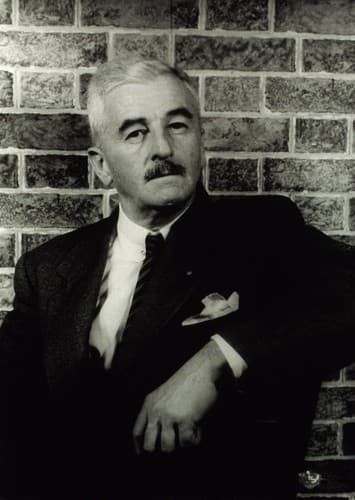
William Cuthbert Faulkner was an American writer known for his novels and short stories set in the fictional Yoknapatawpha County, based on Lafayette County, Mississippi, where Faulkner spent most of his life. A Nobel laureate, Faulkner is one of the most celebrated writers of American literature and often is considered the greatest writer of Southern literature.
Similar books
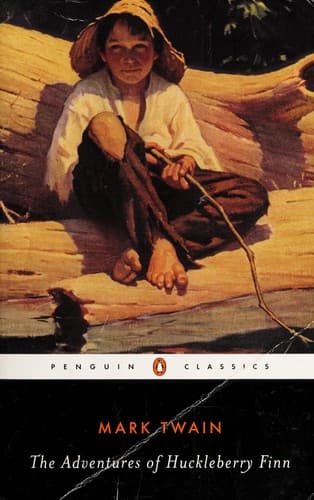
- The Adventures of Huckleberry Finn
Mark Twain
3.8 (1.2M) average on GoodreadsHistorical Fiction"The Reivers" shares significant thematic and structural DNA with Twain's classic. Both novels feature a young, impressionable protagonist embarking on a journey through the American South, encountering a diverse cast of characters, and grappling with complex moral dilemmas, particularly concerning race and societal hypocrisy. Like Huck, Lucius is forced to confront adult realities and make choices that challenge conventional morality. However, "The Reivers" is less overtly critical of societal structures and more focused on the personal growth and coming-of-age of its protagonist, often with a more overtly nostalgic and less cynical tone than Twain's biting satire. While both use a first-person narrator, Lucius's retrospective narration in "The Reivers" lends a reflective quality absent in Huck's immediate, present-tense voice.
- A Confederacy of Dunces
John Kennedy Toole
3.9 (231k) average on GoodreadsLiterary FictionWhile stylistically very different, both "The Reivers" and "A Confederacy of Dunces" are celebrated for their comedic portrayal of Southern life and their ensemble of eccentric characters. Toole's novel, set in modern-day New Orleans, features the unforgettable Ignatius J. Reilly, a character whose absurd misadventures and philosophical pronouncements drive the narrative. "The Reivers" shares this spirit of comedic misadventure and the creation of memorable, idiosyncratic individuals who find themselves in increasingly outlandish situations. However, "The Reivers" possesses a warmth and nostalgic affection for its characters and setting that is largely absent in Toole's often biting and cynical satire. Faulkner's humor, while broad, serves a more tender exploration of human foibles and coming-of-age, whereas Toole's is more purely satirical and critical of societal absurdities.
- The Old Man and the Sea
Ernest Hemingway
3.8 (831k) average on GoodreadsLiterary FictionA Cuban fisherman's long struggle with a giant marlin becomes a story of endurance and dignity, now retold for young adults with illustrations, phonetic guides, and writing prompts in Traditional Chinese.
- One Hundred Years of Solitude
Gabriel García Márquez
4.1 (753k) average on GoodreadsLiterary FictionThrough the multi-generational story of the Buendía family, a mythical town deals with the repeating patterns of time, love, and solitude, as the extraordinary mixes with the ordinary.
- The Goldfinch
Donna Tartt
3.9 (720k) average on GoodreadsLiterary FictionHaunted by a tragic explosion and clutching a stolen Dutch masterpiece, a young orphan navigates the opulent drawing rooms of New York and the gritty underbelly of the art world, desperately seeking connection and redemption amidst a life spiraling into crime and obsession.
- Little Fires Everywhere
Celeste Ng
4.1 (713k) average on GoodreadsLiterary FictionIn Shaker Heights, an artist and her daughter move in, and their free-spirited lives clash with a rule-bound matriarch, revealing hidden conflicts beneath a perfect surface.




Enjoyed the summary?
A summary gives you the shape of the book. The book itself has the detail, the examples and the voice.
Find The Reivers on AmazonAs an Amazon Associate, BookBrief earns from qualifying purchases. How we're funded