

Synopsis
Covers the whole plot, including the ending.
- Difficulty
- Medium
- Pacing
- Moderate
- Mood
- Atmospheric, Suspenseful, Romantic, Melancholy
- Read it if
- You enjoy classic gothic romances with intricate plots, atmospheric settings, and a strong sense of mystery and suspense.
- Skip it if
- You prefer fast-paced modern thrillers or stories without detailed descriptions and philosophical digressions.
The Romance of the Forest Plot Summary
Covers the whole plot, including the ending.
Adeline's Abduction and Introduction to the La Motte Family
The story starts with Adeline, a young woman, taken from a convent near Savoy by two strangers who will not say why or where they are going. Scared and confused, she is given to Monsieur and Madame La Motte, a Parisian couple running from their creditors. Monsieur La Motte, a weak man who makes quick decisions, had to leave his home and things because of gambling debts. They are hiding in the French countryside, and Adeline is put into their uncertain life without explanation. Her sudden arrival and the La Mottes' desperate situation create a feeling of uncertainty and danger for Adeline.
Flight to the Ruined Abbey
As the La Mottes and Adeline continue to flee Paris, their money problems worsen, and the risk of being found grows. Monsieur La Motte, desperate after a chance meeting, decides to hide in a remote, old, and mostly empty abbey in the Fontanville forest, in southeastern France. The abbey, a large and crumbling building covered in plants, immediately makes Adeline feel sad and worried. Its isolated spot and old, falling-apart architecture create a good setting for the mysteries and dangers Adeline and her reluctant protectors will soon face.
Mysterious Discoveries and Encounters
Adeline, curious and seeking comfort from her worries, starts to explore the large, winding abbey. She finds a hidden passage that leads to a secret room. In this hidden room, she finds several disturbing things: a rusty dagger, a torn manuscript, and a human skeleton on a bed. These finds deeply trouble Adeline, filling her mind with thoughts of past tragedies and making her want to learn the truth about these items. The manuscript, though incomplete, hints at a dark history of murder and unfairness, directly connected to the skeleton.
The Arrival of the Marquis de Montalt
The quiet of the abbey ends with the unexpected arrival of the Marquis de Montalt, the estate's owner and a powerful, cruel nobleman. The Marquis, known for his harsh and immoral nature, immediately shows an unwanted interest in Adeline, drawn to her beauty and innocence. Monsieur La Motte, owing the Marquis for letting him stay and afraid of his power, feels more and more pressured to betray Adeline. The Marquis's presence increases the danger, making Adeline's situation in the abbey even more risky as he starts to make his intentions clear.
Adeline's Peril and Monsieur La Motte's Complicity
The Marquis de Montalt's pursuit of Adeline becomes more forceful. He tries many times to force his attention on her, using threats and promises, wanting her to be his mistress. Monsieur La Motte, at first a hesitant protector, gives in to the Marquis's tricks and bribes, finally agreeing to betray Adeline to save himself from ruin and possible jail. He even thinks about giving her directly to the Marquis. Adeline becomes more aware of how much danger she is in and the betrayal around her, realizing she is trapped with no one to trust in the abbey.
Escape from the Abbey and Encounter with Theodore
Driven to desperation by the Marquis's constant pursuit and Monsieur La Motte's help, Adeline decides to escape the abbey. She runs into the forest, where Theodore, a good and brave young man, finds and rescues her. Theodore, the son of a local nobleman, is immediately taken by Adeline's beauty and distress. He offers her protection and a place to stay, and they quickly develop a deep affection for each other. Their growing romance gives Adeline a rare moment of hope and happiness among her troubles, but it also puts Theodore in danger from the powerful Marquis.
Theodore's Imprisonment and Adeline's Continued Flight
The Marquis de Montalt, angry about Adeline's escape and Theodore's help, uses his power to have Theodore arrested and jailed on false charges. Adeline is heartbroken by Theodore's situation and, knowing she is still not safe, has to flee again. She finds shelter with a kind farmer's family, whom Theodore had introduced her to. While safe for a time, Adeline lives in constant fear, knowing the Marquis's influence is widespread and that Theodore's life is in danger because of her. She wants to find a way to clear Theodore's name and gain her own freedom.
Unraveling the Past: The Manuscript's Revelation
Adeline, through a series of good events and the help of allies, finally gets the full manuscript she had partly found in the abbey. This document tells the complete, terrible truth: the skeleton in the secret room belonged to the previous Marquis de Montalt, the current Marquis's older brother, who was killed by his younger brother out of jealousy and a desire for his title and wealth. The manuscript also reveals a shocking personal truth for Adeline: she is the daughter of the murdered Marquis and the rightful heir to the Montalt estate. Her real identity is finally revealed, explaining her mysterious kidnapping at the start of the novel.
Justice and Resolution
With the full manuscript and knowledge of her true family, Adeline, with the help of loyal friends and the law, exposes the current Marquis de Montalt's crimes. The evidence, including the manuscript and others' statements, leads to his arrest and conviction for his brother's murder. Justice is done, and the cruel Marquis gets his punishment. With the villain defeated, Theodore is finally released from prison, his name cleared. Adeline takes back her rightful inheritance and title as the true heir of the Montalt estate, ending her long time of trouble and mystery.
Happy Ending and Union
With the Marquis de Montalt's power ended and Adeline's true identity and inheritance secured, she is finally free to find happiness. Adeline and Theodore, whose love grew stronger through their shared difficulties, marry. Their marriage shows good, innocence, and true love winning over evil, betrayal, and oppression. They settle into a life of peace and contentment, leaving behind the dark horrors and dangers of the forest and the abbey. The novel ends with their happy marriage, ensuring a fair and fulfilling end for the good heroine and her brave protector.
The Romance of the Forest Characters
Adeline
Protagonist
A virtuous and innocent young woman seeking her identity and safety.
Adeline is the central figure of the novel, characterized by her exquisite beauty, delicate sensibility, and unwavering virtue. Orphaned and initially ignorant of her true parentage, she is thrust into a world of danger and mystery. She possesses a keen intellect and a vivid imagination, which often lead her to romanticize and fear the unknown, particularly within the gothic settings she inhabits. Despite her vulnerability, Adeline demonstrates remarkable resilience and moral strength in the face of relentless persecution, maintaining her integrity and hope. Her journey is one of self-discovery, from a passive victim to an active agent in unraveling her past.
Relationships: Monsieur La Motte (reluctant guardian, then betrayer); Madame La Motte (sympathetic but ultimately powerless guardian); Marquis de Montalt (antagonist, persecutor, her uncle and murderer of her father); Theodore (lover and protector); Louis (loyal servant and ally)
Marquis de Montalt
Antagonist
The cruel and licentious proprietor of the abbey, Adeline's persecutor.
The Marquis de Montalt is the primary antagonist, a character embodying aristocratic villainy, greed, and debauchery. He is a powerful and influential nobleman who murdered his elder brother to usurp his title and fortune. Obsessed with Adeline's beauty, he relentlessly pursues her, using his power to imprison, threaten, and manipulate those around him. He is utterly devoid of moral conscience, driven by self-interest and a desire for absolute control. His presence casts a long, sinister shadow over the novel, representing the oppressive forces that virtuous individuals like Adeline must contend with.
Relationships: Adeline (niece (unknown to him initially), object of his lust and persecution); Monsieur La Motte (debtor and accomplice); His murdered brother (victim of his ambition)
Theodore
Supporting
Adeline's virtuous lover and brave protector.
Theodore is a young, noble, and honorable man who embodies chivalric virtues. He encounters Adeline after her escape from the abbey and immediately falls in love with her, becoming her steadfast protector. He is courageous, willing to defy the powerful Marquis de Montalt to defend Adeline's honor and safety, even at great personal cost, including his own imprisonment. Theodore represents hope, loyalty, and the possibility of true love in a world fraught with danger and deceit. His unwavering commitment to Adeline provides her with crucial emotional support and practical assistance.
Relationships: Adeline (lover and eventual husband); Marquis de Montalt (rival and adversary)
Monsieur La Motte
Supporting
A weak-willed and debt-ridden man who becomes Adeline's reluctant guardian and eventual betrayer.
Monsieur La Motte is a complex character whose moral compass is easily swayed by self-preservation and financial pressure. Initially tasked with protecting Adeline, he is a man of good intentions but weak resolve, prone to impulsive decisions and easily manipulated by more powerful figures like the Marquis. His fear of poverty and imprisonment ultimately leads him to betray Adeline, making him a tragic figure who compromises his morality for perceived safety. He struggles with guilt and fear, demonstrating the corrupting influence of desperation and external pressure.
Relationships: Adeline (guardian then betrayer); Madame La Motte (wife); Marquis de Montalt (creditor and manipulator)
Madame La Motte
Supporting
Monsieur La Motte's wife, a kind and sympathetic but ultimately powerless figure.
Madame La Motte is a compassionate and maternal figure who genuinely cares for Adeline. Despite her own family's desperate circumstances, she attempts to shield Adeline from her husband's darker impulses and the Marquis's villainy. However, she lacks the strength of character or agency to effectively protect Adeline from the machinations of the men around her. Her kindness provides moments of solace for Adeline, but her inability to prevent her husband's betrayal highlights the limited power of women in this patriarchal society. She represents domestic virtue and emotional support, albeit ineffectual.
Relationships: Adeline (sympathetic guardian); Monsieur La Motte (husband)
Louis
Supporting
A loyal servant to the La Motte family who offers Adeline assistance.
Louis is a minor but significant character who serves the La Motte family. He is characterized by his loyalty, honesty, and simple goodness. Unlike Monsieur La Motte, Louis remains steadfast in his moral compass and offers genuine assistance and sympathy to Adeline when she is in distress. He helps her with her escape and provides crucial information at various points. Louis represents the innate goodness that can be found even among those of humble station, contrasting with the corruption of the aristocracy.
Relationships: Adeline (ally and helper); Monsieur La Motte (employer)
Peter
Supporting
A benevolent farmer who provides refuge for Adeline after her second flight.
Peter is a kind and honest farmer and a friend of Theodore's family. When Adeline is forced to flee after Theodore's imprisonment, Peter and his family offer her a safe haven. They represent the virtuous, simple life of the countryside, contrasting with the corrupt world of the nobility. Their hospitality and genuine concern for Adeline's well-being provide her with a much-needed period of peace and security, albeit temporary. Peter's integrity and willingness to help those in need highlight the novel's themes of virtue found in unexpected places.
Relationships: Adeline (host and protector); Theodore (friend)
Du Bosse
Mentioned
The original steward of the murdered Marquis, instrumental in preserving key evidence.
Du Bosse is primarily mentioned through the discovered manuscript. He was the loyal steward of Adeline's father, the former Marquis de Montalt, and played a crucial role in documenting the murder and preserving the evidence, including the manuscript itself. His foresight and loyalty posthumously contribute to the unraveling of the current Marquis's crimes and the restoration of Adeline's inheritance. He represents the hidden forces of justice working against tyranny.
Relationships: Former Marquis de Montalt (loyal steward); Adeline (indirect benefactor)
The Romance of the Forest Themes
Identity and Self-Discovery
Adeline's journey is about finding her true identity. Kidnapped without explanation, she spends much of the novel not knowing her parents, which makes her constantly search for belonging. The manuscript and skeleton in the abbey are key, as they slowly show her noble birth and her family's sad history. This revelation changes her from a helpless orphan into the rightful heir, giving her power and a sense of self. Understanding who she is helps her face her tormentor and reclaim her inheritance.
“Oh, how delightful it is to reflect, that I am not a desolate, friendless orphan, but the daughter of a murdered father, whose memory I can now honour, and whose wrongs I can avenge!”
Virtue vs. Vice
This theme is central to the novel, comparing pure, innocent, and moral characters like Adeline and Theodore with the corrupt, immoral, and cruel Marquis de Montalt and the weak Monsieur La Motte. Adeline's strong goodness is tested by the Marquis's advances and the treacherous world around her. The novel consistently supports the victory of goodness, suggesting that despite great suffering, good will eventually win and be rewarded, while evil will be punished. The suffering of good people is shown as a test that ultimately makes them stronger.
“Oh, virtue! how often dost thou prove a shield to the innocent, and a torment to the guilty!”
The Corrupting Influence of Power and Wealth
The Marquis de Montalt shows how absolute power and money can corrupt. His noble status lets him commit murder, jail innocent people like Theodore, and constantly pursue Adeline without immediate punishment. He uses his influence to control Monsieur La Motte and avoid justice for a long time. The novel criticizes the uncontrolled power of the nobility, showing how it allows tyranny and moral decay. It suggests that such power, when used by the wicked, leads to widespread suffering and unfairness.
“Power, when abused, is a two-edged sword; it wounds him who wields it, no less than him on whom it falls.”
The Sublime and the Beautiful
Radcliffe often uses the ideas of the Sublime and the Beautiful. Adeline's experiences with vast, wild places, storms, and the ruined, impressive abbey create the Sublime—feelings of terror, wonder, and overwhelming power. These moments often show her inner fear and weakness. In contrast, the 'Beautiful' is found in calm natural scenes, peaceful home moments, and good characters like Theodore, offering comfort and hope amid the terror. This interaction makes the novel's emotional depth and atmosphere richer, immersing the reader in Adeline's personal experience.
“The deep solitudes of the forest, the wild grandeur of the mountains, and the awful magnificence of the ruins, contributed to impress her mind with a solemnity that was not unpleasing.”
The Supernatural vs. Rational Explanation
The novel creates a feeling of dread, especially in the abbey, with its secret passages, strange sounds, and the skeleton. Adeline's imagination often sees these things as ghostly. However, Radcliffe consistently gives rational explanations for these seemingly supernatural events by the story's end. The 'ghostly' sounds are revealed to be natural, and the 'supernatural' mystery of the skeleton is solved by the manuscript, showing human crime rather than ghost intervention. This method builds tension and terror while finally rooting the story in human action and reason.
“The terrors she had suffered from the idea of supernatural agency, now yielded to the more certain evils of human wickedness.”
Plot Devices & Literary Techniques
The Ruined Abbey
A gothic setting that functions as a character in itself, embodying mystery and decay.
The ruined abbey of Fontanville is more than just a setting; it is a central plot device. Its vast, decaying architecture, secret passages, hidden rooms, and isolated location create an oppressive, mysterious, and terrifying atmosphere. It serves as a prison for Adeline, a hiding place for evidence (the skeleton and manuscript), and a catalyst for the gothic elements of the plot. The abbey's antiquity and desolation reflect the moral decay of the aristocratic villain and the forgotten past that holds the key to Adeline's identity.
The Manuscript
A fragmented document that gradually reveals the central mystery and Adeline's identity.
The fragmented manuscript discovered by Adeline in the secret apartment is a crucial plot device. It acts as a delayed exposition, slowly unveiling the truth about the murdered former Marquis de Montalt and, eventually, Adeline's true parentage. Its fragmented nature builds suspense, forcing Adeline (and the reader) to piece together the tragic history. This document is the key to solving the mystery of the skeleton, exposing the current Marquis's crimes, and ultimately empowering Adeline to claim her inheritance and clear Theodore's name.
Hidden Rooms and Passages
Architectural features that facilitate mystery, escape, and the concealment of secrets.
The abbey's hidden rooms and secret passages are classic gothic devices. They allow for clandestine meetings, provide escape routes, and, most importantly, conceal the evidence of past crimes, such as the secret apartment where the skeleton and manuscript are found. These architectural elements heighten the sense of danger and claustrophobia, creating an environment where characters can be trapped or observed without their knowledge, and where the past literally remains hidden within the structure itself.
Dreams and Omens
Precognitive visions and symbolic dreams that foreshadow events and heighten suspense.
Adeline frequently experiences vivid dreams and unsettling premonitions that foreshadow future dangers and revelations. These dreams, often filled with symbolic imagery like specters, shadows, or threatening figures, serve to heighten the gothic atmosphere and Adeline's psychological distress. While sometimes seeming supernatural, they are ultimately psychological manifestations of her anxieties and subconscious processing of the real dangers she faces. They build suspense and allow Radcliffe to explore Adeline's inner world and her sensitive, imaginative nature.
The Rusty Dagger and Skeleton
Macabre relics that symbolize past violence and provide tangible evidence of a crime.
The discovery of the rusty dagger and the human skeleton in the secret apartment are powerful symbols and tangible plot devices. They immediately establish a sense of past violence and unsolved mystery, acting as a physical link to the abbey's dark history. The skeleton represents the murdered former Marquis, and the dagger is the instrument of his death. These relics serve as concrete evidence of the crime, driving Adeline's investigation and ultimately providing the proof needed to convict the current Marquis, thus ensuring justice.
The Romance of the Forest Quotes
“The mind, when long oppressed by a sense of its own misfortunes, too often seeks a sad indulgence in the contemplation of others' woes.”
“Solitude, which to the happy is a nurse of peace, is to the wretched a tormentor of despair.”
“How many errors are committed by the wisest, and how many evils endured by the best, through the fatal influence of passion!”
“The human heart is an enigma, and often a labyrinth, even to itself.”
“Conscience, that monitor within, which, though often lulled to sleep, never dies, but awakens at the hour of retribution.”
“There are moments when the soul, overwhelmed with its own sensations, finds no language to express them.”
“The greatest evils are often those we bring upon ourselves by our own imprudence.”
“How vain are the schemes of man, when opposed by the decrees of Heaven!”
“Suspense is often more intolerable than certainty, however dreadful.”
“The forest, which had so often been to her a scene of terror, now assumed a character of picturesque sublimity.”
“It is not the place, but the mind, that makes us happy or miserable.”
“The past, however painful, holds lessons for the future, if we but have the courage to learn them.”
“Imagination, when left to its own wild wanderings, often creates phantoms more terrifying than reality.”
“Truth, like the sun, though it may be obscured for a time, will at length break through every cloud.”
Quiz
10 questions on the plot and the characters. Each answer comes with a short explanation.
Question 1
Why does the La Motte family initially take Adeline under their protection?
- They are paid a large sum of money to do so.
- They are fleeing Paris due to debt and are instructed to care for her.
- Adeline is a distant relative who seeks their help.
- They accidentally discover her abandoned and take pity on her.
Show answer
B. They are fleeing Paris due to debt and are instructed to care for her. The La Motte family is fleeing Paris due to debt, and Adeline is mysteriously placed under their protection as they depart.
Question 2
What kind of building do the La Mottes and Adeline take refuge in after fleeing Paris?
- A bustling inn in a large city
- A secluded cottage in the mountains
- A ruined abbey in south-eastern France
- A grand chateau belonging to a wealthy relative
Show answer
C. A ruined abbey in south-eastern France Their refuge is a ruined abbey located in south-eastern France, which becomes the setting for many mysterious events.
Question 3
Which of the following items are discovered in concealed rooms within the ruined abbey?
- A chest of jewels, ancient maps, and a telescope
- A skeleton, a manuscript, and a rusty dagger
- A collection of rare books, a musical instrument, and a locket
- A hidden stash of gold coins, a secret diary, and a portrait
Show answer
B. A skeleton, a manuscript, and a rusty dagger The discovery of a skeleton, a manuscript, and a rusty dagger are key sinister relics that drive the mystery within the abbey.
Question 4
Who is the 'libidinous Marquis' who becomes a threat to Adeline at the abbey?
- The long-lost father of Adeline
- A rival suitor for Adeline's hand
- The proprietor of the ruined abbey
- A powerful local magistrate
Show answer
C. The proprietor of the ruined abbey The Marquis is the proprietor of the abbey, and his unwelcome attentions toward Adeline force her to consider escape.
Question 5
What is a central theme explored in 'The Romance of the Forest' beyond its plot and characters?
- The industrial revolution's impact on society
- Debates in philosophical thought and systems of belief in late 18th-century Europe
- The rise of democratic governments in France
- The challenges of intercontinental trade routes
Show answer
B. Debates in philosophical thought and systems of belief in late 18th-century Europe The novel is noted for its engagement with current philosophical debates and examinations of systems of thought central to the intellectual life of late eighteenth-century Europe.
Question 6
What does Adeline eventually contemplate due to the Marquis's persistent attentions?
- Marrying him to gain protection
- Seeking help from the local authorities
- Escaping to distant regions
- Confiding in Madame La Motte for assistance
Show answer
C. Escaping to distant regions The Marquis's 'libidinous' attentions become so oppressive that Adeline is forced to contemplate an escape to distant regions.
Question 7
The novel is rich in allusions to which two areas of study, in addition to philosophical debate?
- Classical mythology and political science
- Military strategy and agricultural reform
- Aesthetic theory and travel literature
- Economic policy and scientific discovery
Show answer
C. Aesthetic theory and travel literature The book is explicitly described as being 'Rich in allusions to aesthetic theory and to travel literature', alongside its philosophical concerns.
Question 8
How does the setting of 'Roman Catholic Europe of violent passions and extreme oppression' influence the narrative?
- It provides a backdrop for lighthearted romantic comedies.
- It creates an atmosphere where characters can easily achieve justice and freedom.
- It heightens the sense of danger, moral conflict, and the heroine's vulnerability.
- It encourages open discussion of progressive political ideas.
Show answer
C. It heightens the sense of danger, moral conflict, and the heroine's vulnerability. The 'violent passions and extreme oppression' of the setting directly contribute to the gothic atmosphere, the challenges faced by Adeline, and the moral dilemmas explored, making her vulnerable to figures like the Marquis.
Question 9
What is the primary genre classification of 'The Romance of the Forest'?
- Science Fiction
- Gothic Fiction (combining Historical Fiction, Mystery, Romance)
- Satirical Comedy
- Pastoral Poetry
Show answer
B. Gothic Fiction (combining Historical Fiction, Mystery, Romance) While listed as Historical Fiction, Mystery, and Romance, the elements of a ruined abbey, sinister discoveries, and a vulnerable heroine facing a villain are hallmarks of Gothic Fiction, a prominent genre for Ann Radcliffe.
Question 10
What role does the discovered manuscript likely play in the overall mystery of the abbey?
- It contains a recipe for a forgotten medieval dish.
- It is a philosophical treatise unrelated to the abbey's secrets.
- It likely reveals details about the skeleton, the dagger, or the history of the abbey and its former inhabitants.
- It is a collection of love poems written by a former monk.
Show answer
C. It likely reveals details about the skeleton, the dagger, or the history of the abbey and its former inhabitants. In a mystery novel, especially one with gothic elements, a discovered manuscript found alongside a skeleton and dagger is almost certainly a key to unlocking the secrets and history of the place and its tragic past.
The Romance of the Forest FAQ
What is 'The Romance of the Forest' about?
'The Romance of the Forest' follows the orphaned Adeline, who is unexpectedly taken in by the La Motte family fleeing debt from Paris. They seek refuge in a desolate, ruined abbey in south-eastern France, where Adeline uncovers dark secrets, including a skeleton and a mysterious manuscript, hinting at a past crime. She also faces the unwelcome advances of the abbey's proprietor, the Marquis de Montalt, forcing her to confront her precarious situation and search for her true identity.
Why should I read 'The Romance of the Forest'?
You should read it for its masterful blend of gothic atmosphere, suspense, and philosophical depth. Ann Radcliffe excels at creating a sense of dread and mystery through detailed descriptions of crumbling abbeys and dark forests, while also exploring themes of virtue, oppression, and the power of sensibility. It's a foundational work of gothic literature that influenced many subsequent authors.
What is the background/setting of 'The Romance of the Forest'?
The novel is primarily set in a Roman Catholic Europe of the late eighteenth century, specifically beginning in Paris and then moving to a ruined, remote abbey in the forests of south-eastern France. This setting provides a backdrop of both historical context, with its 'violent passions and extreme oppression,' and the classic gothic atmosphere of isolated, decaying structures filled with secrets.
What writing style does the author use?
Ann Radcliffe employs a highly descriptive and evocative writing style, rich in sensory details that build atmosphere and suspense without resorting to overt supernatural elements. Her prose is often flowery and emphasizes the emotional states of her characters, particularly Adeline's sensibility and distress, characteristic of the sentimental and gothic novels of the period.
What minor details add significant meaning?
The repeated descriptions of Adeline's musical talent and her ability to find solace in nature, such as sketching or contemplating landscapes, are not merely aesthetic details. They highlight her refined sensibility and inner strength, contrasting sharply with the harsh realities she faces and providing a moral compass in a world of corruption, linking her to notions of virtue and natural order.
What are some subtle foreshadowing moments?
Early on, the La Mottes' initial reluctance to take Adeline with them, and their subsequent discussions about her mysterious origins, subtly foreshadow the deeper secrets surrounding her parentage. The very act of taking refuge in a 'ruined abbey,' described with an ominous air, hints at the dark discoveries and dangers Adeline will soon encounter within its walls.
What unexpected character connections exist?
The most significant unexpected connection is Adeline's relationship to the Marquis de Montalt. It is eventually revealed that he is not only her tormentor but also her uncle, having been involved in the murder of her true father, the Marquis de Villeroi, and the imprisonment of her mother. This familial link deepens the horror of his villainy.
What are unspoken character motivations?
Monsieur La Motte's initial motivation to hide Adeline from her supposed pursuers, while presented as benevolent, is subtly driven by a desire to gain favor and potentially exploit her wealth or connections, should they exist. His wavering loyalty to her often stems from a self-serving fear for his own safety and financial interests.
What psychological complexities do characters exhibit?
Adeline exhibits a complex blend of profound sensibility, resilience, and a capacity for deep reflection despite her traumatic experiences. Her psychological journey involves navigating extreme fear and despair while maintaining her moral integrity and hope. La Motte, on the other hand, shows the complexities of moral compromise, constantly battling between his conscience and his self-preservation.
What are the major emotional turning points?
A major emotional turning point for Adeline is the discovery of the skeleton and manuscript in the abbey, which shifts her fear from external threats to the horrifying realization of a past crime and her potential connection to it. Another is her escape from the Marquis de Montalt, marking her transition from passive victim to an active agent in her own destiny.
How do relationship dynamics evolve?
The relationship between Adeline and the La Motte family evolves from one of initial protection to increasing tension and betrayal, as Monsieur La Motte succumbs to the Marquis's influence. Adeline's dynamic with Theodore, however, grows from mutual respect and sympathy into deep, enduring love, offering her a source of strength and hope amidst her trials.
Which parts remain ambiguous or open-ended?
While the main mysteries are resolved, the exact fate or ultimate redemption of Madame La Motte, particularly after Monsieur La Motte's death, is left somewhat open-ended. Her moral ambiguity and suffering are acknowledged, but her full future beyond the immediate events is not explicitly detailed, inviting some interpretation.
What are controversial scenes or decisions?
Monsieur La Motte's repeated decisions to betray Adeline, first by considering abandoning her and later by actively participating in the Marquis's schemes against her, are controversial. These choices highlight the moral weakness of a character initially presented as a protector, challenging the reader's sympathy and demonstrating the corrupting influence of fear and self-interest.
'The Romance of the Forest' ending explained: how it ends & what it means
The novel concludes with Adeline discovering her true identity as the daughter of the murdered Marquis de Villeroi and the rightful heir to his estates. The villainous Marquis de Montalt is exposed and meets a tragic end, while La Motte dies in prison. Adeline ultimately marries Theodore and finds lasting happiness and security. The ending signifies the triumph of virtue and justice over vice and oppression, characteristic of gothic romance, asserting that innocence and sensibility will ultimately be rewarded.
About the author
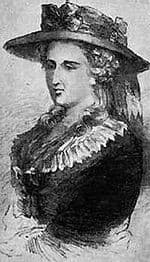
Ann Radcliffe was a pioneering English novelist of the Gothic genre. Her works, including the influential "The Romance of the Forest," are celebrated for their atmospheric settings, suspenseful plots, and the "explained supernatural," where mysterious events are ultimately given rational explanations. Radcliffe's "terror" versus "horror" distinction significantly shaped Gothic literature.
Similar books
- Jane Eyre
Charlotte Brontë
4.1 (1.6M) average on GoodreadsHistorical FictionShares themes of a young woman facing adversity, mysterious pasts, and intense romantic entanglements within a gothic-influenced setting.
- Northanger Abbey
Jane Austen
3.8 (298k) average on GoodreadsHistorical FictionA satirical take on gothic novels, but helpful for understanding the tropes and appeal of the genre 'The Romance of the Forest' exemplifies.
- Caleb Williams
William Godwin
3.5 (4k) average on GoodreadsMysteryGodwin's Caleb Williams (1794), while often classified as a 'Gothic novel of ideas,' differs significantly from Radcliffe's work. While it shares the theme of a persecuted individual and flight, Godwin eschews supernatural elements entirely, focusing instead on social injustice, psychological torment, and the corrupting nature of power. It's a more philosophical and less romanticized take on the Gothic, using the genre's tropes to critique society rather than to explore the picturesque or the sublime. The Romance of the Forest is primarily concerned with individual survival and emotional experience, whereas Caleb Williams delves into systemic oppression.
- To Kill a Mockingbird
Harper Lee
4.3 (4.5M) average on GoodreadsHistorical FictionIn the 1930s Jim Crow South, Harper Lee writes about racial injustice, moral growth, and the quiet courage of a lawyer father, Atticus Finch, as seen through his young daughter's eyes.
- The Great Gatsby
F. Scott Fitzgerald
3.9 (3.8M) average on GoodreadsHistorical FictionIn the opulent Roaring Twenties, a mysterious millionaire's lavish parties hide his desperate, tragic pursuit of a lost love, exposing the emptiness within the American Dream.
- Pride and Prejudice
Jane Austen
4.3 (3M) average on GoodreadsHistorical FictionIn a society focused on status and money, Elizabeth Bennet navigates love and pride, challenging Mr. Darcy and social expectations to find true affection.





Enjoyed the summary?
A summary gives you the shape of the book. The book itself has the detail, the examples and the voice.
Find The Romance of the Forest on AmazonAs an Amazon Associate, BookBrief earns from qualifying purchases. How we're funded