
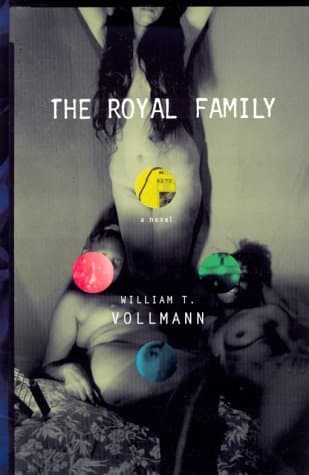
Synopsis
Covers the whole plot, including the ending.
- Difficulty
- Hard
- Pacing
- Variable
- Mood
- Dark, Existential, Raw, Atmospheric, Obsessive
- Read it if
- You want a sprawling, challenging literary novel that explores the dark underbelly of society, existential dread, and the nature of obsession with a unique, often poetic, prose style.
- Skip it if
- You prefer straightforward plots, clear resolutions, or are sensitive to graphic content and explicit language.
The Royal Family Plot Summary
Covers the whole plot, including the ending.
The Ghost of Irene
Henry Tyler, a struggling private detective in San Francisco, is haunted by Irene's recent suicide. Irene was his ambitious lawyer brother John's wife. Henry was secretly in love with Irene, and her death causes deep grief, blurring reality. He often sees and talks to Irene's ghost, who offers fragmented advice about his brother and the city's underworld. This ghost is both a comfort and a torment, pushing Henry further into isolation and an obsessive search to understand loss and degradation. His detective work, already failing, becomes secondary to his internal struggle and his growing interest in the city's marginalized.
The Search for the Queen
Driven by grief and a growing interest in the city's darkest corners, Henry Tyler begins a desperate search for the legendary 'Queen of the Prostitutes.' This figure, rumored to rule San Francisco's Tenderloin district, represents to Henry an essence of degradation, power, and perhaps, a perverse royalty among the dispossessed. His search takes him deep into the city's red-light districts, its grimy bars, and forgotten alleys. He interviews sex workers, pimps, and street dwellers, often recording their stories and observations in his notebook, hoping to find clues about the Queen's identity and location. This search is less about a person and more about a symbol for Henry's internal journey.
John's Ascent and Disdain
John Tyler, Henry's brother, is the opposite of Henry. A successful and ambitious contract lawyer, John moves up the corporate ladder, valuing order, status, and material success. He sees Henry's bohemian life, his failing detective agency, and his growing obsession with the city's underworld with pity and thinly veiled contempt. John is largely unaware, or perhaps willfully ignorant, of Henry's deep grief over Irene, his own wife. Their interactions are tense, marked by John's attempts to 'fix' Henry and Henry's quiet resentment of John's perceived normalcy and lack of empathy. John's world of clean offices and respectable colleagues contrasts with Henry's descent into the Tenderloin.
Encounters with the Dispossessed
As Henry's search for the Queen grows, he spends countless hours immersed in the lives of San Francisco's marginalized. He visits dive bars, shelters, and street corners, talking with prostitutes, drug addicts, and homeless individuals. He observes quietly, often taking notes on their conversations, struggles, and philosophies. These encounters give him a raw, unfiltered view of human suffering and resilience. He meets many characters, each with their own tragic or defiant story. Through these interactions, Henry begins to see a different kind of 'royal family' – one made of those cast out by society, yet having an undeniable dignity and a complex social structure. These interactions further separate him from mainstream society.
The Nature of Possession
Henry's relationship with Irene's ghost and his pursuit of the Queen of the Prostitutes explores the nature of possession – both literal and metaphorical. He is controlled by Irene's memory; her ghost is a constant companion that shapes much of his emotional state. He also seeks to 'possess' the Queen, not physically, but to understand her power, her rule over a realm of the dispossessed. This dual obsession shows how humans try to claim or understand what is lost or unattainable. Irene's ghost often speaks of possession, hinting that John 'possessed' her in life, while Henry now 'possesses' her memory, a more unsettling form of ownership.
Office Politics and Hypocrisy
Despite his immersion in the underworld, Henry occasionally interacts with John's corporate world, attending family gatherings or briefly entering John's office. These forays remind him of the hypocrisy and superficiality he sees in the middle class. He observes the polite facades, the backroom dealings, and the unspoken judgments that mark John's professional life. The contrast between the raw honesty, though brutal, of the street and the polished deceit of the corporate world is striking. Henry sees a different kind of 'prostitution' in how people compromise their values for success and social standing, further solidifying his disdain for conventional society and his commitment to his dark quest.
The Many Faces of the Queen
As Henry continues his search, he meets several women rumored to be the Queen, or who embody qualities that match his evolving idea of her. Some are powerful madams, others are wise street veterans, and some are young, vulnerable prostitutes who show fierce independence. Each encounter adds to the Queen's mythology, making her less of a single person and more of an archetype. He realizes that the 'Queen' might not be one individual, but a symbol representing the collective strength, resilience, and sorrow of the Tenderloin's women. This elusive nature of the Queen fuels Henry's philosophical inquiry into leadership and degradation.
The Royal Family of the Streets
Through his interactions and observations, Henry understands the social dynamics within the Tenderloin. He begins to see a complex, unwritten hierarchy among the prostitutes, drug addicts, and homeless individuals – a 'royal family' of the streets. This family, though dispossessed and often brutalized, follows its own codes of conduct, loyalty, and protection. He sees figures of authority, wisdom, and even a perverse nobility among them, especially in the older, more experienced women. This realization strengthens his belief that the true 'royal family' is not one of inherited wealth or power, but one formed in shared suffering and survival on society's edges.
Irene's Unfolding Secrets
Irene's ghost, a constant presence in Henry's life, slowly reveals fragmented details about her past and her strained marriage to John. Her ethereal conversations often allude to John's coldness, his ambition, and perhaps a sense of entrapment she felt within their respectable, middle-class life. The ghost's words, though often cryptic, deepen Henry's understanding of Irene's despair and the reasons for her suicide. These revelations further cement Henry's belief that his brother's clean, ordered world was more suffocating than the chaotic, yet honest, world he now inhabits. The ghost often questions Henry's motives and his pursuit of the Queen.
The Paradox of Freedom
Henry struggles with the paradox of freedom and degradation he observes in the lives of the street people. While their existence is harsh, marked by poverty, violence, and addiction, he also sees a raw freedom – a liberation from societal expectations, material possessions, and middle-class norms. This freedom, however, comes at a great cost, often leading to degradation. Henry questions if this brutal autonomy is true liberty or another kind of enslavement. His own journey, shedding his former life's constraints, mirrors this paradox, as he finds a strange liberation in his descent.
Henry's Transformation
As the novel progresses, Henry Tyler changes internally. His initial grief over Irene slowly becomes a deeper philosophical inquiry into life, death, and society. He sheds the last bits of his respectable, though failing, private detective persona, fully embracing his role as an observer and chronicler of the dispossessed. His appearance becomes more disheveled, his habits more erratic, and his connection to the mainstream world almost entirely severed. This transformation is not necessarily an improvement, but a reorientation of his values and purpose, driven by his search for understanding and his connection with Irene's ghost and the street's 'royal family'.
The Elusive Resolution
The novel does not end with a neat resolution or the definitive 'finding' of a single Queen of the Prostitutes. Instead, Henry's quest remains open-ended, a continuous journey of observation and understanding. The Queen, like Irene's ghost, becomes less of a tangible entity and more of a symbol – an embodiment of the power, resilience, and suffering of the marginalized. Henry's mission shifts from finding a person to understanding a phenomenon, a social structure, and a philosophy. The story emphasizes that the journey's true value lies not in a destination, but in the insights gained and the internal change experienced, leaving the reader to consider truth and meaning.
Principal Figures
Henry Tyler
Protagonist
A failing private detective haunted by love and grief, seeking meaning in the city's underbelly.
Henry Tyler is a melancholic and introspective private detective in San Francisco, adrift after the suicide of Irene, his brother's wife and the secret love of his life. He is intellectual and observant, but lacks the drive for conventional success. Driven by an intense grief and an almost philosophical curiosity, he embarks on a quixotic quest to find the mythical 'Queen of the Prostitutes.' He finds solace and understanding among the city's marginalized, preferring their raw honesty to the perceived hypocrisy of the middle class. His mental state often blurs reality, particularly in his interactions with Irene's ghost.
Relationships: Irene (Secretly in love with her, haunted by her ghost.); John Tyler (Brother, rival, and a symbol of the conventional world Henry rejects.); Various Prostitutes (Sources of information, philosophical insights, and companionship in his quest.)
Irene
Supporting/Catalyst
Henry's deceased love interest and his spectral guide into the city's depths.
Irene is the deceased wife of John Tyler and the secret object of Henry's profound affection. Her suicide is the catalyst for Henry's transformation and his subsequent journey. Though physically absent, she remains a powerful presence throughout the novel as a haunting ghost, appearing to Henry and engaging him in conversations. Her spectral form is often fragmented and enigmatic, offering cryptic advice, observations, and hints about her past and her true feelings. She represents lost love, unresolved grief, and the elusive nature of memory, guiding Henry even as she torments him.
Relationships: Henry Tyler (Loved by him, appears as his ghost and confidante.); John Tyler (Was his wife; their marriage is revealed to be cold and unfulfilling.)
John Tyler
Supporting/Antagonist (ideological)
Henry's ambitious, conventional brother, representing the mainstream world Henry rejects.
John Tyler is Henry's older brother, a successful and ambitious contract lawyer. He embodies the respectable, middle-class world that Henry increasingly disdains. John is driven by career advancement, social status, and material success, and he views Henry's bohemian lifestyle and his descent into the Tenderloin with a mixture of concern, pity, and thinly veiled contempt. He seems largely oblivious to the depth of Henry's grief for Irene, his own wife, and represents a stark contrast to Henry's introspective and unconventional path. He is a symbol of the societal norms and hypocrisies that Henry seeks to escape.
Relationships: Henry Tyler (Brother, ideological opposite, often disapproving.); Irene (His deceased wife, whose unhappiness he seemed unaware of.)
The Queen of the Prostitutes
Symbolic/Mentioned
A mythical, elusive figure representing power, degradation, and the 'royal family' of the streets.
The Queen of the Prostitutes is a legendary, almost mythical figure in San Francisco's Tenderloin district. She is the elusive object of Henry's obsessive quest. She is never definitively found as a single individual but rather manifests as an archetype, embodying the collective strength, resilience, and sorrow of the marginalized women. To Henry, she represents a perverse form of royalty, a powerful matriarch reigning over a kingdom of the dispossessed. Her elusiveness reinforces the idea that she is more of a symbol than a person, a focal point for Henry's philosophical inquiries into power, degradation, and the hidden structures of society.
Relationships: Henry Tyler (The object of his obsessive, symbolic quest.)
The Prostitutes and Street Dwellers
Supporting/Collective
The diverse inhabitants of the Tenderloin who provide Henry with stories and insights.
This collective group comprises the various sex workers, homeless individuals, drug addicts, pimps, and other marginalized figures Henry encounters during his quest. They are not individual characters in the traditional sense, but a composite 'character' that forms the backdrop and substance of Henry's observations. They offer him raw, unfiltered stories of survival, despair, and defiance, revealing the complex social dynamics and unspoken rules of the Tenderloin. Through their interactions, Henry gains a deeper understanding of human suffering, resilience, and the paradoxical freedoms found on the fringes of society. They are the 'royal family' Henry ultimately comes to appreciate.
Relationships: Henry Tyler (Sources of information and companionship for his research.)
Themes & Insights
Grief and Obsession
The novel is rooted in Henry's deep grief over Irene's suicide, which quickly becomes an obsession. This grief is not just sorrow but a transformative force, blurring his reality and driving his descent into the city's underworld. His obsession with Irene's ghost and his search for the Queen of the Prostitutes become intertwined, both showing his inability to let go and his desperate search for meaning in loss. Irene's ghost constantly reminds him of this obsession, shaping his every move, as seen in his notebooks filled with observations about the Tenderloin.
“Her ghost was a constant companion, more real than the living, her words a compass to his despair.”
The Dispossessed vs. The Middle Class
A central theme is the contrast and parallels between the lives of San Francisco's marginalized (prostitutes, homeless, addicts) and the anxious middle class, represented by Henry's brother, John. Vollmann highlights the hypocrisy, superficiality, and hidden degradations of the 'respectable' world, comparing them to the raw honesty, brutal realities, and unexpected dignity found among the dispossessed. Henry rejects his brother's world, finding an authenticity and a different kind of 'royal family' among those society has cast out. This is clear in Henry's discomfort at John's office parties versus his comfort in dive bars.
“The true royalty resided not in gilded cages, but in the fierce, unyielding hearts of those who owned nothing but their own degradation.”
The Nature of Possession and Loss
The novel explores various forms of possession: Henry's possession by Irene's memory and ghost, John's 'possession' of Irene in life, and Henry's search to 'possess' the knowledge or presence of the Queen. Loss drives much of the story, fueling Henry's existential inquiry. The characters deal with what it means to own something or someone, and how losing can paradoxically create a new, painful form of ownership through memory and obsession. Irene's ghost often speaks of being 'owned' by John, contrasting it with Henry's current 'ownership' of her spectral presence.
“To lose was to possess in a different, more profound way – a ghost's embrace, a memory's claim.”
Reality and Illusion
Vollmann blurs the lines between reality and illusion, especially through Henry's interactions with Irene's ghost. The ghost is a consistent presence, seemingly real to Henry, yet her existence is questioned by others and, at times, by Henry himself. This ambiguity extends to the search for the Queen of the Prostitutes, who may or may not be one person. The novel suggests that subjective experience and internal states can create their own realities, challenging traditional ideas of sanity and truth. Henry's detailed notes, though based on observation, are filtered through his grief and obsession, creating a unique, subjective reality.
“What was real but the things we chose to believe, the voices we permitted to whisper in our ears?”
The Search for Meaning and Identity
Henry's entire journey is a search for meaning in profound loss and an attempt to form a new identity. Stripped of his conventional life and career, he seeks answers in the extreme conditions of the Tenderloin, hoping to understand why Irene died and the universal condition of suffering. His search for the Queen is less about finding a person and more about finding a symbol or a philosophical understanding that can give structure to his fragmented world. He sheds his old self, becoming a chronicler and a philosopher of the forgotten, defining himself by his immersion in the lives of the dispossessed.
“He sought not a woman, but a truth – a brutal, beautiful truth that only the forsaken could reveal.”
Plot Devices & Literary Techniques
The Ghost of Irene
A spectral presence that acts as Henry's confidante, tormentor, and a blurred line between reality and hallucination.
Irene's ghost is a central plot device, serving multiple functions. It externalizes Henry's grief and obsession, allowing for direct internal monologue to be presented as dialogue. The ghost's fragmented and cryptic pronouncements provide clues, raise philosophical questions, and deepen the mystery surrounding Irene's life and death. It also acts as a constant reminder of Henry's mental state, blurring the lines of reality for both him and the reader, making us question the veracity of his experiences and perceptions. This device allows for exploration of themes like grief, possession, and the subjective nature of truth without relying solely on internal narration.
The Notebooks/Chronicling
Henry's act of meticulously documenting the lives and stories of the Tenderloin's inhabitants.
Henry's notebooks and his meticulous act of chronicling the lives of the prostitutes and street dwellers serve as a key plot device. This allows Vollmann to weave in numerous vignettes, character sketches, and observations from the city's underbelly, providing a rich tapestry of detail and perspective. It also highlights Henry's transformation from a detective solving cases to a dedicated, almost academic, observer of society. The act of writing becomes a way for Henry to process his grief, to seek patterns, and to impose a form of order on the chaos he observes, ultimately giving his quest a scholarly, ethnographic dimension.
The Elusive Queen of the Prostitutes
A symbolic figure whose pursuit drives the narrative, representing an unattainable ideal or profound truth.
The Queen of the Prostitutes is less a character and more a symbolic plot device. Her elusiveness ensures that Henry's quest is not about a simple discovery but about a deeper, philosophical journey. She represents the ultimate embodiment of degradation and power within the Tenderloin, an unattainable ideal that constantly shifts and reforms. Her mythical status allows Vollmann to explore themes of leadership, social hierarchy, and the search for meaning in the most unexpected places. The fact that she is never definitively found emphasizes that the value of the quest lies in the journey and the insights gained, rather than a definitive answer.
The Sibling Rivalry/Contrast
The stark opposition between Henry and John's lives and values, highlighting societal divisions.
The relationship between Henry and John Tyler functions as a crucial plot device, serving as a constant point of contrast and ideological conflict. John represents the conventional, successful, and often hypocritical middle-class world that Henry rejects. Their interactions highlight the chasm between their values and lifestyles, emphasizing Henry's deliberate descent into the marginalized world. This rivalry, subtly underscored by their shared love for Irene, provides a framework for exploring the novel's central themes of social class, authenticity, and the different paths individuals choose in life. John's presence grounds Henry's journey by providing a 'normal' world to push against.
The Royal Family Quotes
“The past is a foreign country; they do things differently there.”
“There are some things you can't unsee.”
“Every man has his secret sorrows which the world knows not; and often times we call a man cold when he is only sad.”
“The greatest trick the devil ever pulled was convincing the world he didn't exist.”
“We are all in the gutter, but some of us are looking at the stars.”
“What is essential is invisible to the eye.”
“He who fights with monsters should look to it that he himself does not become a monster.”
“The horror! The horror!”
“It was the best of times, it was the worst of times.”
“All that glitters is not gold.”
“Man is condemned to be free.”
“The only way to get rid of a temptation is to yield to it.”
“We are such stuff as dreams are made on, and our little life is rounded with a sleep.”
“Hell is other people.”
“To be or not to be, that is the question.”
Quiz
10 questions on the plot and the characters. Each answer comes with a short explanation.
Question 1
Who is Henry Tyler's brother, and what is his profession?
- John Tyler, a struggling artist
- John Tyler, an ambitious contract lawyer
- Michael Tyler, a successful businessman
- Robert Tyler, a private detective
Show answer
B. John Tyler, an ambitious contract lawyer The book description clearly states that Henry's brother is John, an ambitious contract lawyer, and Irene's husband.
Question 2
What is Henry Tyler's profession at the beginning of the novel?
- Successful corporate lawyer
- Failing private detective in San Francisco
- Ambitious journalist
- Street vendor
Show answer
B. Failing private detective in San Francisco The synopsis describes Henry Tyler as a 'failing private detective in San Francisco'.
Question 3
What tragic event involving Irene propels Henry Tyler into a new life of 'nightmare beauty and degradation'?
- She leaves him for another man.
- She moves to a different city.
- She commits suicide.
- She is murdered by an unknown assailant.
Show answer
C. She commits suicide. Irene, who was married to John and the love of Henry's life, commits suicide, leading to Henry's grief and subsequent quest.
Question 4
What is Henry Tyler's primary objective after Irene's death?
- To expose his brother's wrongdoings
- To become a successful lawyer himself
- To track down the legendary Queen of the Prostitutes
- To leave San Francisco and start a new life
Show answer
C. To track down the legendary Queen of the Prostitutes Driven by his grief and clinging to Irene's ghost, Henry embarks on a quest to find the 'legendary Queen of the Prostitutes'.
Question 5
The novel draws parallels between which two groups of people?
- The wealthy elite and the working class
- The dispossessed and the anxious middle class
- Academics and street performers
- Politicians and religious leaders
Show answer
B. The dispossessed and the anxious middle class The summary explicitly states that Vollmann 'constructs a haunting series of parallels between the lives of the dispossessed and the anxious middle class'.
Question 6
What kind of locations are vividly depicted in 'The Royal Family'?
- Opulent mansions, exclusive clubs, and high-rise offices
- Low-life bars, office politics, and hobo camps
- Rural farmlands, quaint villages, and bustling markets
- University campuses, research labs, and libraries
Show answer
B. Low-life bars, office politics, and hobo camps The book is described as being 'full of vividly rendered depictions of low-life bars, office politics, and hobo camps'.
Question 7
What is the central paradox explored in 'The Royal Family'?
- The paradox of wealth and poverty
- The eerie paradoxes of possession and loss
- The paradox of love and hate
- The paradox of freedom and constraint
Show answer
B. The eerie paradoxes of possession and loss The novel is described as an 'unforgettable novel about the eerie paradoxes of possession and loss'.
Question 8
How does Henry Tyler initially cope with Irene's death?
- He immediately seeks revenge on those he blames.
- He immerses himself in his work as a detective.
- He clings despairingly to her ghost.
- He tries to forget her by moving on quickly.
Show answer
C. He clings despairingly to her ghost. The text states that Henry 'clings despairingly to her ghost' after Irene's suicide.
Question 9
The language used in 'The Royal Family' is characterized by which combination of traits?
- Simple, straightforward, and journalistic
- Eloquent, humorous, sensual, and obscene
- Academic, formal, and detached
- Poetic, abstract, and minimalist
Show answer
B. Eloquent, humorous, sensual, and obscene The novel is 'crafted out of language by turns eloquent, humorous, sensual, and obscene'.
Question 10
Which of the following character archetypes are NOT explicitly mentioned as being woven into the story?
- The seekers and vigilantes
- The hypocrites and street prostitutes
- The mentors and apprentices
- All of the above are mentioned.
Show answer
C. The mentors and apprentices The description mentions 'the seekers, the vigilantes, the hypocrites, the street prostitutes' as familiar characters, but not 'mentors and apprentices'.
The Royal Family FAQ
What is the central mystery or quest that drives the plot of 'The Royal Family'?
The central quest involves Henry Tyler, a failing private detective, attempting to track down the legendary 'Queen of the Prostitutes' in San Francisco. He embarks on this search following the suicide of Irene, his brother's wife and the love of his life, clinging to her ghost and seeking to transform his grief into something meaningful, albeit through degradation.
Who are the two brothers at the heart of the novel, and what is their relationship dynamic?
The novel centers on Henry Tyler, a struggling private detective, and his brother John, an ambitious contract lawyer. Their relationship is complicated by Henry's unrequited love for John's wife, Irene, and the stark contrast between Henry's descent into the city's underbelly and John's more conventional, success-driven life.
How does Irene's suicide impact Henry Tyler's life and motivations?
Irene's suicide is the catalyst for Henry's profound grief and his subsequent immersion into a 'new life of nightmare beauty and degradation.' He clings to her ghost, and his quest for the Queen of the Prostitutes appears to be a desperate attempt to transmute his loss and despair into something tangible, however dark.
What kind of settings and environments does Henry Tyler explore during his quest?
Henry Tyler navigates a wide array of San Francisco's underbelly, including low-life bars, hobo camps, and the haunts of street prostitutes. These vividly rendered depictions highlight the gritty and often harsh realities of the city's dispossessed, contrasting sharply with the world of office politics.
What is the significance of the 'Queen of the Prostitutes' in the narrative?
The 'Queen of the Prostitutes' serves as a mythical, almost spiritual figure whom Henry obsessively seeks. She embodies a focal point for his grief and degradation, potentially representing an ultimate understanding of loss, power, or even a perverse form of salvation within the novel's dark landscape.
Are there any subtle indications of Irene's feelings for Henry before her suicide?
The synopsis implies a deep connection between Henry and Irene, describing her as 'the love of his life,' suggesting a mutual or at least strongly felt affection from Henry's side. While not explicitly detailed, the intensity of Henry's grief points to a significant, perhaps unacknowledged, bond between them prior to her death.
How does the novel subtly connect the lives of the 'dispossessed' with the 'anxious middle class'?
The novel draws parallels by contrasting Henry's descent into degradation among the dispossessed with his brother John's middle-class existence, and Henry's own past as a failing detective. The shared themes of anxiety, loss, and the search for meaning, albeit in vastly different environments, subtly link these seemingly disparate worlds.
What are some of the 'eerie paradoxes of possession and loss' explored in the book?
The paradoxes manifest in Henry's clinging to Irene's ghost (possession of memory amidst physical loss), his attempt to find something 'precious' in degradation (finding value in what is conventionally lost), and the potential power or influence of the dispossessed, like the Queen, despite their societal 'loss' of status.
Does the novel hint at any scientific or fantastical elements beyond its literary fiction and mystery genres?
The inclusion of 'Science Fiction' as a genre hint suggests there might be elements beyond pure realism, perhaps in the nature of Irene's ghost or the elusive Queen, or even in the psychological states depicted. This could involve speculative concepts of reality, perception, or the human mind, subtly woven into the narrative fabric.
How does Henry's status as a 'failing private detective' inform his psychological state and actions?
Henry's failure as a detective likely contributes to his sense of inadequacy and disillusionment, making him more susceptible to despair and seeking extreme outlets for his grief. His professional failure mirrors his personal loss, pushing him further into the fringes and a new, dark purpose.
What psychological motivations might drive Henry to seek the 'Queen of the Prostitutes' rather than processing grief conventionally?
Henry's quest is likely driven by a profound need to externalize his internal turmoil and grief, seeking a tangible, albeit symbolic, representation of his loss and Irene's memory. This unconventional pursuit might be a form of self-punishment, a search for ultimate truth in degradation, or a desperate attempt to find meaning where conventional life has failed him.
How does Henry's clinging to Irene's 'ghost' reflect his psychological coping mechanisms?
Clinging to Irene's ghost suggests Henry is struggling with acceptance of her death, using the spectral presence as a coping mechanism to maintain a connection. This indicates a deep psychological attachment and an inability to fully let go, leading him to seek solace or understanding in unconventional, even destructive, ways.
What is the psychological impact of the 'nightmare beauty and degradation' Henry experiences?
The 'nightmare beauty and degradation' likely represents Henry's descent into a state where conventional morality and aesthetics are inverted. Psychologically, it could be a form of catharsis, self-destruction, or a distorted pathway to a new understanding of existence, where pain and beauty become intertwined in his grief-stricken mind.
Can Henry's quest for the Queen be interpreted as a search for a maternal figure or ultimate feminine archetype?
Given his profound loss of Irene, Henry's search for the 'Queen of the Prostitutes' could be interpreted as a subconscious quest for a powerful, albeit unconventional, feminine archetype. She might represent a distorted maternal figure, a source of ultimate knowledge, or a symbolic replacement for the love he lost, existing outside societal norms.
Is the 'Queen of the Prostitutes' a literal character or a symbolic representation in the novel?
The description implies she is a 'legendary' figure, suggesting she could be both a literal person and a powerful symbol. She might exist as a real individual whom Henry seeks, but her true significance likely lies in what she represents: the ultimate embodiment of degradation, power, hidden wisdom, or a focal point for Henry's complex grief and desires.
How does the novel challenge conventional notions of morality and societal value through its characters and themes?
By portraying Henry's 'degradation' as a path to something 'precious' and featuring 'low-life bars' alongside 'office politics,' the novel challenges conventional morality. It suggests that value and meaning can be found outside societal norms, among the dispossessed, and that the 'seekers' and 'vigilantes' operate on a different moral compass, blurring lines between good and bad.
What is the author's likely intent in using language that is 'by turns eloquent, humorous, sensual, and obscene'?
This diverse linguistic approach aims to capture the full spectrum of human experience, from the sublime to the sordid. It allows the author to depict the raw reality of Henry's world, evoke strong emotional responses, and reflect the complex, often contradictory nature of beauty and degradation within the narrative.
Could the 'ghost' of Irene be interpreted as a manifestation of Henry's guilt or psychological projection?
Yes, Irene's ghost could be interpreted not just as a literal haunting, but as a powerful psychological projection of Henry's guilt, unresolved feelings, or even a manifestation of his subconscious. Her presence allows him to perpetuate his grief and rationalize his destructive path, making her a complex symbol of his internal state.
How does the science fiction element, though subtle, influence the overall themes of the book?
If subtle, the science fiction element likely introduces a layer of speculative reality or altered perception that enhances the themes of possession and loss. It might suggest non-conventional ways of experiencing reality, grief, or human connection, perhaps through altered states of consciousness, or even a hint of a parallel existence for the 'ghost' of Irene, pushing beyond pure psychological realism.
About the author

William T. Vollmann is an American author known for his diverse body of work that often explores complex themes of human experience. His book "The Royal Family" delves into the lives of characters navigating the intricacies of love and power. Vollmann's fiction often blends elements of history and personal narrative, reflecting his unique perspective on society.
Similar books
- Infinite Jest
David Foster Wallace
4.3 (74k) average on GoodreadsLiterary FictionShares a similar ambition, length, and exploration of societal anomie through a fragmented narrative.
- Underworld
Don DeLillo
4.1 (2k) average on GoodreadsFantasyFeatures a vast scope, intricate prose, and a deep dive into American culture and its psychological landscape.
- The Crying of Lot 49
Thomas Pynchon
3.7 (71k) average on GoodreadsLiterary FictionWhile both novels feature a central mystery within a complex, conspiratorial world, Vollmann's 'The Royal Family' is far more explicit in its exploration of the grotesque and the spiritual, focusing on raw human experience rather than Pynchon's more intellectual, semiotic puzzles. Vollmann's narrative is a descent into existential despair, whereas Pynchon's often functions as a playful, albeit profound, investigation of signs and systems.
- The Old Man and the Sea
Ernest Hemingway
3.8 (831k) average on GoodreadsLiterary FictionA Cuban fisherman's long struggle with a giant marlin becomes a story of endurance and dignity, now retold for young adults with illustrations, phonetic guides, and writing prompts in Traditional Chinese.
- One Hundred Years of Solitude
Gabriel García Márquez
4.1 (753k) average on GoodreadsLiterary FictionThrough the multi-generational story of the Buendía family, a mythical town deals with the repeating patterns of time, love, and solitude, as the extraordinary mixes with the ordinary.
- The Goldfinch
Donna Tartt
3.9 (720k) average on GoodreadsLiterary FictionHaunted by a tragic explosion and clutching a stolen Dutch masterpiece, a young orphan navigates the opulent drawing rooms of New York and the gritty underbelly of the art world, desperately seeking connection and redemption amidst a life spiraling into crime and obsession.




Enjoyed the summary?
A summary gives you the shape of the book. The book itself has the detail, the examples and the voice.
Find The Royal Family on AmazonAs an Amazon Associate, BookBrief earns from qualifying purchases. How we're funded