

Synopsis
Covers the whole plot, including the ending.
- Difficulty
- Easy
- Pacing
- Fast
- Mood
- Action-packed, Tense, Resilient, Loyal
- Read it if
- You love classic Westerns with a strong emphasis on family loyalty, survival against impossible odds, and relentless action.
- Skip it if
- You dislike historical fiction set in the American West or prefer character-driven stories over plot-driven action.
The Sackett Brand Plot Summary
Covers the whole plot, including the ending.
Under the Mogollon Rim
Tell Sackett, a lone rider, is ambushed and chased by forty gunmen from the Lazy A ranch, led by Jud Higgins. They trap him under the Mogollon Rim. Tell, known for his marksmanship and survival skills, finds a good spot among rocks and sparse plants. The Lazy A men want to capture him, to hang him or kill him, believing he is on their land or has wronged their boss, Cass Bannon. Tell, however, will not be taken easily and prepares for a fight, using his limited ammunition and the rough land to his advantage against many enemies.
The First Stand
As the Lazy A gunmen get closer, Tell Sackett shows his fighting skill. He uses his rifle accurately, shooting several of his pursuers from hidden spots. Jud Higgins and his men, frustrated by Tell's toughness and the losses he causes, become more desperate. They try to smoke him out with fire, but Tell expects their moves, moving through the rocks and brush. He wounds more men and avoids immediate capture, forcing the Lazy A outfit to spread out and move carefully. Tell's main goal changes from just surviving to gaining time, hoping for an unexpected chance or help.
News Travels Fast
Unknown to Tell, news of the large manhunt and the attack on a Sackett spreads across the Western lands. Through frontier communication—riders, saloon talk, and telegraph wires—various Sackett relatives learn of Tell's bad situation. Orrin Sackett, a respected cattleman, and his wife, Laura, are among the first to hear. They understand the unspoken Sackett rule: an attack on one is an attack on all. Other Sacketts, from mountain men like Logan to law-abiding citizens and even those with a past, begin to react, seeing the threat to their family's honor and survival. The call to arms, though not stated, is heard.
The Gathering Storm
The different parts of the Sackett family, spread across states and doing different jobs, start heading towards the Mogollon Rim. Orrin Sackett, a practical and skilled leader, immediately organizes a rescue, gathering supplies and men. From the high mountains, the strong Logan Sackett and his relatives, known for tracking and fighting, begin their fast descent. Tyrel Sackett, another skilled and independent member, also sets out, driven by the strong loyalty that defines their family. Each Sackett brings their skills and experience to the coming fight, united by the promise to stand by their own, no matter the cost or the odds.
A Desperate Stand Continues
Under constant pressure from the Lazy A gunmen, Tell Sackett continues his resistance. He is wounded, his ammunition is low, and he is tired. Despite his bad situation, Tell's will to live remains strong. He uses every trick he knows—the land for ambushes, fake retreats—and makes his pursuers pay for every step. Jud Higgins, angry about the losses and Tell's refusal to give up, increases the attack, sending wave after wave of men. Tell knows he cannot last forever, but he is determined to make his last stand as costly as possible for his enemies, hoping to gain a little more time.
The Cavalry Arrives
Just as Tell Sackett is almost at his limit, a new group enters the fight. Orrin Sackett, leading loyal men and family, arrives with a loud charge. They launch a surprise attack on the Lazy A forces from an unexpected direction, catching Jud Higgins and his men off guard. The Lazy A gunmen, who had been focused only on Tell, suddenly find themselves fighting on two fronts. Orrin's smart tactics and the strength of his attack change the battle, causing confusion among the attackers. Tell, seeing his family's faces, finds new strength and joins the counter-attack effectively.
Logan's Fury
The battle grows as Logan Sackett and his tough mountain relatives, having moved through the difficult land with speed and stealth, arrive to help Orrin and Tell. Logan, a force of nature, leads his men with fierce energy, using their knowledge of the wilderness and their fighting skills effectively. The Lazy A gunmen, already weakened by Orrin's attack, are now completely overwhelmed by the Sacketts' combined power. The Sacketts fight with coordinated, almost natural unity, turning the ambush into a defeat. The Lazy A forces, discouraged and outmatched, begin to break and run, taking heavy losses.
The Pursuit and Retreat
With the Lazy A forces in disarray, the Sacketts chase them. They do not seek to kill every last man, but to scatter them completely and send a clear message: attacking one Sackett means facing the anger of the whole family. Jud Higgins, wounded and scared, tries to gather his remaining men but fails. The Sacketts show their better horsemanship and tactical teamwork, ensuring that the Lazy A outfit is fully defeated and spread out. This pursuit not only secures their victory but also cements their reputation as a firm and strong family that protects its own with loyalty and deadly skill.
Cass Bannon's Reckoning
After the battle, the Sacketts, led by Orrin, Tyrel, and Logan, confront Cass Bannon, the wealthy owner of the Lazy A ranch, who planned the attack on Tell. Bannon, at first arrogant, is shocked by his defeat and the unified Sackett family. He tries to bluff and deny responsibility, but the Sacketts, calm but firm, make it clear that his actions have consequences. They demand an explanation for the attack and a promise that no Sackett will be targeted again. The confrontation is tense, but Bannon, realizing he is outmatched, is forced to back down and accept the Sacketts' power.
The Sackett Brand
Afterward, the Sacketts gather, caring for their wounded and thinking about what happened. Tell, though injured, is safe and thankful for his family's help. The experience strengthens the deep loyalty and strong bond that defines the Sackett family. They discuss the 'Sackett Brand'—not a mark on cattle, but an inner code of honor, courage, and support for each other. This event reminds them, and the wider frontier, that while individual Sacketts may travel far, they are always connected, and an attack on one will always bring the full force of the family against the attacker.
Principal Figures
Tell Sackett
Protagonist
A highly skilled and independent frontiersman, ambushed and cornered by forty gunmen.
Tell Sackett is a quintessential L'Amour hero: self-reliant, an expert marksman, and a master of survival in the wilderness. He prefers his own company but possesses an unyielding sense of justice and loyalty to his kin. His resourcefulness and courage are evident as he faces overwhelming odds alone, never giving up despite being wounded and outnumbered. He embodies the individualistic spirit of the frontier but is deeply rooted in his family's values.
Relationships: Orrin Sackett (Cousin, leader of the relief effort); Logan Sackett (Cousin, fierce mountain fighter); Tyrel Sackett (Cousin, skilled and independent fighter); Cass Bannon (Antagonist, orchestrator of the attack)
Orrin Sackett
Supporting
A pragmatic and respected cattleman who organizes the Sackett family's response.
Orrin Sackett is a pillar of the Sackett family, known for his calm demeanor, strategic mind, and leadership qualities. He is a successful cattleman who has built a reputable life, but he never forgets his roots or his family's code. When he hears of Tell's plight, he immediately takes charge, coordinating the disparate Sackett members and leading the most organized relief effort. He represents the more settled, yet still formidable, aspect of the Sackett clan.
Relationships: Tell Sackett (Cousin, whom he leads the rescue for); Laura Sackett (Wife, supportive and understanding); Logan Sackett (Cousin, fellow leader in the family's defense); Tyrel Sackett (Cousin, fighting alongside him)
Logan Sackett
Supporting
A fierce and untamed mountain man, bringing primal fighting skills to the family's defense.
Logan Sackett represents the wilder, untamed side of the Sackett family. He is a mountain man, skilled in tracking, survival, and combat, with a raw, almost primal ferocity when provoked. His loyalty to his kin is absolute, and he responds to the call to arms with swift, decisive action. Logan's presence in the battle is devastating, as he and his kin move with an efficiency born of living close to nature, providing a powerful, aggressive force to the Sackett defense.
Relationships: Tell Sackett (Cousin, whom he helps rescue); Orrin Sackett (Cousin, fighting alongside him); Tyrel Sackett (Cousin, fighting alongside him)
Tyrel Sackett
Supporting
Another skilled and independent Sackett, riding to his cousin's aid.
Tyrel Sackett is another capable and self-reliant member of the family, embodying the spirit of the independent frontiersman. Like Tell, he is comfortable on his own but answers the family's call without hesitation. His skills as a rider and a fighter are crucial in the combined effort to rescue Tell. Tyrel represents the adventurous and free-spirited aspect of the Sacketts, always ready for action and fiercely protective of his own.
Relationships: Tell Sackett (Cousin, whom he helps rescue); Orrin Sackett (Cousin, fighting alongside him); Logan Sackett (Cousin, fighting alongside him)
Cass Bannon
Antagonist
The wealthy and powerful rancher who orders the attack on Tell Sackett.
Cass Bannon is the arrogant and ruthless owner of the Lazy A ranch, accustomed to getting his way through intimidation and force. He views Tell Sackett as an encroacher or a threat to his burgeoning empire and dispatches his men to eliminate him without remorse. Bannon represents the corrupting influence of unchecked power and greed on the frontier. His ultimate defeat at the hands of the Sacketts serves as a powerful lesson about underestimating the strength of family and honor.
Relationships: Tell Sackett (Target of his aggression); Jud Higgins (His foreman, leading the attack)
Jud Higgins
Supporting
The ruthless foreman of the Lazy A, leading the forty gunmen against Tell Sackett.
Jud Higgins is Cass Bannon's loyal but brutal foreman, responsible for executing Bannon's orders to capture or kill Tell Sackett. He is a skilled but ultimately arrogant gunman, confident in the overwhelming numerical superiority of his forces. Higgins underestimates Tell's capabilities and the resolve of the Sackett family, leading to his own defeat and humiliation. He embodies the hired muscle, driven by loyalty to his boss and a desire for dominance.
Relationships: Cass Bannon (His employer); Tell Sackett (His primary target)
Themes & Insights
Family Loyalty and Honor
The main theme of the novel is the strong bond and loyalty among the Sackett family. When one Sackett is threatened, all Sacketts respond, no matter the distance or their own lives. This theme is clearest when Orrin, Logan, and Tyrel, along with other relatives, stop everything to ride to Tell's aid, showing that family honor is more important than anything else. The 'Sackett Brand' itself is a symbol for this inner, unspoken code, proving that individual strength grows when united by blood and shared values. The Sacketts' united front against Cass Bannon's forces shows the power of this group identity.
“Hunt one Sackett and you hunt 'em all. So they're riding in from all over—mountain Sacketts, outlaws, cattlemen, bankers and the rest. They'll fight with Tell on this one.”
Individualism vs. Collective Strength
While Louis L'Amour often praises the independent individual, this novel looks at the balance between individual skill and group strength. Tell Sackett, a strong individual, is at first alone against forty men, showing great personal toughness. However, his survival and the defeat of the Lazy A forces are only possible through his family's combined efforts. The story suggests that while individual skill is important, there are times when even the strongest person needs group support. The Sacketts, while very independent, understand the power of their united 'brand' in overcoming great odds, proving that a strong community can protect its members when an individual cannot.
“Tell knew he could not hold out indefinitely, but he was determined to make his last stand as costly as possible for his enemies, hoping to buy just a little more time. Time for his kin to ride.”
Justice and Retribution
The novel explores the frontier idea of justice, which often falls outside formal law. Cass Bannon's attempt to use force to remove Tell Sackett is met with the Sacketts' own fast and clear retribution. The Sacketts do not just rescue Tell; they actively chase and defeat Bannon's forces, making sure Bannon understands the results of his actions. This theme highlights how frontier society regulated itself, where personal honor and family reputation are protected through decisive action, and those who do wrong are held accountable by the people they offend.
“They didn't seek to annihilate every last man, but to scatter them completely and send an unmistakable message: attacking one Sackett means facing the wrath of the entire clan.”
Survival and Resilience
The tough life of the American frontier demands great resilience, a quality Tell Sackett shows. Trapped and outnumbered, Tell's ability to survive against incredible odds shows not only his physical strength but also his mental toughness and resourcefulness. He uses every trick he knows—cleverness, knowledge of the land, and sheer willpower—to continue his stand. This theme extends to the entire Sackett family, who show their resilience by overcoming obstacles and traveling long distances to confront a powerful enemy, proving that adaptability and a strong spirit are necessary for survival in the untamed West.
“He was wounded, his ammunition dwindling, and exhaustion began to set in. Despite his dire circumstances, Tell's will to survive remained unbroken.”
Plot Devices & Literary Techniques
The Call to Arms
The unspoken signal that rallies the Sackett family to defend one of their own.
This device is crucial to the plot, as it drives the convergence of the disparate Sackett family members. The news of Tell's peril acts as an immediate, non-verbal 'call to arms' that every Sackett understands and responds to. It highlights the deep-seated loyalty and inherent family code, setting in motion the various journeys that lead to the climactic battle. This device effectively transforms a solo survival story into a grand family saga, demonstrating the power of shared heritage and responsibility.
The Mogollon Rim
A formidable natural barrier and strategic setting for the initial ambush.
The Mogollon Rim serves as more than just a backdrop; it's a critical element in the plot. Its rugged, defensible terrain allows Tell Sackett to hold off a vastly superior force, showcasing his survival skills and buying precious time. It also acts as a natural funnel, concentrating the conflict and making the arrival of the other Sacketts more dramatic and impactful. The Rim itself becomes a character, dictating tactics and adding to the epic scale of Tell's stand.
Overwhelming Odds
The initial situation where the protagonist faces an almost impossible challenge.
This device immediately establishes high stakes and suspense. Tell Sackett being cornered by forty armed men creates an insurmountable challenge that makes his individual resistance heroic and the eventual family intervention even more triumphant. It emphasizes the Sacketts' collective power when they turn the tables, demonstrating that even the most overwhelming odds can be overcome by unity and skill, amplifying the theme of collective strength.
The Sackett Brand (Metaphor)
A symbolic representation of the family's honor, code, and unbreakable bond.
More than just a name, 'The Sackett Brand' functions as a powerful metaphor throughout the story. It symbolizes the unwritten code of loyalty, courage, and mutual protection that defines the Sackett family. It's the reason Sacketts from all walks of life ride to Tell's aid, and it's the message they send to Cass Bannon. This device elevates the conflict from a simple feud to a defense of a profound family identity and way of life, giving deeper meaning to their actions.
The Sackett Brand Quotes
“A man's got to stand for something, or he'll fall for anything.”
“The wind blows where it lists, and you hear the sound thereof, but canst not tell whence it cometh, and whither it goeth.”
“There's no justice in this world for a man who won't fight for himself.”
“A man learns more from his mistakes than from his successes.”
“Some men are born to trouble as the sparks fly upward.”
“The only real freedom is the freedom to choose your own path.”
“Fear is a poor companion on a long trail.”
“The wilderness teaches you things a town never will.”
“A good horse and a straight-shooting gun are a man's best friends out here.”
“There's a time to talk and a time to act, and knowing the difference can save your hide.”
“Every man has a brand, whether he knows it or not.”
“It ain't what you take with you, it's what you leave behind that matters.”
“The mountains don't care about your troubles, but they'll teach you how to carry 'em.”
“Sometimes the hardest fight is the one you have with yourself.”
Quiz
10 questions on the plot and the characters. Each answer comes with a short explanation.
Question 1
Where is Tell Sackett initially cornered by the forty gunslingers from the Lazy A?
- In a remote cabin in the Rockies
- Under the Mogollon Rim
- Near the banks of the Rio Grande
- In a small frontier town saloon
Show answer
B. Under the Mogollon Rim The book description explicitly states Tell Sackett is cornered 'under the Mogollon Rim'.
Question 2
What is the primary objective of the forty gunslingers from the Lazy A regarding Tell Sackett?
- To capture him alive and hang him
- To recruit him into their gang
- To demand a ransom for his release
- To challenge him to a fair duel
Show answer
A. To capture him alive and hang him The description states they are 'fixing to hang him if they can capture him alive, fill him extra full of lead if they can't'.
Question 3
What is the implied 'Sackett Brand' or family code of honor mentioned in the synopsis?
- Never draw first unless provoked
- Always help a neighbor in need
- An attack on one Sackett is an attack on all Sacketts
- To never back down from a fight
Show answer
C. An attack on one Sackett is an attack on all Sacketts The text states, 'Hunt one Sackett and you hunt 'em all. So they're riding in from all over—mountain Sacketts, outlaws, cattlemen, bankers and the rest. They'll fight with Tell on this one'.
Question 4
What is the name of the gang or group trying to capture Tell Sackett?
- The Mogollon Raiders
- The Lazy A
- The Rim Riders
- The Forty Thieves
Show answer
B. The Lazy A The synopsis clearly identifies 'Forty gunslingers from the Lazy A' as Tell's adversaries.
Question 5
Which of the following types of Sacketts are NOT explicitly mentioned as riding in to help Tell?
- Mountain Sacketts
- Outlaws
- Lawmen
- Bankers
Show answer
C. Lawmen The text lists 'mountain Sacketts, outlaws, cattlemen, bankers' but does not specifically mention 'lawmen' among those riding to aid Tell.
Question 6
What is the potential consequence for Tell Sackett if he cannot be captured alive?
- He will be left to escape
- He will be filled 'extra full of lead'
- He will be taken as a hostage
- He will be banished from the territory
Show answer
B. He will be filled 'extra full of lead' The description states, 'fill him extra full of lead if they can't' capture him alive.
Question 7
What kind of novel is 'The Sackett Brand' classified as, according to the provided information?
- Science Fiction
- Romance
- Historical Fiction
- Mystery
Show answer
C. Historical Fiction The information provided at the beginning explicitly states, 'Historical Fiction.'
Question 8
What is the implicit race against time described in the synopsis?
- The Sacketts must arrive before Tell runs out of ammunition.
- The Sacketts must arrive before the Lazy A gang calls for reinforcements.
- The Sacketts must arrive before Tell Sackett single-handedly defeats all forty hardcases.
- The Sacketts must arrive before the local law enforcement intervenes.
Show answer
C. The Sacketts must arrive before Tell Sackett single-handedly defeats all forty hardcases. The text states the Sacketts will fight with Tell 'if they can get there before Tell kills all forty hardcases himself,' implying a race against Tell's own formidable skills.
Question 9
Given the description, what can be inferred about Tell Sackett's combat capabilities?
- He is a novice fighter, relying on family for rescue.
- He is a formidable individual, capable of fighting against overwhelming odds.
- He primarily uses diplomacy to resolve conflicts.
- He is known for his strategic retreats rather than direct confrontation.
Show answer
B. He is a formidable individual, capable of fighting against overwhelming odds. The phrase 'if they can get there before Tell kills all forty hardcases himself' strongly suggests Tell is an exceptionally capable and dangerous fighter, even when outnumbered.
Question 10
What is the central conflict type established in the synopsis?
- Man vs. Nature
- Man vs. Self
- Man vs. Society/Man vs. Man
- Man vs. Technology
Show answer
C. Man vs. Society/Man vs. Man The core of the story involves Tell Sackett and his family (Sackett 'society') in direct conflict with the forty gunslingers from the Lazy A (other 'men'/'society').
The Sackett Brand FAQ
What is the central conflict driving the plot of 'The Sackett Brand'?
The central conflict revolves around Tell Sackett being cornered and targeted for death by forty gunslingers from the Lazy A outfit under the Mogollon Rim. This act of aggression against one Sackett triggers a massive gathering of the entire Sackett clan, who are determined to defend Tell and exact retribution against his attackers.
Who is Tell Sackett, and why is he being hunted by the Lazy A?
Tell Sackett is the primary Sackett protagonist in this story, a formidable individual with a reputation for being tough and resourceful. The reasons for the Lazy A's vendetta against him are deeply rooted in prior conflicts, likely involving land, cattle, or a personal slight that escalated to this violent confrontation, though the immediate trigger isn't explicitly detailed in the synopsis.
Describe the composition and motivation of the Sackett family's response to Tell's predicament.
The Sackett family's response is a unified, overwhelming force, comprising diverse members from various walks of life: mountain men, outlaws, cattlemen, and even bankers. Their motivation is an unwavering code of loyalty – 'Hunt one Sackett and you hunt 'em all' – meaning an attack on any family member is an attack on the entire clan, demanding their collective and often violent intervention.
What is the significance of the 'Mogollon Rim' as a setting in this narrative?
The Mogollon Rim serves as a crucial geographical backdrop, providing a rugged, isolated, and defensible location where Tell Sackett is initially trapped. Its natural features likely offer strategic advantages for Tell in his solo defense, while also presenting challenges for both the Lazy A in capturing him and the Sacketts in reaching him.
How does Tell Sackett's individual fighting prowess contribute to the tension before the family's arrival?
Tell Sackett's individual fighting prowess is a key element, creating immense tension as he faces overwhelming odds alone. The narrative hints that he might kill all forty hardcases himself, suggesting he is an extraordinarily capable and dangerous opponent, making the reader question if his family will even arrive in time to assist him.
Are there any specific 'brand' elements or symbols that tie into the title 'The Sackett Brand' beyond just the family name?
The 'Sackett Brand' in the title likely refers not only to the family name but also to their distinct code of honor, loyalty, and fierce independence, which is indelibly 'branded' into each member. It signifies their collective identity and reputation, which they are willing to defend with their lives, much like a cattle brand signifies ownership and belonging.
How might the diverse professions of the Sacketts (outlaws, bankers, cattlemen) foreshadow internal family dynamics or conflicts later on?
The diverse professions of the Sacketts, ranging from outlaws to bankers, subtly foreshadow potential internal dynamics or even minor conflicts. While united against external threats, their varied backgrounds might lead to differing tactical approaches, moral viewpoints, or even personal grievances that could surface once the immediate danger to Tell subsides, adding layers to their relationships.
Is there any indication of a prior history or specific event that led to the Lazy A's decision to target Tell Sackett so aggressively?
While the synopsis doesn't explicitly detail a specific prior event, the sheer scale of the Lazy A's attack—forty gunslingers aiming to hang or kill Tell—strongly indicates a deep-seated and likely violent history. This suggests a long-standing feud or a significant past transgression that escalated to the point of an all-out war against Tell and, by extension, the entire Sackett family.
How does the concept of 'family brand' influence individual Sackett members' psychological states and actions?
The 'family brand' deeply influences each Sackett's psychological state, instilling a profound sense of shared identity, duty, and an unwavering commitment to protect their own. This collective ethos overrides individual fears or reservations, compelling them to ride to Tell's aid, driven by a primal loyalty that defines their very being and dictates their actions.
What psychological impact does being 'cornered' have on Tell Sackett, and how might it affect his fighting style?
Being 'cornered' would intensify Tell Sackett's psychological state, likely pushing him into a heightened state of primal survival and extreme focus. This pressure would strip away any hesitation, making him even more ruthless, resourceful, and efficient in his fighting style, as he knows his life depends on every shot and every move he makes.
Discuss the 'us vs. them' mentality prevalent in the Sackett family and its psychological implications for their adversaries.
The 'us vs. them' mentality is central to the Sackett family's identity, fostering an unbreakable bond among themselves while viewing outsiders, especially those who threaten them, as absolute enemies. For their adversaries, this creates a terrifying psychological implication: they aren't just fighting one man or a small group, but an entire, unified force driven by an almost tribal loyalty, making them relentless and formidable.
How does the threat of hanging versus being shot 'extra full of lead' psychologically differ for Tell Sackett and the Lazy A?
For Tell, the threat of hanging represents a humiliating and ignominious end, while being shot 'extra full of lead' is a more brutal but perhaps less dishonorable death in a gunfight. For the Lazy A, offering both options shows their intent to ensure death, but hanging might be a public display of power and control, psychologically breaking Tell before his end, or simply a quicker, less messy option if capture is possible.
Is the 'hunt one Sackett, hunt 'em all' motto an idealized family value or a pragmatic survival strategy in the Old West?
The 'hunt one Sackett, hunt 'em all' motto functions as both an idealized family value and a pragmatic survival strategy. It embodies their deep-seated loyalty and honor, but in the lawless Old West, it's also a highly effective deterrent, ensuring that any attack on a single member will be met with overwhelming force, thereby protecting the entire clan from being picked off one by one.
Could Tell Sackett's initial solo stand against forty men be interpreted as a test of his individual mettle before the family intervenes?
Yes, Tell Sackett's initial solo stand against forty men can certainly be interpreted as a profound test of his individual mettle. It establishes his formidable capabilities and resilience, proving his worthiness as a Sackett and highlighting his personal strength before the collective power of the family arrives to reinforce the 'Sackett Brand' in its entirety.
What broader message about justice and vengeance does the Sackett family's response convey in the context of the historical setting?
The Sackett family's response conveys a powerful message about frontier justice and vengeance, suggesting that in the absence of formal law enforcement, families often served as their own arbiters of justice. Their collective action implies that wrongs against one are wrongs against all, and retribution, often violent, is a necessary and defining aspect of maintaining honor and order within their own community.
Does the book implicitly critique or celebrate the violence inherent in the Sackett family's code?
The book, like much of Louis L'Amour's work, implicitly celebrates the Sackett family's code of fierce loyalty and self-reliance, even with its inherent violence. It frames their actions as a justified and necessary response to aggression in a lawless land, portraying their readiness to fight as a virtue rather than a flaw, essential for survival and upholding their unique brand of honor.
How does the phrase 'fixing to hang him' versus 'fill him extra full of lead' reflect different levels of malice or intent from the Lazy A?
The phrase 'fixing to hang him' suggests a desire for public humiliation, a definitive end, and perhaps a more 'legalistic' form of execution, even if extralegal. 'Fill him extra full of lead' implies a more personal, vicious, and overkill approach, born out of deep hatred or a desire to ensure absolute certainty of death and perhaps to send a brutal message.
What role does the element of 'time' play in building suspense: will the Sacketts arrive before Tell finishes the job himself?
The element of 'time' is crucial for building suspense, creating a ticking clock scenario. The question of whether the Sacketts will arrive 'before Tell kills all forty hardcases himself' is the central tension, making readers wonder if the family's intervention will be a rescue or merely a reinforcement for an already victorious (or perhaps tragically fallen) Tell.
About the author
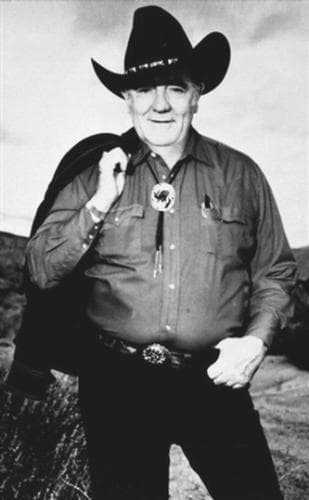
Louis L'Amour was an American author known for his Western novels and adventure fiction. His notable works include "Last of the Breed," "The Walking Drum," "To the Far Blue Mountains," "Jubal Sackett," "The Daybreakers," and "The Sackett Brand," which often explore themes of frontier life and rugged individualism. L'Amour's storytelling has made a significant impact on the genre of Western literature.
Similar books
- Riders of the Purple Sage
Zane Grey
A classic Western with themes of justice, survival, and a lone hero against a corrupt force.
- Lonesome Dove
Larry McMurtry
4.5 (149k) average on GoodreadsHistorical FictionEpic Western saga, though 'The Sackett Brand' is much shorter, it shares the frontier spirit and strong character focus.
- To Kill a Mockingbird
Harper Lee
4.3 (4.5M) average on GoodreadsHistorical FictionIn the 1930s Jim Crow South, Harper Lee writes about racial injustice, moral growth, and the quiet courage of a lawyer father, Atticus Finch, as seen through his young daughter's eyes.
- The Great Gatsby
F. Scott Fitzgerald
3.9 (3.8M) average on GoodreadsHistorical FictionIn the opulent Roaring Twenties, a mysterious millionaire's lavish parties hide his desperate, tragic pursuit of a lost love, exposing the emptiness within the American Dream.
- Pride and Prejudice
Jane Austen
4.3 (3M) average on GoodreadsHistorical FictionIn a society focused on status and money, Elizabeth Bennet navigates love and pride, challenging Mr. Darcy and social expectations to find true affection.
- Angels & Demons
Dan Brown
3.9 (2.7M) average on GoodreadsThrillerA Harvard symbologist races through Rome's ancient sites, deciphering cryptic clues to unmask the Illuminati and stop a vengeful plot to destroy the Vatican with a stolen antimatter weapon.






Enjoyed the summary?
A summary gives you the shape of the book. The book itself has the detail, the examples and the voice.
Find The Sackett Brand on AmazonAs an Amazon Associate, BookBrief earns from qualifying purchases. How we're funded