
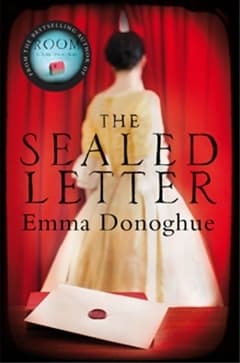
Synopsis
Covers the whole plot, including the ending.
- Difficulty
- Medium
- Pacing
- Moderate
- Mood
- Intriguing, Dramatic, Reflective, Scandalous
- Read it if
- You enjoy historical fiction based on real-life scandals, complex female friendships, and courtroom dramas set in Victorian England.
- Skip it if
- You prefer fast-paced thrillers or stories without morally ambiguous characters and the slow burn of historical detail.
The Sealed Letter Plot Summary
Covers the whole plot, including the ending.
A Friend's Return
The novel begins with Emily Faithfull, a suffragist and manager of Victoria Press, receiving an unexpected visit from her childhood friend, Helen Codrington. Helen, married to Captain Codrington, appears upset and tells Emily about her unhappy marriage. She hints at her husband's cruelty and their lack of affection. Emily, despite her busy schedule and work for women's rights, worries about Helen and offers her support and a place to stay. Helen's return disrupts Emily's life, pulling her back into personal problems she had mostly avoided for her career. This first meeting sets the stage for the growing conflict and Helen's reliance on Emily.
The Affair Begins
As Helen stays with Emily, she slowly reveals her marital unhappiness and, more surprisingly, her affair with Lieutenant Alec Webster. She describes Alec as kind and loving, a stark contrast to her cold husband. Emily is surprised by this confession, as adultery is serious in Victorian society, especially for women. However, her loyalty to Helen and her belief in Helen's suffering lead her to sympathize. Emily becomes a confidante to a secret relationship, seeing Helen's deep emotional and physical attachment to Alec, which she believes gives Helen real happiness despite her marriage. Emily tries to advise her, but Helen is clearly in love.
Escalating Tensions
Captain Codrington eventually learns of Helen's infidelity, likely from his own suspicions or social gossip. This discovery leads to a heated argument between husband and wife, ending with Captain Codrington kicking Helen out of their home. Helen, now without a place to stay and facing social ruin, goes to Emily for shelter. Emily, still loyal, takes Helen in, further involving herself in the Codrington's domestic issues. The separation marks a turning point, making the affair public and starting the legal process that will soon follow. Emily sees Helen's distress and the harsh reality of a Victorian woman cast out by her husband, strengthening her support for her friend.
The Divorce Petition
Captain Codrington formally requests a divorce based on Helen's adultery, naming Lieutenant Alec Webster as the other party. This legal action puts Helen and Alec in the public eye and starts a highly publicized trial. Emily, out of loyalty and a desire to protect Helen, agrees to help her through the complex and often harsh legal system. She talks with lawyers and tries to gather evidence to support Helen's side, hoping to show Captain Codrington as an abusive husband to lessen the scandal around Helen. The stakes are very high for Helen, as a divorce would mean social disgrace, loss of financial security, and possible loss of access to her children.
Preparing the Defense
Emily becomes deeply involved in preparing Helen's defense. She works closely with Helen's legal team, sharing insights into Helen's character and her unhappy marriage. They try to counter Captain Codrington's accusations by painting him as a cruel husband, arguing that his behavior led Helen to seek comfort elsewhere. Emily helps gather evidence, including Helen's personal letters and recounted conversations, all while trying to protect Helen's reputation as much as possible against Victorian society's harsh judgment of adulterous women. This process is emotionally draining for Emily, as she sees firsthand the biases against women in such cases within the legal system.
The Trial Begins
The divorce trial begins, quickly becoming a sensation in Victorian London. Newspapers report every detail, turning Helen, Alec, and Captain Codrington into public figures. Emily attends the proceedings, observing the intense scrutiny and judgment directed at her friend. The courtroom becomes a place where reputations are destroyed and private lives are exposed. Emily is particularly struck by the harsh questioning of Helen, where her character and every part of her private life are examined and criticized. The trial shows the clear double standards for men and women regarding infidelity, making Emily even more determined to support Helen through the ordeal.
Incriminating Evidence
During the trial, the prosecution presents strong evidence against Helen and Alec, including items like stained clothing and intimate letters between the lovers. This evidence is used to prove their physical relationship and show undeniable proof of adultery. The presentation of such personal items in court deeply humiliates Helen and further fuels the public scandal. Emily sees the impact of this evidence, feeling despair for Helen and anger at the invasion of her friend's privacy. The material evidence, especially the letters, becomes a central part of the trial, seemingly strengthening the case against Helen and Alec and making their defense harder.
The Counterclaim of Rape
In an attempt to defend herself and discredit her husband, Helen makes a surprising claim against Captain Codrington, accusing him of marital rape. This accusation shocks the courtroom and the public. In Victorian England, marital rape was largely unrecognized, and Helen's claim is met with doubt and hostility. Emily, while initially supportive, struggles with what this accusation means, knowing how hard it will be to prove and how it might further damage Helen's credibility. The counterclaim adds a new layer of complexity and moral uncertainty to the trial, shifting some focus to Captain Codrington's character and challenging social norms.
The Sealed Letter
Amidst the drama, a mysterious sealed letter appears. Its contents are unknown, but it is believed to hold important information that could greatly affect the trial's outcome, possibly clearing Helen or condemning her further. The letter becomes a symbol of the hidden truths and secrets in the case, creating intense speculation. Emily, along with the legal teams, anxiously awaits what it will reveal, understanding that it could change public opinion and legal judgment. The sealed letter represents the ultimate unknown, a potential key to understanding the true story of the Codrington's marriage and Helen's affair.
Emily's Doubts and Discoveries
As the trial continues and pressure grows, Emily starts to doubt Helen's complete honesty. Small inconsistencies in Helen's stories, combined with the evidence from Captain Codrington's side, begin to weaken Emily's trust. Emily's logical and principled nature clashes with Helen's more emotional and manipulative tendencies. She starts to investigate certain claims herself, uncovering details that make her question how much of a victim Helen is and the truthfulness of her accusations. This period is a turning point for Emily, as her loyalty is tested against her growing sense of moral duty and her desire for the truth, no matter the personal cost.
The Verdict and Aftermath
The trial ends, and the verdict is given. The jury rules in favor of Captain Codrington, granting him the divorce based on Helen's adultery and awarding damages against Alec Webster. Helen is disgraced, socially ruined, and loses custody of her children. Emily is devastated by the outcome, not only for Helen but also by her disillusionment with justice and friendship. The aftermath changes the lives of everyone involved. Helen faces a bleak future, Alec's military career is at risk, and Emily is left to deal with the emotional consequences and the questions raised about truth, loyalty, and female friendship in a patriarchal society. The case is a reminder of the harsh realities women faced in Victorian England.
Emily's Reflection and Future
After the trial, Emily Faithfull is deeply affected but also more committed to women's rights. Her experience with Helen, though painful, has given her a real-world example of the injustices women faced under Victorian law and social norms. She reflects on the compromises, manipulations, and devastating results of a system that gave women so little power. While her friendship with Helen is changed forever, Emily's resolve to fight for legal and social reform for women is stronger. She returns to her work at Victoria Press with new energy, now with a deeper understanding of the personal stakes in her broader political mission.
The Sealed Letter Characters
Emily "Fido" Faithfull
Protagonist
A pioneering suffragist and manager of Victoria Press, deeply loyal but ultimately pragmatic.
Emily, affectionately known as 'Fido,' is an independent and intelligent woman dedicated to advancing women's rights through her Victoria Press. She is a spinster by choice, prioritizing her career and cause over marriage. Emily possesses a strong moral compass, a keen intellect, and a trusting heart, making her initially susceptible to Helen's pleas. She is a woman of integrity and principle, but her loyalty to her friend blinds her to certain truths. She is a pragmatic idealist, believing in the power of legal and social reform.
Relationships: Helen Codrington (Childhood friend, confidante, and later, a source of disillusionment.); Captain Codrington (Antagonist, Helen's estranged husband, whom Emily initially views with suspicion.); Alec Webster (Helen's lover, whom Emily initially sympathizes with due to Helen's portrayal.)
Helen Codrington
Central Figure/Antagonist (to Emily's worldview)
Emily's childhood friend, a beautiful and charismatic woman trapped in an unhappy marriage.
Helen is beautiful, charming, and deeply unhappy in her marriage to Captain Codrington. She is driven by a desire for love, passion, and freedom, which she finds in her affair with Alec Webster. Helen is manipulative and self-serving, often presenting herself as a victim to gain sympathy and support. She is emotionally volatile and prone to dramatic pronouncements, making it difficult for others to discern the full truth of her situation. Her actions are largely dictated by her personal desires and the societal constraints placed upon women of her era.
Relationships: Emily Faithfull (Childhood friend and confidante, whom she relies on heavily.); Captain Codrington (Her estranged, unloved husband; their relationship is marked by cruelty and neglect.); Alec Webster (Her passionate lover, for whom she risks everything.)
Captain Codrington
Antagonist
Helen's cold and neglectful husband, who initiates the divorce proceedings.
Captain Codrington is Helen's husband, portrayed as a stern, unloving, and perhaps abusive man. He is a figure of Victorian patriarchy, adhering strictly to social conventions and expecting subservience from his wife. His discovery of Helen's affair leads him to pursue a divorce, seeking to restore his honor and punish Helen for her transgression. While initially presented as a villain through Helen's eyes, the trial gradually reveals a more complex individual, though still embodying the rigid gender expectations of the era.
Relationships: Helen Codrington (His wife, whom he divorces for adultery; their relationship is loveless and acrimonious.); Emily Faithfull (Emily initially views him with suspicion, based on Helen's accounts.)
Lieutenant Alec Webster
Supporting
Helen's young, passionate lover, entangled in the scandalous divorce case.
Alec Webster is a young army officer who becomes Helen's lover. He is depicted as genuinely in love with Helen, offering her the affection and understanding she craves. He is swept up in the passion of their affair, seemingly unaware of the full ramifications until the divorce proceedings begin. Alec is ultimately a victim of the societal double standards, facing professional and social ruin as the co-respondent in a high-profile adultery case. He represents the romantic ideal that Helen pursues, but also the destructive power of illicit love in a restrictive society.
Relationships: Helen Codrington (Her passionate lover, for whom he risks his career and reputation.); Emily Faithfull (Emily initially sympathizes with him through Helen's perspective.)
Mr. Karslake
Supporting
Helen's solicitor, who advises her throughout the divorce proceedings.
Mr. Karslake is Helen's solicitor, a professional tasked with navigating the complexities of Victorian divorce law on her behalf. He is pragmatic and strategic, focused on building the best possible defense for Helen, even if it means employing morally ambiguous tactics. He represents the legal system's cold, calculated approach to deeply personal matters. He interacts primarily with Emily and Helen to gather information and strategize, providing a legal lens through which the emotional drama is processed.
Relationships: Helen Codrington (Her legal counsel.); Emily Faithfull (Works with Emily to prepare Helen's defense.)
Mrs. Faithfull
Supporting
Emily's mother, a more traditional Victorian woman who provides a contrast to Emily.
Mrs. Faithfull is Emily's mother, a more conventional Victorian woman who worries about Emily's independent lifestyle and her involvement in potentially scandalous affairs. She provides a domestic counterpoint to Emily's public and professional life. While she loves her daughter, she often expresses concern about Emily's reputation and her unmarried status, reflecting the societal pressures of the time. She serves to highlight the generational and ideological differences between Emily and more traditional women.
Relationships: Emily Faithfull (Her mother, who loves her but worries about her unconventional life.)
Miss Rye
Supporting
A fellow suffragist and colleague of Emily's, who supports her work.
Miss Rye is a colleague and fellow suffragist who works with Emily at Victoria Press. She represents the broader community of women actively working for social change. She is practical, supportive, and shares Emily's dedication to women's empowerment. Miss Rye serves as a sounding board for Emily and helps ground her in her professional mission when Emily becomes too entangled in Helen's personal drama. She provides a glimpse into the larger women's movement.
Relationships: Emily Faithfull (Colleague and fellow suffragist, sharing a common cause.)
The Judge
Mentioned
The presiding figure in the divorce trial, representing the legal authority of the era.
The Judge is the impartial, yet ultimately patriarchal, authority figure overseeing the Codrington divorce trial. He embodies the legal system of Victorian England, which often favored men in such cases. While striving for impartiality, his rulings and interpretations of the law reflect the societal biases of the time. He is a symbolic character, representing the ultimate arbiter of justice within the confines of a restrictive legal framework.
The Sealed Letter Themes
The Constraints and Hypocrisy of Victorian Society
The novel shows the severe limits placed on women in Victorian England, especially concerning marriage, divorce, and reputation. Helen's story shows the double standards: her adultery is a public scandal leading to ruin, while Captain Codrington's alleged cruelty is mostly ignored. Emily's fight for women's rights through Victoria Press directly challenges these norms, but even she faces restrictive expectations when she tries to help Helen. The public's interest in the trial highlights the era's mix of moral judgment and interest in scandal. The lack of legal options for women in unhappy marriages, and the severe results of female infidelity, are central to the plot, as seen when Helen loses everything.
“A woman's reputation is her most fragile possession, easily shattered by a whisper.”
Female Friendship and Loyalty
At its core, the novel explores the complex nature of female friendship. Emily's loyalty to Helen drives much of the early plot, as she sacrifices her time, reputation, and peace to support her friend. However, this loyalty is greatly tested as Helen's true nature and manipulative tendencies appear during the trial. The novel looks at the emotional cost of such a friendship, questioning the limits of loyalty when faced with deceit. Emily's disappointment with Helen is a painful but key part of her personal growth, showing how even strong bonds can be strained by different moral views and personal truths.
“I had believed in her, utterly, as one believes in the sun rising.”
Truth, Perception, and Deception
The story constantly plays with the idea of truth, how it is made, seen, and often manipulated. Helen's initial portrayal of herself as a wronged wife shapes Emily's understanding, but the courtroom drama systematically breaks down this story. The conflicting testimonies, the use of evidence (like stained clothing and letters), and Helen's desperate claim of rape all make the truth unclear. Emily's journey involves uncovering layers of deception, both from Helen and from the social biases affecting the trial. The 'sealed letter' itself symbolizes hidden truths, suggesting that full clarity is often hard to find, especially when personal stories clash within a strict legal system.
“The truth, I discovered, was a malleable thing, shaped by the speaker's needs and the listener's expectations.”
Justice and Injustice
The novel critically examines justice within the Victorian legal system, especially for women. The divorce trial, while supposedly a search for truth, becomes a public shaming and a display of male power. Helen, as an adulterous woman, faces overwhelming social condemnation and legal penalties that a man in a similar situation would not. Emily sees firsthand the biases, the difficulty of proving a woman's claims (especially about marital abuse), and the devastating effect of a verdict that takes a woman's children and social standing. The story suggests that 'justice' here often reflects social norms rather than a pure pursuit of fairness.
“In the eyes of the law, a woman's virtue was her most valuable asset, and its loss, her greatest crime.”
The Personal and the Political
Emily Faithfull's character shows the tension between personal life and politics. Her dedication to the women's movement and her work at Victoria Press are political, aiming to change the laws and attitudes that control women's lives. However, her personal involvement in Helen's scandal directly connects with these political ideals. Helen's personal struggle becomes a small example of the larger injustices Emily is fighting, forcing Emily to confront the real-world effects of her principles. The novel shows how personal experiences can strengthen political beliefs, but also how personal entanglements can distract from or complicate broader social missions.
“How could I fight for all women when I could not even save one?”
Plot Devices & Literary Techniques
The Sealed Letter
A physical letter whose unknown contents hold crucial information.
The sealed letter serves as a powerful MacGuffin and a symbol of hidden truths. Its existence creates immense suspense, as its contents are believed to be pivotal to the trial's outcome, potentially exonerating Helen or revealing further damning evidence. It represents the elusive nature of complete truth and the secrets that underpin relationships. The anticipation surrounding its opening and revelation drives a significant portion of the plot's tension, reflecting the era's reliance on written evidence and personal correspondence in legal battles.
The Courtroom Drama
The setting for the central conflict, where truth is debated and reputations are destroyed.
The courtroom serves as the primary stage for the novel's climax and a crucial plot device for revealing character and theme. It is where conflicting narratives are presented, evidence is scrutinized, and the harsh realities of Victorian justice are laid bare. The public nature of the trial allows for the exploration of societal judgment and the double standards applied to men and women. The dramatic tension of cross-examinations, witness testimonies, and the presentation of incriminating evidence directly propels the plot forward and forces Emily to confront the truth about Helen.
First-Person Narration (Emily Faithfull)
The story is told from Emily's perspective, shaping the reader's understanding.
The entire novel is narrated through Emily Faithfull's first-person perspective. This device allows the reader to experience the unfolding events, particularly Helen's story, through Emily's eyes, biases, and emotional journey. Initially, we sympathize with Helen because Emily does. As Emily's doubts grow and she uncovers inconsistencies, the reader's perception also shifts. This creates dramatic irony and allows for a nuanced exploration of loyalty, trust, and the subjective nature of truth, as we witness Emily's gradual disillusionment and personal growth.
The 'Stained Clothing'
Physical evidence of adultery used to condemn Helen.
The stained clothing, specifically a piece of linen or undergarment, serves as a highly incriminating and deeply symbolic piece of evidence presented during the trial. It functions as undeniable proof of Helen's physical intimacy with Alec Webster, directly supporting the adultery charge. More than just proof, it represents the physical humiliation and public exposure of Helen's private life, highlighting the invasive and judgmental nature of Victorian legal proceedings and societal attitudes towards female sexuality and infidelity. It is a stark reminder of the material consequences of Helen's actions.
The Sealed Letter Quotes
“It was impossible, perhaps, to be truly happy with a woman who had once been truly happy without you.”
“The past was a foreign country, and so was the future, and even the present felt like a place she was only visiting.”
“A woman's reputation was like a fragile teacup; once broken, it could never be truly mended.”
“Love, she thought, was not a steady flame but a series of sparks, some catching, some dying, some burning out of control.”
“The greatest prison was not made of bars, but of expectations.”
“There was a certain luxury in being miserable, a kind of self-indulgence that was almost comforting.”
“A secret was a heavy thing, even when it was not your own.”
“Sometimes the truth was a weapon, and sometimes it was a shield, but it was rarely a comfort.”
“Friendship, she realized, was a tapestry woven with shared silences as much as with shared words.”
“To be truly alone was not to be without company, but to be without understanding.”
“Memory was a capricious beast, twisting facts, embellishing emotions, always serving its own purpose.”
“The world was full of men who loved the idea of a woman more than the woman herself.”
“Scandal was a fire that consumed everything in its path, leaving only ashes and whispers.”
“It was easier to forgive a stranger than someone you had once loved beyond measure.”
Quiz
10 questions on the plot and the characters. Each answer comes with a short explanation.
Question 1
What is Miss Emily 'Fido' Faithfull's primary occupation or social role at the beginning of the novel?
- A renowned painter
- A pioneer in the British women's movement and 'woman of business'
- A governess for a wealthy family
- A doctor specializing in women's health
Show answer
B. A pioneer in the British women's movement and 'woman of business' The novel introduces Fido Faithfull as a 'woman of business' and a 'spinster pioneer in the British women's movement,' highlighting her independent and progressive role.
Question 2
Who is the 'once-dear friend' whose return significantly impacts Fido's life?
- Lady Ada Lovelace
- Helen Codrington
- Sophia Jex-Blake
- Florence Nightingale
Show answer
B. Helen Codrington The synopsis explicitly states that Fido is 'distracted from her cause by the sudden return of her once-dear friend, the unhappily wed Helen Codrington.'
Question 3
What is the central conflict that Helen Codrington is experiencing upon her return?
- A dispute over inheritance with her family
- A failing marriage and an obsessive affair with an army officer
- A struggle to establish her own business venture
- A legal battle over child custody
Show answer
B. A failing marriage and an obsessive affair with an army officer The synopsis details that Fido is 'swept up in the intimate details of Helen's failing marriage and obsessive affair with a young army officer.'
Question 4
What historical event or type of case is the novel based on?
- A famous murder trial from the 18th century
- A scandalous divorce case that gripped England in 1864
- A political scandal involving a prime minister
- A major financial fraud case in the Victorian era
Show answer
B. A scandalous divorce case that gripped England in 1864 The novel is 'based on a scandalous divorce case that gripped England in 1864,' providing its historical fiction foundation.
Question 5
What is Fido's initial intention when she gets involved in Helen's situation?
- To expose Helen's affair to the public
- To gather material for a new women's rights publication
- A loyal effort to help a friend
- To learn more about high society scandals
Show answer
C. A loyal effort to help a friend The text states, 'What begins as a loyal effort to help a friend explodes into a courtroom drama,' indicating Fido's initial benevolent motivation.
Question 6
What specific item is mentioned as a key piece of evidence or contention in the ensuing courtroom drama, besides the mysterious letter?
- A stolen locket
- A hidden diary
- Stained clothing
- A forged will
Show answer
C. Stained clothing The description of the courtroom drama explicitly mentions 'stained clothing' alongside accusations of adultery and counterclaims of rape.
Question 7
How does the synopsis characterize Fido Faithfull's personality, particularly her trusting nature?
- Cynical and suspicious
- Aloof and detached
- Naively trusting of heart
- Manipulative and cunning
Show answer
C. Naively trusting of heart Fido is described as 'independent of mind but naively trusting of heart,' which is a key aspect of her character.
Question 8
What is the primary danger posed by the 'mysterious letter' mentioned in the synopsis?
- It could reveal a hidden treasure.
- It could expose a political conspiracy.
- It could destroy more than one life.
- It could incriminate Fido in a minor crime.
Show answer
C. It could destroy more than one life. The synopsis states that the letter 'could destroy more than one life,' emphasizing its severe potential consequences.
Question 9
The novel is described as a 'riveting, provocative drama of friends, lovers, and divorce, Victorian style.' What theme does 'Victorian style' particularly emphasize in the context of divorce?
- The ease and simplicity of divorce proceedings.
- The public scandal and societal judgment associated with divorce.
- The prevalence of no-fault divorce laws.
- The focus on individual happiness over social reputation.
Show answer
B. The public scandal and societal judgment associated with divorce. Given the mention of a 'scandalous divorce case,' 'stained clothing,' and 'accusations of adultery,' 'Victorian style' divorce refers to the highly public, morally judged, and reputation-damaging nature of such proceedings during that era.
Question 10
The description compares the courtroom drama to the 'Clinton affair.' What aspect of the Clinton affair is being drawn as a parallel?
- The involvement of international espionage.
- The high-stakes political implications.
- The public spectacle, intimate details, and accusations of adultery/misconduct.
- The focus on economic policy.
Show answer
C. The public spectacle, intimate details, and accusations of adultery/misconduct. The comparison to the Clinton affair, immediately followed by 'complete with stained clothing, accusations of adultery, counterclaims of rape,' highlights the public, sensational, and intimate nature of the scandal and courtroom drama.
The Sealed Letter FAQ
What is the central conflict that drives the plot of 'The Sealed Letter'?
The central conflict revolves around the scandalous divorce case of Helen Codrington against her husband, Henry Codrington, for adultery, which quickly devolves into counter-accusations and public spectacle. Emily 'Fido' Faithfull, initially a supportive friend to Helen, becomes deeply entangled in the legal and personal drama, often struggling with her loyalty and her own moral compass.
Who is Miss Emily 'Fido' Faithfull and what is her role in the story?
Emily 'Fido' Faithfull is a pioneering 'woman of business' and a prominent figure in the British women's movement, advocating for women's employment and education. She is the primary lens through which the story unfolds, initially offering unwavering support to her old friend Helen Codrington, but gradually becoming disillusioned and deeply affected by the unfolding scandal.
Describe the relationship between Helen Codrington and her husband, Henry Codrington.
Helen and Henry Codrington's marriage is deeply unhappy and volatile, characterized by Henry's alleged cruelty, neglect, and infidelity, and Helen's own passionate, often reckless, nature. Their marital discord forms the foundation of the divorce proceedings, revealing years of resentment and betrayal on both sides.
What is the significance of the 'sealed letter' mentioned in the title?
The 'sealed letter' refers to a crucial piece of evidence that could potentially exonerate Helen or further incriminate her, depending on its contents and interpretation. Its existence and the struggle to reveal or suppress it become a major plot point, holding the power to irrevocably damage the reputations and lives of multiple characters involved in the trial.
Who is Lieutenant Paul Codrington and what is his connection to the main characters?
Lieutenant Paul Codrington is Henry Codrington's younger cousin and Helen Codrington's obsessive lover, whose affair with Helen becomes the primary evidence for Henry's counter-suit for adultery. His presence ignites the passionate and scandalous core of the divorce case, leading to public humiliation for all involved.
How does the historical context of Victorian England influence the characters' actions and the legal proceedings?
Victorian England's strict social mores, particularly regarding female conduct, reputation, and divorce law, profoundly shape the characters' choices and the legal process. Women had limited rights, and divorce was rare and scandalous, making Helen's pursuit of it a courageous but perilous act that invited intense public scrutiny and moral judgment.
What role do the newspapers and public opinion play in the unfolding drama?
Newspapers act as a powerful force, sensationalizing every detail of the Codrington divorce case and fueling public opinion, which often leans heavily against Helen due to prevailing societal prejudices. The constant media scrutiny intensifies the pressure on all parties, turning a private marital dispute into a national spectacle and influencing legal strategies.
Are there any subtle clues about Fido's own romantic inclinations or repressed desires?
While Fido presents herself as a staunch spinster focused on her career, there are subtle hints of her own repressed romantic or emotional longings, particularly in her intense loyalty and almost possessive affection for Helen. Her deep emotional investment in Helen's life, and her occasional discomfort with male attention, suggest a more complex inner world than she publicly displays.
How does Fido's initial idealism and trust evolve throughout the novel?
Fido begins the novel with a somewhat naive idealism, trusting implicitly in Helen's version of events and believing in the purity of her own efforts to help. As the trial progresses and Helen's character flaws and deceptions are revealed, Fido's idealism is shattered, replaced by disillusionment, cynicism, and a profound sense of betrayal regarding her friend.
Analyze Helen Codrington's psychological state and motivations for pursuing the divorce.
Helen Codrington is portrayed as a passionate, impulsive, and deeply unhappy woman, driven by a desire for freedom from her oppressive marriage and a desperate longing for love and excitement. Her motivations for divorce are a mix of genuine grievances against Henry and a self-destructive need for attention, often leading her to make reckless decisions that complicate her own case.
How does the novel explore the theme of female friendship and its complexities?
The novel deeply explores the complexities of female friendship through Fido and Helen's relationship, showcasing its initial strength, loyalty, and intimacy, but also its potential for manipulation, betrayal, and heartbreak. It examines how external pressures and differing moral compasses can strain even the closest bonds, revealing the fragile nature of trust when personal desires clash.
In what ways does Henry Codrington manipulate the legal system and public perception?
Henry Codrington, despite his own flaws, skillfully manipulates the legal system by leveraging Victorian societal expectations and the gender biases inherent in the law. He uses Helen's affair and perceived moral failings to paint her as an unfit woman, effectively turning the narrative against her and using public opinion to his advantage in court.
Is Helen Codrington a sympathetic character, or is she largely responsible for her own downfall?
Helen Codrington is a highly debatable character regarding sympathy. While she suffers under a cruel marriage and societal constraints, her own impulsiveness, dishonesty, and self-serving actions contribute significantly to her downfall. Readers are left to weigh her victimhood against her agency and moral compromises.
What is the novel's stance on the justice system of Victorian England, particularly regarding women?
The novel critiques the Victorian justice system as inherently biased against women, particularly in divorce cases. It highlights how women's reputations and moral conduct were scrutinized far more harshly than men's, and how legal outcomes often depended more on social standing and gendered expectations than on objective truth or equality.
Does 'The Sealed Letter' offer a definitive answer about the truth of all the accusations, or does it leave certain aspects ambiguous?
'The Sealed Letter' masterfully leaves certain accusations and the 'truth' ambiguous, mirroring the real-life complexities of historical events and the subjective nature of human perception. While some facts emerge, the novel often emphasizes the difficulty of discerning absolute truth amidst conflicting testimonies, personal biases, and the sensationalism of the trial, forcing the reader to interpret.
How does Fido's involvement in the scandal affect her work in the women's movement?
Fido's deep involvement in the scandal significantly distracts her from her vital work in the women's movement, consuming her time and emotional energy. The negative publicity and moral ambiguity surrounding the Codrington case also risk tainting her own reputation and, by extension, the cause she champions, presenting a personal and professional dilemma.
What is the ultimate fate of Helen Codrington and Fido Faithfull by the end of the book?
By the end of the book, Helen Codrington faces a complex and often tragic outcome, her reputation irrevocably stained and her future uncertain, reflecting the harsh realities for women who defied Victorian norms. Fido Faithfull, though deeply scarred by the experience, continues her work in the women's movement, albeit with a more cynical and hardened perspective on human nature and justice.
About the author

Emma Donoghue is an Irish author known for her fiction, often exploring complex themes of identity and human relationships. Her notable works include "Room," which was shortlisted for the Man Booker Prize, "The Wonder," "Frog Music," "The Pull of the Stars," "Slammerkin," and "The Sealed Letter." Donoghue's writing often blends historical and contemporary elements, showcasing her versatility as a storyteller.
Similar books
- Alias Grace
Margaret Atwood
4.0 (111k) average on GoodreadsLiterary FictionExplores a real historical crime through the lens of a complex female protagonist and societal expectations.
- The Wonder
Emma Donoghue
3.6 (66k) average on GoodreadsLiterary FictionAnother historical novel by the same author, focusing on a strong female character in a confined, tense situation.
- Fingersmith
Sarah Waters
4.0 (81k) average on GoodreadsHistorical FictionWhile both explore Victorian social dynamics and complex female relationships, Donoghue's The Sealed Letter is more firmly rooted in a specific, documented historical court case, offering a different kind of historical authenticity compared to Waters' more intricately plotted fictional narrative with its twists and turns.
- Possession
A.S. Byatt
4.3 (13k) average on GoodreadsRomanceByatt's Possession is a more academic and intertextual novel, delving into literary scholarship and the lives of fictional Victorian poets. Donoghue's The Sealed Letter, while also historically rich, focuses on making a specific, real-life legal scandal accessible and emotionally resonant through character-driven narrative, rather than a meta-fictional exploration of literary history.
- To Kill a Mockingbird
Harper Lee
4.3 (4.5M) average on GoodreadsHistorical FictionIn the 1930s Jim Crow South, Harper Lee writes about racial injustice, moral growth, and the quiet courage of a lawyer father, Atticus Finch, as seen through his young daughter's eyes.
- The Great Gatsby
F. Scott Fitzgerald
3.9 (3.8M) average on GoodreadsHistorical FictionIn the opulent Roaring Twenties, a mysterious millionaire's lavish parties hide his desperate, tragic pursuit of a lost love, exposing the emptiness within the American Dream.





Enjoyed the summary?
A summary gives you the shape of the book. The book itself has the detail, the examples and the voice.
Find The Sealed Letter on AmazonAs an Amazon Associate, BookBrief earns from qualifying purchases. How we're funded