
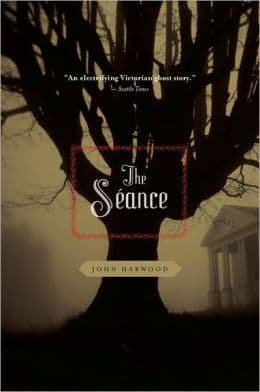
Synopsis
Covers the whole plot, including the ending.
- Difficulty
- Medium
- Pacing
- Moderate
- Mood
- Atmospheric, Suspenseful, Gothic, Eerie, Mysterious
- Read it if
- You enjoy gothic mysteries with a strong sense of atmosphere, Victorian-era settings, and a slow burn investigation that blurs the lines between the supernatural and human deception.
- Skip it if
- You prefer fast-paced thrillers, hard-boiled detective stories, or clear-cut horror without psychological ambiguity.
The Seance Plot Summary
Covers the whole plot, including the ending.
A Childhood Shadowed by Grief
Constance Langton grows up in a sad London household, shadowed by the death of her older sister, Eleanor, who died as a child. Her father, a barrister, is distant, while her mother, Mrs. Langton, is consumed by grief and ill health. Constance, a solitary and imaginative child, often feels neglected and struggles to connect with her parents, who remain trapped in their sorrow. Their life is somber, with Eleanor's memory a constant presence that shapes the emotional climate of their home and Constance's early understanding of loss and the supernatural.
The Ill-Fated Séance
Desperate to ease her mother's suffering, Constance convinces her to attend a séance hosted by the charismatic medium, Mrs. Temple. Mrs. Langton, frail and susceptible, believes she can communicate with Eleanor beyond the grave. During the séance, the atmosphere is charged, and Mrs. Langton experiences an overwhelming emotional episode, collapsing shortly after a supposed message from Eleanor. The event proves too much for her delicate health, and she dies a few days later, leaving Constance an orphan and deeply traumatized by the experience. She questions the nature of the spiritual world and the medium's intentions.
The Mysterious Bequest
Following her parents' deaths, Constance receives a surprising inheritance: Wraxford Hall, a dilapidated and isolated manor in the English countryside, along with a substantial sum of money. The bequest comes from an unknown benefactor and is handled by a solicitor, Mr. Finch. Wraxford Hall, however, is no ordinary inheritance; it has a sinister reputation. Years before, the previous owners, the Wraxford family, mysteriously vanished from the house without a trace, leaving behind a local legend and an unsolved police investigation. Constance is warned against living there but feels an inexplicable pull to uncover its secrets.
Arrival at Wraxford Hall
Against advice, Constance decides to move into Wraxford Hall, accompanied by her loyal housekeeper, Mrs. Pike, and a few servants. The house is in disrepair, filled with dust-shrouded furniture and a sense of abandonment. Local villagers are wary of the Hall, telling tales of ghosts and a curse associated with the Wraxford family's disappearance. Constance, despite her initial apprehension, feels a strange connection to the house and a growing determination to understand its past. She begins to explore the vast, echoing rooms, sensing that the house holds more than just memories.
Uncovering the Wraxford Mystery
Constance looks into the history of Wraxford Hall and the Wraxford family. She reads old newspaper clippings, legal documents, and local records, slowly piecing together the events surrounding their vanishing. The official police report offered no clear answers, suggesting a voluntary departure or a tragic accident, but never ruling out foul play. Constance discovers that the Wraxfords were a wealthy but eccentric family, and their disappearance led to much speculation. She notices inconsistencies in the accounts and realizes that the truth is far more complex and sinister than initially presented, hinting at betrayal and deception within the family.
The Diaries of Mary Wraxford
While exploring a hidden compartment in the library, Constance finds diaries belonging to Mary Wraxford, the young daughter of the vanished family. These diaries become a link to the past, providing a personal and unsettling account of life at Wraxford Hall leading up to the disappearance. Mary's entries reveal growing tension, strange occurrences, and her suspicions about certain individuals within the household, particularly the family's governess, Miss Gilder. The diaries hint at a dark secret and suggest that the family did not simply vanish but were victims of a deliberate act.
Encounters with the Supernatural
As Constance continues her investigation, she begins to experience inexplicable events within Wraxford Hall. She hears whispers, sees fleeting shadows, and feels a chilling presence. Objects move on their own, and phantom footsteps echo in empty corridors. These occurrences, initially dismissed as imagination or the house's age, become more frequent and vivid, leading Constance to question if the spirits of the Wraxford family are trying to communicate with her or if she is succumbing to the house's sinister influence. She grapples with her skepticism and the chilling possibility of genuine supernatural activity.
The Interruption of Mr. Steerforth
Constance's solitary investigation is interrupted by the unexpected arrival of Mr. Steerforth, a seemingly refined but unsettling man who claims to be a distant relative of the Wraxford family, or perhaps an executor of their estate. He expresses an interest in the Hall and its contents, particularly certain documents. Steerforth's presence is suspicious; he is overly inquisitive, evasive about his true motives, and seems determined to obstruct Constance's efforts to uncover the truth. He attempts to discredit her findings and subtly threatens her, revealing a sinister intention.
Unmasking the Imposter
Through diligent research and piecing together clues from Mary's diaries and other documents, Constance uncovers Mr. Steerforth's true identity: he is not a relative but an accomplice to the original crime. He was involved with Miss Gilder, the governess, in a plot to defraud the Wraxford family and seize their assets. The 'disappearance' was, in fact, a carefully orchestrated murder, with the bodies hidden within the very grounds of Wraxford Hall. Steerforth's return was to retrieve incriminating evidence or to ensure the secret remained buried.
The Confrontation and Resolution
Constance confronts Mr. Steerforth with her discoveries, leading to a tense and dangerous confrontation within the Hall. Steerforth, realizing he has been exposed, tries to silence Constance. However, Constance, armed with knowledge and a new resolve, manages to outwit him. The climax reveals the full extent of the gruesome plot, including the location of the Wraxford family's remains. With the truth finally brought to light, Steerforth is apprehended, and the Wraxford Mystery is solved. Constance, though scarred by the experience, finds a sense of peace, having brought justice to the vanished family.
Aftermath and New Beginnings
Following the resolution of the Wraxford Mystery, the Hall is no longer a place of dread but a reminder of a dark chapter finally closed. The Wraxford family's remains are given a proper burial, and their story is finally told. Constance, having bravely faced the past, emerges a stronger, more independent woman. She decides to keep Wraxford Hall, not as a haunted relic, but as a home she has reclaimed from its sinister history. Her journey through grief and mystery has made her a resilient individual, ready to embrace a future unburdened by the ghosts of her own past or those of Wraxford Hall.
The Seance Characters
Constance Langton
Protagonist
A determined young woman haunted by loss, who inherits a cursed manor and seeks to unravel its secrets.
Constance is initially a quiet, somewhat melancholic young woman, deeply affected by the early death of her sister, Eleanor, and her mother's subsequent grief. She is intelligent, observant, and possesses a latent strength that emerges as she confronts the mysteries of Wraxford Hall. Driven by a desire for truth and justice, she is unafraid to challenge conventional wisdom or face unsettling realities. Her skepticism battles with her experiences, making her a relatable and complex investigator. She is also fiercely independent, choosing to pursue the Wraxford mystery despite warnings.
Relationships: Mrs. Langton (Grieving mother, distant but loved); Mr. Langton (Emotionally distant father); Mrs. Pike (Loyal and protective housekeeper/confidante); Mary Wraxford (Posthumous connection through diaries, shared experience of the Hall)
Mrs. Langton
Supporting
Constance's frail mother, consumed by grief for her deceased child, Eleanor.
Mrs. Langton is a tragic figure, perpetually shrouded in mourning after the death of her daughter, Eleanor. Her ill health is as much emotional as physical, making her vulnerable to spiritualist claims. She is depicted as fragile and withdrawn, unable to fully engage with Constance due to her all-consuming sorrow. Her desperation for connection with Eleanor leads her to the séance, an event that ultimately proves fatal. Her character highlights the destructive power of unresolved grief and serves as a catalyst for Constance's initial foray into the supernatural.
Relationships: Constance Langton (Daughter, whom she struggles to connect with); Eleanor Langton (Deceased daughter, the object of her unending grief)
Mrs. Temple
Supporting
The charismatic spiritualist medium who hosts the fateful séance.
Mrs. Temple is a professional medium, skilled in creating an atmosphere of spiritual connection. Her character embodies the Victorian fascination with spiritualism and the ambiguity surrounding its authenticity. While she appears empathetic and convincing, there's an underlying question of whether she is a genuine conduit to the spiritual world, a clever charlatan, or simply a facilitator of emotional release. Her séance, intended to bring comfort, instead brings tragedy to the Langton family, setting Constance on her path.
Relationships: Mrs. Langton (Client, who dies after her séance); Constance Langton (Witness to her mother's collapse at the séance)
Mr. Steerforth
Antagonist
A mysterious and sinister man who attempts to obstruct Constance's investigation into the Wraxford mystery.
Mr. Steerforth presents himself as a refined gentleman with a claim to Wraxford Hall, but his true nature is menacing and manipulative. He is evasive, calculating, and driven by a desire to protect a dark secret. He embodies the villain of the piece, attempting to intimidate and mislead Constance. His intelligence is matched by his ruthlessness, and he will stop at nothing to prevent the truth from being exposed. He is the physical manifestation of the lingering evil within Wraxford Hall.
Relationships: Constance Langton (Adversary, attempting to stop her investigation); Miss Gilder (Accomplice in the original Wraxford murders)
Mary Wraxford
Supporting/Mentioned
The young daughter of the vanished Wraxford family, whose diaries become crucial to solving the mystery.
Mary Wraxford is only present through her hidden diaries, but her voice is central to the narrative. She was a perceptive and intelligent child, keenly aware of the growing tensions and strange occurrences within Wraxford Hall before her family's disappearance. Her entries provide a direct, unfiltered account of the events leading to the tragedy, offering clues and insights that no other source could. She serves as Constance's posthumous guide, her youthful perspective revealing adult deceptions and betrayals.
Relationships: Constance Langton (Posthumous confidante and collaborator in solving the mystery); Wraxford Family (Daughter, victim of their disappearance)
Mrs. Pike
Supporting
Constance's loyal and practical housekeeper, who accompanies her to Wraxford Hall.
Mrs. Pike is a steady, no-nonsense figure who provides a grounding presence for Constance amidst the unsettling events at Wraxford Hall. She is fiercely loyal and protective of Constance, offering practical advice and emotional support. While she may not fully understand the complexities of Constance's investigation, she implicitly trusts her mistress and stands by her. Her skepticism towards the supernatural serves as a foil to Constance's growing belief, adding a touch of realism to the increasingly eerie atmosphere.
Relationships: Constance Langton (Employer and trusted companion)
Miss Gilder
Mentioned
The governess to the Wraxford children, implicated in their disappearance through Mary's diaries.
Miss Gilder is a key figure in the Wraxford mystery, though she is only known through Mary Wraxford's diaries and Constance's subsequent investigations. She is depicted as a manipulative and ambitious woman, having orchestrated the disappearance of the Wraxford family for financial gain, in complicity with Mr. Steerforth. Her character represents the betrayal and treachery that lay at the heart of the original crime, making her a crucial piece of the puzzle Constance must solve. She is the unseen architect of the Hall's tragic past.
Relationships: Mr. Steerforth (Accomplice and lover in the Wraxford murders); Wraxford Family (Governess and betrayer)
The Seance Themes
Grief and Loss
The novel opens with Constance's family consumed by grief for her deceased sister, Eleanor. This pervasive sorrow shapes Constance's early life and motivates her mother's fateful visit to the séance. Grief is a powerful, sometimes destructive force, capable of isolating individuals and clouding judgment. Constance's journey to Wraxford Hall is, in part, an escape from her own family's grief and an attempt to find meaning in loss. The Wraxford family's disappearance is another manifestation of loss, a violent one, with Constance's investigation bringing closure to their unresolved fates.
“Constance grew up in the shadow of a ghost, not of a spirit, but of a memory, the memory of her sister Eleanor.”
The Nature of Truth and Deception
The entire plot revolves around the pursuit of truth behind the Wraxford mystery, which is shrouded in layers of deception, rumor, and misdirection. Constance must distinguish between genuine clues and deliberate falsehoods, between supernatural phenomena and human villainy. The spiritualist séance itself highlights the blurred lines between belief and trickery. The novel constantly challenges the reader and Constance to question what is real and what is fabricated, ending with the unmasking of Mr. Steerforth's elaborate lie and the revelation of the true, brutal events at Wraxford Hall.
“The house whispered secrets, but it was up to her to discern which were echoes of the past and which were deliberate lies.”
Supernatural vs. Rational Explanation
From the séance to the haunting of Wraxford Hall, the novel plays with the tension between the supernatural and rational explanations. Constance, initially a skeptic, experiences unsettling phenomena within the Hall, leading her to question her beliefs. The local legends and her personal experiences suggest a ghostly presence, yet the ultimate resolution reveals a very human, horrific crime. The book implies that while the supernatural may be a powerful psychological force, human evil often underlies what appears to be paranormal, using fear and superstition as a cloak.
“Was it the house itself that was haunted, or merely the dark deeds committed within its walls that cast such a long, cold shadow?”
Isolation and Independence
Constance is often isolated, first by her family's grief, then by her orphan status, and finally by her solitary investigation at Wraxford Hall. This isolation forces her to rely on her own intelligence and resilience. The decaying Hall itself is a symbol of isolation, cut off from the outside world and its judgment. Through her solitary pursuit of the truth, Constance develops a strong sense of independence and self-reliance, proving capable of facing danger and uncovering dark secrets on her own terms. Her journey is one of forging her own path in a world that often seeks to control or dismiss her.
“She was alone in the vast, echoing house, but in that solitude, she found a strange, fierce strength.”
Plot Devices & Literary Techniques
The Haunted House (Wraxford Hall)
A decaying manor house with a sinister reputation, central to the mystery.
Wraxford Hall is more than just a setting; it's a character in itself. Its dilapidated state, isolated location, and local legends create an oppressive, eerie atmosphere. The house acts as a repository of secrets, with hidden rooms, forgotten documents, and the psychological impact it has on Constance. It functions as a catalyst for the mystery, drawing Constance into its past, and also as a physical manifestation of the unresolved grief and horror that permeate the narrative. The 'haunting' elements blur the line between supernatural and psychological, keeping the reader on edge.
The Unreliable Narrative (Spiritualism/Diaries)
Information sources that may be biased, manipulated, or incomplete.
The novel utilizes elements of unreliable narration through the lens of spiritualism and the fragmented nature of historical documents. The séance itself is a prime example, where Mrs. Temple's pronouncements are open to interpretation and potentially deceptive. Mary Wraxford's diaries, while crucial, are the perspective of a child, and thus might miss nuances or misinterpret adult actions. Constance must sift through rumors, incomplete police reports, and personal accounts, constantly questioning the veracity of what she uncovers, forcing both her and the reader to actively engage in discerning the truth.
The Bequest
An unexpected inheritance that propels the protagonist into the central conflict.
Constance's inheritance of Wraxford Hall and its accompanying funds is the primary plot driver. It provides her with the means and the motivation to leave her melancholic life and actively engage with a new, dangerous purpose. The bequest is mysterious in its origin, immediately raising questions about who would leave her such a property and why, thereby initiating her investigation into the Wraxford family's past. It acts as a literal and metaphorical doorway to the core mystery of the novel.
The Found Document (Mary's Diaries)
A hidden document that provides crucial, first-hand information to solve the mystery.
Mary Wraxford's hidden diaries are a classic plot device that allows for direct access to past events and characters' thoughts, even across decades. They serve as the primary source of reliable information for Constance, providing intimate details and critical clues that official reports or local gossip could not. The diaries not only advance the plot by revealing the truth of the Wraxford family's fate but also allow for a deeper emotional connection to the victims, making their tragedy more poignant for Constance and the reader.
The Seance Quotes
“The past is a foreign country; they do things differently there.”
“There are some doors that, once opened, can never truly be closed again.”
“Sometimes, the most terrifying things are not those that go bump in the night, but those that reside within us.”
“A house, like a person, can hold its own secrets, etched into its very foundations.”
“The truth, like a ghost, often demands to be seen, no matter how much we try to deny its presence.”
“Belief is a powerful thing, capable of both creating and destroying reality.”
“The dead do not always rest easy, especially when their stories remain untold.”
“Memory is a fickle companion, capable of both illuminating and obscuring the past.”
“It is not the darkness itself that frightens us, but what we imagine might be lurking within it.”
“Every family has its shadows, some deeper and more ominous than others.”
“The most convincing deceptions are often woven from threads of truth.”
“Silence can be more eloquent than any words, especially when it conceals a terrible truth.”
“Sometimes, the only way to escape the past is to confront it head-on, no matter how painful.”
“The veil between worlds is thinner than many believe, especially in places steeped in sorrow.”
Quiz
10 questions on the plot and the characters. Each answer comes with a short explanation.
Question 1
What is the primary reason Constance Langton takes her mother to a séance early in the story?
- To inherit a mysterious bequest from a deceased relative.
- To seek comfort for her mother, who is in perpetual mourning for her lost sister.
- To investigate the disappearance of a family at Wraxford Hall.
- To expose a fraudulent medium and charlatan.
Show answer
B. To seek comfort for her mother, who is in perpetual mourning for her lost sister. Constance takes her mother to a séance hoping to alleviate her mother's deep grief for her deceased sister, as her mother is described as being in 'perpetual mourning.'
Question 2
What significant event occurs during the séance that Constance attends with her mother?
- Constance communicates directly with her deceased sister.
- Her mother's health improves dramatically, leading to a full recovery.
- The meeting has tragic consequences, leaving Constance alone.
- Constance receives a direct warning about Wraxford Hall from a spirit.
Show answer
C. The meeting has tragic consequences, leaving Constance alone. The synopsis states that 'the meeting has tragic consequences. Constance is left alone,' indicating a significant negative outcome for her and her mother.
Question 3
What is the 'mysterious bequest' that Constance receives after the tragic séance?
- A large sum of money and a collection of rare books.
- A house and a mystery related to a vanished family.
- A diary detailing the history of her own family's secrets.
- Shares in a burgeoning spiritualist society.
Show answer
B. A house and a mystery related to a vanished family. The synopsis explicitly states, 'For Constance’s bequest comes in two parts: a house and a mystery.' This refers to Wraxford Hall and the vanished family.
Question 4
What is the reputation of Wraxford Hall, the decaying mansion Constance inherits?
- It is known as a place of great beauty and historical significance.
- It has a sinister reputation, associated with a family's disappearance.
- It is famous for hosting grand social events and parties.
- It is a newly built estate with no prior history.
Show answer
B. It has a sinister reputation, associated with a family's disappearance. Wraxford Hall is described as 'a decaying mansion in the English countryside with a sinister reputation,' and where 'Years before, a family disappeared.'
Question 5
What era is 'The Seance' primarily set in?
- Early Georgian England.
- Mid-Edwardian England.
- Late-Victorian England.
- Post-World War I England.
Show answer
C. Late-Victorian England. The synopsis clearly states, 'It is a world of apparitions, of disappearances and unnatural phenomena, of betrayal and blackmail and black-hearted villains—and murder. For Constance’s bequest comes in two parts: a house and a mystery. Years before, a family disappeared atWraxford Hall, a decaying mansion in the English countryside with a sinister reputation.Now the Hall belongs to Constance. And she must descend into the darkness at the heart of theWraxford Mystery to find the truth, even at the cost of her life.'
Question 6
The initial quote, 'Sell the Hall unseen; burn it to the ground and plow the earth with salt, if you will; but never live there . . .' suggests what about Wraxford Hall?
- It is a valuable property best sold for profit.
- It is an extremely dangerous and cursed place to inhabit.
- It requires significant renovation before it can be lived in.
- It is a perfect location for agricultural endeavors.
Show answer
B. It is an extremely dangerous and cursed place to inhabit. The strong, negative language—'burn it to the ground and plow the earth with salt,' and 'never live there'—emphasizes the extreme danger and malevolent nature associated with the Hall.
Question 7
What is the ultimate goal Constance pursues regarding the Wraxford Mystery?
- To sell Wraxford Hall quickly and escape its influence.
- To use the Hall as a new venue for spiritualist gatherings.
- To find the truth behind the family's disappearance, even at personal risk.
- To restore the Hall to its former glory as a historical landmark.
Show answer
C. To find the truth behind the family's disappearance, even at personal risk. The synopsis states, 'And she must descend into the darkness at the heart of the Wraxford Mystery to find the truth, even at the cost of her life,' highlighting her determination.
Question 8
Beyond apparitions and disappearances, what other elements are characteristic of the 'world' described in 'The Seance'?
- Political intrigue, industrial espionage, and scientific discovery.
- Betrayal, blackmail, black-hearted villains, and murder.
- Romantic entanglements, social climbing, and artistic rivalry.
- Colonial expansion, military conflicts, and technological advancements.
Show answer
B. Betrayal, blackmail, black-hearted villains, and murder. The description explicitly mentions, 'It is a world of apparitions, of disappearances and unnatural phenomena, of betrayal and blackmail and black-hearted villains—and murder.'
Question 9
What overarching theme is suggested by Constance's journey into the 'darkness at the heart of the Wraxford Mystery'?
- The triumph of rationalism over superstition.
- The pursuit of truth despite grave personal danger and the confrontation of hidden evils.
- The importance of preserving historical architecture.
- The inevitability of fate and the futility of human effort.
Show answer
B. The pursuit of truth despite grave personal danger and the confrontation of hidden evils. Constance's willingness to 'descend into the darkness' and 'find the truth, even at the cost of her life' points to a theme of courageous investigation into profound and dangerous secrets.
Question 10
How does the initial state of Constance's family life influence her actions at the beginning of the novel?
- Her father's strictness drives her to rebellion and seeking excitement.
- Her desire to alleviate her mother's grief leads her to the séance, setting off the main plot.
- Her family's wealth allows her to pursue spiritualism as a hobby.
- The close bond with her sister inspires her to solve mysteries.
Show answer
B. Her desire to alleviate her mother's grief leads her to the séance, setting off the main plot. Constance's mother is 'in perpetual mourning for Constance’s sister,' and Constance is 'Desperate to coax her mother back to health,' which directly leads her to 'takes her to a séance.' This initial family dynamic is the catalyst for the entire plot.
The Seance FAQ
What is the central mystery driving the plot of 'The Seance'?
The central mystery revolves around the disappearance of the family at Wraxford Hall years prior to Constance Langton inheriting it. Constance must unravel the truth behind their vanishing and the sinister reputation of the decaying mansion, which holds secrets of betrayal, blackmail, and murder.
Who is Constance Langton and what is her initial motivation?
Constance Langton is the protagonist who grows up in a melancholic household, marked by the death of her sister and her mother's perpetual mourning. Her initial motivation is to alleviate her mother's grief, leading her to take her mother to a séance in hopes of finding comfort from beyond the grave, which tragically backfires.
How does the séance event impact Constance's life?
The séance has tragic consequences, leaving Constance alone and burdened with a mysterious bequest that significantly blights her life. This event directly leads to her inheritance of Wraxford Hall and the associated mystery, setting the course for the rest of the novel.
What is the significance of Wraxford Hall in the story?
Wraxford Hall is a decaying mansion with a sinister reputation, serving as the physical and metaphorical heart of the novel's darkness. It is the site of a past family disappearance and the key to unlocking the 'Wraxford Mystery,' which Constance must solve after inheriting the property.
What kind of atmosphere can readers expect from 'The Seance'?
Readers can expect a gripping, dark mystery set in late-Victorian England, filled with a gothic atmosphere of apparitions, unnatural phenomena, and an underlying sense of dread. The narrative promises elements of betrayal, blackmail, and murder, creating a suspenseful and haunting experience.
Are there any clues to the true nature of the 'apparitions' mentioned in the summary?
The summary mentions 'apparitions' and 'unnatural phenomena,' hinting that these might be more than simple ghosts. Given the context of betrayal and blackmail, these apparitions could be manifestations of psychological trauma, deliberate deceptions, or a more complex interplay between the supernatural and human machinations, rather than straightforward spectral presences.
How might the 'mysterious bequest' be more than just an inheritance of property?
The 'mysterious bequest' is explicitly stated to 'blight her life,' suggesting it carries a curse, a hidden obligation, or a dangerous secret beyond just the house itself. It likely includes the burden of the Wraxford Mystery and the implied threats that come with investigating it, making it a poisoned chalice rather than a simple gift.
What is the implied connection between the 'two generations of women' mentioned in the blurb and Constance's story?
The mention of 'two generations of women' implies that the Wraxford Mystery, or a similar dark secret, might have affected women in the previous generation, perhaps even Constance's own mother or the women who lived at Wraxford Hall before the disappearance. This suggests a pattern or a legacy of suffering and determination passed down through female lines.
Does the phrase 'cursed manor house' imply a literal curse or a metaphorical one due to past tragedies?
While 'cursed manor house' evokes supernatural dread, in a mystery novel, it often implies a metaphorical curse stemming from past human atrocities, such as murder, betrayal, or long-held secrets. The 'curse' might be the lingering psychological impact of these events, influencing subsequent inhabitants rather than a magical hex.
How does Constance's early life of mourning and detachment prepare her for the Wraxford Mystery?
Constance's upbringing, marked by her father's distance and her mother's perpetual grief, likely fosters a sense of resilience, self-reliance, and perhaps a certain emotional detachment. This hardened perspective might enable her to confront the grim realities and psychological horrors of Wraxford Hall without succumbing to immediate despair, making her uniquely suited to investigate dark truths.
What psychological impact might the 'tragic consequences' of the séance have on Constance?
The tragic consequences of the séance could instill in Constance a deep-seated guilt, a fear of the supernatural, or a profound sense of isolation after losing her mother. This event might shape her motivations, making her either more cautious or, conversely, more reckless in her pursuit of truth, perhaps feeling she has nothing left to lose.
How does the late-Victorian setting contribute to the psychological tension and themes?
The late-Victorian setting, with its fascination with spiritualism, séances, and the occult, provides a rich backdrop for psychological tension, blurring the lines between genuine supernatural occurrences and human deception. The era's societal constraints and repressed emotions can amplify the characters' internal struggles and the sinister atmosphere of the mystery.
What role might 'betrayal and blackmail' play in the psychological unraveling of characters?
Betrayal and blackmail are powerful psychological weapons that can destroy trust, induce paranoia, and force characters into desperate actions. They likely serve to manipulate characters, conceal truths, and create intense interpersonal conflict, contributing to the overall sense of dread and the psychological strain on Constance as she navigates a world of deceit.
Is 'The Seance' primarily a ghost story, or does it use supernatural elements to explore human evil?
'The Seance' appears to blend elements of a ghost story with a deeper exploration of human evil. While it features 'apparitions' and 'unnatural phenomena,' the mention of 'betrayal and blackmail and black-hearted villains—and murder' suggests that the true horror might stem from human depravity and the dark secrets people keep, perhaps manifested through or amplified by the supernatural.
How might the title 'The Seance' foreshadow the novel's themes beyond the initial event?
The title 'The Seance' could foreshadow themes of communication with the past, revealing hidden truths, or even the manipulation of belief. Just as a séance attempts to bridge the living and the dead, Constance's investigation will likely involve 'communicating' with the past events at Wraxford Hall to uncover its secrets, whether through literal or metaphorical means.
What kind of 'truth' is Constance ultimately seeking, and what might be the cost?
Constance is seeking the truth behind the family's disappearance at Wraxford Hall and the mystery surrounding it, which includes elements of murder. The cost is explicitly stated as 'even at the cost of her life,' suggesting that the truth is incredibly dangerous and that exposing it will put her in direct peril from those who wish it to remain buried.
How does the phrase 'descend into the darkness at the heart of the Wraxford Mystery' suggest a journey of self-discovery for Constance?
The phrase 'descend into the darkness' implies not only an investigation into external horrors but also a journey into Constance's own inner strength and resilience. Confronting such profound evil and mystery could force her to face her own fears, test her moral compass, and ultimately reveal aspects of her character she never knew existed, transforming her in the process.
Could the 'blight' on Constance's life from the bequest be a metaphorical curse of knowledge?
Yes, the 'blight' could certainly be interpreted as a metaphorical curse of knowledge. Discovering the horrific truths of the Wraxford Mystery might leave Constance permanently scarred, disillusioned, or burdened with a terrible secret, fundamentally altering her perception of the world and the people within it, even if she survives physically.
Similar books
- The Woman in White
Wilkie Collins
4.0 (132k) average on GoodreadsHistorical FictionFeatures Victorian mystery, hidden identities, and a sense of pervasive unease.
- The Little Stranger
Sarah Waters
3.5 (44k) average on GoodreadsHistorical FictionExplores a decaying post-war manor, class anxieties, and ambiguous supernatural events.
- The Forgotten Garden
Kate Morton
4.1 (191k) average on GoodreadsHistorical FictionBoth books involve a mysterious bequest and the uncovering of long-buried familial secrets across generations. However, The Seance is more confined in its historical scope and narrative ambition, focusing intensely on one location and a more concentrated period of discovery. Morton's novel is more expansive, featuring multiple timelines and a broader geographical reach, making for a more sprawling, multi-generational saga.
- To Kill a Mockingbird
Harper Lee
4.3 (4.5M) average on GoodreadsHistorical FictionIn the 1930s Jim Crow South, Harper Lee writes about racial injustice, moral growth, and the quiet courage of a lawyer father, Atticus Finch, as seen through his young daughter's eyes.
- The Great Gatsby
F. Scott Fitzgerald
3.9 (3.8M) average on GoodreadsHistorical FictionIn the opulent Roaring Twenties, a mysterious millionaire's lavish parties hide his desperate, tragic pursuit of a lost love, exposing the emptiness within the American Dream.
- Pride and Prejudice
Jane Austen
4.3 (3M) average on GoodreadsHistorical FictionIn a society focused on status and money, Elizabeth Bennet navigates love and pride, challenging Mr. Darcy and social expectations to find true affection.




Enjoyed the summary?
A summary gives you the shape of the book. The book itself has the detail, the examples and the voice.
Find The Seance on AmazonAs an Amazon Associate, BookBrief earns from qualifying purchases. How we're funded