
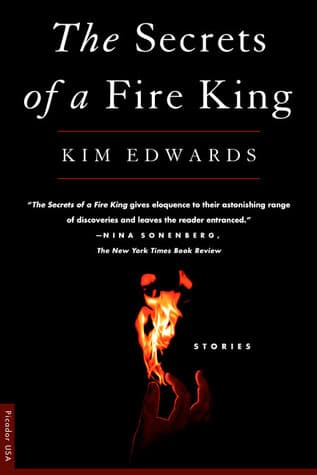
Synopsis
Covers the whole plot, including the ending.
- Difficulty
- Medium
- Pacing
- Slow
- Mood
- Atmospheric, Reflective, Melancholy, Evocative
- Read it if
- You enjoy beautifully written, character-driven literary short stories with a touch of the fantastical and historical depth, exploring themes of memory and identity.
- Skip it if
- You prefer fast-paced plots, clear genre boundaries, or a single, linear narrative.
The Secrets of a Fire King Plot Summary
Covers the whole plot, including the ending.
The Secrets of a Fire King
Sylvie, a young woman living an ordinary life, becomes interested in her deceased grandfather's past. He was a fire-eater known as the 'Fire King.' She starts to learn about his life through old photographs, letters, and her grandmother, Elara's, stories. Sylvie discovers that her grandfather's public image hid a complex inner world and a secret. Her investigation takes her through her family's history and into the world of circus performers, showing the dedication and risks involved. She learns about his early struggles, his rise to fame, and the sacrifices he made for his art, all while dealing with his absence and the weight of his legacy. This story introduces themes of hidden lives and the power of memory.
The Way It Feels
This story is about a woman reflecting on a passionate but difficult relationship with an artist. She describes their strong connection, his artistic nature, and how his art both brought them together and pulled them apart. The story explores the complexities of loving someone consumed by their art, showing the sacrifices and compromises made. She remembers his unique view of the world, often seen in his paintings, and how he changed her own perceptions. Despite their relationship ending, she acknowledges his influence on her life and how his art still affects her, shaping her understanding of beauty, pain, and human connection. The story explores the bittersweet nature of memory and the lasting power of art.
The United States of Japan
Set after the Korean War, this story follows an American soldier and his Korean war bride as they try to build a life in the United States. The story explores the large cultural gap between them and the challenges they face in understanding each other. The bride struggles with adjusting to a new culture, loneliness, and the lingering effects of war, while the soldier deals with his own post-war experiences and the difficulties of supporting his wife in a new land. Their attempts to communicate and bridge the gap show themes of displacement, identity, and resilience. The story portrays the subtle acts of love and misunderstanding in their relationship, highlighting the quiet struggles faced by many during this time and the lasting impact of conflict on individuals.
The Man in the Moon
This story centers on a young boy who finds comfort in watching the moon, using it to escape the growing tension between his parents. He has a strong imagination, projecting his hopes and fears onto the moon. His interest in the moon becomes a symbol for his desire for stability and understanding in a difficult home. The boy observes his parents' arguments and silences, trying to understand their emotional distance. Through his innocent but perceptive view, the story explores how marital conflict affects a child and how children cope with adult problems they cannot fully grasp. The moon, always present, gives him a sense of continuity and a silent companion in his emotional journey, becoming a symbol of hope and escape.
The Beautiful Life
This story looks at the lives of two circus performers: Leo, a juggler, and Anya, a trapeze artist. They are part of a traveling circus, constantly moving, their lives defined by performance and their transient existence. Despite the glamour of their acts, their daily lives involve rigorous training, physical demands, and the loneliness of constant travel. Leo and Anya develop a quiet understanding and a deep, unspoken bond as they navigate the unique challenges of their profession. Their relationship is built on shared experiences, respect for each other's art, and the support they offer each other in a world that often feels isolated. The story highlights the beauty and fragility of their lives, their dedication to their craft, and the strong connections formed in unusual circumstances.
The Story of My Life
A woman tells about an important event from her childhood, recalling a moment that shaped her view of truth, memory, and storytelling. She thinks about a specific incident, perhaps a family secret, and how different family members remember or describe it. The story explores how memory changes and how personal stories are built and revised over time. The narrator deals with the difference between her own clear memories and the versions presented by others, making her question the reliability of memory and the subjective nature of truth. This experience becomes a foundational moment in her understanding of how stories are told, shaped, and become part of one's identity, influencing her own way of understanding and sharing her past.
The Summer of the Dead
This story focuses on two sisters growing up in a close, somewhat isolated town during a summer marked by a local tragedy or a series of unexplained deaths. These events cast a shadow over their community, forcing the sisters to face mortality and the unknown. They observe the reactions of the adults around them—their grief, fear, and attempts to find meaning. Through their innocent but observant eyes, the story explores how children process difficult events and the questions they ask about life and death. The sisters form their own theories and rituals, trying to make sense of the inexplicable. The story captures the atmosphere of a community dealing with loss and the bond between siblings as they navigate a challenging period, highlighting childhood innocence lost and the search for meaning.
The Language of Birds
The protagonist of this story is a young woman deeply interested in birds, especially their communication. She spends her days observing various species, documenting their calls, songs, and behaviors. Her dedication to understanding the 'language of birds' is more than scientific curiosity; it is a symbol for her own desire to understand and connect with other humans. She struggles with expressing herself and understanding the nuances of human interaction, finding a parallel in the complex but often clear communication in the avian world. The story explores loneliness, the search for connection, and the different forms communication can take, suggesting that sometimes the deepest understandings come from unexpected sources, reflecting her own journey to find her voice and connect with the world around her.
The Fire King's Daughter
This story revisits Sylvie, the protagonist from the collection's first story, years later. After exploring her grandfather's past, she is now drawn back to the circus, not as an outsider but as someone seeking to understand and perhaps embrace her heritage. She may not become a fire-eater herself, but she finds a way to honor the 'Fire King's' legacy, perhaps by becoming involved in the circus in a different role, or by simply carrying his dedication and passion into her own life. The story explores inherited identity, the weight of family history, and the process of finding one's place within a larger story. Sylvie's journey ends with a deeper understanding of herself and her connection to her extraordinary family, showing how the past shapes the present.
The Collector of Small Things
This story centers on an elderly woman who has spent her life collecting small, seemingly unimportant objects—buttons, forgotten postcards, dried flowers, pebbles. Each item, to her, holds a specific memory, a piece of a past event, or a connection to a person she once knew. As she reflects on her collection, the story goes through her life, revealing the stories behind these everyday items. The collection becomes a tangible autobiography, a record of a life lived, filled with quiet joys, small heartbreaks, and enduring love. The story explores memory, nostalgia, the meaning found in ordinary things, and the human desire to preserve moments and connections. It suggests that even the smallest details of life contribute to one's personal history, each object a silent keeper of a cherished secret.
Principal Figures
Sylvie
Protagonist
The granddaughter who uncovers the Fire King's secrets and eventually embraces her heritage.
Sylvie is a curious and contemplative young woman, initially somewhat adrift in her own life, who becomes captivated by the mysterious past of her deceased grandfather, the Fire King. She is driven by a deep-seated need to understand her family's history and her own place within it. Intelligent and sensitive, Sylvie pieces together narratives from fragmented memories, old photographs, and the stories of others. Her journey is one of self-discovery, as she grapples with the legacy of an extraordinary figure and the implications for her own identity. She is an empathetic observer, capable of seeing the hidden depths in others and in the world around her.
Relationships: The Fire King (Grandfather) (Subject of her investigation and source of her family's legacy); Elara (Grandmother) (Reluctant storyteller and keeper of family secrets)
The Fire King
Supporting/Central Figure
Sylvie's enigmatic grandfather, a legendary circus performer.
The Fire King is a legendary and somewhat mythical figure, known for his dangerous and mesmerizing fire-eating acts. Though deceased at the start of Sylvie's investigation, his presence looms large throughout the collection, particularly in the titular story. He is portrayed as a man of intense dedication to his craft, embodying both profound artistry and a hidden vulnerability. His public persona is one of fearlessness and control, but Sylvie's research reveals a complex individual who made significant sacrifices for his art and harbored deep personal secrets. He represents the allure of the extraordinary and the human capacity for both spectacle and quiet suffering.
Relationships: Sylvie (Granddaughter) (His legacy profoundly shapes her journey); Elara (Wife) (His partner, who holds many of his secrets)
Elara
Supporting
The Fire King's widow and Sylvie's grandmother, a reluctant keeper of family history.
Elara is Sylvie's grandmother, a woman who carries the weight of her past with the Fire King. She is initially hesitant to fully reveal the details of his life, perhaps out of a desire to protect his memory, or herself, from the complexities of their shared history. Elara represents the often-silent strength and resilience of those who live alongside extraordinary individuals. Her fragmented memories and occasional insights are crucial to Sylvie's understanding of her grandfather. She embodies the theme of memory and the way personal narratives are shaped and sometimes obscured over time, offering glimpses into a life lived in the shadow of spectacle.
Relationships: The Fire King (Husband) (His widow and confidante); Sylvie (Granddaughter) (The recipient of her fragmented memories and stories)
The Artist (from 'The Way It Feels')
Supporting
A troubled and passionate artist whose work leaves a lasting impression.
This character is a passionate, intense, and often troubled artist, whose life is consumed by his creative pursuits. He is a deeply sensitive individual, capable of both profound love and great emotional volatility. His art is a direct expression of his inner world, often challenging and unconventional. He struggles with the practicalities of life, prioritizing his artistic vision above all else. His relationship with the narrator is complex, marked by both deep connection and the inevitable friction caused by his single-minded dedication to his craft. He serves as a catalyst for the narrator's own understanding of art, love, and the sacrifices inherent in creative lives.
Relationships: The Narrator (Lover) (His former lover, who remembers his impact)
The Korean War Bride
Protagonist
A resilient woman grappling with displacement and cultural assimilation after marrying an American soldier.
She is a young Korean woman who marries an American soldier in the aftermath of the Korean War and moves to the United States. She embodies themes of displacement, cultural shock, and resilience. Having endured the trauma of war, she faces new challenges in a foreign land, struggling with a new language, customs, and the loneliness of being far from her home. Despite her quiet demeanor, she possesses an inner strength and a determination to adapt. Her experiences highlight the often-overlooked struggles of war brides and the profound impact of historical events on individual lives, as she navigates a new identity while holding onto fragments of her past.
Relationships: American Soldier (Husband) (Her husband, with whom she builds a new life)
The American Soldier
Supporting
A veteran trying to build a new life with his Korean wife amidst post-war trauma and cultural divides.
This character is an American soldier who returns from the Korean War with his new Korean wife. He is a man trying to navigate his own post-war experiences while simultaneously supporting his wife through her immense cultural adjustment. He likely carries his own emotional scars from the conflict, which may manifest in quiet ways. He is generally well-intentioned but sometimes struggles to fully understand the depth of his wife's displacement and trauma. His journey involves learning patience, empathy, and how to bridge significant cultural and emotional gaps to build a shared life. He represents the challenges faced by many veterans and their partners in the aftermath of war.
Relationships: Korean War Bride (Wife) (His wife, with whom he returns to America)
Leo (The Juggler)
Protagonist
A dedicated juggler in a traveling circus who finds quiet connection with Anya.
Leo is a highly skilled and dedicated juggler, whose life revolves around the demanding schedule and transient nature of the traveling circus. He is a man of quiet focus and precision, finding his purpose and expression in his art. Beneath his public performance, he likely experiences the solitude inherent in circus life. He finds a deep, unspoken understanding and connection with Anya, the trapeze artist, a relationship built on shared experience and mutual respect for their demanding crafts. Leo embodies the theme of finding belonging and connection in unconventional families and the beauty of dedication to one's passion.
Relationships: Anya (The Trapeze Artist) (His fellow performer and quiet confidante)
Anya (The Trapeze Artist)
Protagonist
A graceful and resilient trapeze artist, part of the traveling circus.
Anya is a graceful and courageous trapeze artist, whose life is defined by the physical demands and artistic precision of her aerial performances. She possesses a quiet strength and resilience, navigating the constant movement and challenges of circus life. Like Leo, she is deeply committed to her craft, finding both freedom and discipline in her art. She shares a profound, unspoken bond with Leo, a connection that transcends words and is built on shared experiences and understanding of their unique world. Anya represents the beauty of physical artistry, the strength of the human spirit, and the search for connection in an often-isolated existence.
Relationships: Leo (The Juggler) (Her fellow performer and quiet confidante)
The Narrator (from 'The Story of My Life')
Protagonist
A woman reflecting on how childhood experiences shaped her understanding of truth and narrative.
This character is a reflective and insightful woman, looking back on a pivotal childhood experience that profoundly influenced her understanding of truth, memory, and the construction of personal narratives. She is keenly aware of the subjective nature of recollection and the different ways family members can interpret or retell shared events. Her intelligence lies in her ability to analyze these discrepancies and to question the 'official' versions of stories. She embodies a search for authenticity and a nuanced understanding of how our pasts are shaped not just by what happened, but by how we remember and recount it.
Relationships: Family members (various) (Participants in the shared childhood experience she reflects upon)
The Bird-Studying Woman
Protagonist
A young woman who seeks understanding of human connection through the study of avian communication.
This protagonist is a solitary and introspective young woman, deeply engrossed in the scientific and metaphorical study of birds and their communication. She possesses a keen intellect and an observant nature, finding complex patterns and meanings in the natural world. Her dedication to understanding avian language stems from a deeper personal struggle to connect and communicate effectively with other humans. She is sensitive and perhaps somewhat introverted, finding solace and a sense of purpose in her unique pursuit. She embodies the theme of seeking connection in unconventional ways and the idea that profound lessons can be learned from the natural world.
Themes & Insights
The Power of Memory and Storytelling
Throughout the collection, memory is not fixed but a fluid, subjective force that shapes identity and understanding. Characters like Sylvie ('The Secrets of a Fire King') piece together fragmented memories to reconstruct the past, showing how personal stories are built and revised. The narrator in 'The Story of My Life' directly confronts differences in family recollections, highlighting how different perspectives influence the 'truth.' Memory is both a comfort and a challenge, allowing characters to revisit moments while also dealing with the elusive nature of what truly happened. Storytelling, through narratives or anecdotes, is how characters make sense of experiences and connect with their histories.
“'Memory is a kind of fire, burning away the unnecessary, leaving only the bright, essential core.”
Hidden Lives and Secret Selves
Many characters in Edwards' stories live lives that appear one way on the surface but hide deep inner complexities and secrets. The Fire King, for instance, is a public spectacle, but Sylvie uncovers a man of quiet struggles and personal sacrifices. Similarly, the Korean War Bride carries unseen trauma and cultural displacement beneath her attempts at assimilation. This theme explores the difference between public image and private reality, and how individuals guard their inner worlds. These hidden lives often reveal deeper truths about identity, resilience, and the unspoken burdens people carry. Uncovering these secrets, whether by a protagonist or through a character's own reflection, often leads to greater understanding and empathy.
“Every performance was a kind of secret, a momentary unveiling of something carefully guarded.”
The Search for Connection and Belonging
A common theme is the human desire for connection, often when facing isolation or displacement. The American soldier and his Korean war bride struggle to bridge a vast cultural divide, finding comfort in quiet acts of understanding. The juggler and trapeze artist in 'The Beautiful Life' form a deep, unspoken bond in the transient world of the circus, creating their own sense of family. Even the young woman studying birds in 'The Language of Birds' seeks to understand communication as a way to connect with others. This theme appears in various forms—romantic, familial, and communal—showing the resilience of individuals in finding a place where they feel understood and accepted, whether in a traditional family or an unconventional community.
“Even in silence, there was a language, a shared understanding that built its own kind of home.”
The Nature of Art and Performance
Art and performance are central to several stories, exploring their transformative power, the sacrifices they require, and their ability to both reveal and conceal. The Fire King's act is a dangerous art form that defines his existence, while the troubled artist in 'The Way It Feels' is consumed by his creative vision. The circus performers dedicate their lives to mastering their crafts, finding purpose and identity in their acts. This theme looks at the discipline, passion, and often solitary nature of artistic creation, and how art can be a form of expression, escape, or a way of understanding the world. It also examines the audience's role in interpreting and being affected by these performances.
“The fire was not just an act; it was a conversation with the impossible.”
The Impact of Displacement and Cultural Identity
Several stories explore the effects of physical and cultural displacement on individuals. The Korean War Bride in 'The United States of Japan' clearly shows the challenges of assimilation, dealing with a new language, customs, and the loss of her former identity. Characters often find themselves in between spaces, caught between different worlds or past and present. This theme examines how individuals adapt, resist, or come to terms with new environments while trying to keep a sense of their original cultural heritage. It highlights the psychological and emotional toll of being an outsider and the search for a stable sense of self in unfamiliar surroundings.
“She carried her homeland not in a suitcase, but in the quiet spaces between her thoughts.”
Plot Devices & Literary Techniques
Retrospective Narration
Stories often unfold through characters recalling past events, shaping the narrative through memory.
Many stories in the collection employ retrospective narration, where characters look back on significant past events, relationships, or periods of their lives. This device allows for a layered exploration of memory, regret, and the lasting impact of experiences. It enables characters to reflect on how past events shaped their present selves, offering insights that might not have been available in the moment. For example, Sylvie's entire journey to understand the Fire King is retrospective, piecing together a life already lived. This technique emphasizes the subjective nature of memory and the way personal histories are constructed and reinterpreted over time, lending a contemplative and often melancholic tone to the narratives.
Symbolism of Fire and Light
Fire and light represent danger, passion, transformation, and revelation.
The symbolism of fire and light is central, most prominently in 'The Secrets of a Fire King.' Fire represents both extreme danger and mesmerizing beauty, embodying passion, destruction, and transformation. It signifies the Fire King's controlled power and his hidden inner world. Beyond the literal fire, light often symbolizes revelation and understanding, as characters like Sylvie shed light on hidden truths. Conversely, darkness or shadows can represent secrets, the unknown, or the unaddressed aspects of a character's past. This recurring motif reinforces themes of hidden lives, the allure of the extraordinary, and the potential for both peril and profound insight.
Framing Device (The Collection Itself)
The collection's structure allows for diverse stories unified by overarching thematic concerns.
The structure of 'The Secrets of a Fire King' as a short story collection functions as a framing device. While each story is distinct with its own characters and plot, they are unified by overarching thematic concerns such as memory, identity, connection, and the nature of performance. The titular story, and its revisiting in 'The Fire King's Daughter,' also acts as a subtle frame, grounding the collection in a specific family's legacy while allowing for exploration of diverse human experiences. This device allows Edwards to explore similar ideas through varied lenses, demonstrating the universality of these themes across different lives and settings, creating a cohesive yet expansive literary experience.
Metaphorical Landscapes
Physical settings and natural elements often serve as metaphors for characters' inner states or larger themes.
Edwards frequently uses physical landscapes and natural elements metaphorically to reflect characters' internal worlds or to deepen thematic concerns. The moon in 'The Man in the Moon' becomes a symbol of escape and a silent confidante for the young boy struggling with his parents' conflict. The intricate 'language of birds' in another story serves as a metaphor for the protagonist's own struggles with human communication and connection. These metaphorical landscapes enrich the narrative, providing visual and sensory dimensions that resonate with the emotional and psychological journeys of the characters, connecting their personal experiences to broader universal truths about nature and human existence.
The Secrets of a Fire King Quotes
“The past is a country we can never truly leave, no matter how far we travel.”
“There are some things that cannot be explained, only felt, like the heat of a fire or the chill of a ghost.”
“Every secret is a kind of weight, pressing down on the one who keeps it.”
“Love is not always gentle; sometimes it burns, sometimes it leaves scars.”
“To forget is a kind of death, but to remember is to live with the ghosts.”
“The greatest illusions are often the ones we create for ourselves.”
“Sometimes, the only way to find your way home is to get lost first.”
“Magic isn't about tricks; it's about seeing the world with different eyes.”
“Even the strongest bonds can be stretched thin by time and distance.”
“There are places in the heart that never heal, only grow quiet.”
“The past isn't something you escape; it's something you learn to carry.”
“Every performance is a kind of confession, even when it's just a trick.”
“Sometimes, the only way to keep someone alive is to tell their story.”
“The world is full of impossible things, if only you're willing to believe.”
Quiz
10 questions on the plot and the characters. Each answer comes with a short explanation.
Question 1
In the story 'The Way It Feels', what unusual talent does the main character possess related to touch?
- She can tell the future by touching objects.
- She can feel the past of an object or person through touch.
- She can heal wounds by touching them.
- She can manipulate objects with her mind by touching them.
Show answer
B. She can feel the past of an object or person through touch. The protagonist in 'The Way It Feels' has a unique sensitivity, allowing her to perceive the history and emotions associated with objects and people through physical contact.
Question 2
Which story features a character who is a 'fire king' and performs acts of fire eating?
- 'The Way It Feels'
- 'The Secrets of a Fire King'
- 'The House of Doors'
- 'Summer of the Naked Dance'
Show answer
B. 'The Secrets of a Fire King' The title story, 'The Secrets of a Fire King', directly references and features a character who is a fire-eater, exploring the mystique and danger of his profession.
Question 3
In 'The House of Doors', what peculiar architectural element is central to the narrative?
- A house made entirely of glass.
- A house with an impossibly large number of doors, some leading nowhere.
- A house that constantly shifts its internal layout.
- A house built into the side of a cliff.
Show answer
B. A house with an impossibly large number of doors, some leading nowhere. 'The House of Doors' describes a dwelling with an overwhelming and mysterious abundance of doors, symbolizing choices, hidden paths, and the unknown.
Question 4
What common theme often links the seemingly disparate characters across the collection?
- The pursuit of wealth and power.
- A sense of being an outsider or living on the fringes of society.
- Their shared love for a specific historical period.
- Their involvement in espionage.
Show answer
B. A sense of being an outsider or living on the fringes of society. The collection consistently explores characters who are unconventional, possess unique talents, or find themselves living on the margins, whether as performers, immigrants, or individuals with extraordinary sensitivities.
Question 5
Which of the following locations is NOT explicitly mentioned as a setting for one of the stories?
- Europe
- Africa
- Asia
- America
Show answer
B. Africa The book description specifically mentions Europe, Asia, and America as settings, but not Africa.
Question 6
In 'Summer of the Naked Dance', what is the significance of the 'naked dance' performed by the young women?
- It is a rebellious act against societal norms and a celebration of freedom.
- It is a traditional ritual for good harvest.
- It is a form of protest against political corruption.
- It is a performance art piece for tourists.
Show answer
A. It is a rebellious act against societal norms and a celebration of freedom. The 'naked dance' in the story is portrayed as a spontaneous and defiant expression of liberation and youth, challenging the expectations of their community.
Question 7
The story featuring an American and his Korean war bride primarily explores what kind of challenges?
- Financial struggles and poverty.
- The difficulties of cultural assimilation and prejudice.
- The challenges of raising children in a post-war era.
- Their struggle to escape a totalitarian regime.
Show answer
B. The difficulties of cultural assimilation and prejudice. Stories involving war brides often delve into the complexities of cross-cultural marriages, the prejudice faced by immigrants, and the struggle to adapt to a new society after conflict.
Question 8
In 'The History of Light', what is the protagonist's unusual profession or hobby related to light?
- He is a photographer who captures rare phenomena.
- He studies the historical effects of light on human behavior.
- He collects and studies the light from historical events, believing it carries memories.
- He designs elaborate light shows for circuses.
Show answer
C. He collects and studies the light from historical events, believing it carries memories. This story features a character with a unique, almost fantastical, interest in light, believing it retains echoes of the past and can be 'collected' or studied for its historical resonance.
Question 9
What recurring literary device or stylistic choice is characteristic of Kim Edwards' writing in this collection?
- Heavy use of stream-of-consciousness narration.
- Blending magical realism with grounded emotional narratives.
- Strict adherence to a single, objective narrative voice.
- Frequent use of satire and dark humor.
Show answer
B. Blending magical realism with grounded emotional narratives. Kim Edwards is known for imbuing her stories with elements of the fantastical or extraordinary (like the fire king, the house of doors, or the ability to feel the past) while keeping the emotional core and character development very human and relatable, a hallmark of magical realism.
Question 10
In the story involving a juggler and a trapeze artist, what is the central conflict or tension between them?
- They are rival performers competing for the same act.
- Their contrasting approaches to risk and stability in their art and life.
- A love triangle involving a third circus performer.
- They are trying to escape a corrupt circus owner.
Show answer
B. Their contrasting approaches to risk and stability in their art and life. The juggler and trapeze artist often represent different philosophies: the juggler with control and groundedness, the trapeze artist with daring and flight, creating a natural tension in their relationship and art.
The Secrets of a Fire King FAQ
What is the overarching theme connecting the seemingly disparate stories in 'The Secrets of a Fire King'?
The collection explores themes of performance, identity, the secrets people keep, and the search for belonging across generations and cultures. Many stories feature characters who are literally performers or live lives that require a certain degree of performance or hidden self, often dealing with the aftermath of war or significant personal trauma.
Which story features the titular 'Fire King' and what is his significance?
The story 'The Secrets of a Fire King' features a fire-eater who performs in a traveling circus. He represents the allure and danger of hidden talents and the way extraordinary abilities can both define and isolate individuals, often carrying a burden of unspoken history and personal sacrifice.
How does the story involving the American soldier and his Korean war bride contribute to the collection's themes?
This story highlights the immense cultural and personal divides that can arise from international conflict and cross-cultural relationships. It delves into the difficulties of assimilation, the weight of past trauma, and the silent struggles faced by those who bridge vastly different worlds, emphasizing themes of displacement and the search for acceptance.
Are the characters in the different stories directly related or are their connections more thematic?
While the stories often feature distinct characters and settings, there are subtle thematic and sometimes familial connections woven throughout the collection, creating a sense of shared human experience and recurring motifs. For example, some stories hint at shared ancestries or the echoes of similar struggles across generations, linking them beyond mere thematic resonance.
What role does the setting play in shaping the characters' experiences, particularly in the stories set in Europe and Asia?
The diverse settings, from post-war Korea to European circuses, are crucial in defining the characters' identities and challenges. They emphasize cultural dislocation, the impact of historical events like war, and the search for a place where one can truly belong or escape their past, making the environment an active participant in their psychological journeys.
Are there any recurring symbols or motifs that link the various narratives?
Yes, recurring symbols include fire and light (representing danger, performance, and revelation), acts of performance (juggling, trapeze, fire-eating, storytelling), and objects that carry historical or emotional weight (photographs, letters, heirlooms). These motifs subtly tie the stories together, hinting at shared human vulnerabilities and resilience.
How does the author use 'secrets' as a narrative device throughout the collection?
Secrets are central to almost every story, serving as both plot drivers and psychological burdens. Characters often harbor hidden pasts, unspoken desires, or concealed identities, which shape their actions and relationships. The slow revelation of these secrets often provides the emotional climax and deeper understanding of the characters' motivations and pain.
In what ways do characters grapple with their identities as 'outsiders' or those on the 'fringes of society'?
Many characters are literally or metaphorically outsiders: circus performers, immigrants, war survivors, or individuals with unique talents. They struggle with societal acceptance, the longing for normalcy, and the internal conflict of embracing their unique identities versus conforming. This often leads to feelings of isolation and a complex search for belonging.
How does the author explore the psychological impact of war, particularly in the stories touching upon the Korean War?
The stories subtly depict the long-lasting psychological scars of war, not just on soldiers but also on their families and communities. They explore themes of trauma, loss, cultural displacement, and the difficulty of rebuilding lives in the aftermath of conflict. The impact is often shown through characters' silences, anxieties, and their struggle to reconcile past horrors with present realities.
What is the significance of the 'performance' aspect common to many characters, such as the juggler and trapeze artist?
Performance serves as a metaphor for the masks people wear, the roles they play in life, and the vulnerability inherent in presenting oneself to the world. It highlights the tension between artifice and authenticity, the dedication required to master a skill, and the potential for both freedom and entrapment within a chosen identity.
Is there a sense of hope or resolution at the end of the stories, or do they lean towards ambiguity?
The endings often strike a balance between resolution and lingering ambiguity. While some characters find a measure of understanding or peace, others are left contemplating the complexities of their situations. The collection frequently offers moments of quiet revelation or acceptance rather than definitive happy endings, reflecting the nuanced nature of life's struggles.
How does the theme of love manifest in the relationships depicted, given the characters' complex lives?
Love in these stories is often complicated, marked by sacrifice, misunderstanding, and the weight of personal histories. It appears in various forms—romantic, familial, platonic—but is rarely simple. Characters struggle to connect deeply, their pasts and secrets often creating barriers, yet love remains a powerful, often redemptive, force in their lives.
What is the role of memory and storytelling in the collection?
Memory is a central character itself, shaping perception and influencing present actions. Characters often grapple with fragmented or suppressed memories, and the act of storytelling (both within the narratives and by the author) becomes a way to confront the past, reconcile trauma, and construct meaning from disparate experiences. Stories are often passed down, carrying the weight of generations.
How does the author's writing style contribute to the 'mesmerizing' and 'elegant' quality mentioned in the synopsis?
Kim Edwards employs a lyrical and evocative prose style, characterized by rich imagery, precise language, and a keen eye for human emotion. Her sentences often possess a quiet power, drawing the reader into the characters' inner worlds and the often melancholic beauty of their experiences, creating an immersive and reflective reading experience.
Are there any characters whose paths subtly cross or whose stories echo each other in a way that suggests a larger tapestry?
While not always explicit, several stories feature subtle echoes or thematic parallels that suggest a shared universe of human experience. For instance, the enduring resilience of women in the face of adversity, the struggles of immigrant families, or the allure of the performing arts are threads that weave through different narratives, creating a sense of a larger, interconnected human tapestry.
What philosophical questions does the collection invite readers to ponder?
The collection prompts readers to consider the nature of identity, the search for meaning in a chaotic world, the impact of historical events on individual lives, and the enduring power of human connection despite profound differences. It asks what it means to truly see and accept others, and oneself, with all their hidden complexities and imperfections.
How does the concept of 'home' evolve for characters who are frequently displaced or living unconventional lives?
For many characters, 'home' is not a fixed geographical location but a fluid concept, often linked to people, memories, or a sense of inner peace. They frequently grapple with the loss of a physical home due to war or migration, and their journeys become a quest to redefine or create a new sense of belonging, whether in a new country, a new family, or within themselves.
About the author

Kim Edwards is an American author known for her fiction, particularly exploring themes of memory and family dynamics. Her notable works include "The Memory Keeper's Daughter," which examines the complexities of love and loss, "The Lake of Dreams," a story about family secrets and self-discovery, and "The Secrets of a Fire King," a collection of interconnected tales.
Similar books
- Tenth of December
George Saunders
4.0 (62k) average on GoodreadsLiterary FictionCollection of literary short stories with diverse characters and emotional depth.
- The Old Man and the Sea
Ernest Hemingway
3.8 (831k) average on GoodreadsLiterary FictionA Cuban fisherman's long struggle with a giant marlin becomes a story of endurance and dignity, now retold for young adults with illustrations, phonetic guides, and writing prompts in Traditional Chinese.
- One Hundred Years of Solitude
Gabriel García Márquez
4.1 (753k) average on GoodreadsLiterary FictionThrough the multi-generational story of the Buendía family, a mythical town deals with the repeating patterns of time, love, and solitude, as the extraordinary mixes with the ordinary.
- The Goldfinch
Donna Tartt
3.9 (720k) average on GoodreadsLiterary FictionHaunted by a tragic explosion and clutching a stolen Dutch masterpiece, a young orphan navigates the opulent drawing rooms of New York and the gritty underbelly of the art world, desperately seeking connection and redemption amidst a life spiraling into crime and obsession.
- Little Fires Everywhere
Celeste Ng
4.1 (713k) average on GoodreadsLiterary FictionIn Shaker Heights, an artist and her daughter move in, and their free-spirited lives clash with a rule-bound matriarch, revealing hidden conflicts beneath a perfect surface.
- Eleanor Oliphant Is Completely Fine
Gail Honeyman
4.3 (708k) average on GoodreadsLiterary FictionA lonely woman's structured life changes when an IT guy and an elderly man help her learn to open her heart.





Enjoyed the summary?
A summary gives you the shape of the book. The book itself has the detail, the examples and the voice.
Find The Secrets of a Fire King on AmazonAs an Amazon Associate, BookBrief earns from qualifying purchases. How we're funded