
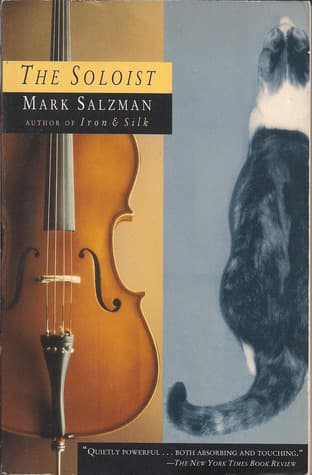
Synopsis
Covers the whole plot, including the ending.
- Difficulty
- Medium
- Pacing
- Moderate
- Mood
- Reflective, Thought-provoking, Introspective, Poignant
- Read it if
- You appreciate character-driven literary fiction exploring themes of artistic talent, justice, and personal reflection.
- Skip it if
- You prefer fast-paced thrillers or clear-cut narratives without moral ambiguity.
The Soloist Plot Summary
Covers the whole plot, including the ending.
A Life Interrupted
Renne, a cellist living a quiet life in Los Angeles, receives a jury summons. Once a child prodigy compared to Yo-Yo Ma, he now teaches a few students and practices diligently, his grand ambitions having faded. The summons pulls him from his routine of music, solitude, and occasional visits from his sister, Sarah. He sees it as an annoyance mixed with civic duty, unaware of how deeply this trial will affect his views on justice, art, and his own unused potential. His inner world, usually focused on his instrument, is about to face the harsh realities of the legal system.
The Brutal Crime
Renne is chosen for the jury in a high-profile murder trial. The victim is Master Li, a respected Buddhist monk, brutally beaten and stabbed in his temple. The accused is David, a young, troubled man with a history of mental illness and drug abuse. The prosecution, led by Ms. Chen, presents a strong case, claiming David committed the act in a drug-fueled rage, possibly for theft. The defense, handled by Mr. Peterson, tries to create doubt about the evidence and highlight David's mental state. Renne, with the other eleven jurors, must sort through the disturbing details and conflicting stories, a sharp contrast to his world of musical beauty.
A New Pupil's Arrival
During the trial's growing intensity, a new student enters Renne's life: Ko, a young Korean boy with amazing musical talent. Ko's mother, Mrs. Kim, brings him to Renne for lessons, convinced of his potential. From their first meeting, Ko shows an natural understanding of the cello and a skill that immediately reminds Renne of his own early genius. Teaching Ko becomes a mixed experience for Renne; while he is impressed and inspired by the boy's talent and dedication, it also makes him face his past as a child prodigy and the path he ultimately chose. The boy's presence provides a poignant contrast to the dark murder trial.
Jury Deliberations Begin
After weeks of testimony, the jury begins deliberations. The first discussions are filled with differing opinions and emotions. Renne, at first hesitant to speak strongly, finds himself drawn into the debate, applying the same careful thought to the evidence as he would to a musical score. Some jurors are sure of David's guilt, while others have doubts, pointing to the lack of clear motive and the defendant's fragile mental state. The jury room becomes a small version of society, with each member bringing their own biases, experiences, and interpretations. The heavy responsibility to deliver justice for Master Li and David weighs on them all.
Ko's Rapid Progress
Ko's cello progress is remarkable. Under Renne's guidance, he quickly masters complex pieces, showing not only technical skill but also a deep musicality beyond his young age. Renne pours his teaching knowledge and artistic passion into Ko, treating him not just as a student but as a way for pure musical expression. He gives Ko challenging music, pushes him to explore the emotional depths, and even arranges for Ko to try a better cello. The lessons become a refuge for Renne, a place where music's order and beauty offer a temporary escape from the trial's moral questions.
A Divided Jury
As days turn into weeks, the jury remains deeply divided. The main argument is about David's intent and whether he truly planned the murder, or if his actions resulted from a psychotic break. Renne, initially leaning toward guilt, starts to question the prosecution's story, finding inconsistencies and gaps in the evidence. He struggles with the idea of justice in a system that often fails to account for mental illness and complex human reasons. Tension in the jury room grows, with heated arguments and emotional outbursts, as jurors feel pressure to reach a unanimous decision, knowing a young man's life depends on it.
Renne's Inner Turmoil
The long jury duty and the trial's difficult details force Renne into deep self-reflection. He constantly compares the search for absolute truth in court to the search for perfect beauty in music. He re-evaluates his artistic journey, why he stepped back from a potentially world-famous career, and the compromises he made. The harsh reality of David's situation, and the potential for a wasted life, deeply resonates with Renne's own feelings of unfulfilled potential. He sees in Ko the raw talent he once had, and the potential for both triumph and deep loss, depending on choices made and outside forces.
The Verdict
After what feels like a very long time of arguments, re-examining evidence, and emotional pleas, the jury finally reaches a verdict. The decision is not easy, and Renne plays a significant role in persuading some undecided jurors, carefully dissecting evidence and offering other interpretations. The jury ultimately finds David guilty of a lesser charge, not first-degree murder, acknowledging his fault while also considering his mental state and the unclear facts. The verdict brings a sense of tired relief, but also a lingering unease and the recognition that true justice is often hard to find and imperfect, leaving no one fully satisfied.
Ko's Public Debut
After the trial, Renne focuses more on Ko's development. He enters Ko into a local junior music competition, an important step for the young prodigy. Ko performs with amazing maturity and technical brilliance, impressing the audience and judges. His performance is a triumph, confirming Renne's belief in his talent and the potential for a remarkable career. For Renne, watching Ko perform is a shared experience, a glimpse into the future he might have had, and a confirmation of music's lasting power and beauty, a sharp contrast to the ugliness he saw in court. Ko's success gives Renne immense pride and renewed purpose.
The Weight of Expectation
As Ko's talent gains recognition, Renne starts to see the familiar pressures and expectations grow. Mrs. Kim, Ko's mother, becomes more ambitious for her son, pushing him toward more competitions and a demanding schedule. Renne recognizes the same patterns that shaped his own childhood – the intense focus, the sacrifice of normal childhood, and the huge burden of being a 'prodigy.' He feels protective of Ko, wanting to nurture his talent without crushing his spirit, and struggles with how best to guide him through the difficult world of professional music, a world he knows well to be both beautiful and harsh.
A Shared Understanding
Despite outside pressures, Renne and Ko form a deep, unspoken bond through their shared love for the cello. Their lessons are more than just technical instruction; they become musical conversations, where Renne shares not only technique but also the emotional depth and philosophical meaning he finds in art. Ko, in turn, inspires Renne with his pure passion and fresh perspective. Renne sees a reflection of his younger self in Ko, but also a unique individual with his own voice. Their connection allows Renne to revisit his own relationship with music, finding new meaning and perhaps a sense of redemption through his mentorship.
The Echoes of the Past
Even after the trial ends, its effects echo in Renne's life. He often thinks about the moral questions, life's fragility, and justice's imperfect nature. At the same time, his work with Ko forces him to confront his own past as a prodigy – the sacrifices, the immense pressure, and why he ultimately chose a different path. He struggles with regret and acceptance, understanding that his journey, though different from what was once predicted, has led him to a place where he can deeply affect another's life through music. The intertwining experiences of the trial and Ko's mentorship lead Renne to a deeper understanding of himself and his place in the world.
A Crossroads for Ko
As Ko nears adolescence, the demands on his time and talent increase. Opportunities for advanced study and international competitions arise, pushing him toward a path that will require huge dedication and sacrifice. Renne observes this with a mix of pride and worry, knowing the toll such a life can take. He sees Ko at a crossroads, similar to where he once stood. Renne offers guidance, drawing from his own experiences, but ultimately understands that Ko must make his own choices about how to pursue his gift, whether to embrace the relentless pursuit of virtuosity or to find a more balanced, perhaps less public, relationship with his music.
A Performance and a Farewell
Ko gives an important performance, perhaps at a major recital or competition, showing the peak of his work with Renne. His playing is technically perfect and deeply moving, a testament to his talent and Renne's guidance. This performance marks a turning point, signaling Ko's readiness to move to the next stage of his musical education, likely with a more famous teacher or institution. Renne watches with a mix of pride and a quiet sense of farewell. He understands that his role as Ko's main mentor is ending, and while bittersweet, it shows Ko's growth and the successful passing of knowledge. Renne reflects on Ko's deep impact on his own life.
Harmony and Discord
Renne continues his own musical practice and teaching, but with a renewed sense of purpose and a deeper understanding of life's complexities. The murder trial and his mentorship of Ko have changed him deeply. He has learned that justice is rarely absolute, and that human nature holds both deep beauty and terrible darkness. He finds comfort and meaning in music's lasting power, recognizing its ability to express the inexpressible and to bring order to chaos. He understands that while life will always have discord, there is also the potential for harmony, and that his role is to contribute to that harmony, through his own playing and by nurturing it in others.
The Soloist Characters
Renne
Protagonist
A former cello prodigy turned teacher, grappling with unfulfilled potential and moral complexities.
Renne is a highly skilled cellist who, in his youth, was hailed as a prodigy with a promising international career. However, he chose a quieter life as a teacher, living in relative solitude. He is introspective, analytical, and deeply sensitive to music, which serves as his primary mode of understanding the world. His life is disrupted by jury duty, forcing him to confront the messy realities of human nature and justice, which stand in stark contrast to the ordered beauty of his art. He is kind, patient, and possesses a deep well of empathy, though he often keeps his emotions guarded.
Relationships: Ko (mentor and student, a deep artistic and personal bond); Sarah (his sister, a source of familial connection and occasional grounding); David (the accused in the trial, a catalyst for Renne's moral and ethical questioning)
Ko
Supporting
A young Korean boy of astonishing cello talent, who reminds Renne of his own prodigal past.
Ko is a child prodigy whose innate musicality and technical skill on the cello are extraordinary for his age. He is dedicated, focused, and possesses a natural understanding of music that both inspires and challenges Renne. Though young, he shows a seriousness of purpose and a remarkable ability to absorb and interpret complex musical ideas. He represents unblemished potential and the pure joy of artistic expression, but also the immense pressures that come with such a gift. His quiet demeanor belies a profound inner world expressed through his music.
Relationships: Renne (student and protégé, deeply influenced by Renne's teaching and life lessons); Mrs. Kim (his ambitious mother, who drives his musical career)
David
Antagonist/Catalyst
The young man accused of murdering Master Li, whose trial challenges Renne's perceptions of justice.
David is the defendant in the murder trial, a young man with a history of drug abuse and mental health issues. He is depicted as troubled, confused, and often unresponsive during the trial, making it difficult for the jury to ascertain his true culpability and state of mind. He represents the darker, more chaotic aspects of human nature and the complexities of the justice system when confronted with mental illness. His presence forces Renne and the other jurors to grapple with questions of moral responsibility, intent, and the possibility of redemption.
Relationships: Renne (the accused, whose fate is deliberated by Renne as a juror); Master Li (the victim of the crime David is accused of committing)
Master Li
Mentioned/Catalyst
A revered Buddhist monk whose brutal murder is the subject of the trial.
Master Li is the victim of the murder at the center of the trial. Though he never appears in person, his presence looms large over the narrative. He is described as a highly respected and peaceful Buddhist monk, whose life exemplified compassion and wisdom. His brutal death is particularly shocking because of his spiritual standing, making the crime seem even more senseless and tragic. His memory serves as a moral compass for some jurors, while for others, his peaceful nature makes the violence against him all the more incomprehensible.
Relationships: David (the victim of David's alleged crime); The community (a revered spiritual leader)
Mrs. Kim
Supporting
Ko's ambitious and dedicated mother, who drives his musical career.
Mrs. Kim is Ko's mother, a determined and ambitious woman who recognizes her son's extraordinary talent and is committed to fostering it. She approaches Renne for lessons and is a constant presence in Ko's musical journey, pushing him towards excellence and seeking out opportunities for him. While her intentions are rooted in love and a desire for Ko's success, she also embodies the intense pressure and high expectations placed upon child prodigies, often mirroring the forces that shaped Renne's own youth. She represents the external world's demands on artistic genius.
Relationships: Ko (his mother, highly invested in his musical career); Renne (Ko's teacher, whom she trusts with her son's development)
Sarah
Supporting
Renne's sister, who provides a connection to his family and the outside world.
Sarah is Renne's sister, a pragmatic and supportive figure who serves as one of his few regular connections to the world outside his music room. She is concerned for his well-being and often tries to draw him out of his reclusive tendencies. She offers a grounded perspective and a familial anchor, contrasting with Renne's more ethereal artistic pursuits and the grim realities of the trial. Her presence reminds Renne of his personal life beyond the cello and the courtroom, representing normalcy and unconditional affection.
Relationships: Renne (his sister, a supportive family member)
Ms. Chen
Supporting
The assertive prosecutor in the murder trial.
Ms. Chen is the prosecuting attorney in David's murder trial. She is sharp, articulate, and highly confident in her case, presenting the evidence with conviction and aiming for a first-degree murder conviction. She represents the prosecutorial side of the justice system, focused on proving guilt and securing punishment. Her arguments and methods challenge the jury, including Renne, to critically evaluate the evidence and the narrative she presents.
Relationships: David (the prosecutor in his trial); Renne (a juror who evaluates her case)
Mr. Peterson
Supporting
The earnest defense attorney for David.
Mr. Peterson is David's defense attorney. He is earnest and tries his best to represent his client, but often appears somewhat outmatched by the prosecution. He attempts to highlight David's mental state and the ambiguities in the evidence, arguing for a more lenient view of his client's actions. He represents the often-challenging role of the defense, particularly when faced with a difficult client and a seemingly strong case against them.
Relationships: David (his defense attorney); Renne (a juror who evaluates his case)
The Soloist Themes
The Nature of Justice
The novel explores the complexities of justice, especially within the legal system. Renne, as a juror, must grapple with conflicting evidence, subjective views, and the moral weight of deciding someone's fate. The contrast between the absolute truths sought in court and the messy realities of human behavior (like David's mental illness and unclear motives) highlights the system's flaws. The verdict, a compromise rather than a clear answer, shows that justice is often hard to find and rarely satisfies everyone. This theme is central to the entire jury duty storyline.
“The law, he was learning, was less a precise instrument for extracting truth than a blunt tool for managing human affairs, a series of compromises and conventions that, when applied, often left a residue of doubt.”
The Pursuit of Artistic Excellence vs. Life's Realities
This theme contrasts the orderly, beautiful world of music with the chaotic realities of human existence. Renne, a cellist, finds comfort and meaning in his art, which demands precision, discipline, and emotional depth. However, the murder trial forces him to confront extreme violence, moral ambiguity, and life's fragility. The novel questions whether pursuing artistic perfection can truly protect one from the world's harshness, and how to reconcile the two. Renne's journey with Ko also explores the sacrifices and pressures inherent in striving for artistic greatness, reflecting Renne's own past decisions.
“How could the beautiful logic of a Bach suite coexist with the illogical brutality of a human crime?”
Mentorship and Legacy
The relationship between Renne and Ko explores mentorship, the transfer of knowledge, and artistic legacy. Renne, having stepped back from a world-class career, finds new purpose and a measure of redemption in guiding Ko. He shares his knowledge, technique, and passion with the young prodigy, seeing in Ko a reflection of his own past potential. This theme examines a teacher's responsibility, a mentor's impact on a student's development, and how one generation's dreams can find new life through the next. It highlights the deep connection formed through shared artistic passion.
“To teach was to pass on a piece of oneself, a living tradition, a breath of the past into the future.”
Unfulfilled Potential and Regret
Renne's character is deeply shaped by his past as a child prodigy who did not achieve the world-renowned career predicted for him. Ko's arrival, a young talent mirroring Renne's youthful brilliance, forces Renne to confront his choices, his regrets, and why he stepped away from the spotlight. This theme explores the psychological weight of unfulfilled potential, the paths not taken, and the process of accepting one's life choices. It is about the complex mix of ambition, pressure, and personal fulfillment that shapes an artist's journey.
“Ko was a mirror, reflecting a younger Renne, a Renne who had once believed in infinite possibilities, before the world had taught him limits.”
Compassion and Empathy
The novel subtly explores the importance of compassion and empathy in understanding others, especially during the murder trial. Renne, initially focused on facts, gradually opens himself to understanding David's troubled background and mental state. This allows him to move beyond simple judgment to a more nuanced view of human responsibility. Similarly, his deep empathy for Ko's artistic journey makes him an effective mentor, understanding the boy's struggles and triumphs on a deep level. The book suggests that true understanding often requires seeing beyond surface appearances and connecting with the human experience.
“It was easy to judge a monster; it was far harder to judge a broken human being.”
Plot Devices & Literary Techniques
Parallel Narratives
Two distinct storylines, the murder trial and Ko's cello lessons, run concurrently.
The novel expertly employs parallel narratives, interweaving the grim, morally ambiguous events of the murder trial with the beautiful, ordered world of Renne's cello lessons with Ko. This device creates a powerful contrast, highlighting the core themes of justice vs. art, discord vs. harmony, and the outside world's chaos vs. the inner world's refuge. The two storylines often comment on each other metaphorically; the search for truth in the courtroom mirrors the search for perfect expression in music, and the fragility of David's life reflects the delicate nature of Ko's budding talent and Renne's own past. This structure allows for a rich exploration of Renne's internal state as he navigates these disparate experiences.
Symbolism of the Cello
The cello represents order, beauty, discipline, and emotional expression.
The cello itself is a potent symbol throughout the novel. It represents the pinnacle of artistic expression, embodying order, discipline, and the ability to convey profound emotion. For Renne, it is both his refuge and a reminder of his past ambitions. Its precise construction and the harmony it produces stand in stark contrast to the chaos and violence of the murder trial. The act of playing and teaching the cello symbolizes the pursuit of perfection, the passing of knowledge, and the enduring power of art to bring meaning and beauty into a often-harsh world. Ko's mastery of the instrument symbolizes pure, unadulterated talent and potential.
Flashbacks and Internal Monologue
Renne's past as a prodigy is revealed through recollections and his inner thoughts.
The novel uses Renne's internal monologues and occasional flashbacks to reveal his past as a child prodigy and the reasons behind his current, more reclusive life. These glimpses into his history are triggered by his interactions with Ko and the introspective nature of jury duty. This device allows the reader to understand Renne's motivations, his regrets, and the immense pressures he faced, thereby deepening his character and providing context for his present choices and emotional responses. It also helps to establish the theme of unfulfilled potential and the cyclical nature of artistic ambition.
The Jury Room as a Microcosm
The jury room functions as a miniature representation of society's diverse views and conflicts.
The jury room serves as a powerful plot device, acting as a microcosm of society. Within its confines, twelve individuals from different backgrounds, with varying beliefs and biases, are forced to interact, debate, and ultimately come to a collective decision. This highlights the challenges of achieving consensus, the impact of individual prejudices, and the difficulty of discerning objective truth. The heated arguments, emotional appeals, and logical deductions within the jury room reflect broader societal conflicts and the imperfect nature of human judgment, forcing Renne to confront diverse perspectives beyond his own artistic world.
The Soloist Quotes
“The hardest part of playing the cello is not just hitting the right notes, but making them sing, making them human.”
“There are times when the only thing that makes sense is the music itself. It’s a language that speaks directly to the soul.”
“Practicing is not about perfection; it’s about transformation. It’s about becoming more of who you are through the discipline.”
“Every note has a story, every phrase a journey. To play is to tell that story, to embark on that journey, with every fiber of your being.”
“The cello, in many ways, is like a voice. It can whisper, it can shout, it can weep, it can rejoice. It holds the full spectrum of human experience.”
“Silence is not the absence of sound, but the canvas upon which music is painted.”
“The true soloist isn't just someone who plays alone, but someone who finds their unique voice within the grand symphony of life.”
“Fear is a terrible conductor. It makes you rush, it makes you falter. But passion, passion is a maestro.”
“Sometimes, the most profound lessons are learned not from what you achieve, but from what you struggle with.”
“To surrender to the music is not weakness; it is the ultimate strength. It is to let go of self and become a vessel.”
“The journey of a thousand notes begins with a single, perfectly placed bow stroke.”
“We are all trying to find our own melody in the cacophony of the world.”
“The beauty of music is that it doesn't need to be understood intellectually to be felt deeply.”
“Every performance is a conversation, not just between the musician and the instrument, but between the musician and the audience, and even with the composer across time.”
Quiz
10 questions on the plot and the characters. Each answer comes with a short explanation.
Question 1
What two significant events alter Renne's life at the beginning of the novel?
- He gets married and moves to a new city.
- He becomes a juror in a murder trial and takes on a brilliant young cello pupil.
- He wins a major cello competition and reconciles with his estranged father.
- He loses his job and decides to become a full-time music teacher.
Show answer
B. He becomes a juror in a murder trial and takes on a brilliant young cello pupil. The synopsis explicitly states Renne's life is altered by becoming a juror in a murder trial and taking on a Korean boy as a pupil whose musicianship reminds him of his past.
Question 2
What instrument was Renne destined to become a great player of, as a child?
- Violin
- Piano
- Cello
- Flute
Show answer
C. Cello The description states that Renne showed promise of becoming one of the world's greatest cellists.
Question 3
The murder trial Renne serves on involves the brutal killing of which type of religious figure?
- Catholic Priest
- Buddhist Monk
- Jewish Rabbi
- Sufi Mystic
Show answer
B. Buddhist Monk The synopsis clearly mentions Renne becomes a juror in a murder trial for the brutal killing of a Buddhist monk.
Question 4
How does the young Korean pupil's musicianship specifically affect Renne?
- It inspires him to give up music entirely.
- It makes him resent his own past musical failures.
- It reminds him of his own past musical brilliance and potential.
- It causes him to doubt the future of classical music.
Show answer
C. It reminds him of his own past musical brilliance and potential. The text states that the pupil's 'brilliant musicianship reminds him of his own past,' implying his own past potential.
Question 5
What is the primary role Renne undertakes in the murder trial?
- Prosecutor
- Defense Attorney
- Witness
- Juror
Show answer
D. Juror The synopsis explicitly states Renne 'becomes a juror in a murder trial.'
Question 6
What is the implied emotional state Renne experiences due to his past musical promise?
- Contentment with his accomplishments.
- A sense of unfulfilled potential or regret.
- Excitement for future musical endeavors.
- Indifference towards his musical history.
Show answer
B. A sense of unfulfilled potential or regret. The phrase 'his life suddenly is altered' by events that remind him of his past promise, suggests a current state where that promise is unfulfilled, leading to a sense of unfulfilled potential or regret.
Question 7
The novel's title, 'The Soloist,' most directly refers to which character's potential or actual musical role?
- The Buddhist monk, who was a soloist in his religious chants.
- Renne, who showed promise as a cello soloist, and potentially the Korean boy.
- One of the lawyers in the murder trial, who operates independently.
- A character who performs a solo act in a play within the book.
Show answer
B. Renne, who showed promise as a cello soloist, and potentially the Korean boy. Renne was destined to be a great cellist (a soloist), and the Korean boy's brilliance reminds him of this, suggesting both their soloistic potential. The title ties directly to the main characters' musical journeys.
Question 8
What is the primary thematic connection between Renne's past as a prodigious cellist and his current life events?
- The contrast between the structured world of classical music and the chaos of the legal system.
- The exploration of talent, discipline, and the pursuit of perfection in different life contexts.
- The idea that all artistic pursuits inevitably lead to personal isolation.
- The inevitability of failure when one deviates from their childhood path.
Show answer
B. The exploration of talent, discipline, and the pursuit of perfection in different life contexts. Renne's past musical promise, the brilliance of his pupil, and the intense focus required in a murder trial (seeking truth/justice) all touch upon themes of talent, discipline, and the pursuit of an ideal, whether artistic or ethical.
Question 9
Considering the description, what kind of internal conflict is Renne likely experiencing as a result of taking on the Korean pupil?
- A struggle between his love for teaching and his desire to retire.
- A confrontation with his own unfulfilled potential and past choices.
- A dilemma about whether to encourage the pupil or protect him from the pressures of music.
- A conflict between his personal life and the demands of the pupil's parents.
Show answer
B. A confrontation with his own unfulfilled potential and past choices. The text states the pupil's musicianship 'reminds him of his own past,' implying a comparison to what Renne was and what he is now, leading to an internal struggle about his own path and unfulfilled potential.
Question 10
How might the murder trial, specifically the killing of a Buddhist monk, implicitly connect to Renne's musical journey or the themes of the book?
- It provides a stark contrast to the peaceful nature of music, highlighting life's harsh realities.
- It introduces concepts of spirituality, discipline, and the search for truth/enlightenment, mirroring the pursuit of musical mastery.
- It serves as a plot device to introduce a love interest for Renne from the legal profession.
- It is purely coincidental and has no thematic link to Renne's musical life.
Show answer
B. It introduces concepts of spirituality, discipline, and the search for truth/enlightenment, mirroring the pursuit of musical mastery. Buddhist monks embody discipline, inner peace, and a pursuit of higher truth, much like a musician striving for mastery and spiritual connection through their art. The brutal killing might force Renne to confront the fragility of such pursuits and the search for meaning in a chaotic world.
The Soloist FAQ
What is the central conflict Renne faces at the beginning of 'The Soloist'?
Renne, a former cello prodigy who abandoned his musical career, finds himself adrift and unfulfilled. His central conflict is a quiet internal struggle with his past potential and present mediocrity, exacerbated by his mundane job and lack of passion before the pivotal events of the book unfold.
How does the murder trial specifically impact Renne's daily life and internal state?
The murder trial forces Renne into close proximity with profound moral questions and the brutal realities of human nature. Being a juror for the killing of a Buddhist monk, a figure associated with peace, deeply disturbs Renne and compels him to confront his own apathy and the nature of justice, pulling him out of his self-imposed detachment.
Who is the Korean boy Renne takes on as a pupil, and why is he significant?
The Korean boy is named Kim, and he is a remarkably gifted young cellist. Kim is significant because his prodigious talent, particularly his natural musicality and passion, serves as a mirror reflecting Renne's own youthful brilliance and the path he chose to abandon, forcing Renne to confront his past and the choices he made.
What is Renne's initial reaction to Kim's musical talent?
Renne's initial reaction to Kim's talent is a mixture of awe, nostalgia, and perhaps a touch of bitterness. Kim's effortless brilliance reminds Renne intensely of his own past potential, stirring up dormant feelings about his abandoned career and the sacrifices he once made, forcing a complex emotional response.
What role does the murdered Buddhist monk play, even in death, within the narrative?
Even in death, the Buddhist monk serves as a symbolic catalyst for Renne's spiritual and moral awakening. The monk's peaceful life and brutal demise underscore themes of innocence, violence, and the search for meaning, prompting Renne to reflect on his own values and the nature of good and evil as he deliberates on the trial.
Are there any subtle parallels drawn between the discipline of a musician and the discipline of a monk?
Yes, subtle parallels are drawn between the rigorous discipline required for musical mastery and the meditative discipline of a monk. Both paths demand immense dedication, focus, and a transcendence of the self for a higher purpose, suggesting that Renne's past musical pursuit shared a spiritual quality with the monk's chosen life.
Does the book suggest a specific reason why Renne abandoned his promising cello career?
The book hints at a combination of factors, including the immense pressure of prodigy status and a potential loss of joy in the pursuit of perfection. Renne's early abandonment suggests a deep-seated disillusionment or an inability to reconcile the demands of greatness with personal happiness, a detail revealed through his internal reflections and reactions to Kim.
Is there a recurring motif or image that connects Renne's musical past, the trial, and Kim's present?
The motif of 'sound' or 'silence' subtly connects these elements. Renne grapples with the silence of his abandoned cello, the jarring sounds of testimony in the courtroom, and Kim's vibrant music. This motif highlights the presence or absence of harmony and meaning in Renne's life, connecting his past, present, and potential future.
How does the act of judging in the murder trial mirror Renne's self-judgment regarding his musical past?
The act of judging in the trial forces Renne to weigh evidence and assign culpability, mirroring his own internal process of evaluating his life choices and abandoning his musical gift. He is implicitly judging his past self for not living up to his potential, just as he must judge the accused, creating a powerful resonance of self-scrutiny.
What psychological effect does Kim's presence have on Renne's identity?
Kim's presence has a profound psychological effect, forcing Renne to re-evaluate his identity as a 'failed' musician. Kim acts as a living reminder of Renne's unfulfilled potential, challenging his complacent self-perception and stirring up old ambitions and regrets, ultimately prompting a crucial internal reckoning with who he is and who he could have been.
How does Renne's empathy for the murder victim or the accused evolve throughout the trial?
Renne's empathy evolves from initial detachment to a deeper, more conflicted understanding. As he hears the brutal details of the monk's death and witnesses the accused's humanity, Renne is forced to confront the complexities of good, evil, and justice, challenging his preconceived notions and deepening his capacity for compassion and moral ambiguity.
Does Renne experience a form of vicarious living through Kim?
Yes, Renne experiences a form of vicarious living through Kim, reliving his own past through the boy's talent and potential. He finds himself investing emotionally in Kim's musical journey, perhaps projecting his own unfulfilled dreams onto him, and finding a renewed sense of purpose by nurturing the talent he once possessed himself.
Is the book suggesting that art (music) can be a path to spiritual or moral redemption?
The book strongly suggests that art, particularly music, can indeed be a path to spiritual or moral redemption. For Renne, reconnecting with music through Kim and the introspection sparked by the trial offers a way to reclaim lost purpose, find beauty amidst brutality, and potentially achieve a form of personal harmony and meaning.
Does 'The Soloist' offer a definitive resolution to Renne's internal conflicts, or is it more ambiguous?
'The Soloist' offers a nuanced and somewhat ambiguous resolution to Renne's internal conflicts. While he experiences significant growth and a reconnection with his passion, the book doesn't provide a neat 'happily ever after,' instead suggesting that the journey of self-discovery and reconciliation with one's past is ongoing, with new paths opening rather than old ones perfectly mended.
How does the title 'The Soloist' apply to Renne's journey, given he's also teaching a pupil?
The title 'The Soloist' applies to Renne's journey in multiple ways. It refers to his past as a prodigy, the solitary nature of his internal struggle, and ultimately, his individual path towards self-discovery and reconciliation. Even while teaching Kim, Renne's core journey remains a deeply personal 'solo' performance of his own life's challenges.
What is the significance of the Buddhist monk being the victim in the murder trial?
The Buddhist monk's identity as the victim is highly significant, injecting themes of spirituality, peace, and the senselessness of violence into the narrative. His serene nature contrasts sharply with the brutality of his death, compelling Renne and the jury to grapple with profound moral questions about human nature, justice, and the search for meaning in a chaotic world.
Does the book comment on the nature of genius and its potential burdens?
Yes, the book strongly comments on the nature of genius and its potential burdens through Renne's past and Kim's present. Renne's abandonment of his gift suggests the immense pressure and isolation that can accompany prodigious talent, while Kim's journey explores the responsibility and dedication required, highlighting both the glory and the weight of extraordinary ability.
How does Renne's interaction with the other jurors contribute to his personal growth?
Renne's interaction with the diverse group of other jurors forces him out of his isolated introspection and exposes him to various perspectives on morality, justice, and humanity. Deliberating with them challenges his assumptions, broadens his understanding of the world, and indirectly contributes to his own personal and emotional growth.
Similar books
- Snow Falling on Cedars
David Guterson
3.8 (166k) average on GoodreadsLiterary FictionFeatures a murder trial as a central plot device, exploring justice, prejudice, and community.
- Presumed Innocent
Scott Turow
4.1 (107k) average on GoodreadsThriller"The Soloist" delves into crime and justice, but unlike Turow's legal thriller, it uniquely integrates profound artistic and redemptive dimensions, making the legal aspects a backdrop for deeper human exploration rather than the sole focus.
- The Old Man and the Sea
Ernest Hemingway
3.8 (831k) average on GoodreadsLiterary FictionA Cuban fisherman's long struggle with a giant marlin becomes a story of endurance and dignity, now retold for young adults with illustrations, phonetic guides, and writing prompts in Traditional Chinese.
- One Hundred Years of Solitude
Gabriel García Márquez
4.1 (753k) average on GoodreadsLiterary FictionThrough the multi-generational story of the Buendía family, a mythical town deals with the repeating patterns of time, love, and solitude, as the extraordinary mixes with the ordinary.
- The Goldfinch
Donna Tartt
3.9 (720k) average on GoodreadsLiterary FictionHaunted by a tragic explosion and clutching a stolen Dutch masterpiece, a young orphan navigates the opulent drawing rooms of New York and the gritty underbelly of the art world, desperately seeking connection and redemption amidst a life spiraling into crime and obsession.
- Little Fires Everywhere
Celeste Ng
4.1 (713k) average on GoodreadsLiterary FictionIn Shaker Heights, an artist and her daughter move in, and their free-spirited lives clash with a rule-bound matriarch, revealing hidden conflicts beneath a perfect surface.





Enjoyed the summary?
A summary gives you the shape of the book. The book itself has the detail, the examples and the voice.
Find The Soloist on AmazonAs an Amazon Associate, BookBrief earns from qualifying purchases. How we're funded