
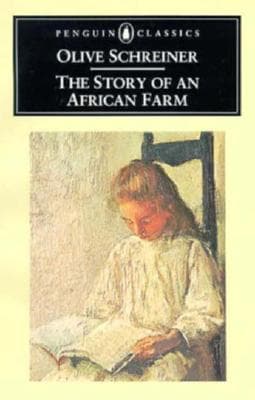
Synopsis
Covers the whole plot, including the ending.
- Difficulty
- Medium
- Pacing
- Slow
- Mood
- Philosophical, Melancholy, Reflective, Critical
- Read it if
- You are interested in 19th-century feminist literature, philosophical novels, or stories set in colonial South Africa that critique societal norms.
- Skip it if
- You prefer fast-paced plots, lighthearted reads, or stories with clear-cut happy endings.
The Story of an African Farm Plot Summary
Covers the whole plot, including the ending.
The Farmstead and Its Inhabitants
The novel begins on an isolated ostrich farm in the Karoo desert of South Africa. Waldo, a young German boy, works as a shepherd for Tant Sannie, the strict and religious Boer matriarch. Waldo is quiet and thoughtful, spending his days carving figures and thinking about life. He is often neglected by Tant Sannie and her second husband, Piet Vander Walt. He finds comfort in his friendship with Em, Tant Sannie's kind but traditional niece, and Lyndall, Em's clever and rebellious cousin. Lyndall, educated in a boarding school, questions the strict social rules of their conservative community. The children's different personalities and hopes are clear from the start, setting up their separate paths.
The Arrival of Bonaparte Blenkins
Bonaparte Blenkins, a cunning and dishonest Englishman, arrives at the farm. He claims to be a distant relative and a religious man. He quickly impresses Tant Sannie with his exaggerated piety, earning her trust. Blenkins, however, is cruel to Waldo, mocking his intellectual pursuits and burning his carvings. He tries to control the household, disrupting the children's lives and using Tant Sannie's gullibility for his own benefit. His presence highlights the hypocrisy in the community and makes the children question traditional values.
Waldo's Spiritual Awakening and Blenkins's Downfall
Waldo, despite Blenkins's cruelty, continues his solitary search for understanding, finding peace in nature and his own thoughts. He grapples with complex philosophical and religious questions, often showing them in his allegorical carvings. Meanwhile, Blenkins's true nature becomes clear through his manipulative acts and his attempt to marry Tant Sannie for her money. His schemes are eventually exposed, including a confrontation with Lyndall, leading to his expulsion from the farm by Tant Sannie's brother, Otto. This brings a temporary calm to the farm, but the lessons of hypocrisy and injustice stay with the children.
Lyndall's Return and Intellectual Rebellion
Lyndall returns from boarding school, more intellectual and rebellious than before. She openly states her feminist views, criticizing the limited roles for women in their society and wanting intellectual and personal freedom. Her sharp mind and independent spirit make her unusual in the conservative farm setting. She often has passionate discussions with Waldo, who, though less outspoken, shares her desire for deeper meaning beyond their world. Lyndall's return sparks new thoughts and discontent among the young people on the farm.
Em's Engagement and Lyndall's Rejection of Marriage
Em, unlike Lyndall, follows the traditional path expected of her and gets engaged to Gregory Rose, a wealthy but uninspiring neighbor. Lyndall, however, firmly rejects marriage, seeing it as a way women are controlled. She refuses proposals from several men, including Gregory Rose, who, drawn to her intelligence, first proposes to her before turning to Em. Lyndall's refusal comes from her belief that marriage would suppress her independence and intellectual growth, showing the sharp differences in the cousins' views on life and society.
Lyndall's Mysterious Departure and Unconventional Choice
Wanting independence and a life away from the farm, Lyndall leaves, promising to return. She later reappears, changed, and tells Waldo she is pregnant by a wealthy, unnamed man she refused to marry. This choice further shows her rejection of social norms and her commitment to living authentically, even if it means being ostracized. She explains her reasons to Waldo, stressing her desire to keep her autonomy rather than be tied to a conventional, loveless marriage. Her decision is a strong statement about female agency and the limits of Victorian morality.
Lyndall's Illness and Tragic End
As Lyndall's health declines after childbirth, she travels with Gregory Rose. Despite her earlier rejection, he remains devoted to her and cares for her as she nears death. Gregory, knowing her unconventional situation, still offers her marriage to legitimize her child, but Lyndall refuses, holding to her principles. She eventually dies, her dreams of freedom unfulfilled, but her spirit unbroken. Her death comments on the societal pressures that ultimately crushed her spirit, leaving a lasting impact on Waldo and Em.
Waldo's Philosophical Journey and Solitary Death
After Lyndall's death, Waldo continues his solitary, philosophical journey. He works as a transport rider, traveling through the vast Karoo, observing nature and thinking about life, suffering, and the universe. His intellectual and spiritual growth deepens, but he remains an outsider, unable to fully connect with the conventional world. He eventually returns to the farm, finding quiet peace in his connection with nature. One day, while resting under a tree, he dies peacefully and alone, his journey of contemplation complete, leaving behind his carvings and a legacy of quiet thought.
Em's Conventional Life and Gregory's Devotion
Em, married to Gregory Rose, settles into a traditional life on the farm. She finds happiness as a wife and mother, embracing the domestic role Lyndall rejected. Gregory, however, is still deeply affected by his experiences with Lyndall. Though he is a loving husband to Em, his encounter with Lyndall's intelligence and spirit has broadened his view, making him less rigid and more understanding than before. His devotion to Lyndall, even in death, shows the deep impact she had on his life, highlighting the quiet change in his character.
The Enduring Farm and Lingering Questions
Life on the African farm continues, seemingly unchanged by the deaths of Waldo and Lyndall. Tant Sannie grows older, still holding to her strict beliefs. The landscape, a constant background to the human drama, remains indifferent but beautiful. The novel ends with a sense of life's cycles and the lasting power of the natural world. While Em finds her place in the traditional order, the questions Lyndall and Waldo raised about freedom, truth, and society remain, echoing through the vast, silent Karoo, prompting the reader to consider the meaning of their struggles.
Principal Figures
Lyndall
Protagonist
An intelligent, rebellious young woman who challenges Victorian societal norms.
Lyndall is the most outspoken and intellectually advanced of the protagonists. Educated in a boarding school, she possesses a keen mind and an unwavering belief in women's rights and personal freedom. She openly critiques the patriarchal structures and restrictive marriage conventions of her time, refusing to be confined by societal expectations. Her quest for intellectual and personal autonomy drives her actions, leading her to make radical choices that defy conventional morality. She is passionate, articulate, and fiercely independent, often seen as an anomaly in her conservative environment.
Relationships: Waldo (Intellectual confidante and kindred spirit); Em (Cousin and foil, representing conventionality); Gregory Rose (Suitor and devoted caregiver); The Stranger (father of her child) (Lover, whose identity she keeps secret)
Waldo Faku
Protagonist
A quiet, philosophical shepherd boy who seeks meaning beyond material existence.
Waldo is a sensitive and introspective German boy who works as a shepherd on the farm. Neglected and often mistreated, he finds solace in nature, his allegorical carvings, and deep philosophical contemplation. He grapples with profound questions about existence, religion, and the human condition, often through silent observation and inner reflection. Despite his lack of formal education, he possesses an innate wisdom and a pure spirit, representing a search for truth and spiritual understanding outside of conventional dogma. His journey is one of quiet intellectual and spiritual awakening.
Relationships: Lyndall (Intellectual confidante and kindred spirit); Em (Childhood friend, representing kindness and conventionality); Tant Sannie (Cruel mistress); Bonaparte Blenkins (Tormentor)
Em
Supporting
Tant Sannie's kind-hearted but conventional niece, seeking traditional happiness.
Em is Tant Sannie's niece, a sweet-natured and gentle young woman who embodies the traditional virtues and expectations of her society. She is kind, practical, and deeply religious, finding comfort in conventional roles and relationships. While she loves Lyndall and Waldo, she doesn't share their radical intellectual or philosophical leanings. Her aspirations are centered on marriage, family, and domestic life, which she ultimately achieves. Em serves as a foil to Lyndall, representing the path of conformity and the quiet contentment found within societal norms, yet she possesses a genuine goodness that makes her endearing.
Relationships: Lyndall (Cousin and object of admiration); Waldo (Childhood friend); Gregory Rose (Husband)
Tant Sannie
Antagonist
The pious, hypocritical, and domineering Boer matriarch of the farm.
Tant Sannie is the formidable and deeply religious Boer matriarch who owns the farm. She is a figure of patriarchal authority, often cruel and narrow-minded, especially towards Waldo. Her piety is a facade for her self-interest and judgmental nature, as she readily embraces the manipulative Bonaparte Blenkins and prioritizes wealth and social standing. She embodies the rigid, conservative, and often hypocritical aspects of the Boer society that the novel critiques. Her character highlights the oppressive forces that the younger protagonists struggle against.
Relationships: Waldo (Mistress, often cruel); Em (Niece, whom she controls); Bonaparte Blenkins (Dupe and admirer); Piet Vander Walt (Second husband)
Bonaparte Blenkins
Antagonist
A manipulative and hypocritical Englishman who exploits others' credulity.
Bonaparte Blenkins is a cunning and self-serving Englishman who arrives at the farm claiming to be a relative and a man of God. He uses flattery, false piety, and manipulative tactics to ingratiate himself with Tant Sannie, gaining influence and authority. He is cruel to Waldo, mocking his intelligence and destroying his creations, and attempts to exploit the family for his own financial gain. Blenkins embodies religious hypocrisy and deceit, serving as a stark example of the moral corruption that can hide behind a veneer of righteousness. His presence highlights the vulnerabilities of the isolated community.
Relationships: Tant Sannie (Victim of his manipulation); Waldo (Victim of his cruelty)
Gregory Rose
Supporting
A well-meaning but initially conventional man who falls for Lyndall and later marries Em.
Gregory Rose is a neighboring farmer, initially presented as a somewhat conventional and earnest young man. He is deeply smitten by Lyndall's intelligence and spirit, proposing to her despite her unconventional views. After her rejection, he turns his affections to Em and marries her. However, his devotion to Lyndall, even after she makes her radical choices, demonstrates a capacity for growth and understanding beyond his initial traditional mindset. He becomes a caring and compassionate figure, especially in Lyndall's final days, showing a quiet strength and loyalty that transcends societal judgment.
Relationships: Lyndall (Unrequited love, devoted caregiver); Em (Husband)
Otto
Supporting
Tant Sannie's brother, who provides a voice of reason and justice.
Otto is Tant Sannie's brother, a more reasonable and just character than his sister. He is a man of integrity who sees through Bonaparte Blenkins's deceit and ultimately orchestrates his removal from the farm. While not a central character, he represents a more ethical and fair aspect of the Boer community, offering a contrast to Tant Sannie's hypocrisy. His actions bring a temporary sense of order and justice to the farm, acting as a protector for the vulnerable, particularly Waldo.
Relationships: Tant Sannie (Sister, whom he sometimes corrects); Bonaparte Blenkins (Antagonist, whom he exposes)
Themes & Insights
The Search for Truth and Meaning
This theme is mainly explored through Waldo. He constantly questions God, existence, and suffering, finding answers not in formal religion, but in nature and his own deep thoughts. His carvings show his philosophical inquiries. Lyndall also embodies this theme through her search for intellectual honesty and her rejection of superficial social truths. Both characters want to understand the world beyond its surface, challenging the rigid beliefs in their community. For example, Waldo's long talks with a stranger about faith and doubt show his endless quest.
“For the soul, when it is hungry, will take any food.”
Feminism and the Oppression of Women
Lyndall is central to this theme. She strongly criticizes the limited roles and expectations for women in 19th-century South African society. She sees marriage as a form of control, stifling a woman's intellectual and personal freedom. Her refusal to marry, even when pregnant, is a defiant act against male-dominated norms. The novel contrasts Lyndall's intellectual desires with Em's acceptance of domesticity, showing the different paths available (or not available) to women. Lyndall's discussions with Waldo about the 'woman question' are key.
“We are like the spider in the web; we want to catch something, and we don't know what it is. We want to be free, and we don't know what freedom means.”
Hypocrisy and Dogmatic Religion
This theme is clearly shown through Tant Sannie and Bonaparte Blenkins. Tant Sannie's strong religious statements often hide her cruelty, greed, and narrow-mindedness, especially towards Waldo. Blenkins, a self-proclaimed man of God, uses his piety to manipulate others and gain personal advantage, exploiting Tant Sannie's trust. Their characters reveal the superficiality and moral corruption that can hide behind outward religious practice, contrasting sharply with Waldo's sincere spiritual search. The scene where Blenkins burns Waldo's carvings, claiming religious righteousness, is a clear example.
“He always prayed with a loud voice, and he always preached with a loud voice, and he always ate with a loud voice.”
The Alienation of the Individual
Both Waldo and Lyndall feel isolated from their society. Waldo, with his thoughtful nature, is misunderstood by most, finding true connection only with Lyndall and in nature. Lyndall's radical ideas and independent spirit set her apart from the traditional women around her, leaving her alone in her intellectual and personal struggles. Even Em, despite conforming, feels a certain distance from her more complex cousin and friend. This theme highlights the difficulty of living authentically when social structures are rigid, leading to loneliness despite being near others.
“Life is a long battle, and the end is always defeat.”
Nature as Solace and Reflection
The vast Karoo landscape is a powerful background and a source of comfort for Waldo. He finds spiritual connection and intellectual inspiration in nature, observing its cycles and seeing parallels to human existence. The desert's silence and size give him space for deep thought, acting as a sanctuary from the harsh realities of the farm. Nature is presented as a constant, indifferent yet beautiful force, contrasting with the fleeting human drama. Waldo's peaceful moments and his death under a tree highlight nature's role as both inspiration and final resting place.
“The long, long days came and went, and the sun rose and set, and the stars came out, and the moon grew full and waned, and still the Karoo lay there.”
Plot Devices & Literary Techniques
Allegory
Waldo's carvings and stories serve as symbolic representations of philosophical ideas.
Waldo's allegorical carvings and his stories, such as 'The Hunter,' function as a key plot device for exploring complex philosophical and religious themes. These creations allow Waldo, a character of few words, to articulate his profound thoughts on life, death, truth, and the human spirit. They provide a window into his inner world and his search for meaning beyond the literal. The destruction of his carvings by Blenkins symbolizes the suppression of free thought and spiritual inquiry by dogmatic authority, making them central to the novel's thematic development.
Foil Characters
The contrasting personalities of Em and Lyndall highlight different societal paths.
The relationship between Em and Lyndall serves as a classic example of foil characters. Em, kind-hearted and conventional, embraces the traditional roles of womanhood, seeking happiness in marriage and domesticity. Lyndall, on the other hand, is intellectually rebellious, vehemently rejecting societal norms and patriarchal expectations. Their contrasting choices and aspirations illuminate the limited options available to women in their era and underscore the novel's feminist critique. Their dynamic allows the author to explore the complexities of female identity and societal pressure from multiple perspectives.
The Isolated Farm Setting
The remote Karoo farm symbolizes societal constraints and the search for freedom.
The isolated African farm in the Karoo desert is more than just a setting; it functions as a powerful plot device. Its remoteness emphasizes the characters' isolation from broader society and its intellectual currents, intensifying their personal struggles. The vast, unchanging landscape contrasts with the internal turmoil of the characters, particularly Waldo and Lyndall, who yearn for something beyond its confines. This isolation also highlights the rigidity and insularity of the Boer community, making the challenges to its norms, especially Lyndall's, seem even more radical and significant. It embodies both confinement and a space for introspection.
The Stranger/Unnamed Father
An enigmatic figure who catalyzes Lyndall's ultimate act of defiance.
The unnamed man who fathers Lyndall's child is a crucial plot device, despite his minimal direct appearance. His existence allows Lyndall to make her most radical statement against conventional marriage and societal expectations. By refusing to marry him, even in the face of pregnancy and social ruin, Lyndall asserts her autonomy and redefines motherhood on her own terms. This anonymous figure enables the novel to explore themes of female independence, societal judgment, and the consequences of unconventional choices without romanticizing or over-complicating the partner in the relationship. He is merely the catalyst for her profound act of self-determination.
The Story of an African Farm Quotes
“It is not what we are that hurts us, but what we think we are.”
“Every man’s life is a train, and he is the driver, and the train carries a freight.”
“We are all in the power of some other thing; we are all slaves.”
“The soul's highest aspiration is to be free.”
“The world is a great school, and we are all pupils.”
“There are some people who seem to have been born without a skin; they feel everything.”
“She had a way of looking at you, as if she knew all about you, and more.”
“The greatest sorrow in life is not to have loved, but to have loved in vain.”
“No one can judge what another suffers.”
“Life is a dream from which we are all at last awakened by death.”
“It is better to be a human being dissatisfied than a pig satisfied; better to be Socrates dissatisfied than a fool satisfied.”
“The world is a great machine, and we are the little wheels in it.”
“Man is a creature that strives, and hopes, and falls, and rises again.”
“To be free, to walk on the bare veld, to hear the wind, to see the stars — that is my heaven.”
Quiz
10 questions on the plot and the characters. Each answer comes with a short explanation.
Question 1
What is the name of the orphaned English girl who lives on the farm and is the protagonist of the novel?
- Em Lyndall
- Waldo Faku
- Lyndall
- Tant' Sannie
Show answer
C. Lyndall Lyndall is the central female protagonist, an intelligent and independent orphan.
Question 2
Which character is the German-born, contemplative shepherd boy who spends much of his time carving wooden figures and pondering life's mysteries?
- Bonaparte Blenkins
- Waldo
- Gregory Rose
- Otto
Show answer
B. Waldo Waldo is the introspective shepherd boy, known for his philosophical nature and wood carvings.
Question 3
What is the primary setting for most of the events in 'The Story of an African Farm'?
- A bustling city in Cape Town
- A remote missionary school
- A secluded farm in the South African Karoo
- A diamond mining camp
Show answer
C. A secluded farm in the South African Karoo The story is predominantly set on a remote farm in the South African Karoo, reflecting the isolation and rural life.
Question 4
What happens to Waldo's father, Otto, early in the novel?
- He moves to a different farm to become a richer farmer.
- He is dismissed from his position as overseer by Tant' Sannie and dies shortly after.
- He leaves to fight in a local war.
- He marries Tant' Sannie and becomes the farm owner.
Show answer
B. He is dismissed from his position as overseer by Tant' Sannie and dies shortly after. Otto, Waldo's kind father, is unjustly fired by Tant' Sannie and dies from heartbreak and exposure soon after.
Question 5
What is Lyndall's ultimate fate, reflecting the novel's themes of female independence and societal constraints?
- She marries Gregory Rose and lives a conventional life.
- She becomes a successful teacher in a big city.
- She dies after giving birth to an illegitimate child, rejecting marriage.
- She inherits the farm and manages it successfully.
Show answer
C. She dies after giving birth to an illegitimate child, rejecting marriage. Lyndall dies after having a child out of wedlock, a poignant end that highlights her struggle against societal norms and her desire for freedom, even if it leads to tragedy.
Question 6
How does Bonaparte Blenkins manipulate Tant' Sannie and gain control on the farm for a period?
- He threatens to expose her past misdeeds.
- He uses flattery, feigned piety, and appeals to her religious beliefs.
- He offers her a large sum of money.
- He proves his superior farming knowledge.
Show answer
B. He uses flattery, feigned piety, and appeals to her religious beliefs. Bonaparte Blenkins is a hypocritical character who gains Tant' Sannie's trust and influence through exaggerated piety and flattery, aligning himself with her religious views.
Question 7
What significant societal convention does Lyndall explicitly challenge through her actions and philosophy?
- The importance of land ownership.
- The traditional roles and expectations for women in marriage and society.
- The strict hierarchy between employers and workers.
- The necessity of religious faith.
Show answer
B. The traditional roles and expectations for women in marriage and society. Lyndall is a strong proponent of female independence, openly questioning and rejecting the conventional roles and limitations placed upon women, especially regarding marriage and education.
Question 8
What happens to Waldo at the very end of the novel?
- He marries Em and inherits the farm.
- He leaves the farm to travel the world.
- He dies peacefully on the veld, his body discovered by Em.
- He becomes a renowned philosopher and writer.
Show answer
C. He dies peacefully on the veld, his body discovered by Em. Waldo, after a life of introspection and quiet suffering, dies alone on the veld, a poignant end that underscores the novel's often bleak outlook on individual aspirations in a restrictive world.
Question 9
How does the character of Gregory Rose evolve throughout the story, particularly in relation to Lyndall?
- He remains consistently indifferent to Lyndall.
- He starts as a conventional suitor but later adopts female attire and takes on a nurturing role for Lyndall's child.
- He becomes a cruel and abusive figure.
- He abandons Lyndall and leaves the farm permanently.
Show answer
B. He starts as a conventional suitor but later adopts female attire and takes on a nurturing role for Lyndall's child. Gregory Rose undergoes a significant transformation, initially a conventional, somewhat effeminate suitor, he later adopts female clothing and cares for Lyndall's child, challenging gender norms.
Question 10
What controversial aspect of the novel, mentioned in the provided description, relates to its themes?
- Its detailed descriptions of farming techniques.
- Its unorthodox views on religion and marriage.
- Its advocacy for colonial expansion.
- Its use of experimental narrative structures.
Show answer
B. Its unorthodox views on religion and marriage. The description explicitly states that 'The novel's unorthodox views on religion and marriage aroused widespread controversy upon its 1883 publication,' reflecting key thematic challenges to societal norms.
The Story of an African Farm FAQ
What is the central conflict in 'The Story of an African Farm' and how do the main characters embody it?
The central conflict revolves around the clash between individual aspirations and the rigid, patriarchal Boer social conventions of 19th-century South Africa. Lyndall embodies this through her intellectual hunger and rejection of traditional female roles, Waldo through his philosophical musings and spiritual quest, and Em through her initial conformity followed by a quiet yearning for genuine connection beyond societal expectations.
Who are the three main childhood friends, and what are their primary desires?
The three main friends are Lyndall, a fiercely intelligent and independent girl who yearns for knowledge and freedom from societal constraints; Waldo, a contemplative and artistic boy who seeks truth and meaning beyond the physical world; and Em, a kind-hearted and conventional girl who desires love and acceptance within the existing social structure.
How does the setting of the Karoo farm influence the characters' development and outlook?
The isolated Karoo farm, with its vast, stark landscapes, fosters introspection and a sense of alienation, particularly for Lyndall and Waldo. It symbolizes both the beauty and the harshness of their existence, limiting their opportunities while also providing a backdrop for profound philosophical thought and a yearning for a larger world beyond its confines.
What role does Bonaparte Blenkins play in the narrative, and what does he represent?
Bonaparte Blenkins is a manipulative, hypocritical Englishman who exploits the farm's inhabitants, particularly Tant Sannie. He represents the corrupting influence of false piety and opportunism, highlighting the vulnerability of the uneducated and the dangers of uncritical acceptance of authority figures, especially those cloaked in religious dogma.
How do Lyndall's views on marriage challenge the societal norms of her time?
Lyndall vehemently rejects the traditional view of marriage as a woman's sole purpose and a path to security, viewing it instead as a form of subjugation that stifles female intellect and independence. She desires a partnership based on equality and mutual respect, a radical concept for 19th-century society, and ultimately chooses a path that defies conventional expectations.
What is the significance of the 'Hunter's Dream' chapter for Waldo's character arc?
The 'Hunter's Dream' is a pivotal allegorical chapter where Waldo envisions a hunter pursuing a beautiful bird of truth, only to find that the bird's beauty lies in its unattainable nature. This dream encapsulates Waldo's lifelong spiritual and philosophical quest, suggesting that ultimate truth is elusive and that the journey of seeking is more significant than the destination itself.
Are there any subtle connections between the natural world descriptions and the characters' inner states?
Yes, the descriptions of the Karoo's harsh beauty, its droughts and storms, often mirror the characters' internal struggles and emotional landscapes. For instance, the vast, empty plains reflect Waldo's solitude and philosophical ponderings, while the relentless heat and dust can symbolize the oppressive societal pressures felt by Lyndall.
What is implied by Lyndall's choice to have a child out of wedlock, despite her strong convictions against male dominance?
Lyndall's decision to have a child out of wedlock, knowing it will lead to social ostracization and her eventual decline, is a complex act. It can be interpreted as a final, desperate assertion of her bodily autonomy and an ultimate rejection of patriarchal control over her life, even if it comes at a devastating personal cost, highlighting her tragic defiance.
How does the character of Otto, the German overseer, subtly contrast with other male figures like Blenkins or Gregory Rose?
Otto, with his simple honesty, kindness, and deep spiritual faith, stands in stark contrast to the manipulative Blenkins and the well-meaning but ultimately conventional Gregory Rose. Otto represents a genuine, unpretentious goodness and a practical spirituality, offering a quiet counterpoint to the hypocrisy and superficiality found elsewhere on the farm.
Analyze Lyndall's psychological struggle between her desire for intellectual freedom and the biological/social expectations placed upon her.
Lyndall's psychological struggle is profound; she yearns for a life of intellectual pursuit and independence, clashing with the era's rigid expectations for women to marry and bear children. This conflict creates deep internal turmoil, as she recognizes the limitations imposed by her gender while fiercely resisting them, ultimately leading to a tragic path as she refuses to compromise her ideals.
How does Waldo's introspective nature contribute to his isolation and eventual fate?
Waldo's intensely introspective and philosophical nature, while leading to deep insights, also isolates him from the more practical and conventional world around him. His inability to fully connect with others on an intellectual or emotional level, combined with his physical frailty and lack of social ambition, contributes to his quiet, solitary existence and eventual, peaceful death.
Discuss the psychological impact of Tant Sannie's hypocrisy and self-deception on her own life and those around her.
Tant Sannie's profound hypocrisy and self-deception allow her to maintain a comfortable, if superficial, existence, but it comes at the cost of genuine connection and understanding. Her rigid adherence to dogma and her inability to see beyond her own prejudices create a suffocating environment for Lyndall and Waldo, demonstrating how unexamined beliefs can perpetuate cruelty and limit human potential.
What psychological journey does Em undertake, moving from conventionality to a deeper understanding of love and sacrifice?
Em begins as a conventional, somewhat naive character, eager to please and fit into societal norms. Her journey involves a slow awakening, particularly through her observations of Lyndall's suffering and her own experiences with love and loss. She ultimately develops a deeper, more compassionate understanding of love, demonstrating quiet strength and self-sacrifice, especially in her care for Lyndall's child.
Is 'The Story of an African Farm' primarily a feminist novel, or does it explore broader themes of human liberation?
'The Story of an African Farm' is undeniably a pioneering feminist novel due to Lyndall's explicit critiques of marriage and gender roles. However, it also explores broader themes of human liberation, addressing intellectual freedom, spiritual seeking, and the individual's struggle against all forms of societal and religious oppression, making its scope wider than just gender issues.
How does the novel's unorthodox view on religion challenge Victorian sensibilities?
The novel challenges Victorian religious sensibilities through Waldo's skeptical inquiries, Lyndall's outright rejection of dogma, and the portrayal of hypocritical religious figures like Bonaparte Blenkins. It suggests that true spirituality lies in individual quest and moral integrity rather than rigid adherence to institutionalized religion, which was a radical stance for its time.
To what extent is the ending of the novel pessimistic or hopeful regarding the potential for social change?
The ending is often seen as largely pessimistic, with Lyndall's tragic death and Waldo's quiet passing suggesting that those who defy convention may not find happiness or success. However, the survival of Em and her quiet strength, along with the continued yearning for truth, offers a glimmer of hope that the seeds of change, though slow, might eventually bear fruit through future generations or subtle shifts in consciousness.
What is the enduring legacy of Olive Schreiner's novel in South African literature?
Olive Schreiner's novel is considered the first great South African novel, profoundly influencing subsequent generations of writers. Its searing critique of colonial society, exploration of complex psychological states, and its pioneering feminist themes established a new standard for literary realism and social commentary in the region, securing its place as a foundational text.
How does the novel's structure, with its philosophical digressions and allegories, contribute to its overall impact?
The novel's structure, featuring philosophical digressions, allegories like the 'Hunter's Dream,' and vivid descriptions of the Karoo, enriches its impact by transcending mere plot. These elements deepen the thematic exploration, allowing Schreiner to directly address complex ideas about truth, freedom, and human existence, making the book a profound intellectual and emotional experience rather than a simple narrative.
About the author

Olive Schreiner was a South African author known for her contributions to literature in the late 19th and early 20th centuries. Her notable work, The Story of an African Farm, explores themes of gender and social issues in colonial South Africa. Schreiner's writing is recognized for its early feminist perspective and its critique of societal norms.
Similar books
- Jane Eyre
Charlotte Brontë
4.1 (1.6M) average on GoodreadsHistorical FictionExplores a strong female protagonist challenging societal expectations and seeking independence in a restrictive era.
- Wuthering Heights
Emily Brontë
3.9 (1.3M) average on GoodreadsHistorical FictionFeatures intense character studies, a bleak landscape, and themes of passion, rebellion, and social class.
- The Mill on the Floss
George Eliot
3.8 (48k) average on GoodreadsHistorical FictionDepicts a spirited and intelligent heroine struggling against the confines of her provincial life and gender roles.
- King Solomon's Mines
H. Rider Haggard
3.8 (43k) average on GoodreadsFantasyHaggard's novel is an adventure-driven colonial romance focused on external conquest and discovery, glorifying imperial expansion. Schreiner's African Farm, in contrast, offers an internal, psychological drama, exploring existential struggles and intellectual rebellion within a colonial setting, without the same focus on imperial triumph. It presents a starkly different vision of Africa.
- Middlemarch
George Eliot
4.0 (136k) average on GoodreadsHistorical FictionEliot's Middlemarch is a masterpiece of Victorian social realism, meticulously portraying the intricate social structures, moral dilemmas, and domestic lives within a provincial English community. Schreiner's novel, while also Victorian, is more fragmented, philosophical, and focused on the individual's spiritual and intellectual quest against a vast, indifferent landscape, rather than detailed social realism. It prioritizes abstract ideas and character interiority over community dynamics.
- To Kill a Mockingbird
Harper Lee
4.3 (4.5M) average on GoodreadsHistorical FictionIn the 1930s Jim Crow South, Harper Lee writes about racial injustice, moral growth, and the quiet courage of a lawyer father, Atticus Finch, as seen through his young daughter's eyes.

Enjoyed the summary?
A summary gives you the shape of the book. The book itself has the detail, the examples and the voice.
Find The Story of an African Farm on AmazonAs an Amazon Associate, BookBrief earns from qualifying purchases. How we're funded