
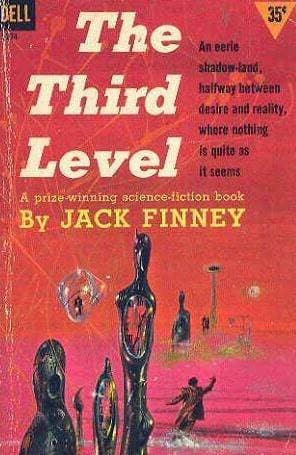
Synopsis
Covers the whole plot, including the ending.
- Difficulty
- Easy
- Pacing
- Moderate
- Mood
- Nostalgic, Mysterious, Reflective, Whimsical
- Read it if
- You enjoy short, thought-provoking science fiction stories about time travel and escapism, with a classic, nostalgic feel.
- Skip it if
- You prefer complex plots with extensive world-building or definitive answers to mysteries.
The Third Level Plot Summary
Covers the whole plot, including the ending.
The Discovery of the Third Level
Charley, a thirty-one-year-old man in New York, often seeks a break from the city's rush. One evening, rushing to catch a late train, he takes the subway from Grand Central Station. He gets lost, which he blames on the station's complex layout, saying that Grand Central 'is growing like a tree, pushing out new corridors and staircases like roots.' He takes an unfamiliar corridor that slopes downward and leads him to a hidden third level. This level looks old-fashioned: gaslights glow, brass spittoons line the floor, and men wear old suits with fancy mustaches. He sees a ticket counter with a man wearing a green eyeshade and a black four-button suit, and a newsstand selling a newspaper called 'The World' dated June 11, 1894.
An Attempt to Buy Tickets to Galesburg
Overwhelmed by being in the past, Charley goes to the ticket counter. He decides he wants to buy two tickets to Galesburg, Illinois, for himself and his wife, Louisa. Galesburg is his hometown, and he often imagines its peaceful past. He shows his modern money, but the clerk, suspicious of the unfamiliar bills, accuses him of trying to 'skin' him and threatens arrest. Frightened by the clerk's stern manner and the realization his money is useless in this era, Charley quickly leaves the third level, fearing he might be thrown into an 1894 jail. He hurries back through the corridor, eventually finding his way back to the modern second level of Grand Central Station.
Consulting a Psychiatrist Friend
Disturbed by his experience, Charley tells his psychiatrist friend, Sam Weiner. Charley describes the third level in detail, recounting the gaslights, old clothing, and the 1894 newspaper. Sam, however, is doubtful. He calls Charley's story a 'waking-dream wish fulfillment,' suggesting Charley is unhappy with the modern world's insecurity, war, and worry, and is looking for an escape. Sam suggests Charley's stamp collecting hobby is also a temporary escape from reality. Louisa, Charley's wife, is also concerned about his mental state but eventually accepts Sam's explanation, though with some doubts.
The Quest for the Third Level
Despite Sam's logical explanation, Charley remains sure the third level is real. He spends many lunch hours looking for the corridor in Grand Central Station, carefully exploring every turn and hidden passage. His obsession grows, worrying Louisa more and more. He describes Grand Central as an endless maze, a place where one could easily get lost or even find a new, old-fashioned level. He is driven by the desire to escape to the peaceful past of Galesburg, a place he sees as a refuge from present-day worries. He often remembers the quiet streets, large houses, and long summer evenings of his childhood in Galesburg.
Louisa's Concern and Shared Search
Louisa initially worries about Charley's growing obsession with the third level. She tries to stop him, fearing for his mental health, and wishes he would stop searching. However, her concern for him eventually leads her to reluctantly join him in his search for the third level. Together, they spend evenings exploring the vast passages of Grand Central Station, hoping to find the hidden entrance. Despite their efforts, they never find the specific corridor or the third level again. This shared but fruitless quest shows her underlying affection and concern for Charley, even if she does not fully believe in his discovery.
Sam's Disappearance and the First-Day Cover
One day, Charley's stamp collection reveals a surprise. Among his oldest first-day covers—new stamps issued on their first day of sale and postmarked to prove the date—he finds one that should not be there. It is an envelope addressed to his grandfather in Galesburg, postmarked July 18, 1894, and bearing a six-cent stamp with a picture of President Garfield. Inside, there is a letter from Sam Weiner. The letter confirms Sam's presence in 1894 Galesburg, having found the third level himself. Sam describes the peaceful life there, inviting Charley and Louisa to join him and even suggesting he has set up a hay and feed business, which he always wanted to do.
Sam's Escape to the Past
Sam's letter from 1894 Galesburg proves to Charley that the third level is real, and that Sam, who had first dismissed Charley's story as a delusion, has now experienced it himself. Sam writes about the pleasant environment of 1894 Galesburg, with people playing pianos, singing, and enjoying the quiet evenings. He encourages Charley and Louisa to keep looking for the third level and join him in the past. The letter implies that Sam, despite his professional doubt, had his own desires to escape modern world pressures, and ultimately found his way to the past Charley wanted. This discovery validates Charley's experience and strengthens his resolve.
Charley's Renewed Search for the Third Level
With the clear evidence of Sam's letter, Charley's belief about the third level is stronger than ever. The letter not only validates his own experience but also confirms that escape to the past is possible. He sees Sam's business venture in 1894 Galesburg—setting up a hay and feed business—as a clear sign of his friend's successful move. Charley now has a goal: to find the third level, exchange his modern money for old currency at a coin dealer, and buy tickets to Galesburg for himself and Louisa, to join Sam in that peaceful, past era. His search becomes more determined and hopeful than before, fueled by the idea of a shared escape.
The Implication of Shared Desire for Escape
The revelation of Sam's letter and his journey to 1894 Galesburg changes how the story interprets reality and escape. Initially, Sam, as a psychiatrist, represents reason and scientific explanation, dismissing Charley's experience as a delusion. However, his disappearance and the letter from the past show that even those who seem grounded in reality have a deep desire to escape modern life's anxieties and pressures. Sam's move to a quiet, simpler past suggests that the longing for a bygone era is a common human feeling, not just an individual neurosis, and that the 'third level' might be a way for anyone seeking peace.
The Third Level Characters
Charley
Protagonist
A man who discovers a mysterious third level at Grand Central Station leading to the past.
Charley is a thirty-one-year-old, ordinary man living in New York City. He works in an office and, like many, feels the pressures and anxieties of modern life – the constant worry about war, insecurity, and the fast pace of the urban environment. He finds solace in his hobby of stamp collecting, which his psychiatrist friend Sam dismisses as a temporary escape. Charley is imaginative and a bit of a romantic, idealizing the peaceful, simpler past of his hometown, Galesburg. He is persistent in his beliefs, even when others doubt him.
Relationships: Louisa (Wife, initially skeptical but eventually supportive and concerned.); Sam Weiner (Psychiatrist friend, initially dismissive but later confirmed to have also escaped to the past.)
Louisa
Supporting
Charley's wife, initially concerned about his mental state but eventually joins his search.
Louisa is Charley's loving and supportive wife. Initially, she is worried about Charley's obsession with the third level, fearing for his sanity. She tries to persuade him to stop searching and is relieved when Sam Weiner offers a psychological explanation for his experience. However, her concern for Charley's well-being eventually leads her to reluctantly participate in his search, demonstrating her loyalty and affection. She represents the grounding force in Charley's life, though she is not entirely immune to the allure of a simpler past.
Relationships: Charley (Husband, whom she loves and is concerned about.)
Sam Weiner
Supporting/Mentioned
Charley's psychiatrist friend who initially dismisses the third level, but later escapes to the past himself.
Sam Weiner is Charley's psychiatrist friend. Initially, he embodies scientific rationality, providing a psychological explanation for Charley's discovery of the third level, diagnosing it as a 'waking-dream wish fulfillment' driven by the anxieties of modern life. He also labels Charley's stamp collecting as an 'escape.' However, Sam's character takes a surprising turn when he himself vanishes and sends a letter from 1894 Galesburg, revealing that he, too, found a way to escape to the past. This makes him a foil to Charley's initial 'delusion' and a testament to the universal human desire for escape.
Relationships: Charley (Patient/friend, whom he initially tries to rationalize but ultimately follows into the past.)
The Third Level Themes
Escape from Modern Reality
The main theme is the human desire to escape modern life's anxieties, pressures, and perceived dangers. Charley's discovery of the third level and his longing for 1894 Galesburg show this directly. The story mentions 'insecurity, fear, war, and worry' as reasons for seeking refuge. Even Sam, the psychiatrist, who at first dismisses Charley's experience as wish fulfillment, eventually finds his own escape to the past, suggesting this desire is universal. The third level is a literal and metaphorical door to a simpler, more peaceful existence, away from present complexities.
“The modern world is full of insecurity, fear, war, and worry, and all the rest of it, and that I just want to get away.”
The Allure of the Past
The story idealizes the past, especially the late 19th century, as a peaceful haven. Galesburg in 1894 is shown as a place of 'big old frame houses, huge lawns, and tremendous trees,' where people had 'time for everything.' This contrasts sharply with Charley's view of the hurried, anxious modern world. The gaslights, brass spittoons, and old clothing on the third level all add to this nostalgic vision. The past is not just a different time, but a different quality of life—one of peace, community, and leisure, which both Charley and Sam ultimately seek.
“Galesburg, Illinois, is a wonderful town still, with big old frame houses, huge lawns, and tremendous trees whose branches meet overhead and roof the streets. And in 1894, summer evenings were twice as long, and people sat out on their lawns, the men smoking cigars and talking quietly, the women waving palm-leaf fans, with the fire-flies all around, in a peaceful world.”
Subjectivity of Reality
The story plays with what is real and what is imagined. At first, Charley's experience is seen as a possible delusion, a 'waking-dream wish fulfillment,' by his psychiatrist friend. However, finding Sam's letter from 1894 blurs the lines between reality and fantasy. It suggests that what one person sees as impossible might be another's lived experience. The 'third level' itself exists outside common understanding, challenging the fixed nature of time and space. The story leaves the reader questioning whether the third level is a physical place, a psychological escape, or a mix of both, highlighting the subjective nature of truth.
“That’s what he said, and my friends all agreed. Everything points to it, they claimed. My stamp collecting, for example; that’s a temporary refuge from reality.”
The Labyrinthine Nature of Life and Time
Grand Central Station itself acts as a symbol for life's complexities and hidden paths, and for time. Charley repeatedly describes it as 'growing like a tree, pushing out new corridors and staircases like roots,' implying that there are always unseen dimensions or possibilities. This maze-like quality extends beyond the physical station to represent the complex, sometimes confusing, nature of existence and the potential for unexpected turns, like finding a portal to the past. The difficulty in finding the third level again reinforces that such escapes or discoveries are not easily accessed or repeated.
“Grand Central is growing like a tree, pushing out new corridors and staircases like roots. There’s probably a long tunnel that nobody knows about, feeling its way under the city right now, on its way to Times Square, and maybe another to Central Park.”
Plot Devices & Literary Techniques
First-Day Cover
A philatelic item that serves as irrefutable proof of time travel.
The first-day cover is a crucial plot device. It's an envelope bearing a new stamp, postmarked on its first day of issue. Charley's discovery of a first-day cover from July 18, 1894, addressed to his grandfather in Galesburg and containing a letter from Sam, provides tangible, undeniable evidence that the third level is real and that Sam has successfully traveled to the past. This object shifts the narrative from Charley's subjective experience to a verifiable event, validating his 'delusion' and propelling the story towards a more concrete (albeit fantastical) resolution.
Grand Central Station as a Portal
A mundane location transformed into a gateway to another time.
Grand Central Station is not just a setting but a dynamic plot device. Its famously complex and ever-changing structure serves as the perfect, believable (within the story's context) location for a hidden 'third level.' Charley's initial reason for getting lost – the station's labyrinthine quality – makes the existence of a secret level plausible. The station acts as a liminal space, a transit hub that paradoxically allows for transit not just through space, but through time, serving as the physical manifestation of the story's central fantastical element.
The Psychiatrist's Role Reversal
A character who initially dismisses the fantastical, only to become part of it.
Sam Weiner, the psychiatrist, functions as a powerful plot device through his unexpected role reversal. Initially, he represents the voice of scientific reason and skepticism, providing a logical (though ultimately incorrect) explanation for Charley's experience. This establishes a baseline of 'reality' against which Charley's claims are measured. However, Sam's later disappearance and letter from the past subvert this role. His transformation from dismissive professional to fellow time-traveler validates Charley's experience and adds a surprising twist, suggesting that the desire for escape is universal and even the most rational minds can succumb to it.
The Third Level Quotes
“The trouble with Harry is that he's always trying to find a way back to something that doesn't exist anymore.”
“Sometimes you're just looking for an escape, and you find it in the most unexpected places.”
“The world is full of people who are looking for a way out, and they find it in different ways.”
“I’ve been to the third level, and it’s a beautiful place. A place where time stands still.”
“The fact is, Charley, you're unhappy. That's why you're seeing things.”
“Every time I go to Grand Central, I feel like I'm going to find it again. That third level.”
“It was a way of going back, a way of getting away from all the hustle and bustle of modern life.”
“The third level is a waking-dream wish fulfillment.”
“You can never really go back, not to a place, not to a time.”
“The past is a foreign country; they do things differently there.”
“Maybe the third level is just a crack in the wall of time.”
“For a moment, I really believed it. That I had found it.”
“The third level is a place where you can breathe, where the air is clean and the pace is slow.”
“There are always two levels to everything, the one you see and the one that's hidden.”
Quiz
10 questions on the plot and the characters. Each answer comes with a short explanation.
Question 1
In 'The Third Level,' where does Charley initially believe the third level of Grand Central Station leads?
- To a hidden subway line to the Bronx
- To a different time period in Galesburg, Illinois
- To a secret government bunker
- To a new express route to Boston
Show answer
B. To a different time period in Galesburg, Illinois Charley discovers the Third Level and buys tickets to Galesburg, Illinois, in the year 1894, indicating his belief it leads to a past time.
Question 2
What is the primary motivation for Charley's psychiatrist friend, Sam, to initially dismiss Charley's claims about the Third Level?
- Sam believes Charley is trying to escape the mundane reality of modern life.
- Sam thinks Charley is attempting to defraud the railway company.
- Sam is jealous of Charley's unique experience.
- Sam has experienced similar delusions himself.
Show answer
A. Sam believes Charley is trying to escape the mundane reality of modern life. Sam tells Charley that his finding the Third Level is a 'waking-dream wish fulfillment,' a way to escape the 'insecurity, fear, war, worry, and all the rest of it' of the modern world.
Question 3
What specific detail convinces Charley that he has traveled back in time to the 1890s on the Third Level?
- The price of a cup of coffee
- The type of currency used (old-style bills) and the fashion of the people
- The absence of electric lights
- The sound of horse-drawn carriages outside
Show answer
B. The type of currency used (old-style bills) and the fashion of the people Charley notices the gas lights, brass spittoons, men with sideburns, fancy mustaches, and beards, and women wearing leg-of-mutton sleeves and skirts, and specifically, the outdated currency at the ticket window.
Question 4
What is the key difference between Charley's initial attempts to find the Third Level again and Sam's eventual success?
- Sam uses a map, while Charley relies on memory.
- Sam sends a letter through the old postal system, while Charley only talks about it.
- Sam is guided by an old railroad employee, unlike Charley.
- Sam sacrifices his stamp collection, while Charley only collects stamps.
Show answer
B. Sam sends a letter through the old postal system, while Charley only talks about it. Sam's disappearance and the discovery of his letter from 1894, sent to Charley's grandfather's address, confirm his success in reaching the past, something Charley could only imagine doing.
Question 5
What is the significance of the first-day cover in 'The Third Level'?
- It is a rare stamp Charley hopes to sell for money.
- It proves that stamp collecting is a common hobby in the past.
- It is the means by which Sam communicates his success in reaching the past to Charley.
- It represents Charley's childhood dream of becoming a postman.
Show answer
C. It is the means by which Sam communicates his success in reaching the past to Charley. Sam's letter to Charley from 1894 is found inside a first-day cover, which had been put away and never opened since the stamp was issued. This serves as tangible proof of Sam's journey.
Question 6
How does Charley's wife, Louisa, react to his stories about the Third Level?
- She immediately believes him and tries to find it with him.
- She is worried about his mental state and consults Sam.
- She dismisses it as a childish fantasy and ignores him.
- She thinks he's trying to trick her into moving to Galesburg.
Show answer
B. She is worried about his mental state and consults Sam. Louisa is concerned about Charley's obsession and takes him to Sam, who is a psychiatrist, indicating her worry about his mental well-being.
Question 7
What specific characteristic of Galesburg, Illinois, makes it an ideal 'escape' destination for Charley and later Sam?
- Its bustling industrial economy.
- Its reputation as a major cultural hub.
- Its peaceful, spacious, and idyllic past as described by Charley's memories and imagination.
- Its advanced technological infrastructure.
Show answer
C. Its peaceful, spacious, and idyllic past as described by Charley's memories and imagination. Charley describes Galesburg in 1894 as a 'wonderful town still, with big old frame houses, huge lawns, and tremendous trees whose branches meet overhead and roof the streets.' He remembers the peaceful evenings and the slow pace of life.
Question 8
The story 'The Third Level' can be interpreted as exploring the theme of escapism. Which of the following best supports this interpretation?
- Charley's detailed knowledge of Grand Central Station's architecture.
- The psychiatrist's explanation that the Third Level is a 'waking-dream wish fulfillment' to escape modern anxieties.
- The historical accuracy of the 1894 details on the Third Level.
- Charley's hobby of stamp collecting as a way to connect with others.
Show answer
B. The psychiatrist's explanation that the Third Level is a 'waking-dream wish fulfillment' to escape modern anxieties. Sam, the psychiatrist, explicitly states that the Third Level is Charley's way of escaping the 'insecurity, fear, war, worry, and all the rest of it' of the modern world, directly addressing the theme of escapism.
Question 9
What is the ultimate irony regarding Sam's belief about Charley's Third Level experience?
- Sam initially dismisses it as a delusion but later finds the Third Level himself and sends a letter from the past.
- Sam claims to be a good friend, but he charges Charley for therapy sessions.
- Sam advises Charley to stop collecting stamps, but Sam himself is a collector.
- Sam suggests Charley travel more, but Sam never leaves New York.
Show answer
A. Sam initially dismisses it as a delusion but later finds the Third Level himself and sends a letter from the past. The profound irony lies in Sam, the psychiatrist, who initially diagnoses Charley's experience as a delusion or 'waking-dream wish fulfillment,' eventually succumbing to the same desire for escape and finding the Third Level himself, as evidenced by his letter.
Question 10
Despite the fantastical element, what real-world observation about Grand Central Station does Charley make that contributes to his belief in hidden levels?
- The station's unusual ventilation system.
- The fact that it's always expanding and losing corridors and staircases.
- The presence of old, disused ticket booths.
- The frequent changes in train schedules.
Show answer
B. The fact that it's always expanding and losing corridors and staircases. Charley explicitly states, 'I've been in and out of Grand Central hundreds of times, but I'm always bumping into new doorways and corridors and staircases,' noting that 'Grand Central is growing like a tree, pushing out new corridors and staircases like roots.' This constant change makes the idea of a third level plausible to him.
The Third Level FAQ
What is the central premise of 'The Third Level' story?
The central premise of 'The Third Level' revolves around Charley, a man who discovers a mysterious 'third level' at Grand Central Station, a level that appears to exist in the past, specifically the 1890s. He attempts to escape his modern anxieties by buying tickets to Galesburg for himself and his wife, Louisa, but struggles to return to this elusive level.
Who is Charley and what is his primary motivation in 'The Third Level'?
Charley is the protagonist, a young man who feels overwhelmed by the 'insecurity, fear, war, and worry' of the modern world. His primary motivation is to find a sense of peace and escape the harsh realities of his present, leading him to seek refuge in the nostalgic and seemingly idyllic past represented by the third level.
How does Charley's psychiatrist friend, Sam Weiner, initially react to the third level concept?
Sam Weiner, Charley's psychiatrist friend, initially dismisses the third level as a 'waking-dream wish fulfillment' and a symptom of Charley's escapism. He believes Charley is merely projecting his desire to flee the modern world onto a fabricated reality, interpreting it as a psychological delusion rather than a physical place.
What evidence does Charley find that suggests the third level might be real, even after Sam's skepticism?
Charley finds a first-day cover from Sam Weiner, mailed from Galesburg in July 1894, with a letter from Sam confirming he found the third level and is enjoying life there. This tangible evidence, despite its mysterious origin, strongly suggests to Charley that the third level is a genuine portal to the past, not just a figment of his imagination.
What happens to Sam Weiner in the end, according to Charley's interpretation?
According to Charley's interpretation, Sam Weiner actually finds the third level and travels back to Galesburg in 1894, establishing a hay and feed business there. Sam's letter and the first-day cover serve as 'proof' to Charley that Sam successfully escaped the present, validating Charley's own belief in the mysterious level.
What specific details of the third level environment emphasize its historical setting?
The third level features gas lights, brass spittoons, men with sideburns and fancy mustaches, women in 'leg-of-mutton sleeves' and long skirts, and a newsboy selling 'The World' newspaper dated June 11, 1894. These specific period details vividly contrast with the modern Grand Central and immerse Charley in the past.
How does Charley's stamp collecting hobby connect to his discovery of the third level?
Charley's stamp collecting hobby is explicitly described as 'a temporary refuge from reality,' much like his search for the third level. It provides him with a structured escape and a connection to history, foreshadowing his deeper yearning to literally enter the past and find solace there.
What is the significance of Galesburg, Illinois, to Charley?
Galesburg, Illinois, represents Charley's idealized vision of the past, a tranquil town from his grandfather's era, with 'big old frame houses, huge lawns, and tremendous trees.' It symbolizes a simpler, more peaceful existence, making it his chosen destination to escape the anxieties of the present.
Beyond escapism, what deeper psychological needs might Charley be trying to fulfill by seeking the third level?
Beyond simple escapism, Charley might be seeking a sense of control and predictability that the modern world lacks, or a connection to a perceived 'golden age' where life was simpler and less threatening. His longing for the past could also stem from a desire for authenticity and genuine human connection, which he feels are absent in his contemporary life.
How does Louisa, Charley's wife, react to his obsession with the third level, and what does this reveal about their relationship?
Louisa initially expresses worry and concern, urging Charley to stop searching for the third level, seeing it as a source of stress rather than a solution. Her reaction highlights her grounded nature and her desire for Charley's well-being, suggesting a supportive but cautious dynamic in their relationship.
Is Charley's search for the third level a healthy coping mechanism or a dangerous delusion?
From a psychological perspective, Charley's search can be seen as a dangerous delusion if it completely detaches him from reality and prevents him from addressing his present anxieties. However, it could also be interpreted as an extreme, albeit understandable, coping mechanism for dealing with overwhelming societal stress, highlighting the human need for hope and escape.
How does the story use the concept of 'time' to explore psychological themes?
The story uses the concept of time not just as a linear progression but as a fluid, subjective experience. The third level blurs the lines between past and present, reflecting how Charley's psychological state allows him to perceive or create a reality where he can literally step into a bygone era, emphasizing the mind's power over perception.
Is the third level a literal place or a psychological manifestation of Charley's desires?
This is a central ambiguity. While Sam initially diagnoses it as 'waking-dream wish fulfillment,' Sam's later letter from 1894 suggests it might be a literal portal. The story deliberately leaves it open to interpretation, allowing readers to decide whether it's a fantastical reality or a profound psychological experience within Charley's mind.
What is the significance of the story's ending, particularly Sam's letter?
Sam's letter from the past serves as a powerful validation for Charley, transforming his 'delusion' into a shared reality. It signifies either that the third level truly exists and Sam found it, or that Charley's psychological need for escape is so strong that it has manifested a convincing 'proof,' leaving the reader with a sense of wonder and unresolved mystery.
Could 'The Third Level' be interpreted as a critique of modern society?
Yes, the story can be strongly interpreted as a critique of modern society, portraying it as a source of 'insecurity, fear, war, and worry' that drives individuals like Charley to seek refuge in the past. The idealized vision of 1894 Galesburg contrasts sharply with the present, highlighting the perceived loss of peace and simplicity in contemporary life.
How does the author, Jack Finney, use elements of fantasy and reality in 'The Third Level' to create its unique atmosphere?
Jack Finney masterfully blends mundane reality (Grand Central Station, stamp collecting) with fantastical elements (the hidden third level, time travel) to create a sense of plausible wonder. He grounds the extraordinary in the ordinary, making Charley's experience feel both unbelievable and strangely compelling, blurring the lines for the reader just as they are blurred for Charley.
What does the story suggest about the nature of happiness and fulfillment?
The story suggests that happiness and fulfillment are often elusive in the face of modern anxieties, leading characters like Charley to seek them in an idealized past. It implies that true contentment might involve finding peace within oneself or in simpler times, rather than perpetually chasing external achievements in a stressful present, though the ultimate success of this approach remains ambiguous.
About the author

Walter Braden "Jack" Finney was an American writer. His best-known works are science fiction and thrillers, including The Body Snatchers and Time and Again. The former was the basis for the 1956 film Invasion of the Body Snatchers and its remakes.
Similar books
- A Sound of Thunder
Ray Bradbury
4.1 (4k) average on GoodreadsFantasyExplores themes of time travel and the delicate nature of the past.
- The Hunger Games
Suzanne Collins
4.3 (6.4M) average on GoodreadsFantasyIn a future where children fight to the death on live television, Katniss Everdeen volunteers for the arena, turning a death sentence into a fight for survival and a spark of rebellion.
- 1984
George Orwell
4.2 (3.1M) average on GoodreadsPoliticsIn a future where surveillance and thought control are absolute, a man's search for truth clashes with the Party, showing that hope can be a form of rebellion.
- Divergent
Veronica Roth
4.2 (2.9M) average on GoodreadsFantasyIn a society divided by virtues, a sixteen-year-old's difference from the norm starts a rebellion that threatens her world.
- Animal Farm
George Orwell
4.0 (2.7M) average on GoodreadsPoliticsA farm animals' rebellion against humans turns into a pig-led dictatorship, showing how power corrupts and revolutionary ideals are betrayed.
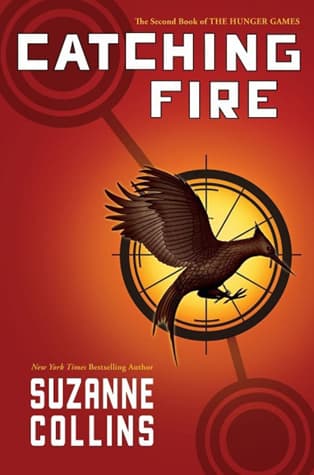
- Catching Fire
Suzanne Collins
4.3 (2.5M) average on GoodreadsFantasyAfter defying the Capitol and starting a rebellion, Katniss and Peeta are forced on a dangerous Victory Tour, navigating political schemes, a fake romance, and the constant threat of a government eager to crush the uprising they began.




Enjoyed the summary?
A summary gives you the shape of the book. The book itself has the detail, the examples and the voice.
Find The Third Level on AmazonAs an Amazon Associate, BookBrief earns from qualifying purchases. How we're funded