

Core Idea
- Difficulty
- Medium
- Read it if
- You are seeking a profound spiritual guide on life, death, and the nature of consciousness, particularly interested in Tibetan Buddhist perspectives and practices for living and dying consciously.
- Skip it if
- You are looking for a purely academic or scientific exploration of death, prefer a quick-read self-help book, or are uncomfortable with spiritual and philosophical concepts rooted in an Eastern tradition.
Key Takeaways from The Tibetan Book of Living and Dying
Embrace Impermanence
Life's transient nature is the ultimate teacher, not a cause for despair.
The main teaching of 'The Tibetan Book of Living and Dying' focuses on understanding and accepting impermanence (anicca). Rinpoche says that our suffering comes mostly from resisting this basic truth. We hold onto things, relationships, and even our own identities as if they will last forever. This leads to disappointment and sadness when they change or end. By realizing that everything is always changing—from our breath to mountains—we can better appreciate the present moment and let go of the worry of trying to control what cannot be controlled. This does not mean being negative, but rather living more fully and valuing each short experience.
“When you understand impermanence, you realize that the present moment is all you ever have.”
In the book: Rinpoche frequently references the Buddhist teaching of the 'four seals' of dharma, with impermanence being the first. He also uses the analogy of clouds constantly shifting in the sky or waves in the ocean to illustrate the ever-changing nature of existence.
Try this: Practice mindfulness of your breath and bodily sensations, noticing their constant arising and passing. Reflect daily on the impermanence of objects around you, your emotions, and even your thoughts. This helps to loosen attachment and foster a more open, accepting mindset.
Related ideas: impermanence, anicca, mindfulness, attachment
The Bardos: Navigating Transitions
Life is a series of 'in-between' states, culminating in the ultimate transition of death.
The idea of 'bardos' is central to Tibetan Buddhism and Rinpoche explains it well. Bardos are in-between states, not just the well-known bardo of death and rebirth, but also the bardo of life, the bardo of dreams, and the bardo of meditation. Rinpoche says that understanding these in-between states during life prepares us for the bardo of death. By seeing the dream-like nature of our waking life and practicing awareness during sleep and meditation, we train our minds to stay clear when facing the intense experiences of dying. This framework gives a map for handling change and uncertainty, seeing them as chances for spiritual growth instead of scary emptiness.
“The bardo teachings are not only about death; they are about life, and about the transitions that occur in life.”
In the book: The book details the six main bardos: the natural bardo of this life, the bardo of dreams, the bardo of meditative concentration, the painful bardo of dying, the luminous bardo of dharmata, and the karmic bardo of becoming. Rinpoche provides specific practices for each.
Try this: Cultivate lucid dreaming practices to gain awareness in altered states. During waking life, consciously observe transitions – from one activity to another, from one mood to another – as mini-bardos, practicing presence and non-attachment.
Related ideas: bardos, death-and-dying, lucid-dreaming, consciousness
Mind as the Creator
Our perception and experience of reality are shaped by the nature of our minds.
Rinpoche often stresses the Buddhist idea that the mind, not outside reality, is what shapes our experience. He shows how our thoughts, feelings, and old habits decide how we see the world and react to it. This does not ignore outside events, but it highlights that our inner state determines our suffering or freedom. A mind with compassion and wisdom will experience a difficult situation differently than a mind full of anger and fear. The book suggests that by clearing and training the mind through practices like meditation, we can change our reality, moving from confusion and pain to clarity, peace, and eventually, enlightenment.
“The mind is the creator of everything. It is the creator of joy, of sorrow, of good, of evil.”
In the book: The concept of 'mind-only' or 'cittamatra' is frequently invoked, explaining how projections of our mind create our world. Rinpoche uses the example of how different people perceive the same event in vastly different ways based on their individual mental predispositions.
Try this: Begin a daily meditation practice, focusing on observing your thoughts without judgment. Recognize that your thoughts are not 'you' and that you have the power to choose how you react to them, rather than being swept away.
Related ideas: mindfulness, meditation, perception, consciousness
Compassion: The Heart of Practice
Developing boundless love and empathy for all beings is the ultimate path to inner peace and liberation.
While often seen as a 'death book,' Rinpoche makes it clear that the goal of understanding death is to live a life full of deep compassion. He says that seeing our shared humanity and the common experience of suffering naturally makes us want to help others. The practice of Tonglen (giving and taking) is introduced as a strong way to develop this. By taking on the suffering of others and giving back happiness, we break down the idea of being separate and open our hearts. This is not just about helping others; Rinpoche states that true compassion is the most direct way to change our own minds, get rid of self-centeredness, and find lasting joy.
“Compassion is the radicalism of our time.”
In the book: Rinpoche extensively describes the practice of Tonglen, where one visualizes taking in the suffering of others with the in-breath and sending out healing and happiness with the out-breath. He also shares stories of enlightened masters whose lives were defined by their boundless compassion.
Try this: Practice Tonglen daily, starting with loved ones, then expanding to neutral parties, difficult people, and finally all beings. Actively seek opportunities to practice kindness and empathy in your daily interactions.
Related ideas: compassion, tonglen, metta, altruism
The Guru and Transmission
Spiritual guidance is essential for navigating the complex path to enlightenment.
Rinpoche writes a lot about the importance of the spiritual teacher, or Guru, in Tibetan Buddhism. He explains that while intellectual understanding is helpful, true spiritual realization comes directly from a skilled master. The Guru guides, protects, and shows the teachings, helping students overcome problems, clear doubts, and finally experience the true nature of their minds. This relationship is shown as sacred and life-changing, needing great trust and dedication from the student. While it might be debated in Western cultures, Rinpoche presents it as a necessary part of deep spiritual progress, especially when facing the difficulties of death.
“Without the guru's blessing, there can be no real understanding, no real realization.”
In the book: Rinpoche shares personal anecdotes of his own Gurus, such as Jamyang Khyentse Chökyi Lodrö, and the profound impact they had on his spiritual journey. He details the qualities of a true Guru and the importance of 'devotion' (diligent practice and respect) in the student-teacher relationship.
Try this: Seek out authentic spiritual teachers or mentors in your chosen path. Even if not in a formal Guru-disciple relationship, identify individuals who embody the qualities you aspire to and learn from their wisdom and example. Approach teachings with an open heart and mind.
Related ideas: guru, spiritual-teacher, lineage, devotion
Understanding Karma
Our actions, thoughts, and words create our future, shaping our experiences in this life and beyond.
Rinpoche clarifies the often-misunderstood idea of karma, going beyond a simple 'reward and punishment' view. He explains karma as the rule of cause and effect, where every action (physical, verbal, and mental) plants a seed that will eventually grow. This means we are not just victims of fate, but active creators of our own future. Understanding karma helps us take responsibility for our lives, making thoughtful choices that lead to good results for ourselves and others. It is a call to live ethically, recognizing that kindness, generosity, and wisdom create good karma, while negativity and harm lead to suffering. This insight offers both responsibility and great hope for change.
“Karma is not fate. It is action, and the consequence of action.”
In the book: Rinpoche uses the analogy of planting seeds: a good seed yields good fruit, a bad seed yields bad fruit. He also discusses the different types of karma (positive, negative, neutral) and how they ripen, emphasizing that even small actions can have significant consequences.
Try this: Reflect on your daily actions, thoughts, and words. Consciously choose to act with kindness and integrity. Practice meditation to become more aware of the motivations behind your actions, aiming to purify negative impulses.
Related ideas: karma, cause-and-effect, ethics, responsibility
The Practice of Dying
Preparing for death allows us to live more fully and die without fear.
This book is, at its core, a guide for preparing for death. Rinpoche says that by facing our own death throughout life, we stop denying it and develop a deep appreciation for our existence. He offers practical advice for both the dying person and their caregivers, covering everything from making a calm environment to guiding consciousness through the death process. The goal is not to fear death, but to see it as a natural, sacred change and even a chance for freedom. By understanding the stages of dying—both physical and mental—and doing practices like Phowa (transference of consciousness), people can face their last moments with respect, awareness, and peace.
“If you want to understand death, you have to understand life.”
In the book: Rinpoche details the 'four stages of dissolution' (earth, water, fire, wind elements dissolving) and the corresponding internal experiences of the dying person. He also provides specific prayers, visualizations, and mantras to be used during the death process.
Try this: Engage in regular 'death meditations' where you contemplate your own mortality. Prepare a 'death plan' outlining your wishes for your final moments. Learn simple meditation techniques to calm the mind and cultivate presence.
Related ideas: death-preparation, phowa, mortality, end-of-life-care
Finding True Nature (Rigpa)
Beneath the surface of thoughts and emotions lies the pure, luminous awareness of our true self.
Beyond all the practices and teachings, Rinpoche always points to finding 'Rigpa,' the original, pure, and bright nature of our mind. This is not something to be made, but rather revealed, as it is always there, hidden only by our usual patterns of thought and feeling. Through meditation and a realized master's guidance, one can have glimpses, and eventually a stable understanding, of this natural wisdom and compassion. Recognizing Rigpa is the ultimate freedom, leading to a steady peace and freedom from suffering, even during life and death's challenges. It is the main 'secret' found in the teachings.
“The true nature of mind is primordial purity, naturally luminous, utterly beyond all concepts.”
In the book: Rinpoche uses analogies like the sun hidden by clouds to describe how Rigpa is always present, just obscured. He frequently cites Dzogchen teachings, which directly point to the nature of mind as Rigpa, emphasizing direct introduction by a Guru.
Try this: Engage in open awareness meditation, allowing thoughts to arise and pass without grasping. Seek out teachings or guidance on 'pointing out instructions' if you feel drawn to directly experiencing the nature of mind.
Related ideas: rigpa, Dzogchen, enlightenment, buddha-nature
The Power of Prayer and Devotion
Connecting with spiritual forces through heartfelt intention and reverence offers solace and strength.
Rinpoche highlights the role of prayer and devotion, not just as asking for things, but as strong tools for change and connection. He explains that sincere prayer, whether to enlightened beings or to the wisdom within, creates positive mind states, cleanses bad karma, and brings blessings. Devotion, when directed towards a Guru or the Buddhas, is shown as a way to open the heart and mind, making one open to spiritual messages and guidance. This is not about blind faith, but a conscious connection with spiritual energy that provides comfort, strength, and a sense of purpose, especially during crises, illness, and death.
“Prayer is not asking God for things. It is connecting with the divine within us.”
In the book: Rinpoche shares numerous traditional Buddhist prayers and mantras, explaining their significance and efficacy. He recounts stories of individuals who found strength and healing through sincere prayer and devotion.
Try this: Integrate a daily prayer or mantra practice into your routine. Cultivate gratitude and reverence for the positive forces in your life. Practice connecting with a sense of universal wisdom or compassion through intention.
Related ideas: prayer, devotion, mantra, blessings
Living with an Open Heart
Cultivating generosity, patience, and joy in daily life transforms our existence.
Beyond the teachings on death and mind, 'The Tibetan Book of Living and Dying' is a guide to living a meaningful and joyful life. Rinpoche always relates the spiritual teachings to practical, daily use. He encourages developing the 'six perfections' (paramitas): generosity, ethical discipline, patience, joyful effort, meditative concentration, and wisdom. These are not just abstract ideas but actions that change our interactions, our work, and our inner world. By practicing these virtues, we not only prepare for a peaceful death but, more importantly, create a life that is rich, fulfilling, and good for all beings. The book suggests living with an open heart, fully present and engaged with the world.
“The greatest gift you can give is to be present.”
In the book: Rinpoche dedicates chapters to each of the six paramitas, providing practical advice and examples for their cultivation in daily life. He emphasizes the importance of 'joyous effort' as a counter to spiritual complacency.
Try this: Consciously practice generosity in small ways each day. When faced with frustration, practice patience. Approach tasks with 'joyous effort.' Be fully present in your conversations and activities, giving your undivided attention.
Related ideas: generosity, patience, joyous-effort, paramitas
The Tibetan Book of Living and Dying Quotes
“The only real death is the death of the ego.”
“We are like people who have been shipwrecked and have forgotten that we have a boat.”
“True compassion is not just an emotional response but a firm commitment founded on reason.”
“The greatest gift you can give another is the purity of your own awareness.”
“To be truly alive, you have to be ready to die.”
“The most important thing is to be kind to ourselves.”
“Learning to meditate is the greatest gift you can give yourself in this life.”
“The whole purpose of spiritual practice is to get rid of the idea that there is a 'me' to get rid of.”
“Death is not the end of life, but a transition.”
“The spiritual journey is the unlearning of fear and the acceptance of love.”
“Our mind is like a mirror, it can reflect everything, but it can also be clouded by dust.”
“The greatest obstacle to discovering the truth is the belief that you already know it.”
“At the moment of death, the only things that really matter are how much love we have in our hearts and how much peace we have in our minds.”
“Every moment is a chance to begin again.”
Quiz
10 questions on the main ideas. Each answer comes with a short explanation.
Question 1
According to Sogyal Rinpoche, what is the fundamental cause of suffering, as understood in the Buddhist tradition?
- Lack of material possessions
- Attachment to the illusion of a separate, permanent self
- The actions of malevolent spirits
- Insufficient meditation practice
Show answer
B. Attachment to the illusion of a separate, permanent self The book emphasizes that suffering arises from our ignorance of the true nature of reality and our clinging to the ego, the illusion of a solid, independent self.
Question 2
What does Sogyal Rinpoche identify as the most crucial preparation for death?
- Accumulating wealth to ensure a comfortable passing
- Developing a deep understanding and familiarity with the nature of mind in life
- Writing a detailed will and making funeral arrangements
- Seeking medical treatments to prolong life indefinitely
Show answer
B. Developing a deep understanding and familiarity with the nature of mind in life The book repeatedly stresses that how we live prepares us for how we die, and the most vital preparation is to understand and stabilize the mind through spiritual practice.
Question 3
The concept of 'Bardo' refers to what in Tibetan Buddhism, as explained by Rinpoche?
- A specific type of meditation technique
- A state of profound enlightenment
- An intermediate state or transition, particularly between death and rebirth
- A sacred text or scripture
Show answer
C. An intermediate state or transition, particularly between death and rebirth Bardo is a central concept in the book, describing the various transitional states, most notably the Bardo of Dying, the Bardo of Dharmata, and the Bardo of Becoming, experienced after death and before the next rebirth.
Question 4
What is the primary purpose of 'tonglen' practice as described in the book?
- To accumulate personal merit for future rebirths
- To develop compassion by taking on the suffering of others and giving them happiness
- To achieve a state of pure emptiness or voidness
- To purify negative karma through intense visualization
Show answer
B. To develop compassion by taking on the suffering of others and giving them happiness Tonglen is a powerful meditation practice focused on developing compassion, where one breathes in the suffering of others and breathes out happiness and well-being.
Question 5
Sogyal Rinpoche emphasizes the importance of 'Rigpa.' What does Rigpa refer to?
- A complex ritual performed during funeral ceremonies
- The innate, primordial wisdom or pure awareness of the mind
- A type of sacred offering made to enlightened beings
- The cumulative effect of one's past actions (karma)
Show answer
B. The innate, primordial wisdom or pure awareness of the mind Rigpa is presented as the very essence of our being, the pure, unconditioned nature of mind, which we can realize through meditation and spiritual practice.
Question 6
How does the book advise individuals to support someone who is dying?
- By constantly reminding them of their past mistakes to encourage repentance
- By encouraging them to cling to life at all costs, even against their wishes
- By creating a peaceful environment, speaking truthfully yet gently, and helping them to let go of attachments and fears
- By avoiding any mention of death or the afterlife to keep their spirits up
Show answer
C. By creating a peaceful environment, speaking truthfully yet gently, and helping them to let go of attachments and fears The book provides extensive practical advice on how to care for the dying, focusing on creating a supportive, truthful, and spiritually conducive atmosphere for their transition.
Question 7
What is the significance of the 'clear light' experience in the Bardo of Dharmata?
- It is a hallucination caused by the dying brain's oxygen deprivation
- It represents the fundamental, unconditioned nature of mind, offering an opportunity for liberation if recognized
- It is a sign that the individual is about to be reborn into a higher realm
- It is a memory of past lives flashing before the mind's eye
Show answer
B. It represents the fundamental, unconditioned nature of mind, offering an opportunity for liberation if recognized The clear light is described as the ultimate ground of being, the radiant emptiness of the mind, which manifests during the Bardo of Dharmata. Recognizing it is crucial for spiritual liberation.
Question 8
Sogyal Rinpoche argues that modern society's approach to death is largely characterized by what?
- An open and healthy acceptance of mortality
- A profound understanding of the spiritual aspects of dying
- Denial, fear, and a tendency to medicalize and hide the dying process
- An overemphasis on elaborate funeral rites and ceremonies
Show answer
C. Denial, fear, and a tendency to medicalize and hide the dying process The book opens by critiquing the modern world's avoidance and fear of death, which prevents individuals from preparing for it and supporting the dying effectively.
Question 9
What is the role of a guru or spiritual teacher in the context of the teachings presented in the book?
- To perform all spiritual practices on behalf of the student
- To act as an infallible authority whose every word must be followed without question or personal understanding
- To introduce the student to the nature of their own mind and guide them on the path to liberation
- To provide financial support and material comfort to the student
Show answer
C. To introduce the student to the nature of their own mind and guide them on the path to liberation The guru is depicted as a vital guide who can directly introduce the student to Rigpa, their innermost nature, and provide instruction and inspiration for their spiritual journey.
Question 10
The practice of 'phowa' is described as a method for what purpose?
- To improve physical health and longevity
- To consciously transfer one's consciousness at the moment of death to a higher state or pure land
- To recall memories from previous lives
- To generate good karma through charitable acts
Show answer
B. To consciously transfer one's consciousness at the moment of death to a higher state or pure land Phowa is a powerful and advanced practice taught in the book that allows the practitioner, or those assisting the dying, to consciously direct the consciousness to a favorable rebirth at the time of death.
The Tibetan Book of Living and Dying FAQ
What is 'The Tibetan Book of Living and Dying' about?
This book is a comprehensive introduction to Tibetan Buddhist wisdom, offering profound insights into life, death, and the bardo states. It serves as a spiritual manual designed to help readers understand the nature of existence, prepare for death, and live more meaningfully.
Does meditation really help with the fear of death?
Yes, the book emphasizes that consistent meditation practices can significantly reduce the fear of death by cultivating mindfulness, compassion, and a deeper understanding of impermanence. It helps individuals develop inner peace and clarity, transforming their perspective on mortality.
What is the concept of 'bardo' explained in the book?
The 'bardo' refers to the intermediate states of consciousness experienced between death and rebirth, as described in Tibetan Buddhism. The book details various bardo states, offering guidance on how to navigate them with awareness and intention for a favorable rebirth or liberation.
How is this book different from other books on mindfulness or death?
While sharing themes with other books on mindfulness or death, 'The Tibetan Book of Living and Dying' uniquely integrates ancient Tibetan Buddhist wisdom, particularly the teachings on bardo, into a practical guide. It offers a spiritual framework for both living and dying that is deeply rooted in a rich philosophical tradition.
Who is Sogyal Rinpoche and what makes him qualified to write this book?
Sogyal Rinpoche was a renowned Tibetan Buddhist lama, teacher, and author known for his ability to present complex Buddhist teachings in an accessible way for Western audiences. His extensive training, deep understanding of the Dharma, and experience in teaching worldwide provided the foundation for this acclaimed work.
Can this book be helpful for people of all faiths, or only Buddhists?
The book's universal themes of life, death, compassion, and the nature of mind resonate with people of all faiths and none. While rooted in Tibetan Buddhism, its profound insights and practical advice offer comfort and wisdom that transcend specific religious doctrines, making it valuable for anyone seeking spiritual understanding.
What practical advice does the book offer for caring for the dying?
The book provides compassionate and detailed advice for caregivers, emphasizing the importance of creating a peaceful environment, maintaining open communication, and offering spiritual support to the dying. It guides readers on how to help loved ones navigate the dying process with dignity and awareness.
What is 'Rigpa' and why is it important in the context of the book?
'Rigpa' refers to the pristine, pure awareness or intrinsic Buddha-nature that is the ultimate state of one's mind. The book explains its importance as the fundamental ground of being, which, when recognized and sustained, can lead to liberation during life and at the moment of death.
Is there a specific meditation practice recommended in the book for beginners?
While the book introduces various advanced practices, it also lays the groundwork for beginners through basic mindfulness and compassion meditations. It encourages starting with simple awareness practices to familiarize oneself with the mind and develop a foundation for deeper spiritual work.
About the author
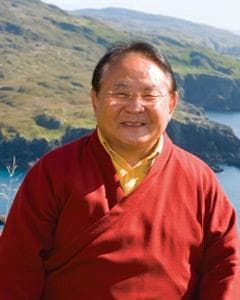
Sogyal Rinpoche was a Tibetan Buddhist teacher and author known for his teachings on Tibetan Buddhism and the nature of life and death. His notable work, "The Tibetan Book of Living and Dying," offers insights into Buddhist practices related to dying and the afterlife. He has played a significant role in bringing Tibetan Buddhist philosophy to a wider audience.
Similar books
- The Perks of Being a Wallflower
Stephen Chbosky
4.2 (1.3M) average on GoodreadsPsychologyThrough letters, a shy high school freshman learns to navigate first love, trauma, and self-discovery, stepping off the sidelines and into life.
- Eleanor Oliphant Is Completely Fine
Gail Honeyman
4.3 (708k) average on GoodreadsLiterary FictionA lonely woman's structured life changes when an IT guy and an elderly man help her learn to open her heart.
- One Flew Over the Cuckoo's Nest
Ken Kesey
4.2 (631k) average on GoodreadsPsychologyIn a mind-bending asylum, the boisterous Randle McMurphy wages a defiant war against the tyrannical Nurse Ratched, inspiring his fellow inmates, including the seemingly catatonic Chief Bromden, to reclaim their lost humanity.
- The Bell Jar
Sylvia Plath
4.0 (591k) average on GoodreadsPsychologyIn the suffocating grip of 1950s expectations, a brilliant young woman's descent into mental illness is painted with such vivid, internal clarity that her 'insanity' feels terrifyingly rational and inevitable.
- The Subtle Art of Not Giving a F*ck: A Counterintuitive Approach to Living a Good Life
Mark Manson
3.9 (530k) average on GoodreadsBusinessEmbrace your flaws and stomach life's lemons, because true happiness isn't about relentless positivity, but about choosing what truly matters to give a f*ck about.
- Sapiens: A Brief History of Humankind
Yuval Noah Harari
4.4 (502k) average on GoodreadsPsychologySapiens tells the story of Homo sapiens, showing how our ability to create shared fictions helped us go from an ordinary ape to the planet's main species, changing Earth and our future.






Enjoyed the summary?
A summary gives you the shape of the book. The book itself has the detail, the examples and the voice.
Find The Tibetan Book of Living and Dying on AmazonAs an Amazon Associate, BookBrief earns from qualifying purchases. How we're funded