

Synopsis
Covers the whole plot, including the ending.
- Difficulty
- Medium
- Pacing
- Moderate
- Mood
- Haunting, Suspenseful, Poignant, Resilient, Hopeful
- Read it if
- You enjoy historical retellings of fairy tales, stories of survival and resilience during wartime, or poignant narratives focusing on children's experiences in conflict.
- Skip it if
- You prefer lighthearted stories, are sensitive to themes of war and child endangerment, or dislike historical fiction with a slower, more reflective pace.
The True Story of Hansel and Gretel Plot Summary
Covers the whole plot, including the ending.
Abandonment in the Forest
In Nazi-occupied Poland, Natan and his younger sister, Malca, are taken deep into a dense forest by their father and stepmother. Their parents, fearing for their safety due to their Jewish heritage, make the heartbreaking decision to leave them. They instruct them to change their names to Hansel and Gretel to hide their identity. The children receive a small piece of bread and are told to follow a path, hoping to find safety. Initially confused and scared, the children soon realize the seriousness of their situation as they are left alone amid the war and wilderness. This desperate act begins their perilous journey for survival.
Wandering and Despair
Hansel and Gretel wander through the vast, cold forest, their initial hope fading each day. They ration their small piece of bread, enduring hunger, thirst, and constant fear of discovery. The forest, while offering concealment, also poses threats from wild animals and German patrols. Gretel, being younger, struggles more physically and emotionally, often looking to Hansel for comfort. Hansel, despite his own terror, tries to act brave for his sister, drawing on his older brother's responsibility to protect her. Their journey becomes a test of endurance and their bond.
Discovery of the Old Woman's Hut
After days of wandering, weak from hunger and exhaustion, Hansel and Gretel find a small, isolated hut deep within the forest. It looks dilapidated and overgrown, suggesting a solitary existence. Driven by desperation and a faint hope, they cautiously approach. The hut belongs to Magda, an eccentric old woman who lives a reclusive life. Villagers in the nearby settlement often call her a 'witch.' Her appearance is disheveled, and her initial demeanor is gruff, but the children's desperate state touches her.
Magda's Reluctant Hospitality
Magda, initially wary of taking in the two strange children, eventually agrees. She is moved by a mix of compassion and perhaps her own loneliness. She gives them food — simple, but life-sustaining — and a place to sleep in her small, cluttered hut. The children are relieved to be safe but remain cautious of Magda, given her unusual appearance and the villagers' whispers. Magda, in turn, is gruff but methodical in her care. She teaches them about foraging and the ways of the forest, subtly preparing them for a life of hiding while protecting them from the immediate dangers of the war outside her isolated home.
Life with Magda
Life with Magda is very different from their previous existence but provides some safety. They learn to help with chores, gather food, and understand the forest's rhythms. Magda, despite her rough exterior, begins to show affection and a deep determination to protect them. She teaches them the importance of silence, observation, and how to blend into their surroundings — vital skills for their survival as Jewish children in wartime Poland. The children, in turn, bring purpose and companionship to Magda's solitary life, slowly softening her hardened exterior and forming an unusual, makeshift family.
The Arrival of the German Officer
The fragile peace of Magda's secluded life ends with the arrival of an SS officer, Obersturmführer Karl von Stahler, in the nearby village. His presence means an increase in the Nazi regime's efforts to remove Jews and partisans from the region. Von Stahler is a shrewd and ruthless man, determined to uncover hidden Jews and exert his authority. His arrival casts a long shadow over the forest, making Magda's efforts to protect Hansel and Gretel even more uncertain. The children become acutely aware of the heightened danger, understanding that their very existence is a direct threat in this new, more vigilant environment.
Magda's Deceptions and Defiance
As the German presence grows, Magda, with her knowledge of the forest and her cunning, develops strategies to keep Hansel and Gretel hidden. She creates secret hiding places, teaches them to remain absolutely silent, and uses her reputation as a 'witch' to deter curious villagers and German soldiers. When questioned, she acts senile or eccentric, deflecting suspicion. Her defiance is subtle but strong, driven by a commitment to the children's safety, even at great risk to her own life. She becomes a formidable protector, using her wit and the isolation of her home as her main weapons.
Von Stahler's Investigation
Obersturmführer von Stahler, a meticulous and suspicious officer, becomes particularly interested in Magda and her isolated hut. The rumors of a 'witch' and the remote location pique his curiosity. He suspects she might be harboring something or someone. He conducts searches, interrogates villagers, and carefully watches Magda's movements. His investigation is thorough and relentless, driven by his fanatical ideology and desire for promotion. Magda and the children are constantly on edge, knowing that one wrong move could lead to their discovery and capture, threatening their fragile existence.
A Close Call
During one of von Stahler's frequent and aggressive searches, Hansel and Gretel have a terrifying close call. German soldiers search the area around Magda's hut, forcing the children to hide in a cramped, secret compartment, barely daring to breathe. The sounds of boots and voices outside are loud, and they feel the vibrations of the soldiers' movements. Magda distracts the soldiers with her usual eccentric behavior, feigning confusion and playing on their superstitions. The incident traumatizes the children but reinforces Magda's resourcefulness and their complete dependence on her protection.
The Forest's Embrace and Betrayal
The forest, which first offered refuge, becomes a character itself, providing both sustenance and new threats. While Magda teaches Hansel and Gretel how to forage for food and water and use its natural camouflage, the increased German presence means that even the deepest woods are no longer entirely safe. Partisan activity also increases, leading to skirmishes that ripple through the forest, further endangering the children. Changing seasons bring new challenges, from harsh winters to the need for constant vigilance against human and natural predators. The children learn to read the forest, understanding its rhythms as key to their survival.
Magda's Sacrifice
As the war ends, and the Germans become desperate and brutal, von Stahler closes in on Magda and the children. Realizing their time is running out, Magda plans for Hansel and Gretel to escape. In a final, heroic act of self-sacrifice, she creates a diversion, drawing the German soldiers' attention away from the children's escape route. She confronts von Stahler, her defiance unwavering, ensuring the children have enough time to flee deeper into the forest, hopefully toward the approaching Allied forces. Her actions confirm her role as their protector and savior, leaving a lasting impact on the children.
Journey Towards Freedom
After Magda's sacrifice, Hansel and Gretel are again alone in the vast forest. But this time, they have the survival skills and resilience Magda taught them. They continue their journey, guided by the distant sounds of battle and the hope of liberation. They encounter other refugees, some helpful, some dangerous, and see the devastating aftermath of the war. Their bond, formed through shared trauma and survival, strengthens. They press on, clinging to the hope of a world free from persecution, forever changed by their experiences but determined to find a new beginning.
Encounter with Liberation
Weak but determined, Hansel and Gretel eventually find Allied soldiers. The sight of the liberating forces brings overwhelming relief, exhaustion, and the deep realization that their long nightmare is finally over. The soldiers, recognizing their plight, offer them food, comfort, and safety. While the immediate danger has passed, the emotional scars of their journey and the loss of Magda remain. This encounter marks the formal end of their physical struggle for survival, but the beginning of their healing process and the daunting task of processing their trauma and finding a place in a world changed by war.
The Weight of Memory
After liberation, Hansel and Gretel, now using their real names, Natan and Malca, begin the slow, painful process of confronting their past. The memories of their parents, their abandonment, Magda's sacrifice, and the constant fear of the war weigh heavily on them. They are forever marked by their experiences, carrying the trauma of their journey. The novel implies a future where they must learn to live with these memories, finding ways to honor those they lost while building new lives. Their story shows resilience, the power of familial bonds, and the long shadow cast by historical atrocities.
The True Story of Hansel and Gretel Characters
Natan (Hansel)
Protagonist
The older brother, protective and resourceful.
Natan, initially a scared child, quickly assumes the role of protector for his younger sister, Malca. He is resourceful and determined, constantly thinking of ways to keep them safe and fed. His primary drive is to ensure Malca's survival, often suppressing his own fears and pain to appear strong for her. He embodies resilience and the burden of responsibility placed upon children in wartime.
Relationships: Malca (Gretel) (Younger sister, whom he fiercely protects.); Magda (Surrogate guardian and protector, whom he comes to trust deeply.); Parents (Source of initial abandonment, a complex mix of love and resentment.)
Malca (Gretel)
Protagonist
The younger sister, vulnerable yet surprisingly resilient.
Malca, the younger of the two, is initially more vulnerable and dependent on Natan. She experiences the trauma of abandonment and war with a child's raw fear and confusion. However, over time, she develops her own quiet resilience, learning to adapt to the harsh realities of their existence with Magda. Her innocence and fragility highlight the profound impact of the war on children.
Relationships: Natan (Hansel) (Older brother and primary source of comfort and protection.); Magda (Surrogate grandmother figure, providing care and safety.)
Magda
Supporting
The reclusive 'witch' who shelters the children.
Magda is an old, eccentric, and reclusive woman living deep in the forest. Feared by villagers as a 'witch,' she is fiercely independent and possesses a deep knowledge of the natural world. Beneath her gruff exterior lies a strong moral compass and a profound capacity for compassion. She is driven by a desire to defy the Nazi regime and protect innocent life, even at great personal risk. Her past experiences may have contributed to her isolation and her eventual willingness to help the children.
Relationships: Natan (Hansel) (Mentee and object of her protection, a surrogate grandson.); Malca (Gretel) (Mentee and object of her protection, a surrogate granddaughter.); Obersturmführer Karl von Stahler (Antagonist, whom she actively defies and outwits.)
Obersturmführer Karl von Stahler
Antagonist
A ruthless SS officer hunting for Jews.
Von Stahler is a cold, calculating, and fanatical SS officer. He is meticulously thorough in his duties, driven by a twisted sense of ideology and ambition for promotion. He represents the oppressive and merciless force of the Nazi regime, relentlessly pursuing any suspected Jews or partisans. He possesses a keen, suspicious mind, making him a formidable threat to Magda and the children. He embodies the cruelty and dehumanization of the Holocaust.
Relationships: Magda (Opponent in a battle of wits and survival.); Natan (Hansel) and Malca (Gretel) (His targets, whom he seeks to eliminate.)
Natan and Malca's Father
Supporting
The desperate parent who leaves his children in the forest.
The father is a man driven to an unthinkable act by the horrors of war and the desperate hope of saving his children. His decision to abandon Natan and Malca, though agonizing, is presented as a last resort to protect them from certain death at the hands of the Nazis. He represents the impossible choices forced upon parents during the Holocaust.
Relationships: Natan (Hansel) (Son, whom he leaves to an uncertain fate.); Malca (Gretel) (Daughter, whom he leaves to an uncertain fate.)
Natan and Malca's Stepmother
Supporting
The stepmother who participates in the abandonment.
The stepmother, though less central, is complicit in the decision to leave the children in the forest. Her motivations are implied to be similar to the father's—a desperate attempt to ensure their survival, even if it means a heartbreaking separation. Her role underscores the widespread terror and the extreme measures taken by families during the war.
Relationships: Natan (Hansel) (Stepson, whom she leaves behind.); Malca (Gretel) (Stepdaughter, whom she leaves behind.)
Local Villagers
Mentioned
Superstitious locals who fear Magda and are wary of the war.
The villagers are a collective presence, often driven by fear, superstition, and self-preservation. They view Magda with a mix of awe and suspicion, spreading rumors about her 'witchcraft.' Their interactions with the German soldiers reveal their desperate attempts to navigate the war, often trying to avoid drawing attention to themselves, even if it means ignoring the plight of others.
Relationships: Magda (Feared and avoided, seen as an outcast.); Obersturmführer Karl von Stahler (Feared and obeyed, representing the occupying power.)
The True Story of Hansel and Gretel Themes
Survival and Resilience
The most prominent theme is Hansel and Gretel's unwavering will to live despite immense hardship. From their abandonment in the forest, enduring hunger and fear, to their adaptation to Magda's unconventional life, their journey shows human resilience. Magda herself embodies this, having survived a lifetime of isolation and now defying the Nazis. The children's ability to learn, adapt, and keep going, even after Magda's sacrifice, highlights the human spirit in the face of overwhelming adversity.
“They were not children of the forest, but the forest was becoming their only home.”
The Loss of Innocence
The war forces Hansel and Gretel to lose their childhood innocence early. They are exposed to extreme violence, fear, and the harsh realities of survival. Their change from sheltered children to hardened survivors, capable of understanding complex dangers and making difficult decisions, is central to the story. The fairy tale names 'Hansel and Gretel' are a poignant reminder of the childhood they lost, contrasting sharply with the brutal reality they face. Their experiences leave lasting emotional scars, permanently changing how they see the world.
“The forest had erased their names, and the war had erased their childhood.”
The Nature of Good and Evil
The novel explores the complex shades of good and evil beyond simple categories. Obersturmführer von Stahler represents overt, systemic evil, driven by hateful ideology. However, 'good' is also nuanced: the parents' 'abandonment' is a desperate act of love, and Magda, initially seen as a 'witch' (evil by local superstition), proves to be a force for good. Her actions challenge the villagers' prejudiced views and show that heroism can be found in unexpected places, often defying societal norms and overwhelming power.
“Sometimes, the greatest kindness came wrapped in the roughest cloth.”
Memory and Identity
The children's forced name change to 'Hansel' and 'Gretel' symbolizes the erasure of their Jewish identity and past. Throughout their ordeal, they struggle to remember who they are and where they came from, while also having to forget their true names for safety. Remembering, both personal and collective, is crucial for healing and understanding their place in a post-war world. The narrative suggests that while names can change, the true essence of identity and the memories of one's heritage endure.
“They carried their real names like a secret, a precious, dangerous jewel hidden deep inside them.”
Family and Found Family
The initial family unit of Hansel and Gretel is broken by their parents' desperate act. However, a new, unconventional family is formed with Magda. This 'found family' gives the children the love, protection, and stability their biological family could no longer offer. Magda's self-sacrifice reinforces the idea that family is not solely defined by blood but by shared experience, loyalty, and unconditional care. This theme highlights the human need for connection and belonging, especially in times of crisis.
“She was no grandmother, no mother, but she was all they had, and in her rough hands, they found a kind of fierce love.”
Plot Devices & Literary Techniques
Fairy Tale Allusion (Hansel and Gretel)
Uses the classic fairy tale as a framework for a dark, realistic narrative.
The novel deliberately invokes the 'Hansel and Gretel' fairy tale, using the children's adopted names and the forest setting. This allusion serves multiple purposes: it creates a chilling contrast between the magical, albeit dark, world of the fairy tale and the brutal reality of the Holocaust. It immediately establishes a sense of peril and abandonment, drawing on readers' existing knowledge of the story. The 'witch' figure (Magda) is subverted, becoming a protector rather than an antagonist, while the true 'monsters' are the Nazis. This device heightens the emotional impact by juxtaposing innocence with unimaginable horror.
The Forest as a Character
The natural environment acts as both a protector and a threat.
The forest is more than just a setting; it plays an active role in the children's survival. Initially, it offers concealment and a place to hide from the Germans. Magda's deep knowledge of the forest's resources provides food and shelter. However, it also presents dangers: wild animals, harsh weather, and the constant threat of discovery within its depths. The forest mirrors the children's journey—it is wild, unpredictable, and ultimately indifferent, yet it provides the means for their endurance. It symbolizes both isolation and sanctuary, reflecting the ambiguous nature of their existence.
Change of Names (Natan/Malca to Hansel/Gretel)
Symbolizes loss of identity and the need for concealment.
The forced renaming of Natan and Malca to Hansel and Gretel is a powerful symbol of the children's lost identity and the desperate measures taken for survival. Their Jewish names are a death sentence, so they must shed them, along with their past lives, to blend in. This act of renaming highlights the dehumanizing effects of the war and the profound sacrifice of self required to stay alive. It also connects directly to the fairy tale allusion, reinforcing the idea of a lost, almost mythical, childhood that can never be fully reclaimed.
The 'Witch' Stereotype (Magda)
Subverts traditional fairy tale archetypes.
Magda's character plays directly into the 'witch' stereotype from the original fairy tale, but with a profound subversion. The villagers fear her and label her as such due to her reclusive nature and eccentricity. However, instead of being the evil antagonist, she becomes the children's savior. This device challenges preconceived notions and highlights that appearances can be deceiving, especially in times of moral ambiguity. It underscores the novel's theme of finding good in unexpected places and defying societal prejudices.
The True Story of Hansel and Gretel Quotes
“The trees were so close together that they seemed to be holding hands, whispering secrets to each other.”
“Hunger makes you think of things you wouldn't otherwise. It makes you brave, or foolish, or both.”
“A promise is like a bird in your hand. You can hold it tight, but if you squeeze too hard, you kill it.”
“Sometimes, the biggest monsters are the ones that look the most ordinary.”
“The forest doesn't care if you're good or bad. It just is.”
“To forget is a kind of death, but to remember everything can be a kind of madness.”
“Even in the darkest places, a small kindness can be a light.”
“There are stories that live in the bones of the land, if you know how to listen.”
“Fear can make you do terrible things, but it can also make you surprisingly strong.”
“A home isn't just a place; it's the people you share it with, the memories you make.”
“The world is full of choices, and every choice changes everything.”
“Sometimes, you have to burn down the old to make way for the new.”
“Hope is a small, stubborn thing. It can survive in the most unlikely places.”
“The past is never truly gone. It echoes, sometimes faintly, sometimes loudly, in the present.”
Quiz
10 questions on the plot and the characters. Each answer comes with a short explanation.
Question 1
What is the primary reason Hansel and Gretel's father and stepmother leave them in the forest?
- They cannot afford to feed them due to extreme poverty.
- To protect them from the Nazi occupation and their Jewish identity.
- The children were disobedient and ran away from home.
- They were forced to join a partisan group and couldn't take the children.
Show answer
B. To protect them from the Nazi occupation and their Jewish identity. The synopsis explicitly states they are left to find safety in a dense forest because their real names would reveal their Jewishness, indicating protection from Nazi occupation as the motive.
Question 2
Why are the children renamed 'Hansel' and 'Gretel'?
- To give them new identities that sound more Polish.
- To honor the classic fairy tale they are retelling.
- To conceal their Jewish identities from the authorities.
- Because they had forgotten their original names due to trauma.
Show answer
C. To conceal their Jewish identities from the authorities. The book's description states, 'Because their real names will reveal their Jewishness, they are renamed 'Hansel' and 'Gretel,'' directly linking the renaming to concealing their identity.
Question 3
Who is Magda in the story, and what is her initial reputation among the villagers?
- She is a kind schoolteacher respected by everyone.
- She is an eccentric old woman called 'witch' by the villagers.
- She is the children's aunt who lives in the forest.
- She is a German officer's housekeeper.
Show answer
B. She is an eccentric old woman called 'witch' by the villagers. The summary describes Magda as 'an eccentric and stubborn old woman called 'witch' by the nearby villagers,' and she takes in the children.
Question 4
What is the primary setting of 'The True Story of Hansel and Gretel'?
- Post-World War II Germany during reconstruction.
- Pre-World War II Eastern Europe in a peaceful village.
- Poland during the final months of Nazi occupation.
- A fictional medieval kingdom during a famine.
Show answer
C. Poland during the final months of Nazi occupation. The synopsis clearly states the setting: 'In the last months of the Nazi occupation of Poland.'
Question 5
What is Magda's main objective regarding Hansel and Gretel?
- To use them for labor on her farm.
- To turn them over to the German authorities for a reward.
- To save them from the dangers of the war and the German officer.
- To teach them traditional Polish folklore and survival skills.
Show answer
C. To save them from the dangers of the war and the German officer. The description states, 'Magda is determined to save them,' indicating her primary goal for the children.
Question 6
What literary technique does the author, Louise Murphy, employ by retelling 'Hansel and Gretel' within a historical context?
- Allegory, where the characters represent abstract ideas.
- Pastiche, a work that imitates another, often with humorous intent.
- Retelling/Reimagining, using a classic story to explore new themes in a different setting.
- Parody, a satirical imitation of a serious piece of literature.
Show answer
C. Retelling/Reimagining, using a classic story to explore new themes in a different setting. The book is described as 'a poignant and suspenseful retelling of a classic fairy tale set in a war-torn world,' which is the definition of reimagining or retelling.
Question 7
What is the role of the German officer who arrives in the village?
- He is there to negotiate a peace treaty with the villagers.
- He is seeking to capture Hansel and Gretel for his own plans.
- He is investigating Magda for witchcraft.
- He is bringing supplies and aid to the war-torn village.
Show answer
B. He is seeking to capture Hansel and Gretel for his own plans. The synopsis states, 'even as a German officer arrives in the village with his own plans for the children,' implying a sinister intent related to their capture.
Question 8
How does the novel portray the theme of 'redemption,' as mentioned in the Publishers Weekly review?
- Through the children's ability to forgive their parents for abandoning them.
- By showing how characters find hope and new meaning despite immense suffering and past mistakes.
- By depicting the German officer's eventual change of heart and aid to the children.
- Through the villagers finally accepting Magda and her 'witchcraft' as beneficial.
Show answer
B. By showing how characters find hope and new meaning despite immense suffering and past mistakes. Publishers Weekly states, 'redemption is not a fairy tale ending but a heartening message of hope.' This implies finding hope and new meaning in a difficult situation, consistent with the survival and journey themes.
Question 9
What specific aspect of war is powerfully depicted in the novel, according to the description?
- The strategic military maneuvers and battles.
- The experiences of families, especially children.
- The political negotiations between warring nations.
- The economic impact on global trade routes.
Show answer
B. The experiences of families, especially children. The description explicitly states the novel 'powerfully depicts how war is experienced by families and especially by children,' focusing on the human impact.
Question 10
Considering the historical context of Nazi occupation and the children's Jewish identity, what is the underlying significance of the 'witch' accusation against Magda by the villagers?
- It reflects a genuine belief in supernatural powers prevalent in rural Poland.
- It highlights how fear and prejudice can lead communities to ostracize and mislabel those who are different or perceived as outsiders, mirroring the larger conflict's persecution.
- It serves as a literal plot device for Magda to use magic to protect the children.
- It's merely a whimsical detail to connect to the fairy tale's original antagonist.
Show answer
B. It highlights how fear and prejudice can lead communities to ostracize and mislabel those who are different or perceived as outsiders, mirroring the larger conflict's persecution. Given the themes of prejudice, survival, and a war-torn world where Jewish people are persecuted, the 'witch' label for Magda likely symbolizes how fear and ignorance lead to marginalization, drawing a parallel to the broader persecution of the time.
The True Story of Hansel and Gretel FAQ
What is the central premise of 'The True Story of Hansel and Gretel'?
The novel reimagines the classic fairy tale, placing Hansel and Gretel as Jewish children, renamed to conceal their identity, abandoned by their parents in a Polish forest during the final months of Nazi occupation. They seek survival amidst the horrors of war and the constant threat of discovery.
Who are Hansel and Gretel in this adaptation, and why are they renamed?
Hansel and Gretel are Jewish siblings, whose real names would betray their heritage to the Nazis. Their father renames them before leaving them in the forest, hoping the new, innocuous names will offer them a slim chance of survival and anonymity in a hostile world.
Who is Magda, and what is her role in the children's journey?
Magda is an eccentric, older Polish woman living in isolation near a village, often considered a 'witch' by the locals. She takes Hansel and Gretel in after they wander into her care, providing them shelter, food, and a fierce determination to protect them from the Germans, despite the grave risks to herself.
What is the primary threat Hansel and Gretel face beyond hunger and exposure?
Their primary threat is the Nazi occupation and the pervasive anti-Semitism, specifically the German officer who arrives in the village with plans for the children. Their Jewish identity, if discovered, would lead to their immediate capture and likely death.
How does the setting of wartime Poland influence the narrative?
The setting profoundly shapes the narrative, imbuing every decision and encounter with life-or-death stakes. The constant fear, scarcity, suspicion, and the ever-present danger of German patrols create an atmosphere of intense suspense and desperation, mirroring the real-life struggles of Jews during the Holocaust.
Are there any subtle allusions to the original fairy tale beyond the character names and abandonment?
Yes, Magda's isolated cottage, her initial mysterious persona, and the villagers' 'witch' label subtly echo the witch's house in the original tale. The children's desperate hunger and the breadcrumbs left by their father also directly reference elements of the classic story.
What is the significance of the breadcrumbs in this retelling?
Unlike the original where breadcrumbs are a failed attempt to find the way back, here the father leaves them as a final act of love and hope, a desperate measure to give his children a chance to survive by leading them away from their home and into the unknown, rather than back to it.
How does the German officer's character add complexity to the narrative?
The German officer isn't a one-dimensional villain; he represents the insidious nature of the occupation and the various motivations within the Nazi regime. His 'plans' for the children, while sinister, might not always align with outright extermination, adding a layer of psychological manipulation and moral ambiguity to his pursuit.
What role does memory play in the children's survival and Magda's actions?
Memory is crucial; the children cling to memories of their parents and their past life for comfort and identity. Magda's own past experiences and memories of loss or injustice likely fuel her fierce protectiveness, driving her determination to save Hansel and Gretel.
How does the forced renaming impact Hansel and Gretel psychologically?
The forced renaming strips them of their original identity, forcing them to adopt new personas to survive. This act likely creates an internal conflict, a sense of loss for their true selves, and a constant awareness of their precarious existence, contributing to their trauma and resilience.
What psychological impact does the abandonment by their parents have on the children?
The abandonment, though a desperate act of love, inflicts profound trauma, leaving them with feelings of betrayal, fear, and a deep-seated need for security. Their journey becomes not just about physical survival but also about coping with this emotional wound and finding new attachments.
How does Magda's 'eccentricity' contribute to her resilience and ability to protect the children?
Magda's eccentricity and isolation likely make her less susceptible to village gossip and more independent in her thinking, allowing her to defy social norms and the Nazi regime's influence. Her stubbornness, often seen as a flaw, becomes a powerful asset in her unwavering commitment to the children's safety.
What psychological themes are explored through the children's interactions with nature?
Nature initially represents danger and isolation, but also offers concealment and a sense of raw survival. The children's interactions with the forest reflect their internal state: fear and vulnerability, but also a growing resilience and adaptability as they learn to navigate its challenges.
Is the ending of the book truly a 'fairy tale ending' or something more nuanced?
The Publishers Weekly review suggests it's not a typical fairy tale ending but a 'heartening message of hope' and 'redemption.' This implies a resolution that acknowledges the enduring trauma of war but emphasizes resilience, the power of human connection, and the possibility of healing, rather than a simplistic 'happily ever after.'
How does the novel challenge or reaffirm traditional notions of good versus evil in wartime?
The novel likely challenges simplistic good vs. evil by showing the complexities of human behavior during war, where survival often blurs moral lines. Magda, an outcast, becomes a savior, while seemingly ordinary villagers might succumb to fear or collaboration, forcing readers to question easy judgments.
What is the author's message about the power of storytelling and memory in the face of atrocity?
The novel, by reframing a classic story, suggests that narratives and shared memories are vital for processing trauma and maintaining identity. It implies that even in the darkest times, stories provide a framework for understanding, preserving the past, and offering a pathway to hope and remembrance for future generations.
How does the book explore the concept of family beyond traditional blood ties?
The book deeply explores chosen family, particularly through Magda's relationship with Hansel and Gretel. Despite not being biologically related, Magda forms a powerful bond with the children, demonstrating that love, protection, and a sense of belonging can transcend genetic connections, especially in times of crisis.
What is the significance of the title, 'The True Story of Hansel and Gretel'?
The title suggests that this adaptation reveals a deeper, more historically grounded truth behind the fantastical elements of the original fairy tale. It implies that the horrors and abandonment depicted in the classic story have real-world parallels, particularly in the context of the Holocaust and children's experiences during wartime.
Similar books
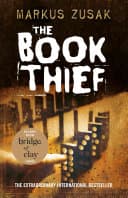
- The Book Thief
Markus Zusak
4.4 (1.8M) average on GoodreadsHistorical FictionFeatures a young protagonist navigating life in Nazi Germany, with themes of survival, human kindness amidst brutality, and the power of storytelling.
- Number the Stars
Lois Lowry
4.2 (448k) average on GoodreadsChildren'sFocuses on children's experiences and acts of bravery during the Holocaust, with a similar tone of quiet courage and danger.
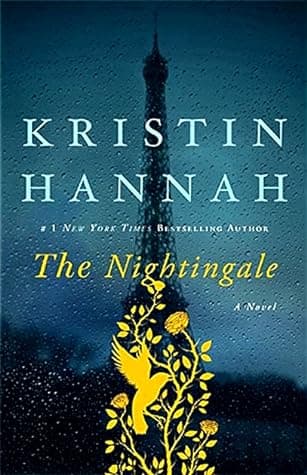
- The Nightingale
Kristin Hannah
4.6 (698k) average on GoodreadsHistorical FictionExplores the lives of women in Nazi-occupied France, showcasing resistance, sacrifice, and the emotional toll of war.
- The Diary of a Young Girl
Anne Frank
4.2 (2.7M) average on GoodreadsBiographyFrank's diary is a non-fiction, first-person, intimate account of hiding during the Holocaust, offering direct insight into the psychological experience. Murphy's novel is fictional, providing a broader narrative arc with external characters and a more dramatic plot, exploring themes of sacrifice and external threats in a way a personal diary cannot.
- To Kill a Mockingbird
Harper Lee
4.3 (4.5M) average on GoodreadsHistorical FictionIn the 1930s Jim Crow South, Harper Lee writes about racial injustice, moral growth, and the quiet courage of a lawyer father, Atticus Finch, as seen through his young daughter's eyes.
- The Great Gatsby
F. Scott Fitzgerald
3.9 (3.8M) average on GoodreadsHistorical FictionIn the opulent Roaring Twenties, a mysterious millionaire's lavish parties hide his desperate, tragic pursuit of a lost love, exposing the emptiness within the American Dream.




Enjoyed the summary?
A summary gives you the shape of the book. The book itself has the detail, the examples and the voice.
Find The True Story of Hansel and Gretel on AmazonAs an Amazon Associate, BookBrief earns from qualifying purchases. How we're funded