
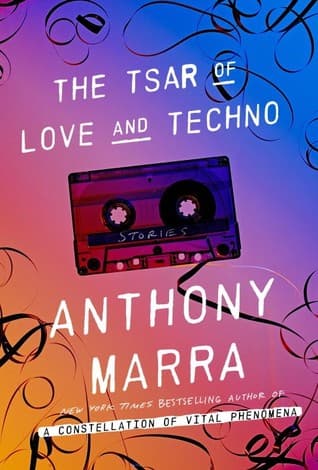
Synopsis
Covers the whole plot, including the ending.
- Difficulty
- Medium
- Pacing
- Variable
- Mood
- Melancholy, Poignant, Lyrical, Reflective, Historically grounded
- Read it if
- You appreciate beautifully written, interconnected short stories that explore the human cost of war and political regimes across generations, with a focus on Russian and Chechen history.
- Skip it if
- You prefer linear narratives, lighthearted themes, or struggle with non-chronological storytelling and the often bleak realities of historical conflict.
The Tsar of Love and Techno Plot Summary
Covers the whole plot, including the ending.
The Leopard
In 1937 Leningrad, Roman Markin works as a censor in a hidden facility, airbrushing people considered 'enemies of the people' from photographs. He is skilled at his job, removing faces and sometimes entire crowds from historical records. His work constantly reminds him of the regime's power and how fragile life is. Roman becomes fixated on a specific image: a photograph of a disgraced prima ballerina, Galina, whose face he is ordered to remove. Instead of erasing her completely, he secretly keeps a small, unnoticed detail of her, a leopard print on her scarf. This is a subtle act of rebellion and a wish to keep a trace of beauty in a world determined to destroy it. This act plants a seed of defiance and personal connection in his otherwise sterile and dangerous life.
Granddaughters
This story is told through the voices of women in Kirovsk, a remote Siberian mining town. They recount the experiences of their grandmothers, who were political prisoners in the gulag during Stalin's time. These women were exiled, forced to labor in harsh conditions, and suffered greatly, yet they formed strong bonds and showed resilience. The granddaughters, living with this brutal history, reflect on how their grandmothers' pasts shaped their own lives and community. The narrative shows the lasting trauma and strength passed down through generations, as they remember and honor the sacrifices made by their ancestors to survive and build a life in a harsh land.
The Grozny Tourist Bureau
Ruslan, a Chechen veteran of the Chechen Wars, tries to create a 'Grozny Tourist Bureau' in the destroyed city. His aim is not to attract actual tourists, but to create a fictional, perfect version of Grozny through detailed brochures and a city model, complete with miniature landmarks. He is driven by a deep desire to reclaim the city's identity and beauty, which war and conflict have shattered. His younger brother, Akhmed, still involved in the conflict, views Ruslan's effort with skepticism and quiet admiration. Ruslan's project is an act of defiance against destruction, a desperate attempt to show hope and preserve the memory of what was, and what could be, through art and imagination.
A Prisoner of the Caucasus
Akhmed, Ruslan's younger brother, is active in the Chechen resistance. The story explores his experiences as a fighter, the constant threat of violence, and the moral compromises war demands. He deals with the loss of family members and his homeland's destruction. His path crosses with that of a Russian soldier, creating a complex and dangerous dynamic. Akhmed’s loyalty to his cause is strong, but he is also burdened by the human cost of the conflict. He struggles to balance his life's brutal realities with memories of a peaceful past and his brother's efforts to rebuild Grozny, finding comfort and purpose in fighting for his people's survival.
The Tsar of Love and Techno
Sasha, a young man who served in the Chechen Wars, returns to his Russian hometown, carrying the physical and psychological scars of combat. He struggles to adapt to civilian life, haunted by the violence he saw and took part in. He finds comfort in music and technology, especially at a local club where he deejays. The story explores his attempts to find meaning and connection in a world that feels alienating and broken. He meets other veterans and civilians also dealing with the aftermath of war, showing conflict's widespread impact on individuals and society. Sasha's journey is about seeking healing and understanding, trying to bridge his traumatic past and uncertain future.
Wolf of White Forest
Kolya, a veteran of the Chechen Wars, now lives on society's edge, involved in petty crime and struggling with his own issues. His story is linked to his brother, Vanya, who was also a soldier and a source of both admiration and concern. Kolya is haunted by Vanya's memory and the circumstances of his death. He gets caught in a dangerous situation involving stolen goods and local thugs, forcing him to face his loyalties and his capacity for violence. The narrative shows war's lasting effects on those who return, how its brutality can seep into civilian life, shaping choices and relationships in profound and often destructive ways.
Palace of the People
Katerina, a young art student in contemporary Russia, discovers an unusual painting in an old palace, an unremarkable oil landscape showing a peaceful, pre-war Chechen village. The painting seems to have a strange power and meaning, especially for a reclusive art restorer she meets. As Katerina looks into the painting's history, she finds a connection to the Chechen Wars and the experiences of those who lived through the conflict. The painting becomes a focus for understanding memory, loss, and the human desire for beauty and peace amidst devastation. Her investigation reveals how art can hold history and witness immense suffering and strength.
A Temporary Exhibition
This chapter brings together several characters from previous stories, including Ruslan and Katerina, through an unusual art exhibition. The exhibition features artworks that subtly question official narratives or offer different views on history and memory, especially concerning the Chechen Wars. Ruslan's miniature Grozny, which he has carefully created, is shown, as is the mysterious landscape painting Katerina discovered. The exhibition is a space for reflection, reconciliation, and the quiet challenge of state-controlled narratives. It shows art's power to provoke thought, evoke empathy, and connect individuals across different experiences and generations, revealing their lives' interconnectedness and shared history's lasting impact.
The End
The final chapter is a poignant ending, weaving together the fates and legacies of various characters from the collection. It revisits themes of memory, loss, and the lasting power of human connection and art. The narrative subtly reveals how the small acts of defiance, the preserved memories, and the artistic creations of characters like Roman and Ruslan affect generations. It emphasizes history's cyclical nature, hope's persistence, and the quiet ways individuals resist erasure and keep their humanity. The ending offers a sense of closure while acknowledging that the past's echoes continue to shape the present and future.
Principal Figures
Roman Markin
Protagonist
A meticulous Soviet censor who secretly defies the regime.
Roman is a highly skilled photographic censor in Stalinist Leningrad. His job is to erase 'enemies of the people' from official photographs, a task he performs with chilling precision. Despite his complicity in the regime's historical revisionism, Roman possesses a deep, unacknowledged artistic sensibility and a quiet defiance. He is meticulous, observant, and deeply affected by the images he manipulates, particularly the face of the ballerina Galina. His internal life is a stark contrast to his external conformity, driven by a hidden desire to preserve beauty and truth, however small.
Relationships: Galina (Obsession/unrequited admiration for her image)
Galina
Mentioned
A disgraced prima ballerina whose image becomes a symbol of resistance.
Galina is a prima ballerina whose image is ordered to be erased from official photographs due to her status as an 'enemy of the people.' Though she never appears directly, her photograph, particularly the detail of her leopard-print scarf, becomes a powerful symbol. She represents beauty, grace, and individuality, all of which are threatened by the oppressive regime. Her image serves as a catalyst for Roman's quiet rebellion and a recurring motif throughout the collection, linking different stories and generations through the enduring power of art and memory.
Relationships: Roman Markin (Object of his secret admiration and defiance)
Ruslan
Protagonist/Supporting
A Chechen veteran who creates a fictional tourist bureau for Grozny.
Ruslan is a Chechen veteran haunted by the destruction of his homeland. He channels his grief and hope into an unusual project: creating a 'Grozny Tourist Bureau' filled with meticulously crafted brochures and a miniature model of the city. He is an idealist and an artist, driven by a profound need to reconstruct meaning and beauty from the ruins of war. Ruslan is a dreamer, often at odds with the harsh realities around him, but his unwavering dedication to his vision offers a poignant counterpoint to the violence and despair that define much of his world.
Relationships: Akhmed (Brother, often at odds due to differing approaches to the war); Katerina (Collaborator/fellow artist in the exhibition)
Akhmed
Protagonist/Supporting
Ruslan's younger brother, a Chechen fighter.
Akhmed is Ruslan's younger brother and an active participant in the Chechen resistance. He is a pragmatic and fierce fighter, hardened by the brutal realities of war. Unlike Ruslan, Akhmed is immersed in the direct conflict, driven by a sense of duty and vengeance for his destroyed homeland and lost family. He views his brother's artistic endeavors with a mixture of skepticism and a deep, unspoken love. Akhmed embodies the violent struggle for survival and identity, constantly navigating the moral ambiguities and personal sacrifices demanded by war.
Relationships: Ruslan (Brother, with a complex dynamic of love and differing ideologies); Russian Soldier (Antagonist/adversary in war)
Sasha
Protagonist
A Russian veteran struggling with the aftermath of the Chechen Wars.
Sasha is a young Russian man who served in the Chechen Wars and returns home deeply scarred. He struggles with PTSD, alienation, and the difficulty of reintegrating into civilian life. He finds a temporary escape and sense of purpose in deejaying, using music as a way to process his experiences and connect with others. Sasha represents the generation of young men who fought in the Chechen conflicts, grappling with the psychological toll of war and searching for meaning in a broken world. He is introspective, melancholic, but also possesses a quiet resilience.
Kolya
Protagonist/Supporting
A veteran entangled in the criminal underworld, haunted by his brother Vanya.
Kolya is a veteran of the Chechen Wars who, like many, struggles to find a stable path after returning home. He drifts into petty crime and is deeply affected by the memory of his brother, Vanya, who also served. Kolya is impulsive and prone to violence, a reflection of the brutalization he experienced in war. He is driven by a complex mix of grief, loyalty, and a desperate search for purpose, often making questionable choices. His character embodies the destructive legacy of war that seeps into civilian life, corrupting individuals and relationships.
Relationships: Vanya (Brother, whose memory and fate profoundly influence Kolya)
Katerina
Protagonist/Supporting
An art student who uncovers the hidden history of a painting.
Katerina is a curious and perceptive art student who becomes fascinated by an unassuming landscape painting. She possesses an innate ability to see beyond the surface, driven by a desire to understand the stories and histories embedded within art. Her investigation into the painting's origins leads her to uncover connections to the Chechen Wars and the lives of those affected by it. Katerina represents the younger generation grappling with the inherited trauma of the past, using art as a means of discovery, empathy, and challenging official narratives. She is intelligent, persistent, and empathetic.
Relationships: Ruslan (Collaborator/fellow artist in the exhibition)
Vanya
Mentioned
Kolya's deceased brother, a fellow veteran.
Vanya is Kolya's brother, also a veteran of the Chechen Wars, whose death profoundly impacts Kolya. Though deceased, Vanya's memory, his experiences, and the circumstances of his passing are central to Kolya's narrative. He represents the many young men lost to the conflict, and his legacy shapes Kolya's choices and struggles. Vanya is a symbol of the war's destructive power and the enduring grief it leaves behind, acting as a powerful motivator and haunting presence for his surviving brother.
Relationships: Kolya (Brother, whose memory is a driving force for Kolya)
Themes & Insights
The Redemptive Power of Art
Art, in its various forms, is a powerful means of resistance, memory, and healing throughout the collection. Roman Markin's subtle preservation of Galina's image defies the regime's erasure. Ruslan's miniature Grozny and fictional tourist bureau offer an imaginative reconstruction of a war-torn city, showing hope amidst devastation. Katerina's discovery and investigation of the landscape painting reveal hidden histories and connect individuals across time. Art allows characters to process trauma, preserve identity, and challenge oppressive narratives, providing comfort and a path toward understanding and reconciliation.
“What is art if not an attempt to make the ordinary extraordinary, the broken whole?”
The Legacy of War and Trauma
War's widespread and devastating impact is a central theme, explored across generations and conflicts (Stalin's purges, Chechen Wars). Characters like Sasha, Akhmed, and Kolya bear deep physical and psychological scars, struggling to return to civilian life or find peace. The collective narrative of the 'Granddaughters' shows the intergenerational trauma inherited from the gulag. The stories consistently demonstrate how violence shapes individuals, families, and entire societies, with its echoes lasting long after the fighting has ended, affecting identity, relationships, and a nation's very landscape.
“War leaves its mark not just on the land, but on the souls of those who survive it.”
Memory and Erasure
The conflict between official narratives and personal memory is a recurring idea. Roman Markin's job as a censor literally involves erasing individuals from history, yet his act of preserving Galina's image defies this erasure. The 'Granddaughters' carefully preserve memories of their gulag experiences, ensuring their grandmothers' suffering and strength are not forgotten. Ruslan's tourist bureau is an act of memory-making, reclaiming Grozny's past and future from its destruction. The collection explores how memory, personal or collective, is a vital act of resistance against totalitarian attempts to control and rewrite history.
“History is not what happened, but what survives the telling.”
Family and Brotherhood
The bonds between family members, especially brothers, are explored with tenderness and complexity. The relationships between Ruslan and Akhmed, and Kolya and Vanya, highlight fierce loyalty, shared trauma, and sometimes different paths shaped by war. These family ties provide both comfort and conflict, acting as anchors in a turbulent world. The stories show how family can be a source of strength and identity, but also a site of deep pain and unresolved grief, as characters deal with the loss, sacrifice, and lasting love that define these intimate connections.
“A brother's love is a complicated thing, both a burden and a blessing.”
Identity and Belonging
Characters often deal with questions of identity in a post-Soviet landscape scarred by conflict and political change. From Chechen fighters struggling to preserve their cultural identity to Russian veterans alienated from their homes, the search for belonging is central. Characters' identities are shaped by their war experiences, their heritage, and their attempts to find new meanings in a world that often feels fractured. This theme explores how individuals define themselves amidst national and personal crises, finding or losing a sense of place and purpose.
“Who are we, if not the sum of our pasts, both chosen and inherited?”
Plot Devices & Literary Techniques
Interwoven Short Stories/Linked Narratives
Independent stories that subtly connect, building a larger narrative tapestry.
The novel is structured as a collection of seemingly disparate short stories that gradually reveal their interconnectedness. Characters or objects (like Galina's image, the landscape painting, or the miniature Grozny) reappear or are referenced across different narratives, creating a mosaic effect. This device allows Marra to explore a wide range of experiences and historical periods while demonstrating the profound, often invisible, ways in which lives and legacies are intertwined across generations and geographies, ultimately forming a cohesive and expansive narrative about Russia and Chechnya's shared past.
Symbolic Objects
Everyday items imbued with deeper meaning and narrative significance.
Throughout the collection, specific objects carry immense symbolic weight, acting as anchors for memory, defiance, and connection. Galina's leopard-print scarf, subtly preserved by Roman, symbolizes beauty and resistance against erasure. Ruslan's miniature model of Grozny represents hope, reconstruction, and the power of imagination. The unassuming landscape painting discovered by Katerina becomes a vessel for hidden histories and a link between past and present conflicts. These objects transcend their material form, becoming silent witnesses to profound human experiences and vehicles for complex themes.
Shifting Perspectives
The narrative perspective changes frequently, offering multiple viewpoints.
The novel employs a shifting narrative perspective, moving between first-person collective ('Granddaughters') and various third-person limited points of view. This allows the author to delve deeply into the interior lives of diverse characters—from a Soviet censor to a Chechen fighter to an art student—providing a comprehensive and empathetic understanding of their struggles and motivations. The shifting perspectives highlight the multifaceted nature of truth and memory, demonstrating how historical events are experienced and interpreted differently by individuals based on their background, loyalties, and personal traumas, enriching the overall thematic complexity.
Historical Revisionism vs. Personal Memory
The tension between official, manipulated history and individual, lived experience.
This device highlights the constant struggle between state-controlled narratives and the persistent power of individual and collective memory. Roman Markin's role as a censor directly embodies historical revisionism, yet his personal actions undermine it. The stories of the 'Granddaughters' are acts of preserving personal memory against the official silence surrounding the gulag. Ruslan's tourist bureau counters the official narrative of a destroyed Grozny by creating an idealized, hopeful version. This tension underscores the fragility of truth and the human need to remember and bear witness, even when powerful forces attempt to erase the past.
The Tsar of Love and Techno Quotes
“Every country has its own geography of grief, and in Russia, that geography is vast.”
“The greatest trick the devil ever pulled was convincing the world he didn't exist. The greatest trick the Soviet Union ever pulled was convincing its people that there was no alternative.”
“To forget is to betray. To remember is to suffer.”
“Love, it turned out, was not a singular emotion, but a collection of them: hope, fear, regret, resentment, and a hundred others, all jostling for position.”
“He understood then that history wasn't a story told by the victors, but a story told by the survivors, and often, the two weren't the same.”
“The past was a country, and he was an undocumented immigrant, forever trying to cross its borders.”
“Art, like love, was a dangerous business. It demanded everything and offered little in return, except perhaps a fleeting glimpse of beauty in a world that often seemed determined to deny it.”
“A lie, like a song, could travel the world before the truth had even laced up its boots.”
“There are some things you can't outrun, no matter how fast you go, or how far.”
“Every person was a library, filled with stories, some bound in leather, some in rags, some still being written.”
“The only way to survive was to invent a new future, even if it was a lie.”
“Grief was a language spoken only by those who had lost, and it had a thousand dialects.”
“Perhaps that was the nature of all revolutions: they devoured their own children.”
“He had learned that forgiveness was not a single act, but a lifetime of small decisions.”
Quiz
10 questions on the plot and the characters. Each answer comes with a short explanation.
Question 1
What is the primary duty of Roman Markin, the protagonist of 'The Leopard'?
- He is a painter commissioned by the state to create propaganda murals.
- He is a censor responsible for airbrushing 'enemies of the people' out of photographs.
- He is a historian tasked with documenting the lives of Soviet heroes.
- He is a secret police agent investigating dissent among artists.
Show answer
B. He is a censor responsible for airbrushing 'enemies of the people' out of photographs. Roman Markin works as a censor in Leningrad, meticulously removing disgraced figures from official photographs, a task that leads him to obsess over the image of a prima ballerina.
Question 2
In 'Granddaughters,' what is the shared experience that binds the women of the Siberian mining town?
- They all worked in the same local factory before its closure.
- They are all descendants of former gulag prisoners who settled the town.
- They are all widows of soldiers who died in the Chechen Wars.
- They are all members of a collective farming commune.
Show answer
B. They are all descendants of former gulag prisoners who settled the town. The women in 'Granddaughters' form a chorus, recounting stories of their grandmothers who were survivors of the gulag and were forced to settle in the remote Siberian mining town.
Question 3
What specific detail does Roman Markin repeatedly add to the landscape painting in 'The Leopard' and later stories?
- A small, red star on the horizon.
- A specific type of tree, indigenous to Siberia.
- A tiny figure of a ballerina dancing in a field.
- His own initials hidden in the brushstrokes.
Show answer
C. A tiny figure of a ballerina dancing in a field. Roman repeatedly adds the figure of the disgraced prima ballerina, Galina, to the innocuous landscape painting, a secret act of rebellion and remembrance.
Question 4
In 'A Prisoner of the Caucasus,' what is the relationship between the brothers Kolya and Ruslan?
- They are estranged brothers who meet again as enemies in the war.
- Kolya is a Russian soldier and Ruslan is a Chechen rebel, but they are secretly brothers.
- They are childhood friends who pretend to be brothers to survive the conflict.
- They are twin brothers serving together in the same Russian army unit.
Show answer
B. Kolya is a Russian soldier and Ruslan is a Chechen rebel, but they are secretly brothers. Kolya is a Russian soldier, and Ruslan is a Chechen rebel. The story reveals their complex and tragic fraternal bond amidst the Chechen Wars.
Question 5
What is the significance of the mixtape mentioned in the title story, 'The Tsar of Love and Techno'?
- It contains secret government communications.
- It is a collection of popular songs that distract soldiers from the war.
- It is a personal creation by a character for someone they love, representing hope and connection.
- It is used as a tool for interrogation in the military.
Show answer
C. It is a personal creation by a character for someone they love, representing hope and connection. The mixtape is a deeply personal creation, a symbol of affection and a way for characters to connect and express love amidst hardship, reflecting the theme of art's redemptive power.
Question 6
Which recurring motif or object represents the lasting impact of war and state control on personal lives throughout the collection?
- The ever-present snow and harsh Russian winters.
- The decaying Soviet-era architecture.
- The altered photographs and the landscape painting.
- The specific type of military uniform.
Show answer
C. The altered photographs and the landscape painting. The altered photographs, particularly the landscape painting with the hidden ballerina, symbolize the state's attempt to erase history and individuals, and the characters' quiet resistance through art and memory.
Question 7
In 'The Grozny Tourist Bureau,' what is the protagonist's unusual business venture?
- He sells black market goods to foreign journalists.
- He offers tours of war-torn Grozny, highlighting its destruction.
- He operates a souvenir shop selling Chechen war memorabilia.
- He runs a humanitarian aid distribution center.
Show answer
B. He offers tours of war-torn Grozny, highlighting its destruction. The protagonist of 'The Grozny Tourist Bureau' ironically capitalizes on the city's devastation by offering 'tours' that showcase the destruction caused by the war.
Question 8
What is the ultimate fate or purpose of the landscape painting that Roman Markin has been working on for decades?
- It is destroyed by authorities who discover its hidden message.
- It is publicly displayed in a museum as a testament to Soviet art.
- It becomes a family heirloom, passed down through generations, holding a hidden legacy.
- It is sold on the black market for a significant sum of money.
Show answer
C. It becomes a family heirloom, passed down through generations, holding a hidden legacy. The landscape painting, with its hidden ballerina, becomes a profound family heirloom, connecting generations and embodying a secret history and a quiet act of defiance.
Question 9
Which of the following best describes the overarching theme of 'legacy' in the collection?
- The financial inheritance passed down through generations.
- The enduring impact of political decisions and personal sacrifices on future generations.
- The preservation of ancient Russian folklore and traditions.
- The architectural preservation of historical Soviet buildings.
Show answer
B. The enduring impact of political decisions and personal sacrifices on future generations. The collection consistently explores how the choices, sacrifices, and historical events (like the gulags and Chechen Wars) of one generation profoundly shape the lives and identities of those who follow.
Question 10
In 'Wolf of White Forest,' what is the primary conflict faced by the characters in the isolated village?
- A struggle against a harsh winter and lack of resources.
- A conflict between a local militia and invading government forces.
- A moral dilemma regarding the protection of a 'wolf' (a person) from the outside world.
- A dispute over land ownership and mining rights.
Show answer
C. A moral dilemma regarding the protection of a 'wolf' (a person) from the outside world. The villagers in 'Wolf of White Forest' face a moral quandary about whether to protect a 'wolf' – a person seeking refuge – from the authorities, highlighting themes of loyalty and survival.
The Tsar of Love and Techno FAQ
What is the overarching connection between the seemingly disparate stories in 'The Tsar of Love and Techno'?
The stories are interconnected through recurring characters, objects, and thematic elements, particularly the legacy of Soviet history, war, and the power of art to preserve or distort truth. The most prominent link is the altered photograph of Galina, which Nikolai, the censor, manipulates, and which later reappears in various forms throughout the collection, symbolizing the rewriting of history.
Who is Nikolai Vasilevich and what is his role in the initial stories?
Nikolai Vasilevich is a Soviet censor working in 1930s Leningrad, tasked with airbrushing 'enemies of the people' out of photographs. He becomes obsessed with the image of Galina, a disgraced prima ballerina, whom he not only preserves in his private collection but also subtly alters into a new identity, unknowingly setting a chain of events into motion.
How does the 'oil landscape' painting connect different narratives?
The oil landscape painting, initially mentioned as unremarkable, gains significance through its depiction of a 'peaceful past' that is increasingly at odds with the violent present. It becomes a symbol of lost innocence and a tangible link, particularly for characters like Ruslan and Kolya, who encounter it in different contexts, representing a longing for a different reality.
What is the significance of the character Galina and her photograph?
Galina is a disgraced prima ballerina whose image is meant to be erased, but Nikolai's fascination leads him to preserve and alter her photograph. This altered image, with Galina's head superimposed onto another body, becomes a powerful symbol of identity, memory, and the deliberate manipulation of history, reappearing and influencing lives across generations and stories.
How does the theme of brotherhood manifest in the book?
Brotherhood is a central theme, explored through several pairs of brothers, such as Ruslan and Kolya, and later through characters who develop brotherly bonds in difficult circumstances. These relationships are characterized by fierce loyalty, sacrifice, and often tragic outcomes, highlighting the protective and destructive aspects of such deep connections amidst conflict and historical upheaval.
What role do the 'granddaughters' play in the story collection?
The 'granddaughters' are a chorus of women in a Siberian mining town, descendants of gulag prisoners, who collectively recount their family histories and the experiences of their grandmothers. They serve as collective memory keepers, embodying the enduring legacy of trauma and resilience, and providing a powerful, multi-voiced perspective on the impact of the past.
How does the novel explore the concept of truth and its manipulation?
The novel deeply explores the manipulation of truth through Nikolai's censorship, the deliberate erasure of individuals from photographs, and the creation of new, fabricated histories. This theme extends to how characters cope with their pasts, often through selective memory or artistic interpretation, questioning the very nature of objective reality in the face of political control and personal trauma.
What is the 'Tsar of Love and Techno' and how does it relate to the book's title?
The 'Tsar of Love and Techno' is a fictional, underground music club in contemporary Russia, representing a space of escape, freedom, and artistic expression amidst the harsh realities of post-Soviet life. The title story features a character seeking refuge and identity within this subculture, connecting the historical themes of art and resistance to a modern context.
How does the setting of Chechnya impact the narratives?
Chechnya serves as a brutal and often devastating backdrop for several stories, particularly 'A Prisoner of the Caucasus' and 'The Grozny Tourist Bureau'. It highlights the ongoing cycles of violence, military conflict, and the profound psychological scars left on individuals and the landscape, contrasting sharply with earlier Soviet-era narratives but showing a continuity of suffering.
In what ways do characters find redemption or seek meaning amidst their suffering?
Characters often find redemption or meaning through art, memory, and acts of love or sacrifice, even if these acts are small or go unrecognized. For instance, Nikolai's preservation of Galina's image, the creation of paintings, or the telling of stories by the granddaughters all serve as ways to resist erasure and find purpose in the face of overwhelming adversity.
What is the significance of the recurring motif of 'wolves' in the collection?
The motif of wolves, particularly in 'Wolf of White Forest', represents both a primal force of nature and a metaphor for the predatory aspects of human conflict and survival. It can symbolize untamed wilderness, danger, and the animalistic instincts that emerge in times of war and desperation, reflecting the harsh realities faced by many characters.
How does the book explore the psychological impact of war across generations?
The book vividly portrays the intergenerational trauma of war, showing how the violence of the Soviet era and later conflicts like Chechnya leaves deep psychological wounds. Characters often grapple with PTSD, moral ambiguities, and the struggle to reconcile their pasts with their presents, demonstrating how historical trauma reverberates through families and communities for decades.
Is there a definitive 'happy ending' for any of the characters, or is the tone generally melancholic?
While moments of beauty, love, and resilience shine through, the overall tone of 'The Tsar of Love and Techno' is often melancholic and poignant, reflecting the weight of history and the enduring impact of suffering. Definitive 'happy endings' are rare; instead, characters often find a fragile peace or a bittersweet acceptance, highlighting the enduring human spirit amidst hardship.
How does the book use art, specifically painting and photography, as a means of commentary?
Art forms like painting and photography are central to the book's commentary on memory, history, and truth. Photography is shown as a tool for manipulation and erasure, while painting, like the oil landscape, can be a means of escape or an attempt to preserve a desired reality. Both mediums highlight the subjective nature of perception and the power of images to shape understanding.
What is the role of memory, both individual and collective, in shaping the characters' lives?
Memory is a crucial, often unreliable, force in the characters' lives, shaping their identities and their understanding of the world. Individual memories are often fragmented or deliberately altered, while collective memories, as told by the granddaughters, provide a counter-narrative to official histories. The struggle to remember, forget, or reinterpret the past is a driving force throughout the collection.
How does the final story, 'The End,' tie together the various threads of the collection?
'The End' serves as a culmination, bringing together characters and motifs from previous stories in a powerful, often cyclical manner. It revisits the altered photograph of Galina, revealing the full extent of its impact across generations and highlighting the enduring legacy of Nikolai's initial act of artistic subversion, ultimately offering a poignant reflection on the interconnectedness of fate and history.
What does the 'Palace of the People' represent in the story where it appears?
The 'Palace of the People' represents the grand, often hollow, promises of the Soviet state and later, post-Soviet aspirations. It symbolizes the monumental yet often decaying infrastructure left behind by past regimes, and the dreams or failures associated with them. It serves as a physical manifestation of ideological shifts and the changing fortunes of the characters who inhabit its shadow.
How does the author use humor, if at all, to balance the heavy themes?
While the themes are generally heavy, Marra injects subtle, often dark or ironic, humor into the narratives. This humor often arises from the absurdities of bureaucracy, the resilience of the human spirit in dire circumstances, or the unexpected juxtapositions of everyday life with historical tragedy. It serves to provide moments of levity and underscore the resilience of the characters.
About the author

Anthony Marra is the author of "The Tsar of Love and Techno," a collection of short stories lauded for its intricate narratives and exploration of Chechnya. His debut novel, "A Constellation of Vital Phenomena," also garnered critical acclaim and won the National Book Award for Fiction. Marra's work is known for its lyrical prose and profound humanism, often set against the backdrop of conflict and resilience.
Similar books
- Everything is Illuminated
Jonathan Safran Foer
3.9 (164k) average on GoodreadsLiterary FictionFeatures a unique narrative structure, historical exploration of Eastern Europe, and a blend of humor and tragedy.
- Life of Pi
Yann Martel
3.9 (1.3M) average on GoodreadsFantasyExplores profound philosophical questions and survival through a compelling, imaginative narrative, though in a very different setting.
- The Old Man and the Sea
Ernest Hemingway
3.8 (831k) average on GoodreadsLiterary FictionA Cuban fisherman's long struggle with a giant marlin becomes a story of endurance and dignity, now retold for young adults with illustrations, phonetic guides, and writing prompts in Traditional Chinese.
- One Hundred Years of Solitude
Gabriel García Márquez
4.1 (753k) average on GoodreadsLiterary FictionThrough the multi-generational story of the Buendía family, a mythical town deals with the repeating patterns of time, love, and solitude, as the extraordinary mixes with the ordinary.
- The Goldfinch
Donna Tartt
3.9 (720k) average on GoodreadsLiterary FictionHaunted by a tragic explosion and clutching a stolen Dutch masterpiece, a young orphan navigates the opulent drawing rooms of New York and the gritty underbelly of the art world, desperately seeking connection and redemption amidst a life spiraling into crime and obsession.
- Little Fires Everywhere
Celeste Ng
4.1 (713k) average on GoodreadsLiterary FictionIn Shaker Heights, an artist and her daughter move in, and their free-spirited lives clash with a rule-bound matriarch, revealing hidden conflicts beneath a perfect surface.





Enjoyed the summary?
A summary gives you the shape of the book. The book itself has the detail, the examples and the voice.
Find The Tsar of Love and Techno on AmazonAs an Amazon Associate, BookBrief earns from qualifying purchases. How we're funded