
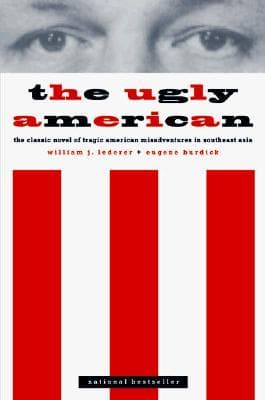
Synopsis
Covers the whole plot, including the ending.
- Difficulty
- Medium
- Pacing
- Variable
- Mood
- Thought-provoking, Critical, Observational, Urgent
- Read it if
- You are interested in the historical context of U.S. foreign policy in Southeast Asia during the Cold War, particularly critiques of American aid and diplomacy.
- Skip it if
- You prefer fast-paced thrillers or are looking for a deep character study rather than a socio-political commentary.
The Ugly American Plot Summary
Covers the whole plot, including the ending.
The Ambassador's Blunder
Ambassador Louis Krupitzyn, known as MacWhite, arrives in the fictional Southeast Asian country of Sarkhan with big ideas for American aid and influence. Despite his good intentions, MacWhite quickly shows himself to be out of touch with the local people. He insists on building a massive, air-conditioned embassy in a remote area, far from the capital. Locals find this impractical and culturally insensitive. His attempts to start large, Western-style industrial projects fail because he does not understand the existing agricultural economy or the people's needs. He surrounds himself with American staff who are equally isolated and dismissive of Sarkhanese customs, further alienating the very people they are supposed to be helping. His projects, though well-funded, are often abandoned or misused, becoming symbols of American waste and misunderstanding.
Father Finian's Success
In contrast to the official American mission, Father Finian, an American Catholic priest, lives among the Sarkhanese people. He speaks their language fluently and understands their culture deeply. He operates a small, practical soap factory that provides jobs and a useful product to the community. His success comes from his humility, his willingness to live simply like the locals, and his genuine desire to help them on their own terms. He teaches them modern methods for improving their lives, not by forcing Western ideas, but by adapting solutions to their existing framework. His approach earns him the trust and respect of the Sarkhanese, showing that effective aid requires cultural immersion and practical, small-scale efforts rather than grand, top-down projects.
The Engineer and the Bicycle
Homer Atkins, an independent American engineer, arrives in Sarkhan with his wife, Emma. Unlike the embassy staff, Atkins lives modestly and focuses on practical solutions. He designs and builds a simple, hand-powered bicycle-driven pump that the Sarkhanese can easily manufacture and repair themselves, meeting their need for irrigation. He teaches local mechanics how to build and maintain these pumps, giving them sustainable technology. His approach is hands-on and direct, avoiding the bureaucratic problems and cultural insensitivity of the official American mission. Atkins' success highlights how well grassroots, appropriate technology works compared to complex, Western-centric infrastructure projects that locals cannot maintain or afford.
The Journalist's Frustration
Joe Bing, an American journalist stationed in Sarkhan, tries to report on the growing disconnect between American policy and its actual impact. He observes the failures of the official mission and the successes of individuals like Father Finian and Homer Atkins. However, he faces resistance from the embassy, which prefers to present a clean, positive image of American efforts. His attempts to highlight the cultural insensitivity and ineffectiveness of American aid are often dismissed or censored. Bing's character shows the frustration of those who see the truth but cannot change the fixed bureaucratic system, emphasizing the book's criticism of American self-deception abroad.
The French General's Wisdom
General Mott, a veteran French officer with experience in colonial conflicts in Southeast Asia, offers a cynical but insightful view of the struggle against Communism. He recognizes the strategic importance of understanding local people and using unconventional tactics. He criticizes the American reliance on traditional military power and their inability to win the 'hearts and minds' of the people. Mott's character serves as a warning. He draws parallels between French colonial mistakes and current American errors, suggesting that a purely military approach, without cultural understanding, will fail against a determined, locally supported insurgency.
The Communist Threat
Throughout the story, the Communist forces are shown to be very effective in their propaganda and local efforts. They use American mistakes, such as the grand, impractical projects and the cultural isolation of embassy staff, to portray Americans as arrogant and out of touch. The Communists, often through seemingly simple acts of kindness, medical aid, or promises of land reform, win the loyalty of the rural populations. They understand local complaints and offer solutions that connect with common people. This shows a better understanding of psychological warfare and local needs compared to the official American approach.
The Political Officer's Failure
Ambassador MacWhite selects Joe Sears, a brilliant but socially awkward political science professor, for a crucial role in Sarkhan. Sears, despite his academic knowledge, is completely unprepared for the practical realities of diplomacy and cultural engagement. He cannot connect with the Sarkhanese people, preferring to analyze situations from a theoretical distance. His attempts at communication are hindered by his lack of language skills and cultural understanding, making him an easy target for manipulation and ridicule. Sears' failure highlights the book's argument that academic intelligence without practical, on-the-ground experience and cultural empathy is not enough for effective foreign policy.
The American 'Ugly'
The 'ugly American' in the book is not necessarily physically unattractive, but rather someone who might be unpolished, unpretentious, and willing to work hard, often living among the local people. This is seen in characters like Homer Atkins and Father Finian. They are 'ugly' in the sense that they do not fit the image of the sophisticated, well-dressed diplomat. Yet, it is precisely their lack of pretense and their willingness to integrate and understand the local culture that makes them effective. They show that true effectiveness abroad comes from humility, practical skills, and genuine connection, not from official titles or lavish spending.
The Losing Battle
The overall story shows that, despite vast financial and military resources poured into Sarkhan, the United States is steadily losing ground to Communist influence. The well-intentioned but misguided efforts of the official American mission, marked by cultural ignorance, bureaucratic inefficiency, and an inability to adapt, actively alienate the Sarkhanese population. The Communists, conversely, effectively win the loyalty of the people through their understanding of local needs and their local propaganda. The book ultimately paints a grim picture of American foreign policy's failure to grasp the true nature of the Cold War struggle in Southeast Asia. It highlights the importance of 'hearts and minds' over military might.
A Call to Action
While not explicitly a concluding chapter, the combined effect of the various scenes and character studies is a strong call to action. The successes of individuals like Homer Atkins and Father Finian are presented as models for what effective foreign policy could be. This contrasts sharply with the failures of the official system. The book argues that for America to succeed in the Cold War, it must fundamentally change its approach. This means sending fewer diplomats who are culturally isolated, and more practical, empathetic individuals who are willing to live simply, learn local languages, and work directly with the people on their own terms. It advocates for humility, understanding, and appropriate technology over arrogance and grand, impractical schemes.
Principal Figures
Louis Krupitzyn (MacWhite)
Supporting
The well-intentioned but culturally ignorant American Ambassador to Sarkhan.
MacWhite is an American ambassador who genuinely wants to help Sarkhan but is utterly ineffective due to his lack of cultural understanding and his reliance on conventional, large-scale Western solutions. He means well but is blinded by his own cultural biases and surrounded by equally isolated staff. He prioritizes grand gestures and visible projects over practical, grassroots initiatives, leading to widespread failure and alienation of the local populace.
Relationships: Joe Sears (His chosen political officer, equally ineffective.); Homer Atkins (Unaware of Atkins' effective, contrasting methods.)
Homer Atkins
Protagonist
A pragmatic American engineer who successfully implements simple, effective technology.
Homer Atkins is a self-made American engineer, rough around the edges but possessing immense practical intelligence and a deep respect for local capabilities. He lives modestly, speaks the local language, and focuses on creating appropriate technology that the Sarkhanese can build and maintain themselves, such as the bicycle-powered pump. He embodies the 'ugly American' ideal: unpretentious, hands-on, and effective, proving that genuine help comes from understanding and empowering, not from imposing.
Relationships: Emma Atkins (His supportive and understanding wife.); Sarkhanese people (Earns their trust and respect through his work.)
Father Finian
Protagonist
An American Catholic priest who connects with locals through humility and practical aid.
Father Finian is an American priest who has lived in Sarkhan for many years, fully immersing himself in the local culture and language. He runs a successful small-scale soap factory, providing employment and a needed product. His success stems from his genuine empathy, his willingness to live simply, and his ability to understand and address the needs of the Sarkhanese people on their own terms. He is another example of the 'ugly American' who achieves far more than the official diplomatic mission.
Relationships: Sarkhanese people (Deeply respected and trusted by the community.)
Joe Bing
Supporting
An American journalist frustrated by the official narrative of American success.
Joe Bing is a perceptive American journalist who observes the failures of the official American mission and the successes of individuals like Atkins and Finian. He attempts to report the truth but faces resistance and censorship from the embassy, which prefers to maintain a facade of progress. Bing represents the voice of critical observation and the difficulty of challenging entrenched bureaucratic self-deception.
Joe Sears
Supporting
A brilliant but socially inept political science professor chosen by MacWhite.
Joe Sears is a highly intelligent academic, a political science professor chosen by Ambassador MacWhite for his intellectual prowess. However, Sears is completely devoid of practical experience, cultural sensitivity, or language skills. He is unable to connect with the Sarkhanese people and his theoretical approach makes him ineffective and easily manipulated, serving as an example of intellectual brilliance failing in the face of real-world complexities.
Relationships: Louis Krupitzyn (MacWhite) (Chosen by MacWhite for his perceived intelligence.)
Emma Atkins
Supporting
Homer Atkins' supportive and practical wife.
Emma Atkins is Homer's wife, a down-to-earth and pragmatic woman who shares her husband's simple lifestyle and respect for the Sarkhanese people. She supports Homer's work and adapts easily to life in Sarkhan, further highlighting the contrast between their integrated existence and the isolated lives of the embassy staff. She embodies the quiet strength and adaptability needed for effective engagement abroad.
Relationships: Homer Atkins (His devoted and practical wife.)
General Mott
Supporting
A cynical French general with deep experience in colonial conflicts.
General Mott is a seasoned French military officer who has witnessed the complexities of colonial warfare and the challenges of engaging with local populations. He offers a world-weary but accurate critique of American conventional military thinking, emphasizing the importance of understanding the indigenous people and employing unconventional tactics. His character provides a historical perspective and a warning against repeating past colonial mistakes.
The Sarkhanese People
Mentioned
The indigenous population of the fictional Southeast Asian country.
The Sarkhanese people are depicted as resilient, culturally rich, and largely agricultural. They are the target of both American aid and Communist influence. Their trust and loyalty are crucial in the ideological struggle. They are often bewildered or alienated by the official American approach but are receptive to those who show genuine respect, understanding, and offer practical help, highlighting their agency in choosing sides.
Relationships: Louis Krupitzyn (MacWhite) (Alienated by his grand, insensitive projects.); Homer Atkins (Empowered by his practical technology and teaching.); Father Finian (Trust and respect him for his genuine care.)
Themes & Insights
Cultural Ignorance vs. Cultural Empathy
This is the main theme, comparing the failures of American foreign policy rooted in a lack of understanding and respect for local cultures with the successes achieved through deep immersion and empathy. Ambassador MacWhite's insistence on Western-style projects and his staff's isolation in their air-conditioned embassy show cultural ignorance, leading to wasted resources and alienation. In contrast, Father Finian's fluent Sarkhanese and his soap factory, or Homer Atkins' bicycle pump, succeed because they are tailored to local needs and cultural contexts, showing that genuine empathy is the foundation of effective engagement.
“They are trying to buy friends, but they only buy enemies.”
The Effectiveness of Grassroots vs. Top-Down Aid
The book clearly distinguishes between large-scale, centrally planned aid programs and small, local initiatives. The official American mission, with its massive infrastructure projects and bureaucratic layers, consistently fails to make a meaningful impact, often causing resentment. In contrast, characters like Homer Atkins and Father Finian achieve significant success by working directly with the people, implementing simple, practical solutions that empower locals to improve their own lives. This theme argues that effective aid is not about spending the most money, but about empowering communities with suitable technology and knowledge from the ground up.
“The trouble with Americans abroad is that they think they can buy friends, or make them with big projects.”
The 'Ugly American' Paradox
The title itself refers to the idea that the most effective Americans abroad are often those who are physically unpolished, unpretentious, and willing to live simply among the local people, rather than the sophisticated, well-dressed diplomats. Homer Atkins, with his rough manner and practical approach, and Father Finian, living modestly among the Sarkhanese, embody this 'ugly American' ideal. Their effectiveness comes from their humility, their ability to connect with locals as equals, and their focus on practical solutions. This challenges the idea that diplomatic effectiveness requires a polished, Western appearance.
“He was an ugly American. He was not pretty. He was not refined. But he was effective.”
The Cold War for 'Hearts and Minds'
The story frames the conflict in Sarkhan not as a traditional military struggle, but as a battle for the loyalty and trust of the local population. The Communists are shown to be very good at winning 'hearts and minds' by using American mistakes and offering relatable solutions to local complaints. The American failure to understand this psychological and cultural dimension leads to their losing ground, despite their greater military and economic power. The book argues that true victory in the Cold War depended on understanding and connecting with people, not just on containing communism through force or grand gestures.
“The Communists don’t fight for land. They fight for people.”
Bureaucracy and Inefficiency
The official American diplomatic and aid system is consistently portrayed as slowed down by bureaucracy, internal politics, and an inability to adapt. Decisions are made by distant officials, projects are often designed without local input, and communication is hindered by layers of hierarchy and a lack of language skills. This inefficiency contrasts sharply with the speed and directness of individuals like Homer Atkins, who bypass official channels to achieve concrete results. The theme highlights how rigid bureaucratic structures can stifle initiative and undermine even well-intentioned efforts in foreign policy.
“Paperwork was the American's greatest weapon against the enemy, and also against themselves.”
Plot Devices & Literary Techniques
Vignette Structure
A series of interconnected short stories and character sketches.
The book is structured as a collection of loosely connected vignettes, each focusing on a different character or situation in Sarkhan. This allows the authors to present various facets of American foreign policy, from the failures of official diplomats to the successes of individual citizens. This episodic approach provides multiple perspectives on the central themes without being confined to a single linear plot, effectively illustrating the widespread nature of the 'ugly American' phenomenon and its antithesis.
Contrasting Characters
Juxtaposition of effective and ineffective Americans abroad.
A key device is the direct contrast between characters. For example, the ineffective Ambassador MacWhite and his staff are consistently juxtaposed with the successful, grassroots efforts of Homer Atkins and Father Finian. This contrast vividly illustrates the book's central argument about the right and wrong ways to engage in foreign aid and diplomacy. By showing both sides, the authors strengthen their critique and provide concrete examples of effective alternatives.
The 'Ugly American' Archetype
A symbolic representation of effective, unpretentious foreign engagement.
The concept of the 'ugly American' itself functions as a powerful plot device. It subverts the traditional understanding of 'ugly' to mean effective and culturally integrated, rather than physically unattractive or socially awkward. Characters like Homer Atkins embody this archetype, serving as living proof that genuine connection and practical help, not polished appearances or grandiosity, are what truly matter in foreign relations. This concept becomes a guiding principle for understanding which characters succeed and why.
Fictionalized Setting and Characters
Using a fictional country and composite characters to represent real-world issues.
The use of the fictional country of Sarkhan and composite characters allows the authors to generalize their critique of American foreign policy without directly accusing specific individuals or nations. This fictionalization grants them creative license to highlight common patterns of behavior and policy failures prevalent in Southeast Asia during the Cold War era, making the book's message broader and more universally applicable to American engagement abroad.
The Ugly American Quotes
“We've got to learn to live with them on their terms, not ours. That's the only way.”
“The people in the provinces, the villages, the rice paddies—they were the real Asia. And we didn't know them.”
“An American in Asia had to be more than an American. He had to be an Asian, too, in his heart and mind.”
“The greatest weapon in the world is a simple idea in the hands of a simple man.”
“Our biggest failure is that we send people out who don't know the language, don't know the customs, and don't care to learn.”
“They want to be free, but they don't want to be told how to do it by us.”
“The ugly American is not ugly because he is an American; he is ugly because he is stupid or arrogant or both.”
“The real battle for Asia is being fought in the villages, not in the capitals.”
“You can't buy loyalty with money. You earn it with respect and understanding.”
“What they need is not a lecture on democracy, but a way to get water for their crops.”
“The people who do the most good are often the ones who are least seen.”
“If we don't change our ways, we're going to lose the hearts and minds of these people.”
“It isn't a question of being liked. It's a question of being effective.”
“The American who tries to impose his way of life on others will always be a failure.”
Quiz
10 questions on the plot and the characters. Each answer comes with a short explanation.
Question 1
Which character in 'The Ugly American' is an engineer who lives among the villagers and helps them build a better road using local materials and techniques, earning their trust?
- Ambassador MacWhite
- Colonel Edwin B. Hillandale
- Louis Sears
- Homer Atkins
Show answer
D. Homer Atkins Homer Atkins is the 'ugly American' who lives simply, respects local culture, and uses his engineering skills to genuinely help the villagers, contrasting with many other American officials.
Question 2
What is the primary criticism 'The Ugly American' levels against American foreign policy and personnel in Southeast Asia?
- Lack of military spending and presence.
- Too much focus on cultural exchange programs.
- Arrogance, incompetence, and a failure to understand local cultures and needs.
- Over-reliance on local interpreters.
Show answer
C. Arrogance, incompetence, and a failure to understand local cultures and needs. The book explicitly criticizes American officials for their arrogance, incompetence, and inability to connect with or understand the local populations they were supposedly helping.
Question 3
Which real-life U.S. President launched a study of the military aid program in response to 'The Ugly American'?
- John F. Kennedy
- Dwight D. Eisenhower
- Lyndon B. Johnson
- Richard Nixon
Show answer
B. Dwight D. Eisenhower The book's description states that President Eisenhower launched a study of the military aid program due to the book's impact.
Question 4
Why does Father Finian, a Catholic priest, succeed in gaining the trust of the local people in Southeast Asia where many American officials fail?
- He provides them with advanced military weapons.
- He lives simply among them, speaks their language, and understands their daily struggles.
- He offers large sums of money for their cooperation.
- He is a skilled diplomat who negotiates with local governments.
Show answer
B. He lives simply among them, speaks their language, and understands their daily struggles. Father Finian, like Homer Atkins, exemplifies the 'ugly American' ideal by immersing himself in the local culture, speaking the language, and living humbly among the people, earning their respect and trust.
Question 5
What is the significance of the character Ambassador MacWhite's efforts to learn the local language and connect with the people, despite his initial difficulties?
- It demonstrates that even well-intentioned efforts are futile against communist influence.
- It highlights the importance of cultural understanding and personal engagement for effective foreign policy.
- It shows that learning a language is unnecessary if one has sufficient diplomatic skills.
- His efforts ultimately lead to his dismissal from his post.
Show answer
B. It highlights the importance of cultural understanding and personal engagement for effective foreign policy. MacWhite represents a rare example of an American official who tries to overcome the typical disconnect by learning the language and engaging directly, emphasizing the book's theme that such efforts are crucial for success.
Question 6
The book suggests that a key reason for the United States 'losing the struggle with Communism in Asia' was:
- The overwhelming military superiority of communist forces.
- A failure to provide adequate economic aid to developing nations.
- The inability of American officials to win the 'hearts and minds' of the local populace due to cultural insensitivity and detachment.
- Excessive reliance on covert operations and espionage.
Show answer
C. The inability of American officials to win the 'hearts and minds' of the local populace due to cultural insensitivity and detachment. The core argument of the book is that American officials' detachment and cultural insensitivity alienated the local populations, making them susceptible to communist influence.
Question 7
How does the character of Colonel Edwin B. Hillandale ('the Ragtime Kid') contribute to the book's overall message?
- He embodies the typical arrogant and incompetent American official.
- He demonstrates that cultural understanding can be achieved through non-traditional means, such as music and genuine friendship.
- He represents the military's inability to adapt to diplomatic roles.
- He is a covert agent whose true mission is to destabilize the region.
Show answer
B. He demonstrates that cultural understanding can be achieved through non-traditional means, such as music and genuine friendship. Hillandale, despite his unconventional methods, connects deeply with the local people through his love of music and genuine warmth, showing that personal connection, not just formal diplomacy, can be effective.
Question 8
The term 'Ugly American' in the book's title refers to:
- Physically unattractive American tourists abroad.
- Americans who are culturally insensitive, arrogant, and detached from the local populace.
- American military personnel involved in combat operations.
- Americans who deliberately sabotage U.S. foreign policy.
Show answer
B. Americans who are culturally insensitive, arrogant, and detached from the local populace. The book coined the phrase to describe Americans abroad who, despite good intentions, act with arrogance, ignorance, and insensitivity, thereby undermining U.S. efforts.
Question 9
What is the primary difference in approach between the 'ugly Americans' (like Homer Atkins and Father Finian) and the majority of American officials depicted in the book?
- The 'ugly Americans' prioritize military solutions, while others favor economic aid.
- The 'ugly Americans' live humbly among the people, learn their language, and work directly on practical, small-scale projects, whereas others remain isolated and focus on grand, often unsuitable, schemes.
- The 'ugly Americans' are communists in disguise, while others are loyal Americans.
- The 'ugly Americans' are academics, while others are career diplomats.
Show answer
B. The 'ugly Americans' live humbly among the people, learn their language, and work directly on practical, small-scale projects, whereas others remain isolated and focus on grand, often unsuitable, schemes. The 'ugly Americans' are characterized by their hands-on approach, cultural immersion, and focus on practical, grassroots solutions, in stark contrast to the isolated, bureaucratic, and often ineffective methods of other American officials.
Question 10
The book's portrayal of the fictional country of 'Sarkhan' and its political struggles is a thinly veiled representation of which real-world region during the Cold War era?
- Latin America
- The Middle East
- Southeast Asia (e.g., Vietnam, Laos, Cambodia)
- Eastern Europe
Show answer
C. Southeast Asia (e.g., Vietnam, Laos, Cambodia) The book's description explicitly states it is an 'expose of American arrogance, incompetence, and corruption in Southeast Asia' and how the U.S. was 'losing the struggle with Communism in Asia.'
The Ugly American FAQ
What is the central premise of 'The Ugly American'?
'The Ugly American' critiques American foreign policy in Southeast Asia during the Cold War, illustrating how arrogance, cultural insensitivity, and bureaucratic incompetence hinder efforts to counter communism. It contrasts ineffective American diplomats with a few dedicated individuals who genuinely connect with local populations, highlighting the failure of top-down, culturally ignorant approaches.
Who is the character that embodies the 'Ugly American' stereotype, and who is the 'ugly American' hero?
The 'Ugly American' stereotype is embodied by many characters, such as Ambassador MacWhite or Colonel Hillandale, who are out of touch with local realities. However, the true 'ugly American' hero is Homer Atkins, an engineer who is physically unkempt but deeply understands local needs and works hands-on with the people, earning their respect and achieving tangible results.
What is the significance of the fictional country of Sarkhan in the narrative?
Sarkhan represents a composite of various Southeast Asian nations facing the threat of communist insurgency and American intervention. Its fictional nature allows the authors to generalize critiques of U.S. policy without directly accusing any single nation, making the commentary broadly applicable to the region's geopolitical struggles.
How do the authors use contrasting character portraits to convey their message?
The authors frequently use stark contrasts, such as the aloof, cocktail-party-attending diplomats versus practical, hands-on figures like Homer Atkins or Father Finian. This juxtaposition highlights the failures of bureaucratic, culturally insensitive approaches against the successes of individuals who genuinely engage with local populations and understand their needs.
What was the immediate impact of the book's publication on U.S. policy?
Upon its publication in 1958, 'The Ugly American' became a bestseller and prompted President Eisenhower to launch a study of U.S. military aid programs. This led to significant reforms aimed at improving the effectiveness and cultural sensitivity of American personnel abroad, demonstrating the book's direct influence on foreign policy discussions.
What specific 'hidden detail' about local culture do successful characters like Homer Atkins leverage?
Homer Atkins, the engineer, leverages a deep understanding of local practical needs and traditional skills. Instead of imposing Western solutions, he designs a simple, hand-operated rice mill that locals can build and maintain themselves, demonstrating respect for their capabilities and fostering self-sufficiency, which resonates far more than complex, imported machinery.
How does the character of Father Finian demonstrate an alternative approach to diplomacy?
Father Finian, an Irish priest, represents an effective 'people-to-people' diplomacy, learning the local language and living among the villagers. He wins hearts and minds by providing practical assistance like medical care and education, building trust and loyalty that official American efforts often fail to achieve due to their detachment and lack of genuine engagement.
What is the subtle critique embedded in the portrayal of intelligence agencies in the book?
The book subtly critiques the intelligence agencies' reliance on high-level informants and their failure to understand grassroots movements. Characters like Joe Bing, who tries to gather intelligence from the ground up by living among the people, are often undermined or ignored by superiors who prefer less messy, more conventional intelligence gathering, missing crucial insights.
What is the psychological impact of cultural isolation on American diplomats in Sarkhan?
Many American diplomats suffer from psychological isolation, retreating into expat communities and luxurious compounds, which prevents them from understanding the local populace. This detachment fosters a sense of superiority and reinforces their existing biases, making them ineffective and creating a barrier to genuine connection and empathy.
How does the book explore the psychology of 'good intentions gone wrong' among American officials?
The book often depicts American officials with ostensibly good intentions who fail due to their lack of self-awareness and cultural humility. They believe their Western methods are universally superior, leading them to impose solutions without considering local context or needs, resulting in resentment and counterproductive outcomes despite their desire to help.
What psychological traits contribute to the success of figures like Homer Atkins or Colonel Hillandale?
Homer Atkins and Colonel Hillandale succeed due to their humility, adaptability, and willingness to get their hands dirty. They possess an innate curiosity about local cultures and a practical problem-solving mindset, which allows them to build trust and achieve tangible results, contrasting sharply with the aloofness of many of their colleagues.
In what ways does the book suggest that American 'arrogance' is a psychological defense mechanism?
The book implies that American 'arrogance' can function as a psychological defense, masking insecurity or discomfort with unfamiliar cultures. By maintaining a facade of superiority and insulating themselves, diplomats avoid confronting their own ignorance or the complexities of foreign societies, thus protecting their worldview at the expense of effective engagement.
Is 'The Ugly American' solely a critique of American foreign policy, or does it offer a broader message about international relations?
While primarily a critique of American foreign policy, the book offers a broader message about the universal importance of cultural understanding, humility, and genuine human connection in international relations. It suggests that any nation's efforts abroad will fail if they are not rooted in respect for local peoples and their unique contexts, rather than imposing external ideologies or solutions.
How does the book's message about individual agency contrast with systemic failures?
The book repeatedly highlights that while the American system often fails due to bureaucracy and cultural insensitivity, individual initiative and genuine effort can still achieve success. Characters like Homer Atkins and Father Finian demonstrate that dedicated individuals, despite systemic obstacles, can make a profound positive impact by connecting with locals on a personal level.
To what extent is the book's portrayal of communism simplistic or nuanced?
The book's portrayal of communism is largely presented as a monolithic threat that exploits American weaknesses, rather than delving into its ideological complexities. Its focus is more on how American failures inadvertently aid communist recruitment by creating resentment and disillusionment among local populations, rather than a deep analysis of communist doctrine itself.
Could the lessons from 'The Ugly American' still be relevant in contemporary foreign policy, despite the Cold War context?
Absolutely. The core lessons regarding cultural sensitivity, the importance of learning local languages, engaging directly with local populations, and avoiding arrogance remain highly relevant. The book's critique of bureaucratic detachment and the imposition of 'one-size-fits-all' solutions transcends the Cold War, offering enduring insights for international engagement in any era.
How does the book's structure, with its collection of interconnected stories, contribute to its overall impact?
The episodic structure, presenting a series of vignettes and character studies, allows the authors to illustrate their central thesis from multiple angles and through various characters without a single overarching plot. This mosaic approach provides diverse examples of both failure and success, making the critique multifaceted and compellingly persuasive through accumulation.
About the author
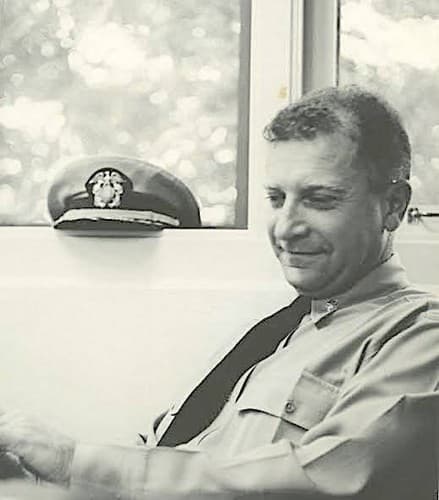
William J. Lederer was an American author known for his works that often explore themes of politics and society. He is best known for his novel "The Ugly American," which critiques U.S. foreign policy and cultural misunderstandings during the Cold War. Lederer's writing reflects his experiences and observations, particularly regarding international relations.
Similar books
- The Quiet American
Graham Greene
4.0 (50k) average on GoodreadsLiterary FictionExplores American involvement in Vietnam and the clash of ideologies and cultures.
- A Thousand Splendid Suns
Khaled Hosseini
4.4 (1.2M) average on GoodreadsHistorical FictionProvides insight into the impact of foreign intervention and cultural differences in a non-Western setting, though with a different focus.
- 1984
George Orwell
4.2 (3.1M) average on GoodreadsPoliticsIn a future where surveillance and thought control are absolute, a man's search for truth clashes with the Party, showing that hope can be a form of rebellion.
- Animal Farm
George Orwell
4.0 (2.7M) average on GoodreadsPoliticsA farm animals' rebellion against humans turns into a pig-led dictatorship, showing how power corrupts and revolutionary ideals are betrayed.
- Freakonomics: A Rogue Economist Explores the Hidden Side of Everything
Steven D. Levitt
4.0 (709k) average on GoodreadsBusinessThis book uses economic principles to reveal the surprising incentives behind everything from drug dealing and real estate to cheating teachers and the decline of crime.
- I Am Malala: The Story of the Girl Who Stood Up for Education and Was Shot by the Taliban
Malala Yousafzai
4.1 (419k) average on GoodreadsPoliticsA teenage girl from a Taliban-controlled valley refuses to give up her books, becoming a global voice for education even after an assassination attempt.






Enjoyed the summary?
A summary gives you the shape of the book. The book itself has the detail, the examples and the voice.
Find The Ugly American on AmazonAs an Amazon Associate, BookBrief earns from qualifying purchases. How we're funded