
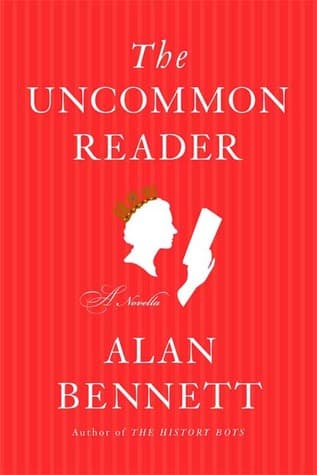
Synopsis
Covers the whole plot, including the ending.
- Difficulty
- Easy
- Pacing
- Moderate
- Mood
- Witty, Charming, Reflective, Humorous, Thought-provoking
- Read it if
- You love literary fiction, enjoy witty social commentary, and appreciate a story about the transformative power of reading. Perfect for fans of British humor and charming, character-driven novellas.
- Skip it if
- You prefer fast-paced thrillers, high fantasy, or stories with intense drama and action. This is a quiet, contemplative read.
The Uncommon Reader Plot Summary
Covers the whole plot, including the ending.
An Unlikely Encounter with a Mobile Library
While walking her corgis on the grounds of Buckingham Palace, the Queen encounters a mobile library van. Her corgis lead her directly to it. Feeling a sense of duty, and curiosity, she decides to borrow a book. This first interaction is awkward, as the Queen has never before had to select a book or talk to a librarian in such a casual setting. She meets Norman, a kitchen boy who uses the library, and the librarian asks him to help the Queen with her selection. This seemingly small event starts a deep and unexpected change in the Queen's life, as she enters the world of literature.
The First Foray into Fiction
The Queen's first borrowed book is by Ivy Compton-Burnett, a challenging author. She struggles with it at first, finding it dense and hard to understand, often falling asleep. But she keeps going, driven by a growing curiosity. Norman, the kitchen boy, becomes her unofficial guide, recommending other authors and genres. He suggests simpler, more engaging books, helping her understand literature. Slowly, the Queen begins to enjoy reading, starting with books she can relate to, like biographies and historical accounts, before reading more diverse and complex fiction. This period shows a shift from duty-bound engagement to genuine interest.
A Growing Obsession and Neglected Duties
As the Queen's reading habit grows, it begins to interfere with her royal schedule. She finds herself reading during official engagements, in the car, and even during private audiences. Her attention during state dinners and ceremonial events lessens, her mind often on the stories in her books. She becomes less interested in trivial conversations and more prone to philosophical thoughts inspired by her reading. Her staff, especially her Private Secretary Sir Kevin, and her dresser, Miss Lapin, worry about her unusual behavior and her neglect of duties. They see her new hobby as a problem for the monarchy.
Norman's Role as Literary Confidante
Norman, initially a shy kitchen boy, becomes an important part of the Queen's reading journey. He is the only one who truly understands her new passion and gives her recommendations, insights, and a way to discuss her literary discoveries. Their conversations, formal at first, become genuine talks about books and ideas. Norman introduces her to authors like Jean Genet and Proust, expanding her horizons beyond traditional royal reading. His simple nature and love for books make him the perfect confidante, bridging the social gap between them and letting the Queen explore her intellectual curiosity without judgment from her worried courtiers.
The Court's Disapproval and Intervention
Sir Kevin, the Queen's Private Secretary, and other household members become alarmed by her reading habit. They see it as an eccentricity, a distraction, and a threat to the monarchy's stability and dignity. They fear she is losing touch with her main role and becoming too introspective. They try various ways to discourage her, from subtly suggesting she read less to trying to stop Norman from talking to her. Sir Kevin even arranges for the mobile library to be removed from the palace grounds. Their efforts, however, only strengthen the Queen's resolve and her commitment to reading.
A New Perspective on People and Society
Through her extensive reading, the Queen begins to see the world, and its people, with fresh eyes. She develops more empathy for ordinary lives, understanding motivations and struggles far removed from her sheltered existence. She starts to observe her staff and the public not just as subjects, but as individuals with complex inner lives, like the characters in her books. This new perspective makes her more critical of superficiality and protocol, and more interested in genuine connection and intellectual engagement. She questions the rigid structures of royalty and her own role, leading to self-reflection and a growing detachment from her former self.
The Queen's Literary Musings and Public Engagements
The Queen's literary immersion begins to show in her public and private talks. She starts to include literary references and philosophical observations in her conversations, often confusing and discomforting those around her. During official engagements, she makes unexpected remarks, quoting authors or comparing fictional scenarios and real-world events. Her staff finds these comments baffling and inappropriate, fearing they undermine her authority and make her seem eccentric. This new way of speaking highlights the growing difference between her inner intellectual life and the expectations of her public role.
Norman's Dismissal and the Queen's Resolve
Because of the concerns of Sir Kevin and other courtiers, Norman is eventually dismissed from his position in the palace kitchen. This is officially for a small infraction, but really because he is seen as a bad influence on the Queen. The Queen is deeply saddened and angered by this, recognizing it as a direct attempt to cut her connection to reading. Despite Norman's absence, her resolve to read only strengthens. She continues her literary explorations independently, showing that her passion has become self-sustaining and no longer needs an external guide. This event solidifies her rebellion against the constraints imposed by her staff.
The Ultimate Act of Literary Subversion
After reading many books and absorbing many stories, the Queen realizes she wants to write. She sees that reading is a passive act, and true engagement with literature is in creation. She begins to secretly work on her own manuscript, finding a new purpose and a deeper connection to the literary world. This decision is the ultimate act of defiance against the expectations of her role. It changes her from an 'uncommon reader' into an uncommon writer. It shows her complete embrace of a life guided by intellectual curiosity and creative expression, regardless of her royal position.
The Royal Announcement and a New Reign
At a state occasion, the Queen makes a shocking announcement: she intends to abdicate the throne. She explains that her true calling is now writing, a pursuit she can no longer do with the demands of monarchy. This declaration sends shockwaves through the establishment and the nation. The novella ends with the Queen, free from her royal duties, embracing her new life as a writer, with Norman, reinstated and working as a librarian, by her side. This final act shows how reading can change people and the ultimate freedom of intellectual pursuit over societal expectations. It suggests a future where literature redefines power and purpose.
The Uncommon Reader Characters
Her Majesty the Queen
Protagonist
The reigning monarch who discovers an unexpected passion for reading.
Initially a creature of habit and duty, the Queen is meticulously organized and somewhat detached, living a life dictated by protocol. Her accidental encounter with a mobile library sparks a profound intellectual awakening. She transforms from a figurehead into a deeply thoughtful and introspective individual, increasingly questioning the artificiality of her royal existence. Her wit, though subtle at first, becomes sharper and more critical as she devours literature. She is determined and persistent in her new hobby, much to the dismay of her staff, and ultimately finds her true calling in writing. Her journey is one of self-discovery and intellectual liberation.
Relationships: Norman (Literary confidante and guide); Sir Kevin (Antagonistic Private Secretary); Miss Lapin (Worried dresser); The Duke of Edinburgh (Long-suffering, traditional husband)
Norman
Supporting
A humble kitchen boy who becomes the Queen's trusted literary advisor.
Norman is a quiet, unassuming kitchen boy with a genuine love for books. He is initially shy in the Queen's presence but quickly becomes her most valuable resource in her literary journey. He recommends diverse authors and genres, patiently answering her questions and engaging in thoughtful discussions about literature. He represents the common man's access to culture and acts as a bridge between the Queen's rarefied world and the broader human experience depicted in books. His sincerity and lack of pretension earn the Queen's respect and affection, making him an unlikely but crucial figure in her transformation. He is eventually dismissed but reinstated at the end.
Relationships: Her Majesty the Queen (Literary student-mentor; close intellectual bond); Sir Kevin (Antagonistic; cause of his dismissal)
Sir Kevin
Antagonist
The Queen's Private Secretary, who views her reading as a detrimental eccentricity.
Sir Kevin is the embodiment of rigid protocol, tradition, and administrative efficiency. As the Queen's Private Secretary, his primary concern is the smooth functioning of the monarchy and maintaining the Queen's dignified image. He sees her newfound passion for reading as an alarming eccentricity, a distraction that threatens the stability of the institution and her public perception. He is constantly devising strategies to curb her reading, from subtle discouragement to orchestrating Norman's dismissal and the removal of the mobile library. He represents the forces of convention and bureaucracy that resist change and intellectual exploration.
Relationships: Her Majesty the Queen (Professional superior-subordinate; ideological conflict); Norman (Antagonistic; views him as a bad influence)
Miss Lapin
Supporting
The Queen's dresser, concerned by her changing habits.
Miss Lapin is the Queen's long-serving dresser, a meticulous and observant woman. She notices the subtle (and not so subtle) changes in the Queen's behavior, such as her distractedness during fittings and her increased introspection. While not as overtly antagonistic as Sir Kevin, she shares his concern for the Queen's well-being and the maintenance of royal decorum. Her observations often serve to highlight the growing impact of the Queen's reading on her daily life, particularly her physical appearance and attention to detail. She represents the loyal, but bewildered, personal staff.
Relationships: Her Majesty the Queen (Professional; personal care and observation)
The Duke of Edinburgh
Supporting
The Queen's husband, who finds her new reading habit bewildering and inconvenient.
The Duke of Edinburgh is portrayed as a traditional, practical man who enjoys outdoor pursuits and has little interest in literature. He finds the Queen's new passion for reading baffling and often inconvenient, as it distracts her from their shared routines and conversations. His comments are often blunt and dismissive, reflecting a lack of understanding or patience for intellectual pursuits. He represents the segment of society that values action and tradition over introspection and abstract thought, providing a contrast to the Queen's evolving intellectualism. He is largely unaffected by her transformation, continuing his established way of life.
Relationships: Her Majesty the Queen (Spousal; increasingly distant due to her new interests)
The Librarian
Supporting
The initial, slightly flustered, facilitator of the Queen's library access.
The librarian is the unassuming individual who runs the mobile library van that the Queen first encounters. She is initially flustered and overwhelmed by the unexpected royal patron but quickly adapts to the situation. She is instrumental in introducing the Queen to the practicalities of borrowing books and assigns Norman to assist her. She represents the accessible, public face of literature and the initial gateway for the Queen into the world of reading. Her role is brief but pivotal in setting the Queen's journey in motion.
Relationships: Her Majesty the Queen (Service provider; initial point of contact for reading); Norman (Colleague; assigns him to assist the Queen)
The Prime Minister
Mentioned
A political figure who interacts with the Queen, noticing her changed demeanor.
The Prime Minister makes occasional appearances, primarily during official audiences with the Queen. He notices her increasing distraction and her tendency to interject literary or philosophical comments into their discussions, often to his confusion. He represents the political establishment that relies on the Queen's traditional role and finds her new intellectual musings disruptive to the practicalities of government. His interactions highlight the growing disconnect between the Queen's inner life and her public duties.
Relationships: Her Majesty the Queen (Official; observes her changing intellectual state)
The Royal Family (various members)
Mentioned
Family members who observe the Queen's changes with varying degrees of bewilderment.
Various unnamed members of the Royal Family are mentioned or briefly appear at official functions. They notice the Queen's increasing preoccupation with books, her distractedness, and her new way of speaking. Their reactions range from mild concern to polite bewilderment, reflecting a general inability to understand or relate to her intellectual awakening. They serve as a collective representation of the traditional royal circle that is challenged by the Queen's transformation.
Relationships: Her Majesty the Queen (Familial; observes her changing habits)
The Uncommon Reader Themes
The Transformative Power of Reading
The central theme is how reading can deeply change an individual, no matter their background or position. The Queen, initially limited by duty and protocol, finds freedom and a new sense of self through literature. Books open her eyes to different perspectives, challenge her old ideas, and let her experience lives far from her own. This change leads her to question her role and ultimately pursue a life of intellectual and creative fulfillment.
“Reading, she decided, was like a drug, a habit, a compulsion, and she was hooked.”
Identity and Self-Discovery
The Queen's journey is one of self-discovery. Through reading, she begins to understand herself not just as a monarch, but as an individual with intellectual desires and creative potential. She sheds the identity her title gave her and discovers a more authentic self. Her engagement with various authors helps her express her own thoughts and feelings, leading to a deep re-evaluation of her life's purpose and her place in the world. This ends with her decision to become a writer, a complete reimagining of her identity.
“She was no longer Queen, but a reader. And reading, she had discovered, was a subversive act.”
Class and Social Barriers
The novella subtly explores class differences through the friendship between the Queen and Norman, the kitchen boy. Norman, from a working-class background, is the Queen's intellectual equal and guide, bridging the large social gap between them through their shared love of books. His simple nature and knowledge of literature contrast sharply with the snobbery and superficiality of some of the Queen's courtiers. The book suggests that intellectual curiosity and cultural appreciation go beyond social hierarchies.
“Books did not care who was reading them.”
The Conflict Between Duty and Personal Fulfillment
A main conflict in the story is the Queen's struggle to balance her royal duties with her growing personal passion for reading. Her staff sees her reading as a failure of duty, while she increasingly finds her official engagements meaningless compared to the richness of literature. This theme shows the tension between societal expectations and individual desires, ultimately leading the Queen to choose personal fulfillment and intellectual freedom over the rigid demands of her inherited role.
“One could not be a monarch and a reader. Or, if one was, one had to choose.”
The Nature of Power and Authority
The novella examines how power and authority are seen and kept. The Queen's staff believes her authority comes from maintaining a certain image and following strict protocols. However, the Queen discovers a different kind of power in literature – the power of ideas, empathy, and critical thought. Her intellectual awakening subtly undermines the traditional power structures around her, as she becomes less interested in ceremonial power and more attuned to the subversive power of the written word. Her abdication redefines what 'power' means to her.
“She was not herself. She was a reader. And a reader, she had come to believe, was a dangerous thing.”
Plot Devices & Literary Techniques
The Mobile Library
A literal and symbolic gateway to a new world for the Queen.
The mobile library serves as the inciting incident and a potent symbol. It is a humble, everyday object that unexpectedly brings the vast world of literature directly to the isolated Queen. It represents accessibility, the democratic nature of books, and the serendipitous nature of discovery. Its eventual removal and the Queen's continued reading highlight that the true 'library' is within her, not just a physical place. It acts as a catalyst for her transformation, bringing the outside world, both literally and intellectually, into the confines of the palace.
Norman as a Foil and Catalyst
The kitchen boy who contrasts with the Queen's world and catalyzes her literary journey.
Norman serves as a crucial foil to the Queen, representing common sense, genuine intellectual curiosity, and a lack of pretension. His humble background contrasts sharply with the Queen's royal existence, yet he becomes her most important guide and confidante. He is a catalyst for her deeper engagement with literature, introducing her to new authors and engaging her in meaningful discussions. His presence highlights the absurdity of class barriers and the universality of intellectual pursuit, proving that true wisdom and passion can come from unexpected places. He embodies the liberating spirit of reading.
The Queen's Reading List
A curated list of diverse authors that reflects and drives the Queen's intellectual growth.
The specific authors and genres the Queen reads (Ivy Compton-Burnett, Jean Genet, Proust, Nancy Mitford, etc.) are not just incidental details; they are a plot device illustrating her intellectual journey. Her initial struggles and eventual embrace of diverse writers showcase her evolving taste and broadening perspectives. The chosen authors often reflect the themes she's grappling with, allowing her to explore ideas of class, sexuality, power, and human nature. The list acts as a roadmap of her intellectual development, from classic literature to more challenging and unconventional works.
Irony and Satire
Bennett's use of gentle humor to critique societal norms and the monarchy.
Alan Bennett employs subtle irony and gentle satire throughout the novella. The humor often arises from the juxtaposition of the Queen's lofty position with her newfound, very human, intellectual struggles and obsessions. The reactions of her staff, particularly Sir Kevin, to her reading are portrayed as comically bureaucratic and out of touch. The satire targets the rigidity of tradition, the superficiality of court life, and the absurdities of protocol, using the Queen's transformation to subtly critique the institutions she represents. The ultimate irony is that her 'neglect' of duty leads her to a more profound understanding of humanity.
The Uncommon Reader Quotes
“One reads for pleasure, and that is the great thing. One should not be ashamed of it.”
“Books, she thought, were a form of social engagement.”
“A book is a device to ignite the imagination.”
“She had not known that one could be so changed by a book.”
“The more she read, the more she realised how little she had read.”
“One could not be a queen and a reader. Not simultaneously.”
“What is life without a book?”
“Reading is not a duty, it is a pleasure.”
“She was no longer the monarch, but a reader.”
“Books did not care who you were. They simply were.”
“To read is to withdraw. To make oneself unavailable. One would have thought that a queen must always be available.”
“It was not just the stories themselves, but the act of reading that was subversive.”
“She read not to escape, but to inhabit.”
“Books did not offer a way out but a way in.”
Quiz
10 questions on the plot and the characters. Each answer comes with a short explanation.
Question 1
What initial event leads the Queen to discover the mobile library?
- She was on a scheduled royal visit to a local school.
- She was following her wandering corgis.
- Her car broke down near the library's location.
- She was specifically looking for a new hobby.
Show answer
B. She was following her wandering corgis. The novella begins with the Queen discovering the mobile library by chance while in pursuit of her runaway corgis, feeling 'duty bound to borrow a book' once she stumbles upon it.
Question 2
Who is Norman, and what is his initial role in the Queen's reading journey?
- He is a senior librarian who manages the mobile library.
- He is a young man from the palace kitchen staff who frequents the library and offers reading advice.
- He is the Queen's private secretary, tasked with finding her suitable books.
- He is a famous author the Queen admires, who she later meets.
Show answer
B. He is a young man from the palace kitchen staff who frequents the library and offers reading advice. Norman is a young man who works in the palace kitchen and is a regular at the mobile library. He becomes an unlikely guide for the Queen, recommending books and discussing literature with her.
Question 3
How does the Queen's new passion for reading primarily affect her relationships with her staff and duties?
- She becomes more efficient and focused on her royal duties.
- She develops a new, more casual rapport with her staff, discussing books.
- She neglects some of her duties and finds formal engagements tedious, alarming her advisers.
- She starts writing her own memoirs, inspiring her staff.
Show answer
C. She neglects some of her duties and finds formal engagements tedious, alarming her advisers. As the Queen becomes more engrossed in reading, she finds her royal duties increasingly tiresome and irrelevant, leading to concern and alarm among her private secretaries and other staff members.
Question 4
What type of authors does the Queen begin to read, often guided by Norman's suggestions?
- Exclusively historical biographies and royal chronicles.
- Mostly contemporary bestsellers and light romance novels.
- A wide and sometimes unconventional range, from the Brontë sisters to Jean Genet.
- Strictly British classic literature from the 19th century.
Show answer
C. A wide and sometimes unconventional range, from the Brontë sisters to Jean Genet. The Queen's reading tastes expand dramatically, moving far beyond typical royal fare. She delves into a diverse collection of authors, including literary giants like the Brontës and more provocative writers like Jean Genet, reflecting her broadening perspectives.
Question 5
What is a major theme explored through the Queen's transformation?
- The importance of adhering strictly to tradition and protocol.
- The liberating power of reading and its ability to broaden one's perspective, regardless of social standing.
- The inherent loneliness of power and royalty.
- The decline of the British monarchy in modern society.
Show answer
B. The liberating power of reading and its ability to broaden one's perspective, regardless of social standing. A central theme is how reading opens the Queen's mind, allowing her to see the world and her own life from new angles, thereby offering a form of liberation and a bridge to common experiences despite her royal status.
Question 6
How do the Queen's private secretaries and other advisers react to her new obsession with reading?
- They encourage it, seeing it as a cultured pastime for royalty.
- They are alarmed and try to subtly (and sometimes not so subtly) discourage her, fearing it's distracting her from her duties.
- They ignore it, believing it to be a temporary fad.
- They begin to read more themselves, inspired by her example.
Show answer
B. They are alarmed and try to subtly (and sometimes not so subtly) discourage her, fearing it's distracting her from her duties. The Queen's advisers view her reading as a detrimental distraction, fearing it makes her less engaged with her duties and potentially less 'royal.' They attempt various strategies to curb her enthusiasm, often to no avail.
Question 7
What 'bold new decision' is the Queen tempted to make towards the end of the novella, fueled by her reading?
- To abdicate the throne and live a private life.
- To write a book herself, sharing her experiences and insights.
- To establish a national literacy program.
- To marry Norman, the kitchen boy.
Show answer
B. To write a book herself, sharing her experiences and insights. Inspired by her extensive reading and new perspectives, the Queen decides to try her hand at writing, believing she has something to contribute. This decision is seen as quite radical by her staff.
Question 8
How does the Queen's understanding of herself and her role change as she reads more?
- She becomes more convinced of the divine right of monarchs.
- She begins to see herself less as a symbol and more as an individual with her own thoughts and desires, detached from her royal persona.
- She develops a deeper appreciation for the historical significance of the monarchy.
- She becomes more critical of commoners and their way of life.
Show answer
B. She begins to see herself less as a symbol and more as an individual with her own thoughts and desires, detached from her royal persona. Reading allows the Queen to step outside her predetermined role, to critically examine her life and position. She starts to view herself as a person with individual thoughts and feelings, rather than solely as a symbol of the monarchy.
Question 9
What ultimately happens to Norman, the young man who assists the Queen with her reading choices?
- He is promoted to the Queen's private secretary.
- He is dismissed from the palace staff due to his influence on the Queen.
- He becomes a published author himself, inspired by the Queen.
- He leaves the palace to become a librarian.
Show answer
B. He is dismissed from the palace staff due to his influence on the Queen. Norman is eventually dismissed from his position in the palace kitchen. This is orchestrated by the Queen's disapproving advisers who see him as a negative influence, encouraging her 'unsuitable' reading habits.
Question 10
The novella can be seen as a playful homage to what?
- The British Royal Family and its enduring traditions.
- The pleasure of reading and the transformative power of literature.
- The importance of mobile libraries in rural communities.
- The life and works of Alan Bennett himself.
Show answer
B. The pleasure of reading and the transformative power of literature. As stated in the description, 'The Uncommon Reader' is a 'playful homage to the written word' and 'a delightful celebration of books and writers, and the readers who sustain them,' using the Queen's journey to exemplify the transformative power of reading.
The Uncommon Reader FAQ
What is "The Uncommon Reader" about?
"The Uncommon Reader" is about Queen Elizabeth II discovering the profound joy and transformative power of reading after stumbling upon a mobile library. Her newfound obsession leads her to question her royal duties, challenge established protocols, and develop a more empathetic and critical view of the world around her, much to the alarm of her staff and government.
Why should I read "The Uncommon Reader"?
You should read "The Uncommon Reader" for its witty humor, its charming protagonist, and its insightful exploration of how art can change one's perspective, regardless of social standing. It's a delightful celebration of literature and offers a unique, satirical look at the British monarchy through the lens of intellectual awakening.
What is the background/setting of "The Uncommon Reader"?
The novella is set primarily within the confines of Buckingham Palace and other royal residences in contemporary Britain. The Queen's discovery of the mobile library, an ordinary public service, starkly contrasts with her highly structured and insulated royal life, highlighting the subversive nature of her new passion.
What are the most memorable quotes?
One memorable quote is, "A book is a device to ignite the imagination." Another is the Queen's realization, "One could not be a reader and a royal; one had to choose." These quotes encapsulate the novella's central themes of intellectual freedom and the conflict between personal passion and public duty.
What writing style does the author use?
Alan Bennett employs a dry, understated, and often mischievous wit. His writing is precise and elegant, blending satirical observations of royal life with genuine affection for the Queen's intellectual journey. The narrative is accessible yet sophisticated, making it both humorous and thought-provoking.
What minor details add significant meaning?
The presence of the Queen's corgis, initially the catalyst for her finding the library, subtly represents her adherence to routine and tradition. Their eventual neglect as she becomes engrossed in books signifies her growing detachment from her ceremonial life and her embrace of intellectual pursuits over customary duties.
What are some subtle foreshadowing moments?
Early on, the Queen's initial discomfort with the library and her feeling of obligation to borrow a book subtly foreshadows the profound disruption reading will bring to her life. Her first few hesitant choices, like a book by Ivy Compton-Burnett, hint at the more challenging and diverse literature she will eventually embrace, moving far beyond 'safe' reading.
What unexpected character connections exist?
The most unexpected connection is between the Queen and Norman, a young kitchen hand. He becomes her informal literary guide, offering recommendations and insights that bridge the vast social divide between them. This connection highlights how literature can level hierarchies and foster genuine intellectual camaraderie.
What are unspoken character motivations?
The Palace staff, particularly Sir Kevin and Mrs. Dalrymple, are motivated by a deep-seated fear of change and a desire to maintain the 'status quo' of the monarchy. Their interventions are less about the Queen's well-being and more about preserving the institution's image and their own positions within it, unspokenly viewing her reading as a threat to order.
What psychological complexities do characters exhibit?
The Queen exhibits a complex blend of duty and burgeoning personal desire. Initially, she is a symbol of stoicism, but as she reads, she develops an inner life that clashes with her public persona, revealing her struggle to reconcile her identity as a monarch with her newfound intellectual self. Norman, too, navigates the complexities of respecting royalty while fostering intellectual rebellion.
What are the major emotional turning points?
A major emotional turning point is when the Queen realizes that reading has made her 'unfit for royal duties,' causing her to view her ceremonial life with newfound detachment and even disdain. Another is her quiet defiance against her advisors, signaling her commitment to her intellectual life over their expectations, even if it brings isolation.
How do relationship dynamics evolve?
The Queen's relationships with her staff, particularly Sir Kevin and Mrs. Dalrymple, become increasingly strained as her reading habit progresses. They move from polite deference to thinly veiled exasperation and even fear. Conversely, her relationship with Norman deepens into a unique intellectual partnership, transcending their social roles.
Which parts remain ambiguous or open-ended?
The full extent of the Queen's future as an author remains somewhat ambiguous. While she embarks on writing her own book, the long-term implications for the monarchy and her role within it are left for the reader to ponder. The novella focuses more on her personal transformation than on the definitive institutional changes.
What are controversial scenes or decisions?
One controversial decision is the Queen's increasing neglect of her duties, such as forgetting to wave or making inappropriate comments during engagements because she is preoccupied with books. Her choice to 'come out' as a writer at a state dinner, effectively abdicating her ceremonial role, is the most overtly controversial act.
"The Uncommon Reader" ending explained: how it ends & what it means
The novella ends with the Queen announcing her intention to become a full-time writer, effectively abdicating her royal duties at a state dinner. She has chosen her intellectual passion over her inherited role, signifying her complete transformation and liberation through literature. The ending means that true personal fulfillment can necessitate radical choices, even for those bound by tradition, and that the power of ideas can dismantle even the most rigid structures.
About the author

Alan Bennett is a celebrated English playwright, novelist, and actor, renowned for his sharp wit and keen observations of British life. His notable works include the novella "The Uncommon Reader" and the autobiographical "The Lady in the Van," which was adapted into a film. Bennett's writing often explores themes of class, aging, and English identity with humor and pathos.
Similar books
- Major Pettigrew's Last Stand
Helen Simonson
3.9 (132k) average on GoodreadsLiterary FictionFeatures a charming, older British protagonist navigating social conventions with wit.
- A Gentleman in Moscow
Amor Towles
4.3 (293k) average on GoodreadsLiterary FictionBoth feature protagonists finding solace and intellectual growth in confinement. However, Towles's novel has a broader historical scope, deeper character development, and explores existential themes over decades within political confinement. Bennett's is more focused, satirical, and the Queen's 'confinement' is self-imposed by her role, with her transformation more directly tied to the act of reading itself, rather than broader philosophical engagement with her environment.
- The Old Man and the Sea
Ernest Hemingway
3.8 (831k) average on GoodreadsLiterary FictionA Cuban fisherman's long struggle with a giant marlin becomes a story of endurance and dignity, now retold for young adults with illustrations, phonetic guides, and writing prompts in Traditional Chinese.
- One Hundred Years of Solitude
Gabriel García Márquez
4.1 (753k) average on GoodreadsLiterary FictionThrough the multi-generational story of the Buendía family, a mythical town deals with the repeating patterns of time, love, and solitude, as the extraordinary mixes with the ordinary.
- The Goldfinch
Donna Tartt
3.9 (720k) average on GoodreadsLiterary FictionHaunted by a tragic explosion and clutching a stolen Dutch masterpiece, a young orphan navigates the opulent drawing rooms of New York and the gritty underbelly of the art world, desperately seeking connection and redemption amidst a life spiraling into crime and obsession.
- Little Fires Everywhere
Celeste Ng
4.1 (713k) average on GoodreadsLiterary FictionIn Shaker Heights, an artist and her daughter move in, and their free-spirited lives clash with a rule-bound matriarch, revealing hidden conflicts beneath a perfect surface.





Enjoyed the summary?
A summary gives you the shape of the book. The book itself has the detail, the examples and the voice.
Find The Uncommon Reader on AmazonAs an Amazon Associate, BookBrief earns from qualifying purchases. How we're funded