

Synopsis
Covers the whole plot, including the ending.
- Difficulty
- Medium
- Pacing
- Moderate
- Mood
- Gritty, Atmospheric, Melancholy, Resilient
- Read it if
- You enjoy gritty historical fiction set in 19th-century New York, exploring themes of poverty, exploitation, and female resilience.
- Skip it if
- You prefer lighthearted stories or are sensitive to themes of child exploitation and prostitution.
The Virgin Cure Plot Summary
Covers the whole plot, including the ending.
Chrystie Street Childhood
The story begins with Moth, a young girl living in the poor tenements of Chrystie Street in 1871 New York City. Her mother, a 'slum-house mystic,' is often distant and preoccupied, leaving Moth mostly to herself. Moth's father abandoned them when she was a small child, leaving a lasting mark on her. She sees the harsh realities of her neighborhood, full of poverty and despair, but also a strange sense of community among the outcasts. Her mother's unusual practices and the constant struggle for survival shape Moth's early, cynical view of the world, preparing her for future betrayals.
Sold into Service
When Moth is twelve, her mother, without regret, sells her into service to Mrs. Wentworth, a wealthy woman living in a grand uptown house. Moth is forced to leave her familiar, if chaotic, life and enter a world of strict rules and expectations. She endures harsh treatment and endless chores, often feeling invisible and completely alone. The clear difference between Mrs. Wentworth's opulent home and the poverty of Chrystie Street highlights the vast social divide in New York. This act of abandonment by her mother strengthens Moth's deep distrust of others and fuels her desire for independence.
Escape to the Bowery
Unable to stand the cruelty and confinement of Mrs. Wentworth's home, Moth makes a daring escape. She navigates the busy, unfamiliar streets of New York, eventually finding her way to the notorious Bowery. This district is a mix of outcasts, performers, criminals, and the very poor. Moth quickly learns to survive by her wits, watching the street vendors, pickpockets, and sideshow acts. She finds a temporary sense of belonging among these marginalized people, who, despite their questionable jobs, offer a different kind of freedom than she has ever known. It is here that she truly begins to make her own way.
The Infant School
Moth's struggles for survival in the Bowery eventually lead her to Miss Everett, the strong and mysterious owner of a brothel known as 'The Infant School.' Miss Everett preys on vulnerable young girls, offering them a roof and food in exchange for their 'services.' Moth, desperate and with nowhere else to go, accepts Miss Everett's offer, though she is initially unaware of the full implications. She sees the other girls, like the fragile and superstitious Lily, being prepared for their 'gentlemen.' Moth slowly realizes the horrifying truth behind the brothel's name and the cruel myth of the 'virgin cure' that draws its clients.
Friendship with Dr. Sadie
While at The Infant School, Moth meets Dr. Sadie, a female physician who discreetly visits the brothel, supposedly to provide medical care for the girls. Dr. Sadie, seeing Moth's intelligence and spirit, takes an interest in her, offering her books and encouraging her to think about her situation. Through Dr. Sadie, Moth begins to understand the societal forces at work, the injustices women face, and the scientific errors behind the 'virgin cure.' This friendship gives Moth a lifeline, a source of knowledge, and a glimmer of hope for a different future, away from the brothel.
Lily's Fate
Moth becomes close with Lily, another young girl at The Infant School. Lily is gentle, naive, and very superstitious, believing that her 'sacrifice' might somehow bring her good fortune or even heal her patrons. Moth watches in horror as Lily is repeatedly subjected to the 'virgin cure' ritual, her health and spirit slowly declining. Lily's tragic decline and eventual death, directly caused by the brothel's brutal practices, deeply affects Moth. It fuels her anger and strengthens her resolve to escape such a fate for herself, reinforcing her urgent desire for true independence and safety.
The Search for Answers
Moved by Lily's death and Dr. Sadie's influence, Moth secretly begins to gather information about the 'virgin cure' and the men who seek it. She uses her sharp observation skills to piece together clues about the patrons, their illnesses, and the societal beliefs that keep the myth alive. Moth realizes that these men, often wealthy and influential, are desperate to cure their venereal diseases or other perceived moral failings by 'cleansing' themselves with an 'innocent' girl. Her investigation shows the hypocrisy of polite society and the vulnerability of girls like herself, deepening her understanding of the corrupt world she lives in.
A Glimmer of Hope
Through her resourcefulness and Dr. Sadie's subtle guidance, Moth discovers a way to earn a small income outside of the brothel's exploitative system. She uses her observation skills and her growing literacy to help Dr. Sadie with tasks, or finds small, legitimate jobs. This new ability to earn her own money, however small, is a significant step towards her independence. It allows her to dream of a future where she is not beholden to anyone, where she can make her own choices and escape the cycle of poverty and exploitation that has defined her life so far. This hope motivates her to plan her escape.
The Confrontation and Escape
Moth's growing independence and defiance are noticed by Miss Everett. A tense confrontation occurs, where Moth states her desire for freedom and refuses to give in to Miss Everett's manipulation. Recognizing the increasing danger and the impossibility of staying at The Infant School, Moth plans a perilous escape. She relies on her street smarts and the quiet help of a few sympathetic people she has met. Her flight is risky, as she navigates the dangerous streets of New York, with the constant threat of being recaptured and forced back into servitude. This escape marks her clear break from the brothel.
A New Beginning
Having successfully escaped The Infant School, Moth begins a new chapter of her life. She uses the knowledge and skills she gained, particularly from Dr. Sadie, to build a modest but independent existence. While the scars of her past remain, Moth is no longer a victim. She is a survivor, resilient and determined. She continues to observe the world around her, now with a deeper understanding and a strong resolve to protect her hard-won freedom. The ending suggests that while her journey is far from over, Moth has found a path towards self-sufficiency and a future where she, finally, answers to no one but herself.
Principal Figures
Moth
Protagonist
A resilient young girl abandoned to the harsh streets of 1871 New York City.
Moth is a sharp-witted, observant, and fiercely independent girl. Abandoned by her father and sold by her mother, she learns early to rely only on herself. Despite her cynicism born from betrayal and hardship, she possesses a deep-seated empathy, particularly for those equally exploited, like Lily. She is a survivor, driven by a powerful desire for freedom and self-determination, refusing to be defined by her circumstances or the expectations of others. Her intelligence and hunger for knowledge set her apart.
Relationships: Moth's Mother (Neglectful and ultimately betraying); Mrs. Wentworth (Cruel employer); Miss Everett (Exploitative madam); Dr. Sadie (Mentor and friend); Lily (Fellow victim and close friend)
Dr. Sadie
Supporting
A pioneering female physician who serves as Moth's mentor and moral compass.
Dr. Sadie is a compassionate and intelligent woman who defies societal norms by pursuing a career in medicine. She operates on the fringes of polite society, caring for those whom others ignore, including the girls at The Infant School. She is a voice of reason and scientific inquiry, challenging superstitions and exposing the dangers of the 'virgin cure.' Dr. Sadie sees Moth's potential and nurtures her intellect, providing her with books, knowledge, and a vision of a life beyond exploitation. She represents hope and the possibility of empowerment through education.
Relationships: Moth (Mentor and friend); Miss Everett (Professional acquaintance, wary of each other)
Miss Everett
Antagonist
The cunning and ruthless madam of 'The Infant School' brothel.
Miss Everett is a formidable and manipulative woman who profits from the exploitation of vulnerable young girls. She presents herself as a protector, offering refuge, but in reality, she traps girls like Moth and Lily in a cycle of abuse. She is shrewd, business-minded, and devoid of genuine empathy, driven solely by financial gain and maintaining her control over her 'infants.' Her polished exterior hides a cruel and calculating nature, making her a formidable adversary for Moth. She embodies the systemic exploitation of women in 19th-century New York.
Relationships: Moth (Exploiter and captor); Lily (Victim of her establishment)
Lily
Supporting
A naive and superstitious young girl at The Infant School, befriended by Moth.
Lily is a gentle and fragile girl, younger than Moth, who is also trapped in The Infant School. She is deeply superstitious and holds onto various folk beliefs, often finding solace in them despite her grim reality. Lily represents the ultimate victim of the 'virgin cure' myth, her innocence and health slowly eroded by the brutal practices of the brothel. Her tragic fate serves as a powerful catalyst for Moth, solidifying her resolve to escape. Lily's vulnerability highlights the extreme dangers faced by uneducated and unprotected girls in this era.
Relationships: Moth (Close friend and fellow victim)
Moth's Mother
Supporting
A detached 'slum-house mystic' who ultimately sells Moth into servitude.
Moth's mother is a peculiar and neglectful figure, more interested in her mystic practices and her own melancholic existence than in caring for her daughter. She is portrayed as self-absorbed and emotionally distant, unable or unwilling to provide Moth with the love and stability she needs. Her ultimate act of selling Moth into service reveals her profound indifference and betrayal, leaving Moth with deep emotional scars. She represents the devastating impact of parental abandonment and the cycle of poverty that can force unthinkable choices.
Relationships: Moth (Neglectful parent, ultimate betrayer)
Mrs. Wentworth
Supporting
The cruel and demanding wealthy woman who employs Moth as a servant.
Mrs. Wentworth represents the hypocrisy and callousness of the upper class in 19th-century New York. She embodies the 'polite society' that ignores the plight of the poor while simultaneously exploiting them. Her household is one of strict rules and harsh treatment, where Moth is seen as little more than property. She is cold, demanding, and utterly lacking in compassion, reinforcing Moth's understanding of the vast chasm between the rich and the poor, and the dangers of being powerless in such a society.
Relationships: Moth (Abusive employer)
The Gentlemen/Patrons
Mentioned
The wealthy and desperate men who seek the 'virgin cure.'
These anonymous figures represent the corrupt and superstitious underbelly of polite society. Driven by fear of disease (often venereal) or a desire for moral cleansing, they perpetuate the myth of the 'virgin cure,' exploiting young girls for their own perceived benefit. They highlight the hypocrisy of the era, where men of standing could engage in such depraved acts with impunity, while their victims were cast out. They are a collective force of male privilege and societal delusion that Moth must navigate and ultimately escape.
Themes & Insights
Exploitation and Survival
The novel shows the brutal exploitation of young, vulnerable girls in 19th-century New York, especially through the 'virgin cure' myth. Moth's journey is an example of the resilience needed to survive in a society that offers little protection to its most marginalized. From being sold into servitude by her mother to being lured into Miss Everett's brothel, Moth constantly faces situations where her body and innocence are treated as commodities. Her eventual escape and search for independence highlight the strong human will to survive and regain control, even against great odds, as seen in her determination to earn legitimate money and learn to read.
“I was a girl from the lowest part of Chrystie Street, born to a slum-house mystic and the man who broke her heart. I knew the law would not protect me, that polite society ignored me, and still I dreamed of answering to no one but myself.”
The Hypocrisy of Society
McKay reveals the deep hypocrisy of 19th-century New York society, where wealthy, 'respectable' men secretly engage in depraved acts like seeking the 'virgin cure,' while at the same time condemning and ignoring the struggles of the poor and exploited. The clear difference between the opulent uptown homes and the poverty of the Bowery, along with the double standards for men and women, is a central part of the story. Dr. Sadie's struggle as a female physician and the anonymous nature of the brothel's patrons further show how society's moral appearance hides a dark side of corruption and injustice.
“Polite society ignores her, and still she dreams of answering to no one but herself.”
The Power of Knowledge and Education
For Moth, knowledge and education become powerful tools for survival and freedom. Dr. Sadie's mentorship, giving Moth books and encouraging her to think critically, is very important. Learning to read and understanding the scientific errors behind the 'virgin cure' empowers Moth to challenge the superstitions and lies that keep girls enslaved. Her ability to observe and gather information allows her to navigate dangerous situations and ultimately plan her escape. Education is presented as the key to breaking cycles of ignorance and exploitation, offering a path to self-determination that physical strength alone cannot provide.
“Dr. Sadie taught me that knowledge was a weapon against the darkness, a light in the shadows.”
Lost Innocence and Betrayal
The novel explores the theme of lost innocence through Moth's journey, from her father's abandonment and her mother's betrayal to her experiences in the brothel. The 'virgin cure' myth itself is a direct attack on innocence, with girls like Lily paying the ultimate price. Moth's initial naiveté is brutally stripped away, forcing her to confront the harsh realities of her world. However, her lost innocence does not lead to complete despair; instead, it fuels her resilience and determination to create a better path, using her experiences to guide her future choices and protect herself.
“There's a high price for such independence, though, and no one knows that better than a girl from Chrystie Street.”
Plot Devices & Literary Techniques
First-Person Narration (Moth)
The story is told entirely from Moth's perspective, offering intimate access to her thoughts and experiences.
Moth's first-person narration provides an immediate and visceral account of her experiences. This device allows the reader to deeply empathize with her struggles, fears, and triumphs. Her sharp observations and cynical wit color the narrative, making the harsh realities of 19th-century New York feel immediate and personal. It also highlights her growth, as her voice matures from a naive child to a wise and resilient young woman, giving insight into her internal world and motivations, particularly her relentless drive for independence and survival.
The 'Virgin Cure' Myth
A central, horrifying belief that deflowering a virgin can cure disease or moral corruption.
The 'virgin cure' serves as the primary catalyst for the exploitation depicted in the novel. It is not merely a plot point but a central thematic element, exposing the superstition, ignorance, and moral depravity of the era. This myth drives the existence of 'The Infant School' and directly leads to the suffering and death of characters like Lily. It highlights the vulnerability of young girls and the power dynamics that allow powerful men to exploit them under the guise of 'healing,' making it a potent symbol of societal corruption and the abuse of innocence.
Contrasting Settings (Chrystie Street, Uptown, Bowery)
The use of distinct geographical locations to highlight social and economic disparities.
The novel effectively uses contrasting settings to underscore the vast social and economic divides of 19th-century New York. Chrystie Street represents abject poverty and a chaotic, marginalized community. The uptown mansions of Mrs. Wentworth symbolize the cold, hypocritical wealth and privilege. The Bowery acts as a vibrant, dangerous, yet paradoxically liberating space for outcasts and performers. These settings not only provide a rich historical backdrop but also reflect Moth's journey through different strata of society, emphasizing her displacement and her struggle to find a place where she truly belongs and can be free.
The Virgin Cure Quotes
“The city was a beast with a thousand mouths, and I was just a scrap of meat caught between its teeth.”
“A girl’s virtue, they said, was like a delicate flower. Once plucked, it could never bloom again.”
“Sometimes the only way to survive was to become invisible.”
“There were two kinds of people in this city: those who took and those who were taken.”
“Hope was a dangerous thing in a place like this. It could get you killed faster than despair.”
“The doctors, with their clean hands and their fancy words, they didn’t see us. Not really.”
“Every woman had a story, if you only knew how to listen.”
“The truth was a luxury few could afford.”
“They called it a cure, but it felt more like a cage.”
“A name could be a shield, or it could be a target.”
“Some scars were visible, etched on the skin. Others were deeper, hidden in the heart.”
“The city never slept, and neither did its hunger.”
“To be a woman was to be constantly judged, constantly weighed, constantly found wanting.”
“We were all just trying to find our way in the dark, some with a little more light than others.”
Similar books
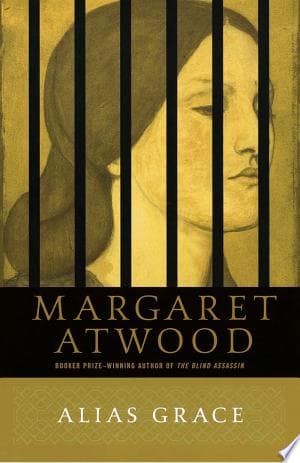
- Alias Grace
Margaret Atwood
4.0 (111k) average on GoodreadsLiterary FictionFocuses on a young female servant in a historical setting facing societal injustices.
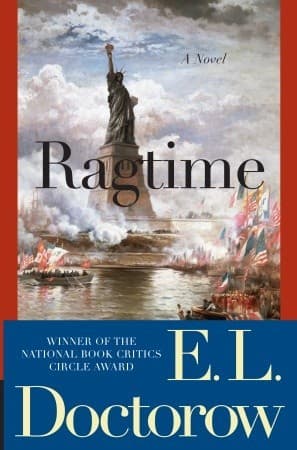
- Ragtime
E.L. Doctorow
3.9 (38k) average on GoodreadsLiterary FictionDoctorow's Ragtime offers a broader, more panoramic view of early 20th-century New York, interweaving historical figures and commenting on wider societal change. "The Virgin Cure" maintains a tighter, more intimate focus on a personal narrative of survival and escape, providing a ground-level perspective of poverty and exploitation.
- To Kill a Mockingbird
Harper Lee
4.3 (4.5M) average on GoodreadsHistorical FictionIn the 1930s Jim Crow South, Harper Lee writes about racial injustice, moral growth, and the quiet courage of a lawyer father, Atticus Finch, as seen through his young daughter's eyes.
- The Great Gatsby
F. Scott Fitzgerald
3.9 (3.8M) average on GoodreadsHistorical FictionIn the opulent Roaring Twenties, a mysterious millionaire's lavish parties hide his desperate, tragic pursuit of a lost love, exposing the emptiness within the American Dream.
- Pride and Prejudice
Jane Austen
4.3 (3M) average on GoodreadsHistorical FictionIn a society focused on status and money, Elizabeth Bennet navigates love and pride, challenging Mr. Darcy and social expectations to find true affection.
- Angels & Demons
Dan Brown
3.9 (2.7M) average on GoodreadsThrillerA Harvard symbologist races through Rome's ancient sites, deciphering cryptic clues to unmask the Illuminati and stop a vengeful plot to destroy the Vatican with a stolen antimatter weapon.




Enjoyed the summary?
A summary gives you the shape of the book. The book itself has the detail, the examples and the voice.
Find The Virgin Cure on AmazonAs an Amazon Associate, BookBrief earns from qualifying purchases. How we're funded