

Core Idea
- Difficulty
- Easy
- Read it if
- You enjoy allegorical tales that offer spiritual and philosophical insights into life's purpose and personal development, or if you appreciate Paulo Coelho's distinctive narrative style.
- Skip it if
- You prefer practical, step-by-step self-help guides, or if you find allegorical storytelling too abstract or simplistic.
Key Takeaways from The Way of the Bow
The Path is the Goal
Mastery is found not in hitting the bullseye, but in the disciplined journey of preparation.
Coelho says that real mastery in archery, and in life, is not just about reaching a specific outcome. Instead, it is about carefully focusing on the process itself: the stance, the breathing, drawing the bow, the release. Each step is a part of the 'Way of the Bow,' requiring presence and careful action. The external goal shows the archer's inner state and discipline. This idea encourages a shift from thinking only about the end result to living focused on the process, suggesting that steady effort and attention to detail in daily tasks are more valuable than sudden pushes of ambition aimed only at the final prize. The journey of constant learning and improvement defines the archer, not just a successful shot.
“The archer is a human being who has a bow, an arrow, and a target. But it is not the bow, the arrow, or the target that matters. What matters is the archer's soul.”
In the book: Tetsuya consistently guides the boy through the fundamentals—how to hold the bow, how to string it, how to position his body—before ever letting him shoot at a target, illustrating that the foundation is paramount.
Try this: Identify a skill or goal you're pursuing. Break it down into its most fundamental steps. Dedicate a specific amount of time each day to mastering just one of these foundational steps, without focusing on the final outcome during that practice session. For example, if learning a new language, spend 15 minutes solely on pronunciation exercises, not on forming complex sentences.
Related ideas: process-orientation, mindfulness, mastery, discipline
Embrace the Unseen Wind
External conditions are not obstacles, but integral elements to be understood and integrated.
Life rarely offers ideal conditions. Coelho, through Tetsuya, teaches that true skill is in adapting to these changing factors, not wishing them away. The wind, in archery, stands for all outside factors—challenges, distractions, unexpected events—that affect our path. A master archer does not ignore the wind or dislike it; they learn its direction and strength, adjusting their aim to account for it. This active adaptation turns possible problems into information, allowing for more informed and effective action. It is a strong lesson in resilience and flexibility, urging us to work with our environment rather than being stopped by its flaws.
“The archer must learn to understand the wind, not to fight it.”
In the book: Tetsuya instructs the boy that even when the wind blows, the archer must still shoot, adjusting their aim based on its force and direction, rather than waiting for calm. This demonstrates a proactive engagement with environmental factors.
Try this: When faced with an unexpected challenge (your 'wind'), instead of reacting emotionally or trying to force your original plan, pause. Analyze the challenge: what are its characteristics? How can you adjust your approach to incorporate this new information? For example, if a project deadline shortens, re-evaluate tasks and resources instead of lamenting the change.
Related ideas: adaptability, resilience, environmental-awareness, problem-solving
The Bow is an Extension of Self
Your tools and resources are only as effective as your connection to them.
Coelho explores the connection between the archer and their bow, seeing it not just as an object but as part of the archer's will and spirit. This means that to achieve mastery, one must deeply understand and respect their tools, whether they are physical items, intellectual ideas, or even one's own body. It is more than knowing how to use something; it is about building a close relationship where the tool responds to the user's subtle intentions. This deep connection creates a sense of unity, removing the felt separation between self and action, leading to smoother, more powerful execution. It suggests that neglecting our tools, or taking them for granted, reduces our own potential.
“The bow is alive, and it will speak to you if you know how to listen.”
In the book: Tetsuya's initial lesson to the boy includes handling the bow with care and respect, understanding its material, and feeling its balance, implying a relationship deeper than mere utility.
Try this: Choose a primary tool or resource you use frequently (e.g., your laptop, a specific software, your journal, or even your body). Spend time actively engaging with it, understanding its nuances, strengths, and limitations. Clean it, organize it, or simply observe how you interact with it. Cultivate a sense of appreciation and connection, aiming to make it feel like a natural extension of your work.
Related ideas: tool-mastery, connection, intention, symbiosis
Silence the Inner Critic
The greatest obstacle often resides within, not on the target.
Before any arrow can fly true, the archer must first win the inner battle of the mind. Fear of failure, self-doubt, overthinking, and the pressure of expectation often hurt more than any outside factor. Coelho stresses the need for mental quietness and focus, urging the archer to reach a state where the shot becomes an intuitive act rather than a difficult calculation. This lesson applies strongly to modern life, where mental clutter and worry often hinder performance and decision-making. Overcoming the inner critic allows for real expression and top performance, freeing us from self-imposed limits.
“The archer must learn to silence his mind, to let go of fears and doubts.”
In the book: Tetsuya repeatedly stresses the importance of an empty mind and a focused heart, warning against the archer's own thoughts and anxieties disrupting the shot, even when the physical technique is perfect.
Try this: Before starting an important task, take 2-3 minutes to practice mindful breathing. Acknowledge any intrusive thoughts or fears without judgment, then gently redirect your focus back to your breath and the present moment. This helps to quiet the mind and reduce internal distractions before you begin your work.
Related ideas: mindfulness, self-doubt, inner-critic, mental-clarity
The Arrow's Journey is Your Commitment
Once released, an action's trajectory is determined; embrace the outcome.
This idea highlights the important moment of commitment and then letting go of control. In archery, once the arrow leaves the string, its path is set, affected only by physics. Similarly, in life, once a decision is made or an action is taken, we must accept that we have done our part and release our attachment to a specific outcome. Excessive worry or regret afterward is useless. This principle encourages thorough preparation and mindful action before the release, but then calls for acceptance and trust after. It teaches us to tell the difference between what we can control (our preparation and action) and what we cannot (the results), helping us find peace and move forward.
“Once the arrow is released, it is no longer in the archer's power. Its destiny is in the air.”
In the book: The very act of shooting, where the archer must release the arrow and then watch its flight, exemplifies this relinquishing of control and acceptance of the trajectory.
Try this: Before making a significant decision, gather all necessary information and consider potential outcomes. Once the decision is made and the action is taken, consciously tell yourself, 'I have done my best with the information I had.' Then, redirect your energy to the next step or task, rather than replaying the decision or worrying about its outcome.
Related ideas: commitment, acceptance, letting-go, consequence
The Target Reflects, Not Defines
External validation is secondary to internal growth and self-awareness.
Coelho subtly changes the purpose of the target. It is not just an object for scoring points or showing skill; it is a mirror. Each shot, whether it hits or misses, gives valuable feedback about the archer's current state, technique, and mental strength. The target helps with self-discovery and constant improvement, rather than being a final measure of worth. This view frees us from the fear of failure, seeing 'misses' as chances to learn. It encourages looking inward, valuing personal growth and understanding over outside approval or competition. Real success is in the journey of becoming a better archer, not just in the number of bullseyes.
“The target is not there to be hit; it is there to help the archer find himself.”
In the book: Tetsuya doesn't immediately praise the boy for hitting the target, but instead asks him to reflect on his form and state of mind during the shot, shifting the focus from external success to internal learning.
Try this: After completing a task or project, don't just focus on the outcome (e.g., did it succeed or fail?). Instead, reflect on your process: What did you learn about your skills, your approach, or your internal state during the task? Use this self-reflection to inform future actions, rather than solely judging yourself by the result.
Related ideas: self-reflection, feedback, personal-growth, intrinsic-motivation
Balance is Dynamic, Not Static
True stability comes from continuous adjustment, not rigid stillness.
Coelho argues that balance, both physical and spiritual, is not a fixed state to be easily achieved and kept. Instead, it is a constant process of adjusting and re-centering. The archer's stance is never perfectly still; it subtly shifts to stay balanced against inner and outer forces. This applies deeply to life: we are always dealing with changing situations, emotions, and demands. Seeking rigid stability can lead to stiffness and collapse. True balance is our ability to adapt, to know when we are off-kilter, and to make the small corrections needed to regain our center. It is a continuous dance, not a frozen pose.
“The archer must learn to keep his balance, not only in his body but also in his soul.”
In the book: Tetsuya teaches the boy how to stand firmly yet flexibly, emphasizing that the archer's body must be 'like a tree rooted in the earth' but also capable of subtle adjustments to maintain equilibrium.
Try this: Throughout your day, periodically check in with your physical and emotional state. If you notice tension or feeling off-balance (e.g., overwhelmed, stressed), take a moment to adjust. This could be a few deep breaths, a quick stretch, or re-prioritizing a task. Don't aim for perfect stillness, but for continuous, small re-alignments.
Related ideas: equilibrium, flexibility, adaptation, self-regulation
The Courage to Begin Anew
Each shot, each moment, offers a fresh opportunity for presence and perfection.
This strong idea encourages us to approach each task or moment with a fresh view, free from past successes or failures. An archer does not dwell on a previous perfect shot or a bad miss; each time they prepare an arrow, it is a new start. This mindset is key for overcoming perfectionism and fear of failure, building resilience and constant improvement. It reminds us that every moment is a chance to use what we have learned, to be fully present, and to aim for our best, no matter what came before. It is a strong remedy for putting things off and self-judgment, promoting a spirit of constant renewal.
“Every arrow is a new arrow. Every shot is a new shot.”
In the book: Tetsuya insists that the boy does not carry the memory of the previous shot into the next, treating each new arrow and target as a distinct opportunity.
Try this: When starting a new task, especially after a previous attempt didn't go as planned, take a moment to consciously 'reset.' Remind yourself that this is a new opportunity. Mentally or physically shake off the past and approach the current task with a renewed sense of focus and presence, as if it's the first time you're doing it.
Related ideas: renewal, present-moment, resilience, fresh-start
Humility in Mastery
True expertise deepens the awareness of what remains to be learned.
Tetsuya, though the 'best archer in the country,' shows deep humility. He understands that mastery is not a destination but an endless journey of learning and refinement. This view challenges the common idea that expertise means an end to learning. Instead, true mastery shows how much is still unknown and the small details that can always be improved. It creates an open mind, a willingness to be taught, and ongoing curiosity. This humility prevents stagnation and encourages lifelong growth, ensuring that even the most accomplished people remain open to new ideas and views.
“The archer who thinks he knows everything will never learn anything new.”
In the book: Tetsuya's willingness to teach a young boy, and his continuous reflection on his own practice, despite his renowned status, exemplifies this humility.
Try this: Regardless of your experience level in a particular field, seek out opportunities to learn from others, especially those with different perspectives or less experience. Ask 'beginner' questions, or teach someone else, which often reveals gaps in your own understanding. Cultivate a 'beginner's mind' in at least one area of your life.
Related ideas: humility, lifelong-learning, growth-mindset, open-mindedness
The Heart as the True Aim
Ultimate precision stems from inner alignment and pure intention.
Beyond technique, clear thinking, and physical balance, Coelho suggests that the deepest accuracy comes from the archer's heart—their intention, passion, and inner truth. This is not about emotional shooting, but about a deep alignment of one's whole being with the shot's purpose. When the heart is pure and focused, the body and mind naturally follow, leading to an easy and powerful release. This idea suggests that for any effort to truly succeed, it must be driven by genuine purpose and honesty. When our actions match our deepest values and intentions, they carry a unique force and clarity that outside perfection alone cannot achieve.
“The archer must shoot with his heart.”
In the book: Tetsuya's final lesson often transcends purely physical instruction, focusing on the archer's internal state and the 'why' behind their desire to shoot, suggesting an inner core is essential.
Try this: Before embarking on a significant task or project, take a moment to connect with your core motivation. Ask yourself: 'Why am I doing this? What is my true intention?' Ensure your actions are aligned with your values. If you find a disconnect, re-evaluate your approach or your objective to bring it into harmony with your 'heart's aim.'
Related ideas: intention, purpose, authenticity, inner-alignment
The Way of the Bow Quotes
“A bow is a line of strength, a line of tension, a line of direction. It is a symbol of life.”
“The archer is the instrument, the bow is the extension of his will, and the arrow is the path of his intention.”
“The arrow has no will of its own. It is the archer's intention that guides it.”
“Do not give up. It is the archer's greatest challenge to continue, even when he thinks he has reached his limit.”
“The archer who perfects his technique and then forgets himself in the act of shooting becomes one with the target.”
“Every archer has a different way of holding the bow, releasing the string, and aiming at the target. There is no single correct way.”
“The target is not just a piece of wood. It is everything that you want to achieve in life.”
“Fear makes you lose your balance. You need to be in harmony with yourself to hit the target.”
“A good archer is not one who always hits the target, but one who always shoots with the same intention.”
“The path is made by walking. The archer learns by shooting.”
“The bow is not just a weapon; it is a bridge between the archer and the universe.”
“When you are in harmony with the bow, the arrow will find its way.”
“The true archer is the one who transforms his life through the practice of archery.”
“Every mistake is a lesson. Every shot is an opportunity to learn.”
“Patience is not simply the ability to wait, but how we behave while we are waiting.”
Quiz
10 questions on the main ideas. Each answer comes with a short explanation.
Question 1
According to Tetsuya, what is the most important element for an archer to master before even considering the bow, arrow, or target?
- The perfect stance and breathing technique.
- The ability to accurately judge wind conditions.
- The archer's own soul and intentions.
- The quality and craftsmanship of the bow.
Show answer
C. The archer's own soul and intentions. Tetsuya consistently emphasizes that the archer's inner state, their soul and intentions, are paramount. The tools and external conditions are secondary to the archer's mastery of self.
Question 2
What does Tetsuya teach about the target in relation to the archer's journey?
- The target is the ultimate goal, and failure to hit it means the archer has not succeeded.
- The target is merely an excuse for the archer to practice and improve their technique.
- The target represents the challenges imposed by others, which must be overcome.
- The target is a fixed point that defines the archer's skill level.
Show answer
B. The target is merely an excuse for the archer to practice and improve their technique. Tetsuya explains that the target is not the end goal itself, but rather a means for the archer to engage in the process of practice, self-discovery, and improvement. It's an 'excuse' to train.
Question 3
When Tetsuya discusses the 'path' in archery, what does he primarily refer to?
- The physical distance between the archer and the target.
- The specific sequence of movements for drawing and releasing the arrow.
- The journey of self-improvement and spiritual growth through the practice of archery.
- The lineage of master archers one must follow to achieve greatness.
Show answer
C. The journey of self-improvement and spiritual growth through the practice of archery. The 'path' in 'The Way of the Bow' is deeply metaphorical, representing the archer's personal journey of growth, discipline, and understanding themselves through the practice of archery.
Question 4
What is Tetsuya's advice regarding the fear of missing the target?
- It is a natural fear that must be acknowledged but then ignored.
- It indicates a lack of preparation and should prompt more rigorous training.
- The fear itself is the primary obstacle, and focusing on the process rather than the outcome dissipates it.
- It is a useful motivator to ensure maximum concentration.
Show answer
C. The fear itself is the primary obstacle, and focusing on the process rather than the outcome dissipates it. Tetsuya teaches that focusing on the fear of missing, or on the outcome, distracts the archer from the present moment and the correct execution of the shot. Mastery comes from focusing on the 'way' not the 'result'.
Question 5
Which quality does Tetsuya NOT explicitly emphasize as crucial for an archer's success and spiritual development?
- Steadfastness
- Courage to take risky decisions
- Ambition to surpass all other archers
- Daily efforts and work
Show answer
C. Ambition to surpass all other archers While 'steadfastness,' 'courage,' and 'daily effort' are directly mentioned as values, the book emphasizes inner mastery and personal growth over competitive ambition or the desire to 'surpass' others.
Question 6
Tetsuya advises the boy that the bow is not merely a tool, but also what?
- A symbol of the archer's social status.
- A reflection of the archer's own body and spirit.
- A relic passed down through generations of masters.
- A magical instrument that grants focus.
Show answer
B. A reflection of the archer's own body and spirit. Tetsuya teaches that the bow, like the arrow and target, is an extension of the archer. It reflects their inner state and becomes a part of their integral system of growth.
Question 7
What is the primary lesson Tetsuya imparts regarding mistakes or failures in archery?
- They are indicators of fundamental flaws in one's technique that require immediate correction by a master.
- They are inevitable and should be quickly forgotten to maintain confidence.
- They offer valuable opportunities for learning and self-correction, revealing areas for growth.
- They signify that the archer is not destined for true mastery.
Show answer
C. They offer valuable opportunities for learning and self-correction, revealing areas for growth. The book emphasizes that difficulties and failures are integral to the learning process. They are not setbacks but rather guideposts for understanding oneself and refining one's approach.
Question 8
How does Tetsuya characterize the 'perfect shot'?
- A shot that hits the very center of the target, regardless of how it felt.
- A shot where the archer, bow, arrow, and target become one, executed with effortless grace and complete presence.
- A shot that consistently replicates previous successful shots.
- A shot that impresses onlookers with its speed and precision.
Show answer
B. A shot where the archer, bow, arrow, and target become one, executed with effortless grace and complete presence. The perfect shot, for Tetsuya, transcends mere accuracy. It is a moment of complete harmony and unity, where the archer is fully present and their action flows from their inner being, aligning all elements.
Question 9
When Tetsuya speaks of the importance of 'rhythm' in archery, what deeper philosophical concept is he referring to?
- The consistent pace of practice sessions to build muscle memory.
- The natural flow and harmony of life, which the archer must align with.
- The cadence of the archer's breathing during the draw.
- The synchronized movement of the bowstring and arrow upon release.
Show answer
B. The natural flow and harmony of life, which the archer must align with. Tetsuya's teachings often connect the microcosm of archery to the macrocosm of life. 'Rhythm' refers to finding one's natural flow and aligning with the greater harmony of existence, which then manifests in the shot.
Question 10
What is the ultimate purpose of archery, according to the philosophical underpinnings of 'The Way of the Bow'?
- To achieve renown and be recognized as the greatest archer in the land.
- To develop perfect physical control and precision.
- To serve as a metaphor and a vehicle for self-discovery and spiritual enlightenment.
- To provide a practical skill for hunting and defense.
Show answer
C. To serve as a metaphor and a vehicle for self-discovery and spiritual enlightenment. The book uses archery as a profound metaphor. Its ultimate purpose is not external achievement, but internal transformation, self-understanding, and spiritual growth.
The Way of the Bow FAQ
What is 'The Way of the Bow' about?
'The Way of the Bow' by Paulo Coelho tells the story of Tetsuya, a renowned archer, who imparts his wisdom to a young boy. It explores themes of daily effort, overcoming challenges, courage, and the pursuit of personal growth through the metaphor of archery.
Does 'The Way of the Bow' teach actual archery techniques?
No, 'The Way of the Bow' is not a technical guide to archery. Instead, it uses the discipline of archery as a rich metaphor to convey philosophical and spiritual lessons about life, focus, perseverance, and the journey of self-improvement.
What philosophical concepts are explored in 'The Way of the Bow'?
The book delves into concepts such as the importance of consistent daily effort, embracing innovation and flexibility, adapting to change, cultivating enthusiasm, and the value of teamwork. It views the archer, bow, arrow, and target as components of a unified system for growth.
How does 'The Way of the Bow' relate to Paulo Coelho's other works?
Like many of Coelho's works, 'The Way of the Bow' emphasizes personal legend, spiritual awakening, and finding purpose through challenges. It shares the allegorical storytelling style and focus on universal human experiences seen in books like 'The Alchemist'.
What is the 'system of growth and challenge' mentioned by Paulo Coelho?
Coelho describes the 'system of growth and challenge' as the integral relationship between the bow, arrow, target, and archer. This interconnectedness represents how every element of our life and efforts contributes to our personal development and the overcoming of obstacles.
Is 'The Way of the Bow' suitable for young readers?
Yes, 'The Way of the Bow' is presented in a simple, allegorical style that makes its profound lessons accessible to a wide range of readers, including younger audiences interested in parables about life, discipline, and self-discovery.
What role does courage play in the teachings of Tetsuya?
Courage is a central theme, as Tetsuya's teachings encourage taking risky decisions and facing difficulties head-on. It's about having the bravery to step outside one's comfort zone and embrace the challenges necessary for personal and spiritual growth.
How different is 'The Way of the Bow' from a self-help book?
While it offers profound life lessons, 'The Way of the Bow' is distinct from a typical self-help book. It uses a narrative parable rather than direct instructions or exercises, inviting readers to reflect on its wisdom and apply its principles to their own lives through contemplation.
What is the main takeaway from 'The Way of the Bow'?
The main takeaway is that life's journey, much like archery, requires focus, discipline, adaptability, and an unyielding spirit to overcome obstacles. It teaches that true mastery comes not just from hitting the target, but from the continuous process of growth and self-improvement.
About the author
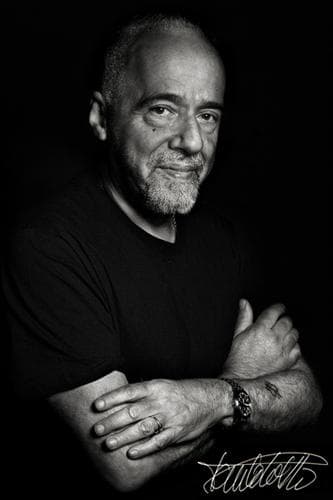
Paulo Coelho de Souza is a Brazilian lyricist and novelist and a member of the Brazilian Academy of Letters since 2002. His novel The Alchemist became an international best-seller and he has published 30 more books since then.
Similar books
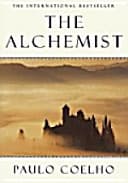
- THE ALCHEMIST
Paulo Coelho
3.6 (3k) average on GoodreadsFictionShares a similar allegorical style and themes of destiny, personal legends, and the journey of self-discovery.
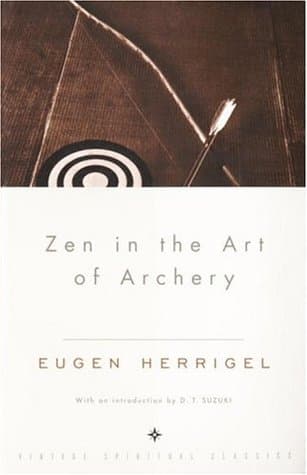
- Zen in the Art of Archery
Eugen Herrigel
4.0 (11k) average on GoodreadsPsychologyExplores the spiritual and meditative aspects of archery as a path to self-realization, though with a more direct, memoir-like approach.
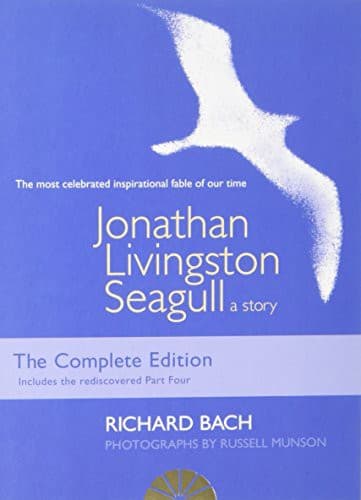
- Jonathan Livingston Seagull
Richard Bach
3.8 (202k) average on GoodreadsFantasyA short, philosophical fable about transcending limitations and pursuing a higher purpose, using an animal protagonist.
- Siddhartha
Hermann Hesse
4.0 (583k) average on GoodreadsHistorical FictionHesse's "Siddhartha" is a more robust philosophical novel that traces the spiritual journey of an individual seeking enlightenment, incorporating elements of Eastern thought. Like "The Way of the Bow," it emphasizes the importance of the path itself and the integration of various life experiences. However, "Siddhartha" offers a much richer narrative, more complex character development, and a deeper engagement with different philosophical schools (asceticism, hedonism, Buddhism) and their limitations. While Coelho presents distilled wisdom, Hesse allows the reader to witness the protagonist's trials, errors, and eventual synthesis of wisdom, providing a more nuanced and intellectually satisfying exploration of similar themes.
- Eat, Pray, Love
Elizabeth Gilbert
3.6 (1.5M) average on GoodreadsLifestyleA heartbroken writer leaves her conventional life for a year-long global search for pleasure in Italy, spiritual devotion in India, and unexpected love and balance in Bali.
- Educated
Tara Westover
4.5 (796k) average on GoodreadsBiographyRaised in the Idaho mountains by fundamentalist survivalists, a young woman forges her own path to education, battling fierce family loyalty and personal demons to discover a world beyond her isolated upbringing.



Enjoyed the summary?
A summary gives you the shape of the book. The book itself has the detail, the examples and the voice.
Find The Way of the Bow on AmazonAs an Amazon Associate, BookBrief earns from qualifying purchases. How we're funded