
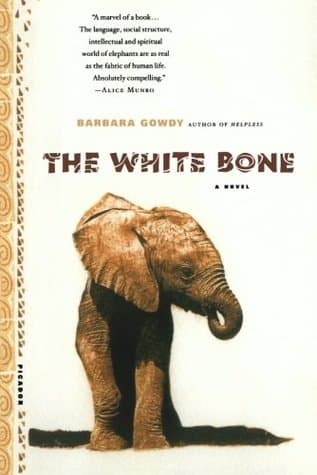
Synopsis
Covers the whole plot, including the ending.
- Difficulty
- Medium
- Pacing
- Moderate
- Mood
- Atmospheric, Poignant, Melancholy, Hopeful, Mystical
- Read it if
- You want a profoundly empathetic and immersive experience of the natural world, told from an animal's perspective, with lyrical prose and a poignant exploration of loss and resilience.
- Skip it if
- You prefer human-centric narratives, are sensitive to animal suffering, or find allegorical tales too abstract.
The White Bone Plot Summary
Covers the whole plot, including the ending.
The Search for the Safe Place
The story begins with Mud, a young female elephant. Her herd, led by the matriarch Old One, suffers greatly from a severe drought. Water holes are dry, food is scarce, and the herd is weak and desperate. Old One, guided by ancient knowledge, believes there is a legendary 'Safe Place' – a green paradise where elephants can live without fear of humans and find endless resources. The herd, including Mud's sister Little Mud, and the cynical She-Screams, starts a dangerous journey. Mud has a unique ability to 'read' the white bones of dead elephants, gaining insights into their past lives and the path ahead, a skill Old One encourages.
The First Loss and the Hunter's Threat
As the drought worsens, the herd's youngest member, a calf named Small, dies from starvation and weakness. This loss deeply affects Mud and the others. Soon after, the herd finds human poachers, known as 'tuskers.' The tuskers are ruthless, leaving behind death and destruction, targeting elephants for their ivory. This encounter creates deep fear in the herd, showing the urgency of finding the Safe Place and the constant threat to their lives. Mud's sense of responsibility for Little Mud grows.
The Separation and Mud's Solo Journey
During a chaotic stampede caused by a tusker attack, Mud is separated from Old One, Little Mud, and the rest of her herd. Lost and scared, she finds herself alone in the vast, dangerous landscape. Devastated but determined, Mud decides she must find the Safe Place herself, believing it is the only way to reunite with her family. Her unique connection to the 'white bone' – the spiritual essence and memories in the bones of dead elephants – becomes her main guide. She interprets the bone's messages, which appear as visions and feelings, to navigate the terrain and avoid human threats, a hard task for a young elephant.
Encounters and Alliances
As Mud continues her solitary journey, she meets other elephants who have also been separated from their herds or are seeking the Safe Place. She first meets Grope, a solitary male elephant, who, despite his initial roughness, becomes a protective and loyal companion. Grope, having seen much suffering, is at first doubtful of the Safe Place but is drawn to Mud's strong belief. Later, they are joined by other elephants, including the wise but traumatized old female, Star-Scratcher, and her calves. These alliances give Mud needed companionship and support, though the dangers of the journey and the tuskers remain present.
The White Bone's Secrets and Warnings
Mud's ability to 'read' the white bone grows stronger. Through her visions, she gains deeper insights into the history of elephants, the true nature of the Safe Place, and the cruelty of humans. The bones reveal not just a path, but also warnings of traps, tusker locations, and the immense suffering that has affected elephantkind for generations. She learns that the Safe Place is not just a physical location but a spiritual idea, a state of being where elephants are truly free. These revelations both fuel her hope and burden her with the weight of her species' fate, making her even more determined to find it.
The River Crossing and Further Losses
Mud, Grope, and their companions encounter a wide, dangerous river that acts as a barrier on their path to the Safe Place. The crossing is difficult, with strong currents and hidden dangers. As they cross the river, they are ambushed by tuskers waiting for them. The attack is brutal and swift, leading to the tragic loss of several more elephants, including Star-Scratcher and her calves. Mud is traumatized by the violence, seeing firsthand the effectiveness of the poachers. This event strengthens her resolve, but also leaves her with deep emotional scars and a growing sense of urgency.
The False Safe Place and Despair
Following the white bone's guidance, Mud and Grope eventually find a lush, water-rich valley that seems to be the Safe Place they have been searching for. For a short time, they feel peace and relief, believing their hard journey is over. However, their joy is brief. They soon discover that this 'paradise' is a trap set by the tuskers to lure desperate elephants. The realization is crushing, deepening Mud's despair and testing her faith in the white bone's guidance. The discovery of human cunning and cruelty leaves them both feeling defeated.
Reunion and Revelation
After the discovery of the false Safe Place, Mud and Grope, weakened and disheartened, continue their journey. Miraculously, they are reunited with Old One, Little Mud, and a few other surviving members of Mud's original herd. The reunion is joyous but mixed with the shared grief of their losses. Old One, now frail but still determined, reveals the true meaning of the Safe Place. She explains that it is not a physical location, but a spiritual state of being, a collective consciousness of all elephants, living and dead, where their memories and spirits reside, free from human harm. It is a place they carry within them.
The Final Stand and Sacrifice
As the remaining herd, including Mud, Little Mud, Grope, and Old One, travels towards what Old One now identifies as the true spiritual Safe Place, they are again confronted by tuskers. The situation is serious, with the elephants exhausted and outnumbered. In a final act of love and leadership, Old One, knowing her time is near, makes a selfless sacrifice. She confronts the tuskers directly, drawing their attention, allowing Mud, Little Mud, and the others a chance to escape to safety. Her death, though heartbreaking, is a heroic act of preservation, ensuring the survival of the younger generation.
Mud's Matriarchy and the Enduring Hope
Following Old One's sacrifice, Mud, changed by her journey and the losses she has endured, steps into the role of matriarch. Guided by the white bone's wisdom and Old One's spiritual legacy, she leads Little Mud, Grope, and the remaining elephants. She understands that the Safe Place is not a physical refuge from human cruelty, but a spiritual sanctuary within the collective memory and spirit of elephantkind. Mud dedicates herself to protecting her new family and passing on the ancient knowledge, ensuring that the hope for a future where elephants can live in peace, even if only in spirit, continues. The cycle of life and death, and the spirit of the elephants, continues.
Principal Figures
Mud
Protagonist
A young female elephant with a unique ability to 'read' the white bone.
Mud is a sensitive, intelligent, and deeply empathetic young female elephant. She possesses the rare and mystical ability to interpret the 'white bone' – the spiritual essence and memories of deceased elephants. This gift burdens her with foresight and knowledge of past suffering, but also provides guidance and hope. She is fiercely devoted to her younger sister, Little Mud, and her herd. Despite her youth, she displays remarkable resilience and courage in the face of immense hardship and danger, consistently striving to find the Safe Place for her family.
Relationships: Old One (Matriarch and mentor); Little Mud (Younger sister, whom she fiercely protects); Grope (Protective companion and eventual mate)
Old One
Supporting
The wise, ancient matriarch of Mud's original herd.
Old One is the venerable matriarch of Mud's herd, a figure of immense wisdom, experience, and spiritual strength. She is the keeper of ancient knowledge and traditions, guiding her herd with a deep understanding of the natural world and the spiritual realm. Old One is the primary believer in the mythical Safe Place, driven by a powerful 'calling' to find this sanctuary. She recognizes and nurtures Mud's gift, understanding its importance for the future of their kind. Her leadership is characterized by a blend of pragmatism and profound spiritual conviction, making her a beacon of hope for her suffering herd.
Relationships: Mud (Mentee and spiritual successor); She-Screams (Herd member, often at odds with her pragmatic views)
Little Mud
Supporting
Mud's younger sister, vulnerable and dependent.
Little Mud is Mud's younger sister, a small and vulnerable calf who represents the innocence and fragility of the younger generation. She is deeply attached to Mud and relies on her older sister for protection and comfort. Her presence is a constant motivator for Mud, fueling her determination to find the Safe Place and ensure their survival. Little Mud's experiences reflect the harsh realities faced by young elephants in a world threatened by drought and human predation, making her a symbol of the future that the older elephants are striving to preserve. Her survival is paramount to Mud's journey.
Relationships: Mud (Older sister and primary protector)
Grope
Supporting
A solitary male elephant who becomes Mud's loyal companion.
Grope is a solitary bull elephant, initially portrayed as gruff and world-weary due to his own experiences of loss and suffering. He is pragmatic and initially skeptical of the Safe Place, having witnessed the harsh realities of the world. However, he is drawn to Mud's unwavering hope and unique abilities. Grope becomes a loyal and protective companion to Mud, using his strength and experience to defend her and their small group. He represents the strength and steadfastness needed for survival, and his bond with Mud deepens as they face dangers together, eventually becoming her mate.
Relationships: Mud (Companion, protector, and eventual mate)
She-Screams
Supporting
A pragmatic and often pessimistic member of Mud's original herd.
She-Screams is a member of Mud's original herd, characterized by her pragmatic and often pessimistic outlook. She frequently voices doubts about the existence of the Safe Place and questions Old One's spiritual guidance, preferring to rely on tangible evidence and immediate survival strategies. Her skepticism serves as a foil to Mud's and Old One's faith, representing the more grounded, less mystical perspective within the herd. Despite her cynicism, she is a survivor, driven by the same instinct to protect her own, although her methods and beliefs often clash with the more spiritually inclined members.
Relationships: Old One (Herd member, often questioning Old One's leadership)
Star-Scratcher
Supporting
An old, traumatized female elephant who joins Mud's group.
Star-Scratcher is an old female elephant who has endured significant trauma and loss, including the death of her own calves. She is wise and experienced, but her past suffering has left her deeply scarred. She joins Mud and Grope on their journey, bringing with her a quiet resilience and the burden of grief. Star-Scratcher represents the enduring pain and vulnerability of elephants in the face of human cruelty, and her eventual tragic demise highlights the constant threat they face. Her presence underscores the shared suffering and the desperate hope for sanctuary.
Relationships: Mud (Fellow traveler, finding temporary solace in their shared journey); Grope (Fellow traveler)
Small
Mentioned
A young calf who dies early in the journey.
Small is a young calf, one of the most vulnerable members of Mud's original herd. Her early death from starvation and weakness due to the drought serves as a stark reminder of the dire circumstances the elephants face. Small's brief life and tragic end emphasize the extreme fragility of life in their harsh environment and the devastating impact of the drought. Her death is a significant emotional blow to the herd, particularly to Mud, and reinforces the urgency of their quest for the Safe Place.
Relationships: Mud (Herd member, her death deeply affects Mud)
The Tuskers
Antagonist
Human poachers who relentlessly hunt elephants for their ivory.
The Tuskers are the primary antagonists of the story, representing humanity's destructive impact on the natural world. They are relentless, cruel, and efficient poachers who hunt elephants for their valuable ivory. They are a constant, terrifying presence throughout the elephants' journey, embodying an existential threat. The Tuskers are not depicted with individual personalities but as a faceless, collective force of destruction, driven by greed and a complete disregard for elephant life. Their actions drive much of the plot's conflict and underscore the desperate need for a sanctuary.
Relationships: All Elephants (Hunters and prey)
Themes & Insights
The Search for Sanctuary and Hope
The main theme is the elephants' desperate search for the 'Safe Place,' a mythical sanctuary free from human persecution and environmental hardship. This quest embodies the universal desire for peace, security, and a place to belong. It shows in Old One's strong faith, Mud's determined journey, and the collective hope of the herd, even as they face great losses. The eventual revelation that the Safe Place is more spiritual than physical highlights that true sanctuary can be found within community and shared memory, rather than just a place.
“The Safe Place was not a place. It was a condition of mind, a state of grace, a memory shared by all elephants, living and dead.”
Loss, Grief, and Resilience
The novel is full of themes of loss and grief, as the elephants constantly face death from drought, starvation, and human poachers. The death of Small, the repeated tusker attacks, and Old One's sacrifice all contribute to a pervasive sadness. However, with this grief is an extraordinary resilience. Mud, despite her deep emotional wounds, continues to lead and maintain hope. The elephants' ability to endure, to continue their journey, and to find comfort in their bonds despite overwhelming difficulty, shows the strength of their spirit and their will to survive.
“Grief, Mud had learned, was a thing that gathered and gathered, until it was too heavy to carry, and then it exploded, leaving only a hollow ache.”
The Destructive Impact of Humanity
A strong and repeated theme is the devastating effect of humanity on the natural world and, specifically, on elephants. The 'tuskers' are a faceless, relentless force of destruction, driven by greed for ivory. Their actions cause immense suffering, fear, and death, forcing the elephants into a desperate struggle for survival. The novel critiques human encroachment, the ivory trade, and the general disregard for wildlife, showing humans as the ultimate threat to the elephants' existence and the primary reason for their suffering and displacement. This theme highlights the book's ecological message.
“The tuskers. They were the reason for everything. The drought, the hunger, the constant, gnawing fear. They were the reason for the Safe Place.”
Spirituality, Memory, and Ancestral Wisdom
The 'white bone' is a central metaphor for the deep spiritual connection among elephants, the power of collective memory, and the passing down of ancestral wisdom. Mud's ability to 'read' the bones allows her to access the experiences and guidance of past generations, linking the living with the dead. This theme suggests that knowledge and spirit are not lost with death but continue to exist and guide the living. Old One's spiritual leadership and her understanding of the Safe Place as a state of being, rather than a physical location, further emphasize the spiritual dimension of elephant life and their connection to their heritage.
“The white bone was the story of everything. The story of the earth, of the rain, of the sun, and of all who had walked before.”
Plot Devices & Literary Techniques
The White Bone
A mystical device allowing Mud to access ancestral memories and guidance.
The 'white bone' is a unique narrative device that functions as both a literal and metaphorical element. Literally, it refers to the bones of deceased elephants, which Mud can 'read' to gain visions, insights, and guidance. Metaphorically, it represents the collective memory, spiritual essence, and ancestral wisdom of all elephants, living and dead. It serves as a source of hope, a warning system, and a means of transmitting knowledge across generations. This device allows the author to explore themes of spirituality, memory, and the enduring spirit of a species facing extinction, providing Mud with a unique form of leadership and foresight.
The Safe Place
The mythical sanctuary that drives the elephants' quest.
The 'Safe Place' is a powerful plot device that acts as the primary motivation for the elephants' arduous journey. Initially presented as a tangible, physical paradise, it represents the ultimate goal and hope for survival. Its elusive nature and the challenges encountered on the way to finding it create suspense and drive the narrative forward. The eventual revelation that the Safe Place is not a physical location but a spiritual state of being – a collective consciousness and memory – transforms it into a profound symbol of enduring hope, resilience, and the internal sanctuary that elephants carry within themselves, even in the face of external threats.
Anthropomorphism
Attributing human-like thoughts, emotions, and complex social structures to elephants.
Anthropomorphism is a key plot device used throughout the novel to create deep empathy for the elephant characters. The elephants are given human-like names (Mud, Grope, Old One), engage in complex internal monologues, express profound emotions like grief, love, fear, and hope, and possess intricate social structures, communication methods, and spiritual beliefs. This device allows readers to connect with the elephants on a deeply emotional level, making their struggles and triumphs highly relatable. It effectively highlights the tragedy of their plight and the devastating impact of human actions from a non-human perspective, enhancing the novel's ecological and ethical messages.
The Drought
A relentless environmental crisis that initiates the herd's journey and ongoing struggle.
The drought is a crucial environmental plot device that sets the entire narrative in motion. It creates the initial crisis, forcing Mud's herd to leave their familiar territory in search of water and sustenance. The relentless scarcity of resources due to the drought constantly exacerbates the elephants' suffering, weakens them, and makes them more vulnerable to other threats, particularly the tuskers. It serves as a constant, tangible antagonist, highlighting the harsh realities of nature and the desperate struggle for survival, thereby intensifying the urgency of their quest for the Safe Place and underscoring the broader ecological challenges faced by wildlife.
The White Bone Quotes
“There are things in the world that are bigger than us, and we must learn to live with them.”
“The earth is our mother, and we must respect her. She gives us life, and she will take it away.”
“To forget is to die twice.”
“We are all part of the same story, even if we don't know the ending.”
“Sometimes the greatest strength is to know when to run.”
“The heart remembers what the mind forgets.”
“Fear is a scent that travels faster than any sound.”
“To be alone is to be incomplete.”
“The past is a heavy burden, but it is also a map.”
“Every life leaves a trace, even if only in the wind.”
“The greatest stories are not told with words, but with tusks and trunks and the dust of many seasons.”
“Hope is a fragile thing, easily trampled, but it can also lift the heaviest heart.”
“We are the keepers of the earth's oldest songs.”
“The moon knows our secrets, and the stars watch over our dreams.”
“Sometimes the world gives you a gift disguised as a wound.”
Quiz
10 questions on the plot and the characters. Each answer comes with a short explanation.
Question 1
What is the primary goal of the elephant herd, especially after the loss of their matriarch?
- To find a new male leader for the herd
- To reach the mythical "White Bone" where elephants go to die
- To seek revenge on the poachers who killed their family members
- To establish a new territory away from human encroachment
Show answer
B. To reach the mythical "White Bone" where elephants go to die The core of the elephants' journey throughout the novel is their quest for the White Bone, a legendary place where elephants go to die and their spirits are released.
Question 2
What unique ability does the young elephant Mud have, which sets her apart from others?
- She can communicate with humans through a form of telepathy.
- She has visions and dreams that predict future events.
- She possesses an exceptionally strong sense of smell, allowing her to find water in droughts.
- She can mimic the calls of other animals perfectly.
Show answer
B. She has visions and dreams that predict future events. Mud is a 'dreamer' elephant, experiencing vivid visions and dreams that often foreshadow future events or reveal hidden truths, guiding the herd's actions.
Question 3
Which character serves as the primary narrator, offering insights into the elephant's world and their 'language'?
- Mud
- Whitelip
- Date
- She-Shrew
Show answer
C. Date Date, the matriarch's sister, is the central narrator, providing the reader with a deep understanding of the elephants' complex thoughts, emotions, and their unique way of perceiving the world.
Question 4
What is the significance of the 'White Bone' as a thematic element in the novel?
- It represents a hidden source of water during the dry season.
- It symbolizes hope, an afterlife, and a spiritual journey for the elephants.
- It is a physical location where the herd's ancestors are buried.
- It is a metaphor for the elephants' struggle against human poachers.
Show answer
B. It symbolizes hope, an afterlife, and a spiritual journey for the elephants. The White Bone is more than a physical place; it embodies the elephants' spiritual beliefs, their understanding of death, and the hope of a peaceful transition to an afterlife.
Question 5
How do the elephants refer to humans in their 'language' throughout the novel?
- The Two-Legs
- The Skin-Rip-Offs
- The Ivory-Hunters
- The Fire-Bringers
Show answer
A. The Two-Legs The elephants consistently refer to humans as 'The Two-Legs,' a term that highlights their physical difference and often their destructive impact on the elephant world.
Question 6
What is the primary challenge the elephants face on their journey to the White Bone, besides human threats?
- A severe shortage of suitable mates for breeding.
- Navigating treacherous mountain ranges and deep valleys.
- The persistent threat of drought and starvation.
- Frequent territorial disputes with other elephant herds.
Show answer
C. The persistent threat of drought and starvation. Beyond the constant danger from humans, the herd struggles significantly with the harsh environment, particularly the scarcity of water and food during prolonged droughts, leading to illness and weakness.
Question 7
What is the fate of She-Shrew, the younger elephant who initially doubts Mud's visions?
- She eventually becomes a skilled tracker for the herd.
- She is killed by poachers while trying to protect a calf.
- She becomes a devoted follower of Mud and helps interpret her dreams.
- She leaves the herd to join a group of rogue male elephants.
Show answer
C. She becomes a devoted follower of Mud and helps interpret her dreams. Despite her initial skepticism, She-Shrew develops a deep bond with Mud, eventually becoming her most loyal companion and a crucial aid in understanding and communicating Mud's prophetic dreams to the rest of the herd.
Question 8
The novel explores the theme of communication beyond human language. How do the elephants primarily communicate complex ideas and emotions?
- Through a rudimentary spoken language of distinct words.
- Through a combination of rumbles, gestures, and shared 'thought-pictures'.
- Exclusively through highly developed scent marking.
- Via a form of telepathy that only the matriarch can initiate.
Show answer
B. Through a combination of rumbles, gestures, and shared 'thought-pictures'. Gowdy portrays elephant communication as rich and nuanced, involving not just sounds and body language, but also the sharing of 'thought-pictures' or 'remembrances' that convey complex ideas and emotional states.
Question 9
What specific event leads to the scattering of the main herd and the isolation of Date, Mud, and She-Shrew for a period?
- A massive wildfire that separates them from the others.
- A sudden, violent attack by a large pride of lions.
- A brutal poacher attack involving gunfire and the death of several elephants.
- Getting lost during a severe sandstorm.
Show answer
C. A brutal poacher attack involving gunfire and the death of several elephants. A devastating encounter with poachers, marked by gunfire and tragic losses, causes the herd to scatter in panic, leading to Date, Mud, and She-Shrew finding themselves separated and having to navigate alone for a significant portion of the journey.
Question 10
How does Gowdy use the elephants' internal monologues and observations to comment on human impact on nature?
- By having the elephants directly discuss human conservation efforts.
- By portraying humans as purely evil, without any redeeming qualities.
- By showing human actions through the elephants' bewildered and often fearful perspective, highlighting destruction and loss.
- By contrasting human technological advancement with elephant primitive living.
Show answer
C. By showing human actions through the elephants' bewildered and often fearful perspective, highlighting destruction and loss. The novel critically examines human impact through the elephants' eyes. Their confusion, fear, and sorrow over lost family members and desecrated lands due to 'Two-Legs' actions serve as a powerful commentary on poaching and environmental destruction, without explicitly stating human intentions.
The White Bone FAQ
What is the central premise of 'The White Bone' and who are the main characters?
'The White Bone' is a novel told from the perspective of African elephants, focusing on the search for the 'White Bone,' a mythical object believed to lead elephants to a safe haven. The central characters are Mud, a young female elephant with a prophetic gift, and her family unit, including her mother, sister Little Tusk, and the matriarch Story, as they navigate the harsh realities of poaching and environmental destruction.
What role does Mud's prophetic ability play in the narrative?
Mud's ability to 'hear' the future and receive visions, often through her trunk, serves as a crucial plot device, guiding the herd on their perilous journey. These visions, though sometimes cryptic, provide warnings of danger, reveal the location of resources, and ultimately steer them towards the elusive White Bone, adding a mystical layer to their struggle for survival.
How does the book portray the elephants' understanding of death and the afterlife?
The elephants possess a complex understanding of death, viewing it as a transition where the spirit joins the 'Great Herd' in the sky. They mourn deeply, perform rituals with bones, and believe that the spirits of their ancestors watch over them, providing a spiritual framework that helps them cope with loss and the constant threat of extinction. This belief system is integral to their emotional landscape.
What is the significance of the 'White Bone' itself?
The White Bone is a powerful symbol of hope and survival, representing a legendary safe haven where elephants can live free from human interference and danger. It acts as the primary motivator for Mud's herd, driving their migration across a perilous landscape, and embodying their deepest desire for peace and security in a world increasingly hostile to them.
How does the novel depict the social structure and family dynamics within an elephant herd?
The novel vividly portrays the matriarchal society of elephants, where the oldest female, Story, leads with wisdom and experience. It highlights the strong bonds of family, the communal care for calves, the intricate communication through rumblings and touch, and the collective decision-making process, emphasizing the deep emotional connections and interdependence within the herd.
Are there any subtle foreshadowing elements regarding the fate of specific characters, like Little Tusk?
Yes, Little Tusk's playful, sometimes reckless nature and her fascination with human objects subtly foreshadow her tragic encounter with poachers. Her curiosity, initially endearing, eventually leads her into a dangerous situation, highlighting the inherent risks elephants face when their world intersects with humans, even in seemingly innocent ways.
What is the deeper meaning behind the elephants' 'hearing' of human thoughts and intentions?
The elephants' ability to 'hear' human thoughts, particularly those of poachers, functions as more than just a plot device; it's a symbolic representation of their acute sensitivity and instinctual understanding of danger. It underscores the profound vulnerability of wildlife to human cruelty and greed, emphasizing a connection that transcends mere physical observation.
Is there a hidden connection between the elephants' dream world and their waking reality?
The elephants' dreams, often vivid and shared, frequently contain symbolic imagery or direct premonitions that influence their waking decisions and perceptions. Mud's prophetic visions sometimes manifest as intense dreams, blurring the line between the subconscious and the 'real' world, suggesting a deeper, interconnected spiritual plane that guides their existence.
What is the implied significance of the 'White Bone' being a specific type of bone, if it is ever revealed?
While the exact nature of the White Bone remains somewhat ambiguous, its symbolic power is paramount. If it were to be revealed as a specific elephant bone, perhaps from an ancient matriarch, it would deepen its connection to ancestral wisdom and the enduring spirit of the elephant species, rather than being a mere geographical marker.
How does Mud's burden of prophecy impact her psychological development?
Mud's prophetic gift places an immense psychological burden on her, isolating her somewhat from her peers and forcing her to confront grim futures. She experiences anxiety and responsibility beyond her years, yet also develops a profound sense of purpose and resilience, demonstrating how a unique ability can shape an individual's identity and emotional landscape.
Explore the psychological impact of constant fear and loss on the elephant herd.
The herd lives under a constant shadow of fear from poachers and environmental threats, leading to collective trauma and grief. They exhibit signs of stress, hyper-vigilance, and deep mourning for lost family members, showcasing a profound psychological resilience alongside their vulnerability, and highlighting the emotional toll of their precarious existence.
How does the novel explore the concept of empathy from an animal perspective?
The novel deeply explores empathy through the elephants' interconnected emotional lives, their shared grief, and their instinctive drive to protect one another. They experience vicarious pain and joy, demonstrating a sophisticated capacity for understanding and sharing feelings, which challenges human-centric notions of emotional intelligence and compassion.
What psychological motivations drive the elephants' unwavering pursuit of the White Bone?
The elephants' pursuit of the White Bone is driven by a deep psychological need for safety, belonging, and the preservation of their species. It represents a primal urge for survival and a hope for an end to suffering, acting as a powerful psychological anchor that sustains them through immense hardship and keeps their collective spirit alive.
Is the novel a critique of humanity, or a celebration of nature's resilience?
The novel functions as both. It is a searing critique of human destructiveness through poaching and habitat destruction, yet simultaneously a profound celebration of the elephants' resilience, their complex social structures, deep emotional lives, and their enduring spirit in the face of overwhelming odds. It holds humanity accountable while revering the natural world.
To what extent is the 'fantasy' element of the elephants' sentience and prophecy literal versus metaphorical?
The fantasy elements are presented as literal within the narrative, inviting readers to fully immerse themselves in the elephants' perspective. However, they also function metaphorically, enhancing our understanding of animal intelligence, instinct, and perhaps even a form of spiritual connection that humans often overlook, blurring the lines between reality and speculative fiction.
How does the narrative perspective (first-person elephant) shape the reader's understanding of the world?
The first-person elephant perspective profoundly shapes the reader's understanding by immersing them in a sensory world dominated by smell, touch, and sound, rather than sight. It reorients perception, challenges anthropocentric views, and fosters deep empathy for the animal experience, revealing a complex, emotionally rich world often unseen by humans.
Does the ending offer a definitive resolution to the elephants' plight, or is it more ambiguous?
The ending offers a hopeful but ultimately ambiguous resolution. While the herd finds a temporary sanctuary, implying the discovery of 'a' White Bone, it doesn't guarantee permanent safety or an end to all threats. This ambiguity reflects the ongoing struggle between nature and humanity, suggesting that true peace remains an elusive, continuous pursuit.
What philosophical questions does 'The White Bone' raise about consciousness and interspecies communication?
'The White Bone' deeply probes questions about the nature of consciousness beyond human understanding, suggesting complex thought, emotion, and even spiritual awareness in animals. It implicitly asks whether interspecies communication is possible, not just through language, but through shared experience, empathy, and perhaps even a collective unconscious, challenging our definitions of intelligence.
About the author

Barbara Gowdy is a celebrated Canadian novelist known for her evocative prose and unflinching exploration of the human condition. Her novel, "The White Bone," was shortlisted for the Booker Prize and garnered international acclaim for its powerful narrative. Gowdy's work consistently delves into themes of love, loss, and the complexities of relationships.
Similar books
- Watership Down
Richard Adams
4.1 (434k) average on GoodreadsFantasyAnthropomorphic animal protagonists on a perilous journey seeking a new home, facing threats and internal conflicts.
- Life of Pi
Yann Martel
3.9 (1.3M) average on GoodreadsFantasySurvival narrative with a strong focus on the animal world, spirituality, and the nature of storytelling.
- The Call of the Wild
Jack London
3.9 (341k) average on GoodreadsChildren'sExploration of animal instinct, survival, and the harsh realities of the wild, though from a canine perspective.
- The Old Man and the Sea
Ernest Hemingway
3.8 (831k) average on GoodreadsLiterary FictionA Cuban fisherman's long struggle with a giant marlin becomes a story of endurance and dignity, now retold for young adults with illustrations, phonetic guides, and writing prompts in Traditional Chinese.
- One Hundred Years of Solitude
Gabriel García Márquez
4.1 (753k) average on GoodreadsLiterary FictionThrough the multi-generational story of the Buendía family, a mythical town deals with the repeating patterns of time, love, and solitude, as the extraordinary mixes with the ordinary.
- The Goldfinch
Donna Tartt
3.9 (720k) average on GoodreadsLiterary FictionHaunted by a tragic explosion and clutching a stolen Dutch masterpiece, a young orphan navigates the opulent drawing rooms of New York and the gritty underbelly of the art world, desperately seeking connection and redemption amidst a life spiraling into crime and obsession.




Enjoyed the summary?
A summary gives you the shape of the book. The book itself has the detail, the examples and the voice.
Find The White Bone on AmazonAs an Amazon Associate, BookBrief earns from qualifying purchases. How we're funded