

Synopsis
Covers the whole plot, including the ending.
- Difficulty
- Hard
- Pacing
- Variable
- Mood
- Surreal, Disturbing, Erotic, Philosophical, Haunting
- Read it if
- You are interested in the intersection of Freudian psychoanalysis, eroticism, historical trauma, and the surreal, and appreciate a challenging, multi-layered narrative.
- Skip it if
- You prefer linear plots, are uncomfortable with graphic sexual content or extreme violence, or find psychoanalytic theory tedious.
The White Hotel Plot Summary
Covers the whole plot, including the ending.
The Dream Case History
The novel opens with a 'case history' presented as letters and notes from Dr. Sigmund Freud concerning a new patient, Anna G. (later revealed as Lisa Erdman), a young opera singer. Anna has been experiencing disturbing and sexually explicit dreams, which she recounts in a long, prose-poem letter to Freud. The central dream involves her staying at a 'white hotel' where she engages in passionate, often violent, sexual encounters with various men, including her brother and a Russian officer, all while a fire rages outside. The dream is filled with symbolic imagery, including a train journey, a funicular, and a sense of impending doom and personal violation, intertwined with intense pleasure. Freud begins to analyze these dreams, seeking their roots in her psyche and past experiences.
Freud's Analysis and Interpretation
Freud engages in a deep psychoanalytic exploration of Anna's dreams, corresponding with her and attempting to uncover repressed desires and traumas. He focuses on the intense eroticism, the recurring imagery of violence and fire, and the symbolic figures in her dreams. Freud interprets the 'white hotel' as a representation of her body and the various men as aspects of her own desires or projections of significant figures in her life. He suggests that the dreams are a manifestation of hysteria, stemming from early childhood experiences and unresolved oedipal conflicts, particularly concerning her relationship with her father and her own nascent sexuality. He also identifies elements of a death wish and a powerful neurotic drive.
Lisa Erdman's Reality
The narrative transitions from the dream-poem and Freud's analysis to a more conventional third-person perspective, introducing Lisa Erdman, a half-Jewish Russian opera singer. It becomes clear that Lisa is the 'Anna G.' of the earlier section. We learn about her life in Switzerland, her artistic career, and her struggles with mental and physical health, specifically her 'pelvic pain' and 'breathing difficulties' which prompted her to seek Freud's help. The novel portrays her as a sensitive, artistic, and somewhat fragile woman, whose inner world is intensely vivid and often overwhelming. Her real-life experiences begin to subtly echo the themes and anxieties present in her dreams, creating a bridge between her subconscious and conscious existence.
The Relationship with Victor
Lisa meets and falls in love with Victor, a Russian engineer and former patient of Freud's. Their relationship blossoms, and they eventually marry. This period marks a phase of relative stability and happiness for Lisa. Victor is a kind and understanding partner, and their life together offers a stark contrast to the tumultuous and often violent nature of her dreams. They share a deep connection, and Lisa experiences a degree of emotional and physical healing. This part of the story emphasizes the power of love and human connection to alleviate suffering, even as the underlying anxieties and unresolved issues from her past continue to simmer beneath the surface of her newfound contentment.
Life in Kiev and the Son
Lisa and Victor move to Kiev, Ukraine, where they establish a life together. Lisa continues her singing career, albeit in a less prominent capacity. They have a son, Kolya, who brings immense joy to Lisa. This section portrays a seemingly idyllic domestic life, with Lisa embracing motherhood and finding a sense of purpose and belonging. The earlier dream-like, fantastical elements of the novel recede, replaced by a more grounded, realistic portrayal of everyday existence. However, subtle hints of the impending historical catastrophe begin to surface, as the political climate in the Soviet Union grows increasingly tense and oppressive, foreshadowing a darker future.
The Seeds of Historical Turmoil
As the 1930s progress, the political situation in the Soviet Union deteriorates. The pervasive fear of purges and state-sponsored violence begins to cast a shadow over Lisa and Victor's lives. Friends and acquaintances disappear, and an atmosphere of suspicion and terror grips the country. Victor, with his intellectual background and past connections, becomes increasingly vulnerable. Lisa, despite her artistic sensibilities, is forced to confront the harsh realities of totalitarianism. The external political turmoil starts to mirror the internal anxieties and sense of impending doom that characterized her earlier dreams, blurring the lines between her personal neuroses and the collective historical trauma unfolding around her.
Victor's Arrest and Disappearance
The inevitable happens: Victor is arrested by the NKVD (the Soviet secret police) on trumped-up charges of being an 'enemy of the people.' Lisa is left alone with their young son, Kolya, in a state of profound shock and despair. Victor's disappearance marks a devastating turning point in Lisa's life, shattering her fragile sense of security and happiness. The bureaucratic brutality and senselessness of the Soviet regime are starkly portrayed, as Lisa grapples with the injustice and uncertainty of her husband's fate. This event rips away the last vestiges of her 'normal' life, forcing her into a struggle for survival in an increasingly hostile world.
The Babi Yar Massacre
The narrative abruptly shifts to the German invasion of Ukraine in 1941. Lisa, now a single mother, and Kolya are among the Jewish population of Kiev. They are rounded up by the SS and marched with thousands of others to Babi Yar, a ravine outside the city. The scene is depicted with horrifying, unsparing detail, as the victims are systematically stripped, humiliated, and then machine-gunned into the ravine. Lisa desperately tries to protect Kolya, but their efforts are futile. This section is a stark and brutal depiction of the Holocaust, rendered with a chilling realism that contrasts sharply with the earlier dream-like sequences, yet simultaneously fulfills the ominous prophecies of violence and death present in Lisa's subconscious.
The Aftermath and the 'White Hotel' Revisited
Following the horrific massacre, the narrative transcends the physical world. Lisa, now a spirit, finds herself in a kind of afterlife, a 'white hotel' that is both familiar and profoundly different from her dream. Here, she is reunited with Victor and Kolya, as well as other victims of the Babi Yar massacre. This 'hotel' is a place of healing and reconciliation, where the spirits process their trauma and find peace. The wounds of their earthly existence are gently tended to, and they are able to shed the pain and suffering they endured. This section is a symbolic attempt to find meaning and solace in the face of unspeakable historical evil, offering a vision of redemption.
Healing and Transcendence
In this spiritual 'white hotel,' the deceased are cared for by compassionate figures, nurses, and doctors, who gently attend to their physical and emotional wounds. Lisa finds a profound sense of peace and belonging, free from the anxieties and neuroses that plagued her earthly life. She is reunited not only with her family but also with the collective memory of those who suffered. The 'hotel' becomes a metaphor for a collective unconscious, a space where individual and historical trauma can be acknowledged, processed, and ultimately transcended. The novel concludes with a sense of quiet hope and the possibility of spiritual healing beyond the horrors of human history.
Principal Figures
Lisa Erdman (Anna G.)
Protagonist
A Russian opera singer whose vivid dreams and tragic life form the core of the narrative.
Lisa is a complex and deeply sensitive woman, an opera singer of Russian-Jewish descent. Initially introduced as 'Anna G.' through her dream-poem, she suffers from severe neurotic symptoms, including unexplained pelvic pain and breathing difficulties. Her inner world is intensely vivid, filled with sexually charged and violent fantasies that she recounts to Freud. She is artistic, vulnerable, and prone to hysteria, yet possesses a strong capacity for love and resilience. Her personal neuroses are inextricably linked to the historical traumas she later experiences.
Relationships: Sigmund Freud (Patient-analyst relationship, initially distant, later a profound influence.); Victor (Husband, a loving and supportive partner.); Kolya (Son, her beloved child.); Her Brother (Figure in her dreams, representing complex familial and sexual anxieties.)
Sigmund Freud
Supporting
The renowned psychoanalyst who attempts to decipher Lisa's complex dreams.
Freud is presented as the insightful, albeit sometimes limited, analyst of Anna G.'s (Lisa's) dreams. He approaches her case with his characteristic rigor, applying his theories of the unconscious, repression, and oedipal complex. While he provides a framework for understanding Lisa's internal world, his analysis, focused on individual neurosis, ultimately falls short of predicting or comprehending the historical horrors that await her. He represents the rational, scientific attempt to understand the human psyche, juxtaposed against the irrationality of both dreams and historical evil.
Relationships: Lisa Erdman (Analyst-patient relationship, intellectual and clinical.)
Victor
Supporting
Lisa's kind and supportive husband, a Russian engineer.
Victor is a former patient of Freud's and Lisa's loving husband. He is portrayed as a stable, intelligent, and compassionate man who offers Lisa a period of happiness and emotional security. His presence provides a stark contrast to the chaotic and violent world of Lisa's dreams. Victor represents the possibility of a normal, fulfilling life amidst personal struggles. His eventual arrest and disappearance at the hands of the NKVD symbolize the arbitrary cruelty of totalitarian regimes and the fragility of individual happiness in the face of historical forces.
Relationships: Lisa Erdman (Husband, deeply loving and supportive.); Kolya (Father, caring for his son.)
Kolya
Supporting
Lisa and Victor's young son, a symbol of innocence and hope.
Kolya is Lisa and Victor's son, a young boy who embodies innocence and the hope for the future. His birth brings immense joy and a sense of purpose to Lisa's life. He represents the preciousness of individual life and the vulnerability of children in the face of war and persecution. His presence at the Babi Yar massacre amplifies the tragedy, highlighting the brutal destruction of the innocent. In the afterlife sequence, his reunion with Lisa and Victor symbolizes the possibility of familial reunification and peace beyond death.
Relationships: Lisa Erdman (Son, deeply loved.); Victor (Son, deeply loved.)
The Russian Officer
Mentioned
A recurring figure in Lisa's dreams, representing forbidden desire and aggression.
The Russian Officer is a prominent figure in Lisa's initial dream-poem. He is often involved in the most intense and violent sexual encounters, representing a complex mix of attraction, fear, and aggression within Lisa's subconscious. He embodies the forbidden and dangerous aspects of her sexuality and the primitive urges that Freud attempts to analyze. While not a real-life character, his presence in the dreamscape is crucial to understanding Lisa's internal conflicts and the symbolic language of her neuroses.
Relationships: Lisa Erdman (Dream lover/antagonist, representing aspects of her subconscious.)
Themes & Insights
The Interplay of Personal Neurosis and Historical Trauma
The novel intertwines Lisa's individual psychological suffering with the catastrophic historical events of the 20th century. Her vivid, violent dreams, initially interpreted by Freud as purely personal neuroses stemming from childhood, later eerily prefigure the real-world horrors of the Holocaust. The 'white hotel' of her dreams, a site of eroticism and violence, finds its terrifying echo in the Babi Yar ravine, a site of mass murder. This theme suggests that individual suffering is not isolated but deeply connected to collective historical trauma, challenging the purely personal scope of psychoanalysis. Her internal 'fire' becomes the external 'fire' of war and genocide.
“His analysis was a great light, but it only illuminated the room, not the vast, dark landscape beyond the window.”
The Nature of Reality and Illusion
Thomas blurs the lines between dreams, fantasy, and historical reality throughout the novel. The initial dream-poem is presented with such vivid detail that it feels real, while later historical events are depicted with a detached, almost dream-like horror. The 'white hotel' itself exists first as a dreamscape, then as a place of death, and finally as a spiritual haven. This fluidity challenges the reader to question what constitutes 'truth' and how subjective experience shapes our understanding of the world. The novel suggests that the inner world of the mind can be as potent and impactful as external events.
“It was a dream, yet it was more real than anything she had ever known.”
Sexuality, Violence, and Death
These three elements are deeply intertwined from the beginning of the novel. Lisa's dreams are filled with intense, often violent sexual encounters, where pleasure and pain are linked. The 'fire' in her dreams, a symbol of passion, also portends destruction. This connection between Eros and Thanatos (life instinct and death instinct) is a central Freudian concept that the novel explores both psychologically and historically. The sexual violation in her dreams finds its ultimate, horrific manifestation in the dehumanization and murder at Babi Yar, where the body, once a site of pleasure and pain, becomes an object for destruction.
“The fire was in her, and around her, and consuming her, and she loved it.”
The Search for Healing and Redemption
Despite the overwhelming trauma and violence, the novel ultimately offers a vision of healing and redemption. Freud's initial attempt at psychoanalytic healing, though limited, aims to alleviate Lisa's suffering. More profoundly, the final section, set in the spiritual 'white hotel,' depicts a place where the spirits of the dead, particularly the victims of Babi Yar, find solace, forgiveness, and reunification. This ending, while fantastical, attempts to provide a sense of meaning and peace in the face of human cruelty, suggesting that even the most profound wounds can eventually be tended to and transcend.
“Here, there was no shame, no guilt, only the endless, gentle unraveling of pain.”
Plot Devices & Literary Techniques
The Dream-Poem
A lengthy, lyrical, and highly symbolic account of Lisa's dreams.
The novel opens with a long, unpunctuated prose-poem detailing Lisa's (Anna G.'s) dreams. This device immediately immerses the reader in the protagonist's subconscious world, establishing a tone of surrealism and psychological depth. It functions as the primary source material for Freud's analysis and foreshadows the novel's later themes of sexuality, violence, and historical trauma. Its poetic language contrasts sharply with the clinical prose of Freud's notes and the stark realism of the later historical sections, highlighting the novel's exploration of different modes of truth and experience.
Psychoanalytic Case Study
The framing device of Freud's analysis of Anna G.
The initial sections of the novel are presented as a psychoanalytic case study, complete with Freud's letters, notes, and interpretations. This device lends a clinical, intellectual authority to the early narrative, grounding the fantastical dreams in a recognized scientific framework. It allows the author to explore Freudian theories directly within the text and provides a lens through which to examine Lisa's neuroses. More significantly, it sets up a dynamic where the limitations of purely psychological analysis become apparent when confronted with the overwhelming force of historical events, hinting at the inadequacy of individualistic explanations for collective suffering.
Shifting Narrative Perspectives
The changing viewpoint from first-person dream to third-person realism to spiritual transcendence.
The novel employs multiple narrative perspectives: Lisa's first-person dream account, Freud's third-person clinical observations, a conventional third-person omniscient portrayal of Lisa's life, and finally, a more ethereal, transcendent perspective in the afterlife sequence. This shifting viewpoint allows the author to explore different facets of reality and consciousness. It moves from the highly subjective and internal (dreams) to the objective and external (historical events), and finally to a spiritual realm, demonstrating the multifaceted nature of human experience and the novel's ambitious scope in reconciling individual destiny with historical fate.
The White Hotel as a Motif
A recurring symbolic location that transforms in meaning throughout the story.
The 'white hotel' is a central and evolving motif. It first appears as the primary setting for Lisa's vivid, erotic, and violent dreams, symbolizing her body, her subconscious, and a place of intense experience. Later, it is subtly echoed in the physical world, and then horrifyingly transformed into a metaphor for the Babi Yar massacre (a place of death and destruction). Finally, it reappears as a spiritual 'hotel' in the afterlife, a place of healing, reunion, and transcendence. This motif binds the disparate parts of the novel together, demonstrating the interconnectedness of psyche, history, and spirituality, and representing a journey from trauma to peace.
The White Hotel Quotes
“There are things in the psyche that are not individual, that belong to the species, to humanity itself.”
“The poem was a kind of mirror, reflecting back to her, and yet also creating, her own story.”
“Every patient comes to us with a myth, a story, which they must understand, and we must help them to understand.”
“The hotel was a place of healing, but also a place where the wounds were laid bare.”
“Love, even in its most perverse forms, is still a reaching out, a desire for connection.”
“The human mind is a battlefield, where reason and instinct fight for supremacy.”
“Sometimes the greatest truths are found in the wildest fantasies.”
“History is not just a collection of facts; it is a living, breathing entity, constantly being reinterpreted.”
“The dead do not always stay dead. Sometimes they linger, in our memories, in our dreams, in our very being.”
“There is a primal scream within us all, waiting for release.”
“The greatest horror is not what happens to us, but what we allow to happen to ourselves.”
“We are all actors in a play we do not fully understand, driven by forces we can barely perceive.”
“The body remembers what the mind tries to forget.”
“Art is not a luxury; it is a necessity, a way to make sense of the chaos.”
Quiz
10 questions on the plot and the characters. Each answer comes with a short explanation.
Question 1
What is the primary form in which Lisa Erdman initially presents her experiences to Sigmund Freud?
- A series of detailed letters
- Recorded audio sessions
- Poetic dream narratives
- Direct, chronological spoken accounts
Show answer
C. Poetic dream narratives Lisa Erdman, as Anna G., presents her initial experiences to Freud in the form of highly symbolic and poetic dream narratives, which he then attempts to analyze.
Question 2
What is the name of the central female character who is a patient of Sigmund Freud?
- Anna O.
- Lisa Erdman (Anna G.)
- Dora R.
- Sabina Spielrein
Show answer
B. Lisa Erdman (Anna G.) The central character is Lisa Erdman, who is also referred to as Anna G. in the context of her case history with Freud.
Question 3
What is the dominant setting for the initial, highly erotic and violent dream sequences recounted by the protagonist?
- A bustling city opera house
- A secluded 'White Hotel' in the mountains
- A military hospital during wartime
- Her childhood home in Vienna
Show answer
B. A secluded 'White Hotel' in the mountains The 'White Hotel' is the central setting for the vivid, often disturbing, and highly symbolic dream sequences that form a significant portion of the book's early narrative.
Question 4
What specific physical symptom does Lisa Erdman experience that leads her to seek Freud's help?
- Sudden blindness
- A persistent cough and lung issues
- Hysterical pains in her left breast and ovary
- Paralysis of her legs
Show answer
C. Hysterical pains in her left breast and ovary Lisa suffers from hysterical pains in her left breast and ovary, which are a central focus of Freud's analysis and are linked to her repressed desires and traumas.
Question 5
Which historical event forms the horrifying climax of the novel's 'real-world' narrative?
- The Russian Revolution
- The Spanish Civil War
- The Babi Yar massacre during the Holocaust
- The bombing of Dresden
Show answer
C. The Babi Yar massacre during the Holocaust The novel shifts dramatically from the psychoanalytic sessions to the horrific historical reality of the Babi Yar massacre, where Lisa and her son are killed.
Question 6
What is the primary analytical tool Freud uses to interpret Lisa's initial dream sequences?
- Hypnosis and suggestion
- Analysis of symbols and repressed sexual desires
- Behavioral conditioning
- Pharmacological intervention
Show answer
B. Analysis of symbols and repressed sexual desires Freud's analysis heavily relies on interpreting the symbols within Lisa's dreams, particularly those related to sexuality, phallic imagery, and oedipal complexes, as a manifestation of repressed desires and traumas.
Question 7
What role does Freud's 'Disciple' play in the narrative, particularly in relation to Lisa's actual life?
- He is a fictional construct within Lisa's dreams.
- He becomes Lisa's actual husband in the 'real world' section of the novel.
- He is a rival analyst who challenges Freud's theories.
- He represents a future persecutor in her prophetic visions.
Show answer
B. He becomes Lisa's actual husband in the 'real world' section of the novel. The character of 'The Disciple' from Lisa's dream-world eventually manifests as her husband, Victor, in the 'real-world' narrative, blurring the lines between fantasy and reality.
Question 8
How does the novel ultimately reconcile the individual's psychological torment with the large-scale historical atrocity of the Holocaust?
- By suggesting that Lisa's personal neuroses were entirely separate from external events.
- By portraying Lisa's internal traumas as a premonition or mirror of the collective historical suffering.
- By concluding that psychoanalysis can prevent future historical tragedies.
- By arguing that historical events are merely projections of individual unconscious desires.
Show answer
B. By portraying Lisa's internal traumas as a premonition or mirror of the collective historical suffering. The novel masterfully intertwines Lisa's personal, often violent and erotic, psychological landscape with the horrific violence of the Holocaust, suggesting her individual suffering is a microcosm or premonition of the collective trauma.
Question 9
What literary technique is most prominently used to bridge the gap between Lisa's fantastical dreams and the brutal historical reality?
- Strictly linear chronological narration.
- An omniscient narrator who explains the connections directly.
- Symbolic foreshadowing, recurring motifs, and the blurring of internal and external worlds.
- Interviews with historical figures.
Show answer
C. Symbolic foreshadowing, recurring motifs, and the blurring of internal and external worlds. The novel uses rich symbolism (e.g., the train, the hotel, the 'Disciple'), recurring motifs of violence and sexuality, and a deliberate blurring of the dream-world and reality to connect Lisa's inner life to the external horrors.
Question 10
What is the significance of the final 'Heaven' section of the novel, following the Babi Yar massacre?
- It implies that the entire preceding narrative was merely a hallucination.
- It offers a symbolic, almost mythical, attempt at healing and reconciliation after profound suffering.
- It is a literal depiction of an afterlife, affirming religious dogma.
- It serves to negate the impact and reality of the Holocaust.
Show answer
B. It offers a symbolic, almost mythical, attempt at healing and reconciliation after profound suffering. The 'Heaven' section provides a transcendent, almost mythical space where victims of the atrocity find peace and reconciliation, serving as a powerful thematic resolution to the unbearable suffering depicted earlier.
The White Hotel FAQ
What is the central premise of 'The White Hotel'?
The novel primarily centers on Lisa Erdman, a young opera singer, who recounts a series of vivid, disturbing dreams and fantasies to her analyst, Sigmund Freud. These dreams are intensely erotic and violent, featuring a mysterious 'white hotel' and a recurring male figure, and Freud attempts to decipher their psychological meaning.
Who is Lisa Erdman and what is her significance to the narrative?
Lisa Erdman is the protagonist, an opera singer of Russian-Jewish descent, whose complex inner life drives the first half of the novel. Her dreams and fantasies, filled with symbolic imagery and trauma, are the primary focus of Freud's psychoanalytic efforts, revealing deep-seated psychological conflicts and foreshadowing later historical events.
How does Sigmund Freud feature in the book?
Sigmund Freud serves as Lisa Erdman's psychoanalyst in the initial sections of the book, diligently analyzing her detailed dreams and fantasies. He attempts to apply his theories of the unconscious, sexuality, and trauma to understand her condition, providing a framework for the psychological exploration of the narrative.
What role does poetry play in the novel's structure?
Poetry, specifically Lisa Erdman's own verses, is interwoven throughout the text, often appearing as direct transcriptions of her thoughts or dream narratives. These poems serve as a direct, unfiltered expression of her subconscious mind, offering raw emotional insights and symbolic premonitions that complement the prose sections.
What is the 'white hotel' and what does it symbolize?
The 'white hotel' is a recurring setting in Lisa's dreams and fantasies, a place of intense erotic encounters and sudden, brutal violence. It symbolizes a liminal space where pleasure and pain, life and death, and individual desire and collective trauma converge, foreshadowing the later historical atrocities.
Are Lisa Erdman's dreams purely psychological, or do they have a prophetic quality?
While initially presented as psychological manifestations, Lisa's dreams possess a strong prophetic quality, subtly foreshadowing the historical atrocities of the Babi Yar massacre. The specific details of violence, the setting, and even certain characters within her fantasies find chilling parallels in the later historical section, blurring the lines between individual psyche and collective fate.
How do the erotic and violent elements in Lisa's fantasies connect to the later historical events?
The intense eroticism and sudden, inexplicable violence in Lisa's early fantasies subtly prefigure the barbarity and dehumanization of the Holocaust. The violation of bodies, the sense of powerlessness, and the overwhelming horror in her dreams create a psychological echo chamber for the later, real-world atrocities, suggesting a primal connection between individual suffering and historical trauma.
What is the significance of Lisa's Jewish heritage, given the book's trajectory?
Lisa's Jewish heritage, though not always explicitly foregrounded in her early life, becomes profoundly significant as the narrative shifts to the historical reality of the Holocaust. It places her directly in the path of the Babi Yar massacre, making her an emblematic victim and connecting her individual psychological torments to the collective suffering of her people.
How does the novel explore the concept of individual destiny versus historical fate?
The novel explores this by juxtaposing Lisa's personal psychological journey and her individual desires with the inescapable historical trajectory leading to the Holocaust. Her premonitory dreams suggest a subconscious awareness of an impending collective fate, making her personal story a microcosm of broader historical destiny that ultimately overtakes individual agency.
What is the purpose of the shift from psychoanalysis to historical narrative?
The abrupt shift from Freud's psychoanalytic sessions to the brutal historical reality of the Babi Yar massacre serves to ground Lisa's fantastical suffering in concrete historical trauma. It demonstrates how individual psychological landscapes can be deeply intertwined with, and ultimately consumed by, the overwhelming forces of history, validating her dreams as more than mere neuroses.
How does the author use the juxtaposition of fantasy and reality to convey meaning?
The author masterfully uses this juxtaposition to suggest that the atrocities of the Holocaust were not entirely unforeseeable, perhaps even emerging from deeper, primal human impulses. By presenting Lisa's fantasies as a prophetic mirror to historical reality, the novel blurs the line between the subjective inner world and objective external events, implying a shared human capacity for both creation and destruction.
Is the ending of the novel meant to offer a form of healing or reconciliation?
The ending, particularly the 'heaven' sequence, can be interpreted as an attempt to offer a form of spiritual reconciliation and healing beyond the horrific reality of death. It imagines a peaceful afterlife where victims find solace and connection, suggesting a transcendent hope for healing the 'wounds of our century' even amidst unspeakable trauma.
How does Lisa's relationship with Victor in her fantasies evolve and what does it signify?
In Lisa's fantasies, her relationship with Victor is intensely erotic yet often marked by violence and a sense of being controlled or consumed. This dynamic signifies her complex relationship with desire, power, and vulnerability, foreshadowing the ultimate powerlessness and violation she experiences in the historical reality of the Holocaust.
What psychological theories of Freud are most evident in the analysis of Lisa's case?
Freud's analysis of Lisa's case heavily draws upon his theories of the Oedipus complex, dream interpretation, the death drive (Thanatos), and the significance of repressed sexual desires and childhood trauma. He meticulously dissects her symbols and narratives to uncover underlying psychological conflicts and their origins.
How does Lisa's physical ailment (hysterics) relate to her psychological state?
Lisa's physical ailments, particularly her recurring hysterics and pain, are presented as direct manifestations of her profound psychological distress and unresolved trauma. Freud views these as conversion symptoms, where repressed emotional conflicts find expression in bodily complaints, highlighting the deep mind-body connection in her suffering.
What is the psychological impact of the 'white hotel' dreams on Lisa?
The 'white hotel' dreams have a profound and unsettling psychological impact on Lisa, causing her immense distress, anxiety, and a sense of being haunted by inexplicable forces. They reveal her deep-seated fears, desires, and a subconscious awareness of trauma, contributing to her overall psychological instability and need for therapy.
How does the novel challenge or affirm Freudian psychoanalysis?
The novel both affirms and challenges Freudian psychoanalysis. It affirms Freud's meticulous approach to the unconscious and symbolism, yet ultimately challenges the limits of individual psychology to fully comprehend or prevent collective historical catastrophe. While Freud deciphers Lisa's individual psyche, he cannot foresee or avert the larger historical fate that engulfs her.
What is the significance of the train journey in the later part of the book?
The train journey in the latter part of the book is highly significant as it marks Lisa's unwitting path towards the site of the Babi Yar massacre. It symbolizes the relentless, inescapable movement towards a horrifying destiny, a journey shared by countless victims, transforming her individual narrative into a collective one of historical tragedy.
About the author
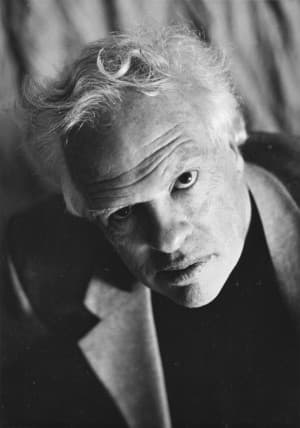
D.M. Thomas is a British author celebrated for his critically acclaimed novel, "The White Hotel," which was shortlisted for the Booker Prize. His fiction often explores themes of memory, identity, and the subconscious, characterized by a surreal and dreamlike quality. Thomas has also published poetry and works of literary criticism.
Similar books
- One Hundred Years of Solitude
Gabriel García Márquez
4.1 (753k) average on GoodreadsLiterary FictionBlends the fantastical with the real, creating a rich, symbolic narrative that spans generations.
- Portnoy's Complaint
Philip Roth
3.7 (59k) average on GoodreadsLiterary FictionFeatures a protagonist undergoing psychoanalysis, with a focus on sexual neuroses and Freudian themes.
- Possession
A.S. Byatt
4.3 (13k) average on GoodreadsRomanceBoth novels blend academic inquiry with fictional narrative, but in very different ways. The White Hotel uses psychoanalysis as its primary academic framework to explore personal and historical trauma. Possession, in contrast, focuses on literary detection and the lives of Victorian poets, blending academic research with a more traditional romance and mystery plot, without the same direct confrontation with historical atrocity or explicit psychoanalytic theory.
- The Old Man and the Sea
Ernest Hemingway
3.8 (831k) average on GoodreadsLiterary FictionA Cuban fisherman's long struggle with a giant marlin becomes a story of endurance and dignity, now retold for young adults with illustrations, phonetic guides, and writing prompts in Traditional Chinese.
- The Goldfinch
Donna Tartt
3.9 (720k) average on GoodreadsLiterary FictionHaunted by a tragic explosion and clutching a stolen Dutch masterpiece, a young orphan navigates the opulent drawing rooms of New York and the gritty underbelly of the art world, desperately seeking connection and redemption amidst a life spiraling into crime and obsession.
- Little Fires Everywhere
Celeste Ng
4.1 (713k) average on GoodreadsLiterary FictionIn Shaker Heights, an artist and her daughter move in, and their free-spirited lives clash with a rule-bound matriarch, revealing hidden conflicts beneath a perfect surface.






Enjoyed the summary?
A summary gives you the shape of the book. The book itself has the detail, the examples and the voice.
Find The White Hotel on AmazonAs an Amazon Associate, BookBrief earns from qualifying purchases. How we're funded