

Synopsis
Covers the whole plot, including the ending.
- Difficulty
- Hard
- Pacing
- Slow
- Mood
- Melancholy, Thought-provoking, Tragic, Introspective, Atmospheric
- Read it if
- You appreciate intricate psychological dramas, detailed character studies, and the moral complexities of human relationships, set against a backdrop of Gilded Age society.
- Skip it if
- You prefer fast-paced plots, clear-cut heroes and villains, or straightforward romantic resolutions.
The Wings of the Dove Plot Summary
Covers the whole plot, including the ending.
Kate Croy's Predicament
The novel begins with Kate Croy in her poor father's house, thinking about her future. She has turned down the wealthy Lord Mark, upsetting her family, because she secretly loves Merton Densher, a struggling journalist. Her Aunt Maud, a powerful and rich socialite, offers Kate a home and a chance to rise in society. But Kate understands she must marry someone wealthy. Kate feels torn. She wants money and social standing, but she does not want to give up Merton. She takes Aunt Maud's offer, hoping to find a way to get what she wants, even though she knows her aunt dislikes Merton.
Milly Theale's Arrival
Milly Theale, a beautiful and very rich young American heiress, arrives in London with her companion, Mrs. Stringham. Milly is an orphan and has a hidden illness. Aunt Maud, always planning social moves, immediately sees Milly's worth and potential. She takes Milly under her wing, introducing her to London society. Kate Croy is also drawn to Milly, sensing Milly's deep innocence and weakness. Milly, in turn, is charmed by Kate's sophistication and beauty. They start a friendship, though their social positions are very different.
The Conspiracy Begins
Kate Croy and Merton Densher, deeply in love but short on money, see Milly Theale's wealth and fragile health as a possible answer to their problems. Kate, with cold practicality, suggests a plan: Merton should court Milly, win her affection, and marry her. When Milly inevitably dies from her illness, Merton would inherit her fortune. He would then share it with Kate, allowing them to finally marry and live comfortably. Merton is at first disgusted by the idea, finding it morally wrong. But his love for Kate and his desire to be with her eventually convince him to reluctantly agree to the plan, starting a dangerous path of deception.
Venetian Entanglements
The social group, including Milly Theale, Kate Croy, Merton Densher, and Mrs. Stringham, moves to Venice. The city makes the romantic and tragic mood stronger. Milly, growing weaker, finds comfort in Venice's beauty and develops a deep affection for Merton. Merton, despite his deceitful intentions, finds himself genuinely drawn to her goodness and vulnerability. Kate, pretending to be Milly's friend, subtly pushes Merton closer to the heiress. Lord Mark, who also pursues Milly, watches the unfolding drama with suspicion, sensing the hidden currents of deceit and manipulation among the group.
Milly's Growing Affection
Milly Theale, alone and facing death, feels a deep connection with Merton Densher. She confides in him, seeking comfort and companionship. She believes Merton truly cares for her and starts to fall deeply in love with him, mistaking his planned attentions for real affection. Merton, increasingly troubled by his role in the deception, struggles with his conscience. He sees Milly's innocence and her great capacity for love, which makes his betrayal more painful. Despite his growing moral discomfort, he continues with the plan, bound by his promise to Kate and his own desires.
Lord Mark's Revelation
Lord Mark, watching Milly and Merton's growing relationship in Venice, becomes suspicious. He had a past romantic interest in Kate Croy and knows about her relationship with Merton. Driven by jealousy and a wish to protect Milly, Lord Mark confronts Milly. He tells her the truth about Kate and Merton's existing engagement and their past relationship. This news shatters Milly's trust and hope. It confirms her deepest fears about the insincerity of those around her. The news devastates her, making her physical and emotional health decline faster.
Milly's Decline and Generosity
Milly Theale is devastated by Lord Mark's revelation. She withdraws, and her illness quickly worsens. The emotional blow hurts her more than her physical problems. Despite her deep pain, Milly's inherent goodness and generosity win out. Before she dies, she makes a will. She leaves a large part of her immense fortune to Merton Densher. She knows his financial struggles stop him from marrying Kate Croy. This act of deep, selfless love is Milly's final, moving gesture. It shows her pure heart even when betrayed, and it silently challenges Kate and Merton's consciences.
Milly's Death and Its Aftermath
Milly Theale dies in Venice from her illness. Her death deeply affects everyone who knew her, especially Merton Densher and Kate Croy. Merton inherits a large part of Milly's fortune, as she intended. However, the money comes with a terrible moral weight. The success of their plan feels empty and stained by Milly's tragic sacrifice. The inheritance, meant to bring Kate and Merton together, instead creates a division between them. It forces them to face the real cost of their deception and the profound goodness they exploited.
The Unspoken Condition
After Milly's death, Merton Densher returns to London, burdened by the inheritance. He confronts Kate Croy, offering her the money. But he sets a clear, unspoken condition: they must marry without touching Milly's money. Merton understands that accepting the money as part of their marriage would mean fully approving their original, corrupt plan. It would also dishonor Milly's memory. He believes that only by rejecting the tainted fortune can they hope to save any integrity in their relationship. This proposal forces Kate to choose between the money she so badly wanted and the man she loves, who is now greatly changed by their shared experience.
The Irreparable Rift
Kate Croy cannot accept Merton's terms. She feels torn. She cannot fully give up the wealth Milly left, but she also cannot deny the moral weight Merton places on it. Their shared guilt and Milly's sacrifice create a barrier they cannot cross. Their love, once passionate and conspiratorial, is now overshadowed by their wrongdoing. The novel ends with Kate and Merton realizing their plan, meant to unite them, has instead driven a wedge between them. They are both isolated and haunted by Milly's innocent, forgiving spirit.
Principal Figures
Kate Croy
Protagonist/Antagonist
A beautiful, intelligent woman driven by ambition and love.
Kate is a captivating and complex character, beautiful and fiercely intelligent, but also deeply pragmatic and ambitious. She comes from an impoverished background and longs for financial security and social standing, which she believes are essential for a fulfilling life. Her love for Merton Densher is genuine, but it is intertwined with her desire for material comfort. She is the architect of the scheme to exploit Milly Theale, displaying a chilling capacity for manipulation and self-deception. She struggles with her conscience, but her ambition often overrides her moral qualms.
Relationships: Merton Densher (Fiancé, co-conspirator, ultimately estranged lover); Milly Theale (Friend, victim of her deception); Aunt Maud (Wealthy aunt, benefactor, social mentor); Lord Mark (Rejected suitor, rival)
Merton Densher
Protagonist
A journalist torn between his love for Kate and his moral conscience.
Merton is a journalist of modest means, deeply in love with Kate Croy. He possesses a strong moral compass, but his love for Kate makes him vulnerable to her influence. He is initially repulsed by the idea of deceiving Milly Theale but is eventually persuaded by Kate's relentless pragmatism and his own desire to secure their future together. Throughout the novel, he grapples with the ethical implications of their plan, experiencing growing guilt and internal conflict. Milly's innocence and generosity profoundly impact him, leading to a significant shift in his values.
Relationships: Kate Croy (Fiancé, co-conspirator, ultimately estranged lover); Milly Theale (Object of his deceit, recipient of his genuine affection, source of his moral awakening)
Milly Theale
Supporting/Central Figure
A wealthy American heiress, pure-hearted and tragically vulnerable.
Milly is a young, immensely wealthy American heiress, an orphan, and suffering from a mysterious, fatal illness. She is portrayed as exceptionally innocent, trusting, and pure-hearted, often likened to a dove. Despite her immense wealth, she is deeply lonely and yearns for genuine connection and love. Her vulnerability makes her an easy target for Kate and Merton's scheme. She is characterized by her profound capacity for love and generosity, even in the face of betrayal, and her presence profoundly impacts the moral trajectories of those around her.
Relationships: Kate Croy (Friend, unknowingly betrayed by); Merton Densher (Object of her love, unknowingly deceived by); Mrs. Stringham (Companion, confidante); Lord Mark (Suitor, revealer of truth)
Aunt Maud Lowder
Supporting
Kate's wealthy, formidable aunt, a master of social strategy.
Aunt Maud is a powerful and wealthy London socialite, Kate Croy's aunt and benefactor. She is a shrewd and calculating woman, deeply concerned with appearances, social status, and advantageous marriages. She takes Kate under her wing, but with the expectation that Kate will make a suitable match that enhances the family's standing. She is perceptive and often sees through the superficiality of social interactions, though she is also capable of her own manipulations. She represents the rigid social structures and material aspirations of the Victorian era.
Relationships: Kate Croy (Niece, protégé); Milly Theale (Social acquaintance, object of her strategic interest)
Lord Mark
Supporting
A wealthy, cynical nobleman who pursues both Kate and Milly.
Lord Mark is a wealthy but cynical nobleman, a rejected suitor of Kate Croy. He is intelligent and observant, possessing a keen eye for human nature and its flaws. He pursues Milly Theale, primarily for her fortune, but also out of a sense of rivalry with Merton. His role in the narrative is crucial as he is the one who ultimately exposes Kate and Merton's deception to Milly, albeit with his own motivations. He acts as a catalyst for the tragic climax, though his own moral standing is ambiguous.
Relationships: Kate Croy (Former suitor, rival); Milly Theale (Suitor, revealer of truth); Merton Densher (Rival)
Mrs. Stringham
Supporting
Milly Theale's devoted but somewhat naive companion.
Mrs. Stringham is Milly Theale's companion, a kind and devoted woman who genuinely cares for Milly. She is somewhat naive about the intricacies of European society and the machinations of those around Milly. She is a loyal protector of Milly, though ultimately powerless to prevent the tragic events. She represents a simpler, more innocent perspective, contrasting with the calculating nature of characters like Kate and Aunt Maud. She is a witness to Milly's decline and her deep affection for Merton.
Relationships: Milly Theale (Companion, confidante)
Mr. Croy
Mentioned
Kate's estranged, impoverished father.
Mr. Croy is Kate's father, a man who has squandered his family's fortune and lives in a state of genteel poverty. He represents the social decline that Kate so desperately wants to escape. His presence, though often off-stage, serves as a constant reminder of the financial insecurity that drives Kate's ambitions and choices. He is a burden on his daughters and a symbol of the societal pressures that shape Kate's decisions.
Relationships: Kate Croy (Daughter)
Mrs. Condrip
Supporting
Kate's sister, married to a man of modest means.
Mrs. Condrip is Kate's sister, married to a clergyman and living a life of respectable but limited means. She represents the alternative path that Kate rejects—a life of love without wealth. Her situation highlights the stark choices Kate faces and the societal expectations placed upon women regarding marriage and financial security. She is a sympathetic figure, but ultimately cannot offer Kate the kind of escape she desires.
Relationships: Kate Croy (Sister)
Themes & Insights
The Corrupting Power of Money
The novel shows how wanting wealth can corrupt people and relationships. Kate Croy's desire for money leads her to plan a morally wrong scheme against Milly Theale. Merton Densher, though hesitant, gives in to the appeal of money as a way to be with Kate. Milly's large fortune, instead of bringing her happiness, makes her a target. It ultimately contributes to her sad end. The inheritance, meant to bring Kate and Merton together, instead symbolizes their moral compromise and eventually separates them. This shows that tainted money can destroy what it was meant to secure.
“'We shall never be again as we were!'”
Innocence and Experience
This theme is seen in Milly Theale, the innocent 'dove,' and the more worldly characters like Kate Croy and Merton Densher. Milly represents American innocence—trusting, generous, and unspoiled by European cynicism. Her purity makes her vulnerable to Kate and Merton's schemes. They represent the 'experience' of a more complex, often morally unclear world. Milly's innocence is sacrificed, but her spirit, the 'wings of the dove,' deeply affects Merton, leading him to a moral awakening. The novel suggests that while innocence can be used, it also has a power to redeem.
“'She was a dove, and they had eaten her up.'”
Love and Betrayal
Love in the novel appears in different, often conflicting, forms. The strong love between Kate and Merton drives their plot, but this love is eventually poisoned by their betrayal of Milly. Milly's love for Merton is pure and selfless, even extending to a generous gift after she learns of his deception. The novel explores the terrible results when love is mixed with deceit and self-interest. Betraying Milly's trust not only destroys her but also permanently harms Kate and Merton's relationship. This shows that true love cannot grow on a foundation of lies.
“'We're beyond that, you and I, by a long way. We're together, and we're not together; we're good and we're bad; we're happy and we're miserable. We're all of it.'”
The Nature of Sacrifice
Sacrifice is a main theme, especially seen in Milly Theale. Milly's final act of leaving her fortune to Merton, even after finding out about his deceit, is a deep sacrifice of her own pain. It shows her lasting love and generosity. This act is meant to secure Kate and Merton's happiness, but it costs Milly her life and emotional well-being. The novel questions the value and effect of such a sacrifice. It suggests that while it can redeem the giver, it can also create a heavy moral burden for those who receive it, leading to their own suffering.
“'She had taken it as it was, and it was hers. It was her life.'”
The American vs. European Sensibility
Henry James often wrote about the conflict between American and European cultures. *The Wings of the Dove* does this too. Milly Theale represents the American ideal—innocent, wealthy, and somewhat naive, with a pure morality. The European characters, especially Kate Croy and Aunt Maud, show a more complex, sophisticated, and often cynical way of thinking. They are driven by social rules, ambition, and a practical view of love and marriage. Milly's experience with European society leads to her downfall, showing how vulnerable American innocence is when it meets European experience and its social and moral complexities.
“'Her type was high, but her range was short.'”
Plot Devices & Literary Techniques
The Innocent Victim (Milly Theale)
Milly's purity and vulnerability drive the central conflict.
Milly Theale serves as the archetypal innocent victim, whose purity and fatal illness make her both a sympathetic character and a target for exploitation. Her immense wealth, combined with her fragile health and trusting nature, sets the stage for Kate and Merton's morally dubious plan. Milly's symbolic association with a 'dove' emphasizes her vulnerability and the tragedy of her demise. Her role is crucial in highlighting the moral corruption of the other characters and ultimately serving as a catalyst for Merton's moral awakening and the downfall of Kate and Merton's relationship.
The Unspoken Illness
Milly's mysterious, unnamed illness creates tension and foreshadows tragedy.
Milly Theale's illness is never explicitly named, lending it an air of mystery and symbolic weight. This ambiguity allows the illness to represent not just a physical ailment but also a metaphor for her intrinsic vulnerability and the fragility of life. It serves as a constant, looming threat that drives the urgency of Kate and Merton's plan and foreshadows Milly's inevitable death. The unspoken nature of the illness heightens the psychological tension and emphasizes the sense of a predetermined tragic fate for Milly, making her a more poignant figure.
Venice as a Setting
The romantic and melancholic atmosphere of Venice amplifies the story's emotional intensity.
Venice is not merely a backdrop but an active plot device that intensifies the novel's themes. Its beauty, mystery, and melancholic atmosphere mirror Milly's own fragile state and impending doom. The city's labyrinthine quality reflects the moral complexities and deceptions unfolding among the characters. The romantic allure of Venice initially draws the characters together, but its isolation also amplifies the sense of entrapment and the tragic inevitability of the conspiracy. It becomes a place where beauty and sorrow, love and betrayal, are inextricably intertwined, culminating in Milly's death.
The Inheritance as a Moral Test
Milly's fortune becomes a test of character for Kate and Merton.
Milly's inheritance, intended by her as an act of generosity to unite Kate and Merton, ironically becomes the ultimate moral test for them. It is the prize they sought through deception, but its acquisition is tainted by Milly's death and their guilt. Merton's refusal to touch the money without specific conditions and Kate's inability to accept those terms demonstrate how the fortune transforms from a desired object into a symbol of their moral compromise. The inheritance ultimately acts as a wedge, destroying the very relationship it was meant to secure, proving too heavy a burden for their love to bear.
The Wings of the Dove Quotes
“She had an income, but it was a small one, and she had an independence, but it was a lonely one.”
“She was a person to whom things had been done, and she was a person to whom things would be done.”
“The great thing was to be right; the great thing was to be true.”
“We shall never be again as we were!”
“She was dead, and she was beautiful.”
“It was as if she had been too beautiful to live.”
“He knew that he loved her, but he knew also that he was not in love with her.”
“I can take nothing from you. I can give you nothing.”
“She had money, and she had charm, and she had youth, and she had beauty, and she had health; and she had, above all, the sense of these things.”
“He had wanted to marry her, and he had not married her.”
“The only way to be really rich was to have money and not to spend it.”
“The whole truth, for them, was what they would make of it.”
“Her value was that she was Milly, and that Milly was rich.”
“He looked at her, and he saw that she was magnificent, but that she was lost.”
“It was as if she had taken the great plunge, and felt the great chill, and then, with a strange smile, had simply floated away.”
Quiz
10 questions on the plot and the characters. Each answer comes with a short explanation.
Question 1
What is the primary motivation for Kate Croy and Merton Densher's conspiracy regarding Milly Theale?
- To ensure Milly finds true love before she dies.
- To gain access to Milly's considerable fortune.
- To help Milly escape her overbearing family.
- To facilitate Milly's return to America.
Show answer
B. To gain access to Milly's considerable fortune. Kate and Merton conspire to marry Merton to Milly so that when Milly, who is terminally ill, dies, Merton will inherit her fortune, which he will then share with Kate.
Question 2
Which city is a significant setting where Milly Theale spends time and where many key events unfold?
- Paris
- Rome
- Venice
- New York
Show answer
C. Venice Milly Theale spends a significant period in Venice, where her health deteriorates further, and the climax of the deception unfolds.
Question 3
What is Milly Theale's nationality?
- British
- French
- American
- Italian
Show answer
C. American Milly Theale is consistently described as a 'naïve, doomed American heiress' in the novel's synopsis and within the text.
Question 4
What is the nature of Milly Theale's illness?
- A sudden, acute infection.
- A chronic, ultimately fatal disease.
- A psychological ailment mistaken for physical illness.
- An injury sustained in an accident.
Show answer
B. A chronic, ultimately fatal disease. Milly's illness is consistently portrayed as a grave, incurable condition that leads to her eventual death, making her a 'doomed American heiress'.
Question 5
How does Milly Theale react when she eventually learns of Kate and Merton's deception?
- She confronts them angrily and publicly exposes their plot.
- She withdraws emotionally and her health rapidly declines.
- She forgives them and offers them a share of her fortune anyway.
- She seeks legal counsel to protect her assets.
Show answer
B. She withdraws emotionally and her health rapidly declines. Upon learning the truth, Milly is deeply wounded and retreats, which exacerbates her already fragile health and ultimately hastens her demise.
Question 6
What is the primary theme explored through the relationship between Kate Croy and Merton Densher?
- The triumph of true love over adversity.
- The corrupting influence of greed and social ambition.
- The complexities of transatlantic cultural exchange.
- The struggle for artistic recognition in Victorian society.
Show answer
B. The corrupting influence of greed and social ambition. Their relationship is fundamentally driven by their desire for wealth and social standing, leading them to betray Milly, embodying the theme of greed's corrupting power.
Question 7
What is the significance of the novel's title, 'The Wings of the Dove'?
- It refers to a specific piece of jewelry Milly owns.
- It symbolizes Milly's innocent, gentle nature and her vulnerability.
- It is a metaphor for the rapid travel between London and Venice.
- It describes the architectural style of Milly's Venetian palazzo.
Show answer
B. It symbolizes Milly's innocent, gentle nature and her vulnerability. The title is widely interpreted as a metaphor for Milly's purity and the fragile, almost angelic quality of her spirit, which is ultimately 'broken' by the deception she faces.
Question 8
After Milly's death, what does her will stipulate regarding her fortune, specifically concerning Merton Densher?
- She leaves her entire fortune to a charity for the ill.
- She leaves a substantial sum to Merton, on the condition that he never marry Kate.
- She disinherits Merton entirely, leaving everything to her distant relatives.
- She leaves her fortune to Kate Croy, as a gesture of defiance.
Show answer
B. She leaves a substantial sum to Merton, on the condition that he never marry Kate. Milly's will leaves a significant inheritance to Merton, implying a final, complex act of generosity and perhaps a subtle judgment, as it effectively separates him from Kate by making his acceptance contingent on not marrying her.
Question 9
What is the ultimate fate of Kate Croy and Merton Densher's relationship after Milly's death and the revelation of her will?
- They marry and live happily ever after with Milly's fortune.
- Merton accepts Milly's inheritance, and their relationship ends.
- They reject Milly's money and choose to stay together in poverty.
- Kate marries another wealthy suitor, leaving Merton heartbroken.
Show answer
B. Merton accepts Milly's inheritance, and their relationship ends. Merton eventually realizes the depth of Milly's trust and the moral burden of the money. He tells Kate he will marry her only if they renounce Milly's money. Kate refuses, recognizing that the money is what truly binds them, and their relationship dissolves.
Question 10
Which of the following best describes the moral dilemma faced by Merton Densher throughout the novel?
- Choosing between his journalism career and a life of leisure.
- Balancing his love for Kate with his growing affection and moral obligation toward Milly.
- Deciding whether to return to America or remain in Europe.
- Navigating the complexities of his estranged family's expectations.
Show answer
B. Balancing his love for Kate with his growing affection and moral obligation toward Milly. Merton is torn between his commitment to Kate and their scheme, and his developing genuine feelings and respect for Milly, whose innocence and suffering increasingly weigh on his conscience.
The Wings of the Dove FAQ
What is the central premise of 'The Wings of the Dove'?
The novel revolves around Milly Theale, a wealthy American heiress facing a terminal illness, and the morally ambiguous scheme concocted by Kate Croy and Merton Densher. Kate, in love with Merton but lacking fortune, manipulates him into courting Milly, hoping Milly will leave him her inheritance upon her death, which they can then share.
Who are the primary characters, and what are their motivations?
Milly Theale is the innocent, doomed heiress seeking connection and love. Kate Croy is a beautiful, ambitious woman trapped by poverty and driven by a desire for financial security, even at the cost of her integrity. Merton Densher is a journalist, deeply in love with Kate, who becomes her reluctant accomplice in the deceit, torn between his love for Kate and his growing affection and pity for Milly.
Where does a significant portion of the story take place?
The narrative begins in London, establishing the relationships and initial plotting, particularly within Kate Croy's impoverished but socially connected family. It then shifts to Venice, where Milly Theale's health deteriorates, and the central deception unfolds amidst the city's opulent yet melancholic atmosphere.
What is the 'dove' in the title a metaphor for?
The 'dove' in the title specifically refers to Milly Theale. She is portrayed as pure, innocent, and vulnerable, possessing a gentle spirit and immense wealth, making her both a figure of pity and a target for exploitation, much like a beautiful, defenceless bird.
How does Milly Theale react to realizing the deception?
Milly eventually discerns the true nature of Kate and Merton's relationship and their scheme, primarily through Lord Mark's blunt revelation. This realization shatters her spirit and contributes significantly to her rapid decline, causing her to withdraw from Merton and effectively giving up her will to live.
What is the significance of the Bronzino portrait Milly purchases?
The Bronzino portrait of a 'dead man' is a subtle foreshadowing of Milly's own fate and her isolated, observer status. It also reflects her deep sensitivity to beauty and sorrow, and its acquisition marks a moment of both personal assertion and melancholy in her time in Venice, hinting at a life cut short.
How does Mrs. Stringham function in the novel?
Mrs. Stringham serves as Milly's devoted companion and confidante, acting as a maternal figure and a protective presence. She is somewhat naive but deeply loyal, and her perspective often provides an outsider's view of the intricate social machinations and emotional complexities surrounding Milly.
What role does Lord Mark play in the unfolding tragedy?
Lord Mark is a suitor to Milly who, out of a combination of jealousy and perhaps a misguided sense of honesty, reveals the truth about Kate and Merton's engagement to Milly. His intervention, though seemingly direct, serves as the catalyst that exposes the deception and irrevocably wounds Milly.
How does Henry James use social class and money as themes?
James intricately explores how social class and the lack of money drive characters like Kate Croy to desperate measures, highlighting the constraints and pressures placed upon individuals, particularly women, in Victorian society. Milly's immense wealth, conversely, makes her both powerful and vulnerable, setting her apart from others.
What is the nature of Kate Croy's love for Merton Densher?
Kate's love for Merton is genuine but deeply intertwined with her ambition and her need for financial security. She is willing to sacrifice Merton's integrity and Milly's well-being for their shared future, demonstrating a love that is possessive and pragmatic rather than purely altruistic, reflecting her psychological makeup.
How does Merton Densher's psychological state evolve throughout the novel?
Merton begins as Kate's compliant lover, but his exposure to Milly's innocence and suffering gradually awakens his conscience. He experiences profound guilt and a growing moral conflict, leading him to an internal struggle between his love for Kate and his sense of honor, ultimately leaving him scarred by the deception.
Discuss the concept of 'salvation' in the context of the novel.
Salvation in the novel is complex. Milly, through her 'wing of the dove' generosity, offers a form of salvation to Merton, freeing him from his financial constraints and potentially from Kate's manipulative influence. However, for Kate and Merton, true salvation from their guilt and moral compromise remains elusive, suggesting that some betrayals are unforgivable.
What is the significance of Milly's final act regarding her will?
Milly's decision to leave her fortune to Merton, even after knowing his complicity, is a profound act of forgiveness and transcendent love. It represents her ultimate embrace of generosity and her desire to bless him, effectively 'saving' him but also creating an insurmountable barrier between him and Kate, who cannot accept the money tainted by Milly's sacrifice.
Why does Kate Croy ultimately reject Merton Densher's proposal at the end?
Kate rejects Merton's proposal because he cannot promise to 'take the money' without thinking of Milly, and he cannot promise to 'let Milly's memory alone.' Her desire for a clean slate, untainted by Milly's ghost, is paramount, and Merton's inability to fully detach from Milly's memory makes their shared future impossible in her eyes.
How does James use the setting of Venice to enhance the novel's themes?
Venice, with its decaying beauty, hidden canals, and sense of historical grandeur, serves as a poignant backdrop for Milly's decline and the unfolding deception. Its melancholic atmosphere mirrors Milly's failing health and the moral decay of Kate and Merton's plan, while its opulence highlights the wealth they covet.
Is 'The Wings of the Dove' a tragedy? Why or why not?
Yes, it is fundamentally a tragedy. Milly Theale, an innocent, dies due to the machinations of others. While Merton inherits a fortune, he is psychologically scarred and morally compromised. Kate Croy achieves her financial goal but loses Merton and lives with the consequences of her actions, leaving all principal characters with a sense of loss and irreparable damage.
What is the role of Susan Stringham's letters to Mrs. Lowder?
Susan Stringham's letters serve as a narrative device, providing Mrs. Lowder (and by extension, the reader) with updates and insights into Milly's life and deteriorating health in Venice. They offer a slightly detached yet emotionally resonant perspective, contributing to the gradual unveiling of the truth and Milly's tragic fate.
How does the novel explore the concept of innocence and its vulnerability?
The novel portrays Milly Theale as the embodiment of innocence, which, paradoxically, makes her highly vulnerable to exploitation. Her purity and trusting nature are ultimately her undoing in a world driven by greed and social climbing. Her fate suggests that innocence, while beautiful, often cannot survive in a corrupted environment.
About the author
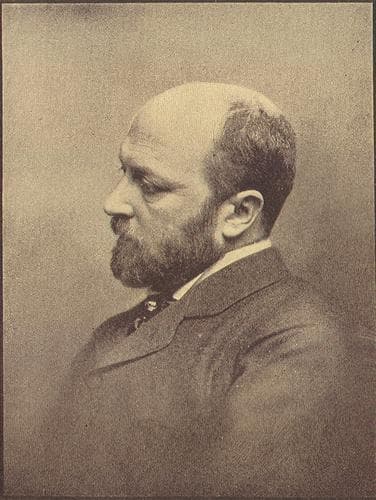
Henry James was an American-British author. He is regarded as a key transitional figure between literary realism and literary modernism, and is considered by many to be among the greatest novelists in the English language. He was the son of Henry James Sr. and the brother of philosopher and psychologist William James and diarist Alice James.
Similar books
- The Portrait of a Lady
Henry James
3.8 (73k) average on GoodreadsHistorical FictionExplores themes of American innocence vs. European experience and female agency within societal constraints.
- Sense and Sensibility
Jane Austen
4.1 (958k) average on GoodreadsHistorical FictionFeatures sisters navigating societal pressures and financial predicaments in their pursuit of love and security.
- The Age of Innocence
Edith Wharton
4.0 (139k) average on GoodreadsHistorical FictionDepicts the rigid social conventions and moral compromises within upper-class society of a similar era.
- A Room With a View
E.M. Forster
3.9 (152k) average on GoodreadsHistorical FictionForster's novel, while also featuring English characters abroad and class themes, is lighter in tone and more focused on individual romantic liberation and societal critique, rather than the deep psychological and moral decay explored by James.
- To Kill a Mockingbird
Harper Lee
4.3 (4.5M) average on GoodreadsHistorical FictionIn the 1930s Jim Crow South, Harper Lee writes about racial injustice, moral growth, and the quiet courage of a lawyer father, Atticus Finch, as seen through his young daughter's eyes.
- The Great Gatsby
F. Scott Fitzgerald
3.9 (3.8M) average on GoodreadsHistorical FictionIn the opulent Roaring Twenties, a mysterious millionaire's lavish parties hide his desperate, tragic pursuit of a lost love, exposing the emptiness within the American Dream.




Enjoyed the summary?
A summary gives you the shape of the book. The book itself has the detail, the examples and the voice.
Find The Wings of the Dove on AmazonAs an Amazon Associate, BookBrief earns from qualifying purchases. How we're funded