
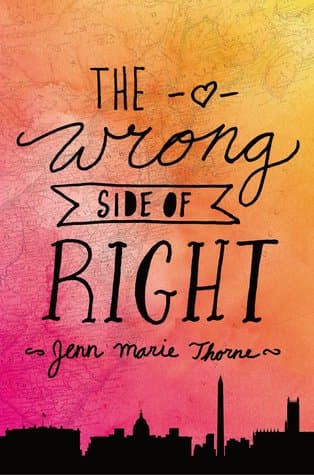
Synopsis
Covers the whole plot, including the ending.
- Difficulty
- Easy
- Pacing
- Moderate
- Mood
- Engaging, Reflective, Romantic, Confrontational
- Read it if
- You enjoy YA romance set against a political backdrop, with themes of finding your identity and moral dilemmas.
- Skip it if
- You're looking for a deep dive into political strategy or prefer fantasy/sci-fi over contemporary romance.
The Wrong Side of Right Plot Summary
Covers the whole plot, including the ending.
A Shocking Revelation
Seventeen-year-old Kate Quinn lives a quiet, grieving life in Seattle with her aunt, a year after her mother's death. Her world changes when two men arrive at her door: George and Senator William Gordon. George, a lawyer, reveals that Senator Gordon is Kate's biological father, a secret her mother had kept. Gordon, a Republican presidential hopeful, explains that he wants Kate to join his family and campaign, offering her a new life and a connection to her past. Initially resistant and overwhelmed, Kate considers this news and its implications.
Welcome to the Campaign Trail
Kate reluctantly agrees to move to Washington D.C. and live with Senator Gordon, his wife Pamela, and their two children, Ashley and Garrett. She immediately enters the high-pressure world of a presidential campaign, where her every move is watched. Ashley, her stepsister, is initially hostile and wary of Kate's sudden appearance, while Garrett is more welcoming. Kate struggles to adapt to the opulent lifestyle, the constant media attention, and the strict rules from the campaign staff, particularly Gordon's chief of staff, Ben. She feels like an outsider, navigating a family and a political world new to her.
The Rebellious Intern
As part of her integration into the campaign, Kate becomes an intern. There, she meets Andy, a charming intern who works for the opposing party. Andy challenges Kate's ideas about politics and encourages her to think critically about her father's campaign and its policies. Their interactions quickly turn into a flirtation, giving Kate a needed escape from the suffocating campaign environment. However, Kate knows that Andy's loyalties are with the opposition, making their budding relationship complicated and potentially problematic for her father's political aspirations.
Uncovering Secrets
Wanting to understand her mother's decision to keep her father a secret, Kate begins to investigate their past. She finds old letters and photographs, slowly putting together the story of her parents' brief, intense relationship. She learns that her mother chose to raise her alone, deliberately keeping Senator Gordon out of her life. This revelation adds another layer of complexity to Kate's feelings for her father, as she grapples with her mother's choices and the implications for her own identity. She also starts to see inconsistencies in the campaign's story about her father.
A Divided Loyalty
Kate's relationship with Andy deepens, but so does her internal conflict. While she is starting to bond with Garrett and even cautiously with Ashley, and trying to connect with her father, her conversations with Andy expose her to different viewpoints. These conversations make her question the campaign's conservative platform, especially on issues like women's rights and economic policy. She finds herself increasingly at odds with the carefully presented image of the Gordon family and the campaign's message. This creates significant emotional strain, as she feels pressure to conform while her own beliefs are challenged.
The Debate and the Fallout
Kate attends a televised presidential debate, where she sees her father in a new light. She observes the strategic attacks, the carefully worded responses, and the ruthless nature of political combat. After the debate, Kate witnesses a private conversation between her father and Ben that shows a more calculating and less empathetic side to Senator Gordon. This moment is a turning point for Kate, confirming her doubts about her father's sincerity and the campaign's integrity, and making her question if she truly belongs in this world.
The Leak
A confidential campaign document, detailing negative strategies against an opponent, is leaked to the press, causing a significant scandal for Senator Gordon's campaign. Panic breaks out among the staff, and accusations fly. Kate, knowing Andy's access to information and his political leanings, immediately suspects him of being the leaker. This incident tests her trust in Andy and forces her to confront the ethical dilemmas in their relationship and the political sphere. She is torn between defending Andy and protecting her father's campaign, further complicating her loyalties.
Confrontation and Betrayal
Kate confronts Andy about the leaked document. He confesses that he was involved in leaking the information, driven by his strong political convictions and a desire to expose what he saw as unethical campaign tactics. This revelation devastates Kate, as it confirms her fears about his motives and the betrayal of her trust. She feels manipulated and used, realizing that their relationship was tied to political maneuvering. This moment shatters her idealized view of Andy and forces her to re-evaluate everything.
Taking a Stand
Following the leak and her confrontation with Andy, Kate feels she must act on her own convictions. She realizes she can no longer remain silent or blindly support a campaign whose values she does not fully endorse. During a campaign event, she takes an opportunity to speak publicly, subtly but firmly expressing her own views on a contentious issue. These views differ from her father's official stance. This act is a declaration of her independence and a refusal to be a pawn in the political game, risking her place within the Gordon family and the campaign.
The Aftermath and Moving Forward
Kate's public statement creates a stir within the campaign and the media. While her father is initially furious, the incident ultimately forces a reckoning. She has asserted her own identity and values, even if it means alienating her newfound family. The novel concludes with Kate navigating the fallout, making peace with her past, and charting a future that aligns with her true self. She accepts that while she may not fully belong in the political world, she has found her voice and the strength to stand by her beliefs, regardless of the personal cost.
The Wrong Side of Right Characters
Kate Quinn
Protagonist
A grieving teenager who discovers her father is a presidential candidate.
Kate is a seventeen-year-old artist reeling from the recent death of her mother. Initially quiet, observant, and somewhat naive, she is thrust into the high-stakes world of politics and a family she never knew. She values authenticity, honesty, and justice, often feeling uncomfortable with the performative aspects of campaigning. Her strong moral compass drives her to question the inconsistencies and compromises inherent in the political arena, even when it puts her at odds with her new family.
Relationships: Senator William Gordon (Biological father, complex and evolving relationship); Andy (Romantic interest, initially supportive but ultimately manipulative); Ashley Gordon (Stepsister, initially hostile but later a cautious ally); Garrett Gordon (Stepbrother, supportive and friendly); Pamela Gordon (Stepmother, distant and pragmatic); Ben (Gordon's chief of staff, strict and controlling)
Senator William Gordon
Supporting/Antagonist
Kate's biological father, a Republican presidential candidate.
Senator Gordon is a powerful and ambitious Republican politician running for President. He is charming, charismatic, and a skilled orator, but also pragmatic and highly focused on his public image and political success. While he genuinely wants to integrate Kate into his family, his primary motivation often appears to be the political advantage she might bring to his campaign. He embodies the complex and sometimes morally ambiguous nature of high-level politics, struggling to balance personal relationships with political ambition.
Relationships: Kate Quinn (Daughter, strained and politically charged); Pamela Gordon (Wife, pragmatic political partnership); Ben (Chief of staff, highly trusted and influential); Ashley Gordon (Daughter, often distant); Garrett Gordon (Son, somewhat distant)
Andy
Supporting/Love Interest
A rebellious intern who challenges Kate's political views.
Andy is a charming, intelligent, and politically astute intern working for the opposing party. He initially draws Kate in with his wit and his seemingly genuine interest in her, offering a refreshing contrast to the stifling campaign environment. However, Andy also possesses a strong ideological conviction that sometimes verges on ruthlessness. He is willing to use information and manipulate situations to further his political agenda, ultimately betraying Kate's trust, though perhaps believing his actions were for a greater good.
Relationships: Kate Quinn (Romantic interest, ultimately a source of betrayal)
Ashley Gordon
Supporting
Kate's stepsister, initially hostile but later understanding.
Ashley is Senator Gordon's biological daughter and Kate's stepsister. Initially, she is cold, resentful, and suspicious of Kate's sudden appearance, viewing her as an intruder and a potential threat to her family's carefully constructed image. Ashley is deeply invested in her father's campaign and the family's public perception. Over time, however, she begins to show glimpses of vulnerability and a deeper understanding of the pressures Kate faces, leading to a tentative connection.
Relationships: Kate Quinn (Stepsister, evolving from hostile to cautiously supportive); Senator William Gordon (Father, strives for his approval)
Garrett Gordon
Supporting
Kate's stepbrother, a friendly and supportive presence.
Garrett is Senator Gordon's son and Kate's stepbrother. He is more easygoing and less consumed by the political world than his father or sister. Garrett offers Kate a much-needed friendly face and a sense of normalcy within the chaotic campaign environment. He is generally kind and supportive, often acting as a bridge between Kate and the more rigid members of the Gordon family. He represents a less cynical perspective on the political life.
Relationships: Kate Quinn (Stepbrother, supportive and friendly); Ashley Gordon (Sister, typical sibling relationship)
Pamela Gordon
Supporting
Senator Gordon's wife and Kate's stepmother.
Pamela is Senator Gordon's elegant and poised wife. She is a political veteran in her own right, perfectly suited to the role of a politician's spouse. Pamela is pragmatic and focused on maintaining appearances and supporting her husband's career. While she is generally polite to Kate, her warmth is often overshadowed by her concern for the campaign's optics. She represents the polished, often guarded, public face of a political family.
Relationships: Kate Quinn (Stepmother, polite but somewhat distant); Senator William Gordon (Husband, political partnership)
Ben
Supporting
Senator Gordon's strict and loyal chief of staff.
Ben is Senator Gordon's highly competent, intensely loyal, and somewhat intimidating chief of staff. He is the pragmatic enforcer of campaign rules and public image, prioritizing the senator's success above all else. Ben views Kate primarily as a political asset and potential liability, constantly monitoring her actions and ensuring she conforms to campaign expectations. He embodies the ruthless efficiency often required in high-stakes politics.
Relationships: Senator William Gordon (Employer, highly trusted advisor); Kate Quinn (Overseer, often a source of tension)
Aunt Janet
Supporting
Kate's maternal aunt and initial guardian.
Aunt Janet is Kate's kind and supportive maternal aunt, who takes Kate in after her mother's death. She represents Kate's 'old life' and a sense of normalcy and stability before the political upheaval. While she encourages Kate to explore the opportunity with her biological father, she also provides a grounding presence and a safe haven for Kate to return to.
Relationships: Kate Quinn (Aunt/guardian, loving and supportive)
The Wrong Side of Right Themes
Identity and Belonging
Kate's journey is about discovering who she is, separate from her mother's legacy and her newly revealed father's political identity. She grapples with where she belongs – with her quiet life in Seattle, within the glamorous but restrictive Gordon family, or somewhere entirely new. Her struggle to reconcile her personal values with the demands of the campaign, especially when she feels like an outsider at campaign events or when she researches her mother's past, shows her search for an authentic self.
“I wasn’t a Gordon, not really. I was Kate Quinn, and I was just trying to figure out what that meant.”
The Illusion vs. Reality of Politics
The novel shows the contrast between the carefully constructed public image of politicians and the often messy, strategic, and sometimes morally ambiguous reality behind the scenes. Kate initially sees her father as a charismatic leader but gradually uncovers his more calculating nature, especially during the debate and in private conversations with Ben. The campaign's focus on 'talking points' and controlling the narrative, alongside Andy's revelations about political maneuvering, exposes the gap between rhetoric and genuine belief, forcing Kate to question what is truly 'right'.
“Politics was a performance, and I was just learning my lines.”
Trust and Betrayal
Trust is a central theme, explored through Kate's relationships. She struggles to trust her father, who kept her existence a secret, and her stepfamily, who are wary of her. Her developing relationship with Andy is built on shared dissent but is ultimately shattered by his political manipulation and the leak. This betrayal forces Kate to learn to trust her own judgment and instincts, rather than relying on others' intentions, leading to her eventual public stand.
“I’d thought I could trust him. But in politics, everyone had an angle.”
Finding Your Voice
Initially a passive observer, Kate slowly finds her voice and the courage to express her own beliefs, even when they conflict with powerful figures around her. This arc is clear in her quiet questioning of campaign rhetoric, her growing discomfort with her father's policies, and culminates in her public statement that deviates from the campaign's script. It is a journey from silence and conformity to confident self-expression, demonstrating the power of individual conviction when facing immense pressure.
“I couldn’t stay silent anymore. Not when what I believed was so different from what they wanted me to say.”
Plot Devices & Literary Techniques
The Secret Child
The revelation of Kate's biological father being a presidential candidate.
This device serves as the primary inciting incident, immediately thrusting Kate into an unfamiliar and high-stakes world. It generates inherent conflict by forcing Kate to confront a hidden past and reconcile her identity with a powerful, public figure. The secret's exposure creates immediate drama, propels the plot forward, and sets up the central themes of identity, family, and the clash between personal truth and public image.
The Campaign Environment
The setting of a presidential campaign as a backdrop for personal growth.
The campaign trail functions as more than just a setting; it's a character in itself, shaping the characters and conflicts. It provides a high-pressure, scrutinizing environment that forces Kate to grow, adapt, and ultimately define herself. The constant media attention, strategic maneuvering, and conflicting ideologies inherent in a political campaign serve to amplify the themes of illusion vs. reality, trust, and the struggle for authenticity, making Kate's personal journey intensely public and challenging.
The Opposing Love Interest
A romantic interest whose political allegiances conflict with the protagonist's family.
Andy, working for the opposition, creates immediate dramatic tension in Kate's romantic storyline. This device not only provides a compelling love interest but also serves to deepen Kate's internal conflict. Andy acts as a catalyst, exposing Kate to alternative viewpoints and prompting her to question her father's campaign, thus directly contributing to her political awakening. His ultimate betrayal highlights the dangers of trust in a politically charged environment and forces Kate to rely on her own judgment.
The Political Leak
A confidential campaign document being released to the public.
This device acts as a major turning point in the plot, creating significant external conflict for the campaign and internal conflict for Kate. It directly implicates Andy, forcing Kate to confront his true motives and the ethical compromises within politics. The leak raises the stakes, creates suspicion and betrayal, and ultimately pushes Kate towards her decision to take a public stand, demonstrating the real-world consequences of political maneuvering and the impact on personal relationships.
The Wrong Side of Right Quotes
“There’s a difference between being right and being effective.”
“I’d always thought the truth was the most important thing. But what if it wasn’t enough?”
“Sometimes, the only way to get people to listen is to give them a story they want to believe.”
“You can’t change the world if you’re too busy being perfect.”
“Being a good person doesn’t always mean doing the easy thing.”
“The line between passion and obsession is thinner than you think, especially in politics.”
“It’s amazing how quickly people can turn on you when it serves their own agenda.”
“Maybe falling in love in the middle of a political campaign was the most illogical, most perfect thing I could have done.”
“You can’t save everyone, but you can try to save the things that matter most to you.”
“Sometimes, the loudest voices aren’t the ones with the best ideas.”
“The hardest part about fighting for what you believe in is knowing when to compromise.”
“It wasn't about being right anymore. It was about finding a way forward, together.”
“Hope isn’t a strategy, but it’s a pretty good motivator.”
“You don't just win an election; you win the right to try and make things better.”
Quiz
10 questions on the plot and the characters. Each answer comes with a short explanation.
Question 1
What is the primary reason Kate Quinn finds herself moving in with a family she never knew?
- Her father won the presidential election and needed her by his side.
- Her mother died, and her biological father, a presidential candidate, came forward.
- She ran away from home and was found by her estranged political family.
- She was offered a prestigious internship on a presidential campaign.
Show answer
B. Her mother died, and her biological father, a presidential candidate, came forward. Kate's mother died the previous year, leaving her parentless. It is at this point that her biological father, a powerful politician running for U.S. President, comes into her life.
Question 2
Who is the rebellious boy Kate falls for, and what is implied about his motives?
- He is a rival campaign's intern, with a genuine interest in Kate.
- He is a journalist trying to get an exclusive story on Kate's family.
- He is a member of the campaign staff, but has ulterior motives related to the family.
- He is a rebellious boy whose motives are explicitly stated as potentially not pure.
Show answer
D. He is a rebellious boy whose motives are explicitly stated as potentially not pure. The synopsis states that Kate falls for 'a rebellious boy who may not have the purest motives,' indicating an element of mistrust or hidden agenda.
Question 3
What is the central conflict Kate faces regarding her new family and the campaign?
- She struggles to adapt to the luxurious lifestyle of a political family.
- Her personal beliefs clash with the campaign's talking points and agenda.
- She is constantly undermined by her newly found siblings.
- She misses her old life and friends too much to fully commit to the campaign.
Show answer
B. Her personal beliefs clash with the campaign's talking points and agenda. The synopsis highlights that 'what she truly believes flies in the face of the campaign’s talking points,' presenting a core conflict of personal integrity versus political necessity.
Question 4
What is the political role of Kate's newly discovered father?
- He is a state governor.
- He is a U.S. Senator.
- He is running for U.S. President.
- He is the current U.S. President.
Show answer
C. He is running for U.S. President. The synopsis explicitly states, 'He’s a powerful politician. And he’s running for U.S. President.'
Question 5
Before her father's appearance, what was Kate's family situation?
- She lived with her mother and stepfather.
- She was an orphan living in foster care.
- She was parentless after her mother died the previous year.
- She lived with her mother and was estranged from her father.
Show answer
C. She was parentless after her mother died the previous year. The text states, 'Kate Quinn’s mom died last year, leaving Kate parentless and reeling.'
Question 6
The synopsis mentions Kate facing a 'third, even scarier option.' What does this option most likely represent in the context of her dilemma?
- Confronting her father directly about his past mistakes.
- Exposing the campaign's secrets to the public.
- Making a choice independently, without relying on her new family or the boy.
- Leaving the campaign and returning to her old life.
Show answer
C. Making a choice independently, without relying on her new family or the boy. The options presented are turning to her family or the boy. A 'third, even scarier option' suggests a path of self-reliance or a more challenging, independent decision that she must make alone.
Question 7
What is the primary challenge for Kate regarding her relationship with her newly discovered father?
- He is too busy with the campaign to spend time with her.
- She hardly knows him, making trust and connection difficult.
- He actively tries to manipulate her for political gain.
- She resents him for not being in her life sooner.
Show answer
B. She hardly knows him, making trust and connection difficult. The text states she is 'joining a campaign in support of a man she hardly knows,' indicating a lack of established relationship and familiarity.
Question 8
The title 'The Wrong Side of Right' most likely alludes to which of Kate's struggles?
- Her difficulty in choosing between two seemingly 'right' romantic partners.
- The moral ambiguity of political life, where 'right' actions can have 'wrong' consequences or vice versa.
- Her constant battle with her family over who is 'right' about campaign strategies.
- The challenge of being on the 'wrong' side of public opinion despite her personal convictions.
Show answer
B. The moral ambiguity of political life, where 'right' actions can have 'wrong' consequences or vice versa. Given the political context and Kate's struggle with her beliefs versus campaign talking points, the title suggests a theme of moral compromise and the difficulty of defining 'right' in a politically charged environment.
Question 9
How does Kate's personal identity ('who is Kate?') become a central question in her new life?
- She has to create a new public persona for the campaign, losing her true self.
- She struggles to remember details of her past life before her mother died.
- Her new family tries to force her into a specific role she doesn't want.
- She discovers she has a hidden talent for politics she never knew existed.
Show answer
A. She has to create a new public persona for the campaign, losing her true self. The synopsis asks, 'But who is Kate?' directly after describing her new life on the campaign, implying that her identity is being challenged or redefined by the demands and expectations of this new, public role, especially when her beliefs clash with the campaign.
Question 10
What is the overarching genre blend of 'The Wrong Side of Right' as described?
- Mystery, Thriller, Drama
- Fantasy, Adventure, Coming-of-Age
- Politics, Young Adult, Romance
- Historical Fiction, Biography, Comedy
Show answer
C. Politics, Young Adult, Romance The genre information provided states: 'Politics, Young Adult, Romance.'
The Wrong Side of Right FAQ
What is the central conflict Kate Quinn faces when she discovers her father is Senator Thomas Carlisle?
Kate's central conflict stems from reconciling her personal beliefs and moral compass with the carefully constructed public image and political agenda of her biological father, Senator Thomas Carlisle, who is running for U.S. President. She struggles with supporting a campaign whose talking points often clash with her own nascent political consciousness and sense of right and wrong, especially concerning social issues.
How does Kate's relationship with her deceased mother influence her initial interactions with the Carlisle family and the campaign?
Kate's mother's death leaves her feeling parentless and adrift, making her vulnerable but also deeply independent. Her mother's memory often serves as a moral touchstone, causing Kate to question the authenticity and motives within the Carlisle family and the campaign, contrasting their polished world with the more grounded life she shared with her mom.
Who is Andy and what role does he play in Kate's new life?
Andy is the rebellious and politically engaged son of Senator Carlisle's campaign manager, and he quickly becomes Kate's love interest. He introduces Kate to a different perspective on politics, often challenging the campaign's narrative and encouraging her to think critically, though his own motives sometimes appear ambiguous.
What specific political issues or stances does Senator Carlisle's campaign advocate that cause internal conflict for Kate?
Senator Carlisle's campaign often takes conservative stances, particularly on issues like women's reproductive rights and LGBTQ+ rights, which directly conflict with Kate's developing liberal views. These disagreements force her to confront the hypocrisy she perceives and question her role in supporting a platform she fundamentally disagrees with.
What is the 'third, even scarier option' Kate considers in the face of her dilemmas?
The 'third, even scarier option' implies Kate's consideration of exposing the truth about her father's campaign, her own existence, or any perceived wrongdoings, potentially jeopardizing his presidential bid and her new family. This path involves significant personal risk and could lead to public scrutiny and isolation.
Are there any subtle clues about Senator Carlisle's true character or past that hint at why Kate's mother kept his identity secret?
The narrative subtly suggests Senator Carlisle's ambition and pragmatism might have overshadowed personal ethics in the past, implying a reason for Kate's mother's decision. His initial reluctance to fully acknowledge Kate publicly, and his campaign's strict control over her narrative, hints at a man prioritizing political image over genuine connection, which could have been a factor in her mother's secrecy.
How does the author use the setting of the campaign trail to highlight Kate's internal struggles?
The author uses the fast-paced, highly scrutinized, and often superficial environment of the campaign trail to amplify Kate's feelings of displacement and inauthenticity. The constant need to be 'on message' and present a united front sharpens her awareness of her own differing beliefs and the performance required of her, making her internal conflict more acute.
Is there a specific incident or revelation that acts as a turning point for Kate, solidifying her decision to act?
A key turning point likely involves witnessing a direct contradiction between the campaign's public rhetoric and its private actions, or a personal experience where Kate feels directly betrayed or compromised by the campaign's demands. This incident would push her past passive discomfort into active resistance, forcing her hand.
How does Kate's sudden immersion into a privileged political world affect her sense of self-identity and authenticity?
Kate's sudden immersion into a world of privilege and political strategy significantly challenges her sense of self. She grapples with feelings of being an outsider, a pawn, and an imposter, constantly questioning whether the person she presents to the world aligns with her true self, leading to an identity crisis.
What psychological impact does the constant public scrutiny and media attention have on Kate?
The constant public scrutiny and media attention create immense pressure on Kate, fostering paranoia, anxiety, and a feeling of being perpetually judged. This environment forces her to censor herself and internalize her thoughts, which can be psychologically isolating and damaging to her self-expression.
How does Kate's relationship with Andy contribute to or detract from her psychological well-being?
Andy's rebellious nature initially offers Kate an outlet and validation for her dissenting thoughts, providing a sense of connection and reducing her isolation. However, if his motives are not pure, his influence could also add to her confusion, trust issues, and ultimately, her psychological distress, making her question her judgment.
In what ways does Kate's grief for her mother manifest throughout her journey, and how does it intersect with her political awakening?
Kate's grief manifests as a lingering ache, a search for connection, and a yearning for her mother's moral clarity. This grief intersects with her political awakening as she often subconsciously seeks her mother's approval or guidance in navigating the complex ethical dilemmas of the campaign, using her mother's values as a benchmark.
Is 'The Wrong Side of Right' primarily a political commentary, a coming-of-age story, or a romance, and how do these elements balance each other?
'The Wrong Side of Right' skillfully blends all three, but arguably functions most strongly as a coming-of-age story set against a political backdrop. The political commentary drives Kate's internal growth, while the romance with Andy acts as a catalyst for her self-discovery, with each element enriching the others rather than overshadowing them.
How does the title 'The Wrong Side of Right' reflect the core themes of the book?
The title 'The Wrong Side of Right' encapsulates the book's core themes by highlighting the moral ambiguities Kate faces. It suggests that even actions perceived as 'right' (like supporting family or a political party) can have negative consequences or be built on questionable foundations, forcing Kate to discern her own ethical boundaries amidst conflicting loyalties.
What message does the book convey about the nature of truth and authenticity in politics?
The book conveys a powerful message about the often-elusive nature of truth and authenticity in politics, suggesting that public personas are meticulously crafted and frequently diverge from private realities. It challenges readers to look beyond superficial narratives and question the motivations behind political messaging, emphasizing the importance of individual integrity.
Does the ending offer a clear resolution to Kate's dilemmas, or does it leave room for ambiguity and future challenges?
The ending likely offers a resolution to Kate's immediate dilemmas, such as her decision regarding the campaign and her relationship with her father, but it may leave room for ambiguity regarding the long-term consequences or her definitive place in the world. It emphasizes her personal growth and agency, even if all external conflicts aren't neatly tied up.
How does Kate's journey challenge the traditional 'family first' loyalty often depicted in fiction?
Kate's journey strongly challenges the 'family first' loyalty by presenting a scenario where familial ties (with her newly discovered father) directly conflict with her personal ethics and sense of justice. She is forced to prioritize her own moral compass over blind allegiance to a family she barely knows, questioning whether blood relation alone dictates loyalty.
Similar books
- The Hating Game
Sally Thorne
4.1 (146k) average on GoodreadsRomanceA contemporary romance with witty banter and office-based tension, though not political.
- The Hate U Give
Angie Thomas
4.5 (504k) average on GoodreadsYoung AdultThe Hate U Give offers a profound and unflinching examination of systemic racism, police brutality, and activism, demonstrating how personal experiences intersect with broader societal injustices. While The Wrong Side of Right deals with ethical breaches and personal integrity in politics, it doesn't achieve the same depth of social commentary or explore systemic issues with the same rigor, focusing more on the individual's moral journey within a political scandal rather than a widespread societal problem.
- 1984
George Orwell
4.2 (3.1M) average on GoodreadsPoliticsIn a future where surveillance and thought control are absolute, a man's search for truth clashes with the Party, showing that hope can be a form of rebellion.
- Animal Farm
George Orwell
4.0 (2.7M) average on GoodreadsPoliticsA farm animals' rebellion against humans turns into a pig-led dictatorship, showing how power corrupts and revolutionary ideals are betrayed.
- Freakonomics: A Rogue Economist Explores the Hidden Side of Everything
Steven D. Levitt
4.0 (709k) average on GoodreadsBusinessThis book uses economic principles to reveal the surprising incentives behind everything from drug dealing and real estate to cheating teachers and the decline of crime.
- I Am Malala: The Story of the Girl Who Stood Up for Education and Was Shot by the Taliban
Malala Yousafzai
4.1 (419k) average on GoodreadsPoliticsA teenage girl from a Taliban-controlled valley refuses to give up her books, becoming a global voice for education even after an assassination attempt.





Enjoyed the summary?
A summary gives you the shape of the book. The book itself has the detail, the examples and the voice.
Find The Wrong Side of Right on AmazonAs an Amazon Associate, BookBrief earns from qualifying purchases. How we're funded