
Synopsis
Covers the whole plot, including the ending.
- Difficulty
- Hard
- Pacing
- Variable
- Mood
- Dark, Gritty, Realistic, Bleak, Intense
- Read it if
- You are looking for a raw, unflinching, and deeply immersive portrayal of urban poverty and family struggle in mid-20th century America, with complex characters and a strong sense of historical context.
- Skip it if
- You prefer lighthearted stories, are sensitive to graphic depictions of violence and abuse, or find narratives without clear moral victories too bleak.
Them Plot Summary
Covers the whole plot, including the ending.
Early Life of Loretta Wendall
The story begins in the 1930s, introducing Loretta Wendall as a young, impressionable girl in Detroit's poor, violent neighborhoods. Her childhood lacks warmth or security, marked by neglect from her mother and a series of abusive or absent men. At a young age, Loretta is raped and becomes pregnant, giving birth to Jules. This early motherhood, along with her continued vulnerability and lack of guidance, sets a tragic course for her life. She moves through relationships, always looking for an escape from her grim reality, but finds only more hardship and disappointment. This reflects the harsh environment that shapes her and her future family.
Jules and Maureen's Childhood
Loretta's children, Jules and Maureen, grow up in extreme poverty, moving often between rundown apartments in Detroit. Jules, the older child, is sensitive and often volatile. He frequently clashes with his mother's various boyfriends and stepfathers, especially Howard, a brutal and abusive man. Maureen, initially a quiet and observant child, internalizes much of the family's problems. Their home is a battleground of domestic disputes, money troubles, and emotional neglect. Loretta, despite moments of affection, is largely overwhelmed and cannot provide a stable environment, leaving the children to largely care for themselves amid constant threats of violence and destitution.
Jules's Descent into Crime
As Jules enters adolescence, his restlessness and anger lead him to the streets of Detroit. He joins local gangs and starts engaging in petty theft, break-ins, and increasingly violent fights. His actions are often impulsive, driven by a desire for money, respect, and an escape from his terrible home life. He becomes involved in a particularly brutal incident, a robbery that becomes a murder, forcing him to flee Detroit and live as a fugitive. This period marks a major turning point, solidifying his path away from normal society and deeper into a life of crime and constant movement.
Maureen's Search for Stability
Maureen, more interested in school than Jules, sees education as her possible salvation. She does well in school, despite the instability at home, and develops a sharp mind and a desire for a different life. She tries to find stability through relationships, first with a high school teacher, Mr. Sissman, which ends badly, and later with a seemingly respectable, older man, Bernie. These relationships, however, often repeat patterns of control and disappointment, reflecting her deep insecurities and lack of a healthy emotional base. She tries to rise above her origins but finds herself repeatedly pulled back into cycles of dependence and disillusionment.
The Howard Incident and its Aftermath
The family's unstable dynamic peaks with Loretta's abusive husband, Howard. Howard's brutality towards Loretta and the children, especially Jules, ends in a horrific incident where Jules, in a rage and self-defense, brutally attacks Howard. This act of violence, a desperate response to years of abuse, forces Jules to flee Detroit to avoid arrest. The incident leaves Loretta further traumatized and isolated, and Maureen deeply affected by the raw violence she has seen, solidifying her wish to escape her family's destructive patterns. The event scatters the family and deepens their individual struggles.
Jules's Life on the Road
After fleeing Detroit, Jules lives a transient life, moving from city to city, taking odd jobs, and often resorting to petty crime to survive. He experiences periods of intense loneliness and alienation, mixed with brief connections and moments of self-reflection. His travels show him different parts of American society, but he remains an outsider, unable to form lasting bonds or find a sense of belonging. His life is a continuous struggle against poverty, the law, and his own inner demons, reflecting the rootlessness and violence that defined his early life and continues to haunt him as he searches for meaning or escape.
Maureen's Marriage and Mental Decline
Maureen marries Bernie, an older, seemingly stable man, hoping to finally achieve the respectable, secure life she wants. However, the marriage quickly proves to be another source of disappointment. Bernie is controlling and emotionally distant, and Maureen finds herself increasingly isolated and unhappy. The pressure to keep up an illusion of normalcy, along with unresolved trauma from her childhood, leads to a severe mental breakdown. She experiences intense anxiety, paranoia, and deep despair, ending in a period of hospitalization. Her breakdown shows how her past continues to affect her present, despite her efforts to escape it.
The Detroit Race Riots of 1967
The novel ends with the devastating Detroit Race Riots of 1967. The city, already a volatile mix of racial tension and economic disparity, explodes into widespread violence, looting, and arson. Loretta, still in the city, finds herself caught in the chaos, experiencing raw fear and destruction firsthand. Jules, having returned to Detroit, becomes involved in the riots, both as a participant and a victim. His life reflects the city's descent into anarchy. Maureen, despite trying to distance herself, cannot escape the profound impact of these events, as the riots symbolize the ultimate breakdown of social order and the harsh realities that have always defined her family's existence.
Jules's Final Struggles
After the riots, Jules's life remains a cycle of violence, imprisonment, and brief, often destructive, relationships. He struggles with his inner demons, his past crimes, and a persistent inability to find a place in society. Despite his tough exterior, there are glimpses of his underlying sensitivity and a longing for love and acceptance, especially in his interactions with women. However, his violent tendencies and inability to trust ultimately ruin any chance of lasting happiness. His journey shows the tragic fate of many caught in the cycle of poverty and crime, leading to an uncertain and often bleak future.
Maureen's Attempt at Autonomy
Following her mental breakdown and the end of her marriage, Maureen tries to build an independent life. She works various jobs, tries to continue her education, and seeks to understand her complex psychology. She grapples with her family's past problems, her mother's erratic behavior, and her brother's violent path. While she achieves some autonomy and self-awareness, she remains deeply scarred by her past. The novel concludes with Maureen's ongoing struggle for self-definition and peace, suggesting that while she may never fully escape 'them' – her family and her past – she continues to fight for her own identity.
Them Characters
Loretta Wendall
Supporting
A beautiful but deeply damaged young woman, overwhelmed by poverty and motherhood.
Loretta is the matriarch of the Wendall family, though her role is often passive and reactive. Born into poverty and exposed to violence and abuse from a young age, she becomes a mother prematurely and struggles with the immense burden of raising children in a chaotic environment. She is beautiful, dreamy, and often detached, seeking escape through relationships that inevitably lead to further disappointment and hardship. Her inability to provide stability or consistent love for her children stems from her own profound trauma and lack of self-worth. She is a victim of her circumstances, perpetuating a cycle of dysfunction despite occasional glimmers of hope or affection.
Relationships: Jules Wendall (Mother-son, often neglectful and strained); Maureen Wendall (Mother-daughter, complex, loving but often damaging); Howard (Abusive husband); Numerous unnamed men (Transient, often exploitative partners)
Jules Wendall
Protagonist
Loretta's volatile and sensitive son, drawn into a life of crime and violence.
Jules is Loretta's first child, a restless, intelligent, and deeply sensitive boy whose environment warps him into a violent and impulsive young man. He yearns for love and acceptance but is constantly met with rejection and abuse, particularly from his mother's partners. His actions are often driven by a desperate need for respect, money, and an escape from his squalid existence. Despite his criminal tendencies and capacity for brutality, he possesses a poetic sensibility and a yearning for something more, making him a complex and tragic figure. He is a product of his environment, embodying the destructive forces at play in urban poverty.
Relationships: Loretta Wendall (Son-mother, strained, often protective of her despite her flaws); Maureen Wendall (Brother-sister, fiercely protective, complex and often distant); Howard (Antagonistic, abusive stepfather); Various girlfriends (Intense but short-lived, often volatile romantic relationships)
Maureen Wendall
Protagonist
Loretta's intelligent and observant daughter, striving for escape and stability.
Maureen is Loretta's second child, an intelligent, introverted, and deeply observant girl who desires to transcend her family's poverty and dysfunction. She sees education as her path to a better life and strives for respectability and stability. However, her childhood trauma and emotional neglect leave her deeply insecure and vulnerable, leading her into relationships that often replicate patterns of control and disappointment. She struggles with her identity, torn between loyalty to her family and a desperate need to break free. Her journey is a profound exploration of mental health, class aspiration, and the enduring impact of a traumatic past.
Relationships: Loretta Wendall (Daughter-mother, complex, often resentful but also seeking approval); Jules Wendall (Sister-brother, close in childhood, later distant but still connected); Mr. Sissman (Teacher-student, inappropriate and damaging romantic relationship); Bernie (Husband-wife, controlling and ultimately failed marriage)
Howard
Antagonist
Loretta's abusive and violent common-law husband.
Howard is one of Loretta's many partners, but his presence is particularly destructive. He is a brutal, alcoholic, and abusive man who inflicts both physical and emotional harm on Loretta and her children, especially Jules. He embodies the raw, unthinking violence that permeates the Wendall family's world, serving as a constant source of fear and instability. His character highlights the vulnerability of women and children in impoverished, lawless environments. His actions are a major catalyst for Jules's criminal path and contribute significantly to the trauma Maureen experiences.
Relationships: Loretta Wendall (Abusive partner); Jules Wendall (Abuser-victim, leading to violent confrontation); Maureen Wendall (Abusive stepfather figure)
Bernie
Supporting
Maureen's older, controlling husband, who fails to provide true stability.
Bernie represents Maureen's attempt to escape her origins through marriage to a seemingly respectable, older man. He is a businessman, initially appearing to offer the stability and security Maureen craves. However, Bernie is revealed to be controlling, emotionally distant, and ultimately unable to provide the genuine connection and understanding Maureen needs. His conservative values and desire to mold Maureen into his ideal wife stifle her individuality and contribute to her mental decline. He symbolizes the superficiality of perceived respectability and the limitations of marriage as an escape from personal trauma.
Relationships: Maureen Wendall (Husband-wife, controlling and ultimately failed)
Mr. Sissman
Supporting
Maureen's high school teacher, who engages in an inappropriate relationship with her.
Mr. Sissman is Maureen's English teacher, an educated man who takes an interest in her intellectual potential. However, his interest quickly turns inappropriate, leading to a sexual relationship with the underage Maureen. He exploits her vulnerability and desire for intellectual and emotional connection, ultimately betraying her trust and contributing to her deep-seated insecurities about relationships and her own worth. His character highlights the predatory nature that can exist even in seemingly respectable figures and the added dangers faced by vulnerable young women.
Relationships: Maureen Wendall (Teacher-student, inappropriate and exploitative romantic relationship)
Mrs. Wendall (Loretta's Mother)
Mentioned
Loretta's neglectful and often absent mother.
Loretta's mother is a largely absent and neglectful figure, whose own struggles with poverty and a string of abusive relationships leave Loretta without guidance or protection. Her character, though not deeply explored, establishes the generational cycle of dysfunction and trauma that Loretta inherits and, in turn, passes on to her own children. She represents the lack of a stable foundation in Loretta's early life, contributing to Loretta's desperate search for love and security in all the wrong places.
Relationships: Loretta Wendall (Mother-daughter, neglectful and distant)
The Unnamed Father of Jules
Mentioned
The absent father of Jules.
Jules's biological father is an absent figure, a man who raped Loretta and then disappeared from her life. His absence and the violent circumstances of Jules's conception contribute to Jules's sense of rootlessness and his early exposure to violence. He is a symbol of the pervasive male irresponsibility and predatory behavior that marks Loretta's life and the lives of many women in their community. His non-presence is as impactful as the presence of other abusive men, leaving a void and a legacy of trauma.
Relationships: Loretta Wendall (Rapist); Jules Wendall (Biological father, absent)
The Unnamed Father of Maureen
Mentioned
The absent father of Maureen.
Maureen's biological father is another transient figure in Loretta's life, a man who provided no lasting presence or support. His absence, like Jules's father, contributes to Maureen's sense of instability and her desperate longing for a stable, loving family. While less violent than Jules's father, his departure signifies the pattern of abandonment and emotional neglect that defines Loretta's relationships and impacts her children's development. He is part of the larger pattern of men who enter and exit Loretta's life, leaving her and her children to cope with the aftermath.
Relationships: Loretta Wendall (Former partner); Maureen Wendall (Biological father, absent)
Them Themes
The Cycle of Poverty and Violence
The novel shows how poverty and violence are deeply linked, creating a seemingly inescapable cycle for the Wendall family. Loretta's early life of deprivation and abuse leads her to repeat similar patterns, often as a victim. Jules's criminal activities are direct responses to his poverty and the violence he experiences at home and on the streets. Maureen's struggle for education and stability is constantly undermined by financial insecurity and emotional trauma from her family's background. The Detroit slums are not just a setting but an active force, shaping destinies and limiting choices, showing how systemic issues trap individuals across generations.
“'Them' was all the people who were not us, the people who were not family, who were not blood. Them was the world outside, the world that wanted to hurt you.”
The Search for Identity and Belonging
Each member of the Wendall family, especially Jules and Maureen, struggles with a deep sense of not belonging and a desperate search for identity. Jules, through his transient life of crime, seeks a place where he can feel powerful or accepted, even in a criminal underworld. Maureen constantly tries to define herself outside her family's poverty and problems, trying to create a new identity through education, marriage, and self-reflection. Loretta, too, seeks identity through her relationships, however brief. Their struggles highlight the human need for connection and a sense of self, often frustrated by their harsh realities.
“She did not know who she was, only that she was not them, not her mother, not Jules, not any of them people.”
The Destructive Nature of Love and Family
While 'them' explores external forces shaping the family, it also looks at the complex and often destructive nature of their internal relationships. Love within the Wendall family is often mixed with resentment, violence, and a desperate need for something they cannot give each other. Loretta's love for her children is real but overwhelmed by her own trauma, leading to neglect. Jules's fierce protectiveness of Maureen sometimes appears as control. Maureen's longing for her mother's approval is tied to deep anger. The family unit, meant to be a source of comfort, often becomes a primary source of pain, showing how trauma can corrupt even the most basic bonds.
“Love was what happened between people, and it was always a kind of violence.”
Mental Health and Trauma
The psychological cost of poverty, violence, and neglect is a main theme, especially clear in Maureen's severe mental breakdown and Jules's unstable emotional state. Maureen's anxiety, paranoia, and depression are direct results of her traumatic childhood and her inability to make peace with her past and her hopes. Jules's impulsive violence and self-destructive tendencies can be seen as signs of deep anger and unaddressed trauma. The novel clearly shows how unresolved psychological wounds can worsen, leading to mental illness and repeated destructive behaviors, making it hard for characters to truly escape their pasts, even when physically removed from their origins.
“The past was not past, it was always present, pressing in on her.”
Social Class and Aspiration
'Them' explores social class in America and the major challenges of moving up. The Wendall family's constant struggle against poverty highlights the rigid barriers of class. Maureen's desire for education and a respectable life represents a desperate hope to escape her working-class origins, but she consistently finds herself pulled back by her family's circumstances and her own deep-seated insecurities. The story shows how class is not just about wealth but also about education, opportunities, and a deep sense of self-worth often denied to those at the bottom of the social hierarchy. The contrast between Maureen's hopes and her reality emphasizes how difficult it is to rise above one's birthright in a stratified society.
“To be clean, to be educated, to be safe—these were the dreams of another world, not hers.”
Plot Devices & Literary Techniques
Stream of Consciousness
The narrative frequently delves into characters' unfiltered thoughts and feelings.
Oates employs stream of consciousness, particularly with Maureen, to immerse the reader directly into the characters' inner worlds. This device allows for a raw, unfiltered portrayal of their anxieties, desires, and fragmented perceptions, reflecting the chaotic and often traumatic nature of their experiences. It blurs the line between objective reality and subjective experience, emphasizing the psychological impact of their environment. For instance, Maureen's mental breakdown is conveyed through a torrent of disjointed thoughts and fears, giving the reader immediate access to her deteriorating state of mind and the pervasive influence of her past.
Episodic Structure
The story unfolds through a series of distinct, often violent, vignettes rather than a linear plot.
The novel's episodic structure mirrors the fragmented and unpredictable nature of the Wendall family's lives. Rather than a straightforward, cause-and-effect plot, the narrative jumps between significant, often traumatic, events and periods in the characters' lives. This creates a sense of relentless struggle and the cyclical nature of their misfortunes. Each episode, though sometimes loosely connected, builds upon the emotional and psychological weight of the previous ones, contributing to the overall sense of despair and the difficulty of escaping their circumstances. It emphasizes that life for 'them' is less a coherent narrative and more a series of brutal, disconnected occurrences.
First-Person Narrator (Maureen)
While largely third-person, Maureen occasionally addresses the reader directly.
Although primarily told in a close third-person perspective, there are moments where Maureen directly addresses the reader, breaking the fourth wall. This device serves to personalize her struggle and create a direct, intimate connection with her experience. It underscores her agency as a narrator and her desperate attempt to make sense of her past and present. By speaking directly, Maureen asserts her voice and her humanity, challenging the reader to confront the harsh realities she describes and inviting empathy for her journey, making her quest for understanding feel all the more immediate and poignant.
Foreshadowing through Violence
Early acts of aggression and trauma hint at future destructive events.
Oates frequently uses early instances of violence and trauma to foreshadow the escalating brutality and tragedy that will define the characters' lives. Loretta's early rape and subsequent pregnancies, and Jules's early displays of aggression, are not isolated incidents but rather portents of the deeper cycles of violence and despair to come. This device creates a pervasive sense of dread and inevitability, suggesting that the characters are trapped by their environment and their own natures. It reinforces the theme of the inescapable cycle of poverty and violence, where past traumas dictate future outcomes.
Them Quotes
“Everything was a lie. The houses, the clothes, the food, the jobs, the schools, the dreams, the God, the love, the hate, the hope, the despair. It was all a lie. And it was all true.”
“The greatest cruelty is our own blindness to the world as it is.”
“Love was a word, a dream, a promise, a lie, a betrayal, a death. It was everything and nothing.”
“History is a nightmare from which I am trying to awake.”
“You can't get away from who you are. No matter what you do, no matter where you go, you carry it with you.”
“The city was a monster, swallowing them whole, spitting them out, leaving them changed and scarred.”
“Every family has its secrets, its madness, its quiet despair.”
“They were always waiting for something to happen, something to change, something to save them. But nothing ever did.”
“The past isn't dead. It isn't even past. It's right here, now, breathing down your neck.”
“Beauty was a weapon, a curse, a fragile gift that could be taken away at any moment.”
“To be born poor was to be born into a kind of warfare, a constant battle for survival.”
“Sometimes you had to lie to survive. Sometimes you had to believe your own lies to keep going.”
“The world was a dangerous place, and the only way to get through it was to be tougher than it was.”
“They built their lives on sand, and the tide kept coming in, washing everything away.”
Quiz
10 questions on the plot and the characters. Each answer comes with a short explanation.
Question 1
Which major American city serves as the primary setting for the novel 'them' by Joyce Carol Oates?
- New York City
- Chicago
- Detroit
- Los Angeles
Show answer
C. Detroit The novel 'them' is set in Detroit, chronicling the lives of a family from the 1930s to the 1967 race riots in that city.
Question 2
Who are the two main children whose destinies are traced throughout 'them'?
- Mary and John
- Maureen and Jules
- Sarah and David
- Linda and Robert
Show answer
B. Maureen and Jules The novel traces the destinies of Loretta Wendall's children, Maureen and Jules, as they fight to survive.
Question 3
What significant historical event marks the later timeline of the novel, reflecting the 'inhumanity of urban life'?
- The Great Depression
- World War II
- The 1967 Detroit race riots
- The Vietnam War protests
Show answer
C. The 1967 Detroit race riots The novel chronicles the family's lives up to the 1967 Detroit race riots, which are a major backdrop for the story.
Question 4
What is Loretta Wendall's emotional state by the age of sixteen, as described in the book's summary?
- Filled with hope and optimism
- Content and satisfied with her life
- Filled with regret
- Determined to escape her circumstances
Show answer
C. Filled with regret Loretta Wendall is described as a 'dreamy young mother who is filled with regret by the age of sixteen'.
Question 5
'them' is part of a larger series by Joyce Carol Oates. What is the name of this series?
- The American Saga
- The Wonderland Quartet
- The Detroit Chronicles
- The Urban Life Series
Show answer
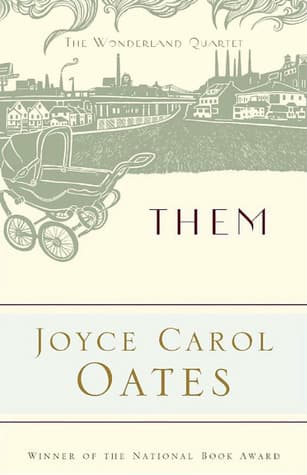
B. The Wonderland Quartet 'them' is the third novel in Joyce Carol Oates's acclaimed Wonderland Quartet.
Question 6
Which of the following is NOT explicitly mentioned as a key theme explored in 'them'?
- Love
- Social Class
- Nature vs. Nurture
- Race
Show answer
C. Nature vs. Nurture The summary explicitly lists love, class, and race as themes. While 'Nature vs. Nurture' might be implicitly present, it's not directly stated as a primary theme like the others.
Question 7
The novel spans a significant period of time. What are the approximate starting and ending decades of the family's story?
- 1920s to 1950s
- 1930s to 1960s
- 1940s to 1970s
- 1950s to 1980s
Show answer
B. 1930s to 1960s The novel chronicles the lives of the family 'from the 1930s to the 1967 race riots', placing the span from the 1930s to the 1960s.
Question 8
What specific challenge do Maureen and Jules 'fight to survive' against, according to the summary?
- Academic pressure and intellectual rivalries
- The strictures of religious dogma
- A world of violence and danger
- The expectations of upper-class society
Show answer
C. A world of violence and danger Maureen and Jules 'must fight to survive in a world of violence and danger', reflecting the harsh realities of their urban environment.
Question 9
How does 'them' relate to the other novels in the Wonderland Quartet in terms of its publication order?
- It is the first novel in the series.
- It is the second novel in the series.
- It is the third novel in the series.
- It is the fourth and final novel in the series.
Show answer
C. It is the third novel in the series. The summary explicitly states: 'Them is the third novel in the Wonderland Quartet.'
Question 10
The novel is described as exploring 'social class in America'. How is this theme primarily manifested through the Wendall family's experience?
- Their struggle to maintain their inherited wealth and status.
- Their aspiration to join the political elite.
- Their lives 'on the edge of ruin in the Detroit slums'.
- Their efforts to bridge the divide between urban and rural communities.
Show answer
C. Their lives 'on the edge of ruin in the Detroit slums'. The description states the novel 'chronicles the tumultuous lives of a family living on the edge of ruin in the Detroit slums,' directly illustrating the theme of social class through their poverty and struggle.
Them FAQ
What is the central premise of 'them' and over what period does it unfold?
'them' chronicles the tumultuous lives of the Wendall family, focusing on Loretta and her children, Maureen and Jules, as they struggle to survive in the Detroit slums. The narrative spans from the 1930s through to the devastating 1967 race riots, depicting their constant fight against poverty, violence, and societal neglect.
Who are the primary protagonists, and what defines their mother's early life?
The primary protagonists are Maureen and Jules Wendall, the children of Loretta Wendall. Loretta is introduced as a dreamy young mother who is already filled with regret by the age of sixteen, setting a precedent for the difficult and often tragic lives her children will inherit and navigate.
How does the setting of Detroit influence the characters' lives?
Detroit, particularly its slum areas, acts as a powerful and often oppressive force, shaping the characters' destinies through its prevalent violence, economic hardship, and racial tensions. The city's decay and the 1967 riots are not just backdrops but active agents in the Wendall family's struggles and ultimate fates.
What major themes does 'them' explore?
The novel deeply explores themes of love, class, race, and the inhumanity of urban life. It delves into how these elements intersect to define individual experiences, aspirations, and limitations, particularly within the context of the American working class and racial discrimination.
What is the significance of the novel winning the National Book Award?
Winning the National Book Award signifies 'them''s profound literary merit and its significant impact on American literature. It recognizes Joyce Carol Oates's powerful narrative and her unflinching portrayal of challenging social realities, cementing its place as an acclaimed work.
How does the concept of 'them' manifest in the characters' perceptions?
The concept of 'them' represents the oppressive, external forces and people that the Wendall family perceives as controlling or threatening their lives. This often includes authority figures, wealthier classes, or even other racial groups, contributing to their sense of powerlessness and alienation.
Are there any subtle connections between 'them' and the other novels in the Wonderland Quartet?
While 'them' stands alone, it shares thematic concerns with 'A Garden of Earthly Delights,' 'Expensive People,' and 'Wonderland' regarding social class, the American dream, and the inner lives of young Americans. Oates subtly weaves a larger commentary on societal structures and individual struggle across the quartet.
What role does the repeated motif of escape or yearning play for the characters?
The motif of escape is central, with characters like Maureen and Jules constantly yearning for a better life or a way out of their circumstances. This yearning often manifests in different forms, from intellectual pursuits to romantic entanglements, but is frequently thwarted by the harsh realities of their environment.
How does Loretta's early regret impact her parenting style and her children's development?
Loretta's deep-seated regret and passivity contribute to a chaotic and often neglectful home environment, leaving Maureen and Jules to largely fend for themselves. This lack of stable guidance forces her children to develop extreme coping mechanisms and resilience, but also leaves them vulnerable to exploitation and trauma.
Analyze Maureen's psychological journey throughout the novel.
Maureen's journey is marked by a deep struggle for identity and stability, oscillating between intellectual aspirations and desperate attempts at belonging, often through destructive relationships. Her psychological state reflects the trauma and instability of her upbringing, leading to periods of profound alienation and self-harm.
How do Jules's experiences with violence shape his identity and worldview?
Jules's constant exposure to and involvement in violence, both as victim and perpetrator, hardens him and shapes a cynical, survivalist worldview. This desensitization and his inability to escape the cycle of aggression define much of his character, making genuine connection and a peaceful life elusive.
What psychological impact do the 1967 Detroit riots have on the Wendall family?
The 1967 Detroit riots serve as a cataclysmic event that shatters any remaining sense of order or hope for the Wendall family. Psychologically, it intensifies their trauma, reinforces their feelings of powerlessness, and further fragments their lives, pushing them to extreme measures for survival.
Is 'them' ultimately a story of nihilism or does it offer glimmers of hope?
While 'them' presents a bleak and often nihilistic view of urban life and the American dream, some interpretations find glimmers of hope in the characters' sheer will to survive and their fleeting moments of connection or aspiration. However, the prevailing tone leans towards the tragic and unforgiving nature of their existence.
How does Oates use the narrative structure to emphasize the characters' entrapment?
Oates employs a non-linear, often fragmented narrative that mirrors the characters' disjointed lives and sense of entrapment. The cyclical nature of their struggles and the lack of clear resolution in many plotlines reinforce the idea that they are caught in an inescapable cycle of poverty and violence.
To what extent is the title 'them' a critique of societal structures rather than individual failings?
The title 'them' heavily suggests a critique of larger societal structures, implying that the Wendall family's suffering is not solely due to individual failings but is largely a consequence of systemic neglect, class inequality, and racial prejudice. Society, as 'them,' creates and perpetuates their dire circumstances.
How does the novel challenge traditional notions of the American Dream?
'them' aggressively challenges the traditional American Dream by demonstrating its inaccessibility and even destructiveness for those living in poverty and marginalized communities. For the Wendalls, the dream is a cruel illusion, replaced by a relentless struggle for mere survival, highlighting systemic barriers.
What is the role of historical context in understanding the characters' motivations and decisions?
The historical context of post-Depression Detroit, economic decline, and growing racial tensions is crucial for understanding the characters' motivations. Their decisions, often desperate and violent, are direct responses to the limited opportunities and oppressive environment shaped by these specific historical forces.
About the author

Joyce Carol Oates is an American author known for her extensive body of work in fiction. Her notable books include The Falls, Zombie, The Accursed, Them, and Wonderland, which explore themes of identity, violence, and the human experience. Oates has received numerous awards throughout her career, establishing her as a significant voice in contemporary literature.
Similar books
- A Tree Grows in Brooklyn
Betty Smith
4.3 (388k) average on GoodreadsHistorical FictionExplores poverty and family resilience in an urban setting, though Them is significantly darker.
- Native Son
Richard Wright
4.0 (89k) average on GoodreadsHistorical FictionDeals with race, class, and violence in an urban environment, and the crushing weight of systemic forces on individuals.
- Beloved
Toni Morrison
3.9 (325k) average on GoodreadsLiterary FictionFeatures powerful, often disturbing, explorations of trauma, family bonds, and the struggle for dignity against oppressive forces.
- The Old Man and the Sea
Ernest Hemingway
3.8 (831k) average on GoodreadsLiterary FictionA Cuban fisherman's long struggle with a giant marlin becomes a story of endurance and dignity, now retold for young adults with illustrations, phonetic guides, and writing prompts in Traditional Chinese.
- One Hundred Years of Solitude
Gabriel García Márquez
4.1 (753k) average on GoodreadsLiterary FictionThrough the multi-generational story of the Buendía family, a mythical town deals with the repeating patterns of time, love, and solitude, as the extraordinary mixes with the ordinary.
- The Goldfinch
Donna Tartt
3.9 (720k) average on GoodreadsLiterary FictionHaunted by a tragic explosion and clutching a stolen Dutch masterpiece, a young orphan navigates the opulent drawing rooms of New York and the gritty underbelly of the art world, desperately seeking connection and redemption amidst a life spiraling into crime and obsession.






Enjoyed the summary?
A summary gives you the shape of the book. The book itself has the detail, the examples and the voice.
Find Them on AmazonAs an Amazon Associate, BookBrief earns from qualifying purchases. How we're funded