
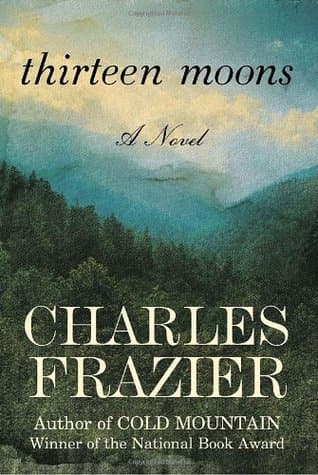
Synopsis
Covers the whole plot, including the ending.
- Difficulty
- Medium
- Pacing
- Moderate
- Mood
- Epic, Melancholy, Adventurous, Reflective, Romantic
- Read it if
- You enjoy sweeping historical sagas with rich cultural detail, a deep sense of place, and a lifelong romance set against a backdrop of significant American historical events.
- Skip it if
- You prefer fast-paced plots or are not interested in detailed historical accounts of Native American experiences and the American frontier.
Thirteen Moons Plot Summary
Covers the whole plot, including the ending.
The Bound Boy's Journey
At age twelve, Will Cooper, an orphan from the East, receives a horse, a key, and a rough map. He is bound as a boy-clerk to run a remote trading post deep in the Cherokee Nation, an unfamiliar and wild place. His solitary journey west marks his sudden shift from childhood to an independent life. He finds the trading post to be a simple, isolated cabin. His first meetings with the local Cherokee people are marked by mutual curiosity and caution. Will, despite his youth, quickly learns how to trade, bartering with the Cherokee for furs and other goods, establishing himself in this new, untamed land.
Adoption and Assimilation
Will's loneliness eventually ends with the strong but kind presence of Chief Bear, a respected elder and leader of a local Cherokee band. Bear sees Will's resilience and resourcefulness and takes the young boy under his care. Through a formal adoption ceremony, Will becomes a member of Bear's family and, by extension, the Cherokee Nation. This integration is deep; Will learns the Cherokee language, customs, and survival skills, leaving much of his old identity behind. He hunts, tells stories, and attends tribal councils, developing deep respect and love for his adopted people and their way of life, especially valuing Chief Bear's wisdom.
The Enigmatic Claire
Amid his new life with the Cherokee, Will meets Claire, a beautiful and mysterious young white woman who lives with the powerful and unstable white trader, Featherstone. Claire, though white, has grown up among the Cherokee, speaking their language and understanding their ways, yet she remains an outsider in many respects. Will is instantly drawn to her intelligence, spirited nature, and the mystery around her. Their early interactions are careful but filled with a growing attraction, setting the stage for a lifelong, complex love affair that will define much of Will's life and future choices.
Featherstone's Influence and Threat
Featherstone, a powerful and often cruel white trader, holds much influence in the territory and acts as Claire's guardian. The nature of their relationship is unclear and disturbing. He sees Will as a rival, both in trade and for Claire's affection, and his presence casts a long, threatening shadow over Will's life. Featherstone's unstable temper and ruthlessness make him a dangerous opponent, and Will must handle their interactions carefully. His desire for Claire is tied to the difficult challenge of facing or avoiding Featherstone's authority, adding danger to their forbidden romance.
Cherokee Removal and Resistance
As years pass, white settlement increases, leading to the devastating policy of Indian Removal. Will, now deeply part of the Cherokee Nation, sees firsthand the deep injustice and suffering brought upon his adopted people. He observes their desperate attempts to resist, through legal means and, for some, armed defiance, as their ancestral lands are systematically taken. The forced marches, the loss of culture, and the heartbreak of displacement become central to Will's experience, solidifying his loyalty to the Cherokee and fueling his anger towards the US government's brutal policies.
The Civil War's Impact
The start of the American Civil War further complicates life in the Cherokee Nation. The Cherokee themselves are divided, some siding with the Confederacy, others with the Union, mainly to protect their remaining lands and sovereignty. Will, now an adult, finds himself caught in the conflict, fighting alongside his Cherokee kin. He experiences the brutal realities of war, the moral ambiguities, and its devastating impact on the Cherokee people, already suffering from forced removal. The war further weakens their already fragile existence and reshapes the political landscape of the territory.
A Life of Pursuit and Loss
Will's life is marked by a constant pursuit of Claire, a love repeatedly blocked by circumstances, Featherstone's interference, and Claire's elusive nature. He experiences times of great joy and connection with her, mixed with long periods of separation and sadness. Throughout these years, Will also suffers many personal losses: the death of Chief Bear, the displacement of his adopted people, and the general decline of the Cherokee way of life he had come to love. These experiences harden him, yet his love for Claire remains a constant, driving force.
The Cattle Business
After the Civil War and continued upheaval, Will, showing his natural business sense, moves into the cattle business. He uses his knowledge of the land and his relationships to build a large cattle empire, gaining considerable wealth. This venture is partly driven by a desire for stability and security, not just for himself but also to potentially offer a better life for Claire and to help the surviving Cherokee. The cattle drives and the challenges of the open range provide a new area for Will to show his resilience and leadership, but his heart remains tied to Claire.
Later Life and Reflection
In his later years, Will Cooper, now an old man, lives a solitary life, often thinking about his long journey. He tells his story as an elder, looking back on his childhood as a bound boy, his adoption by the Cherokee, his lasting love for Claire, and the major changes he saw in the Cherokee Nation. His memories are clear, tinged with both nostalgia and regret, but also a deep gratitude for the life he lived and the people who shaped him. He continues to search for meaning in his experiences, especially in his lifelong devotion to Claire.
The Enduring Love for Claire
Despite decades passing, the trials of war, and gaining wealth, Will's love for Claire remains the most central and moving part of his life. Their relationship, marked by moments of intense closeness and long separations, is never fully resolved in a traditional way. Claire remains a mysterious figure, a symbol of beauty, independence, and a past Will can never fully get back. His story is deeply filled with this longing, making it clear that his pursuit of Claire was not just a youthful crush but a defining, lifelong quest that shaped his identity and gave purpose to his often turbulent existence.
Principal Figures
Will Cooper
Protagonist
An orphan boy who becomes a Cherokee and pursues a lifelong love.
Will Cooper begins as a twelve-year-old orphan, bound to run a trading post. He is resourceful, observant, and possesses a deep capacity for loyalty and love. His journey transforms him from an isolated boy into a man deeply integrated into Cherokee culture, fluent in their language and customs. He is driven by a quest for belonging, a desire for adventure, and an unyielding, lifelong passion for Claire. Despite hardship and loss, Will demonstrates remarkable resilience and an entrepreneurial spirit, eventually building a fortune in the cattle business.
Relationships: Chief Bear (adopted father, mentor); Claire (lifelong, passionate love interest); Featherstone (rival, antagonist)
Claire
Love Interest
An enigmatic white woman raised among the Cherokee, Will's lifelong obsession.
Claire is a captivating and mysterious white woman, raised within the Cherokee Nation under the guardianship of Featherstone. She is intelligent, spirited, and fiercely independent, fluent in Cherokee and possessing a deep understanding of their ways. Claire is often elusive, her motivations and allegiances sometimes unclear, which only deepens Will's lifelong fascination. She represents both the allure of a forbidden love and the complex identity of someone existing between two worlds. Her beauty and wit are undeniable, but her circumstances often prevent a straightforward relationship with Will.
Relationships: Will Cooper (complex, passionate love interest); Featherstone (ambiguous guardian/captor)
Chief Bear
Supporting
Will's adopted Cherokee father and mentor.
Chief Bear is a wise, formidable, and compassionate leader of a Cherokee band. He is a man of great integrity and vision, deeply committed to his people and their traditions. Bear recognizes Will's potential and vulnerability, formally adopting him and teaching him the ways of the Cherokee. He serves as a crucial mentor and father figure to Will, imparting wisdom, survival skills, and a deep respect for the land and its people. His presence provides Will with a sense of belonging and cultural identity that profoundly shapes his character.
Relationships: Will Cooper (adopted son, mentee)
Featherstone
Antagonist
A powerful, volatile white trader and Claire's guardian.
Featherstone is a ruthless and powerful white trader who holds significant sway in the territory. He is often cruel, manipulative, and possessive, particularly concerning Claire, whom he views as his charge or property. Featherstone acts as a primary antagonist to Will, obstructing his pursuit of Claire and often threatening his livelihood and safety. He embodies the darker aspects of the white encroachment on Cherokee lands, driven by greed and a desire for control. His volatile nature makes him an unpredictable and dangerous force in Will's life.
Relationships: Will Cooper (rival, adversary); Claire (guardian/captor)
Wade
Supporting
A loyal and skilled Cherokee warrior and friend to Will.
Wade is a Cherokee warrior and a close friend to Will Cooper. He is a skilled hunter and fighter, embodying the strength and resilience of his people. Wade often accompanies Will on various adventures and provides him with practical support and camaraderie. He represents the unwavering loyalty and deep bonds formed within the Cherokee community. His presence highlights Will's integration into the tribe and the trust he earns from its members, particularly during times of conflict and hardship.
Relationships: Will Cooper (friend, companion)
Young John
Supporting
A Cherokee boy who grows up alongside Will.
Young John is a Cherokee boy who is roughly Will's age and grows up alongside him within Chief Bear's band. He serves as Will's peer and companion, sharing in the experiences of childhood and early manhood within the Cherokee Nation. Their relationship helps Will further assimilate into the culture, as Young John provides a native perspective and friendship. He represents the younger generation of Cherokee facing the challenges of a changing world.
Relationships: Will Cooper (friend, peer)
The Old Man (Narrator)
Protagonist
The older, reflective Will Cooper recounting his life story.
The Old Man is Will Cooper in his advanced years, serving as the primary narrator of the story. He recounts his life with a blend of humor, yearning, and a deep, reflective wisdom acquired through decades of experience. His voice is characterized by a rich, evocative language and a profound understanding of the past. He looks back on his loves, losses, and the significant historical events he witnessed, offering a poignant perspective on the passage of time and the enduring power of memory and love. This older Will provides context and emotional depth to the youthful adventures.
Relationships: Will Cooper (Younger Self) (past self, subject of narration)
Themes & Insights
The Search for Home and Belonging
Will Cooper, an orphan, spends his life looking for a place where he truly belongs. He first finds this home within the Cherokee Nation, adopted by Chief Bear and integrated into their culture. This adoption gives him a family and a cultural identity he never had. The forced removal of the Cherokee shatters this sense of home, forcing Will to constantly adapt and rebuild himself. His later pursuit of wealth and a stable life is partly an attempt to create a secure 'home,' often hoping to share it with Claire. This theme highlights the human need for roots and community amid profound displacement, seen in Will's lifelong connection to the land and the Cherokee people, even after they are gone.
“I had left one home and found another, though it was a home that would prove as ephemeral as smoke.”
Enduring Love and Obsession
Will's lifelong love for Claire is the main emotional focus of the novel. From their first meeting, she drives many of his decisions and actions. This love is not just romantic but almost obsessive, a persistent longing that crosses time, distance, and many obstacles, including the formidable Featherstone. Claire's elusive nature and the circumstances that repeatedly separate them only make Will's devotion stronger. This theme explores the power of an unwavering passion, how it can both support and torment a person, and how an idealized love can shape an entire life, even if never fully achieved in a traditional way. It is a love that defines Will's identity.
“She was the moon to my tides, the compass to my lost way, the fixed point in a turning world.”
Cultural Clash and Resilience
The novel clearly shows the devastating conflict between white expansion and Native American cultures, especially the Cherokee Nation. Will, as a white boy adopted by the Cherokee, offers a unique view of this conflict. He witnesses the systematic loss of Cherokee independence, the brutality of forced removal (the Trail of Tears), and later attempts to rebuild a damaged culture. This theme highlights the resilience of the Cherokee people in the face of immense suffering and injustice, as they try to keep their traditions, language, and identity. Will's own divided loyalties and his deep empathy for his adopted people show the tragic human cost of this historical conflict.
“We were a nation of ghosts, wandering a land that was ours no longer.”
The Wilderness and Civilization
The wildness of the Cherokee Nation is a strong setting and a character itself. It represents freedom, danger, and a different way of life, sharply contrasting with the growing 'civilization' of white settlers. Will's early life is closely tied to the wilderness, learning its rhythms and survival skills from the Cherokee. As the story continues, the wilderness is gradually tamed, fenced, and divided, symbolizing the loss of Native American lands and the imposition of a new order. This theme explores the tension between these two forces and how the landscape shapes the characters, especially Will, who finds both comfort and hardship in its vastness.
“The wildness in me was a thing learned from the land, from the Cherokee, from the necessity of living.”
Plot Devices & Literary Techniques
First-Person Retrospective Narration
An elderly Will Cooper recounts his life story from a distant future.
The entire novel is narrated by an elderly Will Cooper, looking back on his life from a great distance in time. This retrospective viewpoint allows for a rich, reflective, and often melancholic tone. The older Will can comment on the significance of past events, foreshadow future developments, and offer philosophical insights that his younger self could not have possessed. It imbues the story with a sense of destiny and the weight of history, while also allowing the narrator to express deep yearning and the poignancy of lost time and love. This device creates intimacy between the reader and Will's inner world.
The Journey Motif
Will's life is framed by physical and metaphorical journeys.
From his initial journey as a twelve-year-old orphan into the Cherokee Nation, Will Cooper's life is a continuous series of literal and metaphorical journeys. These include his physical travels across the wilderness, his participation in cattle drives, and his forced migrations alongside the Cherokee. Metaphorically, his life is a journey of self-discovery, cultural assimilation, and the lifelong pursuit of love and belonging. Each journey brings new experiences, challenges, and transformations, highlighting his adaptability and resilience in a constantly changing world. It emphasizes the transient nature of life and the continuous search for meaning.
Symbolism of the Moon
The moon represents time, cycles, and the enduring nature of love and memory.
The title 'Thirteen Moons' itself suggests the significance of lunar cycles, representing the passage of time, the rhythms of nature, and the cyclical nature of life, loss, and renewal. The moon often appears in key moments, symbolizing Claire's elusive beauty and Will's enduring longing for her. It also connects to Native American traditions, where the moon holds cultural and spiritual importance. For Will, the moon becomes a constant, unchanging presence in a world of flux, a silent witness to his joys and sorrows, and a reminder of his persistent love for Claire across the decades.
The Trading Post
A central setting that symbolizes the intersection and conflict of cultures.
The remote trading post where Will begins his adult life serves as a crucial plot device and symbolic space. It is a physical location where white and Cherokee cultures directly interact, exchanging goods, stories, and sometimes conflict. It represents Will's initial bridge between his own background and his adopted culture. Over time, as the Cherokee are displaced and the wilderness is settled, the trading post's significance shifts, reflecting the changing landscape and the gradual erosion of the traditional way of life it once facilitated. It's a microcosm of the larger cultural clash unfolding in the territory.
Thirteen Moons Quotes
“The past is a country we all inhabit, not just the dead. It is the soil from which we grow, the air we breathe.”
“There are times when a man, or a boy, must simply endure. Must push on through the cold and the dark and the fear, because there's nothing else to do.”
“Love is a thing that happens to you, whether you want it to or not. It's a force, like a river, and you can either float with it or drown.”
“The world is full of wonders, if you only take the time to look. And full of horrors too, if you're not careful.”
“A man learns more from his mistakes than from his triumphs. If he's wise enough to pay attention.”
“Grief is a heavy cloak. It wraps around you and keeps you from the light.”
“Some things, once broken, can never be fully mended. You can patch them up, but the cracks always show.”
“The land remembers. It holds the echoes of all who have walked upon it, all who have lived and died here.”
“It's a strange thing, time. It stretches and shrinks, rushes and crawls, all at its own whim.”
“Fear is a cold companion, but it can also keep you alive if you listen to it right.”
“Every life is a story, and every story has its share of shadows and light.”
“To truly know a place, you have to walk its paths, drink its water, and listen to its silence.”
“What we seek is often right in front of us, if we only had the eyes to see it.”
“The heart, like a compass, points to what it needs, even when the mind tries to argue otherwise.”
Quiz
10 questions on the plot and the characters. Each answer comes with a short explanation.
Question 1
At what age is Will Cooper sent on his journey to the Cherokee Nation?
- Ten
- Twelve
- Fourteen
- Sixteen
Show answer
B. Twelve The book states that Will Cooper was 'at the age of twelve' when he was sent on his journey.
Question 2
What items is Will Cooper given before he embarks on his journey to the Cherokee Nation?
- A gun, a compass, and a bag of gold
- A horse, a key, and a map
- A knife, a blanket, and a pouch of tobacco
- A wagon, provisions, and a guide
Show answer
B. A horse, a key, and a map Will is given 'a horse, a key, and a map' to begin his journey.
Question 3
What is Will Cooper's initial duty in the Cherokee Nation?
- To scout for new territories
- To serve as an envoy to other tribes
- To run a remote Indian trading post
- To teach English to the Cherokee children
Show answer
C. To run a remote Indian trading post Will is described as a 'bound boy, obliged to run a remote Indian trading post.'
Question 4
Who becomes a father figure to Will Cooper among the Cherokee people?
- Featherstone
- Bear
- Black Fox
- Little Hawk
Show answer
B. Bear Will 'finds a father in Bear, a Cherokee chief, and is adopted by him and his people.'
Question 5
Who is Claire in relation to Featherstone?
- His sister
- His wife
- His charge
- His daughter
Show answer
C. His charge Claire is referred to as 'the enigmatic and captivating charge of volatile and powerful Featherstone.'
Question 6
What is the primary emotional motivation that 'will forever rule Will’s heart'?
- His hunger for fortune and adventure
- His duty to the trading post
- His love of Claire
- His loyalty to Bear and the Cherokee people
Show answer
C. His love of Claire The synopsis explicitly states that 'his love of Claire... will forever rule Will’s heart.'
Question 7
Which of the following is NOT listed as a central theme or pursuit in Will's lifelong narrative?
- A lifelong search for home
- The pursuit of political power
- The rebuilding of a trampled culture
- An enduring pursuit of passion
Show answer
B. The pursuit of political power The text lists 'a lifelong search for home, the hunger for fortune and adventure, the rebuilding of a trampled culture, and above all an enduring pursuit of passion.' Political power is not mentioned.
Question 8
What kind of voice is used by Will Cooper to narrate his story?
- A voice filled with anger and resentment
- A voice filled with both humor and yearning
- A voice filled with stoicism and detachment
- A voice filled with fear and desperation
Show answer
B. A voice filled with both humor and yearning The synopsis describes Will telling his story 'In a voice filled with both humor and yearning.'
Question 9
How does Will Cooper's relationship with Bear and the Cherokee people impact his character?
- It makes him resentful and isolated.
- It leads him to abandon his original duties.
- It ultimately forges Will’s character.
- It causes him to forget his past.
Show answer
C. It ultimately forges Will’s character. The text states that these relationships 'ultimately forge Will’s character.'
Question 10
Which of the following best describes the historical context of the novel based on the provided summary?
- Post-Civil War reconstruction in the South.
- The early days of colonial expansion on the East Coast.
- A period involving interactions with and impact on Native American cultures, specifically the Cherokee Nation.
- The California Gold Rush era.
Show answer
C. A period involving interactions with and impact on Native American cultures, specifically the Cherokee Nation. The story is set 'through the uncharted wilderness of the Cherokee Nation' and involves 'the rebuilding of a trampled culture,' clearly indicating a historical context centered on Native American interactions and their impact.
Thirteen Moons FAQ
What is the central premise of 'Thirteen Moons'?
The novel follows Will Cooper, a twelve-year-old orphan, as he embarks on a journey into the Cherokee Nation to run a remote trading post. It chronicles his lifelong search for belonging, his deep love for Claire, and his integration into Cherokee culture amidst the tumultuous historical backdrop of their displacement.
Who is Bear and what role does he play in Will's life?
Bear is a wise and respected Cherokee chief who becomes a surrogate father to Will Cooper. He adopts Will into his family and the Cherokee Nation, teaching him their ways, language, and values, profoundly shaping Will's character and providing him with the familial connection he lacked as an orphan.
Describe Claire's significance to Will Cooper.
Claire is the enigmatic and captivating charge of Featherstone, and she becomes the enduring love of Will's life. His pursuit of her and their complicated relationship is a central emotional thread throughout the novel, symbolizing his longing for connection and a settled home.
What historical period and setting does the book primarily cover?
'Thirteen Moons' is set in the uncharted wilderness of the Cherokee Nation during the 19th century, specifically covering the period leading up to and including the forced removal of the Cherokee people. It vividly portrays the landscape and the cultural clash of the era.
What does the title 'Thirteen Moons' signify?
The title likely refers to the lunar calendar, which is significant in many Indigenous cultures, including the Cherokee. It suggests the passage of time, the cyclical nature of life, and Will's deep immersion in the Cherokee way of life, where moons mark the seasons and important events.
Are there any subtle foreshadowing elements regarding the Cherokee's eventual fate?
Yes, early in the novel, there are subtle hints through conversations about encroaching white settlers, land disputes, and the increasing political pressure on Native American lands. These details foreshadow the tragic Trail of Tears, which later becomes a central event in the narrative.
How does the symbol of the horse given to Will at the beginning evolve throughout the story?
The horse initially represents Will's independence, his journey into the unknown, and his freedom as he travels to the trading post. Over time, it can symbolize his enduring spirit, his connection to the land, and the means by which he navigates both physical and emotional landscapes.
What is the significance of the key Will receives alongside the map and horse?
The key represents access and responsibility, unlocking the trading post and the life that awaits him there. Metaphorically, it could also symbolize the key to his future, the key to understanding the Cherokee world, or the key to the mysteries of his own identity and destiny.
How does Will's orphan status influence his psychological development?
Will's early orphan status instills in him a profound yearning for belonging and family, which drives his deep attachment to Bear and the Cherokee people. It also fosters a sense of self-reliance and resilience, but leaves him with an underlying insecurity that influences his relationships and decisions.
Analyze the psychological motivations behind Featherstone's volatile actions concerning Claire.
Featherstone's actions are driven by a complex mix of possessiveness, control, and possibly a warped sense of protectiveness over Claire. His volatility stems from a desire to maintain power and prevent anyone, especially Will, from disrupting his hold on her, reflecting deep-seated insecurities or a need for dominance.
How does Will's experience of cultural assimilation (into Cherokee life) affect his identity?
Will's assimilation into Cherokee culture deeply shapes his identity, blurring the lines between his origins and his adopted heritage. He gains a profound understanding of their values, language, and spiritual connection to the land, which often puts him at odds with the encroaching white world and creates a dual sense of belonging.
Discuss the psychological impact of loss and displacement on the Cherokee characters, particularly Bear.
The loss of land, culture, and life during the forced removal profoundly impacts characters like Bear, leading to immense grief, trauma, and a struggle to maintain identity and hope. Psychologically, it represents an existential crisis, forcing them to confront the destruction of their world and the challenge of rebuilding.
Is Will's love for Claire ultimately a destructive or constructive force in his life?
Will's love for Claire is arguably both. It is constructive in that it provides him with a lifelong purpose and a deep emotional connection, driving many of his actions. However, it can also be seen as destructive due to the pain, obsession, and complications it brings, often leading him into difficult or dangerous situations.
How does 'Thirteen Moons' challenge or reinforce stereotypes about Native Americans?
The novel largely challenges stereotypes by presenting the Cherokee people with depth, dignity, and complexity, focusing on their rich culture, wisdom, and resilience through characters like Bear. It avoids simplistic portrayals, instead highlighting their humanity, struggles, and sophisticated societal structures in the face of immense adversity.
What is the author's primary message about the concept of 'home' in the novel?
The author suggests that 'home' is not merely a physical place but a complex interplay of belonging, love, memory, and cultural connection. For Will, home is found not in his origins but in his adopted Cherokee family, his love for Claire, and his enduring connection to the land, even after displacement.
Does the ending offer a sense of resolution or lingering ambiguity for Will's character?
The ending offers a nuanced sense of resolution, as Will reflects on his long life and the journey he has undertaken. While some aspects of his past may remain bittersweet or ambiguous, there is a clear sense of acceptance and peace regarding his identity, his loves, and his place in the world he helped to shape and witness.
How does the narrative voice, described as 'filled with both humor and yearning,' contribute to the book's overall tone?
The narrative voice creates a rich and engaging tone, allowing Will to recount his often-hardship-filled life with a blend of resilience, wit, and deep emotional resonance. The humor lightens the darker moments, while the yearning underscores his lifelong search for love, home, and meaning, making his story deeply human and relatable.
In what ways does Will embody a 'bridge' between two cultures?
Will embodies a bridge by living deeply within both the Cherokee and white worlds. He learns the Cherokee language, customs, and spiritual beliefs, while also navigating the complexities of the white settler society. This unique position allows him to understand both perspectives, though it often places him in difficult and conflicting situations.
About the author

Charles Frazier is an American novelist celebrated for his evocative portrayals of the American South. His breakout novel, "Cold Mountain," won the National Book Award and was adapted into an Academy Award-winning film. His other notable works include "Thirteen Moons" and "Nightwoods," often exploring themes of history, landscape, and the human condition with lyrical prose.
Similar books
- Cold Mountain
Charles Frazier
3.9 (221k) average on GoodreadsLiterary FictionSame author, shares themes of journey, war, and enduring love in a historical setting.
- Lonesome Dove
Larry McMurtry
4.5 (149k) average on GoodreadsHistorical FictionEpic journey across the American frontier, focus on character development and sense of place.
- The Adventures of Huckleberry Finn
Mark Twain
3.8 (1.2M) average on GoodreadsHistorical FictionA young boy's journey on a river, coming-of-age, and encounters with diverse American society.
- To Kill a Mockingbird
Harper Lee
4.3 (4.5M) average on GoodreadsHistorical FictionIn the 1930s Jim Crow South, Harper Lee writes about racial injustice, moral growth, and the quiet courage of a lawyer father, Atticus Finch, as seen through his young daughter's eyes.
- The Great Gatsby
F. Scott Fitzgerald
3.9 (3.8M) average on GoodreadsHistorical FictionIn the opulent Roaring Twenties, a mysterious millionaire's lavish parties hide his desperate, tragic pursuit of a lost love, exposing the emptiness within the American Dream.
- Pride and Prejudice
Jane Austen
4.3 (3M) average on GoodreadsHistorical FictionIn a society focused on status and money, Elizabeth Bennet navigates love and pride, challenging Mr. Darcy and social expectations to find true affection.





Enjoyed the summary?
A summary gives you the shape of the book. The book itself has the detail, the examples and the voice.
Find Thirteen Moons on AmazonAs an Amazon Associate, BookBrief earns from qualifying purchases. How we're funded