
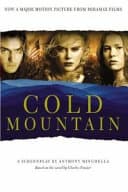
Synopsis
Covers the whole plot, including the ending.
- Difficulty
- Medium
- Pacing
- Moderate
- Mood
- Melancholy, hopeful, reflective, arduous, romantic
Cold Mountain Plot Summary
Covers the whole plot, including the ending.
The Retreat from Petersburg
The story begins with Inman, a Confederate soldier, badly hurt during a skirmish in the final days of the Siege of Petersburg. He lies in a makeshift hospital, suffering from a neck wound and the mental scars of war. Seeing the horrors and pointlessness of the fighting, he decides to desert and start a dangerous trip back to his home in Cold Mountain, North Carolina, and to Ada Monroe, the woman he loves. His first steps are full of pain and the constant fear of being caught by the Confederate Home Guard or other authorities who would punish deserters severely.
Ada's Struggle at Black Cove
Meanwhile, in Cold Mountain, Ada Monroe, a cultured woman from Charleston, struggles to survive on her isolated farm, Black Cove. Her father, Reverend Monroe, a scholar, has recently died, leaving her with no practical skills, no money, and a run-down farm. She tries to manage the land herself, but her efforts fail. Her livestock die, her crops fail, and she faces starvation and eviction. The war has taken all the men from the region, leaving women like Ada vulnerable and desperate. Her once comfortable life has been replaced by harsh reality.
Ruby Thewes Arrives
Just as Ada reaches her lowest point, ready to give up, a practical and independent young woman named Ruby Thewes appears at her doorstep. Ruby, a true child of the mountains, has all the practical skills Ada lacks: she can farm, hunt, butcher, and survive in the wilderness. She offers to help Ada in exchange for a share of the farm's produce and a place to live. At first, Ada resists Ruby's directness and unusual ways, but she quickly realizes that Ruby is her only hope for survival and accepts her help.
Inman's Perilous Road
Inman's journey is a series of difficult encounters. He travels through a war-torn land, meeting desperate refugees, raiding soldiers, and outlaws. He must kill in self-defense, sees brutal acts, and struggles with his own weakening moral compass. He finds temporary safety with various individuals, some kind and some cruel; each meeting tests his resolve and his humanity. He is constantly hunted by the Home Guard, especially Captain Teague and his ruthless men, who want to capture and execute deserters.
The Goat Woman and the Preacher
During his travels, Inman meets two important figures who offer him brief rest and perspective. The first is a solitary 'goat woman' named Sally, who lives in a remote cabin and offers him food and shelter, sharing her quiet wisdom. Later, he meets a disgraced preacher, Veasey, who, despite his questionable past, offers companionship and a different view on faith and survival. Inman, a man of few words, finds himself drawn to the unexpected kindness and the stark realities these individuals represent, even as he remains focused on his goal of returning to Ada.
Ada and Ruby's Bond
As the seasons change, Ada and Ruby turn Black Cove into a working farm. Ruby teaches Ada everything, from planting and harvesting to butchering and preserving food. Through shared work and mutual reliance, their initial, tense partnership grows into a deep friendship. Ada, once helpless, learns resilience and self-sufficiency, while Ruby, who has always been independent, finds a sense of belonging. They face hardships together, including raids by the brutal Home Guard, strengthening their bond during the war.
Inman's Capture and Escape
Inman's journey worsens when he is captured by the Home Guard, led by the cruel Captain Teague, who has been tracking him. He is imprisoned with other deserters and condemned men, facing certain execution. However, Inman, with his will to survive, makes a daring escape, further solidifying his reputation as a man difficult to kill. This escape is brutal and violent, forcing Inman to confront his own capacity for violence to save his life and continue his journey home.
Ada's Letter and Hope
Back at Black Cove, Ada receives a long-awaited letter from Inman. Though brief and delayed, it confirms he is alive and still making his way back to her. This letter, a sign of hope in the bleakness of war, renews Ada's spirit and strengthens her determination to survive and prepare for his return. It is a moment of great emotional impact for Ada, who has been living with the constant fear that Inman might be dead. The letter connects her to her past and promises a future.
The Winter Journey and the Rendezvous
As winter arrives, Inman continues his difficult trek through the snow-covered mountains, fighting hunger, cold, and the constant threat of the Home Guard. He is driven by the memory of Ada and the promise of Cold Mountain. Meanwhile, Ada and Ruby must leave Black Cove temporarily due to the increased activity of the Home Guard and the harsh winter. They find refuge in a hunting cabin owned by Ruby's estranged father, Stobrod, and his companion, Pangle, a fiddler. This move brings them closer to Inman's path.
Reunion and Tragedy
Inman finally reaches the area of Cold Mountain. By chance, he meets Ada and Ruby near the hunting cabin. The reunion between Inman and Ada is tender and emotional, a culmination of their long and painful separation. However, their joy is tragically cut short. The Home Guard, led by Teague, ambushes them. In the shootout, Inman is fatally wounded by Teague. Ada, Ruby, and Inman fight bravely, but the odds are against them. Inman dies in Ada's arms, having finally made it home.
Aftermath and New Beginnings
After the tragedy, Ada and Ruby bury Inman on Cold Mountain. The war eventually ends, and life slowly returns to the damaged land. Ada, now a strong and capable woman, continues to manage Black Cove with Ruby. She eventually has a child, implied to be Inman's, carrying on his legacy. The novel ends with Ada and Ruby living a fulfilling life together, having formed an unbreakable bond. They represent the lasting spirit of survival and the quiet strength of women in a world reshaped by conflict.
Principal Figures
Inman
Protagonist
A wounded Confederate deserter yearning for home and love.
Inman is a quiet, introspective man, a carpenter by trade before the war. He is deeply scarred by the horrors he has witnessed and participated in as a Confederate soldier. His journey home is driven by an unyielding desire to return to Cold Mountain and to Ada, the woman he loves. He is resourceful, resilient, and possesses a strong moral compass, though he is forced to commit violent acts for survival. Despite his outward stoicism, he carries a profound sense of weariness and disillusionment with the war.
Relationships: Ada Monroe (lover, object of his journey); Ruby Thewes (acquaintance, Ada's friend); Captain Teague (antagonist, relentless pursuer); Veasey (traveling companion)
Ada Monroe
Protagonist
A refined city woman learning to survive in the harsh Appalachian mountains.
Ada is introduced as an educated, somewhat naive woman, ill-equipped for the practicalities of rural life after her father's death. She represents the fragile beauty and intellectualism brought to the isolated community. Initially helpless and dependent, she possesses an inner strength and adaptability that emerges through her struggles. Her journey is one of self-discovery and resilience, learning to farm, manage her household, and confront hardship head-on, transforming into a capable and self-sufficient woman.
Relationships: Inman (lover, focus of her hope); Ruby Thewes (best friend, partner in survival); Reverend Monroe (father)
Ruby Thewes
Supporting
A practical, independent mountain woman who teaches Ada to survive.
Ruby is the embodiment of self-sufficiency and raw pragmatism. Abandoned by her father, Stobrod, she grew up fending for herself in the wilderness, developing an encyclopedic knowledge of farming, hunting, and survival. She is blunt, opinionated, and fiercely independent, but also deeply loyal and protective of Ada. Ruby's wisdom comes from experience, not books, and she serves as Ada's mentor and steadfast companion, bringing balance and groundedness to Ada's more refined nature. She represents the resilience and resourcefulness of the mountain people.
Relationships: Ada Monroe (best friend, partner in survival); Stobrod Thewes (estranged father); Inman (acquaintance, Ada's lover)
Captain Teague
Antagonist
The cruel and relentless leader of the Confederate Home Guard.
Captain Teague is the primary human antagonist, a ruthless and sadistic leader of the Home Guard in the Cold Mountain region. He embodies the brutal authority and moral decay that can occur during wartime, using his position to terrorize the local populace, particularly deserters and those who aid them. He is driven by a twisted sense of duty, or perhaps simply by a love for power and violence. His pursuit of Inman is relentless, making him a constant, looming threat throughout Inman's journey. He symbolizes the arbitrary cruelty of the war.
Relationships: Inman (prey/hunter); Ada Monroe (threat)
Reverend Monroe
Supporting
Ada's intellectual but impractical father.
Reverend Monroe is Ada's father, a learned and cultured man who moves to Cold Mountain for its perceived tranquility. He is a scholar and a man of God, but utterly unsuited for the practical demands of farming and frontier life. His death early in the novel leaves Ada vulnerable and highlights her initial helplessness. He represents an older, more refined world that is ill-equipped to survive the harsh realities of war and the wilderness, but also instills in Ada a love for knowledge and beauty.
Relationships: Ada Monroe (daughter)
Veasey
Supporting
A disgraced preacher who accompanies Inman for a time.
Veasey is a morally ambiguous character, a defrocked preacher with a violent past, whom Inman encounters on his journey. Despite his flaws and a dark secret, he offers Inman companionship and a strange form of spiritual guidance. He is a talkative, somewhat boisterous character, contrasting with Inman's quiet demeanor. Veasey represents the various shades of morality and desperation found among those struggling to survive during wartime, and his presence highlights Inman's own struggles with violence and redemption.
Relationships: Inman (traveling companion)
Stobrod Thewes
Supporting
Ruby's estranged, fiddle-playing father.
Stobrod is Ruby's father, an unreliable and somewhat selfish man who abandoned her as a child. He is a talented fiddler, finding solace and expression in music, but is otherwise a largely feckless individual. He reappears later in the story, wounded, providing a reluctant connection for Ruby and a temporary refuge for Ada and Ruby. Stobrod embodies the wanderlust and sometimes irresponsible nature of some mountain folk, but his love for music also offers a glimpse of beauty and humanity amidst the harshness.
Relationships: Ruby Thewes (daughter); Pangle (musical companion)
Pangle
Supporting
Stobrod's simple-minded, fiddle-playing companion.
Pangle is Stobrod's companion, a simple-minded man who shares Stobrod's love for music and accompanies him on his wanderings. He is gentle and harmless, often providing comic relief or a sense of childlike innocence in a brutal world. His presence highlights the diversity of characters surviving the war and offers a contrast to the more violent or desperate figures. Pangle's vulnerability makes him a tragic figure when he inevitably falls victim to the war's cruelty, further illustrating the indiscriminate nature of violence.
Relationships: Stobrod Thewes (musical companion)
Themes & Insights
The Brutality and Futility of War
The novel clearly shows the devastating physical and psychological effects of the Civil War, not only on soldiers like Inman but also on the civilians left behind. It removes any romantic notions of warfare, focusing instead on the senseless violence, suffering, and moral compromises forced upon individuals. The war is a constant, oppressive background, influencing every decision and interaction, leaving a landscape of destruction and despair. It highlights how conflict wears down humanity and leaves lasting scars.
“The world was certainly a place of broken things.”
Survival and Resilience
Both Inman and Ada go on journeys of survival, though in very different ways. Inman's is a physical ordeal against nature and human enemies, while Ada's is a struggle for self-sufficiency and adaptation in a world she was unprepared for. The theme celebrates the human ability to endure, adapt, and find strength in difficulty. Characters like Ruby show this resilience, demonstrating the practical skills and mental toughness needed to navigate a harsh, unforgiving environment during a time of collapse.
“There was no point in getting rid of a thing that still had life in it.”
The Power of Love and Hope
At its core, 'Cold Mountain' is a love story. Inman's entire journey is driven by his love for Ada and the hope of reuniting with her. Similarly, Ada's determination to survive and cultivate Black Cove is sustained by the hope of Inman's return. This theme suggests that even in the darkest of times, love can be a powerful motivator and a source of lasting strength, providing a reason to persevere against overwhelming odds. It is the guide that leads both protagonists through their trials.
“He thought of Ada, and how everything he wanted to do, he had always wanted to do with her.”
Man vs. Nature
The Appalachian landscape is not just a setting but a powerful character itself. Both Inman and Ada must deal with the raw, unforgiving power of nature – harsh winters, treacherous terrain, and the demands of farming. The mountains offer both refuge and danger, demanding respect and resilience. This theme explores humanity's place within the natural world, highlighting the need for practical skills and an understanding of the environment to survive, especially when societal structures have fallen apart.
“The mountains, she thought, were watching them, as they watched all who lived and died within their shadow.”
The Search for Home and Belonging
Inman's journey is a literal search for home, a physical return to Cold Mountain, but it is also a metaphorical search for a place of peace and belonging, away from the chaos of war. Ada, initially an outsider, finds her sense of home and belonging through her connection with Ruby and her mastery of Black Cove. The novel explores what 'home' truly means: not just a physical location, but a sense of peace, love, and community, often formed through shared hardship.
“All he wanted was to be home, and for things to be as they once were.”
Plot Devices & Literary Techniques
Journey Motif
Inman's epic physical and spiritual quest.
Inman's journey from the battlefield back to Cold Mountain forms the central narrative structure of the novel. It is a classic quest motif, where the protagonist faces numerous trials, encounters various archetypal figures, and undergoes significant personal transformation. This device allows for exploration of the war-torn landscape, the diverse human experiences of the era, and Inman's internal struggle for survival and meaning. The physical distance mirrors the emotional and psychological distance he must traverse.
Parallel Narratives
Interweaving Inman's journey with Ada's struggle.
The novel employs a parallel narrative structure, alternating between Inman's perilous journey and Ada's efforts to survive and manage Black Cove. This device creates dramatic tension as the reader follows two separate but intrinsically linked stories, building anticipation for their eventual reunion. It also allows the author to present a comprehensive view of the war's impact, showing both the front-line experience and the civilian struggle, highlighting how both protagonists are being shaped by their respective ordeals.
Symbolism of Cold Mountain
The physical and metaphorical destination for peace and belonging.
Cold Mountain serves as a powerful symbol throughout the novel. Physically, it is Inman's longed-for home and Ada's place of struggle and eventual triumph. Metaphorically, it represents peace, sanctuary, and the possibility of a return to a pre-war existence. It is the ultimate destination for Inman's quest, embodying the hope for a future free from conflict. The mountain also represents the enduring, timeless quality of nature, contrasting with the fleeting brutality of human conflict.
Bildungsroman (Ada's Arc)
Ada's coming-of-age and self-discovery.
While Inman's story is a journey, Ada's narrative functions as a Bildungsroman, a coming-of-age story focused on her moral and psychological growth. She transforms from a sheltered, impractical woman into a capable, resilient individual through hardship and her relationship with Ruby. This device allows for a deep exploration of character development, as Ada sheds her former self and adapts to the harsh realities of her new life, discovering inner strengths she never knew she possessed.
Quiz
10 questions on the plot and the characters. Each answer comes with a short explanation.
Question 1
What is the name of the protagonist who undertakes the long journey in 'Cold Mountain'?
- Inman
- Pangle
- Stobrod
- Teague
Show answer
A. Inman Inman is the Confederate soldier who deserts the army and journeys home to Cold Mountain.
Question 2
What historical event serves as the backdrop for the novel 'Cold Mountain'?
- World War I
- The American Civil War
- The Vietnam War
- The Revolutionary War
Show answer
B. The American Civil War The novel is set during the American Civil War, with the protagonist deserting from the Confederate army.
Question 3
Who is the woman Inman is trying to return to on Cold Mountain?
- Ruby
- Lucille
- Ada
- Sara
Show answer
C. Ada Ada Monroe is the woman Inman is desperately trying to reach at Cold Mountain.
Question 4
What significant challenge does Ada face while Inman is away?
- She inherits a large fortune.
- She becomes a respected town leader.
- She struggles with poverty and survival.
- She joins the Union army.
Show answer
C. She struggles with poverty and survival. Ada's father dies, leaving her unprepared for the realities of survival and poverty in the war-torn South.
Question 5
Who is Ruby Thewes?
- Inman's commanding officer
- A former slave who helps Ada
- A farm girl who becomes Ada's companion
- A Confederate spy
Show answer
C. A farm girl who becomes Ada's companion Ruby is a resourceful and independent young woman who comes to live with Ada and teaches her how to manage the farm.
Question 6
What does Inman encounter on his journey that reflects the desolation and moral decay of the war?
- A thriving community rebuilding
- A group of deserters and outlaws
- A welcoming encampment of Union soldiers
- A peaceful religious commune
Show answer
B. A group of deserters and outlaws Inman's journey is fraught with danger, including encounters with desperate deserters and morally compromised individuals.
Question 7
What is the significance of the title 'Cold Mountain'?
- It refers to a specific battle site
- It is the name of Inman's childhood home
- It is the name of the farm where Ada lives
- It is a metaphor for the emotional distance between Inman and Ada
Show answer
C. It is the name of the farm where Ada lives Cold Mountain is the name of the farm where Ada lives, and it represents home and the object of Inman's quest.
Question 8
Which literary device is most prominently used to characterize the harsh realities and fragmented experiences of the war?
- Allegory
- Stream of consciousness
- Juxtaposition
- Irony
Show answer
C. Juxtaposition Frazier often juxtaposes the beauty of nature with the brutality of war, and the domestic struggles of Ada with Inman's violent journey, highlighting the stark contrasts of the era.
Question 9
What is the thematic significance of the multiple, often fragmented, narratives and perspectives in the novel?
- To provide a clear, linear historical account
- To emphasize the chaotic and disorienting nature of war and its aftermath
- To showcase the author's extensive research capabilities
- To create a simple, romantic love story
Show answer
B. To emphasize the chaotic and disorienting nature of war and its aftermath The shifting perspectives and fragmented narratives mirror the brokenness of society and the individual psyches affected by the Civil War.
Question 10
The novel draws parallels to which classic epic journey narrative?
- The Odyssey
- The Iliad
- The Aeneid
- Beowulf
Show answer
A. The Odyssey Inman's arduous journey home after the war, facing numerous trials and seeking reunion with his beloved, strongly echoes Odysseus's long and perilous voyage in Homer's 'The Odyssey'.
Cold Mountain FAQ
What is Cold Mountain about?
Cold Mountain is a novel by Charles Frazier that tells the story of Inman, a wounded Confederate soldier who deserts the army and journeys home to his beloved Ada Monroe. Along the way, he encounters various dangers and characters, while Ada struggles to survive on her farm.
Is Cold Mountain based on a true story?
While Cold Mountain is a work of fiction, Charles Frazier drew inspiration from historical accounts and the landscape of the American South during the Civil War. The story captures the hardships and realities faced by soldiers and civilians alike.
Who are the main characters in Cold Mountain?
The central characters are Inman, a disillusioned Confederate soldier seeking to return home, and Ada Monroe, the woman he loves who is left to fend for herself on her farm. Their parallel journeys form the core of the narrative.
What are the main themes in Cold Mountain?
Key themes include love and longing, the brutality of war, the resilience of the human spirit, the search for home, and the connection to the natural world. The novel explores the physical and emotional toll of conflict.
What is the significance of the title 'Cold Mountain'?
The title refers to a real mountain range in North Carolina that Inman is trying to reach. It also symbolizes the arduous and often perilous journey Inman undertakes, both physically and emotionally, as he navigates the harsh realities of war and its aftermath.
How does Cold Mountain compare to other Civil War novels?
Cold Mountain stands out for its lyrical prose, its focus on the individual's experience of war rather than grand battles, and its blend of romance and gritty realism. It offers a more intimate and character-driven perspective on the conflict.
Is the movie adaptation of Cold Mountain faithful to the book?
The film adaptation, directed by Anthony Minghella, captures the spirit and central story of the novel. While some plot points and character details are altered for the cinematic medium, it remains a largely faithful interpretation.
What kind of historical detail is present in Cold Mountain?
Frazier meticulously researched the period, incorporating details about military life, the experiences of deserters, the challenges faced by women on the home front, and the social and economic conditions of the time, particularly in the Appalachian region.
Where can I find a Cold Mountain book club guide?
Many publishers and literary websites offer discussion guides for Cold Mountain, often including questions about characters, themes, and historical context. Searching for 'Cold Mountain book club questions' online should yield several options.
What is the writing style of Charles Frazier in Cold Mountain?
Frazier's writing style is characterized by its poetic and evocative descriptions, its deliberate pacing, and its deep empathy for his characters. He uses rich imagery to bring the landscape and the emotional journeys to life.
About the author

Charles Frazier is an American novelist celebrated for his evocative portrayals of the American South. His breakout novel, "Cold Mountain," won the National Book Award and was adapted into an Academy Award-winning film. His other notable works include "Thirteen Moons" and "Nightwoods," often exploring themes of history, landscape, and the human condition with lyrical prose.
Similar books
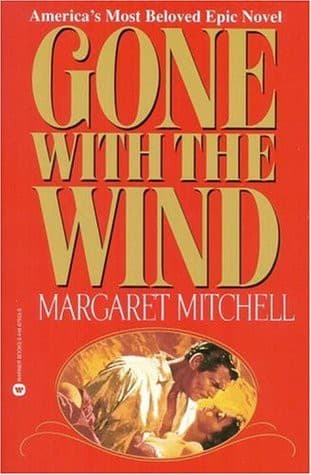
- Gone with the Wind
Margaret Mitchell
4.3 (1.1M) average on GoodreadsHistorical FictionWhile both "Cold Mountain" and "Gone with the Wind" are set during the American Civil War and feature strong female protagonists struggling to survive, they differ significantly in tone and focus. Mitchell's novel is a sweeping romantic saga with a more melodramatic bent, often glorifying the Antebellum South and focusing on the societal upheaval through the lens of a privileged Southern belle. Frazier, in contrast, offers a more intimate and grounded perspective, depicting the war's brutal impact on the common people and the natural landscape, with a less overtly romanticized view of the period. Ada's struggles are more about fundamental survival and self-sufficiency, rather than the maintenance of a social status.
- The Old Man and the Sea
Ernest Hemingway
3.8 (831k) average on GoodreadsLiterary FictionA Cuban fisherman's long struggle with a giant marlin becomes a story of endurance and dignity, now retold for young adults with illustrations, phonetic guides, and writing prompts in Traditional Chinese.
- One Hundred Years of Solitude
Gabriel García Márquez
4.1 (753k) average on GoodreadsLiterary FictionThrough the multi-generational story of the Buendía family, a mythical town deals with the repeating patterns of time, love, and solitude, as the extraordinary mixes with the ordinary.
- The Goldfinch
Donna Tartt
3.9 (720k) average on GoodreadsLiterary FictionHaunted by a tragic explosion and clutching a stolen Dutch masterpiece, a young orphan navigates the opulent drawing rooms of New York and the gritty underbelly of the art world, desperately seeking connection and redemption amidst a life spiraling into crime and obsession.
- Little Fires Everywhere
Celeste Ng
4.1 (713k) average on GoodreadsLiterary FictionIn Shaker Heights, an artist and her daughter move in, and their free-spirited lives clash with a rule-bound matriarch, revealing hidden conflicts beneath a perfect surface.
- Eleanor Oliphant Is Completely Fine
Gail Honeyman
4.3 (708k) average on GoodreadsLiterary FictionA lonely woman's structured life changes when an IT guy and an elderly man help her learn to open her heart.





Enjoyed the summary?
A summary gives you the shape of the book. The book itself has the detail, the examples and the voice.
Find Cold Mountain on AmazonAs an Amazon Associate, BookBrief earns from qualifying purchases. How we're funded