
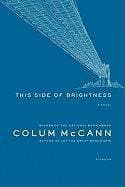
Synopsis
Covers the whole plot, including the ending.
- Difficulty
- Medium
- Pacing
- Moderate
- Mood
- Atmospheric, Melancholy, Reflective, Gritty, Resilient
- Read it if
- You appreciate deep character studies, historical fiction focusing on forgotten labor, and narratives that explore the long-term impact of trauma and legacy across generations.
- Skip it if
- You prefer fast-paced plots with clear resolutions or shy away from stories that delve into themes of hardship, racial prejudice, and urban decay.
This Side of Brightness Plot Summary
Covers the whole plot, including the ending.
The Tunnel's Call
In 1916, Nathan Walker, a young black man from South Carolina, arrives in New York City, drawn by the promise of work on the city's growing infrastructure projects. He quickly finds himself among the 'sandhogs,' men who dig tunnels beneath the rivers, a dangerous profession. Nathan joins a crew working on the East River tunnels, where intense pressure and the constant threat of 'the bends' or cave-ins are daily realities. He learns the job from experienced workers, navigating the physical dangers and the complex social dynamics of a diverse crew of Irish, Italian, and other immigrant groups, all united by the shared danger of their underground existence.
The Collapse and The Bond
During a dangerous shift, a cave-in occurs deep within the tunnel. Nathan and several fellow sandhogs, including the Irish foreman, are trapped in the darkness, cut off from the surface. The air grows thin, and the water level rises, testing their will to survive. In this extreme situation, racial and ethnic differences disappear as the men work together, sharing stories and fears, relying on each other for hope and strength. Their near-death experience creates a strong bond, particularly between Nathan and certain white sandhogs, a connection that goes beyond societal divisions above ground.
Life Above Ground
After the tunnel collapse, Nathan emerges a changed but living man. He soon meets and falls in love with Eleanor, a strong woman. They marry and begin to build a life in Harlem, a thriving black cultural center but still subject to the era's segregation. Nathan continues his dangerous work as a sandhog, supporting his growing family. The community is close-knit, but the shadow of his underground job and the tunnel memories linger, shaping his outlook and his relationships, especially with Eleanor, who constantly worries about his safety.
The Next Generation: Clarence
Decades later, Nathan and Eleanor's son, Clarence, grows up. Unlike his father, Clarence is drawn to Harlem's lively, often dangerous, street life. He struggles with his father's expectations and the contrast between Nathan's disciplined, hardworking life and the appeal of easy money and excitement. Clarence's path diverges significantly from his father's, leading him into petty crime and a life on the fringes. This creates a deep rift between father and son, as Nathan struggles to guide Clarence away from a destructive future, and Clarence resents his father's perceived judgment.
Clarence's Downward Spiral
Clarence's involvement in criminal activities escalates, eventually leading to his arrest and imprisonment. This devastates Nathan and Eleanor, who had hoped for a better life for their son. While incarcerated, Clarence thinks about his life choices and their impact on his family. Prison forces him to confront his past and the legacy he is creating. His experiences behind bars further solidify the distance between him and his aging parents, and he emerges a hardened man, marked by his mistakes and lost years.
The Grandson: Treefrog
The story shifts to the third generation, focusing on Treefrog, Clarence's son and Nathan's grandson. Treefrog grows up in a New York City different from his grandfather's, yet still dealing with systemic inequalities. He inherits his family's complex legacy: Nathan's resilience, Clarence's struggles, and the unspoken weight of their histories. Treefrog is a sensitive, artistic boy, often observing the world with a keen eye. He feels the pull of his family's past, especially the tunnel stories, though he doesn't fully understand their deep meaning.
Treefrog's Quest for Connection
As Treefrog matures, he becomes increasingly interested in the stories of his grandfather, Nathan, and the tunnels. He feels a deep, almost instinctual connection to the city's underground, a place he's never personally experienced. He begins to actively seek information about the sandhogs and his grandfather's life, putting together fragments of family history. This search for understanding comes from a desire to connect with his roots and make sense of his own place in the world, given his family's complex and often painful past, especially the strained relationship between Nathan and Clarence.
The Weight of Memory
Treefrog's journey of discovery leads him to confront the unspoken traumas and love that define his family. He grapples with the lasting effects of racism, poverty, and the choices his father and grandfather made. He realizes how the tunnels' dangers, the bonds made there, and the struggles above ground have shaped Nathan, Clarence, and himself. These memories and experiences become a significant part of his identity as he tries to reconcile the different threads of his family's story.
A Glimmer of Hope
Driven by his strong connection to his family's history and the tunnels, Treefrog finds an outlet for his emotions and understanding through art, specifically graffiti. He begins to paint murals and images that reflect the stories of the sandhogs, the city's forgotten laborers, and his own lineage. This artistic expression is his way of honoring his grandfather's legacy, acknowledging his father's pain, and finding his own voice. It is a creative act that bridges generations, turning the past's burdens into a strong statement of resilience and connection.
Legacy of Brightness
The novel ends by showing the lasting legacy of the sandhogs and the Walker family. Treefrog's art provides a tangible link to the past, ensuring that Nathan's sacrifices and triumphs are not forgotten. While poverty and systemic inequality continue, Treefrog's ability to express his family's story artistically offers hope and continuity. The title's 'brightness' hints at the enduring human spirit that shines through even the darkest tunnels and most challenging urban environments, passed down through generations.
This Side of Brightness Characters
Nathan Walker
Protagonist
A resilient black sandhog who builds the city's tunnels and his family's foundation.
Nathan Walker is the patriarch of the Walker family, a black man who migrates from the South to New York City in the early 20th century to work as a sandhog. He is defined by his immense strength, resilience, and quiet dignity. Despite facing the extreme dangers of tunnel digging and pervasive racism above ground, Nathan remains dedicated to providing for his family. He is a man of few words but deep integrity, carrying the physical and psychological scars of his work. His experiences in the tunnel forge an unbreakable bond with his fellow workers, transcending racial divides.
Relationships: Eleanor (Devoted wife, partner in building a family); Clarence (Son, with whom he has a strained and often disappointing relationship); Treefrog (Grandson, whose life he influences through his legacy)
Eleanor
Supporting
Nathan's strong and supportive wife, the heart of the Walker family.
Eleanor is Nathan Walker's wife, a steadfast and pragmatic woman who anchors the family. She embodies resilience and love, providing a stable home life amidst the dangers of Nathan's work and the challenges of raising a family in Harlem. She is deeply worried about Nathan's safety and later heartbroken by Clarence's choices, yet she remains a source of strength and comfort. Eleanor represents the enduring spirit of the women who supported the men building the city, often bearing the brunt of their anxieties and sacrifices.
Relationships: Nathan Walker (Loving and supportive wife); Clarence (Mother, with whom she shares a complex, often sorrowful bond); Treefrog (Grandmother, offering a connection to the past)
Clarence
Supporting
Nathan's son, who struggles with his father's legacy and the lure of the streets.
Clarence is Nathan and Eleanor's son, a character whose life takes a starkly different path from his father's. He struggles under the weight of his father's expectations and the harsh realities of growing up in Harlem. Clarence is drawn to the allure of street life and crime, leading him to make choices that result in imprisonment and a strained relationship with his parents. He is a figure of regret and missed opportunities, representing the generational struggles and the difficulty of escaping cycles of poverty and violence, despite his parents' sacrifices.
Relationships: Nathan Walker (Father, with whom he has a distant and troubled relationship); Eleanor (Mother, whose love he strains but never entirely loses); Treefrog (Son, whose life he indirectly influences)
Treefrog
Protagonist
Clarence's son and Nathan's grandson, an artist who seeks to understand his family's past.
Treefrog is the protagonist of the latter part of the novel, Nathan's grandson and Clarence's son. He is a sensitive, observant young man with an artistic sensibility, particularly drawn to graffiti. Treefrog represents the third generation, grappling with the complex legacy of his family—the resilience of his grandfather and the struggles of his father. He embarks on a personal quest to understand his family's history, especially the stories of the sandhogs and the tunnels, seeking to bridge the generational divides and find his own identity within their shared narrative. His art becomes his voice and his connection to the past.
Relationships: Nathan Walker (Grandfather, whose legacy he deeply respects and seeks to understand); Clarence (Father, whose mistakes he tries to reconcile with his love); Eleanor (Grandmother, a source of family history and comfort)
Big Moe
Supporting
An experienced sandhog and mentor to Nathan.
Big Moe is one of the seasoned sandhogs working alongside Nathan Walker. He serves as an informal mentor, helping Nathan navigate the treacherous world of tunnel digging, both physically and socially. Big Moe represents the camaraderie and shared experience among the sandhogs, a bond forged in the face of extreme danger that transcends racial and ethnic lines. He embodies the wisdom and stoicism necessary for survival in such a perilous profession.
Relationships: Nathan Walker (Colleague and mentor)
The Foreman
Supporting
An Irish foreman who experiences the tunnel collapse with Nathan.
The Irish foreman is a figure of authority among the sandhogs, initially representing the racial and ethnic hierarchies present even within the dangerous confines of the tunnel. However, during the catastrophic tunnel collapse, he is trapped alongside Nathan and the other men. This shared near-death experience breaks down barriers, forging a profound, unspoken bond between him and Nathan. He symbolizes how extreme circumstances can erase superficial differences and reveal common humanity.
Relationships: Nathan Walker (Colleague; initially superior, later bonded by shared trauma)
The City of New York
Mentioned
A character in itself, representing both opportunity and oppression.
New York City is more than a setting; it is a dynamic character in the novel. It represents the promise of a new life and opportunity for migrants like Nathan, but also the harsh realities of industrial labor, segregation, and poverty. The city's growth, particularly its underground infrastructure, is central to the narrative. It is a place of both dreams and despair, a vibrant, ever-changing entity that shapes the lives of three generations of the Walker family, from the depths of its tunnels to the heights of its aspirations.
This Side of Brightness Themes
The Brutality and Brotherhood of Labor
The novel portrays the extreme dangers and physical cost of working as a sandhog, where men risked their lives daily to build the city's infrastructure. Scenes of tunnel collapses and decompression sickness ('the bends') show the brutal reality of their labor. Yet, within this brutality, a strong sense of brotherhood emerges. Racial and ethnic differences—between black, Irish, and Italian workers—disappear when facing shared danger, especially during the tunnel collapse where Nathan and his crew rely solely on each other for survival. This bond goes beyond the segregation and prejudice above ground, showing a powerful, if temporary, unity.
“Down there, in the dark, you were just a man. Just flesh and bone, trying to breathe.”
The Legacy of Trauma and Resilience
Nathan Walker's experiences in the tunnels leave a lasting mark on him, physically and psychologically, and this trauma affects later generations. Nathan's quiet strength and his son Clarence's struggles with identity and imprisonment are indirect results of the family's foundational experiences. However, the theme also emphasizes resilience. Despite hardships, the Walker family endures, finding strength and hope. Treefrog, the grandson, shows this resilience by turning the family's history of struggle into art, ensuring their story is remembered and honored.
“The brightness was not just the light, but the memory, the thing that lasted.”
Generational Divide and Connection
The novel explores complex relationships and misunderstandings across three generations of the Walker family. Nathan, the sandhog, embodies a strong work ethic and a direct connection to the city's construction. His son, Clarence, struggles to find his place, rejecting his father's path and giving in to street life's temptations, creating a deep gap between them. Treefrog, the grandson, tries to bridge this divide by actively seeking to understand and honor the past, especially Nathan's experiences, and reconcile them with Clarence's struggles. This theme highlights how family history, both successes and failures, shapes individual identities and relationships.
“He knew his father carried the tunnels inside him, and his father's father before that.”
Race and Identity in America
From Nathan Walker's arrival in a segregated New York City to Treefrog's modern urban experience, the novel consistently addresses the complexities of race and identity. Below ground, in the tunnels, racial distinctions briefly fade under the shared threat of death, creating a unique equality among the sandhogs. However, above ground, segregation, prejudice, and systemic inequality deeply affect the Walker family's opportunities and struggles. The characters navigate their identities as black men in America, confronting both clear racism and the more subtle effects of limited access and societal expectations, shaping their choices and destinies.
“Up top, they were black, white, Irish, Italian. Down below, they were just men, breathing the same air.”
Plot Devices & Literary Techniques
The Tunnel as Metaphor
The physical tunnel symbolizes the characters' inner struggles and societal divisions.
The tunnels beneath the East River are not merely a setting but a powerful, multi-layered metaphor. Physically, they represent extreme danger, the struggle for survival, and the literal foundation of the city. Metaphorically, they symbolize the 'underground' struggles of the working class, the hidden bonds formed in adversity that transcend racial lines, and the deep, often buried, traumas that shape generations. The darkness of the tunnel contrasts with the 'brightness' of hope and memory, and the act of digging reflects the arduous process of uncovering truth and understanding one's past.
Generational Narrative Structure
The story spans three generations, highlighting the enduring impact of family history.
The novel employs a generational narrative structure, beginning with Nathan Walker in the early 20th century, moving to his son Clarence, and concluding with his grandson Treefrog. This structure allows the author to explore the long-term effects of historical events, individual choices, and societal changes on a single family. It emphasizes the cyclical nature of struggle and resilience, showing how the experiences of one generation (e.g., Nathan's work ethic and trauma) directly or indirectly influence the lives and identities of subsequent generations (Clarence's struggles, Treefrog's quest for understanding).
Flashbacks and Memory
Past events are recalled to illuminate present circumstances and character motivations.
While largely chronological, the narrative is enriched by moments of memory and reflection, particularly as Treefrog delves into his family's past. These 'flashbacks' or evocations of memory serve to connect the dots between past traumas and present realities. They reveal the lasting impact of Nathan's experiences in the tunnels and Clarence's struggles, providing context for Treefrog's own search for identity. Memory acts as a living force, shaping the characters' understanding of themselves and their place within their family's complex history.
Symbolism of Light and Darkness
The contrast between light and darkness represents hope, despair, and the hidden aspects of life.
The interplay of light and darkness is a recurring symbolic device. The literal darkness of the tunnels represents danger, fear, and the unknown, but also a space where superficial differences dissolve. The 'brightness' of the title, in contrast, symbolizes hope, resilience, the enduring human spirit, and the illumination of truth or understanding. This dichotomy extends beyond the physical, reflecting the characters' internal states—their moments of despair and their eventual capacity to find hope and meaning even in the most challenging circumstances, such as Treefrog's art bringing light to his family's story.
This Side of Brightness Quotes
“The city was a great beast, and we were the lice upon its skin.”
“There are some things you carry with you, like a stone in your pocket, and you can't ever quite let them go.”
“The past is not a foreign country; it is a room in your own house, and you keep going back to it.”
“We were building something that would outlast us, a monument to our own anonymity.”
“Hope was a small, flickering thing, easily extinguished, but sometimes, just sometimes, it caught fire.”
“The sound of the river, always there, a constant whisper beneath the city's roar.”
“Love, he thought, was a series of small, impossible victories.”
“Every tunnel has two ends, and what you find at one end might not be what you expect at the other.”
“The silence in the earth was different from any other silence, a heavy, ancient quiet.”
“He carried the ghosts of his past like a second skin, invisible to others, but heavy on him always.”
“The city was built on the backs of men, and their stories were buried deep beneath its streets.”
“To be forgotten was the true death, not the stopping of a heart, but the fading of a name.”
“Brightness, he realized, was not just the sun, but the memory of it, the promise of its return.”
Quiz
10 questions on the plot and the characters. Each answer comes with a short explanation.
Question 1
What is Nathan Walker's profession when he first arrives in New York City?
- A steelworker
- A sandhog
- A dockworker
- A streetcar conductor
Show answer
B. A sandhog Nathan Walker comes to New York City to take the dangerous job of a sandhog, digging tunnels beneath the East River.
Question 2
Which two boroughs are connected by the tunnel Nathan Walker and his fellow sandhogs are digging?
- The Bronx and Manhattan
- Queens and Brooklyn
- Brooklyn and Manhattan
- Staten Island and Manhattan
Show answer
C. Brooklyn and Manhattan The tunnel is being dug to carry trains from Brooklyn to Manhattan.
Question 3
What event initially forms a strong bond between Nathan Walker and his fellow sandhogs?
- A shared meal above ground
- A labor strike for better wages
- A spectacular accident in the tunnel
- A celebration after completing a section of the tunnel
Show answer
C. A spectacular accident in the tunnel The synopsis states that a 'spectacular accident welds a bond between Walker and his fellow sandhogs'.
Question 4
How does the darkness of the tunnel environment affect the sandhogs' interactions, according to the description?
- It intensifies existing racial and ethnic tensions.
- It makes them more competitive with each other.
- It erases all differences among them, regardless of race or origin.
- It leads to greater isolation and less communication.
Show answer
C. It erases all differences among them, regardless of race or origin. The text states, 'the darkness erasing all differences' among the black, white, Irish, and Italian sandhogs.
Question 5
The bond formed between Walker and his fellow sandhogs is described as both a 'blessing' and a 'curse' for three generations. What literary device is this an example of?
- Metaphor
- Simile
- Paradox
- Hyperbole
Show answer
C. Paradox A paradox is a seemingly self-contradictory statement or proposition that when investigated or explained may prove to be well founded or true. Here, the bond is both positive ('blessing') and negative ('curse').
Question 6
At what historical period is the initial part of the story set, based on the provided information?
- Mid-20th century
- Late 19th century
- The turn of the century (around 1900)
- Early 21st century
Show answer
C. The turn of the century (around 1900) The book description explicitly states, 'At the turn of the century, Nathan Walker comes to New York City.'
Question 7
What does the phrase 'Above ground, though, the men keep their distance' imply about the social dynamics of New York City at the time?
- That the men preferred solitude outside of work.
- That social divisions based on race and ethnicity were prevalent outside the workplace.
- That their dangerous work made them distrustful of outsiders.
- That they were too tired from their labor to socialize.
Show answer
B. That social divisions based on race and ethnicity were prevalent outside the workplace. The contrast with the 'darkness erasing all differences' below ground suggests that above ground, societal prejudices and distinctions, likely based on their diverse backgrounds (black, white, Irish, Italian), reasserted themselves, causing the men to 'keep their distance.'
Question 8
The narrative follows the impact of the initial events on 'three generations'. What literary technique does this generational scope suggest the novel employs?
- Stream of consciousness
- Epistolary narrative
- Family saga or multi-generational narrative
- Picaresque novel
Show answer
C. Family saga or multi-generational narrative A story that traces the impact of events across 'three generations' is characteristic of a family saga or multi-generational narrative, exploring how initial choices and events reverberate through descendants.
Question 9
Given the 'most dangerous job in the country' description and the setting, what is a likely major theme of the novel regarding labor in early 20th-century New York?
- The ease of upward mobility for immigrants.
- The romanticism of industrial work.
- The brutal conditions and profound risks faced by laborers.
- The rapid advancement of worker safety regulations.
Show answer
C. The brutal conditions and profound risks faced by laborers. The description highlights the 'most dangerous job' and the 'bowels of the riverbed,' strongly implying that the harsh and perilous reality of industrial labor for sandhogs is a central theme.
Question 10
The title 'This Side of Brightness' likely holds symbolic meaning. Considering the sandhogs' work, what might 'brightness' represent in this context?
- The literal sunlight and the world above ground.
- Hope, safety, prosperity, or a life free from the tunnel's darkness and dangers.
- The intellectual enlightenment of the era.
- The polished, finished surface of the completed tunnel.
Show answer
B. Hope, safety, prosperity, or a life free from the tunnel's darkness and dangers. Given the contrast between the dark, dangerous work underground and the surface world, 'brightness' likely symbolizes not just literal light, but also the metaphorical light of a better, safer, or more prosperous existence that the sandhogs strive for, or are 'this side of' (meaning, not yet fully in).
This Side of Brightness FAQ
What is the central premise of 'This Side of Brightness'?
The novel follows Nathan Walker, a Black man who arrives in New York City at the turn of the 20th century to work as a sandhog, digging tunnels beneath the East River. It explores the dangerous lives of these multi-ethnic laborers and how a catastrophic accident impacts Nathan and three generations of his family, blurring lines between race and destiny.
Who are the sandhogs and what makes their job so dangerous?
Sandhogs are the men who dug tunnels for subways and aqueducts beneath New York City's rivers. Their job was incredibly perilous due to the high-pressure environment, risk of 'the bends' (decompression sickness), explosions, collapses, and drownings, often leading to severe injury or death.
How does the novel explore themes of race and identity among the sandhogs?
While underground, the shared danger and darkness temporarily erase racial and ethnic distinctions, fostering a camaraderie between black, white, Irish, and Italian workers. However, above ground, societal prejudices resurface, highlighting the stark contrast between their subterranean unity and surface-level divisions.
What is the significance of the 'spectacular accident' mentioned in the synopsis?
The accident is a major tunnel collapse that traps and injures many sandhogs, including Nathan Walker. This event forge an unbreakable bond among the survivors and profoundly shapes Nathan's life, setting into motion a chain of events that affects his descendants for generations.
How does the narrative structure span three generations?
The novel begins with Nathan Walker's experiences as a sandhog, then shifts to focus on his daughter, Clara, and her struggles. Finally, it delves into the life of his grandson, Treefrog, a homeless man living in the abandoned tunnels, connecting past and present through the legacy of the tunnels.
What is the symbolic meaning of the tunnels in the book?
The tunnels symbolize both physical and metaphorical journeys: paths to progress and connection for the city, but also dark, dangerous spaces representing the struggles and hidden lives of the marginalized. They are places of both unity and entrapment, connecting generations and destinies.
Are there any specific historical events or figures that influenced the novel?
While the characters are fictional, the novel draws heavily on the historical reality of early 20th-century tunnel construction in New York City, including the building of the subway system and the dangerous working conditions faced by sandhogs, reflecting a genuine era of industrial ambition and human cost.
How does the character of Treefrog connect to Nathan Walker's legacy?
Treefrog, Nathan's grandson, lives as a homeless man in the very tunnels his grandfather helped build, embodying the cyclical nature of poverty and marginalization within the family. His existence in the 'bowels of the riverbed' directly links him to Nathan's original experiences and the enduring impact of the past.
What role does memory play in shaping the characters' identities?
Memory, both personal and collective, profoundly shapes the characters. Nathan's traumatic experiences underground haunt him, while Clara struggles with the legacy of her father's work and the absence of a stable home. Treefrog's fragmented memories and reliance on oral histories connect him to his family's past.
How does Nathan Walker cope with the trauma of his work and the accident?
Nathan copes by internalizing much of his trauma, finding solace in the camaraderie of his fellow sandhogs but struggling to articulate his experiences to his family. His stoicism and dedication to providing for his family are his primary coping mechanisms, though the psychological scars remain deep.
Discuss the psychological impact of living 'below ground' versus 'above ground' on the characters.
Living below ground creates a sense of primal unity and shared vulnerability, fostering deep bonds among the sandhogs. Above ground, however, characters face societal pressures, racial discrimination, and the harsh realities of poverty, leading to isolation and a constant struggle for dignity and belonging.
How does Clara's life reflect the challenges faced by women in this historical context?
Clara navigates a world with limited opportunities for Black women, facing racial and gender discrimination. She struggles with poverty, the instability of her family life, and the burden of her father's legacy, striving for independence and a better future despite systemic barriers.
Is the ending of the novel ultimately hopeful or tragic?
The ending offers a complex mix. While Treefrog's life in the tunnels can be seen as tragic, his connection to the city's hidden history and the resilience of his spirit suggest a fragile hope. The novel emphasizes the enduring human spirit and the possibility of finding meaning even in marginalized existences.
How does the title 'This Side of Brightness' relate to the novel's themes?
The title refers to the liminal space between the darkness of the tunnels and the brightness of the surface world. It encapsulates the characters' existence on the margins, 'this side' of societal acceptance, prosperity, and even life itself, constantly striving for a glimmer of hope or recognition.
What is the novel's stance on progress and modernity?
The novel presents a nuanced view of progress. While the tunnels represent technological advancement and a modernizing city, McCann highlights the immense human cost and sacrifice involved. It questions whether the 'brightness' of progress truly benefits everyone, especially the laborers who build it.
How does McCann use imagery of light and darkness throughout the book?
McCann frequently contrasts the oppressive darkness of the tunnels with the often-elusive brightness of the surface world. Darkness represents shared struggle, equality, and forgotten histories, while light symbolizes hope, societal judgment, and the harsh realities of life above ground, creating powerful thematic tension.
To what extent do the characters have agency versus being victims of circumstance?
The characters often appear to be victims of circumstance, trapped by poverty, racism, and dangerous work conditions. However, their resilience, acts of solidarity, and persistent search for dignity demonstrate their agency in navigating and resisting their difficult realities, even if their choices are limited.
What message does the book convey about the forgotten histories of marginalized workers?
The book powerfully brings to light the forgotten stories of the diverse, often exploited, laborers who built New York City's infrastructure. It emphasizes that their sacrifices and contributions, though hidden and unacknowledged by mainstream history, are fundamental to the city's very foundation.
About the author

Colum McCann is an Irish-born novelist known for his critically acclaimed works that often explore themes of connection and displacement. His novel "Let the Great World Spin" won the National Book Award for Fiction, and "This Side of Brightness" was a New York Times Notable Book. McCann's writing is celebrated for its lyrical prose and ambitious scope.
Similar books
- Let the Great World Spin
Colum McCann
3.9 (94k) average on GoodreadsLiterary FictionExplores interconnected lives in NYC, similar prose style, and generational themes.
- The Underground Railroad
Colson Whitehead
4.0 (290k) average on GoodreadsLiterary FictionHistorical fiction with a focus on African American struggle and resilience.
- One Hundred Years of Solitude
Gabriel García Márquez
4.1 (753k) average on GoodreadsLiterary FictionWhile both novels explore generational sagas and the weight of history, McCann's narrative in This Side of Brightness can feel more episodic in its later sections, whereas Marquez maintains a more consistently interwoven and cyclical narrative, where family and fate are inextricably linked throughout.
- Angela's Ashes
Frank McCourt
4.1 (540k) average on GoodreadsBiographyBoth novels delve into the immigrant experience and poverty, but McCann's focuses specifically on the physically demanding and often invisible labor of tunnel building in New York, offering a distinct historical and occupational lens compared to McCourt's broader depiction of Irish poverty and migration.
- The Old Man and the Sea
Ernest Hemingway
3.8 (831k) average on GoodreadsLiterary FictionA Cuban fisherman's long struggle with a giant marlin becomes a story of endurance and dignity, now retold for young adults with illustrations, phonetic guides, and writing prompts in Traditional Chinese.
- The Goldfinch
Donna Tartt
3.9 (720k) average on GoodreadsLiterary FictionHaunted by a tragic explosion and clutching a stolen Dutch masterpiece, a young orphan navigates the opulent drawing rooms of New York and the gritty underbelly of the art world, desperately seeking connection and redemption amidst a life spiraling into crime and obsession.





Enjoyed the summary?
A summary gives you the shape of the book. The book itself has the detail, the examples and the voice.
Find This Side of Brightness on AmazonAs an Amazon Associate, BookBrief earns from qualifying purchases. How we're funded