

Synopsis
Covers the whole plot, including the ending.
- Difficulty
- Medium
- Pacing
- Slow
- Mood
- Mystical, Meditative, Melancholy, Spiritual, Atmospheric
- Read it if
- You are drawn to mystical, allegorical tales exploring humanity's connection to nature, spirituality, and the land, with a strong sense of place.
- Skip it if
- You prefer fast-paced plots, clear-cut character motivations, or stories without significant elements of magical realism or pagan spirituality.
To a God Unknown Plot Summary
Covers the whole plot, including the ending.
The Journey to Nuestra Senora
Joseph Wayne, the youngest son of an Irish Catholic family, leaves his Vermont farm for the fertile Jolon Valley in California. He feels a strong, almost spiritual, tie to this place. His father, John Wayne, gives his blessing, encouraging Joseph to follow his path. Joseph finds a beautiful, quiet ranch, mostly untouched, with a large oak tree and a spring. He feels an immediate, deep connection to the land, seeing it as alive. He asks his younger brother, Benjy, to join him and help start the new ranch, beginning his solitary, almost mystical, connection with the land.
The Arrival of Benjy and the Land's Fertility
Benjy arrives, at first unsure about Joseph's deep respect for the land, but he quickly adjusts to the hard work and the valley's beauty. Joseph starts farming, finding the land very fertile. He becomes convinced that the large oak tree near the spring holds the spirit of his father, John Wayne, who died soon after Joseph left Vermont. Joseph begins private rituals, offering wine and blood to the tree and land, believing this connection is vital for the ranch's success. This new, almost pagan, belief begins to quietly shape how he sees the world.
The Brothers Arrive and Joseph's Marriage
Joseph's other brothers, Thomas and Burton, with their families, eventually join him in the valley, setting up their own ranches nearby. Thomas, a practical and cheerful man, embraces the new life. Burton, however, is very religious and strict in his beliefs, bothered by Joseph's growing devotion to the oak tree and the land, which he sees as sacrilege. Joseph, meanwhile, falls in love with and marries Elizabeth, a kind and understanding woman who, despite her own traditional beliefs, accepts Joseph's unique spirituality without fully grasping it. Their marriage brings a time of great happiness and stability to Joseph's life.
The Tree's Destruction and Benjy's Death
Burton, increasingly upset by Joseph's rituals and what he sees as tree worship, acts on his own. Believing he is doing God's will and purifying the land, he cuts down the large oak tree. Joseph finds out with horror and sadness, feeling a deep loss as if his father had died again. Soon after, a terrible accident happens: Benjy, riding a horse, is caught in a rockslide and dies. Joseph is overwhelmed by grief and a sense of unfairness, believing the tree's destruction has brought evil forces upon his family and the land.
Famine and Drought Descend
After Benjy's death and the tree's destruction, a severe drought hits the Jolon Valley. The once-fertile land dries up, the spring starts to disappear, and the cattle, essential to their ranches, begin to get sick and die. Joseph, his brothers, and their families struggle to survive. The drought is endless, and hopelessness settles over the community. Joseph, feeling personally responsible, continues his solitary rituals, trying hard to please the land and bring back the rain, but his efforts seem useless against nature's powerful forces.
Elizabeth's Sacrifice
As the drought gets worse, Joseph's spiritual connection with the land becomes more desperate. He spends nights alone, performing rituals, believing he must make a greater sacrifice to make the land fertile again. Elizabeth, worried about his mental and physical state, follows him one night to the dry spring. In a moment of deep, almost wild intensity, Joseph, consumed by grief and the land's suffering, can barely recognize her. She collapses, possibly from emotional stress and the harsh conditions, and dies in his arms. Her death pushes Joseph into even deeper despair and guilt, feeling he has lost everything he cared for.
Joseph's Declining Sanity and Isolation
After Elizabeth's death, Joseph's mind begins to break. He mostly withdraws from his remaining family, consumed by grief and his focus on the land. He wanders the drought-stricken ranch, talking to the dry earth and dying animals, his rituals becoming more basic and self-destructive. He believes the land is dying because he failed it and that he must somehow become one with it to restore its life. His brothers, especially Thomas, try to reach out to him, but Joseph is too deep in his own mystical world to connect with normal reality.
The Search for Rain
Driven by desperation, Joseph finds a local rainmaker, Juan, known for his spiritual connection to the land and his ability to bring rain. Juan confirms Joseph's belief that a sacrifice is needed, though his words are vague and mystical. Joseph takes this to mean he must offer himself as the ultimate sacrifice to the land to bring back life-giving water. He becomes more and more convinced that his own life is tied to the valley's health, and that only through his death can the land be reborn and fed.
The Final Ritual at the Spring
With the drought at its worst, Joseph returns to the now completely dry spring, the symbolic heart of his ranch and where the oak tree once stood. He is thin and weak, his mind completely on his coming self-sacrifice. He remembers his father's words, the land's fertility, and the deaths of Benjy and Elizabeth; all these reinforce his belief that he must become one with the earth. He feels a deep connection to all living things and the cycle of life and death, believing his act will complete the cycle and bring renewal.
The Ultimate Sacrifice and the Return of Rain
Joseph, at the dry spring, makes a final, desperate offering. He cuts his wrists, letting his blood flow into the dry earth, believing he is giving his life back to the land that sustained him. As he dies, a deep sense of peace and unity washes over him. At that exact moment, the sky, which had been clear for so long, darkens. A gentle rain begins to fall, slowly at first, then growing stronger, soaking the thirsty earth. Joseph's sacrifice, whether by chance or direct cause, is immediately followed by the longed-for rain, fulfilling his desperate hope for renewal.
To a God Unknown Characters
Joseph Wayne
Protagonist
A man driven by a profound, mystical connection to the land.
Joseph is a deeply spiritual and introspective man, the youngest of the Wayne brothers. He is drawn to the Jolon Valley by an almost premonitory sense of destiny, feeling a primal connection to the earth that transcends conventional religion. He views the land, particularly the oak tree and the spring, as living entities, embodying the spirit of his father and the life force itself. His devotion borders on paganism, leading to conflict with his brother Burton. He is kind, devoted to his family, but ultimately isolated by his unique worldview.
Relationships: John Wayne (Father, whose spirit Joseph believes resides in the oak tree.); Benjy Wayne (Younger brother and initial companion, a loyal if less spiritual helper.); Thomas Wayne (Brother, pragmatic and understanding, tries to support Joseph.); Burton Wayne (Brother, deeply religious and rigid, views Joseph's beliefs as blasphemous.); Elizabeth (Wife, loving and accepting, though not fully understanding of Joseph's spirituality.)
Elizabeth
Supporting
Joseph's loving and understanding wife.
Elizabeth is Joseph's wife, a kind, gentle, and pragmatic woman. She brings a sense of normalcy and domestic happiness to Joseph's life. While she doesn't fully comprehend the depth of Joseph's mystical connection to the land, she loves and accepts him unconditionally, providing a grounding presence in his increasingly isolated world. Her death is a profound loss for Joseph, pushing him further into despair and his singular focus on the land.
Relationships: Joseph Wayne (Husband, whom she loves and accepts despite his unusual beliefs.)
Burton Wayne
Antagonist/Supporting
Joseph's religiously zealous brother who opposes his paganism.
Burton is Joseph's brother, a devoutly religious and rigid man. He is a strict Christian who views Joseph's reverence for the oak tree and his nature-based rituals as idolatry and blasphemy. His fear and conviction that Joseph is straying from God's path drive him to chop down the sacred oak tree, an act that precipitates the tragic events that follow. He represents the clash between conventional religion and Joseph's more ancient, nature-based spirituality.
Relationships: Joseph Wayne (Brother, whose paganism he vehemently opposes.); Thomas Wayne (Brother, with whom he shares a more conventional bond.)
Thomas Wayne
Supporting
Joseph's pragmatic and jovial brother.
Thomas is one of Joseph's brothers, a more conventional and pragmatic man than Joseph. He is jovial and hardworking, adapting well to the challenges of ranch life. While he doesn't share Joseph's deep mystical connection to the land, he is generally supportive and understanding, often acting as a bridge between Joseph and the more rigid Burton. He represents the ordinary, resilient human spirit facing adversity.
Relationships: Joseph Wayne (Brother, whom he cares for and tries to help.); Burton Wayne (Brother, with whom he shares a more conventional bond.)
Benjy Wayne
Supporting
Joseph's youngest brother and first companion in California.
Benjy is Joseph's youngest brother, who initially joins him in California. He is loyal, eager to learn, and initially somewhat naive. He quickly adapts to the ranching life and shares a close bond with Joseph. His death, caused by a rockslide shortly after the oak tree is felled, is one of the first major tragedies to befall Joseph and the family, reinforcing Joseph's belief that the land is punishing them.
Relationships: Joseph Wayne (Brother, with whom he shares a close bond and works on the ranch.)
John Wayne (Father)
Mentioned
Joseph's deceased father, whose spirit he believes inhabits the oak tree.
John Wayne is Joseph's deceased father, a figure who looms large in Joseph's spiritual world. Though he dies early in the narrative, Joseph believes his father's spirit has transferred into the majestic oak tree on his California ranch. His memory and the perceived presence of his spirit guide Joseph's initial reverence for the land and the tree, making the tree's destruction a deeply personal and devastating loss.
Relationships: Joseph Wayne (Son, who feels a profound spiritual connection to his father after his death.)
Juan
Supporting
A local rainmaker and mystical figure.
Juan is a mysterious local figure, a 'rainmaker' or spiritual guide, whom Joseph seeks out in his desperation during the drought. Juan speaks in cryptic, mystical terms, confirming Joseph's belief that a sacrifice is needed to appease the land and bring rain. His words reinforce Joseph's conviction that he must offer his own life, though Juan's intent remains ambiguous.
Relationships: Joseph Wayne (Spiritual guide/advisor, though their interaction is brief and enigmatic.)
To a God Unknown Themes
Man's Relationship with Nature
This theme explores the deep, often spiritual, link between people and nature. Joseph Wayne shows this connection, seeing the land not just as something to use, but as a living, sacred being. His respect for the oak tree and the spring, and his belief that his father's spirit lives in them, points to a pagan, animistic view. The novel suggests that when this sacred bond breaks (like Burton cutting down the tree), nature fights back with drought and death, highlighting the delicate balance and humanity's duty to respect the natural world. Joseph's final sacrifice is an attempt to fix this balance.
“A man is not a man, until he is an ancestor...I will be the father of my land.”
Paganism vs. Christianity
The novel contrasts old, nature-based spirituality with traditional Christian beliefs. Joseph's changing belief system, which sees God in the land, sun, and elements, directly conflicts with Burton's strict, Old Testament-style Christianity. Burton's act of destroying the sacred oak tree is driven by religious fervor, an attempt to remove what he sees as pagan worship. The resulting famine and death can be seen as either God's anger or, from Joseph's view, the land's revenge, showing how destructive religious intolerance can be and the clash between different kinds of faith.
“He knew that the God was there, and that the God was in the tree, and he knew that the God was in the water.”
Sacrifice and Rebirth
The idea of sacrifice, both real and symbolic, runs through the story. Joseph makes small offerings to the land, but as bad things happen, the idea of a greater sacrifice appears. Benjy's death, Elizabeth's death, and the dying cattle are all seen by Joseph as sacrifices the land demands. His final act of self-sacrifice at the dry spring is an effort to bring new life, to feed the dry earth with his own blood. This theme reflects old fertility myths and the cycle of life, death, and renewal, suggesting that great loss can come before new beginnings.
“He knew that he had made a promise to the land, and that the land had accepted it.”
Isolation and Madness
Joseph Wayne's unique spiritual journey makes him more and more isolated from his family and society. While Elizabeth supports him at first, his growing involvement in his mystical world, along with the tragedies of Benjy's death, the drought, and Elizabeth's death, pushes him to the edge of madness. His inability to explain his deep connection to the land, or his understanding of its demands, separates him from his practical brothers. This isolation shows how hard it is to live outside normal ways and the mental cost of carrying a unique, very personal spiritual burden.
“He was alone, and the land was alone, and the two were one.”
Plot Devices & Literary Techniques
The Sacred Oak Tree
A physical embodiment of Joseph's father's spirit and the land's vitality.
The majestic oak tree serves as a central symbol and a potent plot device. For Joseph, it is the physical manifestation of his deceased father's spirit and the focal point of his spiritual connection to the land. Its destruction by Burton is the catalyst for the subsequent tragedies – Benjy's death, the drought, and the dying cattle. This act symbolizes the desecration of the sacred and the breaking of a natural bond, driving the narrative towards its tragic conclusion and Joseph's ultimate sacrifice.
The Drought
A prolonged period of aridity symbolizing nature's wrath and Joseph's despair.
The relentless drought is a major plot device, functioning as both a literal natural disaster and a symbolic manifestation of the land's suffering and anger. It directly causes the economic ruin of the Wayne family and the death of their livestock, intensifying their struggle for survival. For Joseph, the drought is a direct consequence of the oak tree's destruction, signifying the land's punishment and driving his increasingly desperate rituals and eventual self-sacrifice. It creates the oppressive atmosphere of despair and pushes the characters to their physical and psychological limits.
Ritual and Sacrifice
Joseph's repetitive actions to connect with and appease the land.
Joseph's rituals, ranging from offering wine to the tree to his final act of self-bloodletting, are key plot devices that drive his character arc and the story's mystical elements. These acts demonstrate his deepening spiritual connection to the land and his belief in its sentience. Each escalating sacrifice, culminating in his own death, is an attempt to restore balance and fertility to the land, reflecting ancient pagan practices. This device underscores the theme of man's symbiotic relationship with nature and the lengths one will go to in order to preserve it.
The Jolon Valley Setting
A remote, fertile valley that becomes a character in itself.
The Jolon Valley is more than just a backdrop; it functions as a character within the narrative. Its initial fertility and beauty draw Joseph to it, symbolizing promise and abundance. As the story progresses, the valley reflects the characters' fortunes, becoming parched and desolate during the drought, mirroring Joseph's despair and the family's suffering. The valley's isolation also contributes to Joseph's increasing detachment from conventional society, allowing his unique spirituality to flourish unchecked, and ultimately leading to his singular communion with the earth.
To a God Unknown Quotes
“It is a strange thing to be an American. It is an immense journey.”
“The earth is a mother, and the earth is a father, and the earth is a lover. And the earth is a friend. And the earth is a brother. And the earth is a sister. And the earth is a god. And the earth is a devil. And the earth is a heaven. And the earth is a hell. And the earth is a life. And the earth is a death. And the earth is a everything.”
“His father, the old man, was a tree, a great oak tree, and he, Joseph, was a sapling growing from the roots.”
“There are times when a man must go into himself to find himself. And there are times when a man must go out of himself to find himself.”
“The land was not to be owned. It was to be loved and served, and it would give back what was given to it.”
“He felt that the sky was a roof, and the stars were holes in the roof, and the moon was a lamp shining through the holes.”
“A man can do anything if he knows what he wants.”
“The little things were the great things, and the great things were the little things.”
“The wind was a living thing, and it talked to him, and he understood its language.”
“He knew that he was a part of the earth, and the earth was a part of him.”
“The tree was his father, and the tree was his god.”
“He had gone to the new land, and the new land had taken him, and made him its own.”
“It was not a thing to be understood, but a thing to be felt.”
“The land was dry, and the land was thirsty, and the land was calling for rain.”
Quiz
10 questions on the plot and the characters. Each answer comes with a short explanation.
Question 1
What is Joseph Wayne's primary ambition upon arriving in California?
- To become a wealthy rancher by raising cattle.
- To build a prosperous farm, fulfilling his deceased father's dream.
- To find gold and become rich quickly.
- To escape his family and live a solitary life.
Show answer
B. To build a prosperous farm, fulfilling his deceased father's dream. Joseph's main goal is to create a successful farm in California, carrying out his father's long-held ambition.
Question 2
Which natural element does Joseph Wayne come to believe embodies his father's spirit on the farm?
- A specific rock formation near the river.
- The spring that feeds the farm's water supply.
- A magnificent oak tree.
- The highest peak overlooking the valley.
Show answer
C. A magnificent oak tree. Joseph develops a strong, almost pagan belief that a magnificent tree on his farm is the embodiment of his dead father's spirit.
Question 3
Which of Joseph's brothers is responsible for killing the sacred tree?
- Thomas
- Burton
- Benny
- Samuel
Show answer
B. Burton Burton, scared by Joseph's pagan beliefs and the reverence for the tree, cuts it down, believing it to be an act against God.
Question 4
What immediate consequences follow the killing of the tree on Joseph's farm?
- An influx of new settlers and increased prosperity.
- A period of disease and famine.
- A family reunion and celebration.
- Joseph decides to abandon the farm.
Show answer
B. A period of disease and famine. After the tree is killed, the land suffers from disease and famine, directly linking to Joseph's belief in the tree's protective power.
Question 5
What is the central theme explored through Joseph Wayne's attempt to control nature and understand God?
- The triumph of human ingenuity over natural forces.
- The conflict between conventional religion and pagan spirituality, and humanity's relationship with the land.
- The importance of technological advancement in agriculture.
- The inevitable failure of all farming endeavors.
Show answer
B. The conflict between conventional religion and pagan spirituality, and humanity's relationship with the land. The novel deeply explores the mystical connection between man and nature, and the clash between traditional religious views and more primal, earth-centered spirituality.
Question 6
How do Joseph's brothers initially react to his prosperity on the farm?
- They resent his success and refuse to join him.
- They share in his prosperity and move their families to the farm.
- They try to steal his land and resources.
- They offer him financial aid but stay in their own homes.
Show answer
B. They share in his prosperity and move their families to the farm. The synopsis states that 'His brothers and their families share in Joseph's prosperity and the farm flourishes,' indicating their positive initial reaction.
Question 7
What is the broader setting or 'country' often associated with Steinbeck's novels, including 'To a God Unknown'?
- The arid deserts of Arizona.
- The bustling cities of the East Coast.
- The agricultural valleys of California.
- The forests of the Pacific Northwest.
Show answer
C. The agricultural valleys of California. The synopsis explicitly states, 'Set in familiar Steinbeck country,' and his most famous works are set in the agricultural regions of California.
Question 8
Joseph Wayne's reverence for the tree and his belief in his father's spirit within it can best be described as:
- Strict adherence to Protestant Christianity.
- A form of scientific rationalism.
- Pagan or animistic spirituality.
- A purely aesthetic appreciation of nature.
Show answer
C. Pagan or animistic spirituality. The synopsis refers to Joseph's belief as 'pagan' and the novel explores 'mystical' themes, indicating an animistic or nature-worshiping spirituality.
Question 9
What is the ultimate 'sacrifice' Joseph considers making to appease the 'God Unknown' and bring rain back to his drought-stricken land?
- Selling his entire herd of cattle.
- Leaving the farm forever.
- Offering his own blood and life.
- Converting to a different religion.
Show answer
C. Offering his own blood and life. In a desperate, climactic act, Joseph believes he must offer his own life and blood to the land to bring back the rain and life to his farm, embodying the ultimate mystical connection.
Question 10
The title 'To a God Unknown' primarily refers to:
- The inability of humans to understand any deity.
- Joseph's personal, evolving, and often pagan understanding of the divine forces in nature.
- A specific, unnamed deity from ancient mythology.
- The Christian God, whose ways are mysterious.
Show answer
B. Joseph's personal, evolving, and often pagan understanding of the divine forces in nature. The title reflects Joseph's highly personal, non-traditional, and evolving spiritual connection to the land and its forces, which he perceives as divine but not fitting conventional religious definitions.
To a God Unknown FAQ
What is the central premise of 'To a God Unknown'?
The novel centers on Joseph Wayne, who leaves his family's Vermont farm to establish a new life and ranch in the fertile Tularosa Valley of California. He becomes deeply connected to the land and a specific oak tree, which he comes to believe embodies the spirit of his recently deceased father, driving the spiritual and physical prosperity of his new venture.
Who are Joseph Wayne's brothers, and how do they relate to his new life?
Joseph has three brothers: Burton, a devout Christian who is deeply disturbed by Joseph's paganistic beliefs; Thomas, who is more pragmatic and initially supports Joseph's endeavors; and Benjamin, who is somewhat detached but eventually drawn into the farm's orbit. They, along with their families, migrate to California to share in Joseph's prosperity, forming a small, interdependent community around his farm.
What significant event triggers the decline of Joseph's farm and his personal suffering?
The turning point occurs when Burton, horrified by Joseph's worship of the oak tree and fearing divine retribution, secretly chops down the magnificent oak. This act immediately coincides with a devastating drought, disease among the cattle, and a general decline of the farm's prosperity, plunging Joseph and his family into hardship and despair.
How does Joseph's relationship with his wife, Elizabeth, evolve throughout the novel?
Joseph's relationship with Elizabeth is initially one of deep love and companionship, with Elizabeth understanding and accepting his connection to the land and his burgeoning spiritual beliefs. However, as Joseph's obsession with the tree and the land intensifies, particularly after her death, he becomes more withdrawn and consumed by his mystical quest, creating a tragic distance.
What is the ultimate fate of Joseph Wayne?
Joseph, driven by guilt, despair, and a desperate desire to appease the land and bring back the rain, ultimately sacrifices himself. He slits his wrists on a mossy rock, offering his blood back to the parched earth, believing this act will restore the land's fertility and complete his spiritual communion with the 'god unknown.'
What is the significance of the character of Juanito and his family?
Juanito and his family represent the indigenous connection to the land and ancient, animistic beliefs that predate Joseph's arrival. They offer Joseph a different perspective on nature's cycles and rituals, subtly influencing his own growing paganism and providing a foil to the Christian beliefs of Burton, highlighting the clash of spiritual traditions.
How does Steinbeck use the setting of the Tularosa Valley to enhance the novel's themes?
The Tularosa Valley is depicted as both Edenic and unforgiving, mirroring Joseph's journey. Its initial fertility allows for prosperity, but its susceptibility to drought underscores the fragile balance of nature and humanity's dependence on it. The valley becomes a character itself, reflecting Joseph's emotional and spiritual state.
What is the implied connection between Joseph's father's death and his veneration of the oak tree?
The novel strongly implies that Joseph transfers his grief and reverence for his recently deceased father onto the magnificent oak tree. He perceives the tree as a physical manifestation of his father's spirit, a source of strength and guidance, suggesting a psychological need to maintain a tangible connection to his paternal legacy.
Are there any parallels between Joseph's story and ancient myths or biblical narratives?
Joseph's story echoes ancient fertility myths and pagan rituals involving blood sacrifice to ensure the land's prosperity, akin to figures like Adonis or Osiris. His journey also subtly mirrors biblical narratives of a chosen man in a new land, albeit with a divergent spiritual path, creating a tension between Western monotheism and animistic beliefs.
How does Joseph Wayne's psychological state evolve throughout his journey?
Joseph begins as a determined, practical farmer but gradually descends into a more mystical, almost obsessive state, driven by his profound connection to the land and the oak tree. His grief, guilt over Elizabeth's death, and the farm's decline push him towards increasingly desperate and ritualistic actions, culminating in a complete identification with the land's suffering.
What role does guilt play in Joseph's motivations and ultimate actions?
Guilt is a powerful motivator for Joseph, particularly after Elizabeth's death and the subsequent drought. He blames himself for not protecting the tree, for Elizabeth's demise, and for the suffering of his family and the land. This overwhelming guilt fuels his desperate attempts to atone and restore balance, leading to his final sacrifice.
How does the novel explore the concept of masculinity and its connection to the land?
The novel portrays Joseph's masculinity as deeply intertwined with his ability to control and provide for his land and family. His initial success aligns with traditional masculine ideals, but as he loses control over nature, his sense of self and masculinity is challenged, leading him to seek a more primal, spiritual connection to the earth.
What is the significance of Joseph's repeated interactions with the 'god unknown'?
The 'god unknown' represents the elusive, powerful, and often indifferent forces of nature that Joseph attempts to understand and appease. It signifies his struggle to find meaning and control in a world beyond conventional religious frameworks, highlighting a personal, intuitive spirituality that is both deeply personal and universally primal.
Is Joseph Wayne a hero or a tragic figure?
Joseph is best understood as a tragic figure. While his initial drive and connection to the land are admirable, his escalating obsession, inability to compromise, and ultimate self-sacrifice stem from a fatal flaw—his attempt to control and embody forces beyond human mastery. His intentions are noble, but his path leads to destruction.
Does the novel endorse Joseph's pagan beliefs, or does it critique them?
Steinbeck presents Joseph's beliefs with a degree of empathy and understanding, exploring the primal human need for spiritual connection to nature. However, the tragic consequences of Joseph's actions and the suffering of those around him suggest a critique of extreme, isolating spiritual obsessions, highlighting the dangers of losing touch with shared reality.
How does 'To a God Unknown' fit within Steinbeck's broader literary themes?
'To a God Unknown' strongly reflects Steinbeck's recurring themes of humanity's relationship with the land, the struggle for survival, the conflict between individual desire and community needs, and the search for spiritual meaning outside traditional religion. It shares the ecological consciousness and a sense of tragic fate seen in works like 'The Grapes of Wrath' and 'East of Eden.'
What is the role of the natural world in the novel, beyond just a setting?
The natural world acts as a living, breathing entity in the novel, embodying spiritual forces and mirroring human emotions. It is not merely a backdrop but an active participant, dictating the characters' fates, responding to their actions, and serving as the primary source of both sustenance and spiritual revelation for Joseph.
What is the significance of the drought in the narrative?
The drought is the ultimate antagonist, a force of nature that tests Joseph's beliefs and breaks his spirit. It symbolizes the indifference of the 'god unknown' and the futility of human attempts to control natural cycles. It also acts as a catalyst for Joseph's final, desperate act of self-sacrifice, intensifying the tragedy.
About the author
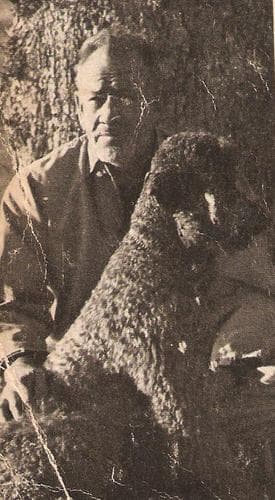
John Ernst Steinbeck was an American writer. He won the 1962 Nobel Prize in Literature "for his realistic and imaginative writings, combining as they do sympathetic humor and keen social perception". He has been called "a giant of American letters."
Similar books
- East of Eden
John Steinbeck
4.4 (429k) average on GoodreadsLiterary FictionExplores themes of good vs. evil, family legacy, and the California landscape, though with a different mystical focus.
- The Grapes of Wrath
John Steinbeck
4.0 (750k) average on GoodreadsHistorical FictionFeatures Steinbeck's signature prose and deep connection to the land and the struggles of those who work it.
- One Hundred Years of Solitude
Gabriel García Márquez
4.1 (753k) average on GoodreadsLiterary FictionRich with magical realism, allegory, and a sense of destiny tied to a specific place and family.
- The Plumed Serpent
D.H. Lawrence
3.3 (1k) average on GoodreadsLiterary FictionBoth novels explore protagonists seeking a primal, nature-based spirituality outside of conventional religion. However, Lawrence's novel is more overtly political and critical of Western civilization, focusing on the search for a new societal order in Mexico, whereas Steinbeck's is more intensely personal and psychological, centered on Joseph Wayne's individual spiritual journey and tragic fate in the California landscape.
- Growth of the Soil
Knut Hamsun
4.1 (8k) average on GoodreadsThrillerBoth works celebrate the deep connection between humanity and the land, depicting the dignity and hardship of agrarian life. Hamsun's novel, however, focuses on the sustained, peaceful establishment of a farm and the quiet strength of its protagonist, Isak, leading to prosperity. Steinbeck's "To a God Unknown" is far more tragic and mystical, with Joseph Wayne's relationship to the land escalating into a fatalistic, ritualistic devotion and ultimate self-sacrifice in the face of drought and despair.
- The Old Man and the Sea
Ernest Hemingway
3.8 (831k) average on GoodreadsLiterary FictionA Cuban fisherman's long struggle with a giant marlin becomes a story of endurance and dignity, now retold for young adults with illustrations, phonetic guides, and writing prompts in Traditional Chinese.



Enjoyed the summary?
A summary gives you the shape of the book. The book itself has the detail, the examples and the voice.
Find To a God Unknown on AmazonAs an Amazon Associate, BookBrief earns from qualifying purchases. How we're funded