
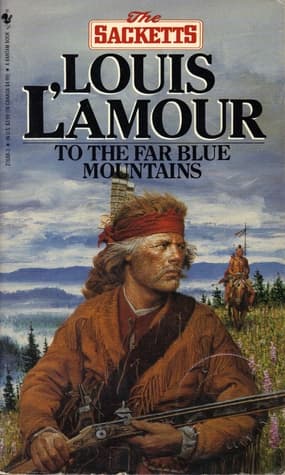
Synopsis
Covers the whole plot, including the ending.
- Difficulty
- Easy
- Pacing
- Fast
- Mood
- Action-packed, Suspenseful, Adventurous, Historical
- Read it if
- You love classic Western adventure transposed to 16th-century England, featuring a resourceful hero on the run, historical intrigue, and thrilling escapes.
- Skip it if
- You prefer slow-burn character studies or aren't interested in high-stakes chase narratives with clear-cut good and evil.
To the Far Blue Mountains Plot Summary
Covers the whole plot, including the ending.
Barnabas Sackett's Return to England and Mounting Danger
Barnabas Sackett, having established himself in the New World, returns to England to finalize his affairs and secure passage for his intended wife, Abigail. He lands in Bristol, a port familiar from his youth, but quickly discovers that his past actions have drawn the attention of Queen Elizabeth I. A royal warrant has been issued for his arrest, orchestrated by Lord Glencoe and his agents, who believe Sackett has a vast treasure of gold coins lost by King John. Sackett's earlier sale of some rare coins to finance his voyage to America is the reason for this misunderstanding. He must navigate a dangerous world of spies and informants while trying to secure his departure and protect Abigail.
The Pursuit Begins: Sackett's Escape from Bristol
Upon realizing the danger, Barnabas Sackett uses his senses and knowledge of the land to evade capture. He is pursued through the narrow streets of Bristol by Glencoe's men, led by figures like Sir Robert Carvell. Sackett uses disguises, his knowledge of secret passages, and the timely help of loyal friends and those who owe him favors to slip through the dragnet. His objective is clear: escape Bristol and make his way to London to understand the charges against him and, if possible, clear his name, or at least buy enough time to secure his passage back to America.
Journey to London and Encounter with Lady Anne
Barnabas Sackett makes his way towards London, traveling cautiously and often by night, avoiding main roads. During his journey, he encounters Lady Anne, a high-born woman with her own secrets and connections to the court. Lady Anne, intrigued by Sackett's reputation and his quiet strength, provides him with information about the political actions against him and the Queen's obsession with the lost treasure. Sackett learns that the Queen is convinced he knows the whereabouts of King John's gold, a belief fueled by Glencoe and other ambitious courtiers eager to gain favor by delivering Sackett to her.
The Web of Intrigue in London
Arriving in London, Barnabas Sackett moves through the city's underbelly, using his network of contacts from his younger days as a merchant and adventurer. He learns that the Queen's need for funds, coupled with Glencoe's personal vendetta and desire for power, is driving the hunt. Glencoe believes Sackett is holding out on the Queen, or has already found the treasure. Sackett realizes that simply proving his innocence regarding the treasure may not be enough. His very existence as a man who moves freely between worlds threatens the established order, making him a convenient scapegoat for the court's financial problems.
Abigail's Peril and Sackett's Rescue
While Sackett is in London, his fiancée, Abigail, who has been waiting for him in a secluded village, is discovered and captured by Glencoe's men. They intend to use her as bait to lure Sackett into a trap. News of Abigail's abduction reaches Sackett, igniting a fierce determination to save her. He abandons his cautious plans and sets out to rescue her, knowing that walking into their trap is a strong possibility. This event shows Sackett's deep love and loyalty, demonstrating he will prioritize Abigail's safety above his own freedom or even his life.
Confrontation and Escape from the Tower
Barnabas Sackett, using his wilderness skills and combat knowledge, infiltrates the stronghold where Abigail is being held. He confronts Glencoe's men, engaging in a series of skirmishes and strategic moves. He manages to free Abigail, but in the ensuing chaos, they are cornered. Sackett, with Abigail's help, executes a daring escape, often involving scaling walls, navigating secret passages, and fighting their way through guards. This escape is not without cost, as they are now even more deeply entrenched in the Queen's anger and must flee the capital with renewed urgency.
The Hunt Intensifies: Across the English Countryside
With Abigail by his side, Barnabas Sackett embarks on a flight across the English countryside. The pursuit intensifies, as Queen Elizabeth issues further decrees, offering rewards for Sackett's capture, dead or alive. They face numerous close calls, hiding in forests, using their knowledge of the land, and relying on the kindness of strangers and the loyalty of a few old friends. Their journey is fraught with danger, hunger, and exhaustion, as they constantly look over their shoulders, knowing that every village and every road could harbor an enemy.
Seeking Refuge and Preparing for the Atlantic Crossing
Barnabas Sackett's goal is to reach a port and secure passage back to the New World, but every major port is under surveillance. He and Abigail move towards the western coast, seeking out smaller, less-guarded fishing villages and hidden coves. Sackett uses his knowledge of ships and the sea to find a vessel willing to risk carrying them across the Atlantic. He encounters old sea captains and smugglers, negotiating discreetly for passage, all while evading the Queen's coastal patrols and spies who are now actively searching every ship leaving England.
The Final Escape and the Open Sea
After weeks of pursuit and narrow escapes, Barnabas Sackett finds a suitable ship and a captain willing to take the risk. Under the cover of darkness, Sackett and Abigail make their final dash to the waiting vessel, dodging patrols and overcoming last-minute challenges. They board the ship just as Glencoe's men close in, witnessing their pursuers arrive at the dock as their ship pulls away. As the sails unfurl and the ship heads out into the open Atlantic, Sackett and Abigail finally find a moment of peace, leaving the dangers of England behind them, bound for the far blue mountains of their new home.
Principal Figures
Barnabas Sackett
Protagonist
Resourceful adventurer and frontiersman, seeking freedom and a new life in America.
Barnabas Sackett is a man of exceptional resourcefulness, courage, and integrity. Having already made a name for himself in the New World, he possesses a deep understanding of both the wilderness and the intricacies of human nature. He is a skilled fighter, an astute observer, and a master of disguise and evasion. Driven by a desire for independence and a life free from the constraints of European aristocracy, he seeks to build a future with Abigail in America. His quiet strength and unyielding determination make him a formidable adversary to Queen Elizabeth's agents.
Relationships: Abigail (Fiancée, deep love and commitment); Lord Glencoe (Primary antagonist, relentless pursuer); Lady Anne (Ally and informant at court); Queen Elizabeth I (Powerful adversary, obsessed with the treasure)
Abigail
Supporting
Barnabas Sackett's steadfast fiancée, facing danger with resilience and loyalty.
Abigail is Barnabas Sackett's fiancée, a woman of quiet strength and unwavering loyalty. Though not a fighter in the same vein as Barnabas, she demonstrates remarkable courage and resilience in the face of immense danger. She is intelligent, resourceful in her own right, and deeply committed to Barnabas, willing to endure hardship and risk her own life for their shared future. Her capture by Glencoe's men serves as a major turning point, galvanizing Sackett's resolve and highlighting the personal stakes of his flight.
Relationships: Barnabas Sackett (Fiancée, deep love and commitment)
Lord Glencoe
Antagonist
Ambitious courtier and Queen's agent, relentlessly pursuing Sackett for the 'lost' treasure.
Lord Glencoe is the primary antagonist, an ambitious and ruthless courtier in Queen Elizabeth's court. He is driven by a thirst for power, wealth, and royal favor. Believing Barnabas Sackett possesses King John's lost gold, or at least knows its location, Glencoe orchestrates the royal warrant and leads the relentless hunt. He is cunning, manipulative, and willing to employ any means, including deception and abduction, to achieve his goals. His obsession with the treasure and capturing Sackett makes him a formidable and dangerous foe.
Relationships: Barnabas Sackett (Arch-nemesis, relentless pursuer); Queen Elizabeth I (Servant, seeking her favor and the treasure)
Queen Elizabeth I
Mentioned
The reigning monarch of England, whose financial woes drive the hunt for Sackett and the treasure.
Queen Elizabeth I is the powerful, though largely unseen, force behind the pursuit of Barnabas Sackett. Her character represents the ultimate authority and the historical context of the narrative. Facing financial difficulties in her realm, she becomes convinced that Sackett holds the key to King John's lost treasure, an obsession fueled by opportunistic courtiers like Glencoe. Her royal warrant and the vast resources of the English crown are deployed to capture Sackett, making her the ultimate, distant antagonist whose will dictates the entire plot.
Relationships: Barnabas Sackett (Target of royal warrant); Lord Glencoe (Trusted, albeit ambitious, agent)
Lady Anne
Supporting
Mysterious noblewoman with court connections, who aids Sackett with crucial information.
Lady Anne is a sophisticated and enigmatic noblewoman whom Barnabas Sackett encounters during his flight. She possesses a keen intellect and a network of contacts within the English court. Intrigued by Sackett and perhaps sympathetic to his plight, she provides him with vital intelligence regarding the Queen's obsession with the treasure and the true motives of Glencoe and his allies. Her assistance proves crucial in helping Sackett understand the forces arrayed against him, offering a glimpse into the higher echelons of English society.
Relationships: Barnabas Sackett (Temporary ally, informant)
Sir Robert Carvell
Supporting
One of Glencoe's most persistent and capable agents, tasked with hunting Sackett.
Sir Robert Carvell is a skilled and relentless agent in Lord Glencoe's employ. He is one of the more prominent figures in the direct pursuit of Barnabas Sackett, often leading the search parties in Bristol and across the countryside. Carvell is a capable tracker and fighter, representing the immediate physical threat to Sackett and Abigail. His persistence and cunning make him a recurring challenge for Sackett, forcing the protagonist to constantly employ his wits and fighting skills to evade capture.
Relationships: Barnabas Sackett (Pursuer and adversary); Lord Glencoe (Subordinate, loyal agent)
Captain Jem
Supporting
An old acquaintance of Sackett, providing aid and passage back to America.
Captain Jem is an experienced sea captain and an old acquaintance of Barnabas Sackett. He represents the network of loyal individuals Sackett can rely upon. Risking his own safety and livelihood, Captain Jem agrees to provide passage for Barnabas and Abigail back to the New World. His knowledge of the sea, his ship, and his willingness to defy royal decrees are instrumental in Sackett's ultimate escape, highlighting the theme of loyalty and the freedom offered by the sea.
Relationships: Barnabas Sackett (Old friend, provider of passage)
The Old Woman of the Inn
Supporting
A minor character who provides shelter and information to Sackett.
This unnamed old woman owns an inn in the countryside and is one of the many ordinary people who, whether out of kindness, respect for Sackett's reputation, or a disdain for royal authority, offer him assistance. She provides him with shelter, food, and crucial local intelligence about the movements of Glencoe's men. Her character embodies the quiet resistance and hidden support Sackett finds among the common folk, contrasting with the treachery of the court.
Relationships: Barnabas Sackett (Temporary benefactor, informant)
Themes & Insights
Freedom vs. Control
The central conflict of the novel is the struggle between Barnabas Sackett's desire for personal freedom and self-determination in the New World, and the control exerted by Queen Elizabeth's monarchy and her agents. Sackett's flight from England symbolizes a rejection of inherited social structures and arbitrary power. He seeks a life where a man's worth is defined by his actions, not his birthright. The pursuit by Glencoe and the Queen's men represents the attempts of the Old World to reclaim and subjugate those who forge their own path.
“He was a man who belonged to no one but himself, and that was a dangerous thing in England.”
The Allure and Corruption of Power
The pursuit of King John's lost treasure shows the corrupting influence of power and wealth. Queen Elizabeth's need for funds, coupled with Lord Glencoe's ambition, drives the entire plot. Glencoe manipulates the Queen's fears and desires, using Sackett to gain favor and consolidate his own power. This theme explores how those in positions of authority can be blinded by greed and how their actions can impact the lives of ordinary, albeit extraordinary, individuals.
“Gold was a fever that gripped men's souls, and a queen's treasury was never full enough.”
Loyalty and Betrayal
Throughout his ordeal, Barnabas Sackett encounters both loyalty and betrayal. His devotion to Abigail drives his most desperate actions, while her steadfastness gives him strength. Conversely, he faces constant betrayal from Glencoe's spies and informants. The novel explores various forms of loyalty – to loved ones, to principles, to the promise of a new life – and how these contrast with the treachery motivated by greed and ambition within the English court.
“There were men who would sell their mothers for a shilling, and others who would die for a friend.”
The Call of the Wilderness and the New World
The 'Far Blue Mountains' of the title symbolize the promise and freedom of the American wilderness. This is a contrast to the dangerous confines of Elizabethan England. Sackett's skills as a frontiersman, honed in the New World, are what allow him to survive the traps of the Old. The novel romanticizes the idea of a fresh start, a place where a man can forge his own destiny away from the historical burdens and social hierarchies of Europe. It is a powerful yearning for a simpler, more authentic existence.
“The salt wind in his face, the endless horizon... that was where a man could truly breathe.”
Plot Devices & Literary Techniques
The Royal Warrant
The primary catalyst for Sackett's flight and the central conflict.
The royal warrant issued by Queen Elizabeth I serves as the inciting incident and the constant driving force behind the plot. It immediately establishes Sackett as a fugitive and sets the stakes – torture and death if caught. This device not only propels the narrative forward but also highlights the immense power of the monarchy and the precariousness of individual freedom in Elizabethan England. It transforms Sackett's routine return to England into a desperate struggle for survival and escape.
King John's Lost Treasure
The MacGuffin that fuels the Queen's obsession and Glencoe's ambition.
King John's lost treasure, specifically the gold coins Barnabas Sackett once sold, acts as the central MacGuffin of the story. Its true existence or Sackett's knowledge of it is largely irrelevant to Sackett himself; he simply used some coins he found. However, the Queen's belief in its existence, and Glencoe's conviction that Sackett possesses or knows its location, is the primary motivation for the relentless pursuit. This device creates the illusion of a grander conspiracy and provides a tangible, albeit false, objective for the antagonists.
Sackett's Wilderness Skills
A character device showcasing Sackett's adaptability and unique abilities.
Barnabas Sackett's honed wilderness skills, acquired in the American frontier, function as a crucial plot device allowing him to repeatedly evade capture in a European setting. His ability to track, move silently, find sustenance, understand natural signs, and fight effectively in close quarters makes him an almost superhuman figure against the more conventional methods of his pursuers. This device emphasizes the contrast between the 'civilized' Old World and the 'wild' New World, demonstrating the superiority of practical survival knowledge over courtly intrigue.
The Pursuit Narrative
The overarching narrative structure, focusing on constant evasion and escape.
The entire novel is structured as a relentless pursuit narrative. From the moment Sackett lands in Bristol until he sails away, he is constantly being hunted. This device creates sustained tension and a sense of urgency, forcing Sackett to be perpetually on the move and to think several steps ahead of his pursuers. The series of narrow escapes, disguises, and strategic maneuvers keeps the reader engaged in the immediate moment of survival, highlighting Sackett's resilience and resourcefulness.
To the Far Blue Mountains Quotes
“A man's got to stand for something, or he'll fall for anything.”
“The wilderness was a great teacher, and it taught its lessons hard.”
“There's no place a man can't go if he's got the guts and the will.”
“It was the land that shaped a man, and the mountains that tried his soul.”
“A good horse is half a man, and sometimes more.”
“Fear was a cold hand, but courage was a fire that could burn it away.”
“Every trail has its end, but a man's spirit can go on forever.”
“The wind carried tales, if you knew how to listen.”
“You can lose everything but your name, and that's the one thing you can't afford to lose.”
“There are some things a man just has to do, whether he wants to or not.”
“The past was like a shadow, always following, but never quite catching up.”
“Water was life, and finding it was often the difference between living and dying.”
“A man's word was his bond, and a broken word was a broken man.”
“The stars were a map, and the wind was a compass, if you knew how to read them.”
Quiz
10 questions on the plot and the characters. Each answer comes with a short explanation.
Question 1
Why was a royal warrant sworn out against Barnabas Sackett upon his return to England?
- He was accused of piracy in the New World.
- He was believed to possess a great treasure lost by King John.
- He had committed treason by aiding a foreign power.
- He had failed to pay taxes on his earnings from America.
Show answer
B. He was believed to possess a great treasure lost by King John. The royal warrant was issued because Barnabas Sackett had sold rare gold coins to finance his first trip to America, which were believed to be part of King John's lost treasure. Queen Bess then suspected he possessed the rest.
Question 2
What was Barnabas Sackett's primary goal when he decided to leave England initially?
- To escape a forced marriage.
- To seek adventure and explore new lands.
- To make his fortune in the New World.
- To avoid a family feud.
Show answer
C. To make his fortune in the New World. The description explicitly states that Barnabas Sackett was leaving England 'to make his fortune in the New World.'
Question 3
Who is the monarch described as relentlessly pursuing Barnabas Sackett?
- King James I
- Queen Victoria
- Queen Bess
- King Henry VIII
Show answer
C. Queen Bess The text clearly states, 'Believing that Sackett possesses the rest of the treasure, Queen Bess will stop at nothing to find him.' Queen Bess is a common nickname for Queen Elizabeth I.
Question 4
What specifically caused suspicion regarding the gold coins Barnabas Sackett sold?
- They were foreign currency not recognized in England.
- They were believed to be part of a treasure lost by King John.
- They were counterfeit and illegally minted.
- They were stolen from a wealthy merchant's estate.
Show answer
B. They were believed to be part of a treasure lost by King John. The text states the coins were 'believed to be part of a great treasure lost by King John years before,' which is why they attracted royal attention.
Question 5
What is the ultimate fate Barnabas Sackett faces if he is caught by Queen Bess's men?
- Imprisonment in the Tower of London.
- Exile to a remote colony.
- Brutal torture and execution on the gallows.
- Forced labor in the royal mines.
Show answer
C. Brutal torture and execution on the gallows. The book description explicitly states, 'If he’s caught, not only will his dream of a life in America be lost, but he will be brutally tortured and put to death on the gallows.'
Question 6
What is the central conflict Barnabas Sackett faces after returning to England?
- Reconciling with estranged family members.
- Navigating political intrigue at court.
- Attempting to return to America while being hunted by the Crown.
- Recovering lost family lands and titles.
Show answer
C. Attempting to return to America while being hunted by the Crown. The core of the plot is 'discovers that finding his way back to America may be impossible' due to the royal warrant and being hunted, making his return to America the central struggle.
Question 7
What is the primary motivation behind Queen Bess's relentless pursuit of Barnabas Sackett?
- To punish him for abandoning England.
- To recover the lost treasure of King John.
- To prevent him from financing rebellious factions.
- To make an example of someone who defies royal authority.
Show answer
B. To recover the lost treasure of King John. Queen Bess's motivation is directly stated: 'Believing that Sackett possesses the rest of the treasure, Queen Bess will stop at nothing to find him.'
Question 8
The title 'To the Far Blue Mountains' most likely symbolizes what for Barnabas Sackett?
- A specific geographical location in England he hopes to reach.
- The insurmountable obstacles he faces in England.
- His ultimate dream of freedom and a new life in America.
- The hidden location of King John's treasure.
Show answer
C. His ultimate dream of freedom and a new life in America. Given the plot, 'The Far Blue Mountains' represents the distant, perhaps unattainable, dream of America and the free life he envisions there, a common metaphorical device for distant goals or freedom in Westerns and historical fiction.
Question 9
Which of the following best describes the genre of 'To the Far Blue Mountains' based on the provided summary?
- Fantasy Adventure
- Romantic Drama
- Historical Thriller/Adventure
- Legal Drama
Show answer
C. Historical Thriller/Adventure The book is explicitly labeled 'Historical Fiction' and the plot involves high stakes, a chase, and a man's fight for survival and freedom, fitting well within a 'Historical Thriller/Adventure' subgenre.
Question 10
What does Barnabas Sackett's predicament upon returning to England highlight about the power of the monarchy in his time?
- The limited reach of royal authority beyond the capital.
- The absolute power of the monarch to pursue and punish individuals.
- The reliance of the Crown on popular support for justice.
- The strict adherence to due process for all citizens.
Show answer
B. The absolute power of the monarch to pursue and punish individuals. The fact that Queen Bess 'will stop at nothing to find him' and he faces 'brutal torture and put to death' for simply being suspected of possessing treasure, without a trial mentioned, demonstrates the absolute and far-reaching power of the monarch.
To the Far Blue Mountains FAQ
What is 'To the Far Blue Mountains' about?
'To the Far Blue Mountains' tells the story of Barnabas Sackett, who, after a successful venture in the New World, returns to England to finalize affairs before a permanent move. However, he finds himself a hunted man due to a royal warrant issued by Queen Elizabeth I, who believes he possesses a lost royal treasure connected to some rare gold coins he previously sold.
Why should I read 'To the Far Blue Mountains'?
You should read 'To the Far Blue Mountains' for its thrilling escape narrative set against the backdrop of Elizabethan England and the untamed American wilderness. It offers a classic L'Amour tale of a resourceful individual against powerful forces, filled with historical intrigue, high stakes, and the enduring dream of freedom in a new land.
What is the background/setting of 'To the Far Blue Mountains'?
The book is primarily set in Elizabethan England, specifically various ports and clandestine locations as Barnabas Sackett evades capture. The looming threat of the American wilderness, which represents his ultimate goal and freedom, serves as a significant contrasting backdrop to the political machinations and dangers he faces in England.
What writing style does Louis L'Amour use in this book?
Louis L'Amour employs his signature straightforward, action-oriented prose, rich with vivid descriptions of landscapes and historical details. His style emphasizes character resilience, a strong sense of place, and a relentless narrative drive, keeping the reader immersed in Barnabas Sackett's desperate flight and determined quest for freedom.
What minor details add significant meaning in Barnabas Sackett's journey?
The specific details surrounding the rare gold coins Barnabas sold are crucial, as they are mistakenly linked to King John's lost treasure, fueling Queen Elizabeth's relentless pursuit. This detail not only instigates the plot but also highlights the historical superstitions and royal avarice of the era.
What are some subtle foreshadowing moments regarding Barnabas's fate?
Subtle foreshadowing exists in the initial descriptions of Barnabas's desire for the New World, implying that his journey there won't be simple or without significant obstacles. The detailed accounts of royal power and the Queen's determination early on hint at the immense and relentless challenge he will face, suggesting his escape will demand extraordinary cunning and luck.
What are unspoken character motivations driving Queen Elizabeth's pursuit of Barnabas?
Beyond the explicit desire for the 'lost treasure,' Queen Elizabeth's unspoken motivations likely include a need to assert absolute royal authority and to prevent any perceived challenge to her power or wealth. Her relentless pursuit of Barnabas, even for a presumed treasure, underscores her determination to maintain control and crush any individual who might appear to defy her will.
What psychological complexities does Barnabas Sackett exhibit during his escape?
Barnabas Sackett exhibits remarkable psychological resilience and adaptability. Despite the constant threat of capture, torture, and death, he maintains a clear focus on his ultimate goal of reaching America. His ability to think several steps ahead, trust his instincts, and leverage his knowledge of various cultures showcases a mind under extreme pressure yet refusing to break.
What are the major emotional turning points for Barnabas Sackett?
A major emotional turning point for Barnabas is the moment he realizes the true extent of the royal warrant against him, transforming his planned return to America into a desperate flight for survival. Another significant point is when he must make difficult choices about whom to trust, understanding that any misstep could lead to his demise and the loss of his dream.
'To the Far Blue Mountains' ending explained: how it ends & what it means.
The ending of 'To the Far Blue Mountains' sees Barnabas Sackett, through sheer determination and resourcefulness, finally evading his pursuers and making his way back to the New World. It signifies his triumph over overwhelming odds and the successful realization of his dream of freedom, symbolizing the enduring spirit of individuals who seek a new life beyond the reach of old-world constraints and royal decrees.
About the author
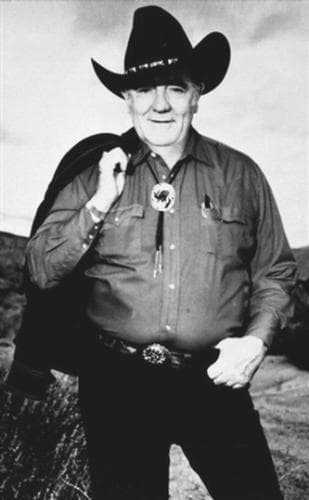
Louis L'Amour was an American author known for his Western novels and adventure fiction. His notable works include "Last of the Breed," "The Walking Drum," "To the Far Blue Mountains," "Jubal Sackett," "The Daybreakers," and "The Sackett Brand," which often explore themes of frontier life and rugged individualism. L'Amour's storytelling has made a significant impact on the genre of Western literature.
Similar books
- Kidnapped
Robert Louis Stevenson
3.8 (58k) average on GoodreadsHistorical FictionFeatures a young man on the run across historical landscapes, evading captors and facing constant danger.
- The Scarlet Pimpernel
Emmuska Orczy
4.1 (124k) average on GoodreadsHistorical FictionInvolves a clever hero outwitting authorities in a historical setting, focused on daring escapes and hidden identities.
- Shane
Jack Schaefer
3.9 (10k) average on GoodreadsHistorical FictionA Western classic with a skilled, mysterious hero who must confront overwhelming odds for survival and justice.
- Lonesome Dove
Larry McMurtry
4.5 (149k) average on GoodreadsHistorical FictionMcMurtry's Lonesome Dove offers a far more complex and melancholic exploration of the frontier, with deeply flawed characters and a greater focus on psychological depth and the often tragic consequences of westward expansion, in contrast to L'Amour's more straightforward heroism and adventurous plots. McMurtry delves into the ambiguities and moral compromises of the West, providing a less idealized view.
- To Kill a Mockingbird
Harper Lee
4.3 (4.5M) average on GoodreadsHistorical FictionIn the 1930s Jim Crow South, Harper Lee writes about racial injustice, moral growth, and the quiet courage of a lawyer father, Atticus Finch, as seen through his young daughter's eyes.
- The Great Gatsby
F. Scott Fitzgerald
3.9 (3.8M) average on GoodreadsHistorical FictionIn the opulent Roaring Twenties, a mysterious millionaire's lavish parties hide his desperate, tragic pursuit of a lost love, exposing the emptiness within the American Dream.





Enjoyed the summary?
A summary gives you the shape of the book. The book itself has the detail, the examples and the voice.
Find To the Far Blue Mountains on AmazonAs an Amazon Associate, BookBrief earns from qualifying purchases. How we're funded