

Synopsis
Covers the whole plot, including the ending.
- Difficulty
- Medium
- Pacing
- Slow
- Mood
- Philosophical, Melancholy, Absurdist, Humorous, Reflective
- Read it if
- You appreciate philosophical musings on literature, censorship, and the human condition, delivered with dark humor and a touch of the absurd.
- Skip it if
- You prefer fast-paced plots with clear resolutions and dislike introspective, stream-of-consciousness narratives.
Too Loud a Solitude Plot Summary
Covers the whole plot, including the ending.
The Cellar of Knowledge
Haňťa, an old man who has spent 35 years compacting wastepaper in a Prague cellar, introduces himself and his unusual life. He describes his job, feeding old books, newspapers, and other paper into a hydraulic press. However, Haňťa cannot bring himself to destroy beautiful or meaningful books, so he rescues them, often at the last moment. His small apartment above the cellar is overflowing with these salvaged treasures, creating a personal library that has shaped his intellect and worldview. He muses on the irony of his profession: a destroyer of books who has become deeply educated by them, blurring his own thoughts with those of the great philosophers and writers he has encountered.
Coffee, Beer, and Philosophy
Haňťa details his daily rituals, which involve coffee, beer, and deep thought inspired by the books he handles. He often drinks beer while working, finding solace and clarity in the simple act. He recounts an incident where he accidentally compacted himself into a bale with a statue of Hegel, a moment that shows his deep connection to the intellectual world he both destroys and preserves. He often reflects on knowledge, beauty, and the human condition, frequently quoting or paraphrasing the authors he has read. His musings are punctuated by the rhythmic thud of the hydraulic press, a constant reminder of his unique role.
The Gypsy Girl and the Bar
Haňťa remembers his youth and an encounter with a young gypsy girl. He bought her a beer and tried to educate her with a book by Kant, but she dismissed it for practical concerns. This memory shows Haňťa's early, perhaps naive, idealism about the power of books and the different ways people engage with knowledge. He also recalls the bar where he spent much of his early life, observing the interactions and conversations of ordinary people, which further shaped his understanding of the world alongside his growing literary education. These early experiences set the stage for his later intellectual development.
The Arrival of the Young Men
The story changes with the arrival of a group of young, muscular, and efficient workers. These men represent the future: a new, fully automatic hydraulic press is being installed, designed to compact wastepaper with unprecedented speed and without human intervention. Haňťa observes them with disdain and resignation. Their methods are brutal and unthinking; they compact everything without a second glance, a stark contrast to Haňťa's careful, almost reverent, approach to books. He understands that this modernization will make his unique, humanistic role obsolete, signaling the end of his era.
The New Press and the Old Ways
The new automatic press is installed, a massive, impersonal machine that dwarfs Haňťa's old, familiar equipment. He watches as the young workers feed vast quantities of paper into it, including valuable books, without hesitation. The efficiency of the new press is undeniable, but it lacks the soul and discretion Haňťa brings to his work. He feels increasingly alienated and redundant; his practice of saving books is now irrelevant. The noise and speed of the new machine symbolize the relentless march of progress that threatens to crush not just paper, but also the individual spirit and the appreciation for culture.
His House of Books
Haňťa's apartment, filled to the brim with salvaged books, is more than just a living space; it is a sanctuary and a testament to his life's work. He describes the precarious stacks of books, reaching the ceiling, creating narrow pathways through his home. Each book represents a victory against destruction, a preserved fragment of human thought and beauty. This personal library is his true university, a chaotic yet meaningful collection that has shaped his identity. He finds comfort and intellectual stimulation within these walls, even as the outside world threatens to strip him of his purpose.
The Farewell to His Press
As the new press takes over, Haňťa spends more time with his old hydraulic press, treating it almost like a living thing. He cleans it, oils it, and remembers the countless bales of paper and books it has helped him process over the decades. This old machine is not just a tool; it is a partner in his unique form of resistance. He understands that his time is ending, and he contemplates his future without the work that has defined him. The impending loss of his job is not merely economic; it is an existential threat to his identity and purpose.
A Final Act of Preservation
In his final days of work, Haňťa performs one last, significant act of preservation. He carefully selects a few more precious books, rescuing them from the new, impersonal press. These books represent the culmination of his life's philosophy: that beauty and knowledge, even when faced with overwhelming destruction, must be saved. He reflects on the cycle of creation and destruction, and the lasting power of ideas. He understands that while his physical role as a compactor is ending, the spirit of intellectual preservation he embodies will persist.
The Vision of the Angels
Haňťa's mind, full of centuries of wisdom, begins to blur the lines between reality and his vast literary knowledge. He experiences vivid, almost hallucinatory visions, particularly of angels or divine beings, often associated with the books he has read. These visions are not madness but a manifestation of his internal world, where philosophy, poetry, and everyday life are intertwined. He sees the world through the lens of his beloved authors, finding deeper meaning and beauty in the mundane, even as his own life approaches its perceived end.
Going Down with the Ship
Confronted with the obsolescence of his life's work, Haňťa makes a final, symbolic choice. He envisions himself entering the hydraulic press, not as a victim, but as a deliberate act of self-compacting, becoming one with the paper and books he has dedicated his life to. This act is not despair, but an affirmation of his identity as a preserver of culture. It is his way of 'going down with the ship,' a final, poetic gesture that ensures his legacy is intertwined with the essence of the written word he so deeply cherished. He becomes, in a sense, another bale of knowledge.
Principal Figures
Haňťa
Protagonist
A philosophical wastepaper compactor with a deep love for books.
Haňťa is a 60-year-old man who has spent 35 years working in a wastepaper cellar in Prague. Despite his humble profession, he is an autodidact, having secretly salvaged and read countless philosophical and literary classics from the paper he was meant to destroy. He is deeply introspective, philosophical, and melancholic, yet possesses a dark, ironic sense of humor. He finds beauty and profound meaning in the written word, which has shaped his entire worldview. He is a solitary figure, but his mind is populated by the voices of great thinkers.
Relationships: His Hydraulic Press (A long-time, almost sentient partner in his work and philosophical companion.); The Gypsy Girl (A past encounter representing the clash between intellectual and practical knowledge.); The Young Workers (Antagonistic, representing the modern, unthinking destruction of culture.)
The Young Workers
Antagonists/Symbolic Figures
Muscular, efficient, and unthinking agents of modernization.
These are a group of young, strong men introduced towards the end of Haňťa's career. They are depicted as robust, unburdened by intellect, and solely focused on efficiency. They operate the new, automatic hydraulic press with brutal indifference, compacting everything without discrimination, including valuable books. They symbolize the relentless march of technological progress, the dehumanizing aspects of industrialization, and the unthinking destruction of culture and intellectual heritage. They are a stark contrast to Haňťa's thoughtful, almost reverent approach to his work.
Relationships: Haňťa (Represent a generational and philosophical clash; they are the agents of his obsolescence.)
The Gypsy Girl
Mentioned/Symbolic Figure
A memory from Haňťa's youth, representing practical wisdom.
A young gypsy girl from Haňťa's past, recalled in a flashback. He attempted to share his burgeoning intellectual passion with her, offering her a book by Kant. She, however, dismissed it in favor of a more immediate, practical concern for beer. She represents a different kind of wisdom—one rooted in practical experience and immediate needs, contrasting with Haňťa's abstract intellectual pursuits. Her brief appearance highlights the tension between theoretical knowledge and lived reality, and Haňťa's early attempts to reconcile these two worlds.
Relationships: Haňťa (A brief, formative encounter that shaped his understanding of human nature and knowledge.)
The Hydraulic Press (Haňťa's Old One)
Supporting/Symbolic Figure
Haňťa's loyal, almost sentient partner in his work.
Haňťa's old hydraulic press is more than just a machine; it is a constant companion and confidant. He imbues it with personality, talking to it, cleaning it, and reflecting on the thousands of tons of paper and books they have processed together. It is through this press that Haňťa performs his unique act of preservation and destruction. It symbolizes his life's work, his daily ritual, and his connection to the physical world of paper and ink. The press is an extension of his will, a tool that facilitates his intellectual rebellion.
Relationships: Haňťa (A deep, symbiotic relationship; a tool that becomes an almost living entity.)
The New Automatic Press
Antagonist/Symbolic Figure
A monstrous, impersonal machine representing modernization and cultural destruction.
This massive, state-of-the-art machine is brought in to replace Haňťa's old press and the human labor associated with it. It is described as efficient, brutal, and completely indiscriminate, devouring vast quantities of paper without a second thought for its content or value. The new press symbolizes the unstoppable force of technological progress, the impersonal nature of modern industry, and the systematic destruction of cultural heritage in the name of efficiency. It is the direct cause of Haňťa's redundancy and a harbinger of a future he cannot comprehend or accept.
Relationships: Haňťa (The direct cause of his obsolescence and a symbol of everything he opposes.)
Themes & Insights
The Indestructibility of the Written Word
Despite Haňťa's job to destroy books, the novel argues for the lasting power of the written word. Haňťa himself becomes a living example of this, absorbing the knowledge and beauty of the books he saves. Even as books are physically compacted, their ideas and essence persist, either in Haňťa's mind or in the salvaged copies that fill his home. The final image of Haňťa contemplating his own compaction into a bale of books suggests a symbiotic relationship where even in physical destruction, the individual becomes part of the larger, eternal body of literature. This theme is central to his entire life's work and his philosophical outlook.
“For thirty-five years I've been compacting old paper and I'm a scholar in my own right, though I never attended any university, because I attended a university of time and books, and I have compacted myself into a man who is proof against himself.”
The Conflict Between Culture and Progress/Efficiency
The novel shows the tension between preserving culture and the relentless drive for efficiency and modernization. Haňťa represents the former, carefully sifting through paper to save valuable books, valuing their content above all else. The new automatic press and the young workers embody the latter, prioritizing speed and output over meaning or heritage. This conflict leads to Haňťa's obsolescence, as his thoughtful, humanistic approach is deemed inefficient. The book criticizes a society that discards its intellectual treasures in favor of unthinking industrial progress.
“And the young men, they don't give a damn about anything. They just throw it all in, books, pictures, everything, into the new press. They don't even look.”
Autodidacticism and the Nature of Knowledge
Haňťa is an example of an autodidact, someone who gains a vast education through self-study. His 'university' is the mountains of wastepaper he processes, from which he extracts philosophical texts, poetry, and history. The novel explores how knowledge is acquired, not necessarily through formal institutions, but through passionate engagement and personal experience. Haňťa's mind becomes a melting pot of his own thoughts and the ideas of great thinkers, blurring the lines of authorship and showing how knowledge becomes deeply integrated into one's identity. His education is both accidental and deliberate, making him a unique intellectual.
“My education has been so unwitting that I can't quite tell which of my thoughts are my own and which come from my books.”
Solitude and the Inner Life
Haňťa's life is characterized by deep solitude, spent mostly in his cellar with his press and in his book-filled apartment. This physical isolation, however, creates a rich and active inner life. His mind is constantly engaged in philosophical discourse, debates, and reflections, drawing on the vast library he has internalized. His solitude is not lonely but a fertile ground for intellectual growth and self-discovery. The 'loud' solitude refers to the many ideas and voices within his mind, showing the power of internal experience over external interaction.
“I am a jug full of beer and wisdom, a jug that is constantly overflowing.”
Plot Devices & Literary Techniques
First-Person Stream of Consciousness
The entire narrative is Haňťa's unfiltered thoughts and reflections.
The novel is told entirely through Haňťa's first-person stream of consciousness. This allows the reader direct access to his complex inner world, his philosophical musings, memories, and observations, often without clear chronological order. This technique blurs the lines between his own thoughts and the ideas he has absorbed from books, effectively demonstrating his unique intellectual state. It creates an intimate, subjective, and often poetic narrative voice, immersing the reader in Haňťa's unique perspective on life, literature, and his impending obsolescence.
Symbolism of the Hydraulic Press
The press represents both destruction and the transformative power of ideas.
The hydraulic press is a central symbol in the novel. On one hand, it represents destruction, the force that obliterates paper and, by extension, knowledge and culture. On the other hand, for Haňťa, it is an instrument of salvation and transformation. It allows him to 'rescue' books, and its rhythmic action becomes a backdrop to his philosophical contemplation. Ultimately, it symbolizes the cyclical nature of creation and destruction, and Haňťa's final vision of himself entering the press suggests a profound transformation, becoming one with the very essence of the written word.
Allusions and Intertextuality
Haňťa's narrative is rich with references to philosophical and literary works.
The novel is saturated with allusions to countless philosophers, writers, and literary works, including Kant, Hegel, Schopenhauer, Lao-tzu, and many others. These allusions are not merely decorative; they are integral to Haňťa's character and worldview. He quotes, paraphrases, and synthesizes these ideas, demonstrating how his mind has become a living library. This intertextuality highlights the novel's central theme of the enduring power of the written word and how knowledge shapes identity, making Haňťa a product of the very culture he works to save.
Irony
The discrepancy between Haňťa's job and his intellectual pursuits.
Irony is a pervasive plot device, primarily stemming from the central paradox of Haňťa's existence: he is employed to destroy books, yet he becomes profoundly educated and enriched by them. This creates a deep, often darkly humorous, irony in his daily life and philosophical reflections. The contrast between his humble, manual labor and his sophisticated intellectual life, or between the literal destruction of books and their symbolic indestructibility, underpins much of the novel's meaning and provides a critical lens through which to view societal values.
Too Loud a Solitude Quotes
“For thirty-five years now I’ve been in a wastepaper an' that’s my life. I’m a compactor. I’m a papermasher. I live in a world of wastepaper, and I’m the king of it.”
“I’ve had a lot of education, so I know that when a man is alone, he is not alone, but is in the company of his thoughts.”
“My mind is a storehouse of all sorts of rubbish, because I am a rubbish collector.”
“I carry my whole library on my back, I have for thirty-five years, and I’m proud of it.”
“I have never been able to read a book without spilling beer on it.”
“Beauty and knowledge, knowledge and beauty, that’s my life, that’s my love, that’s my joy.”
“For thirty-five years I’ve been compacting paper, and in that time I’ve compacted everything there is to compact.”
“When I compact an especially beautiful book, I feel like I’m compacting a piece of myself.”
“My heart is a compactor too, it compacts all the beautiful things that come my way, and it keeps them safe.”
“The more I learn, the more I realize how much I don’t know.”
“I am a connoisseur of trash.”
“Every time I hear the compactor start up, I feel a pang in my heart, a pang for all the wisdom that’s about to be crushed.”
“I don’t know if I’m destroying books or saving them. Maybe both.”
“The greatest truths are often found in the most unlikely places.”
Quiz
10 questions on the plot and the characters. Each answer comes with a short explanation.
Question 1
For how many years has Haňťa worked as a compactor of wastepaper and books?
- 20 years
- 35 years
- 50 years
- 15 years
Show answer
B. 35 years The book description explicitly states that Haňťa has worked for 35 years as a compactor.
Question 2
What is Haňťa's primary job in the story?
- Librarian
- Bookbinder
- Compactor of wastepaper and books
- Censor for the police state
Show answer
C. Compactor of wastepaper and books Haňťa's central role is compacting wastepaper and books, which forms the basis for his unique education and predicament.
Question 3
What unexpected consequence has Haňťa's job had on him?
- He has become a celebrated author.
- He has acquired an unwitting education from the books he compacts.
- He has developed a strong dislike for all literature.
- He has become wealthy by selling rare books.
Show answer
B. He has acquired an unwitting education from the books he compacts. The synopsis highlights that Haňťa has 'acquired an education so unwitting he can't quite tell which of his thoughts are his own and which come from his books.'
Question 4
Why does Haňťa's job ultimately become redundant?
- He retires voluntarily.
- He is fired for rescuing too many books.
- A new automatic press is introduced.
- The police state bans all book compacting.
Show answer
C. A new automatic press is introduced. The description states, 'But when a new automatic press makes his job redundant there's only one thing he can do - go down with his ship.'
Question 5
What is the primary thematic significance of Haňťa's house being 'filled to the rooftops' with rescued books?
- It shows his hoarding tendencies.
- It symbolizes the overwhelming nature of knowledge and the resistance of ideas to destruction.
- It illustrates his ambition to open a private library.
- It represents his eventual financial ruin.
Show answer
B. It symbolizes the overwhelming nature of knowledge and the resistance of ideas to destruction. The overflowing house of books is a powerful symbol of the 'indestructibility' of the written word, even in the face of destruction and censorship, a core theme of the novel.
Question 6
How does Haňťa reconcile his dual roles as a 'destroyer of the written word' and its 'perpetrator'?
- He secretly writes his own books to counteract the destruction.
- He rescues books from the press, preserving them and internalizing their content, thus perpetuating their ideas.
- He believes destruction is necessary for new ideas to emerge.
- He doesn't; this is an internal conflict he fails to resolve.
Show answer
B. He rescues books from the press, preserving them and internalizing their content, thus perpetuating their ideas. Haňťa's role as 'perpetrator' comes from his act of saving books and absorbing their knowledge, making him a vessel for the very words he is tasked to destroy.
Question 7
The book is described as an 'eccentric romp celebrating the indestructibility' of the written word against what forces?
- Poor literary criticism and declining readership.
- Censorship, political oppression, and other forms of suppression.
- The rise of digital media and e-books.
- Natural disasters and the passage of time.
Show answer
B. Censorship, political oppression, and other forms of suppression. The synopsis directly states it celebrates the indestructibility 'against censorship, political oppression etc - of the written word.'
Question 8
What is the philosophical implication of Haňťa's inability to distinguish between his own thoughts and those from his books?
- It suggests a loss of personal identity due to overwork.
- It highlights the profound influence of accumulated knowledge on individual consciousness and the fluidity of self.
- It indicates a mental illness brought on by solitude.
- It implies that he is merely quoting the books he reads.
Show answer
B. It highlights the profound influence of accumulated knowledge on individual consciousness and the fluidity of self. This detail delves into the philosophical aspect of the story, showing how external knowledge can deeply integrate and shape one's inner world, blurring the lines of original thought and absorbed wisdom.
Question 9
The phrase 'go down with his ship' when his job becomes redundant implies what about Haňťa's character and choices?
- He plans to literally sink a ship.
- He intends to commit suicide as a final act of defiance or solidarity with his life's work.
- He will retire to a life at sea.
- He will find a new job in maritime industry.
Show answer
B. He intends to commit suicide as a final act of defiance or solidarity with his life's work. The idiom 'go down with his ship' in this context suggests Haňťa will face his end in a manner consistent with his devotion to his work, implying a tragic, self-sacrificial act tied to the press and the books.
Question 10
Considering the setting of a 'Czech police state,' what broader commentary might the 'indestructibility of the written word' offer?
- It suggests that art and literature thrive best under authoritarian regimes.
- It highlights the futility of state censorship and the enduring power of ideas to resist suppression and tyranny.
- It argues that physical books are superior to digital formats in times of crisis.
- It implies that totalitarian states secretly encourage intellectualism.
Show answer
B. It highlights the futility of state censorship and the enduring power of ideas to resist suppression and tyranny. Given the context of a police state, the theme of indestructibility directly challenges the state's efforts at control and censorship, affirming that ideas and knowledge persist despite attempts to crush them.
Too Loud a Solitude FAQ
What is Haňťa's profession and how long has he been doing it?
Haňťa works as a compactor of wastepaper and books in a Czech police state. He has been performing this job for thirty-five years, meticulously feeding mountains of discarded literature into a hydraulic press.
How has Haňťa's job impacted his personal intellectual development?
Through his daily interaction with discarded books, Haňťa has unwittingly acquired a vast, eclectic education. He absorbs the wisdom, philosophy, and history contained within the pages, often finding it difficult to distinguish his original thoughts from those he has internalized from the literature.
What is the central conflict or threat that Haňťa faces in the story?
Haňťa faces redundancy due to the introduction of a new, more efficient automatic press. This modern machinery threatens to replace his manual labor and, more significantly, end his unique relationship with the books he processes.
Describe Haňťa's living situation and its connection to his work.
Haňťa's small apartment is overflowing with the books he has rescued from the hydraulic press over the decades. These salvaged volumes are stacked to the ceiling, transforming his home into a personal library that mirrors his internal world, a testament to his reverence for the written word.
What is Haňťa's ultimate response to the impending obsolescence of his job?
Rather than accept his fate quietly, Haňťa chooses to 'go down with his ship.' He plans a symbolic act of defiance and self-immolation, intending to compact himself along with his beloved books, thereby becoming one with the knowledge he has cherished.
How does the 'new automatic press' symbolize broader societal changes within the narrative?
The new automatic press symbolizes the impersonal, efficient, and often destructive forces of modernization, industrialization, and totalitarian control. It represents a system that prioritizes efficiency and conformity over individual craftsmanship, intellectual depth, and human connection to culture.
What is the significance of the 'angels' that Haňťa sometimes perceives?
Haňťa sometimes sees 'angels' emerging from the compacted bales of paper, which can be interpreted as manifestations of the beauty, truth, and spiritual essence contained within the destroyed books. These visions highlight the enduring power of ideas even in the face of physical destruction.
How does Haňťa's recurring dream of 'St. John of the Cross' relate to his journey?
Haňťa's recurring dream of St. John of the Cross, a mystic who wrote about the 'dark night of the soul,' connects to his own spiritual and intellectual solitude. It reflects his profound engagement with suffering, knowledge, and the search for meaning amidst destruction, much like a spiritual journey.
What role do the historical figures and philosophers mentioned by Haňťa play in the story?
The historical figures and philosophers Haňťa frequently references—such as Kant, Schopenhauer, or Lao-tzu—are not merely decorative; they form the very fabric of his consciousness. Their ideas become his own, demonstrating how culture and thought are internalized and shape an individual's worldview, blurring the lines between reader and author.
How does Haňťa's constant exposure to contradictory ideas affect his psychological state?
Haňťa's mind is a kaleidoscope of conflicting philosophies and ideas, leading to a unique form of intellectual syncretism. This constant exposure to paradox creates a profound sense of irony and a non-linear thought process, making him both deeply learned and profoundly eccentric, often struggling to form coherent, singular opinions.
Discuss Haňťa's relationship with solitude and how it shapes his identity.
Haňťa's solitude is not merely physical but intellectual, a necessary condition for his deep immersion in the world of books. This isolation allows him to cultivate an internal universe rich with thought and imagination, shaping his identity as an unwitting scholar and guardian of culture, yet also deepening his alienation from conventional society.
In what ways does Haňťa exhibit traits of an 'outsider' or 'rebel'?
Haňťa is an outsider due to his unconventional education and his deep devotion to discarded knowledge in a society that values control and utility. His ultimate act of self-destruction is a profound rebellion against the dehumanizing forces of the state and modernity, a final, poetic refusal to conform.
How does Haňťa's love for beauty manifest amidst his dirty, unglamorous job?
Despite the grime and mechanical nature of his work, Haňťa constantly seeks and finds beauty in the discarded books, in their language, ideas, and even their physical form. He rescues volumes with beautiful illustrations or profound passages, elevating his task from mere labor to an act of cultural preservation and aesthetic appreciation.
Is Haňťa's final act of self-compaction an act of despair or a profound statement?
Haňťa's final act can be interpreted as both a despairing response to his obsolescence and a profound statement. It is a desperate protest against cultural destruction and a poetic assertion of the indestructibility of ideas, a final fusion of man and book, making him a martyr for literature.
How does the book challenge conventional notions of 'education' and 'intellectualism'?
The book challenges these notions by presenting Haňťa, a wastepaper compactor, as a deeply educated and philosophical individual whose learning comes from unconventional sources. It suggests that true intellectualism stems from passionate engagement with ideas, regardless of formal schooling or societal status.
What is the broader message about censorship and the indestructibility of the written word?
The book argues that while physical books can be destroyed or censored, the ideas and spirit they contain are ultimately indestructible. Haňťa's absorption of these texts, even as he destroys them, symbolizes the resilience of human thought and culture against oppressive regimes and attempts to control knowledge.
How does Hrabal use humor and irony to convey serious philosophical themes?
Hrabal employs dark humor and irony, particularly through Haňťa's eccentric thoughts and actions, to make profound philosophical points. The absurdity of a man who saves books from destruction only to destroy them, or his philosophical monologues delivered amidst filth, highlights the paradoxes of life under an oppressive regime and the human spirit's resilience.
Could Haňťa be seen as a metaphor for the Czech nation or its cultural memory under communism?
Haňťa can certainly be seen as a metaphor for the Czech nation, particularly its cultural memory and intellectual spirit, under communist rule. Like Haňťa, the nation experienced attempts at suppression and destruction of its heritage, yet individuals like him secretly preserved and internalized its essence, ensuring its survival.
About the author
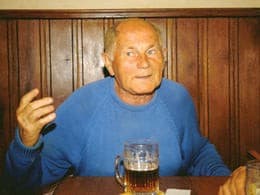
Bohumil Hrabal was a Czech writer, often named among the best Czech writers of the 20th century.
Similar books
- Fahrenheit 451
Ray Bradbury
4.0 (1.7M) average on GoodreadsFantasyExplores themes of censorship and the preservation of books in a dystopian society.
- The Master And Margarita
Mikhail Bulgakov
4.3 (243k) average on GoodreadsFantasyFeatures satirical elements, philosophical depth, and a unique, often surreal narrative voice.
- Notes from Underground
Fyodor Dostoevsky
4.2 (84k) average on GoodreadsPsychologyDelves into the mind of an isolated, introspective narrator grappling with existential questions.
- The Unbearable Lightness of Being
Milan Kundera
4.1 (342k) average on GoodreadsLiterary FictionBoth Hrabal's Too Loud a Solitude and Kundera's The Unbearable Lightness of Being are seminal works of Central European literature that grapple with themes of individual freedom, historical memory, and the absurd under totalitarian regimes. While Kundera employs a more overtly philosophical and essayistic approach, interweaving narrative with direct intellectual discourse, Hrabal's philosophy is more deeply embedded within Hanta's internal monologue and the tactile reality of his work. Kundera's characters often represent different philosophical stances, whereas Hrabal's Hanta embodies a singular, deeply personal struggle against cultural annihilation. Both, however, share a profound melancholic reflection on the human condition and the weight of existence in a politically charged landscape.
- The Old Man and the Sea
Ernest Hemingway
3.8 (831k) average on GoodreadsLiterary FictionA Cuban fisherman's long struggle with a giant marlin becomes a story of endurance and dignity, now retold for young adults with illustrations, phonetic guides, and writing prompts in Traditional Chinese.
- One Hundred Years of Solitude
Gabriel García Márquez
4.1 (753k) average on GoodreadsLiterary FictionThrough the multi-generational story of the Buendía family, a mythical town deals with the repeating patterns of time, love, and solitude, as the extraordinary mixes with the ordinary.




Enjoyed the summary?
A summary gives you the shape of the book. The book itself has the detail, the examples and the voice.
Find Too Loud a Solitude on AmazonAs an Amazon Associate, BookBrief earns from qualifying purchases. How we're funded