
Synopsis
Covers the whole plot, including the ending.
- Difficulty
- Hard
- Pacing
- Variable
- Mood
- Atmospheric, Haunting, Melancholy, Philosophical, Disorienting
- Read it if
- You are looking for a highly experimental, visually striking, and intellectually stimulating literary experience that challenges traditional notions of storytelling and the physical form of a book.
- Skip it if
- You prefer linear narratives, character-driven plots with clear resolutions, or find fragmented, abstract prose frustrating.
Tree of Codes Plot Summary
Covers the whole plot, including the ending.
The Awakening and the Question
The story begins with the unnamed protagonist waking up, feeling an inexplicable emptiness. He describes losing something vital, though he cannot say what it is. His father is present, but his presence is unsettling and fragmented, almost a ghost. The protagonist deals with the feeling that his father is both there and not there, and that his own identity is tied to this spectral figure. He questions his own existence and memory, sensing that something fundamental has been erased or altered, leaving him with a deep anxiety about the day ahead and his life's meaning.
The Search for the Father
Driven by an urgent need, the protagonist sets out to find his father, who seems to have vanished or become elusive. The city he navigates is surreal and decaying, filled with crumbling buildings and a sense of impending collapse. It is a labyrinthine space where familiar landmarks are distorted, and time itself seems fluid and fragmented. He encounters fleeting, indistinct figures and memories, all adding to the disorienting atmosphere. This search is not just physical; it is a quest for understanding, for a severed connection, and for a truth about his past and his father's being.
Encounters with the Past
As the protagonist continues his search, he is assailed by vivid, yet often unsettling, memories of his childhood. These are not clear recollections but fragmented images and sensations: a specific room, a gesture from his mother, a forgotten toy. These memories are often tinged with sadness or a sense of foreboding, suggesting a past that is both cherished and traumatic. The line between what is real and what is imagined becomes increasingly blurred, as the city itself seems to manifest these internal landscapes. He feels a constant pull towards something he cannot fully grasp, a yearning for a clarity that remains just out of reach.
The Nature of Absence
The central struggle for the protagonist is confronting absence. His father's physical presence is sporadic and often intangible, symbolizing a deeper, emotional or spiritual void. This absence extends to other parts of his life; he feels incomplete, a missing piece within himself. The story explores how absence shapes identity, how it can be a stronger presence than physical proximity. He considers memory and forgetting, and how things lost or unspoken continue to influence his present state and his perception of the world.
The Crumbling World
The city itself acts as a metaphor for the protagonist's internal state. Buildings are constantly described as crumbling, dissolving, or transforming, reflecting his fragmented memories and sense of identity. Streets are impassable, and familiar spaces become alien. This physical decay is not just background; it actively contributes to the story, creating an atmosphere of instability and impermanence. The protagonist navigates this collapsing world, his own steps echoing the disintegration around him, reinforcing the feeling that everything he knows, including himself, is about to disappear.
The Encounter with the Other
At various points, the protagonist encounters a mysterious 'other' figure, whose identity is ambiguous. This figure might be a distorted reflection of himself, a manifestation of his subconscious, or another lost soul wandering the decaying city. Their interactions are often brief, cryptic, and unsettling, marked by a shared sense of loss and confusion. These encounters deepen the protagonist's introspection, forcing him to confront aspects of himself he might prefer to ignore. The 'other' acts as a mirror, reflecting his anxieties and his fragmented understanding of his own existence and purpose within this surreal landscape.
The Weight of Time
Time in the story is not linear but subjective and oppressive. The protagonist experiences moments that stretch endlessly, while others vanish quickly. The idea of 'a last day' is central, yet the day itself seems to loop and fragment, making it impossible to know its true duration. This distortion of time adds to the pervasive sense of anxiety and disorientation. The past constantly intrudes upon the present, and the future feels both inevitable and perpetually out of reach, trapping the protagonist in a perpetual state of 'what if' and 'what was' without clear resolution.
The Unspoken Words
A major theme throughout the story is the struggle with communication, or rather, the lack thereof. The protagonist often feels he has important things to say to his father, or to others, but the words remain unspoken, or are lost, or simply cannot bridge the gap between internal experience and external expression. This inability to articulate deep feelings contributes to his isolation and despair. The gaps in the text, literal and metaphorical, highlight the difficulty of conveying complex emotions and memories, leaving much to the reader's interpretation and the protagonist's silent suffering.
The Quest for Meaning
Despite the overwhelming sense of decay and loss, the protagonist is driven by a quest for meaning. He questions why he is experiencing this 'last day,' what purpose it serves, and what, if anything, will remain. This search for meaning is not presented as hopeful but as a desperate, almost futile, attempt to impose order on a chaotic existence. He scrutinizes every detail, every fleeting image, hoping to find a clue that will unlock the deeper significance of his fragmented reality and the strange, haunting journey he is undertaking.
The Perpetual Cycle
Towards the end, the story hints at a perpetual cycle rather than a clear resolution. The 'last day' doesn't necessarily conclude with a clear end but rather seems to loop back or dissolve into an ongoing state. The protagonist's experiences of loss, confusion, and searching appear to be recurring, suggesting that true escape from his internal and external struggles might be impossible. This cyclical nature reinforces the book's themes of memory, trauma, and the enduring impact of the past, leaving the reader with a sense of unresolved, perhaps eternal, melancholy.
Tree of Codes Characters
The Protagonist (Unnamed)
Protagonist
A man grappling with loss, memory, and the elusive presence of his father on his 'last day'.
The protagonist is an unnamed, introspective man experiencing what he perceives as his 'last day.' He is deeply preoccupied with the fragmented memories of his past, particularly his relationship with his father, who appears as an elusive, almost spectral figure. He navigates a decaying, dreamlike city, driven by a profound sense of loss and an urgent need to understand his own existence. His inner world is characterized by anxiety, confusion, and a yearning for clarity amidst the surreal chaos around him. He is a sensitive and reflective individual, constantly questioning the nature of reality, memory, and identity.
Relationships: His Father (Elusive, spectral figure; source of both longing and anxiety.); His Mother (Mentioned in fragmented memories, representing a past connection.)
The Father
Supporting/Symbolic
An elusive, spectral figure, representing memory, loss, and the weight of the past.
The father is not a conventionally present character but rather an elusive, almost ghostly figure who appears and disappears, often in fragmented memories or as an intangible presence. He embodies the central themes of absence, memory, and the difficulty of connection. His actions are often unclear, his words indistinct, reflecting the protagonist's struggle to grasp his past and his relationship with this paternal figure. He represents both a source of deep longing for the protagonist and a catalyst for his profound anxiety and confusion. He is a symbolic representation of the things that are lost or left unsaid.
Relationships: The Protagonist (Son, searching for connection and understanding.); His Wife (Protagonist's Mother) (Mentioned as part of fragmented family memories.)
The City (as a character)
Antagonist/Setting
A decaying, dreamlike urban landscape that mirrors the protagonist's internal turmoil.
The city itself functions almost as a character, an oppressive and constantly shifting entity. It is a place of crumbling buildings, dissolving streets, and disorienting transformations. It actively participates in the protagonist's journey, reflecting his internal state of fragmentation, loss, and anxiety. The city is a labyrinth where past and present blur, and familiar spaces become alien. It is both a physical setting and a psychological landscape, constantly challenging the protagonist's perception of reality and reinforcing the themes of decay, impermanence, and the unreliability of memory. It acts as an external manifestation of the protagonist's inner chaos.
Relationships: The Protagonist (A deeply intertwined relationship; the city is a reflection and a tormentor.)
The Other (Unnamed Figure)
Supporting/Symbolic
An ambiguous figure encountered by the protagonist, possibly a reflection or another lost soul.
This 'other' figure appears in various forms and contexts, often fleetingly. Their identity is never fully revealed, making them a mysterious and unsettling presence. They might be a manifestation of the protagonist's own subconscious, a forgotten aspect of himself, or another individual experiencing a similar state of disorientation and loss within the decaying city. Their interactions with the protagonist are brief and cryptic, serving to deepen the sense of ambiguity and introspection. The 'other' acts as a mirror, reflecting or amplifying the protagonist's anxieties and his fragmented understanding of his own being.
Relationships: The Protagonist (Brief, unsettling encounters; possibly a reflection or parallel existence.)
Tree of Codes Themes
Loss and Absence
The most pervasive theme is the profound sense of loss and the haunting presence of absence. The protagonist deals with losing something vital, though he cannot name it. His father is an absent presence, a spectral figure embodying what is missing. This theme extends to the decaying city, where familiar structures are gone or dissolving, mirroring the protagonist's internal void. The book explores how absence can be more impactful than presence, shaping identity and perception. For example, the protagonist's constant search for his father is a search for a void, a connection that is fundamentally missing, as seen in the fragmented encounters.
“I was empty. I felt as if I had lost something, but I didn't know what it was.”
Memory and Identity
The story explores the fragile and unreliable nature of memory and its link to identity. The protagonist's past is a collection of fragmented, often distorted, recollections. He struggles to piece together who he is in the face of these elusive memories, particularly concerning his father. The blurring of past and present, and the constant questioning of what is real versus imagined, highlights how identity is not fixed but a fluid construct dependent on often unreliable internal narratives. The decaying city itself mirrors this fragmentation, as familiar places become unrecognizable, challenging the protagonist's sense of self and belonging.
“My memory was like a broken mirror, reflecting only pieces.”
The Nature of Reality
The book constantly blurs the lines between reality, dream, and hallucination. The city is surreal and constantly transforming, challenging the protagonist's perception of his surroundings. Events unfold in a non-linear, disorienting way, making it difficult to tell what is actually happening versus what is an internal experience. This theme explores how subjective reality is, especially under stress or strong emotional states. The protagonist's journey is as much an internal landscape as it is a physical one, forcing the reader to question the fabric of the world presented and the reliability of the narrator's perceptions, as seen in the constantly shifting architecture and the spectral figures.
“The city was dissolving, like a dream that melts when you try to grasp it.”
The Weight of the Past/Trauma
The story is deeply imbued with the lingering weight of the past, suggesting an unresolved trauma that underpins the protagonist's 'last day.' While never explicitly stated, the fragmented memories of his father and family, the sense of an unfixable wrong, and the pervasive melancholy point to a past event or condition that continues to exert a powerful influence. The decaying city can be seen as a manifestation of this internal trauma, crumbling under the burden of history and unspoken pain. The protagonist's inability to fully grasp his past or communicate his deepest feelings highlights the enduring, oppressive nature of unaddressed psychological wounds.
“A silence had grown between us, vast and unbridgeable, a silence that held all the unsaid things.”
Plot Devices & Literary Techniques
Die-Cut Text
The literal holes cut into the pages of the book.
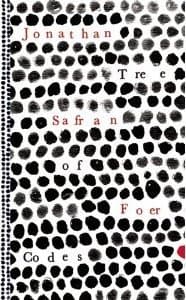
The most prominent plot device, the die-cut text, is integral to the book's meaning. By physically removing words and phrases from Bruno Schulz's 'The Street of Crocodiles,' Foer creates a new narrative. These 'holes' symbolize absence, memory gaps, and the unspoken. They force the reader to actively engage in filling in the blanks, mirroring the protagonist's own struggle to make sense of his fragmented memories and the elusive presence of his father. The physical act of reading through the cuts emphasizes the theme of what is lost and what remains, and how meaning can be found in what is deliberately omitted.
Stream of Consciousness
A narrative style that mimics the protagonist's unfiltered thoughts and feelings.
The narrative employs a stream of consciousness style, immersing the reader directly into the protagonist's fragmented and anxious mind. This device allows for a highly subjective experience of the story, reflecting the protagonist's internal turmoil, his non-linear memories, and his disoriented perception of reality. Thoughts, observations, and feelings blend without clear transitions, mirroring the dreamlike quality of the narrative and the protagonist's struggle to maintain coherence. This style creates an intimate, yet often confusing, connection with the protagonist's deeply personal and unsettling journey.
Symbolic Setting (The City)
The decaying, surreal city functions as a metaphor for the protagonist's internal state.
The city is not merely a backdrop but a powerful symbolic setting. Its constant state of decay, fragmentation, and transformation directly mirrors the protagonist's internal landscape of loss, fragmented memories, and psychological disarray. Buildings crumble, streets dissolve, and familiar spaces become alien, reflecting the protagonist's eroding sense of self and the unreliability of his reality. The city amplifies the themes of impermanence, trauma, and the impossibility of finding solid ground, making the external environment an active participant in the protagonist's internal struggle for meaning and connection.
Ambiguous Narration
The narrator's reliability and the nature of the events are left deliberately unclear.
The narrative maintains a high degree of ambiguity, particularly regarding the reliability of the protagonist's perceptions and the objective reality of the events. It is unclear if the 'last day' is literal, metaphorical, a dream, or a hallucination. The identities of other characters, especially the father and the 'other' figure, are also left vague. This ambiguity forces the reader to inhabit the protagonist's confused state, challenging them to interpret the meaning without clear answers. It reinforces the themes of memory's unreliability and the subjective nature of truth, making the reading experience an act of constant interpretation.
Tree of Codes Quotes
“Every word a tiny funeral.”
“I was looking for a way to say goodbye to something I hadn't yet said hello to.”
“The past is a foreign country; they do things differently there.”
“Some things are too important to be true.”
“I wanted to make a book that was also a sculpture.”
“The story is not in the words, but in the spaces between them.”
“To forget is to remember.”
“The world is not what it is, but what it has become.”
“A book is never finished, only abandoned.”
“What is left is more powerful than what was there.”
“The absence of a thing is a thing itself.”
“Every reader completes the book.”
“This is a story about what remains.”
Quiz
10 questions on the plot and the characters. Each answer comes with a short explanation.
Question 1
Which existing text did Jonathan Safran Foer use as the source material for 'Tree of Codes'?
- The Book of Laughter and Forgetting by Milan Kundera
- The Street of Crocodiles by Bruno Schulz
- If on a winter's night a traveler by Italo Calvino
- Ficciones by Jorge Luis Borges
Show answer
B. The Street of Crocodiles by Bruno Schulz 'Tree of Codes' was created by Jonathan Safran Foer by cutting into the pages of Bruno Schulz's 'The Street of Crocodiles'.
Question 2
What unique physical characteristic defines 'Tree of Codes' as a book?
- It is printed on transparent vellum.
- Each page has a different die-cut.
- It features pop-up illustrations on every spread.
- The text is written in multiple colors of ink.
Show answer
B. Each page has a different die-cut. The book is described as having 'a different die-cut on every page,' making it a unique sculptural object.
Question 3
What is the central narrative focus of the new story created in 'Tree of Codes'?
- A journey through a fantastical dream world.
- A character's enormous last day of life.
- The history of a forgotten town.
- A detective's investigation into a mysterious disappearance.
Show answer
B. A character's enormous last day of life. The book is explicitly described as 'the story of an enormous last day of life' for one character.
Question 4
Which literary technique is primarily employed by Foer in 'Tree of Codes' to create the new narrative?
- Stream of consciousness writing.
- Erasure poetry and found text.
- Traditional narrative structure with a clear beginning, middle, and end.
- Collaborative writing with multiple authors.
Show answer
B. Erasure poetry and found text. Foer 'cutting into and out of the pages' of an existing text to 'exhume a new story' is a form of erasure poetry or found text, where new meaning is created by removing parts of an original work.
Question 5
How does Foer describe the emotional tone and imagery within the story of 'Tree of Codes'?
- Lighthearted, whimsical, and comforting.
- Immense, anxious, and at times disorientating.
- Straightforward, factual, and journalistic.
- Humorous, satirical, and ironic.
Show answer
B. Immense, anxious, and at times disorientating. The text states Foer 'multi-layers the story with immense, anxious, at times disorientating imagery.'
Question 6
What broader implication does the narrative of 'one person’s last day' take on in 'Tree of Codes'?
- It serves as a cautionary tale against procrastination.
- It becomes a universal story, 'everyone’s story'.
- It highlights the unique experiences of a specific cultural group.
- It offers a scientific explanation for the process of dying.
Show answer
B. It becomes a universal story, 'everyone’s story'. The description notes that the story's layered approach makes 'the story of one person’s last day everyone’s story.'
Question 7
What does the phrase 'unchartered literary territory' suggest about 'Tree of Codes'?
- It explores geographical locations never before written about.
- It breaks new ground in how a book is conceived, created, and experienced.
- It tells a story about exploration and discovery.
- It combines elements of fantasy and science fiction in a novel way.
Show answer
B. It breaks new ground in how a book is conceived, created, and experienced. The 'unchartered literary territory' refers to the innovative physical form and creation method of the book, which pushes the boundaries of what a book can be.
Question 8
The description states 'Tree of Codes' was 'initially deemed impossible to make.' What specific aspect likely contributed to this perception?
- The complexity of its philosophical ideas.
- The sheer volume of text that needed to be written.
- The intricate and precise die-cutting required for every page.
- The challenge of securing publishing rights for the original text.
Show answer
C. The intricate and precise die-cutting required for every page. Given the emphasis on 'a different die-cut on every page' and the book being 'as much a sculptural object,' the manufacturing challenge of the precise die-cutting is the most logical reason for it being deemed impossible.
Question 9
How does 'Tree of Codes' challenge traditional notions of authorship and originality?
- By completely abandoning text in favor of pure imagery.
- By creating a 'new story' and 'original new story' from an 'existing text' through physical alteration, blending Foer's voice with Schulz's.
- By using artificial intelligence to generate the narrative.
- By having multiple authors write alternating chapters.
Show answer
B. By creating a 'new story' and 'original new story' from an 'existing text' through physical alteration, blending Foer's voice with Schulz's. Foer 'exhume[s] a new story from an existing text,' 'cutting into and out of the pages, to arrive at an original new story told in Jonathan Safran Foer's own acclaimed voice,' which directly questions where one author's work ends and another's begins, and what constitutes 'originality.'
Question 10
The description mentions the story 'crossing both a sense of time and place.' How might the physical structure of 'Tree of Codes' contribute to this thematic element?
- The book's heavy weight makes it feel ancient.
- The die-cuts reveal words from preceding or succeeding pages, creating a non-linear reading experience that blurs temporal and spatial boundaries.
- Each chapter is explicitly set in a different time period and geographical location.
- The use of an antique font gives it a timeless feel.
Show answer
B. The die-cuts reveal words from preceding or succeeding pages, creating a non-linear reading experience that blurs temporal and spatial boundaries. The die-cuts mean that words from other parts of the original text, and thus other narrative 'times' or 'places' within the source, are visible or implied, creating a fragmented, multi-layered experience that naturally blurs time and place for the reader.
Tree of Codes FAQ
What is the core premise of 'Tree of Codes'?
The book tells the story of an unnamed protagonist experiencing their 'enormous last day of life,' marked by a sense of impending extinction and disorienting imagery. It explores themes of memory, identity, and the liminal space between existence and non-existence, all while being physically carved out of another book.
How does the physical form of 'Tree of Codes' contribute to its meaning?
Each page is die-cut, with words and phrases removed from Bruno Schulz's 'The Street of Crocodiles,' leaving only a select few to form Foer's new narrative. This physical act of subtraction and creation mirrors the protagonist's own experience of disappearing or being 'carved out' of life, emphasizing fragility and absence.
Who is the main character, and what is known about them?
The main character is largely unnamed and amorphous, representing a universal 'everyperson' facing their final moments. We glean fragments of their life, memories, and anxieties through the remaining text, but their specific identity is deliberately obscured to broaden the story's resonance.
What role does memory play in the protagonist's 'last day'?
Memory is central, appearing as fragmented, anxious, and often disorienting recollections that intertwine with the present moment. The protagonist grapples with the weight of past experiences, both cherished and painful, as their life is 'chased to extinction,' suggesting a final reckoning with their personal history.
How does the book connect to Bruno Schulz's 'The Street of Crocodiles'?
Foer literally carves his story from Schulz's text, using its words as his raw material. This creates a palimpsest effect, where Schulz's original themes of childhood, memory, and a fantastical, decaying world subtly resonate beneath Foer's narrative, enriching its layers of meaning and melancholy.
Are there any specific recurring images or motifs in the text?
Yes, motifs of light and shadow, disappearance, transformation, and the 'tree' itself (both literal and metaphorical) recur throughout. The 'tree of codes' can be interpreted as the structure of life, memory, or even the book itself, constantly being reshaped and reinterpreted.
What is the significance of the 'enormous last day of life' phrase?
This phrase suggests that the protagonist's final day is not merely a chronological event but an expansive, overwhelming experience filled with profound emotional and existential weight. It's 'enormous' in its psychological impact and its universal implications for anyone confronting mortality.
How does Foer's 'voice' emerge from the borrowed text?
Despite using Schulz's words, Foer's distinct voice emerges through his meticulous selection, arrangement, and juxtaposition of phrases. He crafts new sentences and meanings, infusing the existing vocabulary with his characteristic blend of melancholic beauty, existential angst, and poignant reflection.
What psychological state is the protagonist in during their last day?
The protagonist experiences a complex psychological state characterized by anxiety, disorientation, a sense of impending doom, and perhaps a desperate search for meaning or resolution. They are caught between past and present, reality and memory, reflecting the turmoil of confronting the end of existence.
How does the book explore the concept of identity?
Identity is explored as fluid and fragile, particularly in the face of extinction. The protagonist's sense of self seems to be dissolving, fragmented by memories and the physical act of their story being 'cut out' from a larger whole, questioning what remains when life fades.
Is there a linear plot, or is the narrative more abstract?
The narrative is largely abstract and non-linear, mirroring the disorienting experience of the protagonist. While there's a central theme of a 'last day,' the story unfolds through fragmented images, thoughts, and memories rather than a conventional chronological plot, emphasizing emotional truth over factual progression.
What does the title 'Tree of Codes' signify?
The title can be interpreted in multiple ways: the physical structure of the book itself, with its 'branches' of text; a metaphorical 'tree of life' being deconstructed or re-coded; or even a reference to the genetic 'codes' that define existence, here being re-written or erased. It suggests a fundamental structure being manipulated.
How does the book's 'impossibility' of creation relate to its themes?
The initial 'impossibility' of making the book reflects the seemingly impossible task of articulating the experience of death or the dissolution of self. The book's very existence as a 'sculptural object' that defies conventional printing methods underscores its unique approach to profound, ineffable themes.
What is the overall tone or mood of 'Tree of Codes'?
The overall tone is haunting, melancholic, anxious, and deeply introspective. It evokes a sense of profound loss and existential reflection, yet also possesses a strange beauty derived from its unique form and poetic language, creating a dreamlike and poignant atmosphere.
Does the book offer any hope or resolution for the protagonist?
Resolution is not offered in a traditional sense; rather, the book explores the process of dissolution itself. While it doesn't provide easy answers, the act of creating and experiencing the story, even in its fragmented form, can be seen as a testament to the enduring human need to confront and articulate mortality, offering a different kind of catharsis.
How does the book challenge traditional notions of authorship?
By physically carving a new story from an existing one, Foer blurs the lines of authorship, making 'The Street of Crocodiles' both source material and co-creator. This act challenges the idea of a singular, original author, suggesting that new narratives can emerge from, and pay homage to, past works.
What kind of emotional impact is the reader expected to experience?
Readers are likely to experience a range of emotions including wonder at the book's physical form, a sense of melancholy and contemplation, and perhaps a disorienting, dreamlike engagement with the fragmented narrative. The book aims to provoke introspection about life, death, and memory.
Are there any specific philosophical underpinnings to the story?
The story grapples with existentialist themes, particularly the confrontation with mortality, the search for meaning in a seemingly absurd existence, and the nature of individual consciousness. It also touches on phenomenology, exploring how subjective experience shapes our perception of reality and time.
About the author

Jonathan Safran Foer is an American novelist. He is known for his novels Everything Is Illuminated (2002), Extremely Loud & Incredibly Close (2005), Here I Am (2016), and for his non-fiction works Eating Animals (2009) and We Are the Weather: Saving the Planet Begins at Breakfast (2019). He teaches creative writing at New York University.
Similar books
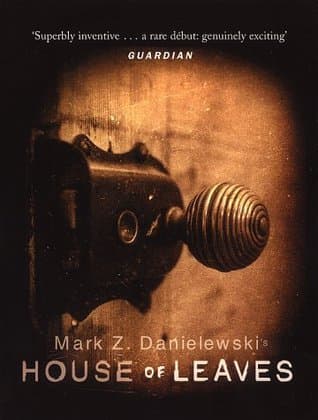
- House of Leaves
Mark Z. Danielewski
4.1 (131k) average on GoodreadsThrillerBoth are experimental, visually driven books that play with the physical form and challenge reader perception.
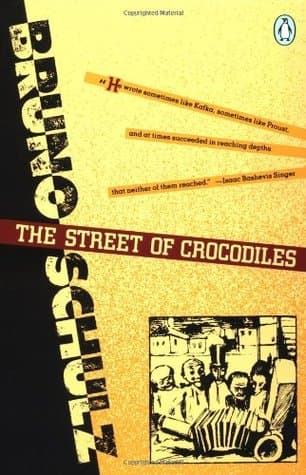
- The Street of Crocodiles
Bruno Schulz
4.1 (7k) average on GoodreadsFantasyThe foundational text from which 'Tree of Codes' is literally carved, sharing thematic and atmospheric resonance.
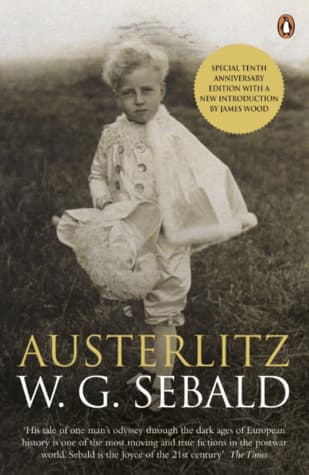
- Austerlitz
W.G. Sebald
4.0 (14k) average on GoodreadsHistorical FictionWhile both Tree of Codes and Austerlitz explore themes of memory, the past, and the search for identity, Sebald employs a more conventional, albeit meandering and melancholic, prose style interwoven with photographs. Foer's approach is far more radical in its textual manipulation, physically altering the source material to represent fragmentation, whereas Sebald's fragmentation is thematic and stylistic within a traditional narrative structure. Sebald's work is often praised for its immersive atmosphere and historical depth, which Tree of Codes sacrifices for its formal experiment.
- The Old Man and the Sea
Ernest Hemingway
3.8 (831k) average on GoodreadsLiterary FictionA Cuban fisherman's long struggle with a giant marlin becomes a story of endurance and dignity, now retold for young adults with illustrations, phonetic guides, and writing prompts in Traditional Chinese.
- One Hundred Years of Solitude
Gabriel García Márquez
4.1 (753k) average on GoodreadsLiterary FictionThrough the multi-generational story of the Buendía family, a mythical town deals with the repeating patterns of time, love, and solitude, as the extraordinary mixes with the ordinary.
- The Goldfinch
Donna Tartt
3.9 (720k) average on GoodreadsLiterary FictionHaunted by a tragic explosion and clutching a stolen Dutch masterpiece, a young orphan navigates the opulent drawing rooms of New York and the gritty underbelly of the art world, desperately seeking connection and redemption amidst a life spiraling into crime and obsession.



Enjoyed the summary?
A summary gives you the shape of the book. The book itself has the detail, the examples and the voice.
Find Tree of Codes on AmazonAs an Amazon Associate, BookBrief earns from qualifying purchases. How we're funded