

Synopsis
Covers the whole plot, including the ending.
- Difficulty
- Hard
- Pacing
- Variable
- Mood
- Dark, Atmospheric, Disillusioned, Philosophical, Gritty
- Read it if
- You want a sprawling, character-driven exploration of the Vietnam War's psychological and moral complexities, with elements of literary fiction, thriller, and mystery.
- Skip it if
- You prefer straightforward narratives, clear-cut heroes, or a fast-paced plot without extensive introspection and moral ambiguity.
Tree of Smoke Plot Summary
Covers the whole plot, including the ending.
The Colonel's Shadow
In 1963, Skip Sands, a young CIA operative in training for Psychological Operations (PSYOPs), arrives in the Philippines, assigned to work under his uncle, Colonel Sands. The Colonel is a legendary intelligence figure, known for his unconventional and often morally vague methods. Skip's first assignment involves a radio station, but he quickly realizes he is part of a larger, more secret network. He meets other operatives like Kathy Jones and Trung, and begins to understand the web of misinformation and manipulation that defines his uncle's world, where truth and fiction constantly blur. Skip wants to prove himself but also feels uneasy about their mission.
The Houston Brothers' Introduction
Meanwhile, the story introduces the Houston brothers, Bill and James, two young men from Arizona. Bill, the elder, is a former Marine, haunted by his past and struggling with drug addiction. James is a naive youth. They find themselves in Southeast Asia, moving from one odd job to another, looking for belonging or purpose. James eventually takes a job as a houseboy for a CIA operative, exposing him to the edges of the intelligence world without fully understanding it. Bill, on the other hand, gets involved with a group of mercenaries and black marketeers, further pulling him into the war's underworld, driven by a need for money and an escape from his inner demons.
The Shaman and The Oracle
Skip becomes more involved in the Colonel's most ambitious and ethically questionable project: creating a 'shaman' or 'oracle' to influence local populations in Vietnam. This involves using psychological manipulation, drugs, and staged supernatural events. The main subject is a young Vietnamese man named Trung, who is prepared to become the oracle. Skip, initially skeptical, finds himself drawn into the elaborate deception, seeing the power and danger of psychological warfare. He deals with the moral implications of their actions, especially as Trung's mental state seems to worsen under the pressure and manipulation, blurring the lines between performance and real delusion.
Operation Hades and its Aftermath
A major operation, code-named 'Hades,' is launched to spread misinformation and destabilize the Viet Cong. Skip is a key participant, but the operation is far more complex and chaotic than expected. Its success is doubtful, and its unintended consequences begin to affect those involved. The mission exposes the deep flaws and dangers of the Colonel's strategies. This period is a turning point for Skip, who sees the brutal realities of war and the devastating impact of their psychological games, leading to a growing sense of disillusionment and moral compromise. He begins to question the effectiveness and ethics of everything he has learned.
Bill's Descent into Darkness
Bill Houston's path continues to decline. His drug addiction worsens, and he becomes more deeply involved with a violent group of mercenaries operating in the war's shadows. He participates in illegal activities, including smuggling, driven by a desperate need for money and a craving for the oblivion drugs provide. His moral compass erodes, and he often finds himself in dangerous situations, narrowly escaping death. His relationship with his brother James becomes strained as James tries to pull him back, but Bill seems determined to self-destruct amidst the conflict's chaos.
The Colonel's Demise
The Colonel, a central figure whose influence affects every part of the story, eventually dies. His death is ambiguous, reflecting the secretive nature of his life and operations. It is unclear if he was killed in action, betrayed, or simply succumbed to the pressures of his own elaborate schemes. His death leaves a significant void and impacts the intelligence community, forcing Skip and others to re-evaluate their positions and the Colonel's legacy. His absence also removes a key guiding force, leaving Skip to navigate the treacherous war with even less direction.
James's Search for Bill
After losing contact with Bill, James Houston begins a desperate and dangerous journey across Southeast Asia to find his brother. His search takes him through war zones, refugee camps, and illicit underworlds, exposing him to the brutal realities of the conflict and widespread human suffering. James, initially naive, is forced to confront the harshness of the world, maturing quickly through his experiences. He meets various characters, some helpful, some dangerous, all of whom contribute to his growing understanding of the war's complexities and its deep human cost. His persistence is driven by a profound brotherly love and a refusal to give up on Bill.
Skip's Retreat and Reflection
Disillusioned and haunted by Operation Hades and the Colonel's death, Skip Sands withdraws from active duty. He finds refuge in a remote, isolated village in Vietnam, trying to distance himself from the psychological warfare he once orchestrated. In this solitude, he grapples with the moral weight of his past actions, the manipulation he engaged in, and the human cost of the war. He tries to find peace or understanding, but the ghosts of his experiences continue to haunt him. This period is marked by introspection, a search for meaning, and a deep sense of exhaustion and moral fatigue.
The Convergence of Paths
The separate paths of Skip Sands and the Houston brothers begin to meet. James, still searching for Bill, eventually crosses paths with individuals connected to Skip's former operations. The web of relationships and consequences from the Colonel's projects and Operation Hades draws them closer. While not a direct meeting for all characters, their stories intertwine through shared experiences, mutual acquaintances, and the war's lasting effects. This convergence shows how seemingly separate lives are connected in the vast, destructive machinery of conflict, demonstrating how individual actions have far-reaching and unforeseen consequences.
The Lingering Aftermath
As the war moves towards its end, the characters are left to deal with its lasting impact. Skip continues his solitary existence, forever marked by his involvement in PSYOPs. Bill Houston, if he survives, is changed by his addiction and experiences in the underworld. James carries the burden of his search and the horrors he witnessed. The novel emphasizes that even when the physical fighting ends, the psychological and moral 'war' continues within each individual. The characters are left with trauma, disillusionment, and a deep understanding of human capacity for both cruelty and resilience amidst chaos.
Tree of Smoke Characters
Skip Sands
Protagonist
A young CIA operative grappling with the moral ambiguities of psychological warfare.
Skip Sands is introduced as a naive, idealistic young man, eager to prove himself in the intelligence world. He is the nephew of the legendary Colonel Sands and initially admires his uncle's cunning, but gradually becomes disillusioned by the moral compromises and destructive outcomes of psychological operations. Skip is intelligent and introspective, constantly questioning the ethics of his work and the blurred lines between truth and deception. He seeks to be the 'Wise American' but ultimately finds himself entangled in the destructive realities of the 'Fucking American' experience in Vietnam. His journey is one of profound moral reckoning and increasing weariness.
Relationships: Colonel Sands (Nephew and subordinate, initially admiring but growing disillusioned.); Kathy Jones (Colleague and brief romantic entanglement, sharing similar disillusionment.); Trung (Target of manipulation, Skip feels a complex mix of responsibility and guilt.)
Colonel Sands
Antagonist/Supporting
Skip's enigmatic and manipulative uncle, a legendary figure in intelligence.
The Colonel is a brilliant, charismatic, and deeply disturbing figure. He is a master of psychological warfare, operating with a chilling moral flexibility and an almost artistic approach to deception. He views war as a grand game of the mind, where the truth is merely a tool to be shaped and wielded. His past is shrouded in legend, and his methods are often extreme, pushing the boundaries of ethics. He exerts immense influence over Skip and other operatives, embodying the seductive yet destructive power of unchecked authority and intellectual arrogance. His motivations are complex, driven by a desire to win at all costs, even if it means sacrificing human dignity.
Relationships: Skip Sands (Uncle and mentor, manipulative and influential.); Kathy Jones (Subordinate, used in his operations.); Trung (Primary subject of his 'oracle' project, a tool for his psychological warfare.)
Bill Houston
Supporting
A former Marine and drug addict, drifting through the war's underbelly.
Bill Houston is a damaged soul, a veteran haunted by his past experiences and struggling with severe drug addiction. He is the older brother of James and tries to protect him, but his own demons constantly pull him towards self-destruction. Bill is a survivor, resourceful and resilient in a harsh environment, but also deeply cynical and prone to violence. He embodies the lost generation of soldiers, those who fought and were left adrift, finding solace only in oblivion or the camaraderie of other outcasts. His journey is a descent into the moral abyss of the war's periphery, driven by a desperate search for meaning or an escape from it.
Relationships: James Houston (Older brother, protective but also a source of worry.); Kathy Jones (Brief, complicated relationship.)
James Houston
Supporting
Bill's naive younger brother, searching for meaning and his lost sibling.
James Houston begins the story as a naive and innocent young man, largely untouched by the harsh realities of the world. He follows his older brother Bill to Southeast Asia, seeking adventure and a sense of purpose. As he experiences the war firsthand and embarks on a desperate search for Bill, James is forced to mature rapidly. He is observant and empathetic, often serving as a moral compass or a witness to the atrocities around him. His journey is one of forced coming-of-age, transforming him from an idealistic youth into a man burdened by experience and the profound sorrow of war. He represents the innocent caught in the maelstrom.
Relationships: Bill Houston (Younger brother, deeply devoted and searching for him.)
Kathy Jones
Supporting
A CIA operative who becomes entangled with Skip and the Colonel's operations.
Kathy Jones is a sharp and capable CIA operative who works alongside Skip and under the Colonel's command. She is intelligent and resilient, navigating the male-dominated world of intelligence with a pragmatic cynicism. While initially committed to her work, she, like Skip, becomes increasingly disillusioned by the ethical ambiguities and the human cost of their operations. She shares a complex, at times romantic, relationship with Skip, providing a counterpoint to his internal struggles. Kathy is a survivor, adapting to the brutal realities around her, but she too carries the psychological scars of the war and the deceptions she participated in.
Relationships: Skip Sands (Colleague and romantic interest, sharing disillusionment.); Colonel Sands (Subordinate, used in his operations.)
Trung
Supporting
A young Vietnamese man manipulated by the Colonel to be an 'oracle'.
Trung is a pivotal figure in the Colonel's psychological operations, selected and groomed to become an 'oracle' or 'shaman' to influence local populations. He is initially a vulnerable and somewhat enigmatic young man, whose personal history and beliefs are exploited for strategic purposes. Under the influence of drugs and psychological conditioning orchestrated by the Colonel and Skip, Trung's mental state becomes increasingly fragile, blurring the lines between his true self and the persona he is forced to embody. He represents the ultimate victim of psychological warfare, his identity and sanity sacrificed for the sake of a strategic objective. His fate is tragic, highlighting the novel's themes of exploitation and the destruction of innocence.
Relationships: Colonel Sands (Manipulator, his handler.); Skip Sands (Observer and participant in his manipulation, feeling guilt.)
The Librarian
Mentioned/Supporting
A mysterious figure associated with the Colonel's operations.
The Librarian is a shadowy, almost mythical figure within the Colonel's network, representing the vast, hidden infrastructure of intelligence gathering and disinformation. He is responsible for managing and disseminating the vast amounts of information—both true and fabricated—that fuel the Colonel's psychological operations. His presence underscores the intricate, bureaucratic yet often absurd nature of the war effort. He is less a character and more a symbol of the unseen forces at play, the silent manipulators behind the scenes, further emphasizing the novel's exploration of knowledge, control, and the manipulation of reality. He embodies the intellectual, detached aspect of the war.
Relationships: Colonel Sands (Colleague/subordinate in the intelligence network.)
Chang
Supporting
A Chinese-American operative working with the Colonel.
Chang is a Chinese-American operative who works closely with the Colonel and Skip. He is pragmatic, loyal to the mission, and possesses a sharp understanding of the local cultures and languages. Chang serves as a grounded counterpoint to some of the more abstract or idealistic characters, providing practical assistance and insights into the complexities of operating in Southeast Asia. He is a competent professional, hardened by his experiences, and represents a more conventional, albeit still morally ambiguous, aspect of the intelligence community. His presence highlights the diverse backgrounds of individuals drawn into the conflict.
Relationships: Colonel Sands (Subordinate/colleague.); Skip Sands (Colleague.)
Tree of Smoke Themes
The Nature of Truth and Deception
The novel constantly blurs truth and deception, especially in psychological warfare. Skip Sands is trained to create and spread misinformation, making him question reality. The Colonel's 'oracle' project, which manipulates a young man named Trung into believing he is a shaman, shows how easily beliefs can be manufactured and exploited. This theme appears in every character's struggle to tell what is real amidst the war's chaos and propaganda, showing how psychological operations not only deceive the enemy but also corrupt those who use them, leading to moral and existential crises.
“Once upon a time there was a war . . . and a young American who thought of himself as the Quiet American and the Ugly American, and who wished to be neither, who wanted instead to be the Wise American, or the Good American, but who eventually came to witness himself as the Real American and finally as simply the Fucking American. That’s me.”
The Corrosive Effects of War
Denis Johnson portrays the devastating impact of war, not just physically but morally and psychologically. The characters are all scarred by their involvement, whether directly in combat or in clandestine intelligence. Bill Houston's drug addiction and moral decline are a direct result of his experiences, while Skip Sands deals with guilt and disillusionment over the manipulation he orchestrates. The novel shows how war strips away innocence, blurs ethical lines, and leaves lasting marks on the human psyche, forcing individuals to confront their darkest capacities and the futility of their actions. The landscape of Southeast Asia itself reflects the turmoil within the human soul.
“He knew that if he could just get out of this war, he would never be the same. He would be someone else, someone he didn't know yet.”
The Search for Meaning and Identity
Amidst the chaos and moral uncertainty, many characters search for meaning, purpose, or a stable identity. Skip Sands initially seeks to be the 'Wise American,' but his experiences force him to confront a more brutal reality. The Houston brothers, Bill and James, drift into the war, each looking for something to anchor them – Bill in the oblivion of drugs, James in loyalty to his brother. The war, instead of providing answers, often removes existing identities, leaving characters adrift. This theme explores the human need for belonging and understanding, even when faced with overwhelming destruction and loss of self.
“He was a man who had lost his way, and the war was just a bigger version of his own lostness.”
Spiritual Despair and Redemption
A deep sense of spiritual despair fills the novel, as characters deal with their actions in a world without a clear moral compass. Many seek solace or redemption, whether through fleeting connections, drug-induced stupors, or a desperate hope for divine intervention. Skip's internal struggle is spiritual, as he questions good and evil in his work. Bill's addiction is a form of self-punishment and an attempt to escape his inner demons. The novel suggests that while redemption might be hard to find, the search for it, even in the darkest places, is a fundamental human drive, often seen through suffering and a yearning for grace.
“He saw God in the faces of the dying, and he saw God in the faces of the killers, and he saw God in the faces of those who merely watched.”
The Absurdity of Bureaucracy and Control
The novel highlights the absurdity and often counterproductive nature of the large military and intelligence bureaucracy during wartime. Operations, like the Colonel's 'oracle' project or 'Hades,' are planned but often descend into chaos, showing the futility of trying to control unpredictable human elements and external forces. The endless reports, coded messages, and layers of command create a system that is both rigid and fractured, ultimately failing to grasp the realities on the ground. This theme underscores the disconnect between strategic planning and the messy, human experience of war, revealing how attempts at absolute control often lead to greater disorder and unforeseen consequences.
“The war was a machine, and they were all just cogs, grinding away at nothing.”
Plot Devices & Literary Techniques
Non-linear Narrative
The story jumps through time and perspectives, reflecting the fragmented nature of memory and war.
The novel employs a non-linear narrative structure, moving back and forth in time and shifting between the perspectives of various characters. This fragmentation mirrors the disorienting experience of war and the subjective nature of memory. It allows Johnson to reveal information gradually, building suspense and forcing the reader to piece together the complex tapestry of events. This device also emphasizes the lasting impact of past events on the present, showing how characters are perpetually haunted by their history and the unresolved traumas of the conflict, making the narrative itself a reflection of the characters' psychological states.
Multiple Perspectives
The story is told through the eyes of various characters, offering a kaleidoscopic view of the war.
By shifting between the viewpoints of Skip Sands, the Houston brothers, Kathy Jones, and others, the novel provides a multifaceted and often contradictory understanding of the Vietnam War and its psychological operations. This device prevents a singular, authoritative interpretation of events, reflecting the inherent ambiguity and moral complexity of the conflict. It allows the reader to witness the same events from different angles, highlighting how individual experiences and beliefs shape perception, and underscoring the novel's theme of the elusive nature of truth in a world saturated with deception and personal biases.
Psychological Operations (PSYOPs)
The central plot driver, using deception and manipulation as weapons.
PSYOPs are not merely a backdrop but a core plot device, driving much of the narrative and character development. The detailed descriptions of how psychological warfare is conceived, planned, and executed—from the creation of false narratives to the manipulation of individuals like Trung—serve to illustrate the novel's central themes of truth, deception, and moral corrosion. This device highlights the insidious nature of a war fought not just with bullets but with minds, and how the very act of manipulating reality can destroy the manipulators themselves, blurring their own sense of what is real and ethical.
Symbolism of the 'Tree of Smoke'
A recurring, enigmatic image representing the elusive nature of truth and the pervasive influence of the unseen.
While not explicitly named as a physical object, the 'Tree of Smoke' functions as a powerful symbolic device throughout the novel. It evokes images of obscured vision, ephemeral existence, and the lingering, almost spiritual, residue of conflict and deception. Smoke obscures, distorts, and eventually dissipates, much like the truths and lies within the narrative. The 'tree' aspect suggests roots, deep-seated origins, and an organic, pervasive influence. It represents the pervasive, intangible effects of war and psychological manipulation, suggesting that even after the flames die down, the 'smoke' of its consequences and the 'tree' of its origins continue to cast a long, shadowy presence over the characters' lives and the historical landscape.
The Oracle/Shaman Project
A specific, elaborate psychological operation that serves as a microcosm of the war's deceptions.
The Colonel's project to create an 'oracle' or 'shaman' out of Trung is a crucial plot device. It is a highly specific, detailed example of psychological warfare that acts as a microcosm for the larger themes of the novel. This elaborate deception allows Johnson to explore the ethical boundaries of manipulation, the power dynamics between colonizer and colonized, and the devastating impact on the individual (Trung) who becomes a pawn in a larger game. It serves as a concrete manifestation of the novel's exploration of manufactured reality, the exploitation of belief systems, and the ultimate futility and moral cost of such operations.
Tree of Smoke Quotes
“You could not be a good man, even, if you did not believe in a good God.”
“He knew that the world was still out there, that it had not ended, but it was just as if it had.”
“What they were doing was playing a game, and the game was called being alive.”
“The past was a country from which you could never entirely emigrate.”
“”
“”
“”
“”
“”
“”
“”
“”
“”
Quiz
10 questions on the plot and the characters. Each answer comes with a short explanation.
Question 1
What is Skip Sands' primary role in Vietnam at the beginning of the novel?
- Combat medic
- Infantry soldier
- Psychological Operations (PsyOps)
- Logistics officer
Show answer
C. Psychological Operations (PsyOps) The book description explicitly states Skip Sands is 'engaged in Psychological Operations against the Vietcong.'
Question 2
Who is 'the Colonel' in Skip Sands' life?
- His commanding officer
- His famous uncle and war hero
- A high-ranking Vietcong defector
- A journalist covering the war
Show answer
B. His famous uncle and war hero The provided text states that disasters befall Skip thanks to 'his famous uncle, a war hero known in intelligence circles simply as the Colonel.'
Question 3
The novel introduces two brothers, Bill and James. Where do they originally drift from?
- The deserts of Nevada
- The slums of Chicago
- The Arizona desert
- The farmlands of Iowa
Show answer
C. The Arizona desert The summary mentions, 'This is also the story of the Houston brothers, Bill and James, young men who drift out of the Arizona desert into a war.'
Question 4
What literary award did 'Tree of Smoke' win in 2007?
- Pulitzer Prize for Fiction
- Booker Prize
- National Book Award for Fiction
- PEN/Faulkner Award
Show answer
C. National Book Award for Fiction The text explicitly states: 'Tree of Smoke is the 2007 National Book Award Winner for Fiction.'
Question 5
What is a central thematic element highlighted by the description of the war's effect on Skip Sands and others?
- The glory of military service and heroism
- The blurring line between disinformation and delusion
- The clear moral imperative of the conflict
- The simple triumph of good over evil
Show answer
B. The blurring line between disinformation and delusion The summary notes that the Houston brothers 'drift... into a war in which the line between disinformation and delusion has blurred away,' indicating this as a key theme.
Question 6
The opening quote from Skip Sands describes a progression of self-perception. Which self-identification does he ultimately arrive at?
- The Wise American
- The Good American
- The Real American and finally the Fucking American
- The Quiet American and the Ugly American
Show answer
C. The Real American and finally the Fucking American Skip's opening monologue states: 'who eventually came to witness himself as the Real American and finally as simply the Fucking American.'
Question 7
Beyond the war itself, what common human desire is explored through the characters in 'Tree of Smoke'?
- The pursuit of wealth and power
- The desire for fame and recognition
- An end to their loneliness, whether in sex or death or by the grace of God
- A return to innocence and childhood
Show answer
C. An end to their loneliness, whether in sex or death or by the grace of God The summary explicitly mentions 'its gritty, sympathetic portraits of men and women desperate for an end to their loneliness, whether in sex or death or by the grace of God.'
Question 8
What specific aspect of the war does Skip Sands' PsyOps work primarily target?
- Direct military combat strategies
- Logistical supply lines of the enemy
- The Vietcong
- Civilian infrastructure
Show answer
C. The Vietcong The text states Skip Sands is 'engaged in Psychological Operations against the Vietcong,' specifying his target.
Question 9
The novel is described as Denis Johnson’s 'first full-length novel in nine years.' What does this detail suggest about the author's approach or the novel's significance?
- It implies a rapid production schedule for the author.
- It highlights the author's prolific output over a short period.
- It suggests a period of careful crafting and potentially heightened anticipation for his return to full-length fiction.
- It indicates the author primarily writes short stories.
Show answer
C. It suggests a period of careful crafting and potentially heightened anticipation for his return to full-length fiction. A nine-year gap for a full-length novel suggests a deliberate, unhurried process, often leading to anticipation for a significant work from an established author.
Question 10
The phrase 'This is a story like nothing in our literature' refers to the novel's unique vision in what specific areas?
- Its depiction of American military might and technological superiority.
- Its portrayal of human folly and sympathetic portraits of men and women desperate for an end to loneliness.
- Its groundbreaking use of science fiction elements in a historical setting.
- Its lighthearted and humorous take on the Vietnam War.
Show answer
B. Its portrayal of human folly and sympathetic portraits of men and women desperate for an end to loneliness. The text states: 'In its vision of human folly, and its gritty, sympathetic portraits of men and women desperate for an end to their loneliness... this is a story like nothing in our literature.'
Tree of Smoke FAQ
What is the central premise of 'Tree of Smoke' and who are its main protagonists?
'Tree of Smoke' is set during the Vietnam War and follows Skip Sands, a CIA operative involved in psychological operations, and the Houston brothers, Bill and James, who are drawn into the conflict. The novel explores themes of espionage, morality, and the psychological toll of war, often blurring the lines between reality and deception.
Who is 'the Colonel' and what is his relationship to Skip Sands?
The Colonel is Skip Sands's uncle, a legendary and enigmatic figure within intelligence circles, known for his unconventional and often morally ambiguous operations. His influence, both direct and indirect, profoundly shapes Skip's experiences and decisions, often leading him into dangerous and ethically complex situations.
How do the Houston brothers, Bill and James, become entangled in the war's events?
Bill Houston initially joins the Navy as a medic, seeking escape from a troubled past in Arizona, while James, his younger brother, later follows him to Vietnam. Their paths intersect with Skip Sands and the broader intelligence apparatus, drawing them into the war's chaotic and often brutal realities, far beyond their initial expectations.
What role does the concept of 'disinformation' play in the narrative?
Disinformation is a central theme, as Skip Sands's psychological operations involve creating and spreading false narratives to influence the enemy. However, this practice increasingly blurs the line between intended deception and self-delusion, impacting the characters' perceptions of reality and contributing to the war's inherent moral ambiguity.
What is the significance of the novel's title, 'Tree of Smoke'?
The title 'Tree of Smoke' evokes a sense of ephemeral existence, the transient nature of war, and the elusive truth amidst chaos and deception. It can symbolize the fleeting lives lost, the smoke of battle, or perhaps the 'tree' of intelligence operations whose branches are obscured by lies and misinformation.
Are there any direct connections between Skip Sands's operations and the fate of the Houston brothers?
Yes, Skip's psychological operations, particularly those involving the manipulation of information and local populations, indirectly and sometimes directly impact the Houston brothers. Their experiences as soldiers and medics put them in situations that are often consequences of the larger intelligence games Skip and his superiors are playing, though they are not always aware of the full scope.
What historical events or figures might have inspired aspects of the Colonel's character or operations?
While not directly based on a single figure, the Colonel embodies elements of real-life unconventional warfare specialists and intelligence operatives from the Vietnam era, known for their audacious and often ethically questionable strategies. His methods reflect the shadowy world of Cold War counterinsurgency and psychological warfare.
Does the 'Quiet American' reference in the opening quote allude to Graham Greene's novel?
Yes, the opening quote directly references Graham Greene's 'The Quiet American,' signaling an intertextual dialogue about American involvement in Southeast Asia. Skip Sands grapples with the archetypes of American identity in foreign conflicts, consciously trying to avoid the pitfalls of naive idealism or destructive arrogance depicted in Greene's work.
What becomes of the mysterious 'tree of smoke' that Skip Sands is tasked with finding or understanding?
The 'tree of smoke' is less a physical object and more a metaphor for an elusive, perhaps non-existent, intelligence asset or a deeper, mystical truth about the war. Its pursuit symbolizes Skip's quest for meaning and control in an increasingly incomprehensible conflict, ultimately leading to more questions than answers about its true nature.
How does Skip Sands's moral compass evolve throughout the novel?
Skip begins with an idealism, hoping to be the 'Wise American,' but his involvement in psychological operations and exposure to the war's brutality gradually erodes his moral certainty. He increasingly witnesses himself as the 'Real American' and eventually the 'Fucking American,' reflecting a profound disillusionment and a loss of ethical grounding.
What psychological impact does the constant exposure to disinformation have on the characters, particularly Skip?
The constant generation and consumption of disinformation deeply fragments the characters' sense of reality, leading to paranoia, cynicism, and an inability to distinguish truth from fabrication. For Skip, this blurs his own identity and purpose, as the very tools he uses to manipulate others begin to manipulate his own perceptions and sanity.
How do the Houston brothers cope with the trauma and horrors they witness in Vietnam?
Bill Houston, as a medic, is exposed to immense suffering and develops a hardened, almost fatalistic perspective, often seeking solace in brief moments of connection or spiritual questioning. James, younger and more naive, struggles with the psychological weight of violence, often resorting to a detached or numb state to survive the immediate horrors.
What role does spirituality or a search for God play in the characters' experiences?
Many characters, particularly Bill Houston and even elements of Skip's internal monologue, grapple with spiritual questions amidst the war's chaos. They seek meaning or divine intervention in the face of senseless violence and suffering, often finding only fleeting glimpses of grace or deeper existential despair, reflecting a profound spiritual crisis.
Is the novel suggesting that the Vietnam War was inherently unwinnable due to its psychological complexities?
The novel strongly implies that the Vietnam War was profoundly complicated by its psychological dimensions, where the lines between combat, propaganda, and internal delusion became indistinguishable. It suggests that success was elusive not just due to military might, but because the very nature of truth and purpose was corrupted and lost.
How does the novel portray the motivations of the American military and intelligence apparatus?
The novel presents a complex and often critical view of American motivations, showing a mixture of genuine idealism, misguided patriotism, bureaucratic inertia, and a cynical pursuit of power. It suggests that the 'good intentions' were often undermined by a deep misunderstanding of the local culture and the self-serving nature of the intelligence games.
Does 'Tree of Smoke' offer any definitive answers or resolutions for its characters?
'Tree of Smoke' largely resists definitive answers or tidy resolutions, reflecting the ambiguity and lingering trauma of the Vietnam War itself. The characters' fates are often left open-ended, emphasizing the lasting psychological scars and the unresolved questions that persist long after the fighting officially ceases, mirroring historical reality.
What is the significance of the novel's non-linear structure and shifting perspectives?
The non-linear structure and shifting perspectives mirror the fragmented, chaotic, and often disorienting experience of war. By presenting events out of sequence and through multiple viewpoints, Johnson emphasizes the subjective nature of truth, the difficulty of grasping a complete picture, and the psychological disarray of the characters.
How does the novel critique the notion of heroism in wartime?
The novel deconstructs traditional notions of heroism, often presenting characters like the Colonel as morally compromised figures whose 'heroism' is built on manipulation and ambiguous ethics. It also shows ordinary men like the Houstons performing selfless acts amidst profound terror, suggesting that true heroism is often unacknowledged and fraught with personal cost.
About the author
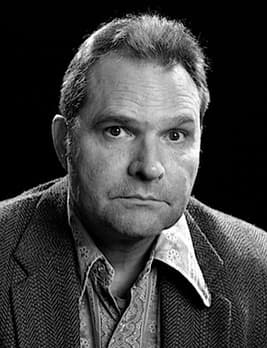
Denis Hale Johnson was an American novelist, short-story writer, and poet. He is perhaps best known for his debut short story collection, Jesus' Son (1992). His most successful novel, Tree of Smoke (2007), won the National Book Award for Fiction. Johnson was twice shortlisted for the Pulitzer Prize for Fiction. Altogether, Johnson was the author of nine novels, one novella, two books of short stories, three collections of poetry, two collections of plays, and one book of reportage. His final work, a book of short stories titled The Largesse of the Sea Maiden, was published posthumously in 2018.
Similar books
- Dispatches
Michael Herr
4.2 (16k) average on GoodreadsBiographyHerr's Dispatches is a seminal work of New Journalism, offering a subjective, impressionistic, and highly influential account of the war. Tree of Smoke, while sharing Herr's hallucinatory sensibility, is a work of fiction that constructs a complex, multi-layered narrative with a focus on character development and moral decay across a wider array of experiences, including those of intelligence agents and civilians, rather than purely frontline combat journalism.
- The Old Man and the Sea
Ernest Hemingway
3.8 (831k) average on GoodreadsLiterary FictionA Cuban fisherman's long struggle with a giant marlin becomes a story of endurance and dignity, now retold for young adults with illustrations, phonetic guides, and writing prompts in Traditional Chinese.
- One Hundred Years of Solitude
Gabriel García Márquez
4.1 (753k) average on GoodreadsLiterary FictionThrough the multi-generational story of the Buendía family, a mythical town deals with the repeating patterns of time, love, and solitude, as the extraordinary mixes with the ordinary.
- The Goldfinch
Donna Tartt
3.9 (720k) average on GoodreadsLiterary FictionHaunted by a tragic explosion and clutching a stolen Dutch masterpiece, a young orphan navigates the opulent drawing rooms of New York and the gritty underbelly of the art world, desperately seeking connection and redemption amidst a life spiraling into crime and obsession.
- Little Fires Everywhere
Celeste Ng
4.1 (713k) average on GoodreadsLiterary FictionIn Shaker Heights, an artist and her daughter move in, and their free-spirited lives clash with a rule-bound matriarch, revealing hidden conflicts beneath a perfect surface.
- Eleanor Oliphant Is Completely Fine
Gail Honeyman
4.3 (708k) average on GoodreadsLiterary FictionA lonely woman's structured life changes when an IT guy and an elderly man help her learn to open her heart.





Enjoyed the summary?
A summary gives you the shape of the book. The book itself has the detail, the examples and the voice.
Find Tree of Smoke on AmazonAs an Amazon Associate, BookBrief earns from qualifying purchases. How we're funded