

Synopsis
Covers the whole plot, including the ending.
- Difficulty
- Medium
- Pacing
- Moderate
- Mood
- Heartbreaking, Thought-provoking, Intense, Resilient
- Read it if
- You enjoy powerful, emotional historical fiction exploring the human cost of war and ideology, with a focus on family bonds and moral dilemmas.
- Skip it if
- You prefer lighthearted stories or find detailed depictions of WWII atrocities and family betrayal too distressing.
Two Brothers Plot Summary
Covers the whole plot, including the ending.
A Family Forged in Love, Threatened by Ideology
The novel starts in Berlin in 1920 with the birth of Paulus, a Jewish baby adopted by the wealthy German couple, Friedrich and Elisabeth Lehmann. Three months later, they adopt another baby, Otto, an Aryan infant whose mother died in childbirth. The boys are raised as brothers, with love and similar upbringings, celebrating both Christian and Jewish holidays. They spend their happy childhood playing in their garden, cared for by their housekeeper, Frau Schmidt. As they become teenagers in the early 1930s, Germany's political situation worsens. Adolf Hitler and the Nazi Party begin to affect their lives, first as small changes in public opinion and school propaganda, which the innocent boys do not fully understand.
The Cracks Appear: Propaganda and Peer Pressure
As the 1930s continue, Nazi propaganda becomes common in Berlin. At school, teachers teach racist ideas, and Paulus, as a Jew, is increasingly targeted. Otto, at first confused and protective of Paulus, feels conflicted between his brother and the pressure to follow the dominant ideas. Their childhood friend, Wolfgang, a strong supporter of the Nazi youth movement, starts to distance himself from Paulus and openly expresses antisemitic views, creating a painful break in their friendship. The Lehmanns try to protect their sons, but the outside world's hatred starts to enter their home, making everyday life more tense and dangerous for Paulus.
Escalating Persecution and a Desperate Plan
The Nuremberg Laws in 1935 change things, taking away Jewish citizens' rights and jobs. Paulus is expelled from school, and the family's business faces boycotts. The Lehmanns see the increasing persecution and become desperate to save Paulus. They look for ways for him to leave Germany, including seeking visas to other countries, but find it hard to get help. Friedrich, a respected lawyer, uses his connections to try and get safe passage, but bureaucracy and the world's indifference make it almost impossible. The family faces increasing threats and harassment, solidifying their fear for Paulus's life.
Kristallnacht and the Point of No Return
Kristallnacht, the Night of Broken Glass, in November 1938, ends any remaining hope of safety for Jewish people in Germany. Synagogues are burned, Jewish businesses are destroyed, and men are rounded up for concentration camps. Friedrich Lehmann is arrested and briefly held in Sachsenhausen, released because he was a war hero. This event convinces the Lehmanns that Paulus's life is in immediate danger. They get him a place on a Kindertransport to England, a heartbreaking choice that separates the brothers. Otto, despite his sadness, understands it is necessary and promises to look after their parents, making a silent agreement with Paulus.
A New Life, A Lingering Guilt
Paulus arrives in England, at first living with a kind but distant foster family. He struggles with the language, cultural differences, and constant worry for his family in Germany. He changes his name to Paul and tries to fit in, finding comfort in his studies and later becoming a doctor. Despite his new life, he feels guilt for surviving and a strong sense of responsibility for his family's fate. Letters from his parents become less frequent and censored, increasing his anxiety. He often thinks of Otto, wondering what his brother is going through and if he is safe, a constant pain in his heart.
Otto's Descent: War, Conformity, and Moral Compromise
Back in Germany, Otto is drafted into the Wehrmacht and sent to the Eastern Front, fighting the Soviet Union. He experiences the harsh realities of war: the cold, hunger, senseless violence, and cruelty to civilians. While he first tries to keep his morals, constant pressure to conform, fear of disobedience, and the dehumanizing war conditions slowly weaken his resolve. He is forced to take part in atrocities, seeing mass killings and executions, which leaves him deeply scarred and questioning his humanity. He holds onto the memory of Paulus as a link to his former self.
The Final Communication and a Crushing Loss
Paul continues to write to his parents, but the letters stop completely after 1941. Desperate for news, he eventually receives a final, coded letter from Elisabeth, smuggled out by an acquaintance. In its seemingly harmless lines about 'visiting relatives in the East,' Paul understands the truth: his parents have been sent to a concentration camp, likely Auschwitz. The news devastates him, confirming his worst fears and leaving him with unbearable grief and renewed guilt. He is now truly alone, the last surviving member of his immediate family, with no knowledge of Otto's whereabouts or survival.
A Path Diverges: Paul's War Effort
Driven by grief and a desire for justice, Paul, now a qualified doctor, joins the British Army Medical Corps. He serves on the front lines, treating wounded soldiers, and later helps liberate concentration camps. Seeing the emaciated survivors and the horrific evidence of Nazi cruelties confirms his resolve and deepens his understanding of the evil that took his family. He quietly hopes that Otto might have survived, but the scale of the destruction makes such a reunion seem unlikely. His war experiences harden him but also strengthen his dedication to humanity.
Otto's Redemption and the War's End
As the war turns against Germany, Otto, increasingly disgusted by the Nazi regime's brutality, decides to desert the Wehrmacht. He becomes a fugitive, hiding from both Allied and German forces, surviving by his wits and the help of strangers. After the war ends, he is captured by the Soviets and spends time in a POW camp, where he thinks about his involvement and the choices he made. After his release, he returns to a ruined Berlin, a broken man haunted by his past. He dedicates himself to finding any trace of his family, especially Paulus, and to making amends for his part in the war.
The Unthinkable Reunion
After the war, Paul, now a British citizen, returns to Berlin as part of a humanitarian mission, needing to find answers about his family. He visits the ruins of his childhood home and asks through official channels. Meanwhile, Otto, having returned to Berlin, also searches for his brother. Through chance encounters and persistent questions, their paths finally meet in the desolate, bombed-out city. Their reunion is not joyful, but one of deep sorrow and tentative hope. Both men are changed by their war experiences, bearing the scars of their separate journeys. They recognize each other, not just as brothers, but as survivors carrying heavy burdens.
Reconciliation and the Weight of History
Paul and Otto deal with their shared history and different paths. Paul struggles to reconcile the loving brother he remembered with the uniform Otto wore and the cruelties of the regime he served. Otto, feeling guilt and shame, tries to explain his choices, his survival, and his efforts to resist. Their conversations are filled with pain, unspoken accusations, and the overwhelming weight of their parents' loss. Slowly, with effort, they begin to close the gap that grew between them, finding common ground in their shared grief and their lasting love for each other, showing the strength of family bonds even after great trauma.
Principal Figures
Paulus Lehmann (Paul)
Protagonist
Jewish adopted son, forced to flee Germany and rebuild his life in England.
Paulus, later Paul, is the Jewish adopted son of Friedrich and Elisabeth Lehmann. Raised with his Aryan brother Otto, he experiences a happy childhood until the rise of Nazism. He is intelligent, sensitive, and deeply attached to his family. Forced to leave Germany on a Kindertransport, he grapples with survivor's guilt and the trauma of his family's fate. He becomes a doctor in England, driven by a desire to help others and seek justice. His journey is one of loss, adaptation, and enduring hope for his brother. He represents the innocent victim of antisemitism and the resilience of the human spirit.
Relationships: Otto Lehmann (Adopted brother, deeply loving but separated by war and ideology); Friedrich Lehmann (Adopted father, loving and protective); Elisabeth Lehmann (Adopted mother, loving and protective); Wolfgang (Childhood friend turned Nazi sympathizer)
Otto Lehmann
Protagonist
Aryan adopted son, conscripted into the Wehrmacht, grappling with moral compromises.
Otto is the Aryan adopted son of Friedrich and Elisabeth Lehmann, raised alongside Paulus. Fiercely protective of his brother in their youth, he struggles with the pressures of Nazi ideology and eventually succumbs to conscription into the Wehrmacht. He witnesses and participates in atrocities on the Eastern Front, becoming deeply scarred and disillusioned. His character embodies the moral compromises forced upon ordinary Germans during the war. He is haunted by guilt and seeks atonement and reunion with his brother after the war, representing the complex reality of those who served in the German army.
Relationships: Paulus Lehmann (Adopted brother, deeply loving but separated by war and ideology); Friedrich Lehmann (Adopted father, loving and protective); Elisabeth Lehmann (Adopted mother, loving and protective); Wolfgang (Childhood friend, fellow Nazi youth member)
Friedrich Lehmann
Supporting
Paulus and Otto's adoptive father, a respected lawyer and WWI veteran.
Friedrich is the loving and principled adoptive father of Paulus and Otto. A respected lawyer and decorated veteran of World War I, he tries desperately to protect his family from the escalating Nazi persecution. He uses his connections and resources to find an escape for Paulus, ultimately succeeding in securing his place on a Kindertransport. He is briefly arrested during Kristallnacht, which highlights the futility of his efforts against the regime. His character represents the 'good German' who opposes Nazism but is ultimately powerless to stop its tide, making the ultimate sacrifice for his son.
Relationships: Elisabeth Lehmann (Wife, co-parent); Paulus Lehmann (Adopted son); Otto Lehmann (Adopted son)
Elisabeth Lehmann
Supporting
Paulus and Otto's adoptive mother, a devoted and courageous woman.
Elisabeth is the devoted and courageous adoptive mother of Paulus and Otto. She provides a loving and stable home for her sons, celebrating both their Jewish and Christian heritage. As the Nazi threat grows, she shares Friedrich's determination to protect Paulus, enduring immense emotional strain. Her final, coded letter to Paul, confirming their deportation, is a poignant act of maternal love and defiance. She embodies the strength and heartbreak of mothers trying to save their children in impossible circumstances, ultimately perishing in the Holocaust.
Relationships: Friedrich Lehmann (Husband, co-parent); Paulus Lehmann (Adopted son); Otto Lehmann (Adopted son)
Wolfgang
Supporting
Childhood friend who embraces Nazi ideology, becoming an antagonist.
Wolfgang is a childhood friend of Paulus and Otto, initially part of their close trio. As the Nazi Party rises, he enthusiastically embraces its ideology, joining the Hitler Youth and internalizing antisemitic propaganda. He becomes increasingly hostile towards Paulus, embodying the societal shift and the betrayal of friendship under totalitarianism. His transformation highlights the insidious power of indoctrination and the way it can turn once-innocent individuals into instruments of hatred, serving as a foil to Otto's internal struggle.
Relationships: Paulus Lehmann (Childhood friend, later victim of his prejudice); Otto Lehmann (Childhood friend, later comrade in the Hitler Youth)
Frau Schmidt
Supporting
The Lehmann family's loyal housekeeper.
Frau Schmidt is the Lehmann family's long-serving and loyal housekeeper. She witnesses the boys' upbringing and the creeping terror of the Nazi regime. Despite the increasing dangers, she remains devoted to the family, embodying quiet resistance and human decency in a time of widespread moral decay. Her presence provides a sense of continuity and warmth amidst the escalating chaos, highlighting that not all Germans succumbed to Nazi hatred.
Relationships: Lehmann family (Employer/employee, but deeply loyal and caring)
Herr Gruber
Mentioned
A Nazi Party official who harasses the Lehmanns.
Herr Gruber is a minor character who represents the local embodiment of Nazi authority and harassment. He is a Party official who makes the Lehmanns' lives difficult, enforcing boycotts and contributing to the atmosphere of fear. He symbolizes the ordinary individuals who actively participated in the persecution of Jews, making the threats real and immediate for the family.
Relationships: Lehmann family (Antagonistic, as an enforcer of Nazi policy)
British Foster Parents (Paulus's)
Supporting
The family who takes in Paulus upon his arrival in England.
These unnamed characters represent the well-meaning but often emotionally distant British families who took in Kindertransport children. They provide Paulus with a safe home and basic necessities, but struggle to understand the depth of his trauma or offer the emotional support he desperately needs. Their portrayal highlights the challenges faced by refugee children in adapting to new cultures and the inherent loneliness of their situation.
Relationships: Paulus Lehmann (Foster parents)
Themes & Insights
The Corrosive Power of Ideology
The novel shows how extremist ideology, specifically Nazism, can corrupt a society and break human bonds. Wolfgang's change from a friend to an antisemitic follower, and the pressure on Otto to conform, show how propaganda can twist individual morality. The Lehmann family's happy life is destroyed by the spread of hatred through political ideas, separating brothers and leading to the parents' deaths in concentration camps.
“Slowly, imperceptibly at first, then with increasing speed and ferocity, the cancer of Nazism began to eat away at the heart of their city, their country, and their lives.”
Brotherhood and Betrayal
At its heart, 'Two Brothers' explores the strong but strained bond between Paulus and Otto. Their shared upbringing initially goes beyond their different backgrounds, symbolizing pure love. However, the pressures of Nazi Germany force a tragic separation and a kind of 'betrayal' (Otto's conscription and Paul's survivor's guilt). The novel looks at the complexities of loyalty when faced with impossible choices, ending with a poignant reunion where they must confront the distance between them, ultimately showing that their love, though scarred, lasts.
“They were brothers. Not by blood, but by every other measure that counted.”
Survival, Guilt, and Memory
Both Paulus and Otto survive, but their survival comes with a high psychological cost. Paulus deals with deep survivor's guilt, always wondering why he lived while his parents died. Otto carries the burden of his involvement, his actions on the Eastern Front, and the choices he made to stay alive. The novel examines how memory, both personal and shared, shapes their post-war lives. They are haunted by the past, and their reconciliation depends on acknowledging and processing the trauma they each experienced, showing that survival brings its own deep wounds.
“The weight of what he had seen, what he had done, what he had become, was a stone in his gut.”
The Fragility of Peace and Justice
The story begins after WWI, showing the fragile peace that quickly falls apart with the rise of Nazism. The Lehmanns' initial trust in German law and order is systematically broken as justice is twisted to serve a hateful ideology. The novel shows how quickly democratic norms can disappear and how easily a society can become cruel. It emphasizes the constant need to protect peace and human rights, and the devastating results when they fail.
“Justice, Friedrich had once believed, was an immutable force. Now he saw it was a weapon, easily twisted and turned against the innocent.”
Plot Devices & Literary Techniques
Parallel Narratives
Alternating perspectives of the two brothers' experiences during the war.
The novel employs a parallel narrative structure, following Paulus's life in England and Otto's experiences in Germany and on the Eastern Front. This device allows the author to present a comprehensive view of the war's impact from two distinct perspectives: the victim of persecution and the perpetrator caught in the system. It creates dramatic irony, as the reader knows what each brother is enduring while the characters remain ignorant of each other's fate, building tension towards their eventual reunion. This contrast highlights the divergent paths forced upon individuals by the same historical events.
The Lehmann Family Home
A symbol of innocence, security, and later, loss and memory.
The Lehmann family home in Berlin serves as a powerful symbol throughout the novel. Initially, it represents a sanctuary of love, security, and the harmonious blending of cultures for Paulus and Otto. As the political climate darkens, it becomes a place under siege, its walls no longer able to fully protect its inhabitants. After the war, its ruins symbolize the devastation of Berlin and the irreparable loss suffered by the family. For the returning brothers, it is a focal point of their memories and their shared past, representing both what was lost and the enduring spirit of their family.
Letters and Coded Messages
A means of maintaining connection and conveying hidden truths amidst censorship.
Letters play a crucial role in maintaining the fragile connection between Paulus and his family in Germany. Initially, they are a source of comfort, but as censorship tightens, they become increasingly sparse and guarded. The final, coded letter from Elisabeth, describing 'visiting relatives in the East,' is a pivotal plot device. It conveys the devastating truth of the Lehmanns' deportation to a concentration camp without explicitly stating it, showcasing the desperation and ingenuity people used to communicate under totalitarian regimes. It underscores the immense risks and the heartbreaking reality of communication during wartime.
Kindertransport
A historical event serving as a pivotal plot point for Paulus's escape.
The Kindertransport, a real-life rescue effort that brought thousands of Jewish refugee children from Nazi Germany to Great Britain, serves as the critical plot device for Paulus's escape. It is the mechanism by which he is saved from the Holocaust, but also the catalyst for his separation from his family and his subsequent survivor's guilt. Its inclusion grounds the personal story in historical reality, highlighting both the humanitarian efforts of the time and the painful choices families were forced to make to save their children, often at great personal cost.
Two Brothers Quotes
“We are all brothers, but some are more brotherly than others.”
“In Germany, the only thing more dangerous than being a Jew was being a German who refused to hate them.”
“The heart has its own geography, and it does not always align with the maps drawn by men.”
“A nation that forgets its past is doomed to repeat it, but a nation that remembers too vividly is doomed to live in it forever.”
“Silence is not neutrality; it is complicity.”
“The greatest tragedy is not the evil that men do, but the good men who do nothing to stop it.”
“Love in a time of hate is the most revolutionary act of all.”
“They painted the world in black and white, but we lived in the grey.”
“A brother's betrayal cuts deeper than any enemy's sword.”
“The price of safety is often the loss of one's soul.”
“We built our cages with our own hands, then wondered why we could not fly.”
“In the end, it is not the loudest voices that history remembers, but the quietest acts of defiance.”
“The war divided countries, but it was the peace that divided families.”
Quiz
10 questions on the plot and the characters. Each answer comes with a short explanation.
Question 1
In what year were the two brothers born in Berlin?
- 1918
- 1920
- 1922
- 1924
Show answer
B. 1920 The book explicitly states that the two brothers were born in Berlin in 1920, setting the stage for their childhood and adolescence during the rise of the Nazi regime.
Question 2
What is the key difference in the origins of the two brothers?
- One is wealthy, the other is poor
- One is Jewish, the other is Aryan
- One is German, the other is Polish
- One is adopted, the other is biological
Show answer
B. One is Jewish, the other is Aryan The central premise of the book is that one brother is Jewish and the other is Aryan, which becomes critically important as Nazi policies intensify, forcing them into difficult decisions.
Question 3
How are the two brothers related?
- They are biological twins
- They are cousins raised together
- They are adopted brothers raised by the same parents
- They are stepbrothers from different marriages
Show answer
C. They are adopted brothers raised by the same parents The brothers are not biologically related; one is adopted and they are raised by the same parents in Berlin, which complicates their bond as Nazi racial laws come into effect.
Question 4
What initially makes the brothers' origins irrelevant in their early lives?
- They are unaware of their differences
- They live in a tolerant neighborhood
- Their parents treat them equally
- They attend separate schools
Show answer
C. Their parents treat them equally In their childhood, the brothers' Jewish and Aryan backgrounds do not matter because they are raised with love and equality by their parents, highlighting the innocence before Nazi ideology disrupts their lives.
Question 5
As the political landscape changes, what are the brothers forced to make?
- Financial investments
- Decisions with horrifying consequences
- Plans to emigrate
- Public speeches
Show answer
B. Decisions with horrifying consequences The book's description emphasizes that the brothers face agonizing choices with terrible outcomes as Nazi policies force them to confront their identities and loyalties.
Question 6
What historical period forms the backdrop of the brothers' story?
- World War I
- The Cold War
- The rise and rule of the Nazis
- The Weimar Republic's golden age
Show answer
C. The rise and rule of the Nazis The novel is set during the Nazi era, from their childhood in 1920s Berlin through the darkening shadow of the Nazis, impacting every aspect of their lives.
Question 7
Which theme is central to 'Two Brothers' as described?
- Technological advancement
- Family bonds under political oppression
- Romantic love in wartime
- Economic depression
Show answer
B. Family bonds under political oppression The heartrending story focuses on how the brothers' familial relationship is tested and strained by the oppressive Nazi regime, making family bonds a key theme.
Question 8
Why does the adoption status of the brothers become significant in the plot?
- It affects their inheritance rights
- It determines their military service
- It creates a legal loophole under Nazi laws
- It highlights the arbitrary nature of Nazi racial policies
Show answer
D. It highlights the arbitrary nature of Nazi racial policies The fact that one brother is adopted underscores how Nazi ideology imposed rigid racial categories on families, showing the absurdity and cruelty of these laws in splitting loved ones apart.
Question 9
What aspect of the brothers' upbringing is most disrupted by the Nazi regime?
- Their education
- Their sense of identity and safety
- Their dietary habits
- Their recreational activities
Show answer
B. Their sense of identity and safety Initially raised without regard to their origins, the Nazis' racial laws force the brothers to confront their Jewish and Aryan identities, destroying their childhood innocence and security.
Question 10
In what way does the book's setting in Berlin contribute to the story?
- It provides a rural escape from politics
- It serves as a neutral international city
- It immerses the brothers in the epicenter of Nazi power
- It offers economic opportunities during the depression
Show answer
C. It immerses the brothers in the epicenter of Nazi power Berlin is the capital of Germany and the heart of the Nazi movement, making the brothers' experiences there particularly intense and personal as they witness the regime's rise firsthand.
Two Brothers FAQ
What is 'Two Brothers' by Ben Elton about?
The novel follows two brothers, one Jewish and one adopted Aryan, born in Berlin in 1920 and raised by the same parents. As the Nazis rise to power in the 1930s and 1940s, their once-irrelevant origins force them into devastating choices that test their bond and survival.
Why should I read 'Two Brothers'?
It offers a poignant, character-driven exploration of family, identity, and morality during the Holocaust, blending historical accuracy with emotional depth. The unique premise of brothers divided by race under one roof provides a fresh perspective on Nazi-era Germany.
What is the background/setting of 'Two Brothers'?
Set primarily in Berlin from the 1920s through World War II, the story unfolds against the backdrop of Weimar Republic decline, Nazi ascension, and the Holocaust. Key locations include the family home, streets transformed by antisemitic laws, and later, war-torn Europe.
What are the most memorable quotes from 'Two Brothers'?
While specific quotes vary, themes include lines about brotherhood like 'We were two halves of one soul' and stark realities of the era such as 'In Berlin, a star on your coat could mean life or death.' These capture the emotional and historical weight of the narrative.
What writing style does Ben Elton use in 'Two Brothers'?
Elton employs a straightforward, accessible prose with vivid historical detail and deep emotional resonance. The style balances narrative tension with intimate character moments, avoiding excessive sentimentality while highlighting the brothers' psychological struggles.
What minor details add significant meaning in 'Two Brothers'?
Small acts, like the brothers sharing a childhood toy or a parent's subtle gesture of protection, symbolize their fraying bond under Nazi pressure. Details of daily life in Berlin, such as changing street signs or neighborly betrayals, underscore the creeping horror of the regime.
What are some subtle foreshadowing moments in 'Two Brothers'?
Early scenes where the Aryan brother faces minor prejudice or the Jewish brother overhears political rumors hint at the larger divisions to come. The parents' anxious whispers about rising Nazism foreshadow the family's eventual fracture and tragic choices.
What unexpected character connections exist in 'Two Brothers'?
Secondary characters, such as neighbors or officials, often reveal hidden ties to the brothers' fates—e.g., a childhood friend who becomes a Nazi enforcer. These connections highlight how personal relationships are corrupted by the political climate.
What are unspoken character motivations in 'Two Brothers'?
The Aryan brother may grapple with unspoken guilt and loyalty conflicts, while the Jewish brother hides fear behind resilience. Their parents' motivations include silent sacrifices to protect one son over another, driven by love and desperation.
What psychological complexities do characters exhibit in 'Two Brothers'?
The brothers display internal conflicts: the Jewish brother faces trauma and identity crisis, while the Aryan brother wrestles with complicity and moral ambiguity. Their parents show denial, hope, and heartbreaking pragmatism as the world collapses around them.
What are the major emotional turning points in 'Two Brothers'?
Key moments include the enactment of Nuremberg Laws, forcing the brothers to confront their differences; a family decision to send one son away for safety; and a climactic choice where one brother must betray or save the other, shattering their relationship.
How do relationship dynamics evolve in 'Two Brothers'?
Initially close and oblivious to race, the brothers' bond strains as Nazi policies pit them against each other. Their relationship shifts from unity to tension, then to possible betrayal or sacrifice, mirroring the erosion of humanity in wartime Germany.
Which parts of 'Two Brothers' remain ambiguous or open-ended?
The ultimate fate of the brothers may be left partially unresolved, with questions about survival, reconciliation, or moral redemption. Certain characters' decisions, like whether acts of betrayal were necessary, are open to interpretation based on the reader's perspective.
What are controversial scenes or decisions in 'Two Brothers'?
Scenes where characters collaborate with Nazis for survival, or where parents must choose between sons, spark debate on morality under duress. The portrayal of German civilians' complicity or resistance can be contentious, reflecting real historical dilemmas.
'Two Brothers' ending explained: how it ends & what it means
Without spoilers, the ending likely involves a poignant resolution of the brothers' journey, emphasizing themes of loss, memory, and the enduring impact of choices. It may leave readers reflecting on the cost of survival and the fragile nature of family in times of atrocity.
About the author

Ben Elton is a renowned British comedian, author, playwright, and screenwriter. He is celebrated for his satirical wit and socially conscious storytelling, evident in novels like 'Two Brothers,' 'Popcorn,' and 'Time and Time Again.' Elton's work often tackles contemporary issues with sharp humor and a distinctive narrative voice.
Similar books
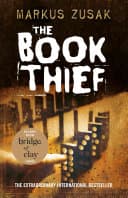
- The Book Thief
Markus Zusak
4.4 (1.8M) average on GoodreadsHistorical FictionExplores childhood in Nazi Germany, the power of words, and human resilience amidst horror.
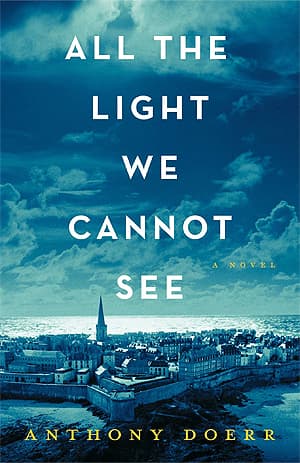
- All the Light We Cannot See
Anthony Doerr
4.3 (1M) average on GoodreadsHistorical FictionFeatures intertwined stories of young people on opposing sides of WWII, facing moral choices and the impact of war.
- The Nightingale
Kristin Hannah
4.6 (698k) average on GoodreadsHistorical FictionFocuses on the difficult choices and sacrifices made by siblings during WWII in occupied territory.
- To Kill a Mockingbird
Harper Lee
4.3 (4.5M) average on GoodreadsHistorical FictionIn the 1930s Jim Crow South, Harper Lee writes about racial injustice, moral growth, and the quiet courage of a lawyer father, Atticus Finch, as seen through his young daughter's eyes.
- The Great Gatsby
F. Scott Fitzgerald
3.9 (3.8M) average on GoodreadsHistorical FictionIn the opulent Roaring Twenties, a mysterious millionaire's lavish parties hide his desperate, tragic pursuit of a lost love, exposing the emptiness within the American Dream.
- Pride and Prejudice
Jane Austen
4.3 (3M) average on GoodreadsHistorical FictionIn a society focused on status and money, Elizabeth Bennet navigates love and pride, challenging Mr. Darcy and social expectations to find true affection.




Enjoyed the summary?
A summary gives you the shape of the book. The book itself has the detail, the examples and the voice.
Find Two Brothers on AmazonAs an Amazon Associate, BookBrief earns from qualifying purchases. How we're funded